
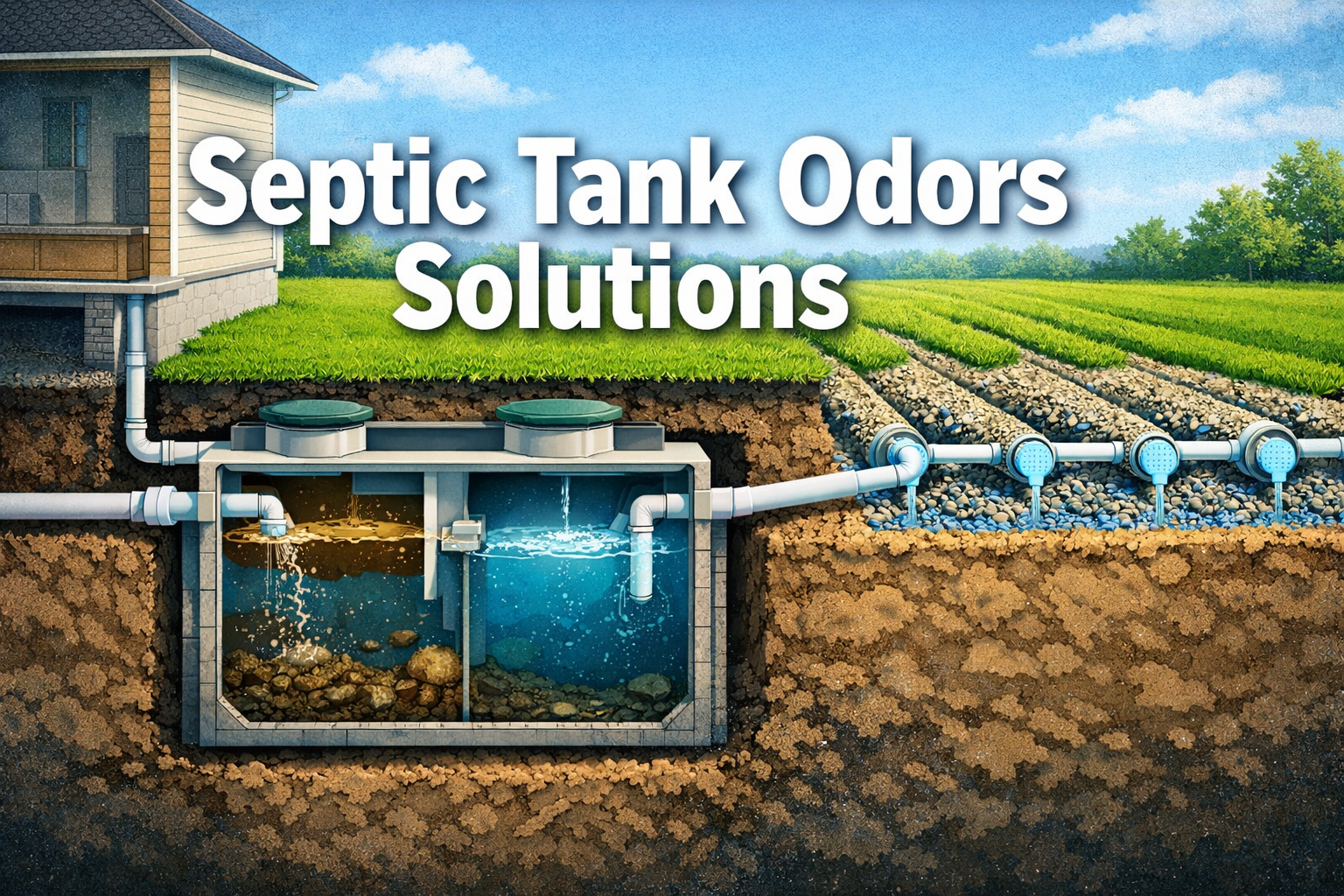
Last updated: March 3, 2026
Key Takeaways
• Septic tank odors typically stem from bacterial imbalance, damaged seals, or poor ventilation rather than normal system operation
• Immediate solutions include checking vent pipes, sealing tank lids, and ensuring proper drainage around the system
• Bacterial treatments can restore microbial balance when harsh chemicals have killed beneficial bacteria populations
• Professional pumping may eliminate odor problems entirely, especially when tanks are overloaded with waste
• Preventive maintenance like avoiding antibacterial cleaners and scheduling regular inspections prevents most odor issues
• Carbon filters on vent pipes provide effective odor control but require annual replacement and cold-weather considerations
• System overload from excessive fats, oils, and greases creates anaerobic conditions that produce strong sulfur smells
• Quick fixes like mulch layers and weather stripping can provide temporary relief while addressing root causes
Quick Answer
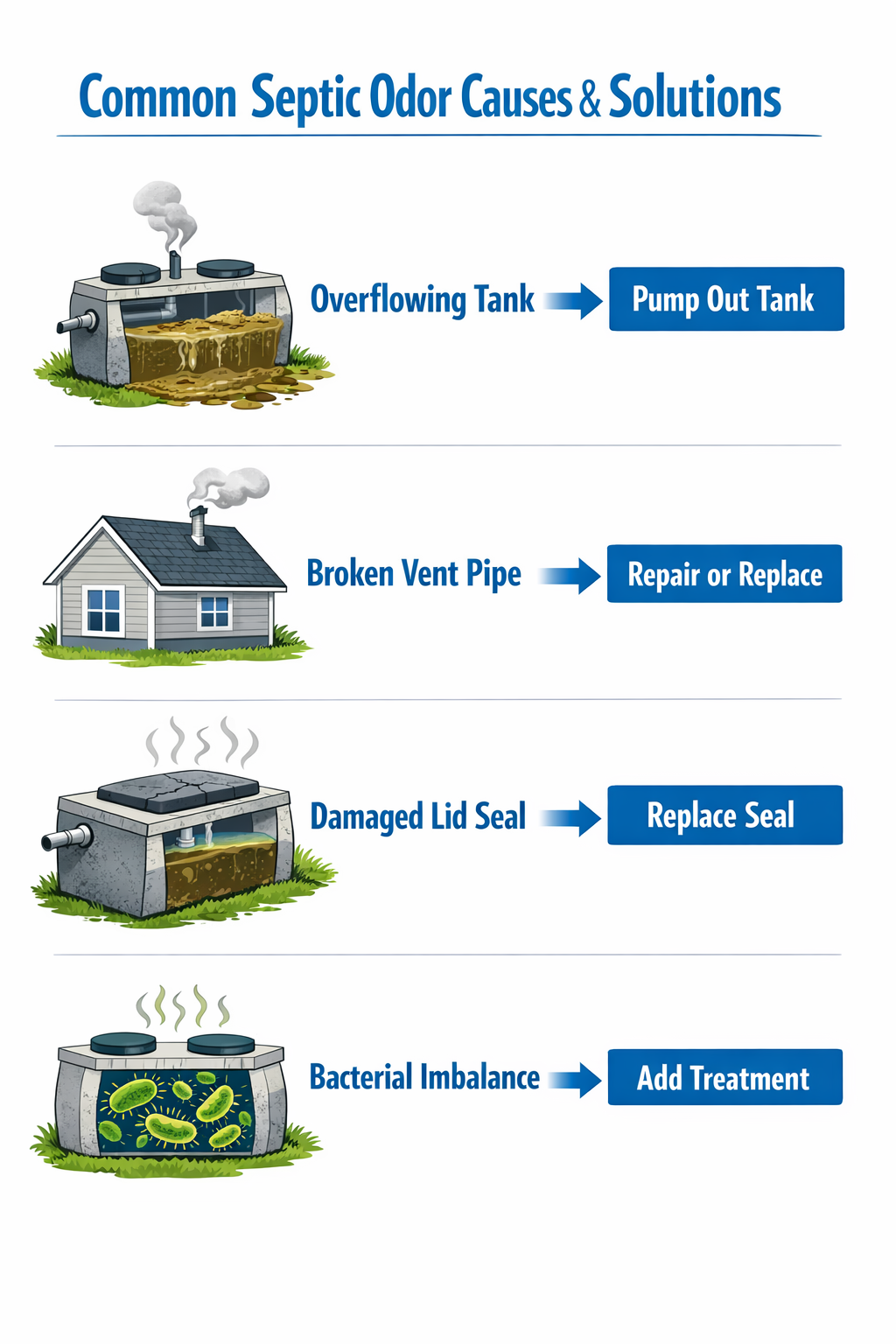
Septic tank odor problems usually indicate bacterial imbalance, damaged seals, or ventilation issues rather than normal operation. Most homeowners can resolve odors by checking vent pipes, sealing tank lids, adding beneficial bacteria treatments, or scheduling professional pumping. The key is identifying whether you’re dealing with a simple maintenance issue or a more serious system problem that requires professional attention.
What Causes Septic Tank Odors in the First Place?
Septic tank odors develop when the natural waste treatment process gets disrupted, creating conditions that produce strong-smelling gases instead of normal decomposition. The most common culprit is bacterial imbalance, where the microorganisms responsible for breaking down waste can’t function efficiently.
Primary causes of septic odors include:
• Chemical damage to bacteria – Harsh cleaning products, antibacterial soaps, and root killers destroy beneficial bacteria populations that normally control odors
• Anaerobic conditions – When bacteria lack sufficient oxygen, they switch to anaerobic digestion, producing hydrogen sulfide and other foul-smelling gases
• System overload – Too much waste, especially fats, oils, and greases (FOG), overwhelms the current bacterial population’s ability to process materials
• Physical damage – Cracked lids, damaged seals, or broken vent pipes allow odors to escape where they shouldn’t
• Poor ventilation – Blocked or inadequate vent pipes prevent proper gas dispersal away from living areas
Choose bacterial treatments if you’ve recently used strong cleaners or antibiotics. Opt for physical repairs if you notice odors only in specific locations around your property. Consider professional pumping if odors coincide with slow drains or backing up issues.
Common mistake: Homeowners often assume odors mean the tank needs immediate pumping, but bacterial imbalance is frequently the real issue and can be resolved with targeted treatments.
How to Identify Where Septic Odors Are Coming From
Pinpointing the odor source helps you choose the most effective septic tank odors solutions and avoid wasting time on unnecessary repairs. Start by conducting a systematic inspection during calm weather when odors are most noticeable.
Step-by-step odor detection process:
- Check around the tank lid area – Walk slowly around your septic tank location, noting any strong smells near the access covers
- Inspect vent pipes on your roof – Look for damaged, blocked, or improperly installed plumbing vents that should extend above the roofline
- Examine the drain field – Check for wet spots, unusually green grass, or sewage odors in your leach field area
- Test indoor fixtures – Run water in sinks, flush toilets, and check floor drains for gurgling sounds or sewer smells
Decision rules for common findings:
- Odors only near tank lids = damaged seals or covers need repair
- Smells throughout yard = vent pipe problems or system overload
- Indoor odors = plumbing issues or septic backing up into house
- Drain field odors = potential overflow or system not draining properly
Edge case consideration: In valleys or heavily forested areas, even properly functioning vent pipes may not disperse odors effectively due to poor air circulation. These situations often require vent pipe extensions or carbon filtration systems.
FYI: Some links may be affiliate links, which means I may earn a small commission at no extra cost to you.
For homeowners dealing with persistent bacterial imbalance issues, Septifix tablets offer a convenient monthly solution. These tablets help break down waste, reduce bad smells, and maintain proper bacterial populations with one simple flush per month, making it easier to prevent the chemical damage that often causes odor problems.
Immediate Septic Tank Odors Solutions You Can Try Today

When septic odors strike, several quick fixes can provide relief while you address underlying causes. These immediate solutions work best for minor issues and can often resolve temporary odor problems completely.
Quick fixes you can implement right now:
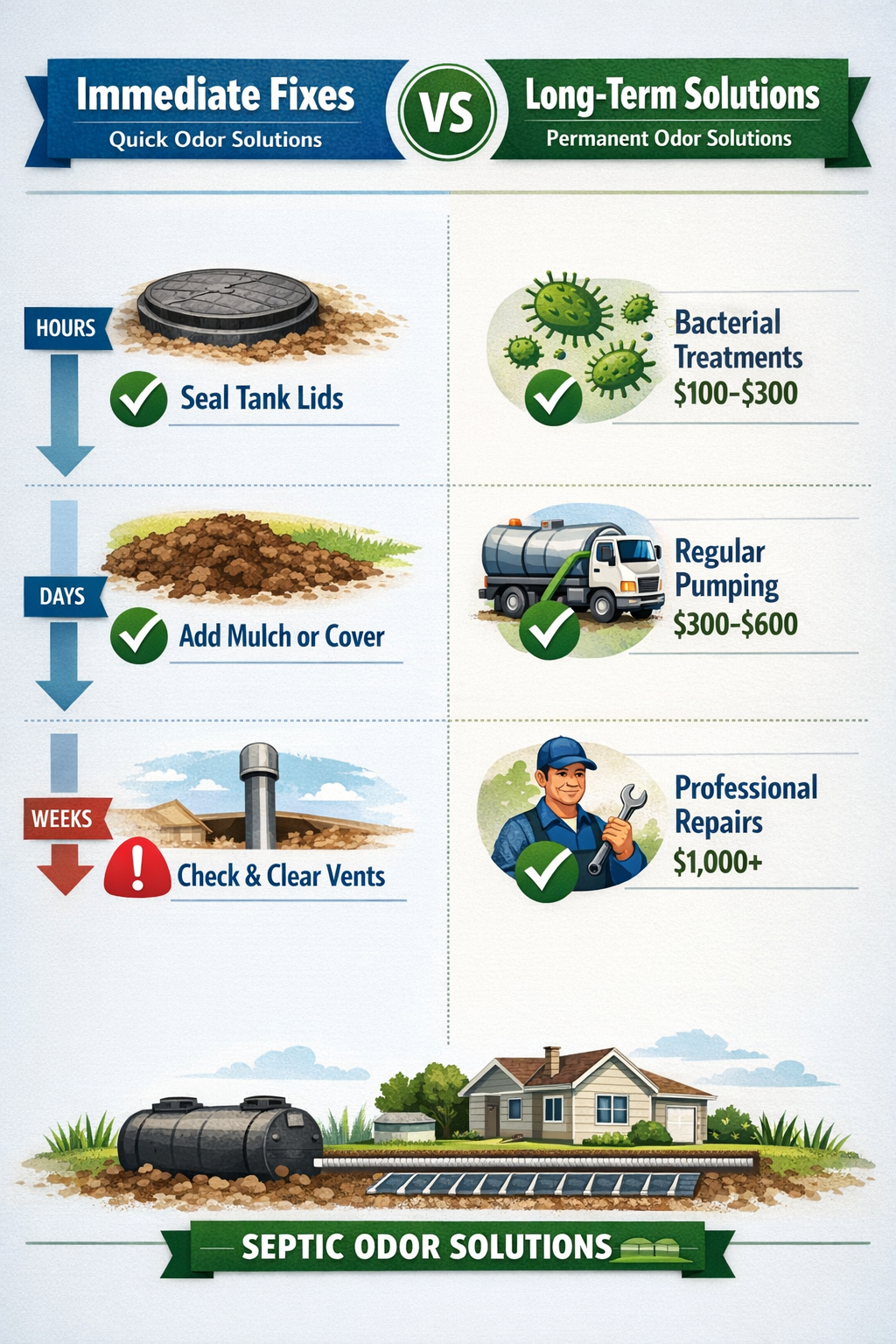
• Seal damaged tank lids – Replace worn rubber seals on plastic lids or use weather stripping as a temporary fix for concrete covers
• Add a thin mulch layer – Spread 2-3 inches of organic mulch over tank lids to absorb escaping odors (avoid soil, which makes maintenance access difficult)
• Check and clear vent pipes – Remove leaves, bird nests, or other debris blocking plumbing vents on your roof
• Reduce water usage temporarily – Give your system time to process existing waste if you suspect overload conditions
• Switch to septic-safe products – Immediately stop using antibacterial cleaners, bleach, or harsh chemicals that kill beneficial bacteria
For ventilation improvements:
- Extend vent pipes higher above the roofline to improve odor dispersal, especially in areas with poor wind patterns
- Install carbon filters on vent pipes for active odor control, though these require annual replacement and should be removed in freezing climates
Choose weather stripping if you need an immediate temporary seal for damaged lids. Opt for mulch if odors seem to be seeping from the general tank area. Focus on vent pipes if smells are strongest during calm weather or seem to hang around your yard.
Common mistake: Using soil instead of mulch to cover odor sources can make future maintenance much more difficult and expensive.
Long-Term Septic Tank Odors Solutions and Prevention
Permanent odor control requires addressing root causes rather than just masking symptoms. The most effective long-term septic tank odors solutions focus on maintaining healthy bacterial populations and proper system function.
Bacterial restoration strategies:
• Monthly bacterial supplements – Products containing beneficial bacteria help maintain proper microbial balance, especially after antibiotic use or chemical exposure
• Oxygen restoration treatments – Slow-release oxygen products help aerobic bacteria recover when low oxygen levels cause anaerobic conditions
• Shock treatments for severe cases – High-concentration bacterial products can restore severely damaged microbial populations
System maintenance for odor prevention:
• Regular pumping schedule – Follow the recommended pumping frequency based on household size and tank capacity
• Professional inspections – Annual or bi-annual septic inspections catch problems before they cause odors
• Drain field protection – Avoid parking vehicles or placing heavy objects over your leach field area
Household habit changes:
- Use septic-safe toilet paper and cleaning products exclusively
- Install low-flow fixtures to reduce system overload
- Dispose of fats, oils, and grease in trash rather than drains
- Space out laundry loads throughout the week instead of doing all washing in one day
Choose professional pumping if odors coincide with other signs your septic tank needs pumping. Opt for bacterial treatments if you’ve recently used antibiotics or harsh cleaners. Focus on household habits if odors are recurring despite other interventions.
Edge case: Some older systems may need permanent ventilation upgrades or even partial system replacement if odor problems persist despite proper maintenance and bacterial treatments.
When to Call a Professional for Septic Odor Problems
Certain septic odor situations require professional expertise and equipment beyond typical homeowner capabilities. Recognizing when to call for help prevents minor issues from becoming expensive system failures.
Call a professional immediately if you notice:
• Indoor sewer smells that persist after checking obvious causes like dry P-traps
• Sewage backup into your home, especially from multiple fixtures simultaneously
• Standing water or wet spots in your drain field area
• Gurgling sounds from multiple drains when using water fixtures
• Strong odors that return quickly after attempting DIY solutions
Professional services that address odor problems:
- System pumping and cleaning – Removes accumulated solids that can cause anaerobic conditions and odors
- Vent pipe repairs or extensions – Ensures proper gas dispersal away from living areas
- Lid and seal replacement – Provides long-term containment of tank gases
- Drain field evaluation – Identifies overflow or saturation issues that cause surface odors
- Bacterial treatment programs – Professional-grade products for severe bacterial die-off situations
Cost considerations for professional solutions:
- Tank pumping: typically every 3-5 years as preventive maintenance
- Vent pipe work: one-time investment for permanent odor control
- Lid repairs: relatively inexpensive but requires proper sealing materials
- Drain field repairs: potentially expensive but necessary for system function
Choose immediate professional help if odors accompany septic backing up or standing water issues. Schedule routine professional service if DIY solutions provide only temporary relief. Get professional assessment if you’re unsure about system age or maintenance history.
Important note: According to University of Minnesota research, avoid septic additives marketed for odor control, as there’s no independent research verifying their effectiveness and they may upset natural bacterial activity.
Helpful Resource for Ongoing Septic Care
For homeowners who want a simple, reliable approach to preventing septic odors and maintaining system health, Septifix tablets provide an easy monthly maintenance routine. With beneficial bacteria and enzymes that help break down waste naturally, these tablets can help prevent the bacterial imbalances that often lead to odor problems. One tablet flushed monthly helps maintain the healthy microbial environment your septic system needs to function properly and stay odor-free.
Prevention Tips to Stop Septic Odors Before They Start
The most cost-effective septic tank odors solutions focus on preventing problems rather than fixing them after they develop. Simple changes to household habits and maintenance routines can eliminate most odor issues permanently.
Daily habits that prevent odor problems:
• Use septic-safe products exclusively – Choose cleaning products labeled as septic-system friendly
• Limit antibacterial products – These kill beneficial bacteria that control odors naturally
• Dispose of grease properly – Never pour fats, oils, or grease down drains where they create anaerobic conditions
• Spread out water usage – Avoid overwhelming your system with multiple loads of laundry or long showers in quick succession
• Flush only appropriate materials – Stick to human waste and septic-safe toilet paper
Monthly and seasonal maintenance:
- Inspect tank lid area for damage or settling that could break seals
- Check vent pipes for blockages, especially after storms
- Monitor drain field for unusual wet spots or odors
- Review household chemical usage and eliminate harsh products
Annual prevention checklist:
- Schedule professional inspection to catch problems early
- Replace carbon filters on vent pipes if installed
- Review and adjust pumping schedule based on household changes
- Document any odor incidents to identify patterns
Long-term system protection:
- Keep detailed maintenance records for warranty and resale purposes
- Plan for eventual system component replacement before failures occur
- Consider upgrading older systems to more odor-resistant designs
- Maintain proper landscaping around system components
Choose bacterial supplements if your household uses medications that might affect septic bacteria. Focus on grease management if kitchen drains are the primary source of wastewater. Prioritize water conservation if you have a smaller tank relative to household size.
Success tip: Homeowners who follow a consistent septic maintenance routine rarely experience persistent odor problems and save thousands in emergency repair costs.
FAQ
Q: How quickly should septic odor solutions work?
A: Simple fixes like sealing lids or clearing vent blockages work immediately. Bacterial treatments typically show results within 2-4 weeks as beneficial microorganisms reestablish proper populations.
Q: Are septic tank odors dangerous to my family’s health?
A: While unpleasant, typical septic odors aren’t immediately dangerous. However, hydrogen sulfide gas in high concentrations can be harmful, so address persistent strong odors promptly and ensure adequate ventilation.
Q: Can I use bleach or disinfectants if my septic tank smells?
A: No, avoid bleach and antibacterial products as they kill beneficial bacteria that control odors naturally. Use septic-safe cleaning products instead to maintain healthy bacterial populations.
Q: Why do septic odors seem worse in hot weather?
A: Heat accelerates bacterial activity and gas production, making odors stronger. Hot weather also reduces air circulation, preventing natural odor dispersal. Focus on ventilation improvements during summer months.
Q: Should I add bacteria products even if my system doesn’t smell?
A: Bacterial supplements can be beneficial after antibiotic use or chemical exposure, but healthy systems typically maintain adequate bacterial populations naturally. Consult a septic professional for personalized recommendations.
Q: How do I know if odors indicate a serious system problem?
A: Odors accompanied by slow drains, gurgling sounds, wet spots in the drain field, or sewage backup indicate serious issues requiring immediate professional attention.
Q: Can landscaping around my septic tank help with odors?
A: Yes, proper landscaping improves air circulation and can help disperse odors. Avoid planting trees with aggressive root systems near tank or pipes, but grass and shallow-rooted plants work well.
Q: Do septic tank odors mean I need to pump immediately?
A: Not necessarily. While pumping can resolve some odor issues, bacterial imbalance or ventilation problems are often the real culprits. Identify the specific cause before scheduling expensive pumping.
Q: How often should I inspect my septic system for odor prevention?
A: Check tank lids and vent pipes monthly, especially after storms. Schedule professional inspections annually or bi-annually depending on system age and household size.
Q: Are there any natural remedies for septic tank odors?
A: Focus on natural bacterial balance rather than masking odors. Reduce chemical usage, maintain proper water levels, and ensure adequate system ventilation. Avoid home remedies that might disrupt bacterial populations.
Q: Can septic odors affect my property value?
A: Yes, persistent septic odors can significantly impact property value and make homes difficult to sell. Address odor problems promptly and maintain documentation of proper system care.
Q: What’s the difference between septic odors and other sewer smells?
A: Septic odors typically smell like rotten eggs (hydrogen sulfide) and occur near the tank or drain field. Other sewer smells might indicate municipal system issues, dry P-traps, or plumbing problems unrelated to your septic system.
Conclusion
Septic tank odors solutions range from simple DIY fixes to professional system interventions, but the key is identifying the root cause rather than just masking symptoms. Most odor problems stem from bacterial imbalance caused by harsh chemicals, poor ventilation, or system overload rather than normal septic operation.
Start with immediate solutions like checking vent pipes, sealing damaged lids, and switching to septic-safe products. For persistent problems, focus on restoring bacterial balance through targeted treatments and addressing any physical system issues. Remember that prevention through proper household habits and regular maintenance is always more cost-effective than emergency repairs.
The most successful homeowners combine simple monthly maintenance routines with annual professional inspections to catch problems before they cause odors. By understanding your septic system’s needs and responding promptly to warning signs, you can maintain an odor-free property while protecting your investment in this essential home infrastructure.
For ongoing support with septic system care, explore our comprehensive guides on septic maintenance best practices and preventing common septic problems.
References
[1] Press Release Tame Your Septic Tank Smells This Summer – https://www.cortecvci.com/press-release-tame-your-septic-tank-smells-this-summer/
[2] Odor – https://septic.umn.edu/news/odor