Septic Tank Not Draining Properly: Complete Homeowner’s Guide to Diagnosis and Solutions
Last updated: February 14, 2026
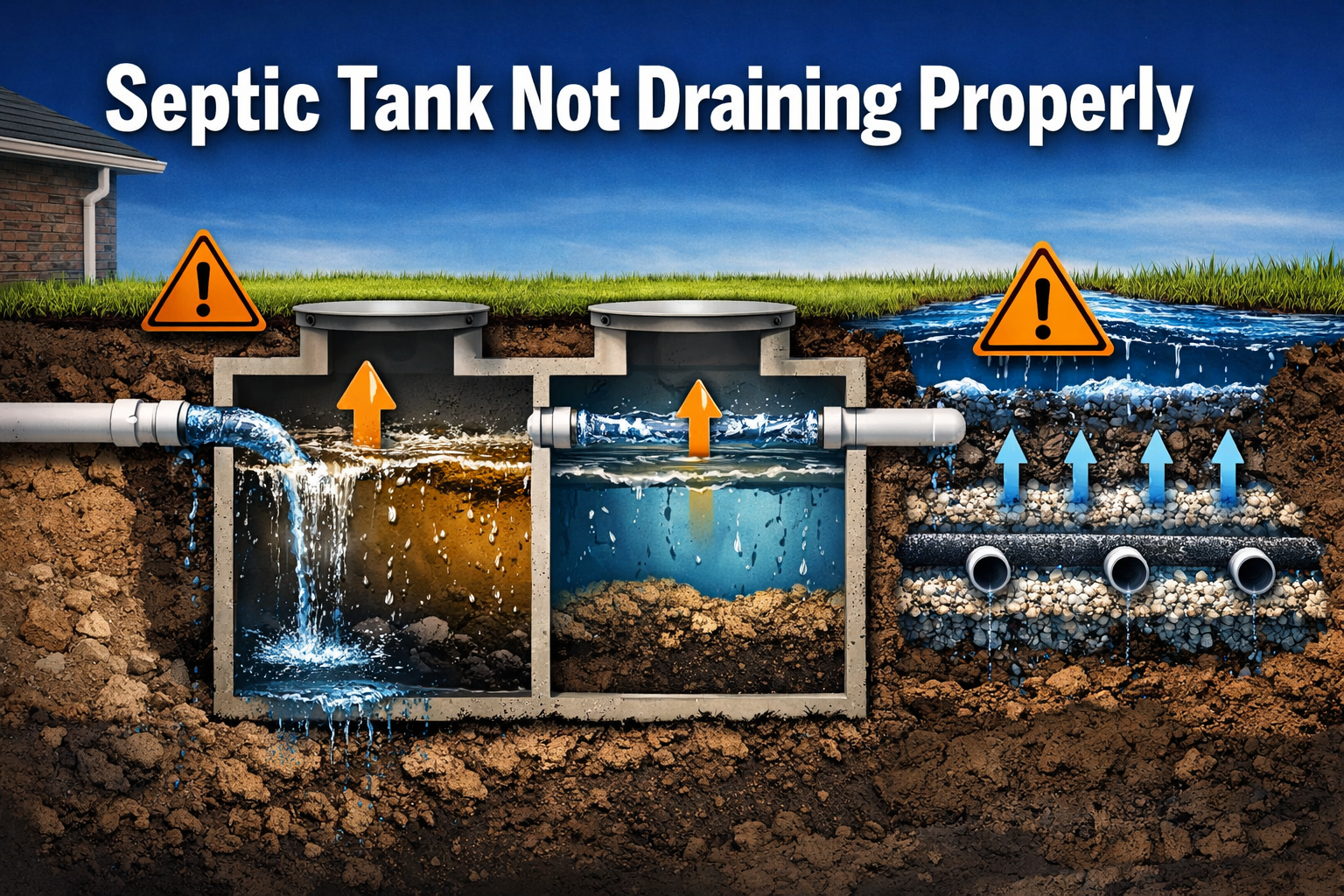
When your septic tank isn’t draining properly, it creates a cascade of problems that can quickly escalate from minor inconvenience to major emergency. A malfunctioning septic system affects every drain in your home and can lead to sewage backups, expensive repairs, and potential health hazards.
Key Takeaways
• Poor drainage typically stems from three main causes: tank overflow, pipe blockages, or drain field failure
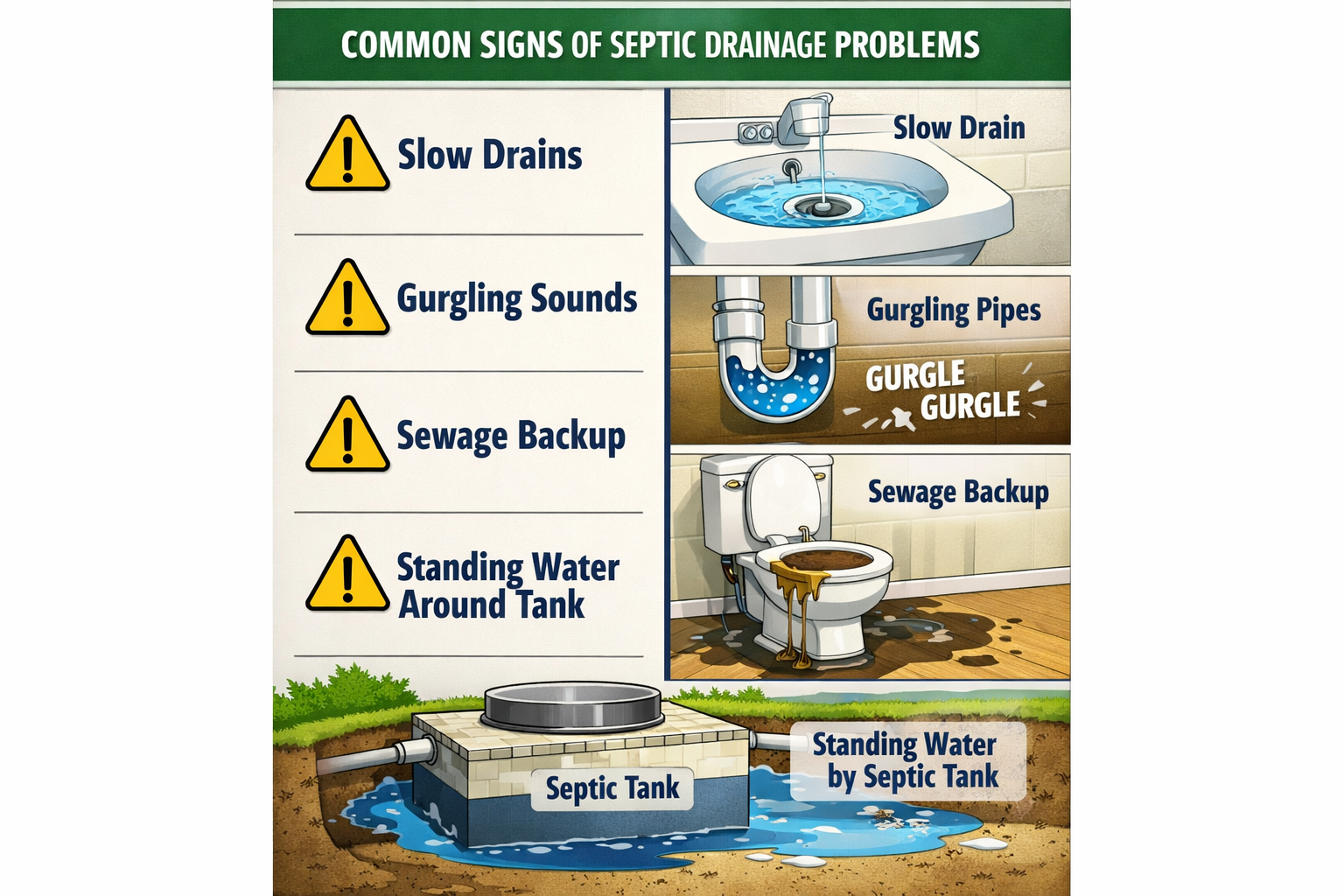
• Early warning signs include: slow drains, gurgling sounds, sewage odors, and standing water near the tank
• Immediate action prevents costly damage: addressing drainage issues quickly can save thousands in repair costs
• Regular maintenance is essential: pumping every 3-5 years and proper waste disposal prevent most drainage problems
• Professional help is often necessary: complex drainage issues require expert diagnosis and specialized equipment
Quick Answer
A septic tank not draining properly usually indicates either a full tank that needs pumping, blocked pipes between the house and tank, or a failing drain field. The most common cause is simply an overfull tank that hasn’t been pumped in several years, which prevents new wastewater from entering and processing correctly.
What Does It Mean When Your Septic Tank Not Draining Properly?
Poor septic drainage means wastewater isn’t flowing through your system as designed. In a properly functioning septic system, wastewater flows from your house into the tank, where solids settle and liquids move to the drain field for final treatment. When this process breaks down, you’ll notice slow drains throughout your home and other warning signs.
The septic system relies on gravity and bacterial action to process waste. When drainage slows or stops, it typically means one of three things has gone wrong:
Tank-related issues occur when the tank becomes too full of sludge or scum, leaving no room for new wastewater. This is the most common cause and usually develops gradually over several years without proper maintenance.
Pipe blockages can happen anywhere between your house and the septic tank. Tree roots, grease buildup, or foreign objects can create partial or complete blockages that prevent normal flow.
Drain field problems develop when the soil becomes saturated or clogged, preventing treated effluent from absorbing into the ground. This forces wastewater to back up through the entire system.
Understanding how your septic tank works helps you recognize when something’s wrong and take appropriate action before minor issues become major problems.
How Do You Know When Your Septic Tank Not Draining Properly?
The warning signs of poor septic drainage are usually obvious once you know what to look for. Most homeowners notice multiple symptoms that develop over days or weeks as the problem worsens.
Indoor Warning Signs
Slow drains are often the first indicator homeowners notice. When your septic system can’t handle incoming wastewater, drains throughout the house become sluggish. This affects sinks, showers, and toilets simultaneously, unlike a single clogged drain.
Gurgling sounds from drains and toilets indicate air displacement as wastewater struggles to move through the system. These sounds are most noticeable when using multiple fixtures or during heavy water usage periods.
Sewage backups represent the most serious indoor warning sign. When wastewater has nowhere to go, it backs up through floor drains, toilets, or the lowest fixtures in your home. This creates an immediate health hazard and requires emergency attention.
Persistent odors inside the house suggest gases aren’t venting properly through the system. Septic odors should never be noticeable inside your home under normal operating conditions.
Outdoor Warning Signs
Standing water around the septic tank or drain field area indicates the system can’t process wastewater effectively. This water may contain untreated sewage and creates health risks for your family and pets.
Unusually green grass over the drain field can signal system failure. While some enhanced growth is normal, excessively lush areas suggest raw sewage is reaching the surface.
Strong odors outside, particularly near the tank or drain field, indicate improper waste processing or system overload.
Wet, spongy ground around septic components suggests effluent isn’t absorbing properly into the soil. This often accompanies drain field failure and requires professional assessment.
Recognizing these signs early and understanding when your septic tank is full can prevent minor issues from becoming expensive emergencies.
What Causes a Septic Tank Not Draining Properly?
Understanding the root causes of drainage problems helps you prevent future issues and determine the appropriate solution. Most drainage problems fall into several common categories that affect different parts of your septic system.
Tank Overload and Capacity Issues
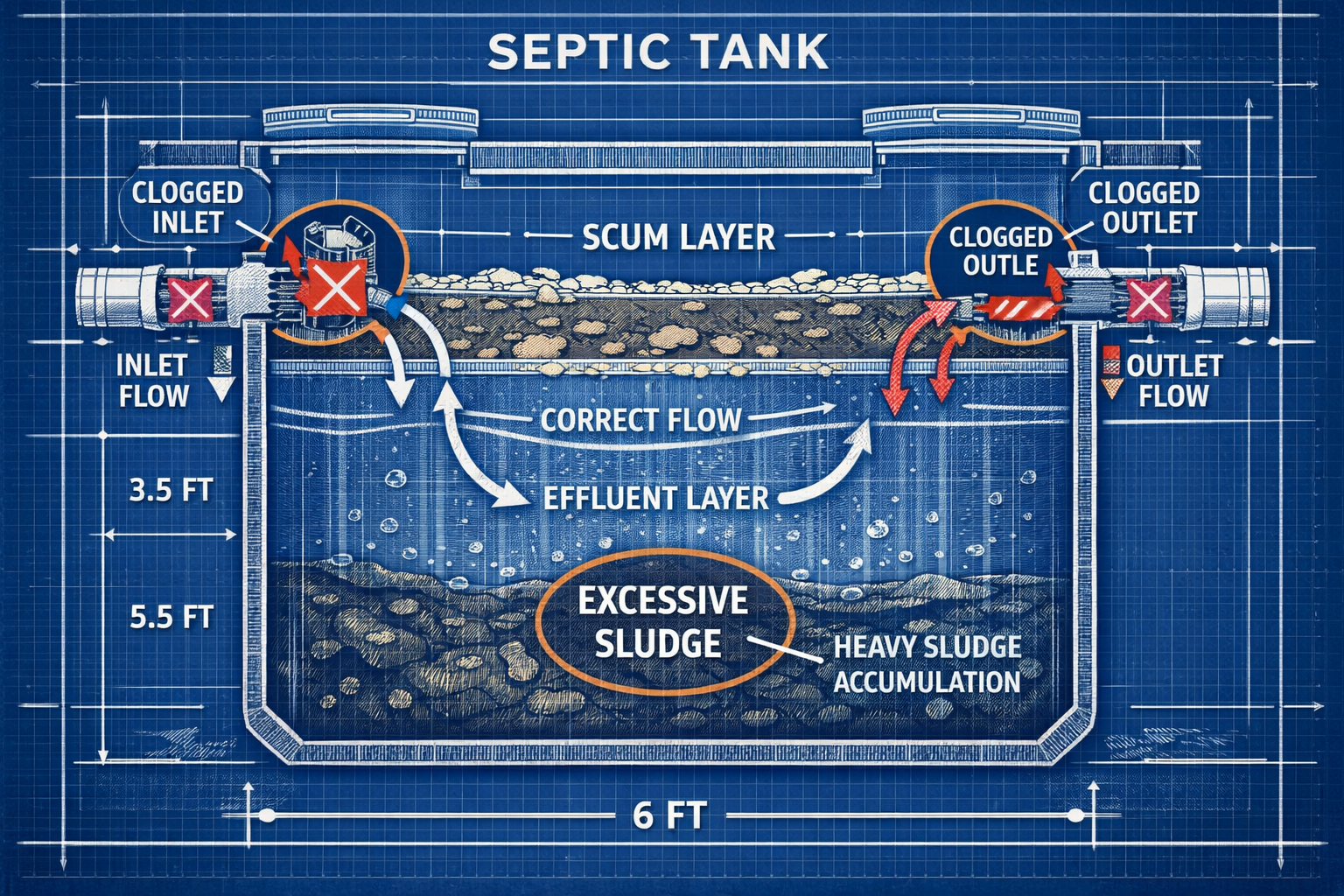
Excessive sludge buildup is the leading cause of poor drainage. Over time, solid waste accumulates faster than bacteria can break it down, reducing the tank’s effective capacity. When sludge levels rise too high, there’s insufficient space for new wastewater to enter and settle properly.
Scum layer overgrowth can block the outlet pipe, preventing effluent from leaving the tank. Oils, grease, and floating debris form this layer, which should be managed through regular pumping and proper waste disposal practices.
Hydraulic overload occurs when you use more water than your system can handle. Large families, frequent guests, or inefficient fixtures can overwhelm even properly maintained systems.
Pipe and Component Failures
Tree root intrusion is a common problem in older systems or areas with aggressive root growth. Roots seek out moisture and nutrients, growing into pipes through small cracks or joints. Once inside, they expand and create significant blockages.
Pipe damage from settling, freezing, or age can create partial blockages or complete breaks. Damaged pipes may allow soil infiltration or prevent normal flow patterns.
Inlet and outlet baffle problems can disrupt proper flow within the tank. Damaged baffles allow solids to escape the tank or prevent proper settling of incoming waste.
Drain Field Complications
Soil saturation occurs when the drain field becomes waterlogged from excessive rainfall, high groundwater, or system overuse. Saturated soil can’t absorb additional effluent, causing backups throughout the system.
Biomat formation happens when organic matter clogs soil pores around drain field pipes. This natural process eventually affects all drain fields but can be accelerated by poor maintenance or system abuse.
Compacted soil from heavy equipment or foot traffic reduces the soil’s ability to absorb effluent. This is particularly problematic in clay soils or areas with poor drainage characteristics.
Chemical and Biological Disruption
Antibacterial products can kill the beneficial bacteria essential for waste breakdown. Excessive use of bleach, antibacterial soaps, or harsh cleaners disrupts the biological processes that make septic systems work.
Inappropriate waste disposal introduces materials that don’t break down naturally. Grease, cat litter, feminine hygiene products, and other non-biodegradable items accumulate and create blockages.
Understanding these causes helps you make informed decisions about maintenance and repairs while avoiding practices that contribute to drainage problems.
How to Diagnose Why Your Septic Tank Not Draining Properly
Proper diagnosis requires a systematic approach to identify the specific cause of your drainage problems. Start with simple observations and progress to more detailed investigations as needed.
Initial Assessment Steps
Document your symptoms by noting which drains are affected, when problems occur, and any patterns you observe. Drainage issues that affect the entire house suggest tank or main line problems, while isolated slow drains may indicate localized blockages.
Check your pumping records to determine when the tank was last serviced. Most residential tanks require pumping every 3-5 years, depending on household size and usage patterns. Overdue pumping is the most common cause of drainage problems.
Inspect visible components around your property for obvious signs of system distress. Look for standing water, unusual odors, or excessively green vegetation near septic components.
Water Usage Evaluation
Calculate your daily water usage to determine if you’re overwhelming your system’s capacity. The average person uses 50-100 gallons per day, and your system should be sized accordingly.
Identify high-usage periods when drainage problems worsen. Systems struggling with capacity often show symptoms during peak usage times like mornings or evenings when multiple family members are active.
Review recent changes in household size, water-using appliances, or daily routines that might have increased system load beyond its design capacity.
Professional Diagnostic Tools
Tank inspection requires removing the access lid to check sludge and scum levels, examine baffles, and assess overall tank condition. This should only be done by qualified professionals due to safety hazards from toxic gases.
Camera inspection of pipes can identify blockages, root intrusion, or structural damage between the house and tank. This technology allows precise location of problems without excavation.
Drain field evaluation may include soil percolation tests, effluent sampling, or excavation to assess pipe condition and soil absorption capacity. These tests help determine if drain field replacement is necessary.
The diagnostic process often reveals multiple contributing factors rather than a single cause, requiring a comprehensive approach to restore proper drainage.
Immediate Solutions When Your Septic Tank Not Draining Properly
When you discover drainage problems, taking immediate action can prevent minor issues from becoming major disasters. Focus on protecting your home and family while arranging for professional assessment and repairs.
Emergency Response Steps
Reduce water usage immediately to prevent further system overload. Limit toilet flushing, take shorter showers, and postpone laundry or dishwashing until the problem is resolved. This gives your system time to process existing wastewater.
Avoid chemical drain cleaners which can kill beneficial bacteria and worsen long-term problems. These products may provide temporary relief but often create more serious issues by disrupting the biological processes essential for septic function.
Pump the tank if overdue for service. This is often the quickest and most effective solution for drainage problems caused by excessive sludge buildup. Emergency pumping services are available for urgent situations.
Temporary Drainage Improvements
Distribute water usage throughout the day rather than concentrating it in short periods. Spread out showers, laundry, and other high-water activities to give your system time to process each load.
Check and clear accessible cleanouts between your house and septic tank. Sometimes simple blockages in these areas can be cleared without professional equipment, restoring normal flow.
Redirect surface water away from septic components to prevent additional hydraulic load from roof runoff or surface drainage. Saturated soil around your system compounds drainage problems.
When to Call Professionals
Contact septic professionals immediately if you experience sewage backups inside your home. This represents a health emergency that requires expert intervention and proper cleanup procedures [8].
Schedule emergency service for systems that haven’t been pumped in over five years or show multiple warning signs. Delaying professional intervention often leads to more expensive repairs.
Arrange comprehensive inspection if simple solutions don’t restore normal drainage. Complex problems require specialized diagnostic equipment and expertise to identify root causes and develop effective solutions.
FYI: Some links may be affiliate links, which means I may earn a small commission at no extra cost to you.
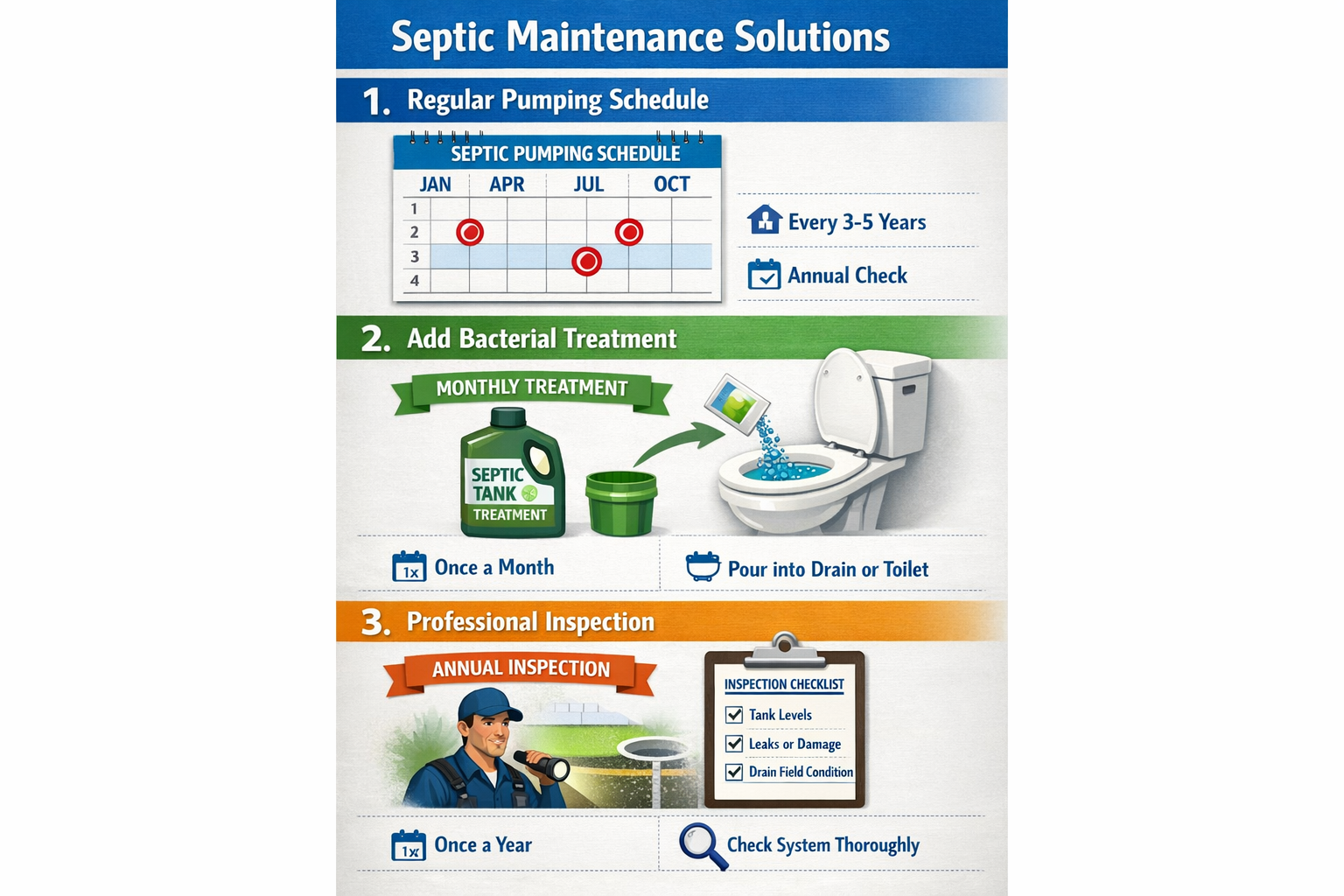
For homeowners looking for an easy way to maintain their septic system health, Septifix tablets offer a convenient monthly treatment option. These tablets help break down waste, reduce odors, and support the bacterial balance essential for proper drainage. While not a cure for existing drainage problems, regular use can help prevent future issues by maintaining optimal tank conditions.
Long-term Prevention of Septic Tank Drainage Problems
Preventing drainage issues requires consistent maintenance practices and mindful usage habits. A proactive approach costs far less than emergency repairs and extends your system’s lifespan significantly.
Regular Maintenance Schedule
Pump your tank every 3-5 years depending on household size and usage patterns. Smaller households may extend this interval, while larger families or heavy water users should pump more frequently. Keep detailed records of pumping dates and sludge levels.
Schedule annual inspections to catch problems before they cause drainage failures. Professional inspections identify developing issues like damaged baffles, pipe problems, or excessive sludge accumulation that could lead to system failure.
Monitor system performance by watching for early warning signs like slower drains or occasional odors. Address minor issues promptly rather than waiting for major problems to develop.
Proper Usage Practices
Dispose of waste appropriately by avoiding flushing non-biodegradable items, excessive grease, or harmful chemicals. Everything that goes down your drains affects your septic system’s ability to function properly.
Use septic-safe products for cleaning and personal care. Choose biodegradable soaps, limit antibacterial products, and avoid harsh chemicals that can kill beneficial bacteria.
Manage water usage by fixing leaks promptly, installing efficient fixtures, and spreading out high-water activities. Your septic system works best when water usage is consistent rather than concentrated in short periods.
Protecting Your Drain Field
Avoid driving or parking over septic components, which can compact soil and damage pipes. Mark your drain field boundaries and educate family members about these restrictions.
Maintain proper landscaping around septic components. Plant only grass over drain fields, avoid deep-rooted plants near pipes, and ensure proper surface drainage away from the system.
Monitor drain field condition by watching for standing water, unusual vegetation growth, or soft spots in the soil. Early detection of drain field problems can sometimes prevent complete system replacement.
Understanding what happens in your septic tank helps you make better decisions about usage and maintenance practices that support long-term system health.
Professional Repair Options for Septic Tank Drainage Issues
When drainage problems persist despite basic maintenance, professional intervention becomes necessary. Understanding your options helps you make informed decisions about repairs and budget appropriately for necessary work.
Tank-Related Repairs
Emergency pumping removes excess sludge and scum that’s preventing proper drainage. This service typically costs $300-600 and provides immediate relief for overloaded systems. Emergency services may charge premium rates for after-hours or weekend calls.
Baffle repair or replacement addresses damaged inlet or outlet baffles that disrupt proper flow patterns. This repair typically requires tank access and specialized equipment but is usually less expensive than full tank replacement.
Tank replacement becomes necessary when structural damage prevents proper function. Modern tanks offer improved designs and materials that provide better long-term performance than older concrete or steel tanks.
Pipe and Line Repairs
Hydro jetting uses high-pressure water to clear blockages from pipes between your house and septic tank. This method effectively removes tree roots, grease buildup, and other obstructions that prevent normal flow.
Pipe replacement may be necessary for severely damaged or collapsed lines. Modern pipe materials resist root intrusion and provide longer service life than older clay or concrete pipes.
Root removal and treatment addresses tree root intrusion through mechanical cutting followed by chemical treatments to prevent regrowth. This solution works best when combined with ongoing root prevention strategies.
Drain Field Solutions
Drain field rehabilitation can sometimes restore function to failing systems through techniques like fracturing compacted soil or adding beneficial bacteria to restore proper biological activity.
Partial drain field replacement may be possible when only sections of the field have failed. This approach costs less than complete replacement while restoring system capacity.
Complete system replacement becomes necessary when drain fields can no longer absorb effluent effectively. This major investment typically costs $10,000-25,000 but provides decades of reliable service.
Advanced Treatment Options
Aerobic treatment units can sometimes be added to failing systems to improve effluent quality and reduce drain field loading. These systems require electrical power and regular maintenance but can extend system life.
Pump systems may be necessary in areas with high groundwater or poor soil conditions. These systems move effluent to more suitable disposal areas but require ongoing electrical costs and maintenance.
Alternative disposal methods like constructed wetlands or evapotranspiration beds may be options in areas where conventional drain fields can’t function properly.
Working with qualified professionals ensures repairs meet local codes and provide long-term solutions rather than temporary fixes.
Cost Considerations for Septic Tank Drainage Repairs
Understanding the financial implications of septic drainage problems helps you budget appropriately and make cost-effective decisions about repairs versus replacement. Costs vary significantly based on problem severity, local labor rates, and site conditions.
Emergency Service Costs
Emergency pumping typically costs 50-100% more than scheduled service, ranging from $450-900 depending on your location and the urgency of the situation. Weekend and holiday service commands premium pricing.
Emergency repairs for sewage backups or complete system failures can cost $1,000-5,000 for immediate intervention, not including long-term solutions. These costs often include cleanup and sanitization services.
Temporary solutions like portable toilets or pump-and-haul services may be necessary during major repairs, adding $200-500 per week to your total costs.
Routine Maintenance Investments
Regular pumping costs $300-600 every 3-5 years, making it one of the most cost-effective investments in system longevity. This preventive measure often prevents thousands in repair costs.
Annual inspections typically cost $100-300 but can identify problems before they cause system failures. Early detection saves money by allowing repairs rather than replacements.
Preventive treatments like bacterial additives cost $20-100 annually but can help maintain proper biological balance and prevent some drainage problems.
Major Repair Investments
Pipe replacement between house and tank typically costs $2,000-6,000 depending on distance and excavation requirements. Difficult access or rocky soil increases costs significantly.
Tank replacement ranges from $3,000-8,000 for standard residential systems. Larger tanks or difficult site conditions can increase costs substantially.
Drain field replacement represents the largest potential expense at $10,000-25,000 for complete systems. Soil conditions, permit requirements, and site accessibility all affect final costs.
Insurance and Financing Considerations
Homeowner’s insurance typically doesn’t cover septic system failures unless caused by covered perils like vehicle damage or vandalism. Gradual deterioration and maintenance issues are usually excluded.
Septic system insurance is available in some areas as supplemental coverage for major repairs and replacements. These policies typically cost $100-300 annually with deductibles of $500-1,000.
Financing options may be available through septic contractors, home improvement loans, or local environmental programs. Some areas offer low-interest loans for septic system upgrades that protect water quality.
Planning for septic system costs as part of homeownership helps you respond quickly to problems without financial stress that might delay necessary repairs.
Helpful Resource for Septic Maintenance
Maintaining proper bacterial balance in your septic tank is crucial for preventing drainage problems. Septifix tablets provide a simple monthly treatment that helps break down waste more effectively and reduces the buildup that can lead to drainage issues. Each tablet contains beneficial bacteria and enzymes that support your system’s natural processes, helping prevent the sludge accumulation that commonly causes poor drainage. While professional pumping and maintenance remain essential, regular use of Septifix can help extend the time between services and maintain optimal system performance.
Frequently Asked Questions
How long can I wait to fix septic drainage problems?
Don’t wait more than a few days to address serious drainage issues. Minor problems like slightly slow drains can be monitored for a week or two, but sewage backups or complete drainage failure require immediate professional attention to prevent health hazards and property damage.
Can I use Drano or similar products in my septic system?
No, chemical drain cleaners can kill the beneficial bacteria essential for septic system function. These products may provide temporary relief but often worsen long-term problems by disrupting biological processes. Use septic-safe alternatives or call professionals for persistent blockages.
How often should I pump my septic tank to prevent drainage problems?
Most residential septic tanks need pumping every 3-5 years, depending on household size and water usage. Smaller households may extend this interval to 5 years, while larger families or heavy water users should pump every 2-3 years to prevent drainage issues.
What’s the difference between slow drains and septic drainage problems?
Slow drains affecting only one fixture usually indicate localized clogs, while multiple slow drains throughout the house suggest septic system problems. Septic issues typically affect all drains simultaneously and may include odors or gurgling sounds.
Can heavy rain cause septic drainage problems?
Yes, excessive rainfall can saturate drain field soil and prevent proper effluent absorption. This forces wastewater to back up through the system, causing temporary drainage problems that usually resolve as soil conditions improve.
Is it safe to be around a septic tank that’s not draining properly?
Exercise caution around malfunctioning septic systems due to potential exposure to harmful bacteria and toxic gases. Avoid direct contact with standing water or sewage, and never enter confined spaces around septic components without proper safety equipment.
How can I tell if the problem is my septic tank or the drain field?
Tank problems usually cause drainage issues throughout the house, while drain field problems often include standing water or unusual vegetation growth in the yard. Professional inspection with specialized equipment provides definitive diagnosis.
Can I fix septic drainage problems myself?
Simple maintenance like reducing water usage or scheduling pumping can be done independently, but most drainage problems require professional diagnosis and repair. DIY attempts often worsen problems and may violate local health codes.
What happens if I ignore septic drainage problems?
Ignoring drainage issues leads to more expensive problems including complete system failure, property damage from sewage backups, and potential health hazards. Early intervention typically costs much less than emergency repairs.
How do I find qualified septic professionals in my area?
Contact your local health department for lists of licensed septic contractors, check online reviews and Better Business Bureau ratings, and ask neighbors for recommendations. Ensure contractors are properly licensed and insured before hiring.
Can tree roots really cause septic drainage problems?
Yes, tree roots actively seek water and nutrients, growing into septic pipes through small cracks or joints. Once inside, roots expand and create significant blockages that prevent normal drainage and may require professional removal.
What’s the most common cause of septic drainage problems?
Overfull septic tanks due to delayed pumping cause most drainage problems. When sludge levels rise too high, there’s insufficient space for new wastewater to enter and process properly, leading to backups and slow drainage throughout the house.
Key Takeaways
• Act quickly when drainage problems develop – Early intervention prevents minor issues from becoming expensive emergencies that threaten your home and health
• Regular pumping every 3-5 years prevents most drainage problems – This simple maintenance task costs far less than emergency repairs and system replacements
• Multiple slow drains indicate septic system problems – Unlike single fixture clogs, system-wide drainage issues require professional diagnosis and treatment
• Avoid chemical drain cleaners in septic systems – These products kill beneficial bacteria and often worsen long-term drainage problems despite providing temporary relief
• Monitor your system for early warning signs – Slow drains, gurgling sounds, odors, and standing water around septic components indicate developing problems
• Professional diagnosis is essential for persistent problems – Complex drainage issues require specialized equipment and expertise to identify root causes and effective solutions
• Proper usage habits prevent many drainage problems – Appropriate waste disposal, water conservation, and septic-safe products support long-term system health
• Budget for septic system maintenance and repairs – Regular maintenance costs prevent much larger expenses from system failures and emergency replacements
• Document maintenance and repair history – Detailed records help professionals diagnose problems and may be required for insurance claims or property sales
• Don’t ignore minor drainage issues – Small problems typically worsen over time and become more expensive to repair when left unaddressed
References
[1] How To Unclog A Septic Tank – https://sanivac.ca/en/how-to-unclog-a-septic-tank/
[2] Clogged Septic System Simple Steps Diy Advice – https://www.wrenvironmental.com/blog/2025/september/clogged-septic-system-simple-steps-diy-advice/
[3] Unclog Drains – https://supeckseptic.com/unclog-drains/
[4] What To Do If You Have A Clogged Septic System – https://masterrooter.com/what-to-do-if-you-have-a-clogged-septic-system/
[5] Septic Pump Problems – https://www.rotorooter.com/blog/outdoor-plumbing/septic-pump-problems/
[6] The Invisible Septic System Problem Slow Drains And Their Causes – https://www.honey-wagonkc.com/blog/posts/the-invisible-septic-system-problem-slow-drains-and-their-causes.html
[7] Clogged Leach Field – https://www.vdwws.com/blog/clogged-leach-field
[8] Preventing A Sewer Line Backup – https://www.johnklineseptic.com/preventing-a-sewer-line-backup