
The Complete Septic Tank Maintenance Schedule: Your Year-Round Guide to System Care
Last updated: March 8, 2026
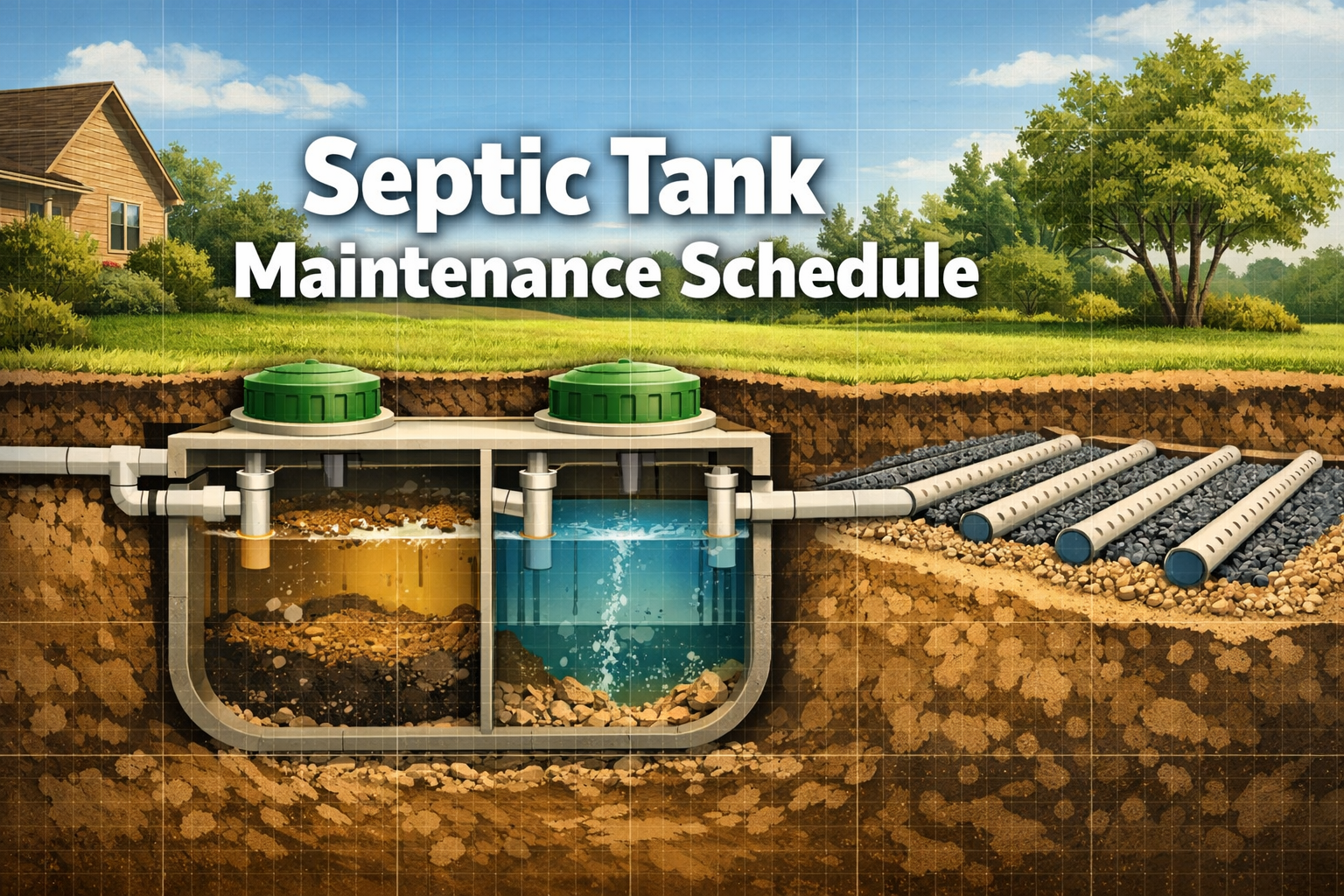
Imagine waking up to sewage backing up into your home because you forgot one simple maintenance task. A proper septic tank maintenance schedule prevents this nightmare and saves you thousands in emergency repairs. Following a structured timeline for inspections, pumping, and routine care keeps your system running smoothly and protects your property investment.
Key Takeaways
- Pump every 3-5 years for most households, with family size and tank capacity determining exact timing
- Professional inspections every 3 years catch problems before they become expensive emergencies
- Monthly visual checks of your drain field and tank area prevent small issues from escalating
- Seasonal maintenance tasks like redirecting water flow and checking for damage extend system life
- Keep detailed records of all services to track patterns and plan future maintenance
- Water conservation and proper waste disposal reduce strain and extend pumping intervals
- Warning signs like slow drains or odors require immediate professional attention
- Alternative systems with pumps need annual inspections instead of the standard 3-year cycle
Quick Answer
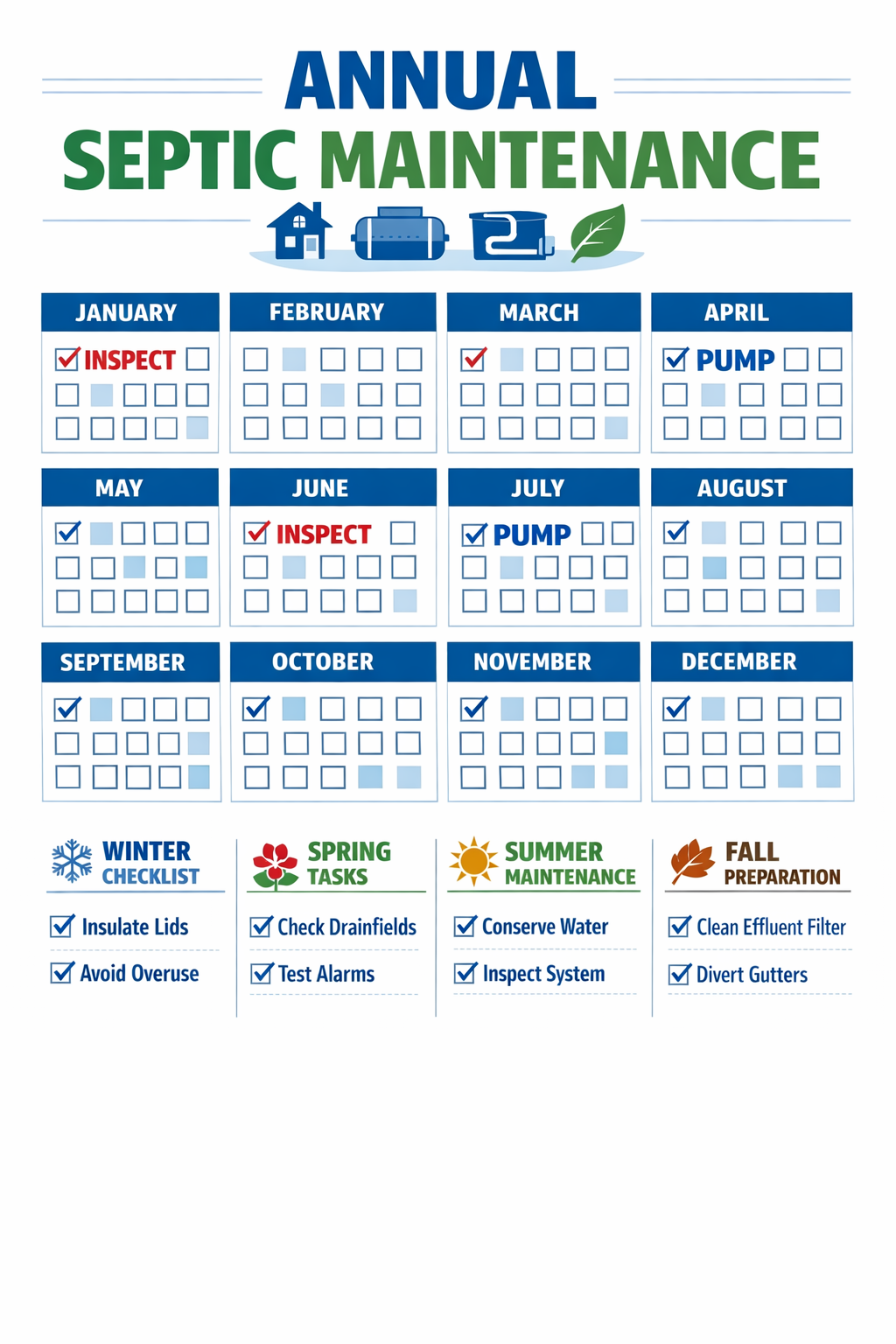
Your septic tank maintenance schedule should include professional pumping every 3-5 years, inspections every 3 years, and monthly visual checks of your system. The exact pumping frequency depends on your household size and tank capacity—a family of four typically needs pumping every 2-3 years. Regular maintenance prevents costly failures and extends your system’s 20-30 year lifespan.
How Often Should You Pump Your Septic Tank?
Most septic tanks require pumping every 3 to 5 years, according to the U.S. EPA. However, your specific schedule depends on household size, tank capacity, and water usage patterns.
A family of four with a 1,000-gallon tank typically needs pumping every 2 to 3 years. Here’s how household size affects pumping frequency:
1,000-Gallon Tank:
- 1 person: Every 12 years
- 2 people: Every 6 years
- 4 people: Every 2 years
- 6 people: Every 1 year
1,500-Gallon Tank:
- 1 person: Every 19 years
- 2 people: Every 9 years
- 4 people: Every 4 years
- 6 people: Every 2 years
Choose more frequent pumping if you:
- Use a garbage disposal regularly
- Do large amounts of laundry
- Have frequent guests
- Use medications that kill beneficial bacteria
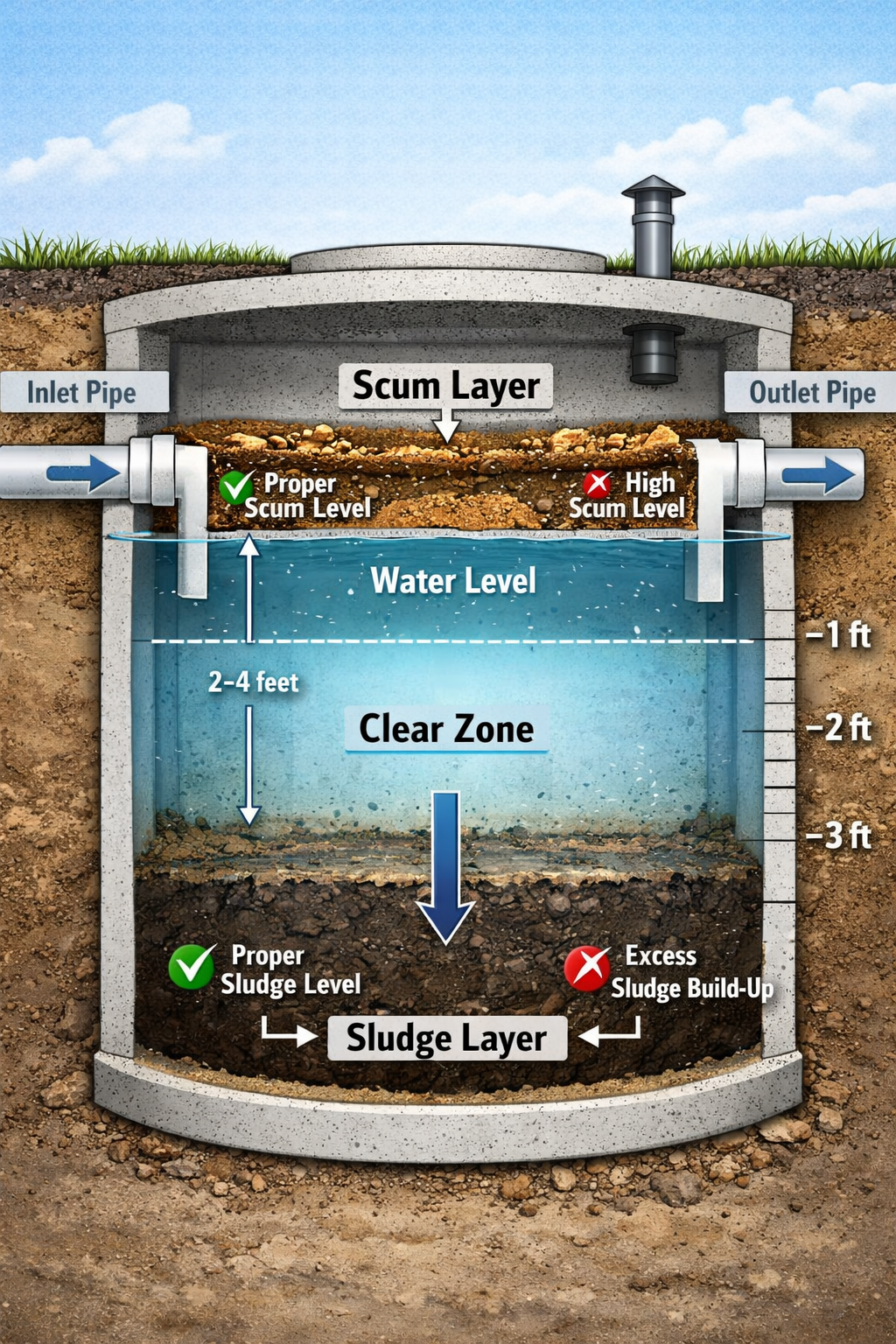
The key trigger point is when solids fill one-third to one-half of your tank. A professional inspection determines the exact timing better than following rigid schedules.
What’s the Ideal Septic System Inspection Schedule?
Professional inspections should occur every 3 years for standard septic systems. This frequency catches developing problems before they cause system failure or expensive drain field replacement.
Systems with mechanical components like pumps or electrical switches need annual inspections. These complex systems have more failure points and require closer monitoring.
During inspections, professionals check:
- Sludge and scum layer thickness
- Tank structural integrity
- Inlet and outlet baffles
- Distribution box condition
- Drain field absorption rates
Annual inspections typically cost $150 to $450 but prevent drain field replacements exceeding $10,000. The math clearly favors preventive care over reactive repairs.
Schedule inspections more frequently if:
- Your system is over 15 years old
- You’ve had previous problems
- Your soil has poor drainage
- Heavy rains frequently saturate your area
Keep inspection records to track your system’s condition trends and plan maintenance timing.
How Do You Create a Monthly Septic Tank Maintenance Schedule?
Monthly maintenance involves visual inspections and simple preventive measures that take less than 30 minutes total.
Monthly Visual Inspection Checklist:
- Walk your drain field looking for soggy spots or standing water
- Check for unusually green or lush grass over the system
- Note any sewage odors around the tank or drain field
- Inspect visible tank components for damage
- Verify no vehicles have driven over the system
Monthly Household Habits:
- Spread laundry loads throughout the week instead of doing all washing in one day
- Check that only septic-safe products go down drains
- Ensure garbage disposal use remains minimal
- Review water usage and look for conservation opportunities
Water conservation directly impacts your maintenance schedule. Reducing daily water usage by 20-30% can extend pumping intervals by 6-12 months. Install low-flow fixtures and fix leaks promptly.
FYI: Some links may be affiliate links, which means I may earn a small commission at no extra cost to you.
For homeowners wanting to support their septic system between professional services, Septifix tablets offer a simple monthly maintenance option. These tablets help break down waste and reduce odors with one easy flush per month, potentially extending the time between pumpings while keeping your system running smoothly.
What Seasonal Maintenance Tasks Should You Include?
Each season brings specific septic system challenges that require targeted maintenance approaches.
Spring Tasks:
- Inspect for winter damage to tank lids and risers
- Check that snow melt doesn’t pool over the drain field
- Schedule professional inspection if due
- Redirect downspouts and gutters away from the system
- Test household drains for winter-related clogs
Summer Tasks:
- Monitor increased water usage from guests and activities
- Keep vehicles and heavy equipment off the drain field
- Maintain proper grass length over the system (not too short)
- Check sprinkler systems don’t oversaturate the drain field
- Plan pumping services during dry weather for easier access
Fall Tasks:
- Remove fallen leaves from tank access areas
- Ensure proper drainage before winter freeze
- Schedule pumping if due (easier access before snow)
- Insulate exposed pipes in cold climates
- Document the year’s maintenance activities
Winter Tasks:
- Avoid driving on frozen drain fields
- Keep tank access areas clear of snow for emergencies
- Monitor for ice dams affecting system drainage
- Reduce water usage during extreme cold snaps
- Watch for signs of system freezing
Seasonal maintenance prevents weather-related damage and ensures your system handles varying conditions throughout the year. For detailed seasonal care, check our winter septic tank maintenance guide and summer care tips.
How Do You Track and Document Septic Maintenance?
Proper documentation helps you identify patterns, plan future services, and maintain warranty coverage. Keep both digital and physical records in case of emergencies.
Essential Records to Maintain:
- Pumping dates and service provider details
- Inspection reports with recommendations
- Repair work and parts replacement
- System installation date and permits
- Tank size and system type specifications
- Household size changes affecting usage
Create a simple tracking system:
- Use a calendar app with recurring reminders for inspections
- Take photos of tank access areas and drain field conditions
- Note any unusual odors, slow drains, or other warning signs
- Record seasonal weather impacts on system performance
- Track water usage changes and conservation efforts
Monthly documentation takes just 5 minutes but provides valuable data for troubleshooting problems. Many homeowners discover usage patterns that help optimize their maintenance schedule.
Digital records sync across devices and won’t be lost in emergencies. However, keep paper backups of critical information like tank location and emergency service contacts.
Professional service providers often maintain their own records, but having your own documentation ensures continuity if you switch companies or sell your property.
What Are the Warning Signs That Require Immediate Attention?
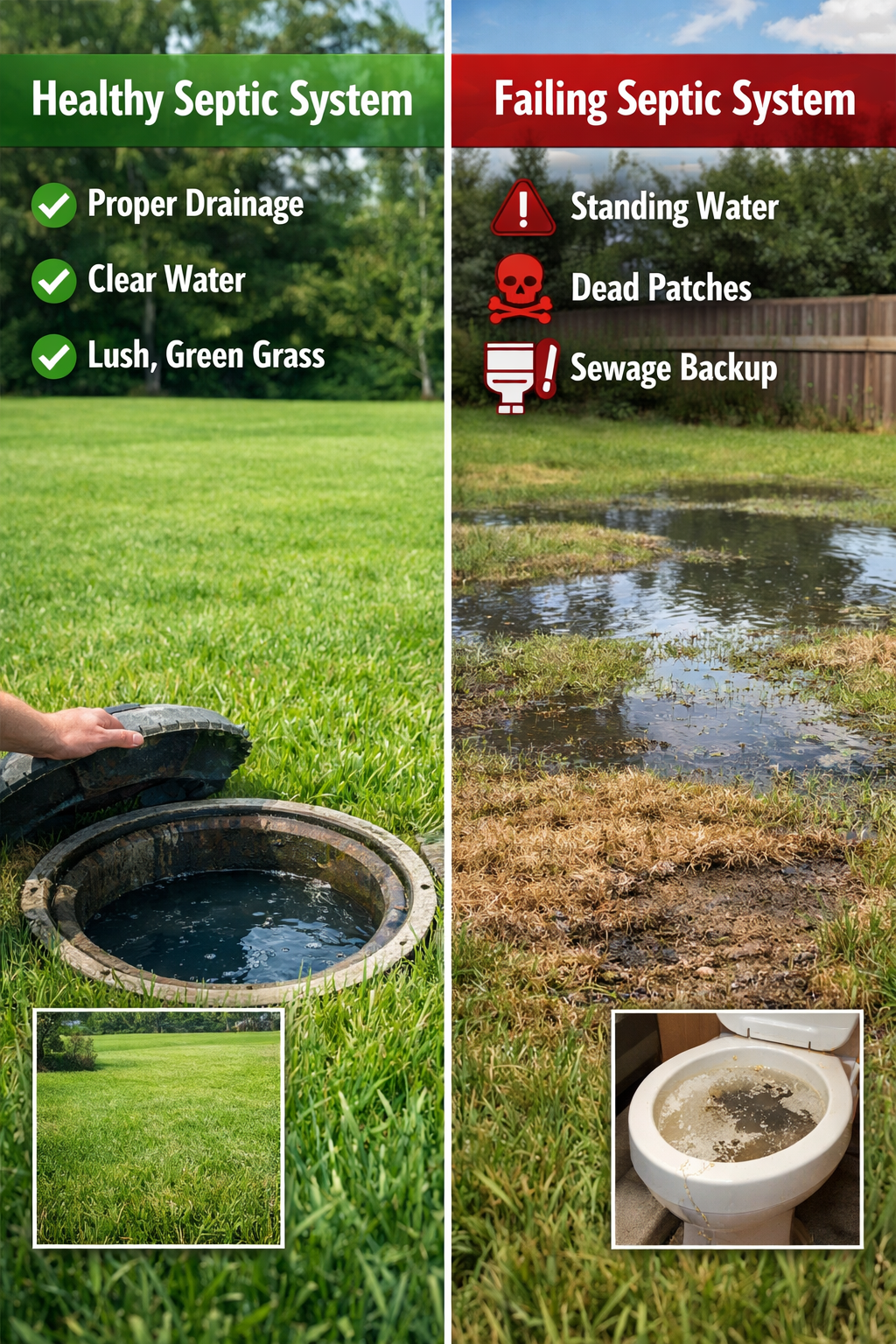
Certain symptoms indicate your septic system needs immediate professional attention, regardless of your maintenance schedule.
Immediate Action Required:
- Sewage backing up into the house
- Strong sewage odors inside or outside
- Gurgling sounds from drains or toilets
- Standing water or wet spots over the drain field
- Unusually green grass in a specific area over the system
Schedule Service Within a Week:
- Slow-draining sinks, tubs, or toilets
- Toilet paper or other debris surfacing in the yard
- High nitrate levels in nearby well water
- Algae growth in nearby water sources
These warning signs often indicate your tank is full or your drain field is failing. Ignoring them leads to more expensive repairs and potential health hazards.
Don’t attempt DIY fixes for septic system problems. Improper repairs can damage the system further and violate local health codes. Professional diagnosis ensures you address the root cause rather than just symptoms.
For guidance on recognizing problems early, see our comprehensive guide on signs your septic tank needs maintenance.
How Does Household Size Affect Your Maintenance Schedule?
Household size directly impacts how quickly your septic tank fills with solids, determining your pumping frequency and maintenance intensity.
Single Person Household:
- Pump every 8-12 years for 1,000-gallon tanks
- Inspect every 3-5 years
- Minimal daily maintenance required
- Focus on preventing chemical damage from cleaning products
Family of 2-3:
- Pump every 4-6 years
- Standard 3-year inspection schedule
- Monitor laundry and dishwasher usage
- Implement basic water conservation
Family of 4-5:
- Pump every 2-3 years
- Consider annual inspections for proactive care
- Spread water usage throughout the day
- Educate family members on septic-safe practices
Large Families (6+ people):
- Pump annually or every 2 years
- Annual professional inspections recommended
- Implement strict water conservation measures
- Consider upgrading to a larger tank system
Temporary household changes also affect maintenance timing. Extended visits from relatives, home-based businesses, or seasonal rentals increase system load and may require schedule adjustments.
Track household changes in your maintenance log to correlate usage patterns with system performance. This data helps you predict optimal service timing and budget for maintenance costs.
What Should You Never Put Down Your Septic System?
Proper waste disposal dramatically extends your maintenance intervals and prevents costly system damage. Certain items can kill beneficial bacteria or clog your system.
Never Flush or Drain:
- Cat litter, coffee grounds, or food scraps
- Diapers, tampons, or personal hygiene products
- Cigarette butts, dental floss, or hair clumps
- Paints, thinners, or household chemicals
- Prescription medications or antibiotics
- Excessive grease, oils, or fats
Household Chemical Limits:
- Use biodegradable cleaning products when possible
- Limit bleach and antibacterial soap usage
- Avoid drain cleaners and toilet bowl cleaners
- Choose septic-safe laundry detergents
- Minimize garbage disposal use
The “flushable” label doesn’t mean septic-safe. Many wipes and personal care products marketed as flushable can clog your system or interfere with bacterial processes.
Educate all household members and guests about septic-safe practices. Post a simple reminder list near toilets and sinks to prevent accidental system damage.
For comprehensive guidance on protecting your system, review our complete guide on what not to put in septic tanks.
FAQ
How much does septic tank maintenance cost annually?
Annual maintenance costs typically range from $200-600, including inspections ($150-450) and routine care supplies. Pumping every 3-5 years adds $300-500 per service, averaging $75-150 annually when spread over time.
Can I inspect my septic tank myself?
You can perform basic visual inspections of drain field areas and tank access points, but professional inspections requiring tank opening and sludge measurement should only be done by licensed technicians for safety and accuracy.
What happens if I skip regular maintenance?
Skipping maintenance leads to system failure, sewage backups, drain field replacement ($10,000+), environmental contamination, and potential health code violations. Regular care costs far less than emergency repairs.
How do I find my septic tank for maintenance?
Check your home’s as-built drawings, look for tank access risers in your yard, or follow the main sewer line from your house. Professional services can also locate tanks using specialized equipment. Our guide to locating septic tanks provides detailed steps.
Should I add bacteria or enzymes to my septic tank?
Most septic systems generate sufficient bacteria naturally from household waste. Additives may help after antibiotic use or heavy chemical exposure, but they’re not necessary for normal operation and won’t replace proper maintenance.
How long do septic systems last with proper maintenance?
Well-maintained septic systems typically last 20-30 years. Concrete tanks can last 40+ years, while plastic and fiberglass tanks average 15-20 years. Regular maintenance significantly extends system lifespan.
What’s the best time of year to pump my septic tank?
Late spring through early fall provides optimal pumping conditions with dry weather and easier equipment access. Avoid pumping during wet seasons when soil saturation can affect the process.
Can heavy rain affect my maintenance schedule?
Heavy rain can saturate drain fields and temporarily affect system performance. Reduce water usage during wet periods and schedule maintenance during dry weather when possible for better access and system evaluation.
How do I prepare for a septic inspection?
Locate and uncover tank access ports, provide maintenance records, note any recent problems, and ensure clear equipment access. Avoid using the system heavily for 24 hours before inspection for more accurate readings.
What maintenance tasks can I do myself vs. hiring professionals?
DIY tasks include visual inspections, water conservation, proper waste disposal, and keeping records. Professional tasks include pumping, detailed inspections, repairs, and any work requiring tank entry or specialized equipment.
How does garbage disposal use affect maintenance schedules?
Regular garbage disposal use can reduce pumping intervals by 25-50% due to increased solid waste. Limit use to small amounts of soft food scraps and consider more frequent inspections if you use disposal daily.
What should I do if my septic system freezes in winter?
Reduce water usage, insulate exposed pipes, and contact professionals immediately. Never use antifreeze or chemicals. Prevent freezing by maintaining consistent water flow and insulating system components in cold climates.
Helpful Resource for Simple Septic Care
Maintaining a septic tank doesn’t have to be complicated. While professional services handle the major maintenance tasks, Septifix tablets provide an easy way to support your system between visits. With just one tablet flushed monthly, you can help break down waste, reduce odors, and potentially extend the time between pumpings. It’s not a replacement for proper maintenance, but it’s a simple addition to your routine that many homeowners find helpful for keeping their systems running smoothly.
Conclusion
A well-planned septic tank maintenance schedule protects your investment and prevents costly emergencies. Start with professional pumping every 3-5 years and inspections every 3 years, then adjust based on your household size and system performance. Monthly visual checks and seasonal maintenance tasks catch problems early, while proper waste disposal and water conservation extend your system’s life.
Take action today:
- Schedule your next professional inspection if it’s been over 3 years
- Create a maintenance calendar with monthly reminders
- Start documenting your system’s performance and service history
- Implement water conservation measures to reduce system strain
- Review our complete septic tank maintenance checklist for detailed guidance
Remember that consistent maintenance costs far less than emergency repairs. A $400 annual investment in proper care prevents the $10,000+ expense of drain field replacement and protects your family’s health and comfort.
References
[1] How Care Your Septic System – https://www.epa.gov/septic/how-care-your-septic-system
[2] How Often To Pump Septic Tank For A Family Of 4 Essential Maintenance Guidelines – https://www.splashplumbing.com/how-often-to-pump-septic-tank-for-a-family-of-4-essential-maintenance-guidelines/
[3] Septic Tanks Preventative Routine Maintenance – https://des.sc.gov/permits-regulations/septic-tanks/homeowner-resources/septic-tanks-preventative-routine-maintenance
[4] Septic System Maintenance – https://www.nearbyhunt.com/articles/septic-system-maintenance