Last updated: February 24, 2026
Key Takeaways
• Septic tank flow moves wastewater through three main zones: scum layer, clear zone, and sludge layer for natural treatment
• Proper flow rate depends on tank size and household usage—typically 1,000-1,500 gallons per day for average families
• Flow problems often stem from excessive water use, blocked pipes, or full tanks requiring immediate attention
• Regular maintenance including pumping every 3-5 years keeps flow patterns healthy and prevents costly backups
• Modern monitoring systems can track flow rates in real-time, alerting you to problems before they become emergencies
• Water conservation with low-flow fixtures helps maintain optimal flow rates and extends system life
• Warning signs like slow drains, gurgling sounds, and sewage odors indicate flow disruption requiring professional help
Quick Answer
Septic tank flow explained involves wastewater moving from your home into a tank where solids settle, liquids clarify in the middle zone, and treated effluent flows to the drain field for final soil filtration. This natural process requires proper flow rates, regular maintenance, and careful water usage to function effectively and protect your property from sewage backups.
How Does Septic Tank Flow Work?
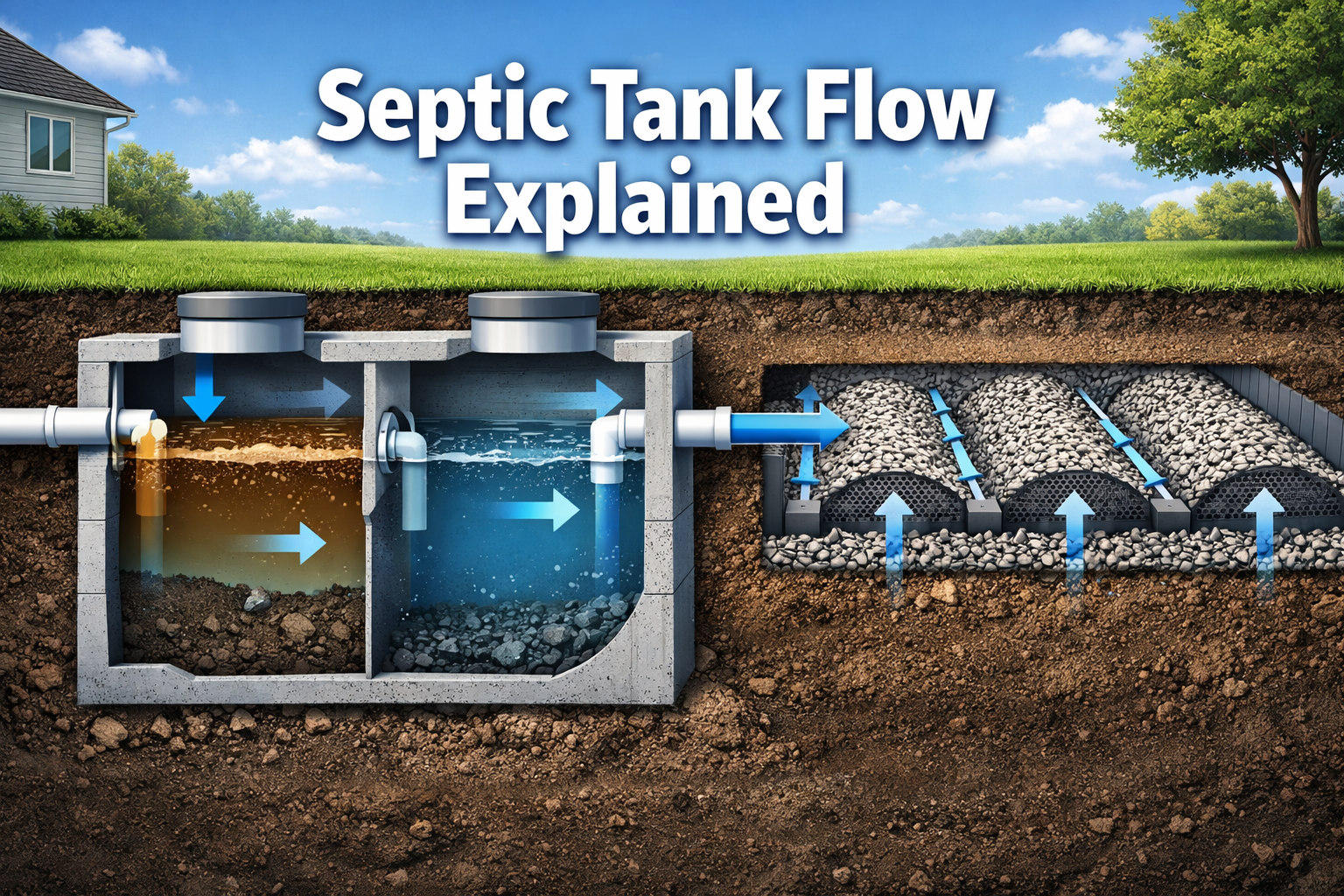
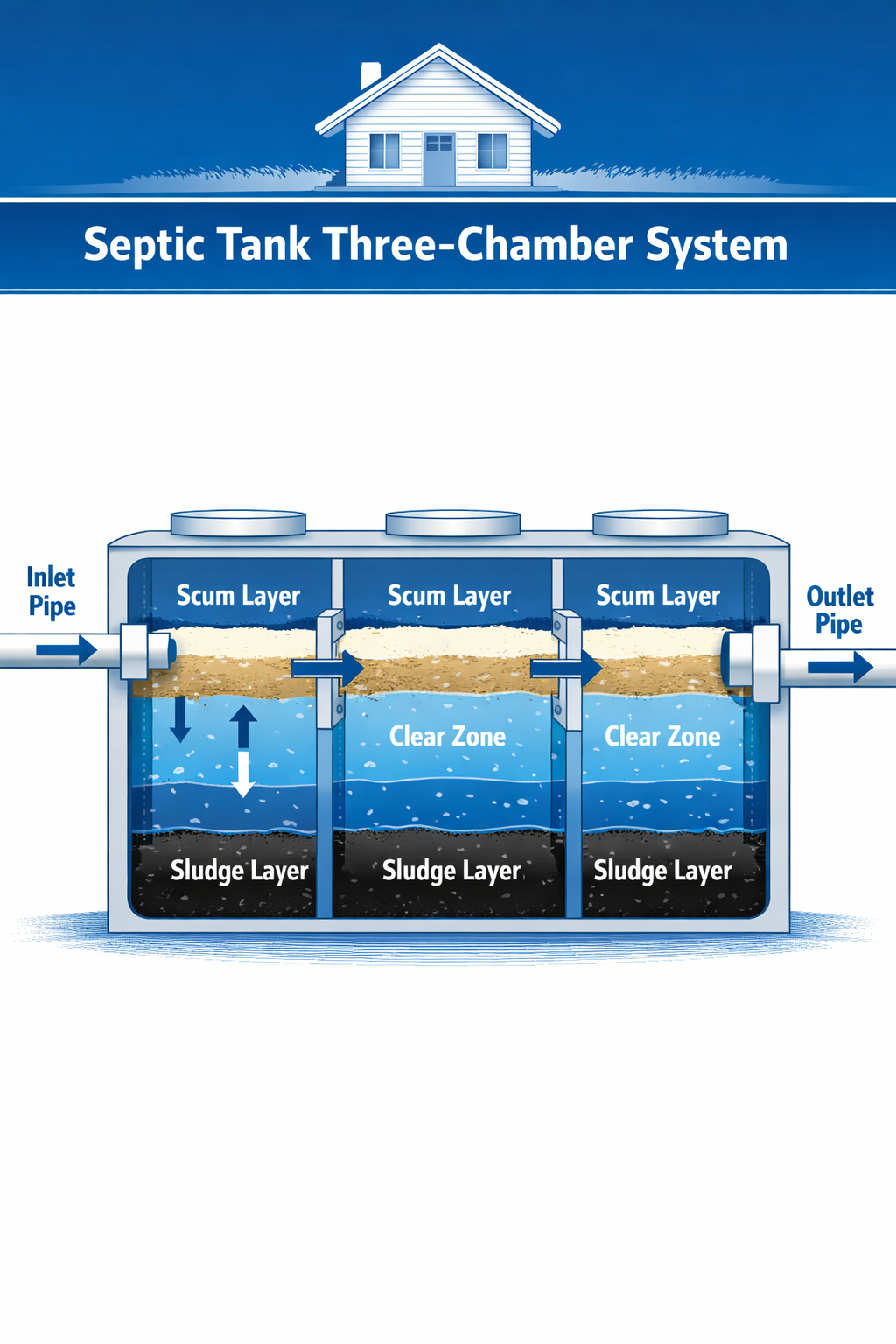
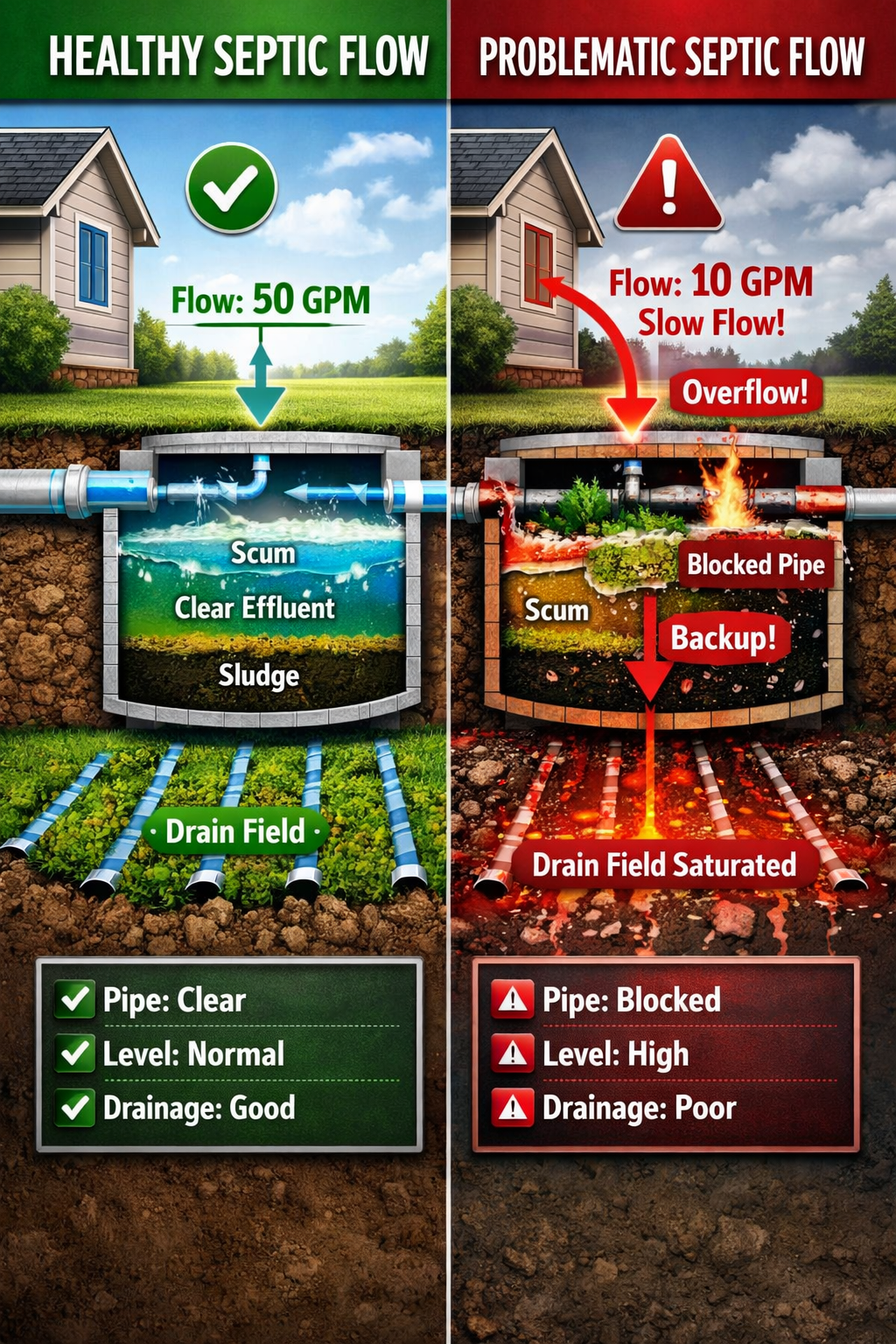
Septic tank flow operates through a carefully designed three-stage process that treats household wastewater naturally. When you flush a toilet or drain water, it travels through your home’s plumbing into the septic tank’s inlet pipe.
Inside the tank, gravity and time work together to separate waste into distinct layers:
• Scum layer (top): Oils, grease, and floating debris form a crust on the surface
• Clear zone (middle): Partially clarified liquid where most treatment occurs
• Sludge layer (bottom): Heavy solids settle and decompose through bacterial action
The magic happens in the clear zone, where beneficial bacteria break down organic matter. As new wastewater enters, it pushes treated effluent through the outlet pipe toward your drain field system.
Flow timing matters: Water should spend 24-48 hours in the tank for proper treatment. Too fast, and solids escape to clog your drain field. Too slow, and you risk backups into your home.
Modern compartmentalized tank designs improve this process by creating multiple treatment zones, reducing solid buildup that could obstruct normal flow patterns.
What Controls Septic Tank Flow Rate?
Flow rate in your septic system depends on several key factors that homeowners can monitor and control. Tank size and household water usage are the primary determinants of how quickly wastewater moves through your system.
Tank capacity guidelines:
• 1,000 gallons: 1-2 bedrooms (up to 4 people)
• 1,250 gallons: 3 bedrooms (up to 6 people)
• 1,500+ gallons: 4+ bedrooms (6+ people)
Daily flow calculations help you understand your system’s limits. Most people use 50-100 gallons per day, so a family of four typically generates 200-400 gallons daily.
Water usage patterns that affect flow include:
• Laundry loads (25-40 gallons each)
• Showers (15-25 gallons per 10 minutes)
• Dishwasher cycles (6-16 gallons)
• Toilet flushes (1.6-7 gallons depending on age)
Choose water-efficient fixtures if your system struggles with current flow rates. Modern homes benefit from low-flow toilets, water-saving fixtures, and high-efficiency washers that prevent overwhelming the tank and drain field.
Common mistake: Doing multiple loads of laundry in one day can flood your system with more water than it can process effectively.
Where Does Septic Tank Flow Go After Treatment?
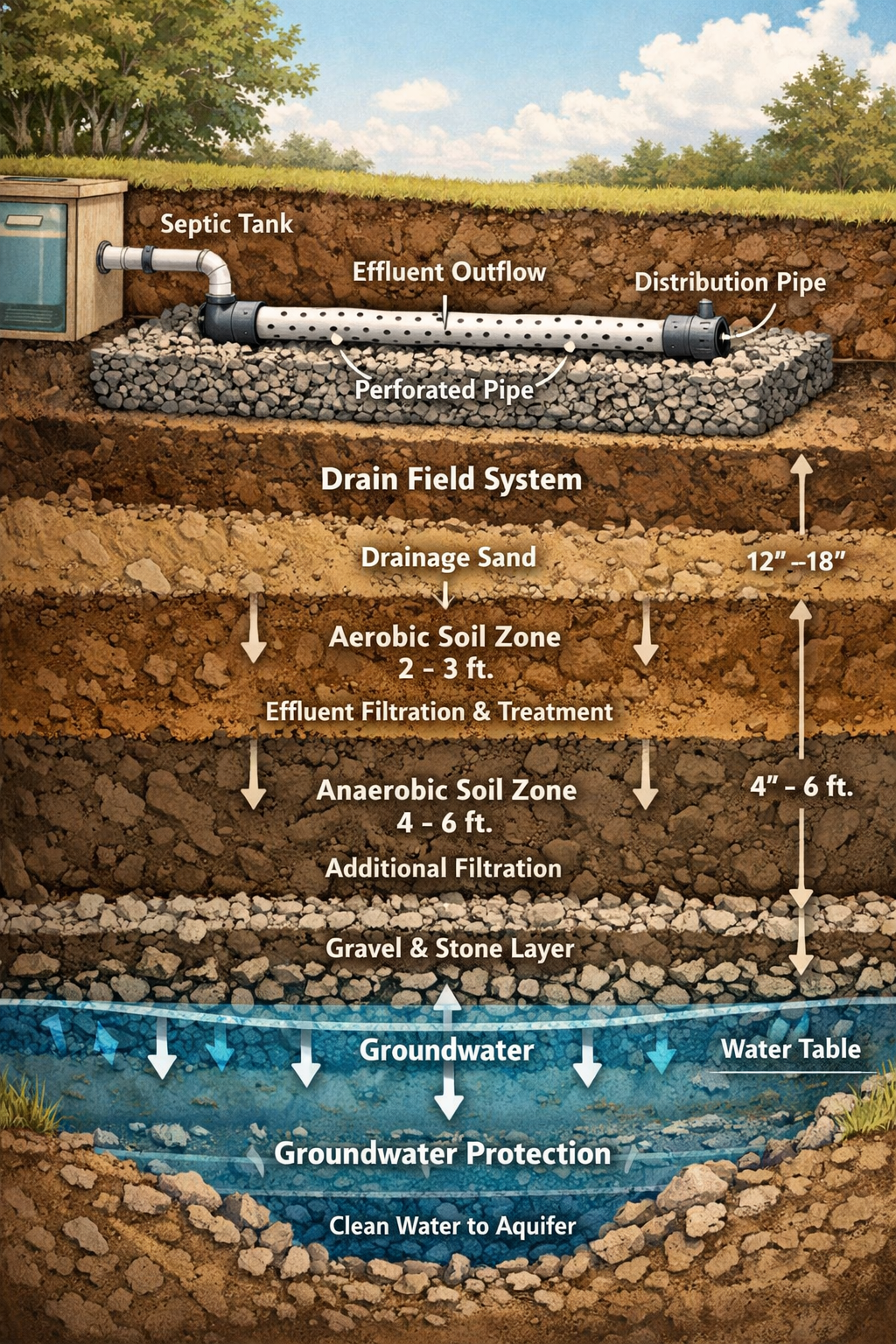
After treatment in your septic tank, effluent flows to the drain field (also called leach field) where final purification occurs through soil filtration. The outlet pipe carries partially treated wastewater from the tank’s clear zone to a distribution box that spreads flow evenly across multiple drain field lines.
Drain field components work together for final treatment:
• Distribution box: Divides flow equally among drain lines
• Perforated pipes: Release effluent slowly into gravel beds
• Gravel layer: Provides initial filtration and prevents soil compaction
• Soil layers: Remove remaining bacteria, nutrients, and contaminants
Drip distribution systems in modern installations improve this process by slowly and evenly dispersing effluent over large areas, preventing soil saturation that can cause system failure.
The soil acts as a natural filter, removing harmful bacteria and excess nutrients before water reaches groundwater sources. Proper soil conditions are critical—clay soils drain too slowly while sandy soils may not filter adequately.
Edge case: If your drain field becomes saturated or damaged, you might notice soggy areas, sewage odors, or lush grass growth above the drain lines, indicating septic system problems requiring immediate attention.
When Does Septic Tank Flow Become Problematic?
Septic tank flow problems develop when the natural treatment process gets disrupted by excessive water use, blockages, or system overload. Warning signs appear gradually before becoming serious issues that require emergency repairs.
Early flow problem indicators:
• Slow draining sinks, tubs, and toilets
• Gurgling sounds from drains or toilets
• Sewage odors inside or outside your home
• Water backing up in lowest-level drains
• Unusually lush grass over the drain field
Critical flow disruption causes:
• Excessive water use: Multiple loads of laundry, long showers, or running water continuously
• Tank capacity exceeded: More people using the system than it’s designed for
• Solid buildup: Skipping regular pumping allows sludge to block outlet pipes
• Grease accumulation: Cooking oils create thick scum layers that impede flow
Choose immediate action if you notice sewage backing up into your home or standing water around your septic tank area. These indicate septic tank overflow that can damage your property and create health hazards.
FYI: Some links may be affiliate links, which means I may earn a small commission at no extra cost to you.
For homeowners dealing with flow issues, maintaining proper bacterial balance is essential. Septifix tablets can help break down waste buildup and restore healthy flow patterns by introducing beneficial bacteria that process organic matter more efficiently, potentially preventing minor flow problems from becoming major repairs.
Performance-based management approaches now evaluate septic systems on treatment consistency over time, rather than waiting for obvious failure signs.
Why Is Understanding Septic Tank Flow Important?
Understanding how septic tank flow works helps homeowners prevent expensive repairs and protect their property investment. Knowledge of flow patterns allows you to recognize problems early and take corrective action before system failure occurs.
Financial protection benefits:
• Avoid emergency repair costs ($3,000-$10,000+)
• Extend system lifespan through proper maintenance
• Prevent property damage from sewage backups
• Maintain home value with functioning septic system
Health and safety advantages:
• Prevent exposure to harmful bacteria and pathogens
• Protect groundwater from contamination
• Avoid sewage odors and unsanitary conditions
• Ensure proper waste treatment for family safety
Environmental responsibility includes protecting local water sources and preventing soil contamination that affects neighbors and wildlife.
Smart monitoring systems now track tank levels and flow rates in real-time using IoT sensors, allowing early detection of abnormal flow patterns before they cause system failure. These technologies help homeowners stay ahead of problems.
Choose professional inspection if you’re unsure about your system’s current condition. Understanding signs of septic tank problems helps you communicate effectively with service providers.
Quick example: A homeowner who understands normal flow patterns might notice their toilet taking longer to refill after flushing—an early sign of developing blockage that’s much cheaper to fix than waiting for complete backup.
How to Maintain Proper Septic Tank Flow
Maintaining healthy septic tank flow requires consistent habits and regular professional maintenance. Daily water management and periodic system care prevent most flow problems before they start.
Essential daily practices:
• Spread laundry loads throughout the week instead of doing multiple loads in one day
• Fix leaky faucets and running toilets immediately
• Use water-efficient appliances and fixtures
• Avoid excessive water use during peak times
Monthly maintenance tasks:
• Check for slow drains or unusual odors
• Inspect visible pipes for leaks or damage
• Monitor water usage patterns
• Test toilet flush efficiency
Annual professional services:
• System inspection and flow rate assessment
• Bacterial level testing and treatment if needed
• Inlet and outlet pipe cleaning
• Tank level measurement
Pumping schedule depends on usage but typically occurs every 3-5 years for most households. Regular pumping removes accumulated sludge that can block proper flow.
Leak-detection devices alert homeowners to running toilets or pipe leaks that could disrupt normal system flow patterns.
Avoid these flow disruptors:
• Flushing non-biodegradable items
• Pouring grease or cooking oil down drains
• Using excessive household chemicals
• Parking vehicles over the drain field
Septic Tank Flow Problems and Solutions
When septic tank flow problems occur, quick identification and appropriate solutions prevent minor issues from becoming major system failures. Most flow problems have specific causes that homeowners can address with proper guidance.
Common Flow Problems and Fixes
| Problem | Cause | Solution | Timeline |
|---|---|---|---|
| Slow drains | Partial blockage | Professional cleaning | 1-2 days |
| Gurgling sounds | Air trapped in pipes | Pump tank, clear vents | 1 day |
| Sewage backup | Full tank or blocked outlet | Emergency pumping | Same day |
| Soggy drain field | System overload | Reduce water use, repair | 1-2 weeks |
Immediate emergency steps:
- Stop all water use in your home
- Contact septic service provider immediately
- Avoid using toilets, sinks, or appliances
- Check for signs of septic tank backup
Professional diagnosis determines whether problems stem from the tank, distribution system, or drain field. Each requires different repair approaches and costs.
Preventive solutions address root causes rather than just symptoms. For example, if your system consistently struggles with flow, consider upgrading to water-efficient fixtures or installing a larger tank.
Choose bacterial treatment if your system shows signs of poor waste breakdown. Natural bacterial action is essential for proper flow, and treatments can restore healthy microbial balance when systems become stressed.
Helpful Resource for Maintaining Septic Flow
For homeowners looking for a simple way to support healthy septic tank flow, Septifix tablets offer an easy maintenance solution. These tablets work by introducing beneficial bacteria that help break down waste more efficiently, potentially reducing buildup that can disrupt normal flow patterns.
Benefits for flow maintenance:
• Breaks down organic waste that could block pipes
• Reduces odors that indicate flow problems
• Helps maintain proper bacterial balance
• Easy monthly application requires no special tools
This can be helpful if you want to be proactive about septic maintenance between professional services. While not a replacement for regular pumping and inspection, bacterial treatments can support the natural processes that keep your system flowing properly.
Many homeowners find that consistent use of quality septic treatments helps them avoid minor flow issues that could develop into more serious problems requiring expensive repairs.
Frequently Asked Questions
How fast should water flow through my septic tank?
Water should spend 24-48 hours in your septic tank for proper treatment. Faster flow doesn’t allow adequate settling time, while slower flow can indicate blockages or capacity issues.
What happens if my septic tank flow is too fast?
Fast flow carries solids into your drain field, potentially clogging pipes and causing system failure. This usually results from excessive water use or undersized tanks.
Can I increase my septic tank flow rate?
You shouldn’t try to increase flow rate beyond system capacity. Instead, manage water usage and ensure proper maintenance to maintain optimal flow patterns.
How do I know if my septic tank flow is blocked?
Signs include slow drains, gurgling sounds, sewage odors, and water backing up in your home. Professional inspection can confirm blockages.
What causes septic tank flow to reverse?
Flow reversal typically occurs when the tank is full, the drain field is saturated, or there’s a major blockage preventing normal effluent discharge.
How often should I check my septic tank flow?
Monitor daily water usage and watch for slow drains. Professional flow assessment should occur during annual inspections or whenever you notice problems.
Can weather affect septic tank flow?
Heavy rain can saturate drain fields and slow effluent absorption. Freezing temperatures may affect flow in shallow pipes. Both conditions can temporarily impact system performance.
What’s the difference between septic tank flow and drain field flow?
Tank flow involves waste separation and initial treatment. Drain field flow handles final filtration through soil. Problems in either area affect overall system function.
How much does it cost to fix septic tank flow problems?
Minor flow issues like pumping cost $200-$500. Major repairs involving tank replacement or drain field restoration can cost $3,000-$10,000 or more.
Should I use additives to improve septic tank flow?
Quality bacterial treatments can help maintain healthy flow, but avoid harsh chemicals that kill beneficial bacteria. Proper septic treatment supports natural processes.
Can I install flow monitoring equipment?
Yes, modern smart monitoring systems track flow rates and tank levels in real-time, alerting you to problems before they cause system failure.
What happens to septic tank flow during power outages?
Gravity-fed systems continue working during outages. Systems with pumps may experience flow disruption until power returns, potentially causing temporary backups.
Conclusion
Understanding septic tank flow is essential for every homeowner with an onsite wastewater system. The natural three-stage process of separation, treatment, and discharge works effectively when properly maintained and not overloaded. By monitoring your water usage, recognizing early warning signs, and maintaining regular service schedules, you can prevent most flow problems before they become expensive emergencies.
Take these immediate steps to protect your septic system:
• Calculate your daily water usage and ensure it doesn’t exceed your tank’s capacity
• Schedule annual inspections to catch flow problems early
• Fix any leaky fixtures that could disrupt normal flow patterns
• Learn to recognize warning signs like slow drains and unusual odors
Remember that modern technology offers new tools for monitoring and maintaining septic tank flow, from smart sensors to improved bacterial treatments. These innovations can help you stay ahead of problems and extend your system’s lifespan.
For ongoing maintenance support, consider incorporating quality bacterial treatments into your routine care plan. Combined with professional service and careful water management, you’ll keep your septic system flowing properly for years to come.
References
[1] Advanced Septic Design Guide – https://landperc.com/advanced-septic-design-guide/
[2] How Modern Septic Technology Is Changing The Game – https://www.septicblue.com/how-modern-septic-technology-is-changing-the-game
[3] Emerging Industry Technology Trends For 2026 – https://news.owpnc.com/emerging-industry-technology-trends-for-2026/
[5] Benefits Of Installing A Modern Septic System – https://www.joeyridglessepticservice.com/benefits-of-installing-a-modern-septic-system