
Last updated: March 3, 2026
Key Takeaways
• Clean your septic tank filter every 3-6 months to prevent costly backups and system failures
• Never use high-pressure washers or harsh chemicals when cleaning filters – they damage the mesh and kill beneficial bacteria
• Replace filters every 10-15 years or when you notice cracks, tears, or damaged gaskets
• Professional inspections every 3-5 years help catch problems before they become expensive repairs
• Proper filter maintenance protects your drain field – the most expensive component of your septic system
• Warning signs include slow drains, gurgling sounds, and sewage odors around your property
• Simple cleaning with a garden hose and inspection can save you thousands in repair costs
Quick Answer
Septic tank filter maintenance involves cleaning your filter every 3-6 months using a garden hose to remove accumulated solids and debris. Regular cleaning prevents clogs that can cause sewage backups and protect your drain field from damage. Most homeowners can handle basic filter cleaning themselves, but professional inspections every 3-5 years ensure your entire system stays healthy.
What Is a Septic Tank Filter and Why Does It Matter?
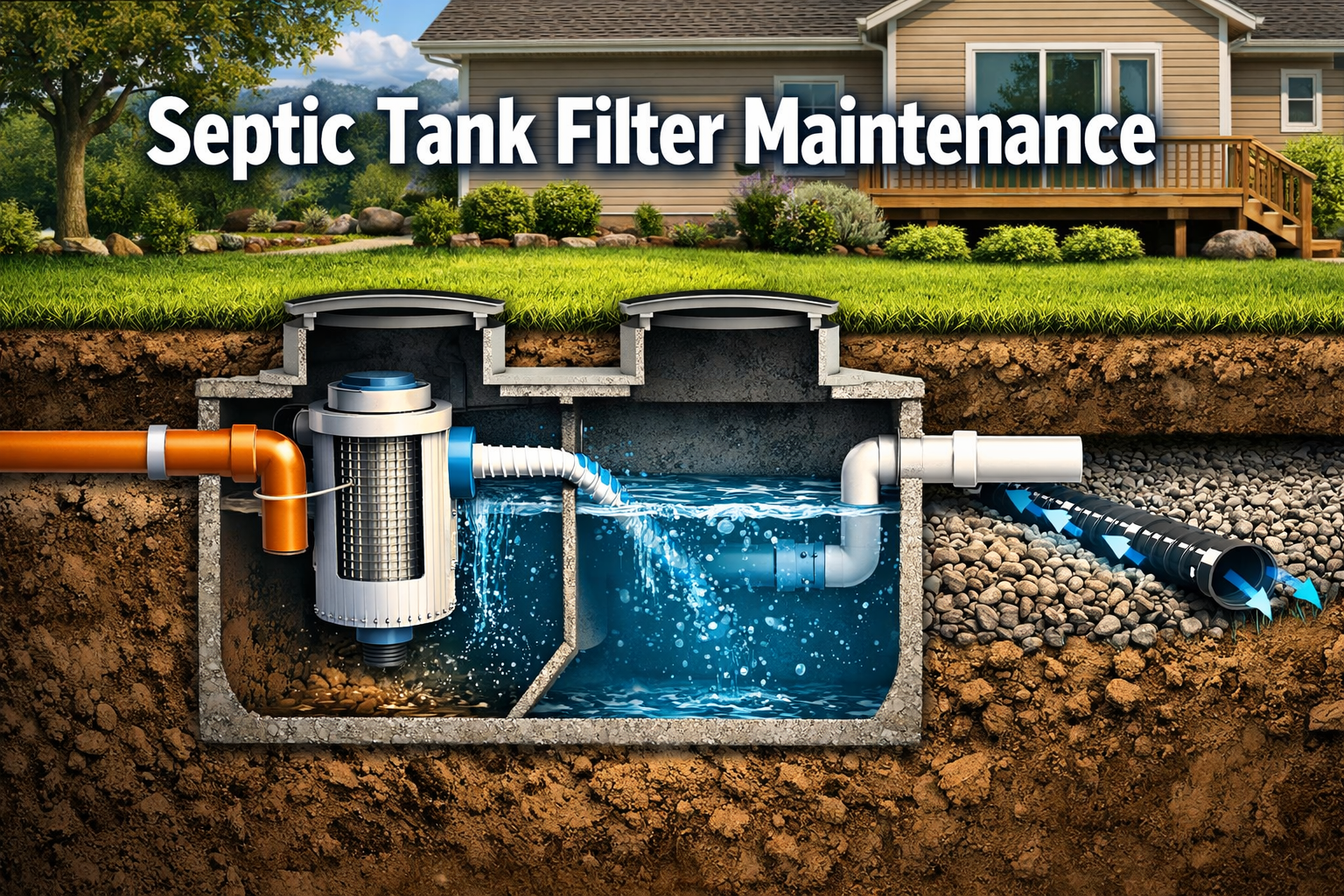
A septic tank filter acts as the final barrier between your tank and drain field, catching solids before they can clog your soil absorption system. This small component protects the most expensive part of your septic system – your drain field, which costs $10,000-$30,000 to replace if it fails.
The filter sits in your septic tank’s outlet pipe and captures particles that escaped the initial settling process. Without proper maintenance, these filters become clogged with grease, hair, food particles, and other debris. When this happens, wastewater can’t flow properly, leading to backups in your home or premature drain field failure.
Choose regular filter maintenance if you want to avoid emergency repairs and extend your system’s lifespan. Most septic systems installed after 1990 include effluent filters, though older systems may need retrofitting.
For ongoing septic system health, consider using Septifix tablets monthly to help break down waste naturally and reduce the load on your filter. These tablets work alongside proper maintenance to keep your entire system running efficiently.
FYI: Some links may be affiliate links, which means I may earn a small commission at no extra cost to you.
How Often Should You Clean Your Septic Tank Filter?
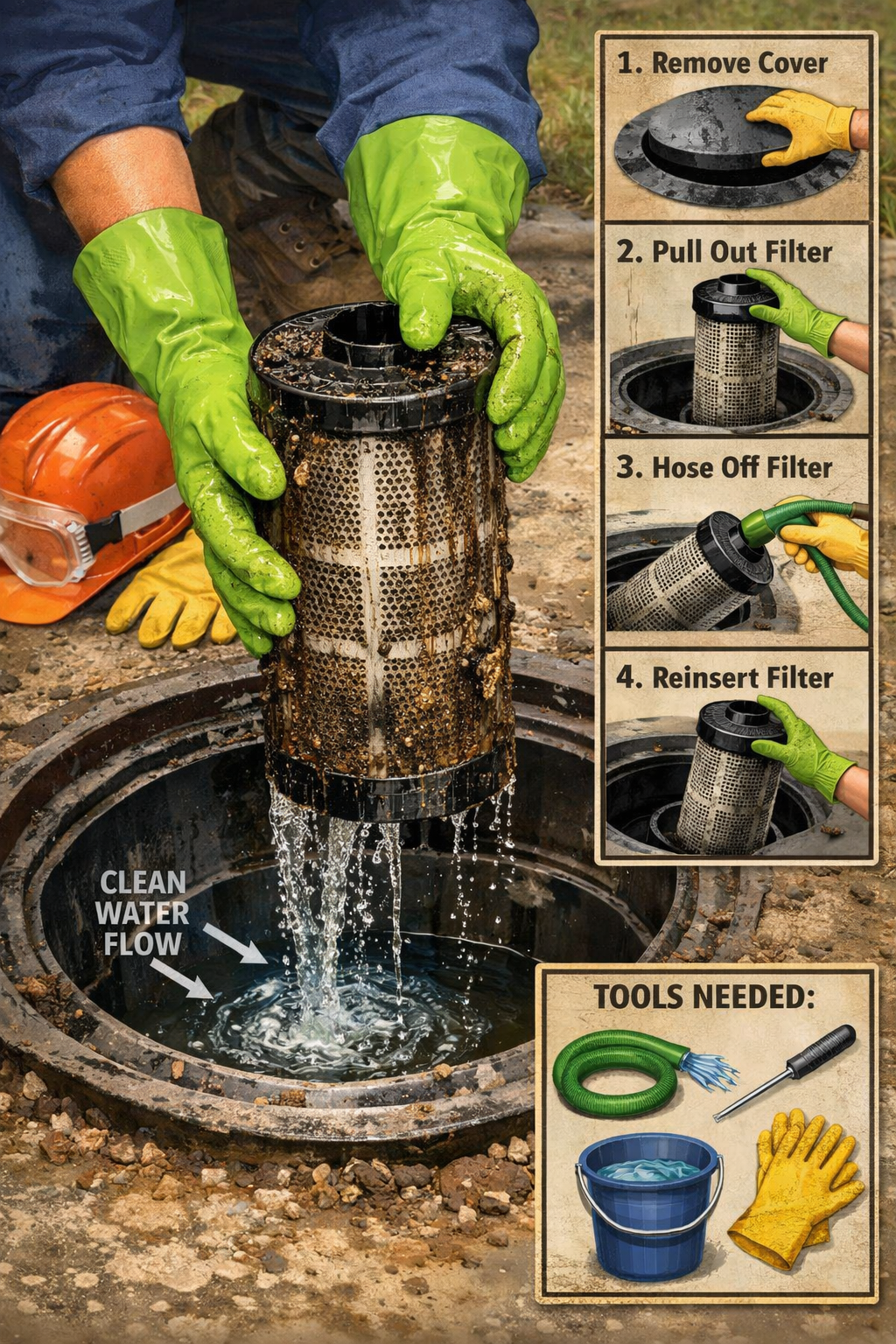
Clean your septic tank filter every 3-6 months for optimal performance. Households with garbage disposals, water softeners, or more than four occupants need quarterly cleaning due to increased waste production.
Factors That Affect Cleaning Frequency
High-usage households (quarterly cleaning needed):
- Homes with garbage disposals
- Properties with water softeners
- Families with 5+ people
- Frequent entertaining or guests
Standard households (every 6 months):
- 2-4 occupants
- No garbage disposal
- Moderate water usage
- Minimal food waste disposal
Monitor these warning signs that indicate your filter needs immediate attention:
- Slow draining sinks, tubs, or toilets
- Gurgling sounds from drains
- Sewage odors near the tank
- Water backing up in fixtures
Common mistake: Waiting until you notice problems means your filter is already severely clogged. Set calendar reminders for regular cleaning to prevent emergency situations.
The filter should also be serviced each time your tank is pumped, which typically occurs every 3-5 years. This ensures both components of your system receive proper attention during professional maintenance visits.
Step-by-Step Septic Tank Filter Cleaning Process
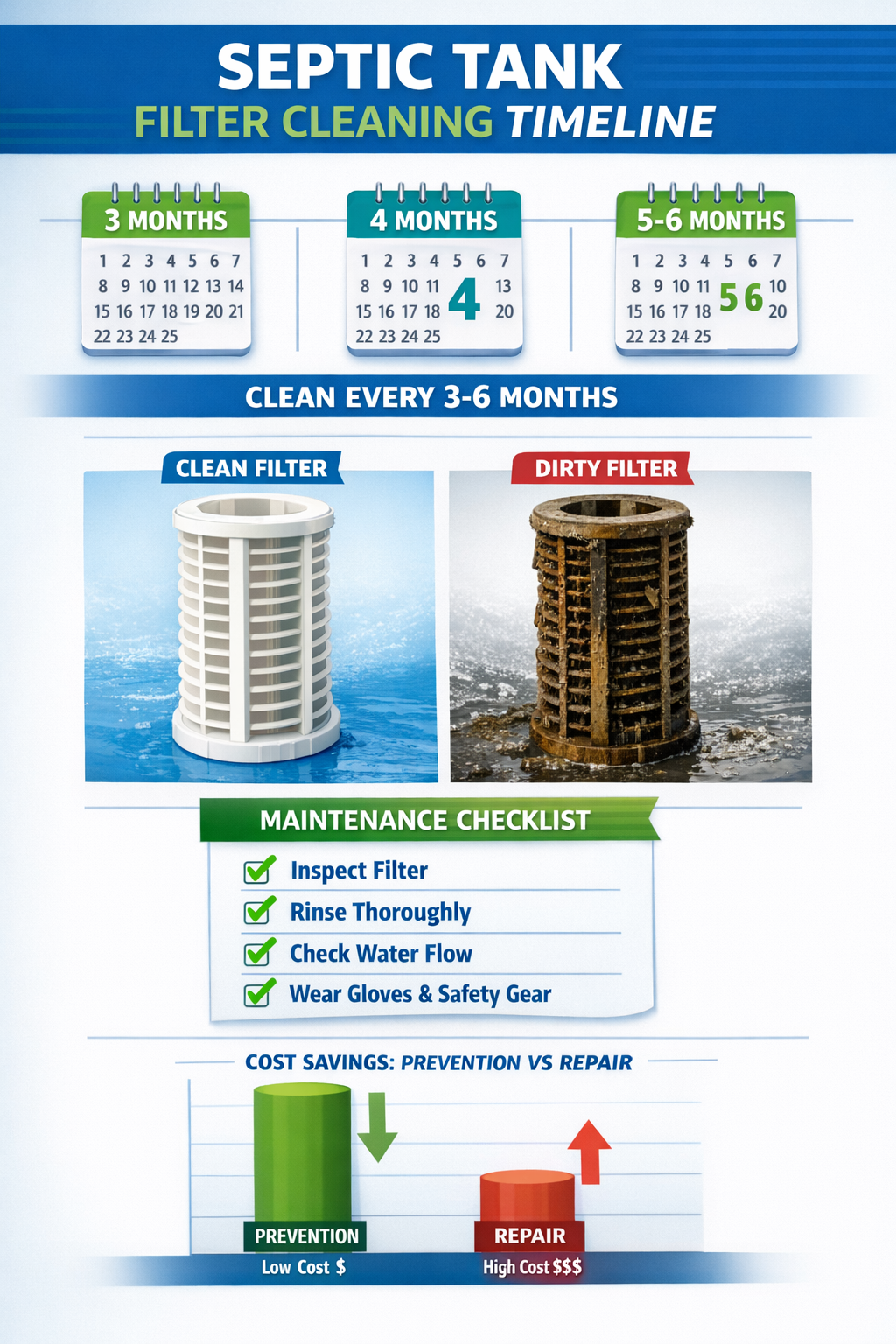
Remove the filter carefully, rinse with a garden hose using low-to-medium pressure, and inspect for damage before reinstalling. The entire process takes 30-45 minutes and requires basic safety equipment [5].
Required Tools and Safety Equipment
- Rubber gloves (elbow-length recommended)
- Safety glasses
- Garden hose with adjustable nozzle
- Large bucket or tarp
- Flashlight or headlamp
- Screwdriver (if needed for access covers)
Cleaning Steps
- Locate your septic tank access port – usually near the house where the main sewer line exits
- Remove the access cover carefully and set aside in a safe location
- Locate the filter in the outlet pipe (cylindrical or rectangular device)
- Lift the filter straight up using the handle or top portion
- Place filter on tarp or over bucket to contain debris
- Rinse thoroughly with garden hose, working from top to bottom
- Inspect the filter mesh for tears, holes, or damage
- Check gaskets and frame for cracks or deterioration
- Reinstall the clean filter ensuring proper seating
- Replace access cover securely
Critical Safety Rules
Never use high-pressure washers – they damage filter mesh and create holes that allow solids through. Stick to garden hose pressure for effective yet gentle cleaning.
Avoid harsh chemicals or bleach – these kill beneficial bacteria in your tank and can damage filter materials. Plain water removes debris effectively without harming your system.
Choose professional help if you’re uncomfortable working around sewage, have mobility issues, or notice significant tank problems during inspection.
Common Septic Tank Filter Maintenance Problems and Solutions
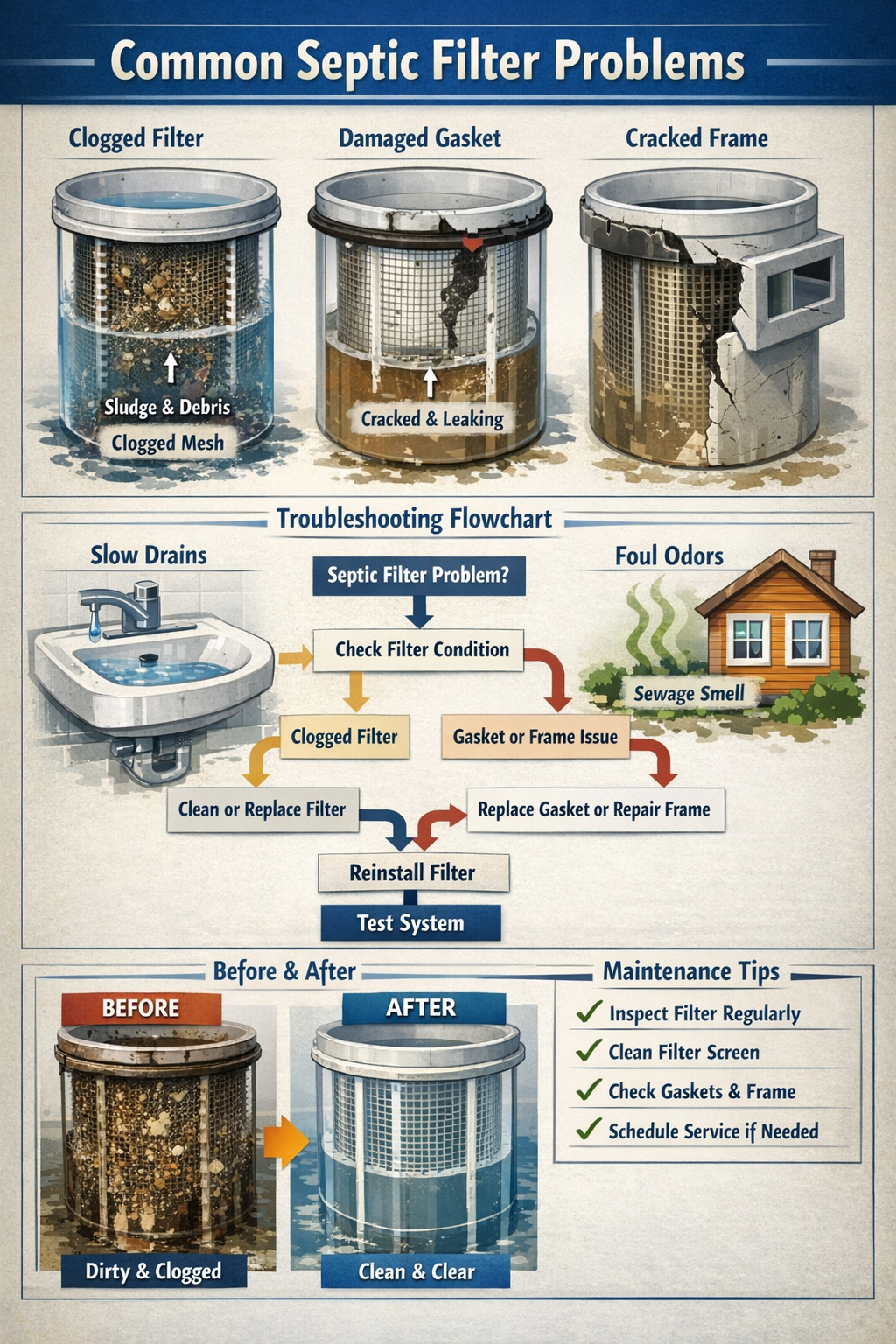
The most frequent issues include clogged mesh, damaged gaskets, and cracked filter frames. Early detection through regular inspection prevents these problems from causing system-wide failures.
Clogged Filter Mesh
Problem: Grease, hair, and food particles accumulate in filter mesh, restricting water flow.
Solution: Increase cleaning frequency and check household disposal habits. Avoid flushing non-biodegradable items.
Prevention: Install drain screens in kitchen and bathroom sinks to catch debris before it reaches your septic system.
Damaged Filter Components
Problem: Cracks in the frame, torn mesh, or hardened gaskets allow solids to pass through.
Solution: Replace the entire filter immediately – repairs are not effective for damaged components.
Warning signs: Visible tears, warped plastic, brittle gasket material, or loose-fitting parts.
Frequent Clogging Issues
Problem: Filter requires cleaning monthly or more often.
Root causes:
- Garbage disposal overuse
- Excessive grease disposal
- Non-septic-safe products
- Undersized filter for household needs
Solutions:
- Reduce garbage disposal use by 50% or more
- Scrape plates before washing dishes
- Switch to septic-safe cleaning products
- Consider filter upgrade during next professional service
System Integration Problems
Problem: Clean filter but persistent drainage issues.
This indicates: Tank needs pumping, drain field problems, or other system components require attention.
Next steps: Contact a professional for comprehensive system evaluation – the problem extends beyond just the filter.
Edge case: If your filter clogs within weeks of cleaning, your tank likely needs pumping or you have excessive solid waste entering the system. Address the root cause rather than just increasing cleaning frequency.
For additional support in maintaining your septic system health, our complete septic tank maintenance checklist provides comprehensive guidance for all system components.
When to Replace Your Septic Tank Filter
Replace your septic tank filter every 10-15 years with proper maintenance, or immediately when you notice physical damage like cracks, tears, or failed gaskets. Attempting to repair damaged filters allows solids to enter your drain field, causing expensive system failures.
Replacement Indicators
Immediate replacement needed:
- Visible tears or holes in mesh material
- Cracked or warped filter frame
- Hardened or missing gaskets
- Brittle plastic that breaks during handling
- Filter doesn’t fit snugly in outlet pipe
Age-related replacement:
- Filter over 15 years old regardless of condition
- Mesh material shows significant wear
- Gasket material remains flexible but shows aging
- Frame shows minor stress marks
Replacement Process
Choose professional installation if your system uses specialized filters or you’re uncomfortable with the process. Standard residential filters cost $50-150, while professional installation adds $100-200 to the total expense.
DIY replacement works when you have a standard effluent filter and basic mechanical skills. Measure your current filter before purchasing a replacement to ensure proper fit.
Filter Selection Criteria
Match your current filter specifications exactly:
- Diameter and height measurements
- Mesh size (typically 1/16″ to 1/8″)
- Mounting style (drop-in vs. threaded)
- Gasket type and size
Upgrade considerations: Some newer filters offer improved designs with easier cleaning access or better debris capture. Discuss options with your septic professional during regular inspections.
Common mistake: Installing an incorrectly sized filter creates gaps that allow solids through or prevents proper seating in the outlet pipe. When in doubt, bring your old filter to the supplier for exact matching.
Professional inspections every 3-5 years help determine optimal replacement timing and ensure you select appropriate filter upgrades for your specific system.
Professional Septic Tank Filter Maintenance vs DIY
Homeowners can handle routine filter cleaning every 3-6 months, while professional maintenance every 3-5 years addresses system-wide issues and complex problems. This combination approach maximizes cost savings while ensuring proper system care.
DIY Maintenance Advantages
- Cost savings: $0 vs. $75-150 per professional cleaning
- Immediate response: Clean filter when problems arise
- System familiarity: Learn your system’s normal operation
- Scheduling flexibility: Maintain on your timeline
Professional Maintenance Benefits
- Comprehensive inspection: Check all system components
- Problem diagnosis: Identify issues beyond the filter
- Specialized equipment: Tools for deep cleaning and testing
- Code compliance: Ensure system meets local regulations
- Warranty protection: Some systems require professional maintenance
When to Choose Professional Service
Call a professional immediately if:
- Filter damage requires replacement
- Persistent problems after cleaning
- Strong sewage odors persist
- Multiple drainage issues throughout the house
- You’re uncomfortable working around sewage
Schedule professional inspections when:
- System is over 10 years old
- Previous owner didn’t maintain records
- You’ve never had professional service
- Local regulations require certified inspections
Cost Comparison Table
| Service Type | DIY Cost | Professional Cost | Frequency |
|---|---|---|---|
| Filter Cleaning | $0 | $75-150 | Every 3-6 months |
| System Inspection | N/A | $200-400 | Every 3-5 years |
| Filter Replacement | $50-150 | $150-350 | Every 10-15 years |
| Tank Pumping | N/A | $300-600 | Every 3-5 years |
Best practice: Handle routine cleaning yourself and schedule professional service for comprehensive system evaluation. This approach typically saves $300-600 annually while maintaining proper system care.
Edge case: If you have a sand filter or advanced treatment unit, professional maintenance requirements may be more frequent. These systems require specialized knowledge and equipment beyond typical homeowner capabilities.
Helpful Resource for Ongoing Septic Care
Maintaining your septic tank filter is just one part of keeping your entire system healthy. If you want a simple way to support your septic system between cleanings, Septifix tablets can help break down waste naturally and reduce the buildup that clogs your filter.
These monthly tablets work alongside your regular maintenance routine to:
- Break down organic waste more effectively
- Reduce odors throughout your system
- Help prevent blockages before they start
- Support the beneficial bacteria your septic system needs
Septifix isn’t required for proper filter maintenance, but many homeowners find it helpful for keeping their entire system running smoothly. One tablet per month is much easier than dealing with emergency backups or premature filter replacement.
Learn more about how Septifix tablets can support your septic system health.
Frequently Asked Questions
How do I know if my septic tank filter needs cleaning?
Watch for slow drains, gurgling sounds from plumbing fixtures, sewage odors near your tank, or water backing up in sinks and toilets. These signs indicate your filter is clogged and needs immediate attention.
Can I clean my septic tank filter with a pressure washer?
No, never use pressure washers on septic filters. High pressure damages the mesh and creates holes that allow solids to pass through to your drain field. Use only garden hose pressure for safe, effective cleaning.
What happens if I don’t maintain my septic tank filter?
Neglected filters cause sewage backups in your home and allow solids to clog your drain field. Drain field replacement costs $10,000-$30,000, making regular filter maintenance a critical investment.
How long does septic tank filter cleaning take?
Most homeowners complete filter cleaning in 30-45 minutes, including setup and cleanup time. The actual cleaning process takes 10-15 minutes once you remove the filter from the tank.
Should I use chemicals to clean my septic tank filter?
No, avoid all harsh chemicals, bleach, or antibacterial cleaners. These products kill beneficial bacteria in your septic system and can damage filter materials. Plain water removes debris effectively and safely.
Can I install a septic tank filter in an older system?
Yes, most older septic systems can be retrofitted with effluent filters. Contact a septic professional to evaluate your system and recommend appropriate filter options for your specific tank design.
How much does a new septic tank filter cost?
Replacement filters cost $50-150 for standard residential units. Professional installation adds $100-200 if you’re not comfortable doing the work yourself. Specialized filters for advanced systems may cost more.
What’s the difference between septic tank filters and pumping?
Filter maintenance removes debris from the outlet filter every 3-6 months, while pumping removes accumulated solids from the entire tank every 3-5 years. Both are necessary for proper system function.
Can a clogged septic filter cause toilet problems?
Yes, severely clogged filters can cause toilets to flush slowly, gurgle, or back up. However, toilet problems can also indicate other septic issues, so check your filter first, then contact a professional if problems persist.
Do all septic systems have filters?
Most systems installed after 1990 include effluent filters, but older systems may not have them. If your system lacks a filter, consider retrofitting one during your next professional maintenance visit.
How do I find my septic tank filter?
Locate your septic tank first, then look for the outlet pipe inside the tank. The filter sits in this pipe as a cylindrical or rectangular device with a handle or lifting mechanism.
What tools do I need for septic filter maintenance?
Essential tools include rubber gloves, safety glasses, a garden hose, and a bucket or tarp. Optional items include a flashlight and screwdriver for accessing covers. Avoid pressure washers and chemical cleaners.
Conclusion
Proper septic tank filter maintenance protects your entire septic system and prevents costly emergency repairs. Clean your filter every 3-6 months using simple garden hose pressure, inspect for damage during each cleaning, and replace filters every 10-15 years or when damaged.
The small investment of time for regular filter maintenance saves thousands in potential drain field replacement costs. Most homeowners can handle routine cleaning themselves, while professional inspections every 3-5 years ensure comprehensive system health.
Take action today: Locate your septic tank and schedule your first filter inspection. Set calendar reminders for regular maintenance, and contact a septic professional if you notice persistent problems or haven’t had system service in over five years.
Remember that filter maintenance is just one component of proper septic care. Follow our best septic tank maintenance practices and watch for signs your system needs professional attention to keep your entire system functioning reliably for decades.
References
[1] Septic Filter Cleaning 101 Protect Your Drain Fi – https://www.wrenvironmental.com/blog/2026/february/septic-filter-cleaning-101-protect-your-drain-fi/
[2] Maintaining Sand Filters For Septic Systems A Complete Guide – https://www.septicserviceshowell.com/post/maintaining-sand-filters-for-septic-systems-a-complete-guide
[3] Maintaining Your Septic System A Guide For Homeowners – https://www.mohave.gov/departments/development-services/environmental-qualitywaste-disposal/documents/maintaining-your-septic-system-a-guide-for-homeowners/
[4] Septic Tank Maintenance Guide Best Practices To Avoid Breakdowns – https://www.aquatiris.com/en/our-advice/septic-tank-maintenance-guide-best-practices-to-avoid-breakdowns/
[5] How To Clean A Septic Tank Filter Avoid Costly Repairs – https://www.wrenvironmental.com/blog/2025/december/how-to-clean-a-septic-tank-filter-avoid-costly-repairs/
[7] Septic System 101 Homeowners Manual – https://www.mohave.gov/departments/development-services/environmental-qualitywaste-disposal/documents/septic-system-101-homeowners-manual/