Septic Tank Explained: Your Complete Guide to Understanding and Maintaining Your Home’s Wastewater System

Picture this: you flush your toilet, wash your dishes, or take a shower, and within seconds, that water disappears from sight. But where does it go? For the approximately 25% of North American households that rely on septic systems, understanding what happens next could save you thousands of dollars in repairs and prevent environmental disasters in your backyard. With the septic tank cleaning and pumping market projected to reach $679 million by 2034, it’s clear that proper septic system knowledge isn’t just helpful—it’s essential for millions of homeowners. This comprehensive guide will demystify how your septic tank works, what you need to know to keep it running smoothly, and how modern innovations are revolutionizing wastewater treatment right beneath your feet.
Key Takeaways
• Septic tanks are three-zone treatment systems that use natural bacterial processes to break down household wastewater before releasing treated effluent to your drain field
• Regular pumping every 3-5 years is crucial for preventing system failure, with smart monitoring technology now making it easier to track when service is needed
• Modern septic systems use advanced materials like HDPE and fiberglass, plus IoT sensors that can improve efficiency by 25-30% compared to traditional concrete tanks
• Proper maintenance habits like avoiding harsh chemicals and managing water usage can extend your system’s lifespan and prevent costly repairs
• New regulations require 92% of extracted sludge to receive biodegradable treatment, making professional maintenance more important than ever
How Your Septic Tank Works: The Science Behind Wastewater Treatment
The Three-Zone System Explained
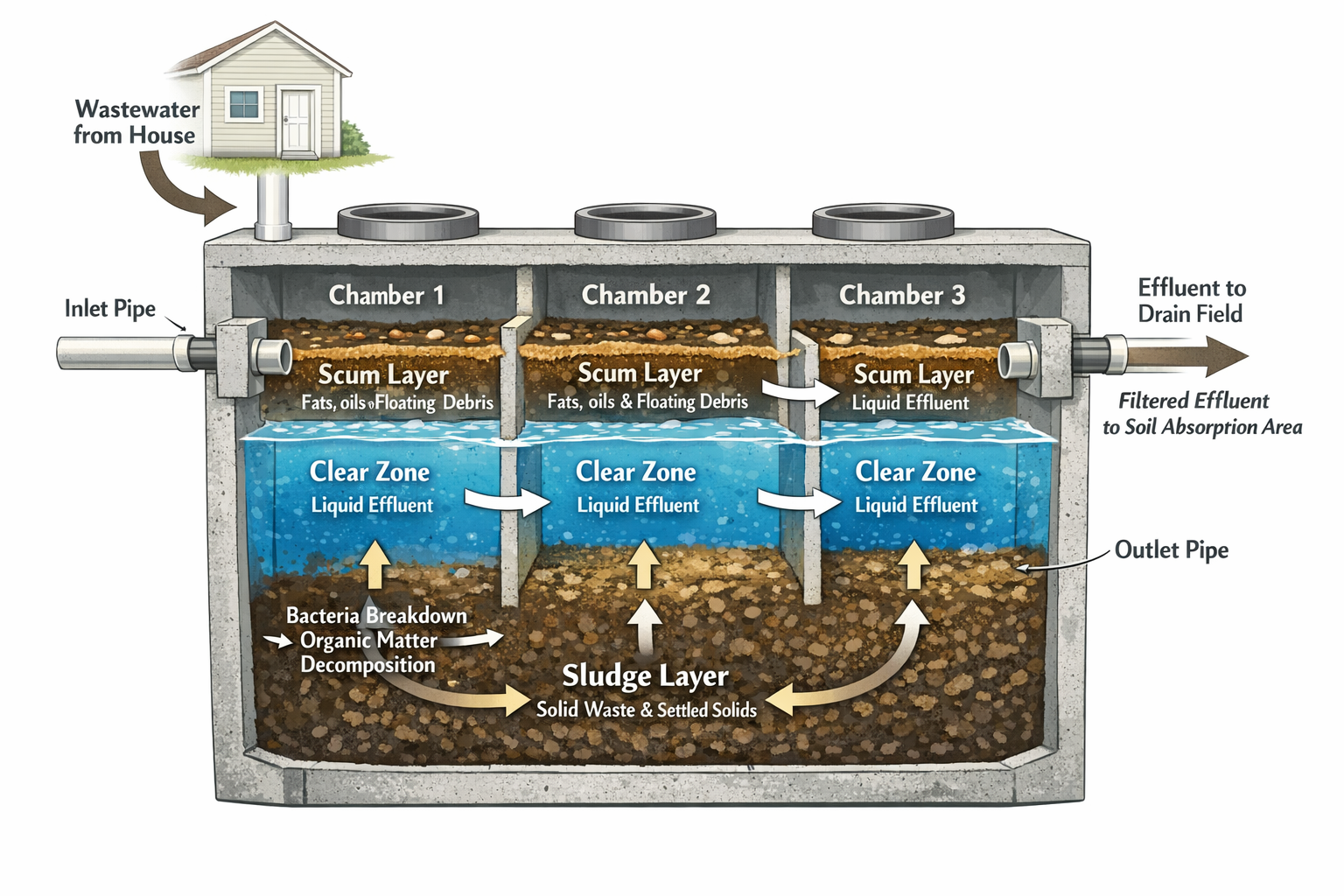
When I explain septic tanks to homeowners, I like to think of them as underground treatment plants that work 24/7 without electricity. Your septic tank operates through a carefully balanced three-zone system that transforms raw sewage into treated water safe for soil absorption.
The Top Zone: Scum Layer 🔝
This floating layer consists of oils, grease, and lightweight debris that naturally rise to the surface. Beneficial bacteria slowly break down these materials over time. The scum layer acts as a protective barrier, helping maintain the anaerobic (oxygen-free) environment essential for proper bacterial function.
The Middle Zone: Clear Zone 💧
This is where the magic happens. The clear zone contains partially treated water (called effluent) that’s actively being processed by billions of beneficial bacteria. These microorganisms consume organic matter and harmful pathogens, naturally purifying the wastewater.
The Bottom Zone: Sludge Layer ⬇️
Heavy solids settle here, forming a dense layer of decomposing organic matter. While bacteria break down much of this material, some inorganic waste accumulates over time—which is why regular pumping is essential.
The Treatment Process Step by Step
- Wastewater enters through the inlet pipe from your home
- Solids separate naturally by density in the tank
- Bacterial breakdown occurs continuously in all three zones
- Treated effluent flows through the outlet pipe to your drain field
- Final filtration happens as water percolates through soil layers
This natural process typically takes 24-48 hours for complete treatment, which is why your tank needs adequate capacity for your household size.
Modern Tank Materials and Design
Gone are the days when concrete was your only option. Today’s septic tanks utilize advanced materials that offer superior performance:
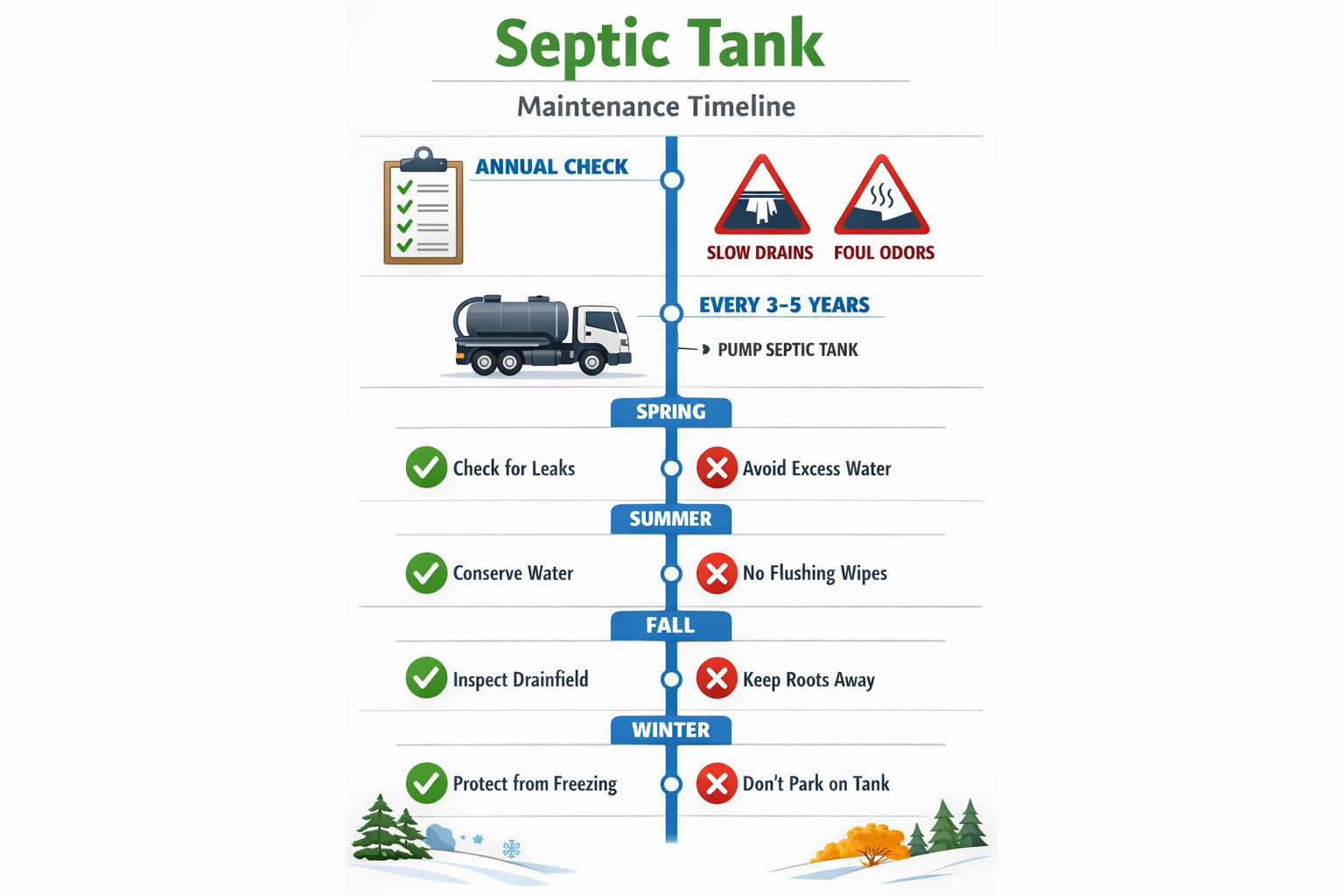
High-Density Polyethylene (HDPE) tanks resist corrosion and cracking while remaining lightweight for easier installation. Advanced fiberglass options provide excellent structural integrity and are virtually immune to root intrusion—a common problem with older systems.
These modern materials not only last longer but also maintain better structural integrity, reducing the risk of groundwater contamination and costly repairs.
Essential Septic Tank Maintenance: Keeping Your System Running Smoothly
The Critical Importance of Regular Pumping
Here’s a truth many homeowners learn the hard way: septic tanks aren’t self-cleaning. While bacteria do an amazing job breaking down organic waste, inorganic materials and excess sludge accumulate over time. Without regular pumping, your system will eventually fail—often at the worst possible moment.
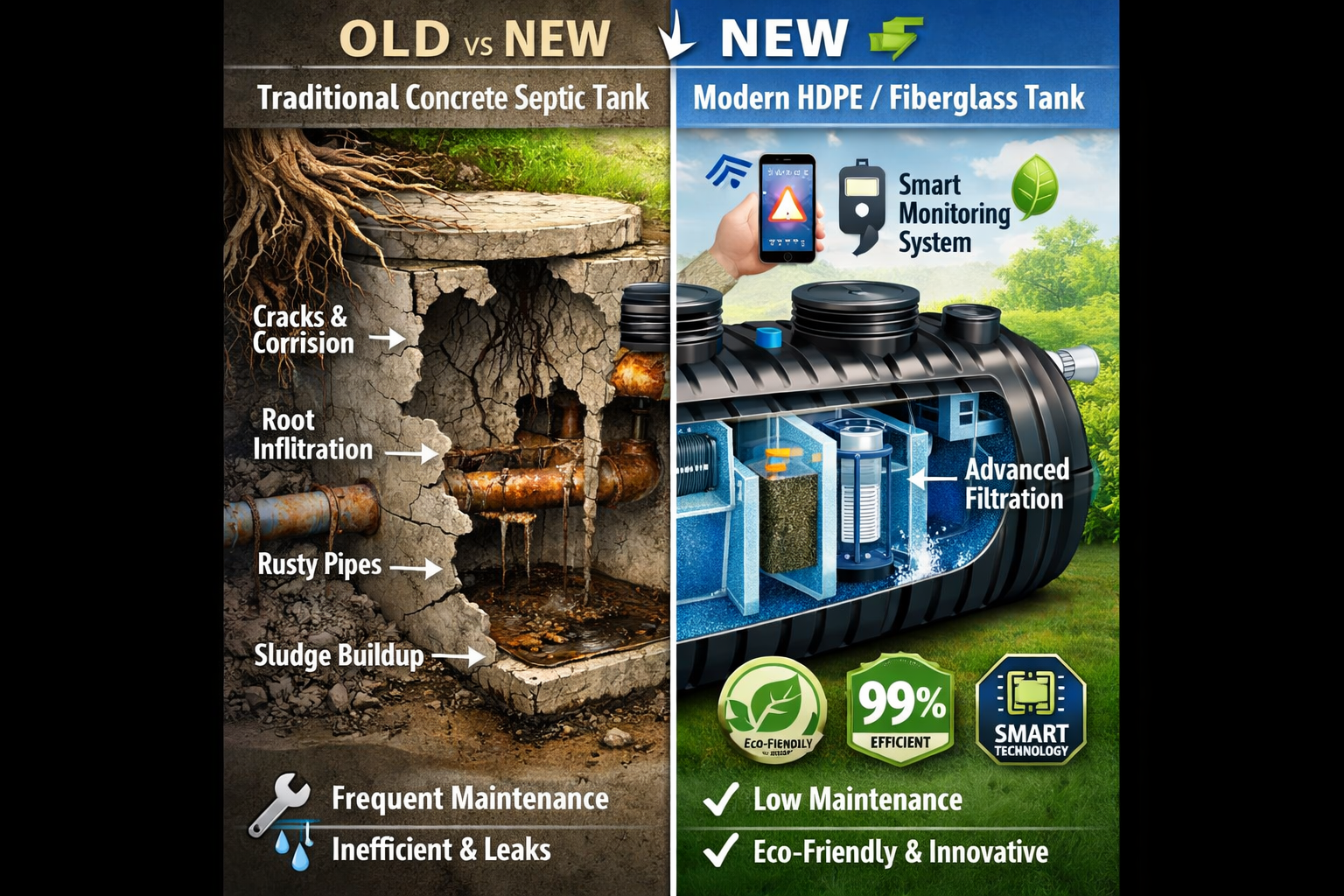
Recommended Pumping Schedule:
- 1-2 people: Every 4-5 years
- 3-4 people: Every 3-4 years
- 5+ people: Every 2-3 years
- Heavy usage homes: Every 1-2 years
The $474 million septic pumping market exists because this maintenance is absolutely essential.[2] Professional pumping services now use high-powered vacuum trucks, fiber-optic cameras, and remote-operated tools for more thorough cleaning than ever before.
Smart Monitoring: The Future of Septic Maintenance
One of the most exciting developments I’ve seen in septic technology is IoT-enabled monitoring systems. These smart sensors can track tank levels in real-time and send automated alerts to your smartphone when pumping is needed.
Benefits of Smart Monitoring:
- 25-30% efficiency improvement in commercial applications
- Prevents unexpected system failures
- Optimizes pumping schedules based on actual usage
- Early warning for potential problems
- 12% annual growth projected through 2030
FYI: Some links may be affiliate links, which means I may earn a small commission at no extra cost to you.
For homeowners who want a simple, proactive approach to septic maintenance, monthly treatment tablets can be incredibly helpful. Here are some of the most convenient septic tank treatment solutions for keeping your system clean, odor-free, and running smoothly—from breaking down sludge and reducing unpleasant smells to helping prevent clogs, backups, and expensive pumping costs. These easy monthly tablets are trusted by many homeowners to maintain a cleaner, healthier septic system with minimal effort.
👉 Check the latest price and see how Septifix can protect your septic system today
Daily Habits That Protect Your Investment
Your septic system’s health depends largely on what goes down your drains. Here are the essential do’s and don’ts:
✅ DO:
- Use biodegradable soaps and detergents
- Fix leaky faucets and running toilets promptly
- Spread laundry loads throughout the week
- Install water-efficient fixtures
- Compost food scraps instead of using garbage disposals
❌ DON’T:
- Flush non-biodegradable items (wipes, feminine products, medications)
- Pour grease, oil, or harsh chemicals down drains
- Use excessive amounts of household cleaners
- Overload the system with multiple simultaneous water uses
- Plant trees or shrubs near the drain field
Warning Signs Your System Needs Attention
Recognizing problems early can save you thousands in repairs. Watch for these red flags:
| Warning Sign | Possible Cause | Action Needed |
|---|---|---|
| Slow drains throughout house | Tank approaching capacity | Schedule pumping |
| Sewage odors indoors/outdoors | System backup or leak | Call professional immediately |
| Wet spots over drain field | System overload or failure | Emergency service required |
| Gurgling sounds in pipes | Blocked vents or full tank | Inspection needed |
| High nitrate levels in well water | Leaking system | Water testing and system repair |
Modern Innovations Transforming Septic Technology
Advanced Treatment Components
The septic industry has undergone remarkable innovation in recent years. Modern systems now feature advanced filtration units, aerobic treatment components, and some even recycle treated water for irrigation purposes, reducing household water consumption significantly.
Aerobic Treatment Units (ATUs) introduce oxygen into the treatment process, dramatically improving bacterial efficiency and producing higher-quality effluent. These systems can treat wastewater to near-drinking water standards.
Advanced Filtration Systems use multiple stages of treatment, including:
- Biological filters for pathogen removal
- Sand filters for fine particle capture
- UV sterilization for final disinfection
- Nutrient removal systems for environmental protection
Eco-Friendly Innovations and Sustainability
Environmental consciousness is driving major changes in septic technology. Contemporary systems now prioritize sustainability and environmental protection through innovative design features.
Water Conservation Integration:
Modern homes increasingly incorporate smart appliances like:
- Low-flow toilets (using 1.28 gallons vs. 3.5+ gallons)
- Water-saving fixtures with aerators
- High-efficiency washing machines
- Leak-detection devices to prevent system overload
These technologies work together to reduce strain on your septic system while conserving water resources.
Regulatory Changes and Environmental Standards
The regulatory landscape is evolving rapidly. The US and EU now mandate biodegradable treatment for 92% of extracted sludge, with stricter environmental regulations contributing to a projected 5.3% compound annual growth rate (CAGR) through 2034.
These changes mean:
- Higher standards for waste treatment
- Increased focus on environmental protection
- Better long-term sustainability
- Improved public health outcomes
Market Growth and Professional Services
The septic industry is experiencing unprecedented growth, with mechanical cleaning methods representing 38% of the 2025 market share. This growth reflects increasing awareness of proper maintenance importance and technological advancement adoption.
Key market players like Royal Flush, A-1 Septic Pumping, and Jim’s Waste Management are leading innovation, though the top 5 players hold only approximately 18% market share, reflecting a fragmented industry with room for local specialists.
Global Opportunities and Rural Development
Looking beyond North America, 60% of rural homes in developing nations lack proper wastewater solutions, representing significant untapped market growth potential. This global perspective highlights the importance of septic technology in addressing worldwide sanitation challenges.
Installation Costs and Planning Considerations
When planning a new septic system installation, costs can vary significantly based on several factors. Understanding these variables helps homeowners budget appropriately:
Factors Affecting Installation Costs:
- Soil conditions and percolation rates
- Local permit requirements and fees
- System size and complexity
- Site accessibility and excavation needs
- Advanced features and monitoring systems
Recent Regulatory Developments:
The Southern Nevada Health District recently proposed transitioning from permanent septic tank permits to 5-year renewable permits costing $226 each, though a public hearing was postponed until 2026 after homeowner opposition. This highlights the evolving regulatory landscape homeowners must navigate.
Helpful Resource for Ongoing Maintenance
Maintaining a septic system doesn’t have to be complicated or stressful. While professional pumping and inspections are essential, there are simple steps you can take between service visits to keep your system healthy.
If you want something convenient and effective for regular maintenance, those monthly septic treatment tablets I mentioned earlier can be a game-changer. They’re designed to break down sludge, reduce odors, and help prevent the buildup that leads to expensive problems. Many homeowners find them helpful for maintaining optimal bacterial balance and extending time between pumpings—though they’re not a replacement for professional service when needed.
The key is consistency with whatever maintenance approach you choose, whether it’s being mindful of what goes down your drains, using beneficial treatments, or staying on top of your pumping schedule.
Septifix: Simple Septic Tank Care in One Tablet
Septifix tablets help break down waste, reduce bad smells, and keep your septic tank working properly. With one easy monthly flush, you can help prevent blockages, protect your plumbing, and avoid costly repairs.
👉 See how Septifix tablets can keep your septic system clean and efficient
Conclusion: Taking Control of Your Septic System’s Future
Understanding your septic system isn’t just about avoiding problems—it’s about protecting one of your home’s most critical infrastructure investments. With the septic industry projected to reach $679 million by 2034 and smart monitoring technology growing at 12% annually, we’re entering an exciting era where homeowners have more tools than ever to maintain their systems effectively.
The key takeaway from this comprehensive septic tank explanation is that knowledge equals savings. By understanding how your three-zone treatment system works, maintaining proper pumping schedules, and embracing modern monitoring technologies, you can avoid the costly emergencies that catch unprepared homeowners off guard.
Your Next Steps:
- Schedule an inspection if it’s been more than a year since your last professional evaluation
- Document your pumping history and set calendar reminders for future maintenance
- Consider smart monitoring if you want real-time system insights
- Evaluate your household habits and make septic-friendly changes where needed
- Research local professionals before you need emergency service
Remember, the 25% of North American households relying on septic systems are part of a community that’s increasingly supported by advanced technology, professional expertise, and environmental awareness. Your septic system, when properly maintained, can provide decades of reliable service while protecting both your property value and the environment.
The investment in understanding and maintaining your septic system pays dividends in avoided repairs, extended system life, and peace of mind. With modern innovations making maintenance easier and more effective than ever, there’s never been a better time to take control of your septic system’s future.
References
[1] How Modern Septic Technology Is Changing The Game – https://www.septicblue.com/how-modern-septic-technology-is-changing-the-game
[2] Global Septic Tank Cleaningpumping Forecast Market 26825 – https://www.intelmarketresearch.com/global-septic-tank-cleaningpumping-forecast-market-26825
[3] Watch – https://www.youtube.com/watch?v=z4iCWMNM9yo
[4] Septic Tank Installation – https://modernize.com/plumbing/systems/drainage/septic-tank-installation
[5] Watch – https://www.youtube.com/watch?v=X1ynK-h3HZE
[6] Septic System Types – https://www.premiertechaqua.com/en-us/blog/septic-system-types
[7] 5 New Years Resolutions For A Healthier Septic System In 2026 – https://www.metroseptic.com/blog/5-new-years-resolutions-for-a-healthier-septic-system-in-2026/
[8] Septic – https://www.epa.gov/septic
[9] What Does It Cost Install Septic System – https://www.angi.com/articles/what-does-it-cost-install-septic-system.htm