Last updated: March 3, 2026
Proper septic tank maintenance prevents costly repairs and protects your home’s wastewater treatment system. Most homeowners need professional pumping every 3-5 years, but your specific schedule depends on tank size, household occupancy, and usage patterns.
Key Takeaways
• Pump every 3-5 years – A 1,000-gallon tank serving 2 people may last 5 years, while 4 people require pumping every 3-4 years
• Regular maintenance costs $250-$300 vs. $3,000-$7,000 for system replacement
• Never flush anything except human waste and toilet paper – wipes, grease, and chemicals harm beneficial bacteria
• Watch for warning signs – slow drains, odors, wet spots in yard, or gurgling sounds indicate problems
• Professional inspections cost $150-$450 and should check tank structure, baffles, and sludge levels
• Spread out laundry throughout the week to avoid overwhelming your system with excessive water
• Use septic-safe products and avoid harsh chemicals that kill beneficial bacteria
Quick Answer
Septic tank care involves regular pumping every 3-5 years, avoiding harmful substances like wipes and grease, monitoring warning signs, and using septic-safe products. Proper maintenance costs $250-$300 every few years but prevents expensive repairs that can reach $7,000.
How Often Should I Pump My Septic Tank?
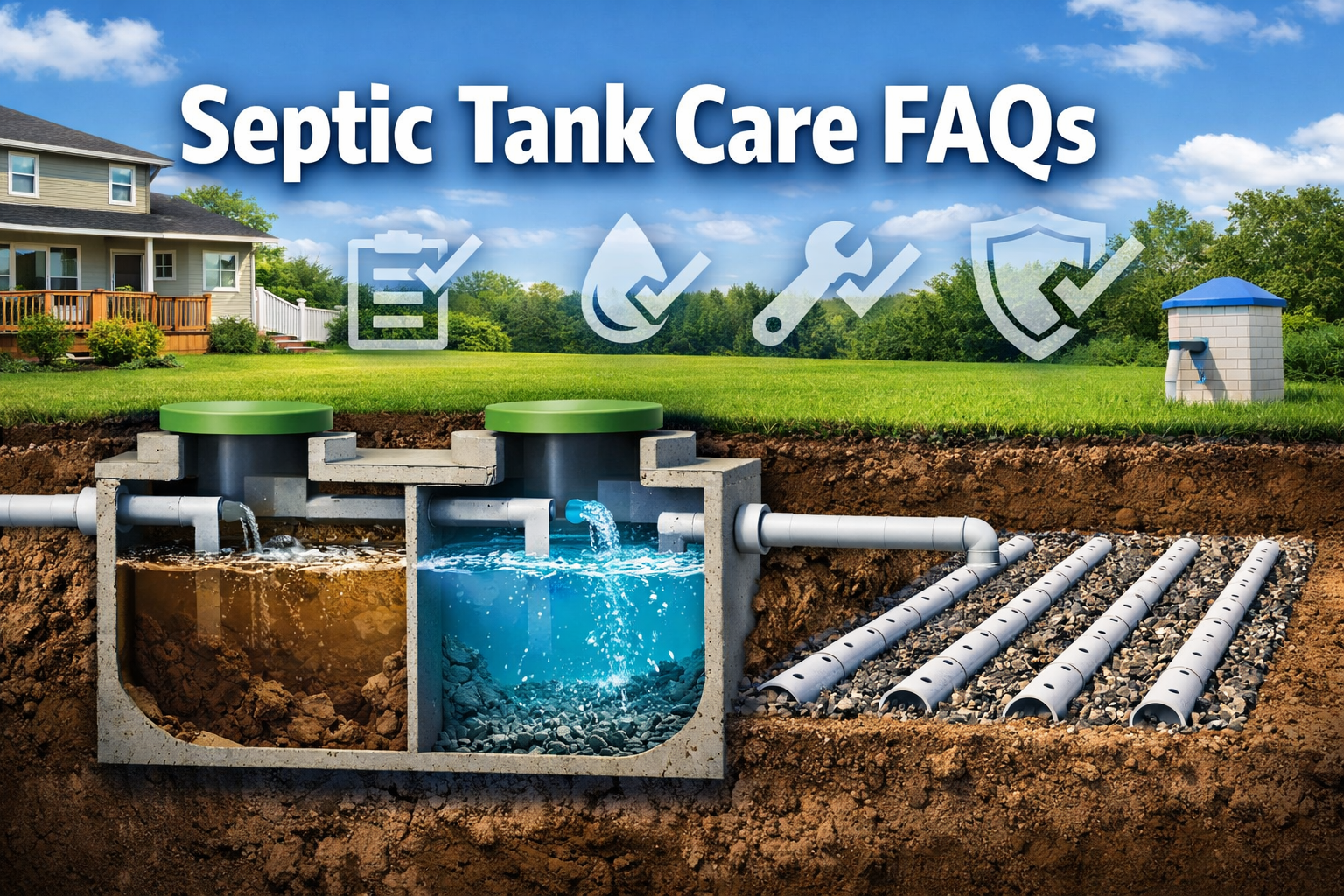
Most residential septic tanks need pumping every 3-5 years, but your specific schedule depends on tank size and household occupancy. A 1,000-gallon tank serving two people may stretch to five years between services, while the same tank for four people typically requires pumping every 3-4 years.
Factors that affect pumping frequency:
• Household size – More people create more waste
• Tank capacity – Larger tanks handle more waste between pumpings
• Water usage patterns – High-efficiency appliances extend intervals
• Garbage disposal use – Increases solid waste accumulation
Professional determination guidelines:
Tanks should be pumped if the scum layer bottom is within six inches of the outlet, if the sludge layer top is within 12 inches of the outlet, or if more than 25% of liquid depth consists of sludge and scum combined.
Choose pumping every 3 years if you have a large household, use a garbage disposal frequently, or notice any warning signs. Extend to 4-5 years only if you have a small household and practice water conservation.
For a structured approach to septic maintenance, consider using Septifix tablets monthly to help break down waste and maintain bacterial balance between professional services.
FYI: Some links may be affiliate links, which means I may earn a small commission at no extra cost to you.
What Should Never Go Down My Drains or Toilet?
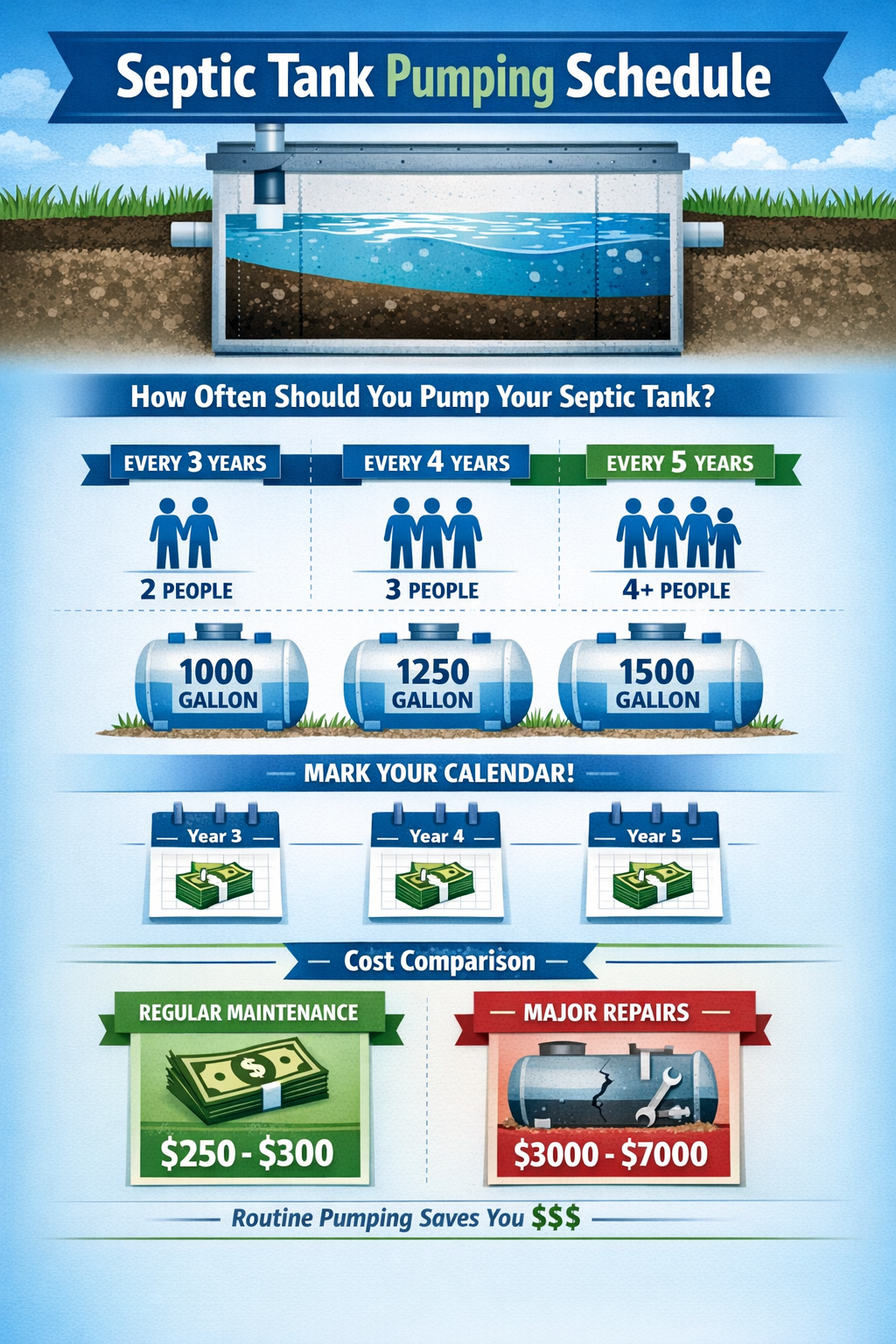
Never flush anything besides human waste and toilet paper into your septic system. Items that should never enter septic systems include cooking grease, coffee grounds, dental floss, disposable diapers or wipes (even “flushable” ones), feminine hygiene products, cigarette butts, cat litter, paper towels, and medications.
Forbidden items and why they’re harmful:
• “Flushable” wipes – Don’t break down like toilet paper and clog pipes
• Cooking grease and oils – Solidify and block drain lines
• Harsh chemicals and bleach – Kill beneficial bacteria needed for waste breakdown
• Medications – Disrupt bacterial balance and contaminate groundwater
• Coffee grounds – Accumulate as sludge and fill tank faster
• Cat litter – Contains clay that doesn’t decompose
Laundry considerations:
Do not do all household laundry in one day. The EPA specifically warns that flooding the septic system with excessive water at once doesn’t allow adequate treatment time and can overwhelm drain field capacity.
Safe alternatives:
Use septic-safe detergents, dispose of grease in the trash after cooling, and spread laundry loads throughout the week. Choose biodegradable cleaning products that won’t harm beneficial bacteria.
What Are the Warning Signs My Septic System Needs Attention?
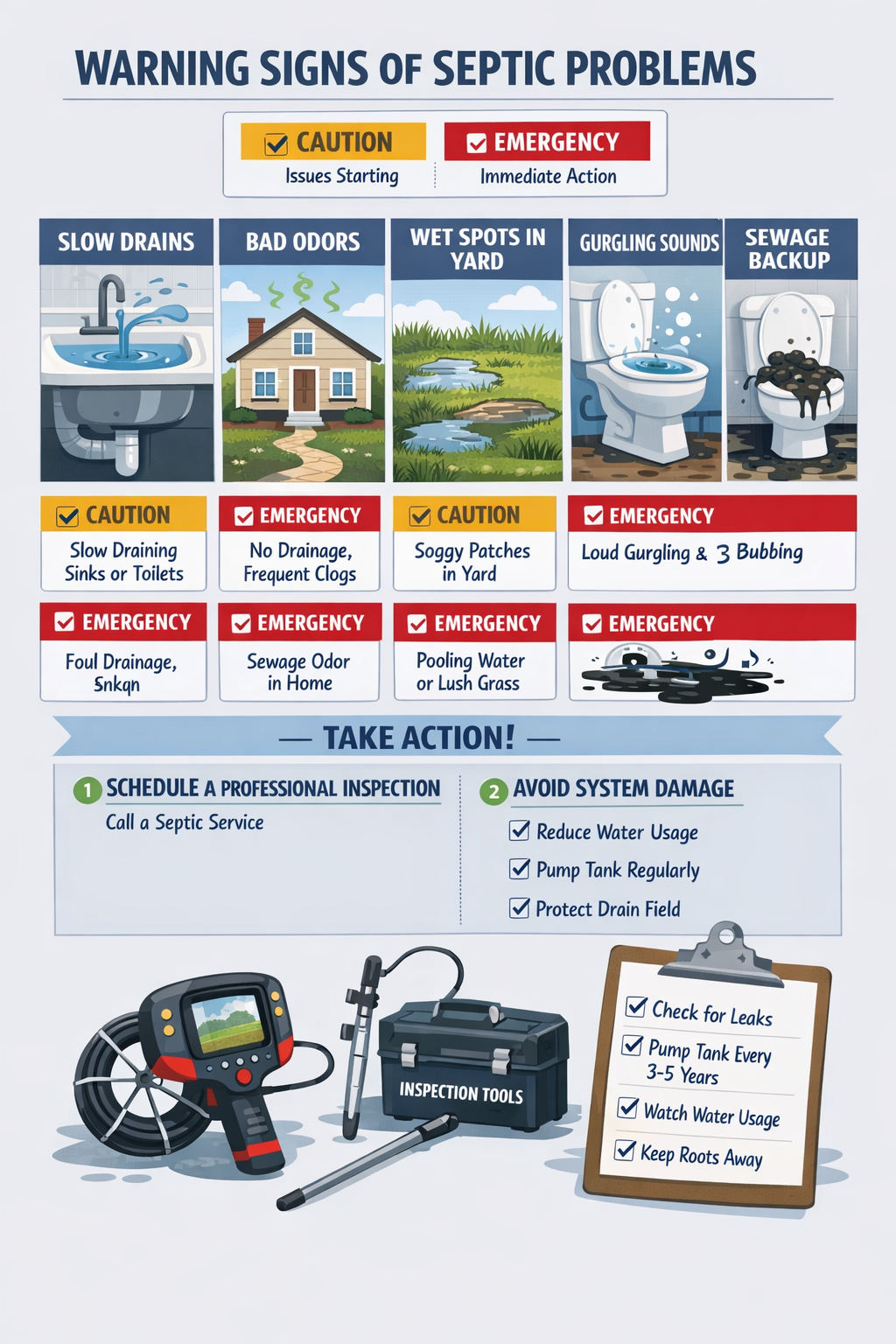
Watch for slow drains, sewage odors, wet spots in your yard, gurgling sounds from plumbing, or sewage backup in your home. These signs indicate your system is failing and needs immediate professional attention to prevent costly damage.
Early warning signs:
• Slow draining sinks, tubs, or toilets
• Sewage odors inside or outside your home
• Gurgling sounds from drains or toilets
• Wet or soggy spots in the drain field area
• Unusually green grass over the septic area
Emergency situations requiring immediate action:
• Sewage backup into your home
• Standing water around the septic tank
• Strong sewage smell throughout your property
• Multiple drain failures at once
Poorly treated sewage from septic systems can pollute groundwater and surface waters, making people and animals sick from waterborne diseases and contributing to algal blooms harmful to aquatic ecosystems.
When to call professionals:
Contact a septic service immediately if you notice any emergency signs. For early warning signs, schedule an inspection within 1-2 weeks. Don’t wait – neglecting maintenance allows solids to build up and escape the tank, blocking the drain field and potentially causing permanent damage that requires complete field replacement rather than just pumping.
Learn more about recognizing these issues in our guide to signs your septic tank needs maintenance.
How Much Does Septic Tank Maintenance Cost?
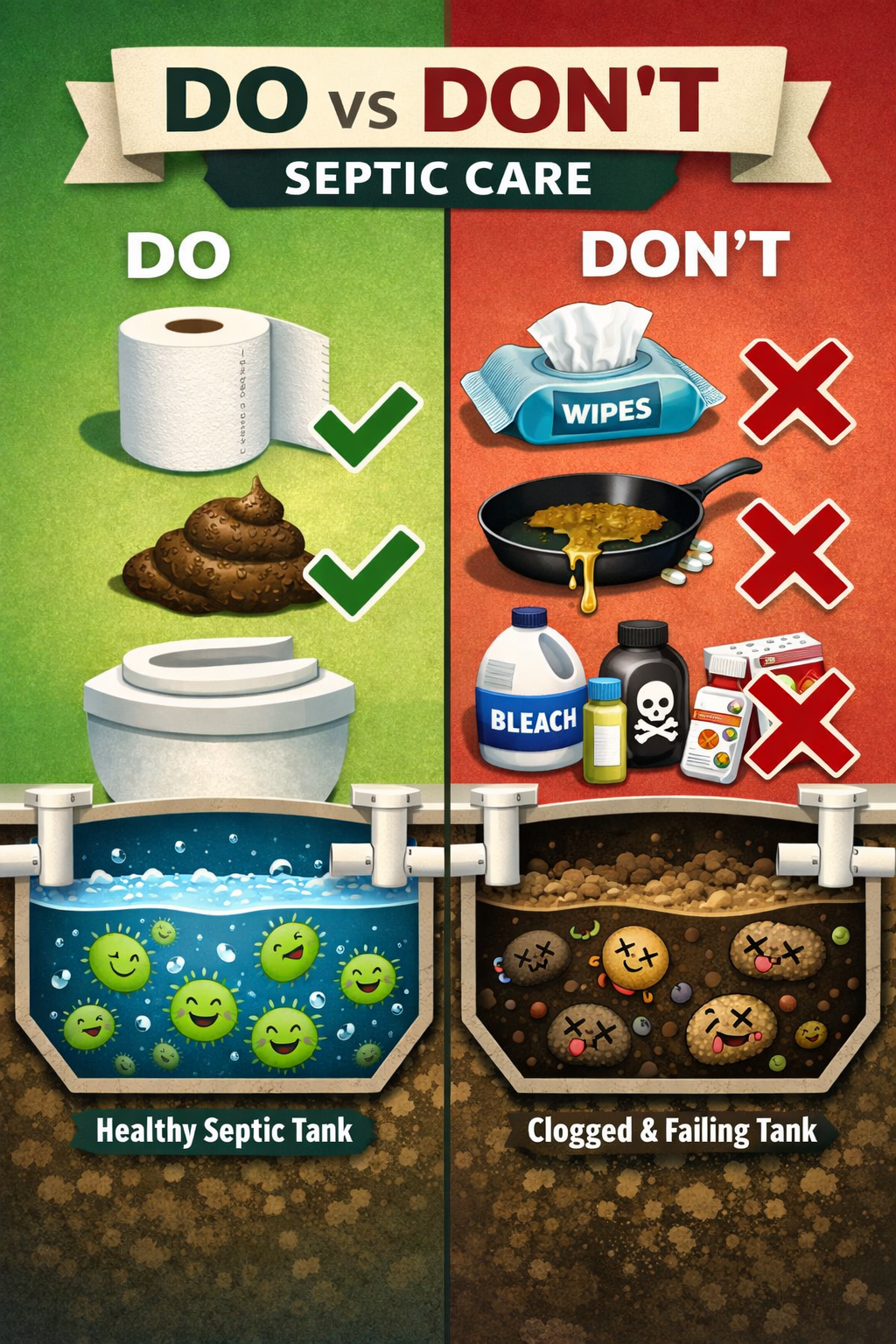
Regular septic maintenance costs $250-$300 every three to four years for routine pumping, compared to $3,000-$7,000 for repairing or replacing a failed system. Professional inspections range from $150-$450 and should evaluate tank structure, baffles, pipes, and sludge levels.
Cost breakdown for routine maintenance:
• Pumping service – $250-$300 every 3-5 years
• Professional inspection – $150-$450 annually or every 3 years
• Minor repairs – $200-$800 for baffles, lids, or pipe fixes
• Septic-safe products – $20-$50 annually for treatments
Major repair costs to avoid:
• Drain field replacement – $3,000-$10,000
• Tank replacement – $3,000-$7,000
• System upgrade – $5,000-$15,000
• Emergency pumping – $400-$600 (premium rates)
Money-saving strategies:
Follow proper usage guidelines, schedule regular pumping, use septic-safe products, and address problems early. The cost difference between prevention and repair makes regular maintenance an excellent investment.
For detailed pricing information, check our complete guide to septic pumping costs.
How Do I Know If My Septic Tank Is Full?
Your septic tank is likely full if you notice slow drains throughout your home, sewage odors, wet spots in your yard over the drain field, or gurgling sounds from toilets and drains. A professional inspection can measure sludge and scum levels to determine if pumping is needed.
Physical inspection methods:
• Professional measurement – Technicians use specialized tools to measure sludge depth
• Visual inspection – Check for scum layer thickness and liquid levels
• Outlet evaluation – Ensure proper distance between waste layers and outlet pipes
Household indicators:
• Multiple slow drains – Not just one clogged fixture
• Persistent odors – Especially around the septic area
• Unusual lawn conditions – Very green grass or wet spots over the system
• Plumbing backups – Starting with lowest fixtures first
Professional assessment criteria:
Tanks should be pumped if the scum layer bottom is within six inches of the outlet, if the sludge layer top is within 12 inches of the outlet, or if more than 25% of liquid depth consists of sludge and scum combined.
Don’t wait for obvious signs – schedule regular inspections to catch problems early. Our article on how to tell if your septic tank is full provides detailed guidance on recognition and next steps.
What Type of Inspections Does My Septic System Need?
Inspection requirements vary by system type. Conventional gravity systems require inspection every 3 years, while pressure distribution, mound, and sand filter systems need annual inspections. Professional inspections evaluate tank condition, bacterial health, and drain field function.
Inspection schedule by system type:
• Conventional gravity systems – Every 3 years
• Pressure distribution systems – Annually
• Mound systems – Annually
• Sand filter systems – Annually
• Advanced treatment units – Every 6 months to annually
What inspections cover:
• Tank structure – Cracks, leaks, or damage
• Baffles and tees – Proper positioning and condition
• Sludge and scum levels – Determining pumping needs
• Drain field function – Absorption and distribution effectiveness
• Electrical components – Pumps, alarms, and controls (if applicable)
Special requirements:
Beginning in 2027, all homes served by a septic system in Washington State must have a Property Transfer Inspection completed and filed when the property is sold or when the deed changes hands.
Choosing an inspector:
Select licensed professionals familiar with your system type. Ask about their certification, experience with your specific system, and what their inspection report includes.
Find more details in our septic inspection guide and maintenance checklist.
What Products Help Maintain My Septic System?
Use septic-safe detergents, biodegradable soaps, and bacterial treatments designed specifically for septic systems. Avoid harsh chemicals, excessive bleach, and antibacterial products that kill beneficial bacteria needed for proper waste breakdown.
Recommended product types:
• Septic-safe laundry detergents – Biodegradable formulas without phosphates
• Natural cleaning products – Vinegar, baking soda, and plant-based cleaners
• Bacterial treatments – Monthly additives to maintain healthy bacterial balance
• Enzyme cleaners – Help break down organic waste and prevent clogs
Products to avoid:
• Antibacterial soaps – Kill beneficial bacteria
• Chlorine bleach – Use sparingly, if at all
• Chemical drain cleaners – Toxic to septic bacteria
• Fabric softeners – Can clog drain field pipes
• Automatic toilet bowl cleaners – Contain harsh chemicals
Helpful maintenance option:
If you want a simple approach to bacterial maintenance, Septifix tablets provide an easy monthly treatment. These tablets help break down waste, reduce odors, and maintain proper bacterial balance with just one flush per month.
Water usage management:
Use high-efficiency appliances when possible, fix leaks promptly, and spread water usage throughout the day. Keep water usage within your system’s capacity to prevent overloading.[4]
For comprehensive product recommendations, see our guide to best septic tank treatment methods.
FAQ
Q: Can I use regular toilet paper in my septic system?
A: Yes, standard toilet paper breaks down properly in septic systems. Choose single-ply or septic-safe brands and avoid thick, quilted varieties that decompose slowly.
Q: How long does a septic system typically last?
A: Well-maintained septic systems can last 20-30 years or more. Poor maintenance can cause failure within 10-15 years, requiring expensive repairs or replacement.
Q: Is it safe to plant trees near my septic system?
A: Plant trees at least 30 feet from your septic tank and drain field. Tree roots can damage pipes and infiltrate the system, causing expensive repairs.
Q: What should I do if my septic alarm goes off?
A: Reduce water usage immediately and call a septic professional within 24 hours. The alarm typically indicates pump failure or high water levels that need immediate attention.
Q: Can I add bacteria or enzymes to boost my septic system?
A: Bacterial additives can help maintain healthy bacterial balance, especially after antibiotic use or chemical exposure. Choose products specifically designed for septic systems.
Q: How do I find my septic tank and drain field?
A: Check your home’s “as-built” drawings, contact your local health department for permits, or hire a professional to locate the system using specialized equipment.
Q: What happens if I accidentally flush something harmful?
A: One incident rarely causes permanent damage. Avoid using that fixture temporarily, increase water usage slightly to dilute the substance, and monitor your system for problems.
Q: Should I add yeast or other home remedies to my septic tank?
A: Avoid home remedies like yeast, which can disrupt bacterial balance. Stick to products specifically designed and tested for septic systems.
Q: Can heavy rain affect my septic system?
A: Yes, heavy rain can saturate the drain field and prevent proper drainage. Reduce water usage during heavy rain periods to avoid overwhelming the system.
Q: How do I maintain my septic system in winter?
A: Keep the tank covered with mulch or leaves for insulation, avoid driving over the system when ground is soft, and maintain normal water usage to prevent freezing.
Q: What’s the difference between pumping and cleaning my septic tank?
A: Pumping removes liquid and floating debris, while cleaning (or pumping out) removes all contents including settled sludge. Most maintenance requires complete cleaning every 3-5 years.
Q: Can I install a garbage disposal with a septic system?
A: Yes, but use it sparingly. Garbage disposals increase solid waste by 25-50%, requiring more frequent pumping and potentially shortening system life.
Recommended Resource
If you want a simple way to maintain your septic system between professional services, Septifix tablets offer an easy monthly solution. These tablets help break down waste, reduce unpleasant odors, and keep beneficial bacteria thriving in your tank. With just one tablet flushed monthly, you can help prevent blockages, protect your plumbing, and potentially extend time between pumpings.
👉 Learn how Septifix tablets can simplify your septic maintenance routine
Conclusion
Proper septic tank care protects your investment and prevents expensive emergencies. Follow the 3-5 year pumping schedule based on your household size, avoid flushing harmful items, watch for warning signs, and use septic-safe products. Regular maintenance costs just $250-$300 every few years but saves thousands in potential repair costs.
Take action today:
• Schedule your next pumping if it’s been over 3 years
• Switch to septic-safe household products
• Learn the location of your septic system components
• Create a maintenance calendar with inspection and pumping dates
• Keep contact information for qualified septic professionals handy
Remember that prevention is always cheaper than repair. By following these septic tank care FAQs and maintaining consistent habits, you’ll keep your system running efficiently for decades. For more detailed guidance, explore our complete septic care routine guide and essential maintenance tips.
References
[1] Essential Facts About Buying Homes With Septic Systems In – https://www.amerisave.com/learn/essential-facts-about-buying-homes-with-septic-systems-in
[2] Inspections – https://kingcounty.gov/en/dept/dph/health-safety/environmental-health/on-site-sewage-systems/maintaining-your-system/inspections
[3] What To Know About Septic Code Changes In Washington State – https://thesepticgroup.com/what-to-know-about-septic-code-changes-in-washington-state/
[4] Wa Septic System Rules Buyers Need To Know 20252026 Guide – https://www.lanifisherhomesblogs.com/blog/wa-septic-system-rules-buyers-need-to-know-20252026-guide