
Last updated: March 8, 2026
Key Takeaways
- Regular septic tank care prevents costly repairs and extends system lifespan by 10-15 years
- Pump your septic tank every 3-5 years to maintain proper function and avoid backups
- Watch for warning signs like slow drains, odors, and wet spots in your drain field area
- Avoid flushing harmful items like grease, chemicals, and non-biodegradable materials
- Professional inspections catch problems early before they become expensive emergencies
- Modern maintenance costs $3,000-$4,000 over 20 years versus $25,000-$35,000 for full replacement
- Simple monthly treatments can help maintain bacterial balance and prevent common issues
- Know your tank’s location and keep records of all maintenance and repairs
Quick Answer
Septic tank care and repair involves regular pumping every 3-5 years, avoiding harmful substances, watching for warning signs, and addressing problems promptly. Proper maintenance costs a few thousand dollars over decades but prevents system failure that can cost $25,000-$35,000 to replace. Most repairs involve fixing pipes, replacing filters, or restoring bacterial balance through treatments or professional service.
What Does Proper Septic Tank Care and Repair Include?
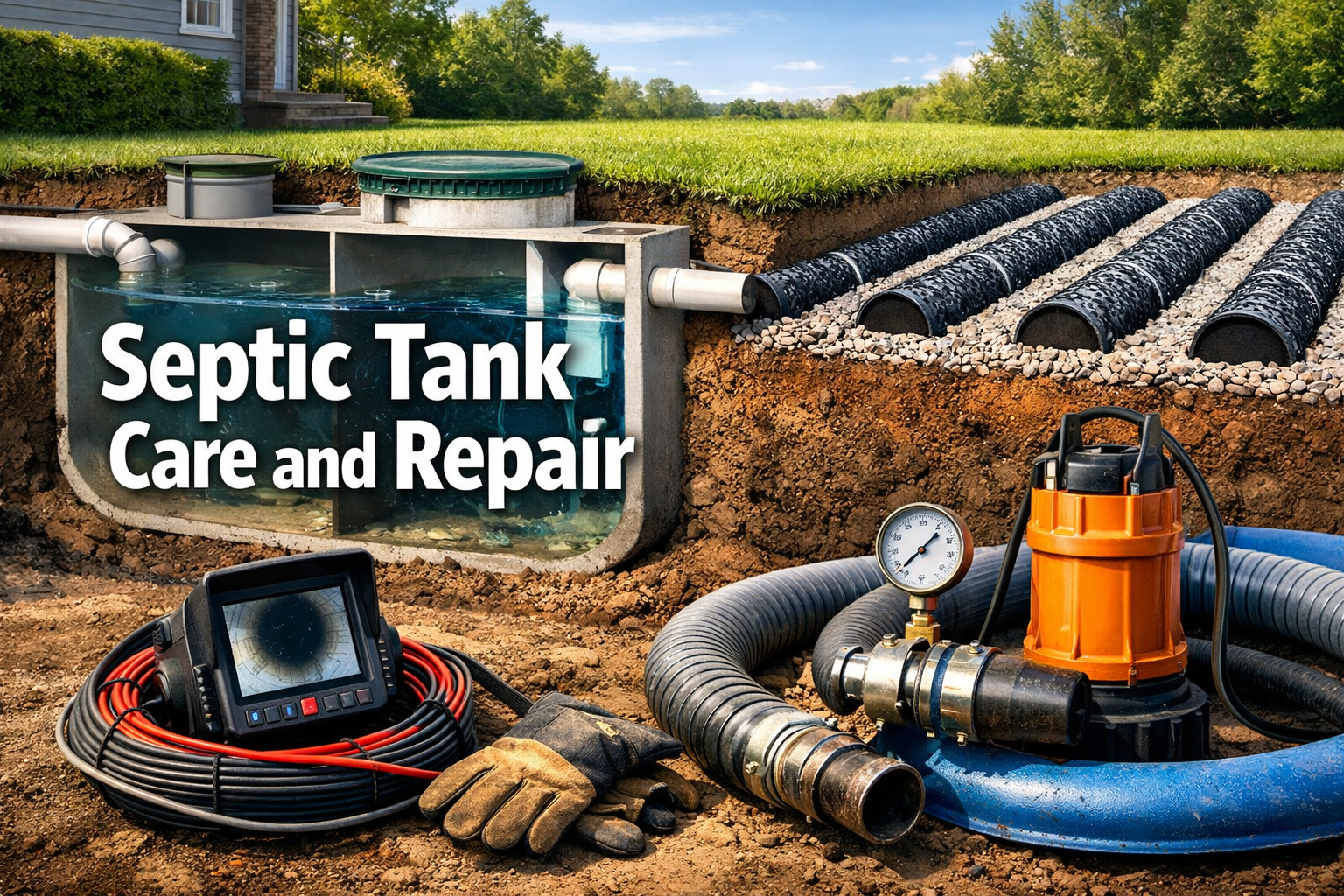
Septic tank care and repair encompasses both preventive maintenance and corrective actions to keep your system functioning properly. This includes regular pumping, bacterial balance maintenance, and prompt repairs when issues arise.
Essential maintenance tasks include:
- Regular pumping every 3-5 years to remove accumulated solids
- Filter cleaning every 6-12 months to prevent clogs
- Bacterial treatment monthly or quarterly to maintain waste breakdown
- Drain field protection by avoiding heavy vehicles and excess water
- Professional inspections annually or biannually for early problem detection
Common repair needs involve:
- Replacing damaged pipes or fittings
- Fixing or replacing septic pumps
- Repairing tank lids or access ports
- Addressing drain field saturation issues
- Restoring proper bacterial levels after system shock
The shift toward predictive maintenance using sensor technology is transforming how homeowners approach septic care. Modern systems can alert you to problems before they become emergencies, making repairs less costly and disruptive.
Choose professional service if you notice persistent odors, frequent backups, or standing water near your drain field. These signs often indicate problems beyond simple maintenance.
How Often Should You Perform Septic Tank Care and Repair Tasks?
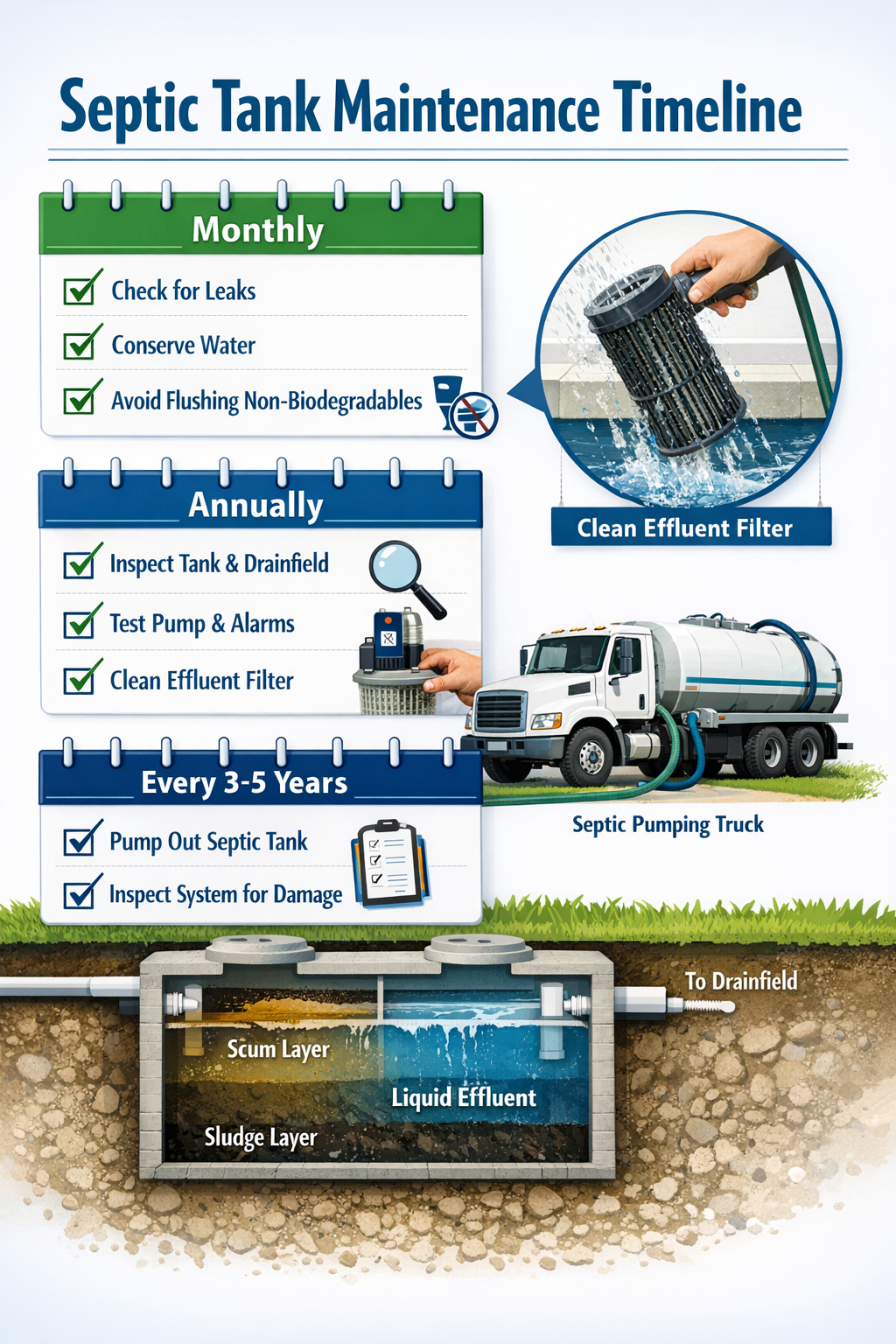
Most septic systems require pumping every 3-5 years, but your specific schedule depends on household size, tank capacity, and water usage patterns. Smaller households with larger tanks can wait longer, while busy families need more frequent service.
Maintenance frequency guide:
- Monthly: Check for odors, slow drains, and add bacterial treatment if needed
- Quarterly: Inspect visible components and clean effluent filter
- Annually: Professional inspection and system performance check
- Every 3-5 years: Complete tank pumping and thorough evaluation
- As needed: Address repairs promptly when problems arise
Factors that affect timing:
- Household size (more people = more frequent pumping)
- Garbage disposal use (increases solids accumulation)
- Water softener discharge (can disrupt bacterial balance)
- Age of system (older tanks may need more attention)
For detailed guidance on establishing your maintenance routine, check our complete septic tank care routine guide.
Common mistake: Waiting until problems appear before scheduling maintenance. This reactive approach often leads to expensive emergency repairs that could have been prevented with regular care.
What Are the Warning Signs That Require Immediate Septic Tank Repair?
Recognizing early warning signs can save you thousands in repair costs and prevent health hazards from system failure. Most septic emergencies develop gradually, giving you time to act if you know what to watch for.
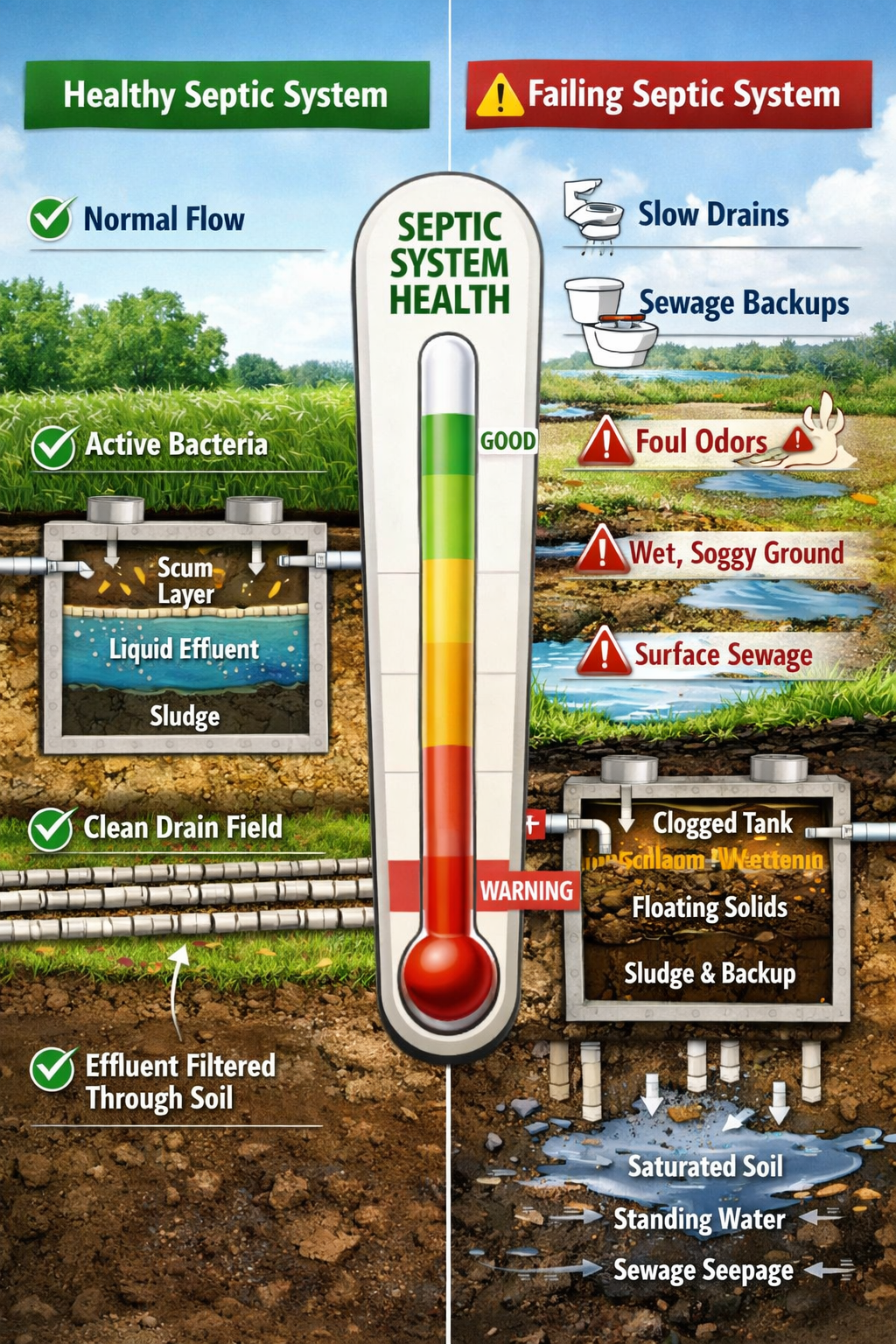
Immediate attention required for:
- Sewage backups in toilets, drains, or basement fixtures
- Standing water or wet spots in the drain field area
- Strong sewage odors inside or outside your home
- Extremely slow drains throughout the house
- Gurgling sounds from plumbing fixtures
- Lush grass growth over the septic area (indicates leakage)
Early warning signs include:
- Toilets that flush slowly or incompletely
- Drains that empty more slowly than usual
- Occasional mild odors near the tank or drain field
- Water backing up in floor drains during heavy use
Learn more about identifying these issues in our guide on how to know if your septic tank is full.
Emergency rule: If sewage backs up into your house, stop using water immediately and call a professional. Continued use can worsen the problem and create serious health risks.
Most homeowners notice problems during high-usage periods like holidays when multiple guests stress the system beyond its normal capacity.
How Much Does Septic Tank Care and Repair Cost?
Understanding septic system costs helps you budget for maintenance and make informed decisions about repairs versus replacement. The financial benefits of regular care become clear when you compare maintenance costs to emergency repairs.
Typical maintenance costs:
- Pumping: $200-$500 every 3-5 years
- Filter cleaning: $50-$150 annually
- Professional inspection: $100-$300
- Bacterial treatments: $10-$30 monthly
- Total maintenance over 20 years: $3,000-$4,000
Common repair costs:
- Pipe repairs: $500-$1,500
- Pump replacement: $800-$2,000
- Tank lid replacement: $200-$600
- Drain field restoration: $3,000-$10,000
- Complete system replacement: $25,000-$35,000 [3]
FYI: Some links may be affiliate links, which means I may earn a small commission at no extra cost to you.
For homeowners looking for a simple way to maintain bacterial balance and reduce repair risks, Septifix tablets offer an easy monthly solution. These tablets help break down waste, reduce odors, and keep your system working properly with just one flush per month. While not required, they can be particularly helpful for busy households or those who want a structured maintenance approach.
Budget planning tip: Set aside $200-$300 annually for septic maintenance. This small investment prevents the much larger expense of system failure and replacement.
What Should You Never Put Down Drains with a Septic System?
Protecting your septic system from harmful substances is one of the most important aspects of septic tank care and repair prevention. What goes down your drains directly affects bacterial balance and system performance.
Never flush or drain:
- Grease, fats, and cooking oils (solidify and clog pipes)
- Chemical drain cleaners (kill beneficial bacteria)
- Antibacterial soaps and cleaners (disrupt bacterial balance)
- Cat litter, diapers, or feminine products (don’t decompose)
- Cigarette butts and coffee grounds (accumulate as solids)
- Paint, solvents, or automotive fluids (toxic to bacteria)
Household items to avoid:
- Excessive amounts of bleach or disinfectants
- Water softener salt discharge (if possible)
- Large volumes of hot water at once
- Non-biodegradable toilet paper
- Prescription medications
For a comprehensive list, see our guide on what not to put in septic tank.
Smart substitution: Use septic-safe cleaning products and biodegradable soaps. These alternatives clean effectively without harming your system’s bacterial ecosystem.
Exception: Small amounts of household cleaners used normally won’t harm your system, but avoid concentrated chemicals and antibacterial products whenever possible.
How Do You Perform Basic Septic Tank Repairs?
While major repairs require professional service, homeowners can handle some basic septic tank care and repair tasks safely. Knowing your limits prevents dangerous situations and costly mistakes.
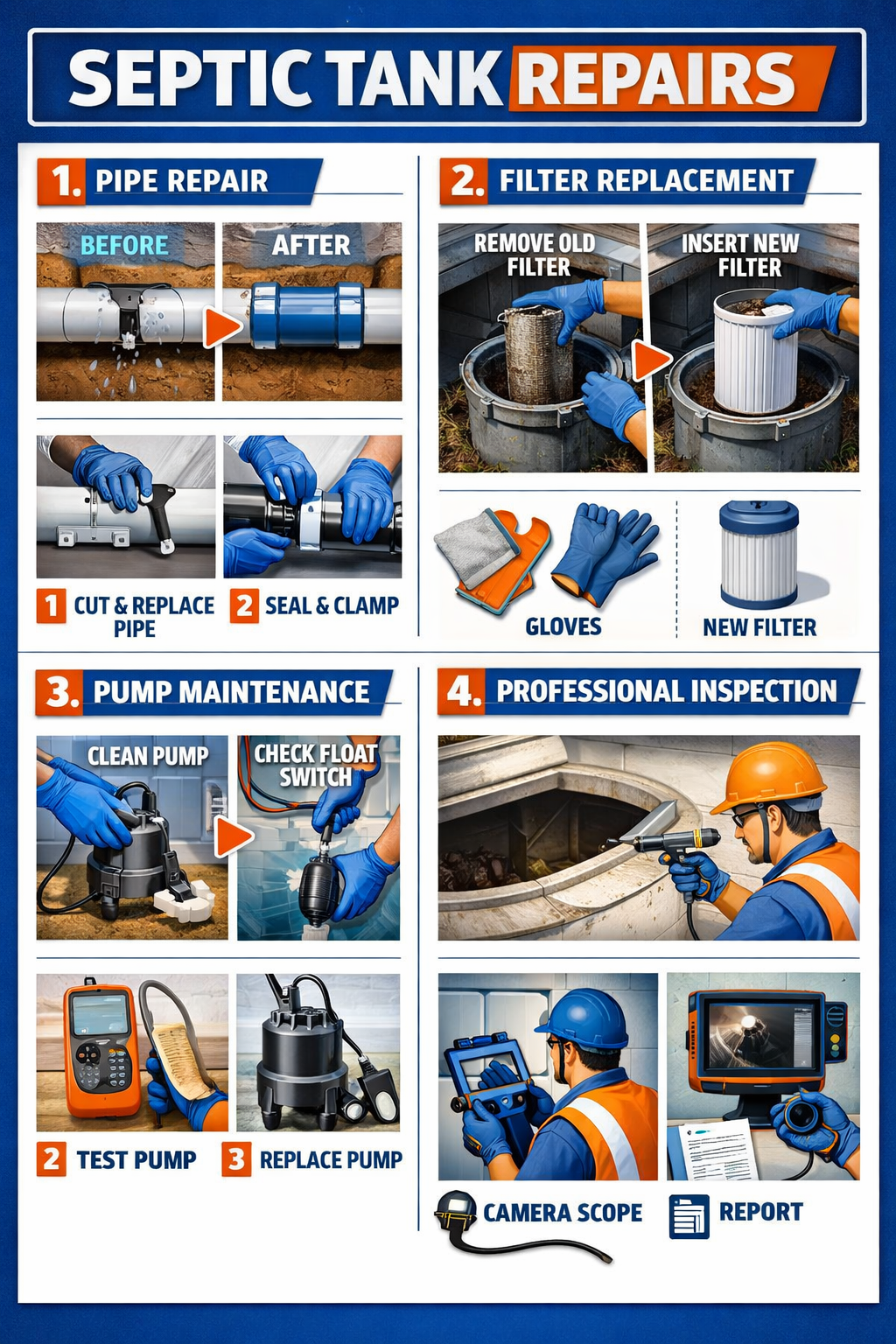
DIY-friendly repairs:
- Filter cleaning: Remove, rinse with hose, and reinstall quarterly
- Minor pipe adjustments: Tighten loose fittings with proper tools
- Lid maintenance: Clean debris and ensure proper sealing
- Bacterial restoration: Add treatments after system shock from chemicals
- Surface maintenance: Keep tank area clear of heavy objects and vehicles
Professional-only repairs:
- Electrical pump repairs or replacement
- Tank structural damage or cracks
- Drain field excavation or replacement
- Gas buildup or ventilation issues
- Any work requiring tank entry
Safety first: Never enter a septic tank. Toxic gases can cause unconsciousness or death within minutes. Always hire professionals for internal tank work.
For help locating your system components, check our guide on how to find septic tank lid.
Tool requirements: Basic repairs need standard plumbing tools, rubber gloves, and safety glasses. Avoid using metal tools near electrical components.
When to call professionals: If you’re unsure about any repair, smell gas, or encounter electrical components, stop and call a qualified septic service technician.
How Can You Extend Your Septic System’s Lifespan?
Modern septic systems built with high-density polyethylene (HDPE) and advanced fiberglass materials resist corrosion and root intrusion better than older concrete systems. However, proper care remains essential regardless of your tank material.
Lifespan extension strategies:
- Water conservation: Install low-flow fixtures and fix leaks promptly
- Bacterial support: Use monthly treatments to maintain healthy microorganisms
- Load management: Spread laundry and dishwashing throughout the week
- Professional monitoring: Schedule regular inspections to catch problems early
- Drain field protection: Avoid parking vehicles or building structures over the area
Modern technology advantages:
Smart monitoring systems with sensors can detect problems before they become visible, enabling predictive maintenance that prevents system failures. These systems track water levels, flow rates, and bacterial activity.
Water usage tips:
- Run dishwashers and washing machines with full loads
- Take shorter showers and install low-flow showerheads
- Fix dripping faucets and running toilets immediately
- Avoid long soaks in large bathtubs
Learn more about maintaining system health in our tips to keep septic tank healthy guide.
Investment perspective: Proper care can extend system life by 10-15 years, representing thousands of dollars in avoided replacement costs.
Helpful Resource for Simple Septic Tank Care
Maintaining proper bacterial balance is crucial for effective waste breakdown and odor control. While regular pumping and professional service handle major maintenance needs, monthly bacterial support can help prevent problems between services.
Septifix tablets provide a convenient solution for homeowners who want structured septic maintenance. With one easy monthly flush, these tablets help break down waste, reduce bad smells, and keep your septic tank working properly. They’re particularly useful for households that use garbage disposals, have high water usage, or want to maintain optimal bacterial levels.
The tablets work by introducing beneficial bacteria that help digest organic waste more efficiently, potentially reducing the frequency of pumping and minimizing odor issues. While not a replacement for regular maintenance, they can be a valuable addition to your septic care routine.
This approach fits well with the industry’s shift toward proactive maintenance strategies that prevent problems rather than simply reacting to them.
FAQ
How often should I pump my septic tank?
Most residential septic tanks need pumping every 3-5 years, depending on household size and usage. Smaller households can wait longer, while larger families may need more frequent service.
What are the first signs my septic system needs attention?
Watch for slow drains, gurgling sounds, sewage odors, or wet spots in your yard. These early warnings allow you to address problems before they become emergencies.
Can I use regular household cleaners with a septic system?
Use septic-safe products when possible and avoid antibacterial cleaners or chemical drain cleaners that kill beneficial bacteria. Small amounts of regular cleaners are usually fine.
How much does septic tank pumping cost?
Pumping typically costs $200-$500 depending on tank size and location. This investment every few years prevents much more expensive repairs or replacement.
Should I add bacteria to my septic tank?
Bacterial treatments can help maintain proper waste breakdown, especially after using antibiotics or harsh chemicals. Monthly treatments are often beneficial for system health.
What happens if I ignore septic maintenance?
Neglected systems can fail completely, requiring replacement costing $25,000-$35,000. Regular maintenance costing a few thousand over 20 years prevents this expense.
Can I repair my septic system myself?
Handle only basic tasks like filter cleaning. Leave pump repairs, electrical work, and any internal tank work to professionals for safety reasons.
How do I find my septic tank?
Check property records, look for green patches in your yard, or hire a professional with locating equipment. Most tanks are 10-25 feet from the house.
What should I do if sewage backs up into my house?
Stop using water immediately and call a professional. Continued use will worsen the backup and create health hazards.
How long do septic systems last?
Well-maintained systems can last 20-30 years or more. Modern materials like HDPE and fiberglass resist corrosion better than older concrete tanks.
Is it normal to smell my septic system?
Occasional mild odors during pumping or wet weather may be normal, but persistent strong odors indicate problems requiring professional attention.
Can heavy rain affect my septic system?
Yes, saturated soil can prevent proper drainage and cause backups. Avoid excessive water use during heavy rain periods and ensure proper surface drainage.
Conclusion
Effective septic tank care and repair combines regular maintenance, early problem detection, and prompt professional service when needed. By pumping every 3-5 years, avoiding harmful substances, and watching for warning signs, you can prevent most major problems and extend your system’s lifespan significantly.
The key to successful septic ownership lies in understanding that small, consistent investments in maintenance prevent large, expensive emergencies. Modern technology is making this easier with smart monitoring systems and improved materials, but the fundamentals remain the same: treat your system well, and it will serve you reliably for decades.
Take action today:
- Schedule pumping if it’s been more than 5 years
- Locate your tank and drain field if you haven’t already
- Switch to septic-safe household products
- Consider monthly bacterial treatments for optimal performance
- Establish a relationship with a qualified septic service professional
Remember, every dollar spent on maintenance saves approximately ten dollars on repairs [3]. Your septic system is a significant investment worth protecting through proper care and timely attention to problems.
Related Reading
For more detailed information on specific aspects of septic care, explore our comprehensive guides on essential septic tank care tips, natural septic tank care methods, and signs your septic tank needs maintenance.
References
[1] How Modern Septic Technology Is Changing The Game – https://www.septicblue.com/how-modern-septic-technology-is-changing-the-game
[2] Septic System Maintenance 1404009 – https://www.datainsightsmarket.com/reports/septic-system-maintenance-1404009
[3] Why Regular Septic Maintenance Can Save You Thousands In 2026 – https://www.metroseptic.com/blog/why-regular-septic-maintenance-can-save-you-thousands-in-2026/