
Last updated: March 2, 2026
Key Takeaways
• Healthy septic tanks already contain sufficient bacteria to break down waste naturally, making additives unnecessary in most cases
• Bacterial treatments may only help compromised systems where harsh chemicals have killed beneficial bacteria populations
• The EPA found no evidence that biological additives improve healthy septic tank performance, questioning their cost-effectiveness
• Limiting harsh cleaners and chemicals is more important than adding bacteria for maintaining system health
• Professional inspection and regular pumping remain the most effective septic maintenance practices
• Simple monthly treatments like Septifix tablets can help maintain bacterial balance without complex procedures
• Signs of bacterial imbalance include slow drains, bad odors, and frequent backups requiring immediate attention
Quick Answer
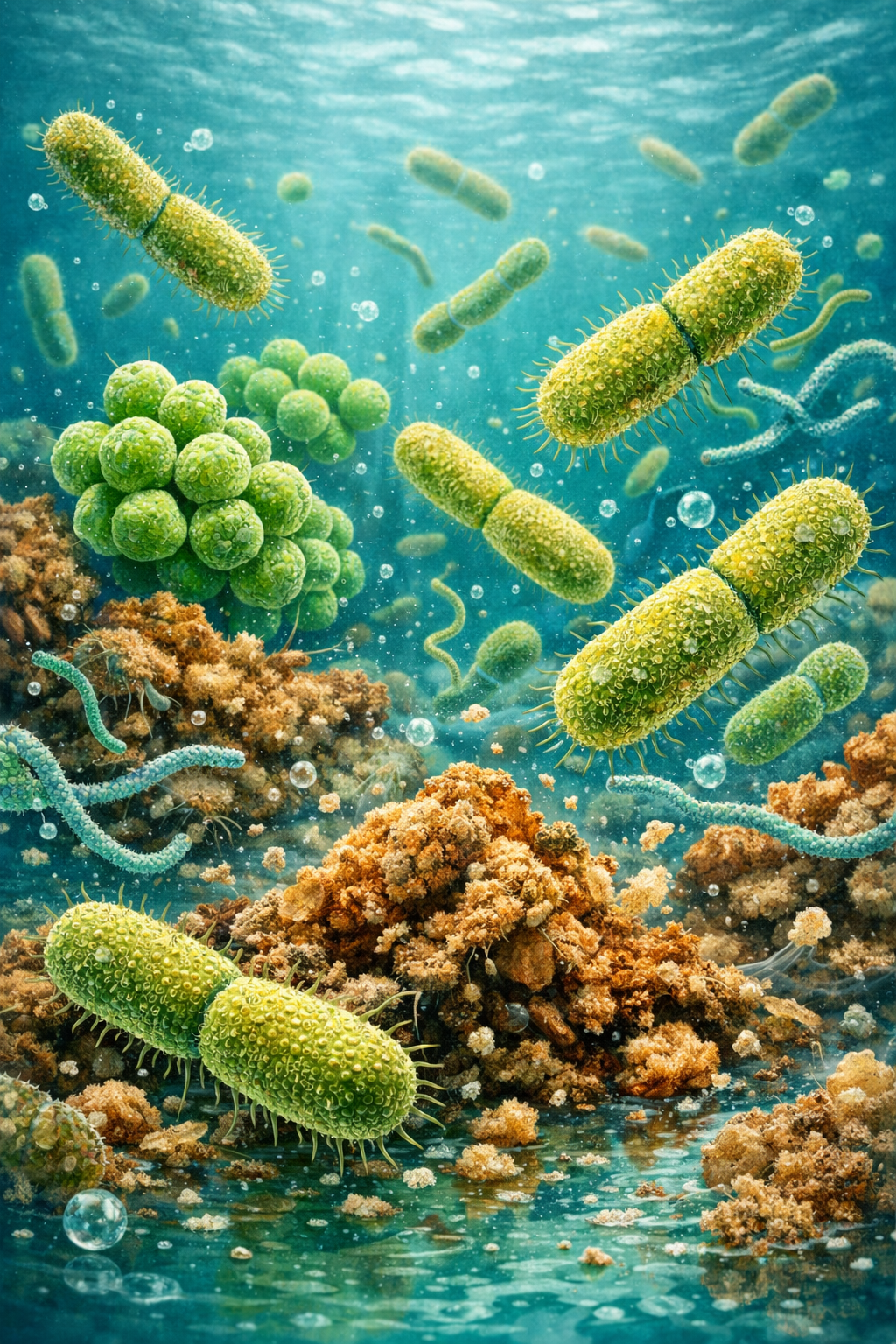
Septic tank bacteria treatment involves adding beneficial microorganisms to help break down waste in your septic system. However, healthy septic tanks already contain enough natural bacteria to function properly. Bacterial treatments are mainly useful for systems compromised by harsh chemicals or antibiotics, not for routine maintenance.
What Is Septic Tank Bacteria Treatment?
Septic tank bacteria treatment refers to adding beneficial microorganisms to your septic system to help break down organic waste and maintain proper function. These treatments typically contain enzymes and bacteria strains designed to digest solids, reduce odors, and prevent system failures.
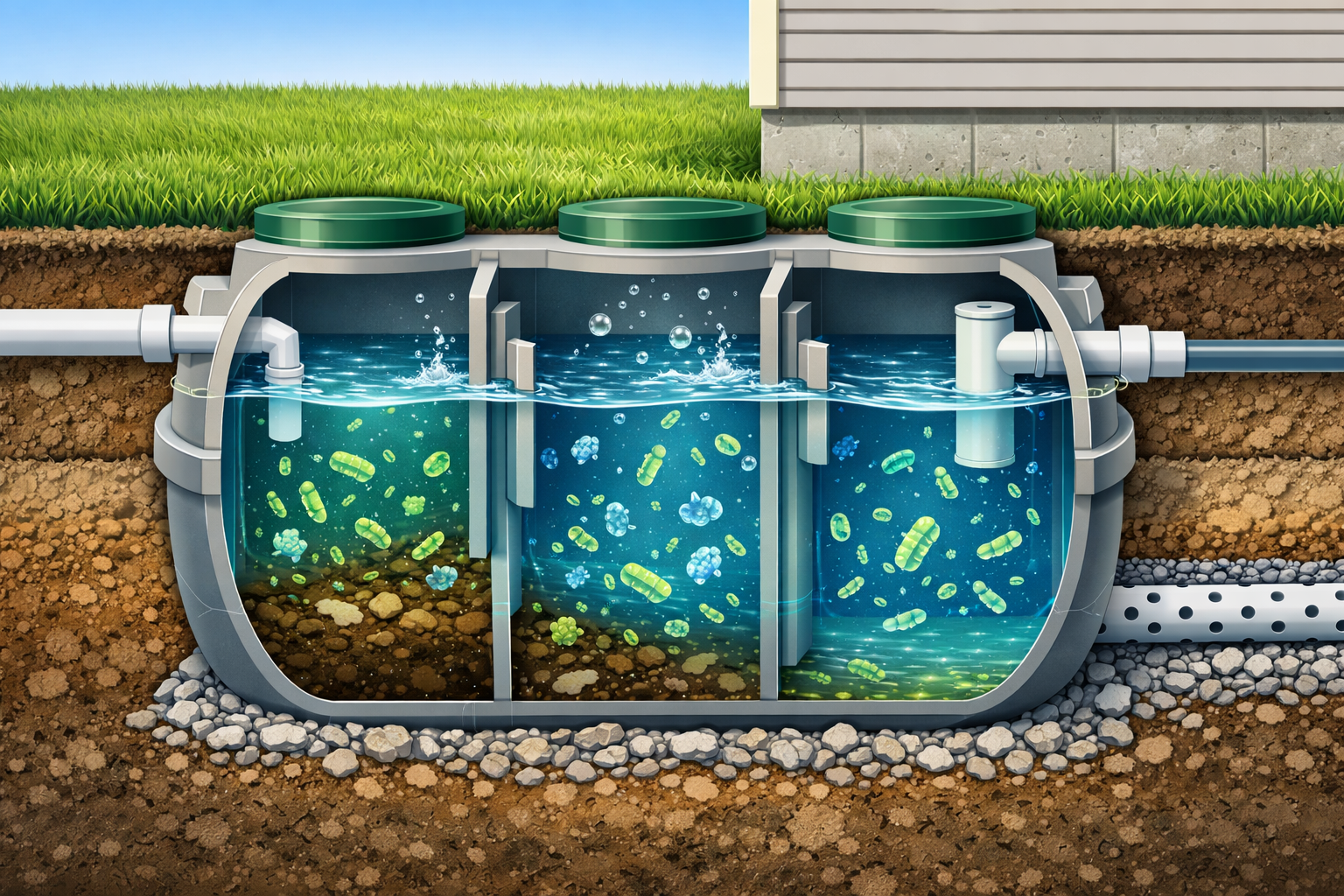
Your septic tank naturally houses millions of bacteria that work around the clock to decompose waste. These microorganisms break down organic matter into simpler compounds that can safely flow to your drain field. The process happens in three main layers:
• Scum layer – where oils and floating debris collect
• Effluent layer – the middle zone of clarified liquid
• Sludge layer – where heavy solids settle and decompose
Choose bacterial treatments only if your system shows signs of bacterial imbalance like persistent odors, slow drains, or frequent backups. Most healthy systems don’t need additional bacteria supplements.
A common mistake homeowners make is assuming more bacteria always equals better performance. In reality, adding bacteria to an already healthy system can create competition among bacterial populations, potentially causing more harm than good.
For more background on how these systems work, check out our guide on how septic tanks work.
Do Septic Tanks Actually Need Bacterial Additives?
Most septic tanks don’t need bacterial additives because they already contain sufficient bacteria to support biological waste treatment processes. The U.S. Environmental Protection Agency found that biological additives do not improve the performance of healthy septic tanks and couldn’t justify their cost for residential use.
Here’s what research shows about bacterial additives:
When additives aren’t needed:
• Your septic system drains normally
• No persistent odors around the tank area
• Regular pumping schedule is maintained
• Household chemical use is minimal
When additives might help:
• Bacterial flora has been destabilized by toxic substances
• Recent antibiotic use has affected bacterial populations
• Harsh cleaning products have disrupted the system
• System shows signs of bacterial imbalance
The key factor is system health, not routine maintenance. Healthy septic tanks maintain their bacterial populations naturally through incoming waste and optimal conditions for microbial growth.
Edge case to consider: If you’ve recently used strong antibiotics or had extensive cleaning with harsh chemicals, a one-time bacterial treatment might help restore balance. However, this should be the exception, not the rule.
FYI: Some links may be affiliate links, which means I may earn a small commission at no extra cost to you.
If you’re looking for a simple monthly maintenance option, Septifix tablets offer an easy way to support your septic system’s bacterial balance. These tablets help break down waste and reduce odors with just one monthly flush, making septic care hassle-free for busy homeowners.
How Does Septic Tank Bacteria Treatment Work?
Septic tank bacteria treatment works by introducing specific bacterial strains and enzymes that accelerate the breakdown of organic waste in your system. These treatments target different types of waste materials and help maintain the delicate microbial ecosystem needed for proper septic function.
The treatment process involves several key mechanisms:
Waste breakdown stages:
- Protein digestion – bacteria break down human waste and food particles
- Fat and grease processing – specialized enzymes target oils and fats
- Cellulose decomposition – bacteria digest paper products and organic fibers
- Sludge reduction – microorganisms convert solids into liquid effluent
Bacterial types in treatments:
• Aerobic bacteria – require oxygen, work in the upper tank layers
• Anaerobic bacteria – thrive without oxygen, dominate the sludge layer
• Facultative bacteria – adapt to both oxygen-rich and oxygen-poor conditions
The treatment typically takes 2-4 weeks to show noticeable effects. You might see improved drainage, reduced odors, and less frequent pumping needs if your system was previously compromised.
Choose bacterial treatment if your system shows clear signs of bacterial disruption like sudden drainage problems or strong sewage odors. Don’t expect dramatic changes in already well-functioning systems.
A common mistake is expecting immediate results. Bacterial populations need time to establish and multiply before you’ll notice improvements in system performance.
For detailed information about the natural waste processing in septic systems, see our guide on what happens in a septic tank.
Signs Your Septic Tank Bacteria May Need Help
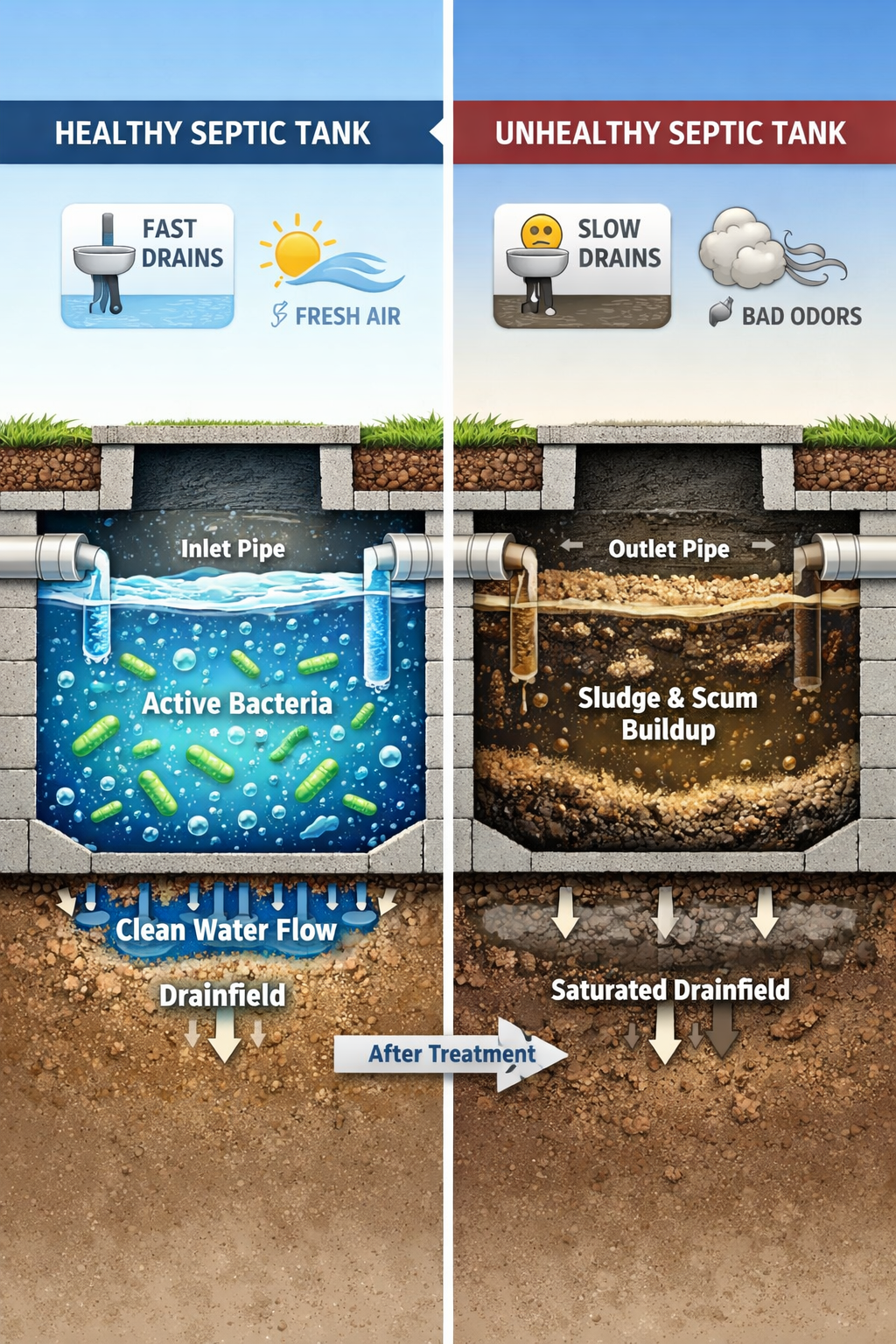
Your septic tank bacteria may need help when you notice persistent drainage problems, strong odors, or frequent system backups that indicate bacterial populations have been compromised. These signs typically appear after exposure to harsh chemicals, medications, or excessive cleaning products.
Clear warning signs include:
Drainage issues:
• Slow-draining sinks, tubs, or toilets
• Gurgling sounds from drains
• Water backing up into fixtures
• Standing water around the drain field
Odor problems:
• Strong sewage smells near the tank
• Foul odors inside the house from drains
• Persistent bad smells in the yard
• Ammonia-like odors around septic components
System performance:
• More frequent pumping requirements
• Visible sludge buildup in inspection ports
• Effluent that appears cloudy or discolored
• Wet spots or pooling water over the drain field
Choose bacterial treatment when these symptoms appear suddenly after antibiotic use, heavy cleaning, or chemical exposure. Gradual onset usually indicates other issues like tank fullness or mechanical problems.
The timing matters – bacterial disruption typically shows symptoms within 2-4 weeks of the triggering event. If problems develop slowly over months, the issue is likely structural rather than biological.
Edge case: Sometimes these symptoms indicate a full septic tank rather than bacterial problems. Always check your pumping schedule and tank levels before assuming bacterial treatment is needed.
For comprehensive guidance on recognizing septic problems, check our signs your septic tank needs maintenance guide.
Types of Septic Tank Bacteria Treatments Available
Septic tank bacteria treatments come in several forms, each designed for different situations and ease of use. The main types include liquid concentrates, powder formulations, tablet treatments, and enzyme-based products that target specific waste components.
Liquid Bacterial Treatments
• Fast-acting – dissolve quickly in tank water
• High concentration – contain millions of bacteria per dose
• Easy measurement – precise dosing with included measuring cups
• Best for – emergency situations or severely compromised systems
Powder Formulations
• Long shelf life – remain stable for extended storage
• Slow release – gradually activate in tank conditions
• Cost-effective – typically less expensive per treatment
• Best for – routine maintenance or preventive care
Tablet Treatments
• Convenient dosing – pre-measured, no mixing required
• Monthly schedule – simple flush-and-forget application
• Consistent results – standardized bacterial counts per tablet
• Best for – homeowners wanting hassle-free maintenance
Enzyme-Based Products
• Targeted action – break down specific waste types
• Complement bacteria – work alongside natural bacterial populations
• Safe formulation – won’t disrupt existing microbial balance
• Best for – systems with grease or protein buildup issues
Choose tablets if you want the simplest maintenance routine. Choose liquids if you need fast results for problem systems. Choose powders if you’re treating multiple properties or want bulk savings.
A common mistake is mixing different treatment types simultaneously, which can create bacterial competition and reduce effectiveness.
Septic Tank Bacteria Treatment Application Methods
Septic tank bacteria treatment application varies by product type, but most treatments are added directly through your toilet or main drain line to ensure proper distribution throughout the tank system. The key is getting the bacteria to the right location where they can establish colonies and begin waste processing.
Standard application steps:
- Choose the right time – apply during low-usage periods (evening or before bed)
- Measure the dose – follow manufacturer instructions exactly
- Add to toilet – pour liquid or drop tablets into main bathroom toilet
- Flush once – single flush distributes treatment without over-dilution
- Limit water use – avoid heavy usage for 6-8 hours after application
Application timing considerations:
• Best time: Late evening when household water use is minimal
• Avoid: During laundry days or heavy cleaning activities
• Frequency: Monthly for maintenance, weekly for problem systems
• Weather: Apply during moderate temperatures for optimal bacterial activity
Distribution methods by treatment type:
| Treatment Type | Application Method | Contact Time |
|---|---|---|
| Liquid concentrate | Pour into toilet, single flush | 6-8 hours |
| Powder formula | Mix with warm water, flush | 8-12 hours |
| Tablets | Drop in toilet, flush | 4-6 hours |
| Enzyme products | Add to multiple drains | 2-4 hours |
Choose toilet application for most treatments since it provides direct access to the main tank. Choose drain application for enzyme products that target specific waste types in different areas.
The biggest mistake homeowners make is applying treatments during high water usage periods, which dilutes the bacteria before they can establish in the tank.
Natural Ways to Support Septic Tank Bacteria
Natural methods to support septic tank bacteria focus on creating optimal conditions for beneficial microorganisms while avoiding substances that harm bacterial populations. These approaches are often more effective and sustainable than adding commercial bacterial treatments.
Limit harmful chemicals:
• Reduce bleach use – switch to oxygen-based cleaners when possible
• Avoid antibacterial soaps – use regular soap for handwashing and cleaning
• Minimize harsh cleaners – choose biodegradable, septic-safe products
• Limit medication disposal – never flush unused antibiotics or chemicals
Feed beneficial bacteria naturally:
• Add biodegradable waste – small amounts of leftover vegetables or starches
• Maintain proper pH – avoid excessive acidic or alkaline substances
• Ensure adequate moisture – bacteria need proper water levels to thrive
• Provide organic matter – normal household waste supplies necessary nutrients
Create optimal conditions:
• Maintain steady temperature – insulate tanks in cold climates
• Ensure proper ventilation – keep vent pipes clear and functional
• Balance water usage – spread laundry and dishwashing throughout the week
• Avoid overloading – don’t exceed your system’s daily capacity
Beneficial household practices:
• Use septic-safe toilet paper that breaks down easily
• Compost food scraps instead of using garbage disposals
• Fix leaky faucets and running toilets promptly
• Schedule regular professional inspections
Choose natural support methods first before considering bacterial additives. Most septic problems stem from harmful practices rather than insufficient bacteria populations.
A common mistake is thinking more organic waste always helps bacteria. Excessive food waste can actually overwhelm the system and create imbalances.
For comprehensive maintenance guidance, see our essential septic tank care tips.
Cost and Effectiveness of Septic Tank Bacteria Treatments
Septic tank bacteria treatments typically cost $15-50 per month, but their effectiveness depends heavily on your system’s current condition rather than the product price. Research shows that bacterial additives provide minimal benefit to healthy septic systems, making cost-effectiveness questionable for routine maintenance.
Treatment costs by type:
| Treatment Type | Monthly Cost | Annual Cost | Effectiveness Rating |
|---|---|---|---|
| Liquid concentrates | $25-50 | $300-600 | Moderate for compromised systems |
| Powder formulations | $15-30 | $180-360 | Low for healthy systems |
| Tablet treatments | $20-40 | $240-480 | Convenient but limited benefit |
| Enzyme products | $30-45 | $360-540 | Good for specific waste issues |
Cost comparison with alternatives:
• Professional pumping: $200-400 every 3-5 years
• System inspection: $100-200 annually
• Preventive maintenance: $50-100 per year
• Emergency repairs: $1,000-5,000+ when systems fail
Effectiveness factors:
• System health – treatments work better on compromised systems
• Chemical exposure – recent antibiotic or cleaner use affects results
• Application consistency – irregular use reduces effectiveness
• Product quality – bacterial count and strain variety matter
Choose bacterial treatments if the cost is justified by clear system problems like persistent odors or drainage issues. Skip treatments if your system functions normally and you maintain good septic practices.
The most cost-effective approach combines proper household practices with professional maintenance rather than relying on monthly bacterial additives for healthy systems.
Edge case: If you frequently use antibiotics or harsh cleaners due to health conditions, occasional bacterial treatments might justify their cost as preventive insurance.
For detailed maintenance cost planning, check our guide on how much it costs to pump septic tanks.
Common Mistakes with Septic Tank Bacteria Treatment
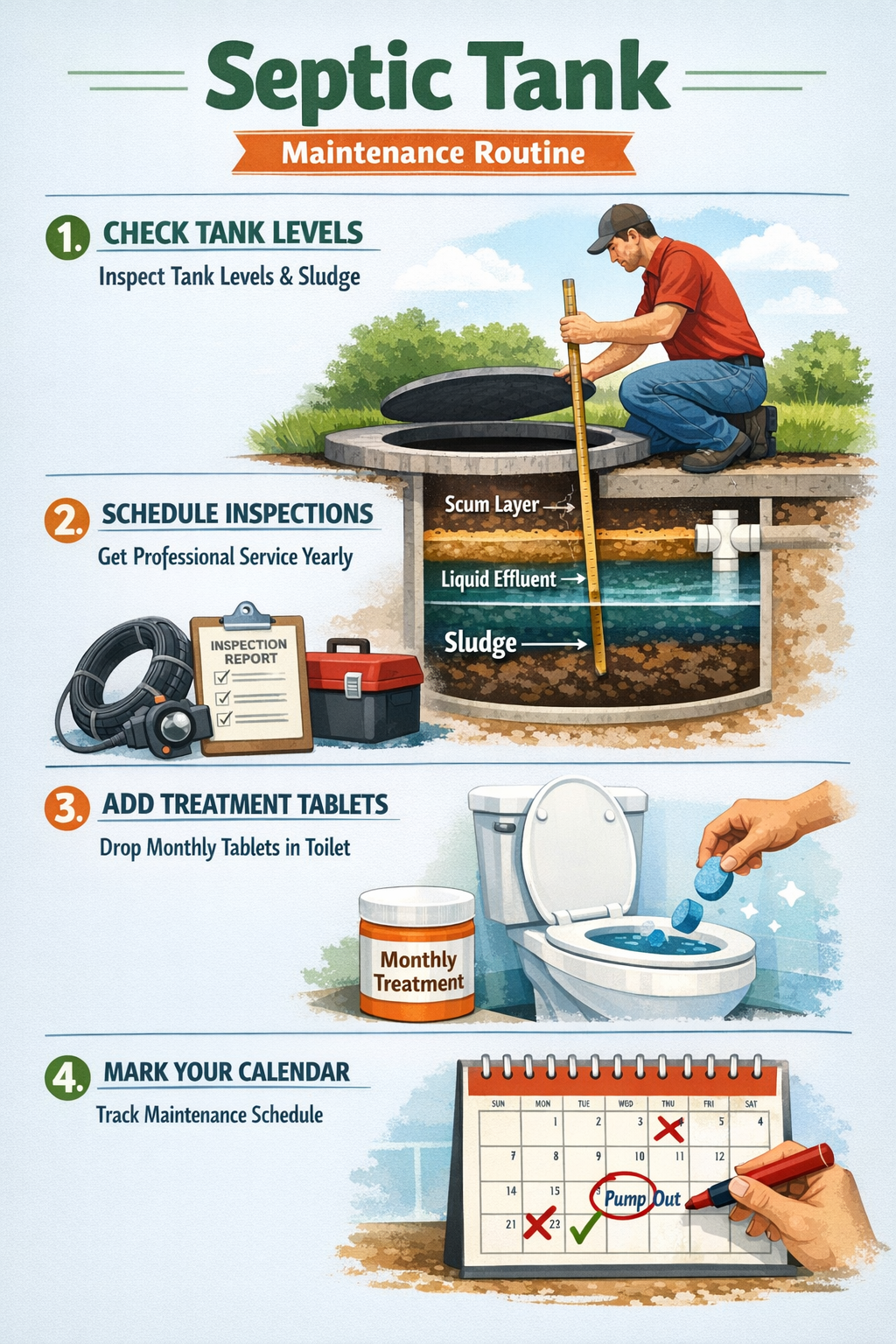
Common mistakes with septic tank bacteria treatment include overusing products in healthy systems, applying treatments during high water usage periods, and expecting bacterial additives to fix structural problems that require professional repair. These errors waste money and can sometimes harm system performance.
Dosage and timing mistakes:
• Overdosing treatments – more bacteria doesn’t equal better results
• Applying during laundry days – heavy water use dilutes bacterial concentrations
• Inconsistent application – sporadic use prevents bacterial establishment
• Wrong timing – adding treatments before heavy chemical cleaning
Product selection errors:
• Using multiple products simultaneously – creates bacterial competition
• Choosing wrong treatment type – enzymes for bacterial problems or vice versa
• Ignoring expiration dates – old products contain dead or inactive bacteria
• Mixing incompatible chemicals – combining treatments can neutralize effectiveness
System assessment mistakes:
• Treating symptoms instead of causes – bacteria won’t fix full tanks or broken pipes
• Assuming all problems are bacterial – mechanical issues need professional repair
• Skipping professional inspection – missing underlying structural problems
• Continuing treatment without results – persisting with ineffective approaches
Household practice errors:
• Continuing harmful chemical use – negating treatment benefits with harsh cleaners
• Overloading the system – excessive water use overwhelms bacterial populations
• Flushing inappropriate items – non-biodegradable materials harm bacteria
• Ignoring maintenance schedules – treatments can’t replace regular pumping
Choose professional evaluation first when problems persist despite bacterial treatment. Many septic issues require mechanical solutions rather than biological interventions.
The biggest mistake is using bacterial treatments as a substitute for proper septic maintenance practices and regular professional service.
Helpful Resource for Simple Septic Care
If you want a straightforward approach to septic maintenance without the guesswork, Septifix tablets provide a simple monthly solution. These tablets help break down waste, reduce bad smells, and support your septic tank’s natural bacterial balance with just one flush per month.
Why homeowners choose Septifix:
• No measuring or mixing – pre-dosed tablets eliminate dosage errors
• Monthly schedule – easy to remember and maintain consistency
• Waste breakdown support – helps process organic matter and reduces sludge
• Odor control – addresses unpleasant smells from bacterial imbalances
• Preventive approach – supports system health before problems develop
Best for homeowners who:
• Want hassle-free septic maintenance
• Prefer scheduled, consistent care routines
• Need help with occasional odors or slow drains
• Want to support their system between professional services
While not required for every septic system, Septifix can be particularly helpful if you’ve noticed minor drainage issues or want a simple way to maintain bacterial balance without complex procedures.
Remember that no bacterial treatment replaces proper septic care practices like regular pumping, professional inspections, and mindful household habits. Septifix works best as part of a complete maintenance routine.
👉 Discover the benefits of using Septifix for hassle-free septic maintenance and see if this simple monthly approach fits your septic care needs.
Frequently Asked Questions
How often should I add bacteria to my septic tank?
Most healthy septic tanks don’t need bacterial additives. If your system requires treatment due to chemical disruption, monthly applications are typically sufficient. Healthy systems maintain adequate bacterial populations naturally.
Can I use too much bacteria treatment in my septic tank?
Yes, excessive bacterial treatments can create competition among bacterial populations and potentially harm system performance. Follow manufacturer dosing instructions and avoid combining multiple products simultaneously.
Do bacterial additives really work for septic tanks?
Research shows bacterial additives provide minimal benefit to healthy septic systems. They may help compromised systems where harsh chemicals have disrupted natural bacterial populations, but won’t improve normally functioning tanks.
What kills bacteria in septic tanks?
Harsh chemicals like bleach, antibacterial soaps, strong cleaners, and certain medications can kill beneficial septic bacteria. Excessive water use and non-biodegradable materials also disrupt bacterial populations.
How long does it take for septic tank bacteria treatment to work?
Bacterial treatments typically take 2-4 weeks to show noticeable effects in compromised systems. You may see improved drainage and reduced odors during this timeframe if bacterial populations were previously disrupted.
Should I add bacteria after septic tank pumping?
No, bacterial additives aren’t necessary after pumping. Your septic tank will naturally repopulate with beneficial bacteria from incoming household waste within a few weeks of normal use.
Can I make my own septic tank bacteria treatment?
While some homeowners use yeast or other household items, commercial treatments contain specific bacterial strains designed for septic conditions. DIY treatments may not provide the right bacterial types for effective waste processing.
Do septic tank bacteria treatments reduce pumping frequency?
Bacterial treatments don’t significantly reduce pumping needs in healthy systems. Regular pumping every 3-5 years remains necessary regardless of bacterial additive use to remove accumulated solids.
Are enzyme treatments better than bacterial treatments?
Enzyme treatments work differently by breaking down specific waste types, while bacterial treatments add living microorganisms. Choose enzymes for grease or protein buildup issues, and bacteria for systems with disrupted microbial populations.
What’s the best time to apply septic tank bacteria treatment?
Apply treatments during low water usage periods, typically in the evening before bed. This allows 6-8 hours of contact time without dilution from household water use.
Can bacterial treatments fix a failing septic system?
No, bacterial treatments cannot fix structural problems like damaged pipes, full tanks, or drain field failures. These issues require professional repair or system replacement regardless of bacterial health.
Do I need bacteria treatment if I use septic-safe products?
If you consistently use septic-safe household products and maintain good practices, bacterial treatments are typically unnecessary. Your system should maintain healthy bacterial populations naturally.
Conclusion
Septic tank bacteria treatment can be helpful for compromised systems, but most healthy septic tanks don’t need bacterial additives to function properly. The EPA research confirms that biological additives provide minimal benefit to well-functioning systems, making routine bacterial treatments unnecessary for most homeowners.
Key takeaways for septic tank bacteria treatment:
• Focus on prevention first – limit harsh chemicals and maintain good household practices
• Consider treatment only for compromised systems – when bacterial populations have been disrupted by chemicals or medications
• Choose simple, consistent approaches – monthly tablets like Septifix offer hassle-free maintenance for those who prefer scheduled care
• Don’t replace essential maintenance – bacterial treatments can’t substitute for regular pumping and professional inspections
Your next steps:
- Assess your system’s current health – check for drainage issues, odors, or recent chemical exposure
- Review your household practices – minimize harsh cleaners and antibacterial products
- Schedule professional inspection – identify any structural issues before considering bacterial treatments
- Consider simple maintenance options – if you want extra support for your system’s bacterial balance
The most effective septic care combines proper household habits, regular professional maintenance, and occasional bacterial support only when needed. Focus on creating optimal conditions for your tank’s natural bacterial populations rather than relying on frequent additives.
For comprehensive septic system guidance, explore our complete septic tank maintenance checklist to develop a maintenance routine that keeps your system healthy for years to come.
References
[1] How Do I Add More Bacteria To My Septic Tank How To Restore Septic Tank Bacteria – https://organicabiotech.com/how-do-i-add-more-bacteria-to-my-septic-tank-how-to-restore-septic-tank-bacteria/
[4] Beneficial Bacteria For Septic Tanks A Complete Guide – https://www.teamonebiotech.com/blog/beneficial-bacteria-for-septic-tanks-a-complete-guide/
[5] Are Septic Tank Additives Good Or Bad – https://www.premiertechaqua.com/en-us/blog/are-septic-tank-additives-good-or-bad
[6] Bacteria Septic Tank – https://dandhsepticservices.com/bacteria-septic-tank/