
Understanding the Septic Tank Anaerobic Process: A Complete Guide for Homeowners
Last updated: March 4, 2026
Key Takeaways
- The septic tank anaerobic process breaks down waste without oxygen using specialized bacteria
- Three distinct layers form during anaerobic decomposition: scum, liquid, and sludge
- Anaerobic bacteria convert organic matter into simpler compounds, gases, and liquid effluent
- This oxygen-free process typically takes 24-48 hours for initial breakdown
- Maintaining proper bacterial balance is crucial for effective waste treatment
- Regular pumping every 3-5 years prevents system overload and maintains efficiency
- Avoiding antibacterial products helps preserve beneficial anaerobic bacteria
- Understanding this process helps homeowners make better maintenance decisions
Quick Answer
The septic tank anaerobic process is an oxygen-free biological treatment that breaks down household waste using naturally occurring bacteria. These bacteria decompose organic matter in your septic tank, converting solids into gases and liquid effluent that can safely move to the drain field. This process happens continuously in the sealed environment of your septic tank, making it the foundation of your entire septic system’s operation.
What Is the Septic Tank Anaerobic Process?
The septic tank anaerobic process is the biological breakdown of organic waste in an oxygen-free environment. Unlike aerobic processes that require air, anaerobic digestion occurs when bacteria work without oxygen to decompose household waste materials.
This process happens naturally in your septic tank because the sealed container prevents oxygen from entering. Anaerobic bacteria thrive in this environment, feeding on organic matter from toilets, sinks, showers, and laundry. These microorganisms break down complex waste materials into simpler compounds, producing methane gas, carbon dioxide, and liquid effluent as byproducts.
The anaerobic process is essential because it:
- Reduces waste volume by up to 50-60%
- Separates solids from liquids for proper treatment
- Produces gases that vent safely through your plumbing system
- Creates effluent that can be further treated in the drain field
Choose anaerobic treatment if you have a conventional septic system, as this process forms the foundation of waste management for most residential properties. The process works continuously, requiring minimal intervention when properly maintained.
For a deeper understanding of how this fits into your overall septic system, check out our complete guide on what happens in a septic tank.
How Does Anaerobic Decomposition Work in Your Septic Tank?
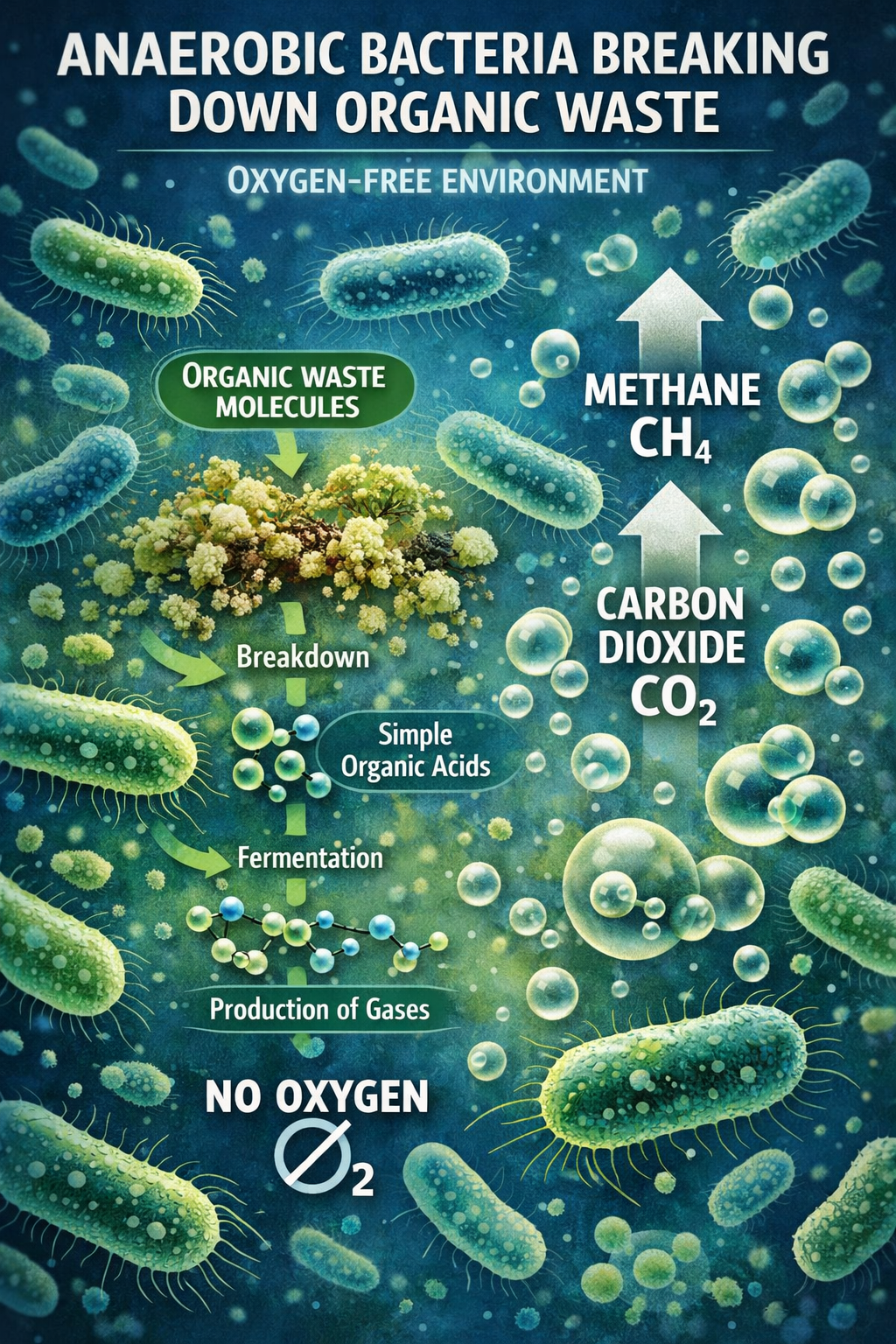
Anaerobic decomposition in your septic tank follows a specific biological pathway that converts complex organic matter into simpler, manageable compounds. The process begins immediately when waste enters your tank and continues as long as conditions remain oxygen-free.
The Four-Stage Breakdown Process:
- Hydrolysis – Large organic molecules break into smaller, water-soluble compounds
- Acidogenesis – Acid-producing bacteria convert these compounds into organic acids
- Acetogenesis – Acid-consuming bacteria transform organic acids into acetic acid and hydrogen
- Methanogenesis – Methane-producing bacteria convert acids into methane and carbon dioxide
Key Bacterial Players:
- Facultative bacteria start the process, working with or without oxygen
- Obligate anaerobic bacteria complete the decomposition in oxygen-free zones
- Methanogenic bacteria produce the final gas products
The entire process typically takes 24-48 hours for initial breakdown, though complete decomposition can take several weeks. Temperature affects speed – warmer conditions accelerate bacterial activity, while cold weather slows the process.
Common mistake: Adding “septic tank cleaners” that contain antibacterial agents can kill beneficial anaerobic bacteria, disrupting this natural process.
The anaerobic environment maintains itself because incoming waste quickly consumes any dissolved oxygen, creating perfect conditions for these specialized bacteria to thrive.
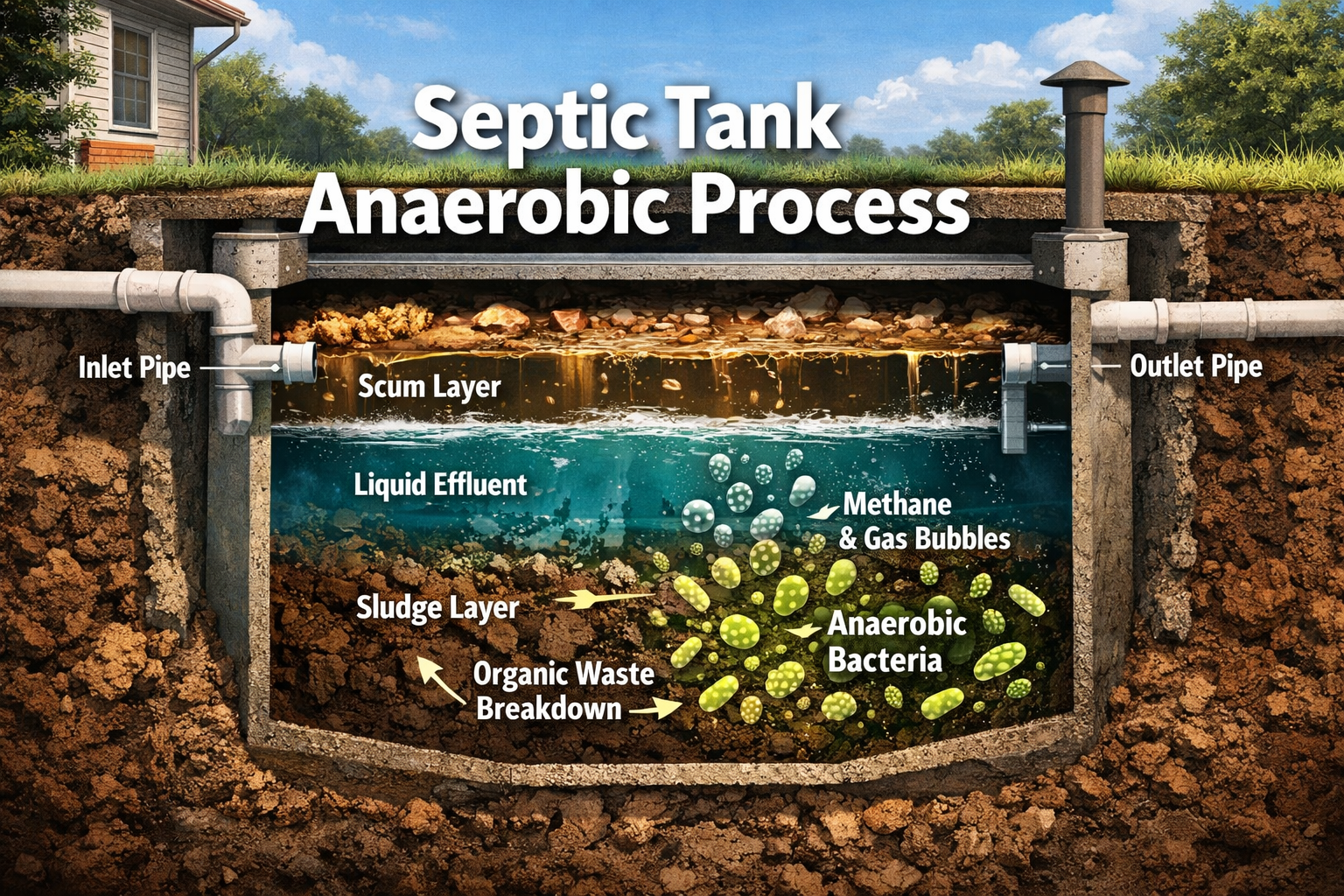
What Are the Three Layers Formed During the Septic Tank Anaerobic Process?
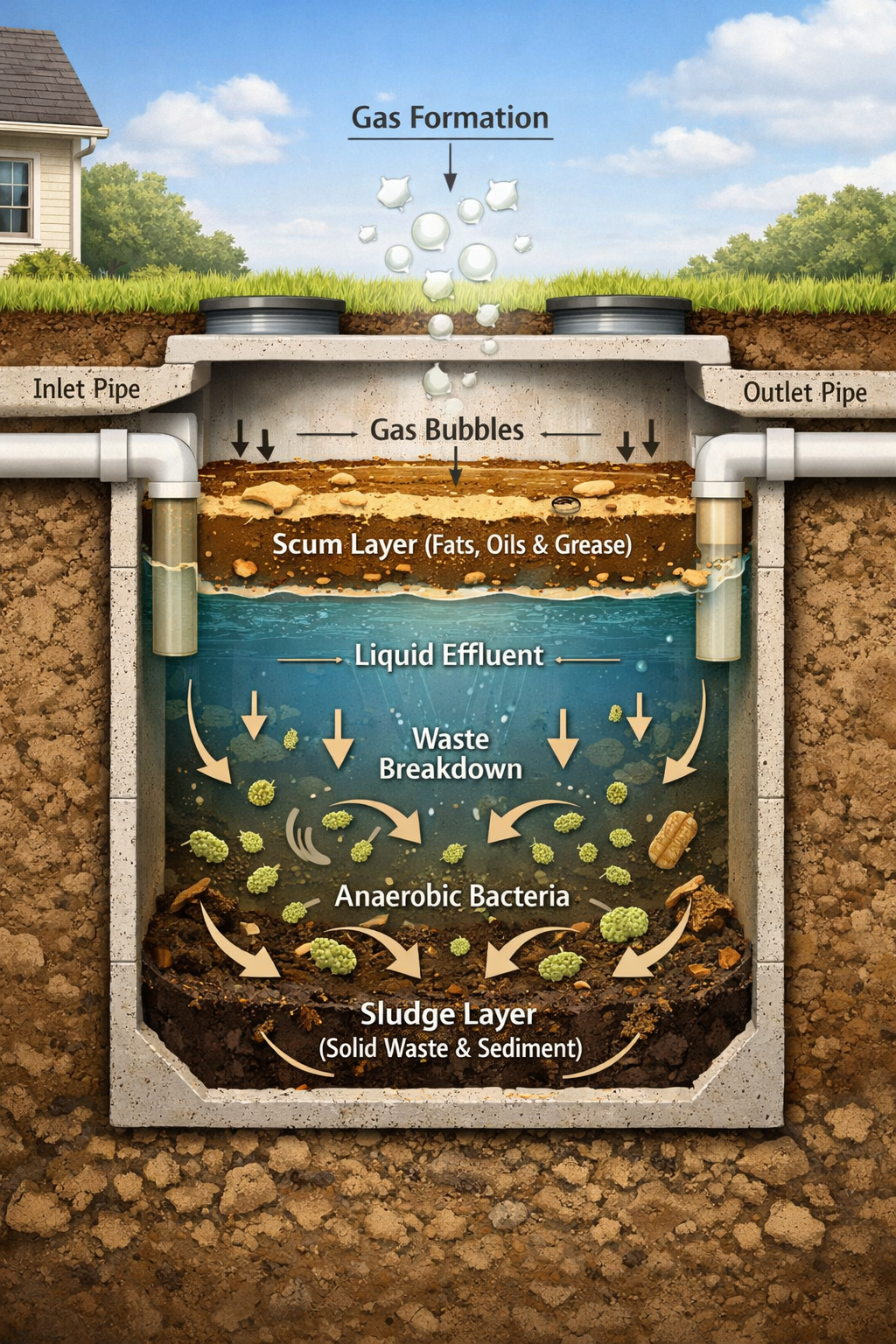
The septic tank anaerobic process creates three distinct layers that are crucial for proper waste treatment. Understanding these layers helps you recognize how your system works and when it might need attention.
Top Layer – Scum:
- Contains oils, grease, and floating debris
- Forms a natural barrier that helps maintain anaerobic conditions
- Should be 6 inches or less from the outlet pipe
- Gets broken down slowly by anaerobic bacteria
Middle Layer – Effluent:
- Clear to slightly cloudy liquid containing dissolved waste products
- Makes up about 80-85% of tank volume
- Flows to drain field for final treatment
- Contains beneficial bacteria that continue working in the soil
Bottom Layer – Sludge:
- Heavy solids that settle and compact over time
- Undergoes intensive anaerobic decomposition
- Accumulates gradually and requires periodic removal
- Should not exceed 30% of tank depth
Layer Maintenance Indicators:
Choose professional pumping if the scum layer is within 6 inches of the outlet or the sludge layer exceeds one-third of tank depth. These conditions indicate the anaerobic process is becoming overwhelmed.
The layers work together – bacteria move between them, and gases produced in the sludge layer rise through the effluent to escape through the scum layer. This natural circulation keeps the anaerobic process active throughout your tank.
FYI: Some links may be affiliate links, which means I may earn a small commission at no extra cost to you.
Maintaining proper bacterial balance in these layers is essential. If you want a simple way to support your tank’s anaerobic process, products like Septifix tablets can help maintain healthy bacterial populations that keep these layers functioning properly.
Why Is the Oxygen-Free Environment Critical for Septic Tank Function?
The oxygen-free environment in your septic tank is absolutely essential because anaerobic bacteria require these specific conditions to break down waste effectively. Without this oxygen-free zone, your septic system cannot perform its primary function of waste decomposition.
Why Anaerobic Conditions Matter:
Anaerobic bacteria are specialized microorganisms that not only survive without oxygen but actually die when exposed to it. These bacteria have evolved to extract energy from organic compounds through fermentation rather than oxidation, making them perfect for septic tank conditions.
Benefits of the Oxygen-Free Environment:
- Slower, more complete decomposition – Anaerobic breakdown is thorough, reducing waste to basic compounds
- Gas production – Methane and hydrogen sulfide gases naturally vent through your plumbing
- Sludge compaction – Solids compress more efficiently in anaerobic conditions
- Pathogen reduction – Many disease-causing organisms cannot survive in this environment
How Your Tank Maintains Anaerobic Conditions:
- Sealed tank design prevents air infiltration
- Incoming waste quickly consumes dissolved oxygen
- Scum layer acts as a natural oxygen barrier
- Continuous bacterial activity depletes any remaining oxygen
Critical factors that can disrupt anaerobic conditions:
Choose proper tank maintenance if you notice sewage odors inside your home, as this might indicate the anaerobic environment is compromised. Avoid using excessive amounts of bleach or antibacterial products, which can kill beneficial bacteria.
The anaerobic environment also enables the septic tank to handle variable waste loads without requiring electricity or mechanical aeration, making it a reliable, low-maintenance treatment system.
For more details on maintaining optimal conditions, see our best septic tank maintenance practices guide.
How Long Does the Septic Tank Anaerobic Process Take?
The septic tank anaerobic process operates on multiple timelines depending on what aspect of decomposition you’re measuring. Initial breakdown begins within hours, while complete waste processing can take weeks to months.
Immediate Process (0-48 hours):
- Waste separation into layers: 2-4 hours
- Initial bacterial colonization: 6-12 hours
- Active decomposition begins: 12-24 hours
- Primary breakdown completion: 24-48 hours
Ongoing Process (Days to Weeks):
- Sludge layer decomposition: 2-4 weeks
- Scum layer breakdown: 3-6 weeks
- Complete organic matter conversion: 1-3 months
- Bacterial population stabilization: 2-6 weeks after disturbance
Factors That Affect Processing Speed:
Temperature influence:
- Optimal range: 60-100°F speeds up bacterial activity
- Cold weather (below 50°F) slows decomposition by 50-75%
- Hot weather (above 100°F) can stress beneficial bacteria
Waste composition matters:
- Toilet paper and human waste: 1-2 weeks
- Food scraps (if present): 2-4 weeks
- Grease and oils: 4-8 weeks
- Synthetic materials: Months to years (avoid these)
System load considerations:
Choose a pumping schedule every 3-5 years if your household produces average waste loads. High-use households may need more frequent service to prevent the anaerobic process from becoming overwhelmed.
Common timing mistake: Expecting immediate results after adding bacterial treatments. The anaerobic process needs 2-4 weeks to fully respond to any interventions.
Understanding these timelines helps you plan maintenance and recognize when your system might need professional attention. For guidance on maintenance timing, check our septic tank maintenance tips guide.
What Factors Can Disrupt the Septic Tank Anaerobic Process?
Several common household practices and environmental factors can seriously disrupt your septic tank’s anaerobic process, leading to system failure and expensive repairs. Recognizing these disruptors helps you protect your investment and maintain proper waste treatment.
Chemical Disruptors:
- Antibacterial soaps and cleaners kill beneficial anaerobic bacteria
- Bleach in large quantities (more than 1 cup per week) destroys bacterial colonies
- Drain cleaners and degreasers create toxic conditions for bacteria
- Paint thinners and solvents poison the anaerobic environment
Physical Disruptors:
- Excessive water use flushes bacteria out before they can establish colonies
- Non-biodegradable items (wipes, feminine products, cat litter) clog the system
- Grease and cooking oils coat bacteria and prevent proper decomposition
- Medications and antibiotics pass through and kill beneficial microorganisms
Environmental Factors:
- Cold temperatures below 40°F nearly stop bacterial activity
- pH imbalances from acidic or alkaline waste kill bacteria
- Lack of nutrients when only synthetic waste enters the system
- Oxygen introduction through damaged tank seals or improper pumping
Warning Signs of Disrupted Anaerobic Process:
Choose immediate professional inspection if you notice slow drains, sewage odors, or wet spots in your drain field. These symptoms often indicate the anaerobic bacteria population has been compromised.
Prevention Strategies:
- Use septic-safe cleaning products
- Spread laundry loads throughout the week
- Never flush medications or chemicals
- Install low-flow fixtures to reduce water volume
- Maintain proper bacterial populations with appropriate treatments
Recovery timeline: After disruption, the anaerobic process typically takes 4-8 weeks to fully reestablish, assuming you eliminate the source of the problem.
For comprehensive guidance on protecting your system, visit our complete septic tank care routine guide.
How Can You Support and Maintain the Septic Tank Anaerobic Process?
Supporting your septic tank’s anaerobic process requires consistent practices that protect beneficial bacteria while providing them with optimal conditions to break down waste effectively. The good news is that most maintenance involves simple changes to your daily routine.
Daily Habits That Support Anaerobic Bacteria:
Water management:
- Spread laundry loads across the week instead of doing multiple loads in one day
- Fix leaky faucets and running toilets immediately
- Use water-efficient appliances and fixtures
- Take shorter showers to prevent overwhelming the system
Chemical protection:
- Choose septic-safe cleaning products without antibacterial agents
- Use liquid laundry detergents instead of powder (they dissolve better)
- Avoid fabric softeners that can coat bacteria
- Limit bleach use to less than 1 cup per week
Waste input control:
- Only flush toilet paper and human waste
- Scrape food scraps into trash instead of using garbage disposal
- Never pour grease or cooking oils down drains
- Avoid flushing medications or chemicals
Monthly and Annual Maintenance:
Bacterial population support:
Choose bacterial treatments if your system shows signs of stress or after antibiotic use in your household. Products like Septifix tablets provide beneficial bacteria that support the natural anaerobic process, especially helpful after system disruptions or during cold weather when bacterial activity slows.
Professional maintenance schedule:
- Inspect tank annually for proper layer formation
- Pump every 3-5 years or when sludge reaches 30% of tank depth
- Check baffles and seals to maintain anaerobic conditions
- Monitor drain field for proper effluent absorption
Seasonal considerations:
- Add bacterial treatments before winter in cold climates
- Reduce water usage during wet seasons
- Insulate tank access areas in freezing conditions
Emergency support measures:
If your system experiences shock from chemicals or excessive water, immediately reduce usage and consider adding bacterial supplements to help reestablish the anaerobic population.
For detailed maintenance schedules, check our septic tank maintenance checklist guide.
Helpful Resource for Septic Tank Anaerobic Process Maintenance

Maintaining a healthy anaerobic process in your septic tank doesn’t have to be complicated, but it does require consistent attention to bacterial health. While proper usage habits form the foundation of good septic care, sometimes your system needs additional support to maintain optimal anaerobic conditions.
When You Might Need Additional Support:
- After illness requiring antibiotics in your household
- Following accidental chemical spills down drains
- During cold winter months when bacterial activity slows
- After periods of heavy water usage or system stress
- When transitioning to a new home with an existing septic system
Simple Solution for Bacterial Balance:
If you want a straightforward way to support your septic tank’s anaerobic process, Septifix tablets offer an easy solution for maintaining healthy bacterial populations. These tablets contain beneficial bacteria specifically designed to thrive in anaerobic conditions, helping break down waste and reduce buildup that can lead to costly repairs.
The tablets work by introducing concentrated anaerobic bacteria that supplement your tank’s natural population, particularly useful when environmental factors or household chemicals have disrupted the bacterial balance. Many homeowners find them especially helpful for preventing blockages and maintaining system efficiency with minimal effort.
Key benefits for the anaerobic process:
- Supports natural waste breakdown in oxygen-free conditions
- Helps maintain proper bacterial populations year-round
- Easy monthly treatment that works with your existing system
- Can help prevent odors and slow drains caused by bacterial imbalances
This type of bacterial support isn’t required for every septic system, but it can be valuable insurance for maintaining the delicate anaerobic environment that keeps your system functioning properly.
Remember, no bacterial treatment replaces proper septic habits and regular maintenance, but the right products can help ensure your anaerobic process continues working effectively even when conditions aren’t perfect.
Frequently Asked Questions
How do I know if my septic tank’s anaerobic process is working properly?
A properly functioning anaerobic process produces clear to slightly cloudy effluent, maintains distinct layers in your tank, and doesn’t create sewage odors in your home. You should also notice normal drainage speeds and no wet spots in your drain field area.
Can I add oxygen to my septic tank to speed up decomposition?
No, adding oxygen will kill the anaerobic bacteria that your septic tank depends on. Septic tanks are specifically designed to maintain oxygen-free conditions. If you want faster decomposition, focus on maintaining proper bacterial populations and avoiding chemicals that harm beneficial bacteria.
What temperature range works best for the anaerobic process?
Anaerobic bacteria work most efficiently between 60-100°F. Below 50°F, bacterial activity slows significantly, while temperatures above 100°F can stress the bacteria. Most residential septic tanks maintain adequate temperatures year-round due to ground insulation.
How often should I add bacterial treatments to support the anaerobic process?
Most healthy septic systems don’t require regular bacterial additives. Consider treatments only after antibiotic use, chemical spills, or when your system shows signs of stress like slow drains or odors. Monthly treatments may help during winter in cold climates.
What happens if my septic tank loses its anaerobic bacteria?
Without anaerobic bacteria, waste won’t break down properly, leading to rapid sludge accumulation, system backups, and potential drain field failure. Recovery typically takes 4-8 weeks with proper care and may require professional bacterial restoration treatments.
Can household cleaners really kill anaerobic bacteria?
Yes, antibacterial soaps, bleach, and harsh cleaners can significantly reduce beneficial bacteria populations. Use septic-safe products and limit bleach to less than 1 cup per week to protect your system’s bacterial balance.
How long does it take for anaerobic bacteria to establish in a new septic tank?
New septic tanks typically develop working bacterial populations within 2-4 weeks of regular use. The process can be accelerated with bacterial starter treatments, but normal household waste provides sufficient bacteria for most systems.
Why does my septic tank smell if the anaerobic process produces gases?
Some gas production is normal and should vent through your plumbing stack. Persistent odors usually indicate problems like blocked vents, damaged seals, or an overwhelmed system where the anaerobic process isn’t keeping up with waste input.
Can I use a garbage disposal with an anaerobic septic system?
Garbage disposals add significant organic load and can overwhelm the anaerobic process, leading to faster sludge accumulation and more frequent pumping needs. If you must use one, limit usage and consider more frequent bacterial treatments.
What’s the difference between anaerobic and aerobic septic systems?
Anaerobic systems work without oxygen and are the most common residential type, while aerobic systems inject air to support different bacteria. Anaerobic systems are simpler, require less maintenance, and don’t need electricity, making them ideal for most homeowners.
How does cold weather affect my septic tank’s anaerobic process?
Cold temperatures slow bacterial activity, potentially causing incomplete waste breakdown and system backups. Insulate exposed pipes, reduce water usage during extreme cold, and consider bacterial treatments to maintain adequate populations during winter months.
Should I worry about methane gas from the anaerobic process?
Methane production is normal and safe when properly vented through your plumbing system. Ensure roof vents aren’t blocked and never smoke near septic tank openings. The gas naturally disperses and doesn’t pose risks with proper system design.
Conclusion
Understanding your septic tank’s anaerobic process empowers you to make informed decisions about system care and maintenance. This oxygen-free biological treatment forms the foundation of effective waste management, converting household waste into manageable byproducts through the action of specialized bacteria.
The key to supporting this process lies in protecting beneficial anaerobic bacteria through proper household practices. Avoid antibacterial products, manage water usage, and never flush non-biodegradable items. Remember that the three-layer system in your tank works continuously, requiring 24-48 hours for initial breakdown and weeks for complete decomposition.
Your next steps:
- Evaluate your current habits – Review cleaning products and water usage patterns that might disrupt bacterial populations
- Schedule regular maintenance – Plan annual inspections and pumping every 3-5 years to prevent system overload
- Monitor warning signs – Watch for slow drains, odors, or wet spots that indicate anaerobic process problems
- Consider bacterial support – Add treatments during times of stress or seasonal challenges
By respecting the natural anaerobic process and maintaining proper conditions, you’ll extend your septic system’s life while avoiding costly repairs. Your septic tank’s bacteria work around the clock to protect your home and environment – supporting them with informed care ensures reliable waste treatment for years to come.
For ongoing guidance and maintenance tips, explore our comprehensive septic care resources to keep your system functioning at its best.
References
[1] Anaerobic Wastewater Treatment Systems Market – https://www.researchandmarkets.com/reports/6183937/anaerobic-wastewater-treatment-systems-market