
Last updated: March 8, 2026
Key Takeaways
- Most septic tank additives provide no proven benefits and some can actively damage your system
- Chemical additives kill beneficial bacteria and can push solids into drain fields, causing expensive repairs
- Bacterial additives are unnecessary because septic tanks already contain billions of naturally occurring bacteria
- Enzyme products show minimal real-world effectiveness despite lab testing claims
- Regular pumping every 3-5 years remains the only proven maintenance method for septic system health
- Professional maintenance costs $250-$400 per service compared to $120-$240 annually for ineffective additives
- EPA and university research confirms no consistent benefits from commercial septic treatments
- Proper usage habits matter more than any additive for maintaining system health
Quick Answer
Septic tank additives and treatments are largely unnecessary and sometimes harmful to your system. The EPA and independent research show no proven consistent benefits from commercial additives, while chemical-based products can kill beneficial bacteria and damage pipes. Your septic tank already contains billions of naturally occurring bacteria that effectively break down waste, making bacterial supplements mathematically insignificant. Regular pumping every 3-5 years remains the only proven maintenance method.
What Are Septic Tank Additives and Treatments?
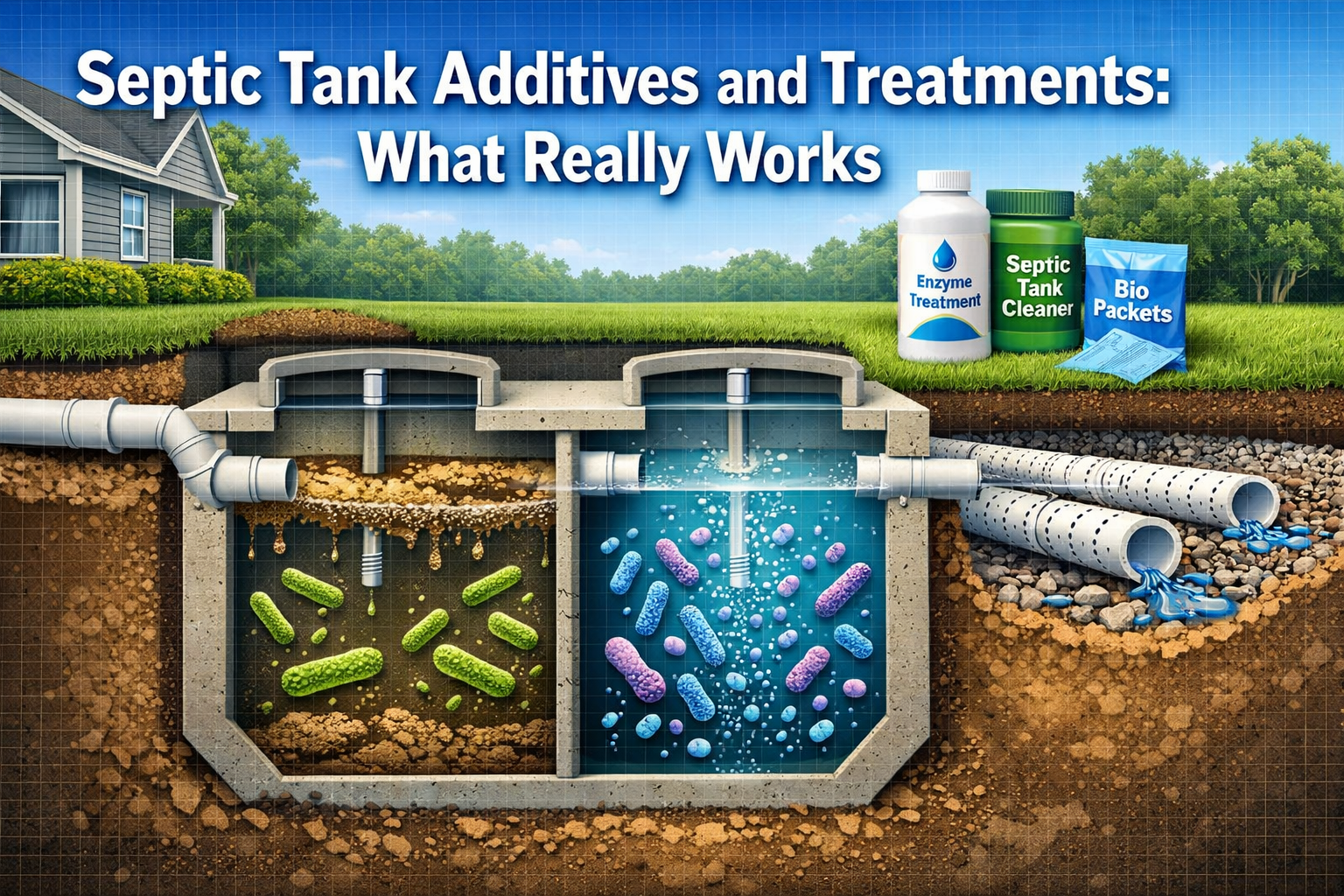
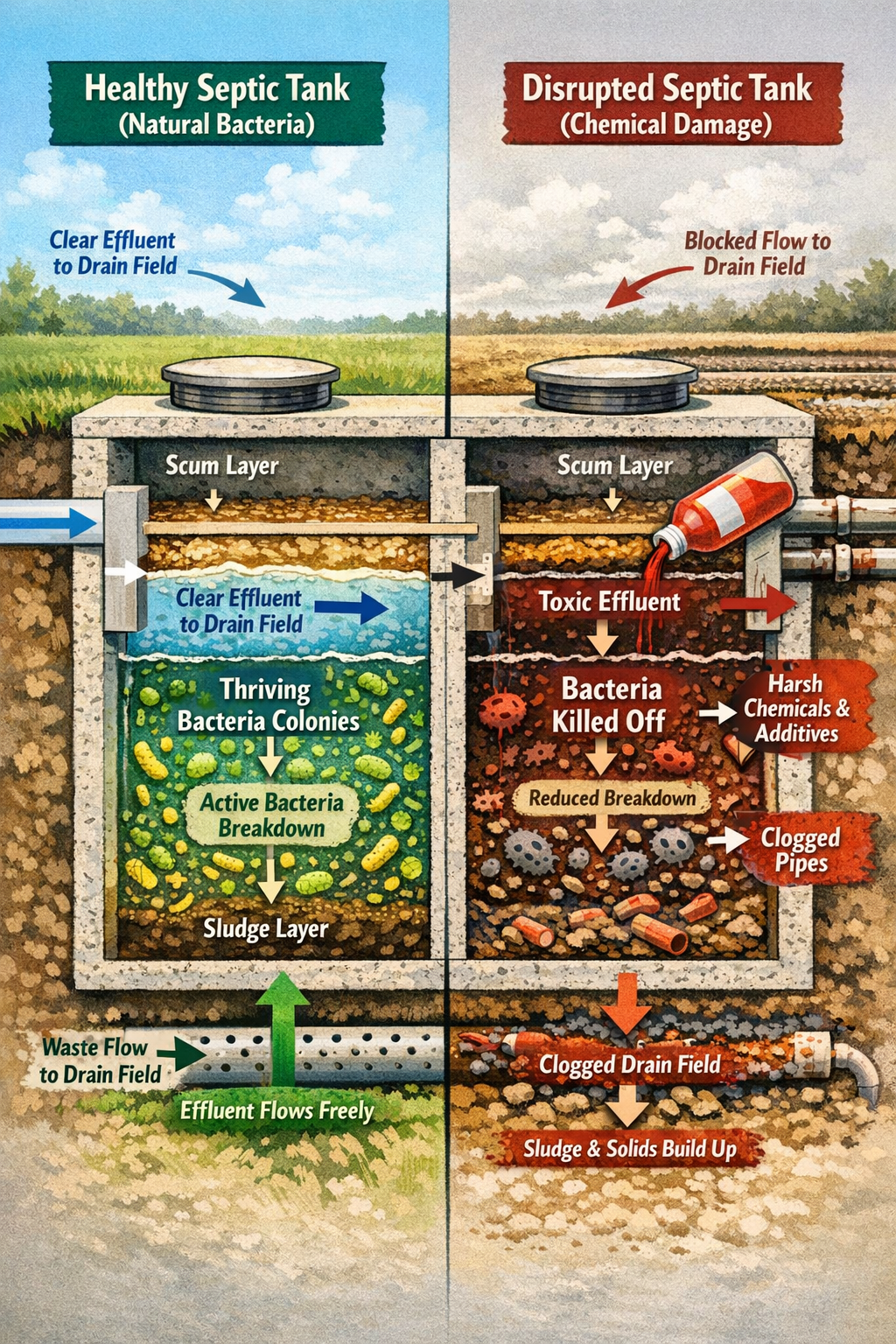
Septic tank additives are commercial products marketed to improve septic system performance, reduce odors, and extend time between pumpings. These products fall into three main categories: bacterial supplements, enzyme treatments, and chemical additives.
Bacterial additives contain live microorganisms intended to boost the bacterial population in your tank. Popular brands like Rid-X cost $8-$15 monthly and claim to enhance waste breakdown. However, each toilet flush introduces more bacteria than these packets can provide, making supplementation meaningless.
Enzyme products contain proteins designed to break down fats, oils, and grease. While lab testing shows some effectiveness in controlled conditions, real-world septic tank environments render these enzymes largely ineffective. Monthly costs of $10-$20 make them economically inefficient compared to proven maintenance methods.
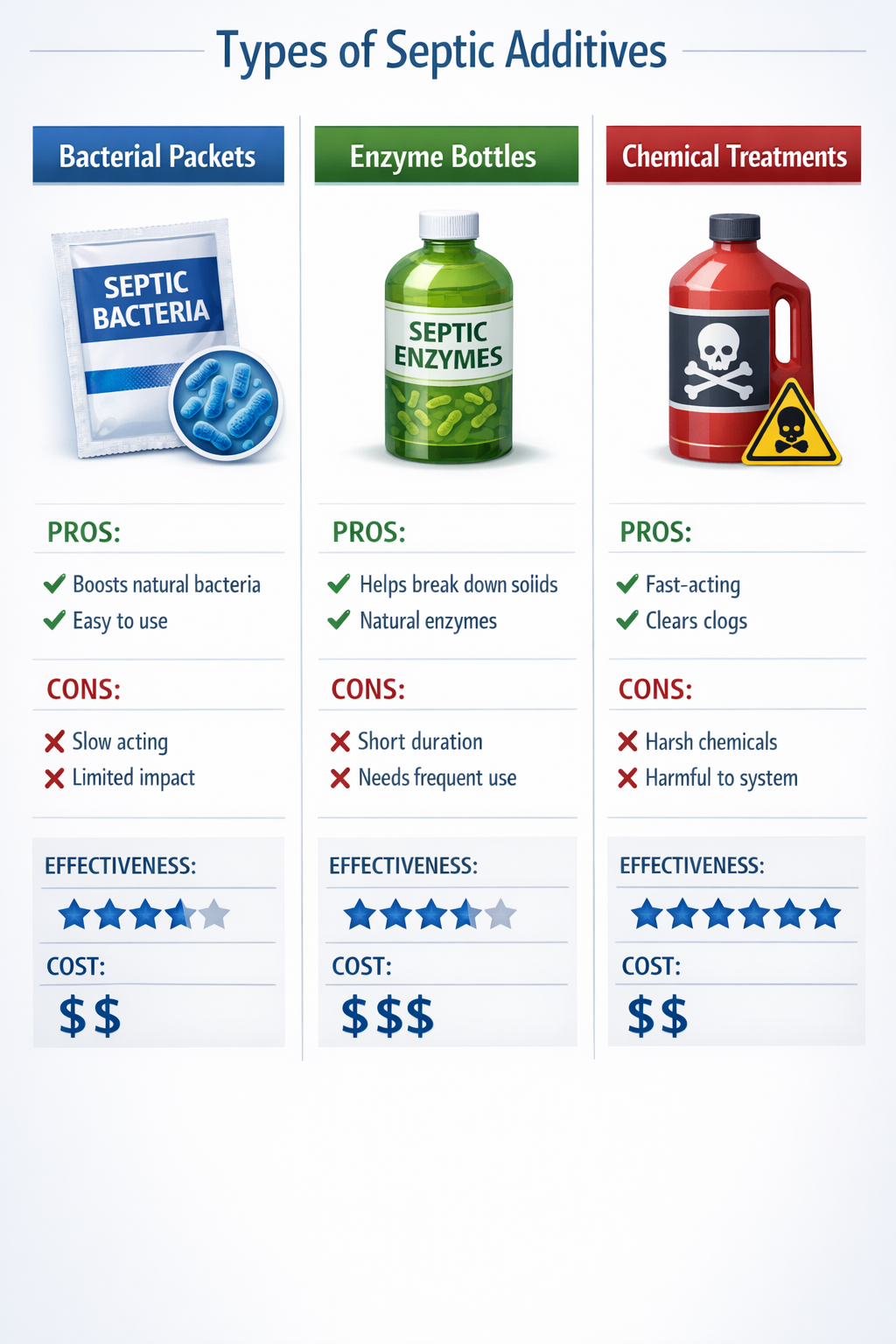
Chemical additives are the most dangerous category, containing acids, solvents, or other harsh compounds. These products kill beneficial bacteria, corrode pipes, and can push solids into drain fields. Drainfield replacement costs can reach tens of thousands of dollars.
Choose bacterial products if you want to try additives without system damage, but understand they won’t provide measurable benefits. Avoid chemical additives entirely to prevent costly repairs.
Do Septic Tank Additives Actually Work?
No, septic tank additives do not provide consistent, measurable benefits for system performance. The EPA states that septic tank additives show no proven advantages, while a peer-reviewed field study of 48 residential septic tanks found bacterial additives had no significant effect on microbial populations compared to untreated systems.
Scientific evidence against effectiveness includes:
- Bacterial populations are already optimal – Your septic tank contains 10-100 billion bacteria per gallon of sewage
- Each flush adds more bacteria than commercial packets can provide
- Enzyme activity is minimal in actual septic conditions compared to lab environments
- No reduction in pumping frequency has been documented in field studies
- Sludge accumulation continues at the same rate regardless of additive use
University extension services consistently recommend against additives. Kentucky, West Virginia, Texas, and other states publish findings that no additive eliminates pumping needs and that chemical products actively damage systems.
Common marketing claims that remain unproven:
- Reducing sludge buildup
- Preventing system backups
- Eliminating pumping requirements
- Extending system lifespan
- Improving drainage performance
FYI: Some links may be affiliate links, which means I may earn a small commission at no extra cost to you.
If you want a simple monthly maintenance routine, Septifix tablets offer a bacterial-based approach that won’t harm your system. While not necessary for proper function, these tablets can provide peace of mind for homeowners who prefer proactive maintenance without the risks of chemical treatments.
Types of Septic Tank Additives and Treatments
Understanding different additive categories helps you make informed decisions about septic system maintenance. Each type claims specific benefits, but their actual effectiveness varies significantly.
Bacterial Supplements
What they contain: Live microorganisms, typically anaerobic bacteria strains
Cost: $8-$15 monthly ($96-$180 annually)
Safety: Harmless but unnecessary
Popular products like Rid-X and Roebic contain bacteria cultures similar to those naturally present in septic tanks. These supplements won’t damage your system but provide no meaningful performance improvement since your tank already maintains optimal bacterial populations.
Enzyme Treatments
What they contain: Proteins that break down organic matter
Cost: $10-$20 monthly ($120-$240 annually)
Effectiveness: Minimal in real-world conditions
Enzyme products show slight effectiveness in lab conditions for breaking down grease and fats, but their effect in actual septic tanks is negligible. The anaerobic environment and existing bacterial activity make supplemental enzymes largely redundant [1].
Chemical Additives
What they contain: Acids, solvents, or alkaline compounds
Cost: $15-$30 monthly
Risk level: High – can cause system failure
Chemical-based additives kill beneficial bacteria, corrode pipes, and can push solids into drain fields. These products represent the highest risk category and should be avoided entirely to prevent expensive repairs.
Advanced Biological Treatments
What they contain: Multiple bacterial strains plus supporting compounds
Cost: $20-$40 monthly
Approach: Comprehensive but still unproven
Products like Septifix combine aerobic bacteria cultures, oxygen-releasing compounds, and pH balancing agents. While more sophisticated than basic bacterial supplements, they still cannot overcome the fundamental issue that septic tanks already function optimally without supplementation.
Are Septic Tank Additives Safe for Your System?
Bacterial and enzyme additives are generally safe but provide no benefits, while chemical additives can cause serious system damage. The safety of septic tank additives depends entirely on their formulation and active ingredients.
Safe but ineffective options:
- Bacterial supplements (Rid-X, Roebic)
- Enzyme treatments
- Yeast-based products
- Biological additives without chemicals
Dangerous additives to avoid:
- Acid-based cleaners
- Solvent treatments
- Alkaline compounds
- Any product claiming to “dissolve” solids
Potential damage from chemical additives includes:
- Bacterial population destruction – Kills beneficial microorganisms essential for waste breakdown
- Pipe corrosion – Acids and solvents damage PVC and metal components
- Drainfield contamination – Chemicals can push solids into absorption areas
- Soil sterilization – Harsh compounds kill soil bacteria needed for final treatment
- Groundwater pollution – Chemical residues can contaminate water supplies
System components at risk:
- Inlet and outlet baffles
- Distribution boxes
- Drainfield pipes
- Soil absorption capacity
Choose products without harsh chemicals if you decide to use additives. However, the most effective approach remains proper usage habits and regular professional maintenance rather than relying on any commercial treatment.
For homeowners seeking a reliable maintenance approach, understanding how septic tank bacteria treatment works provides valuable context for evaluating additive claims.
Cost Analysis: Additives vs. Professional Maintenance
Professional septic maintenance delivers proven results at lower long-term costs compared to regular additive use. Understanding the financial comparison helps homeowners make informed maintenance decisions.
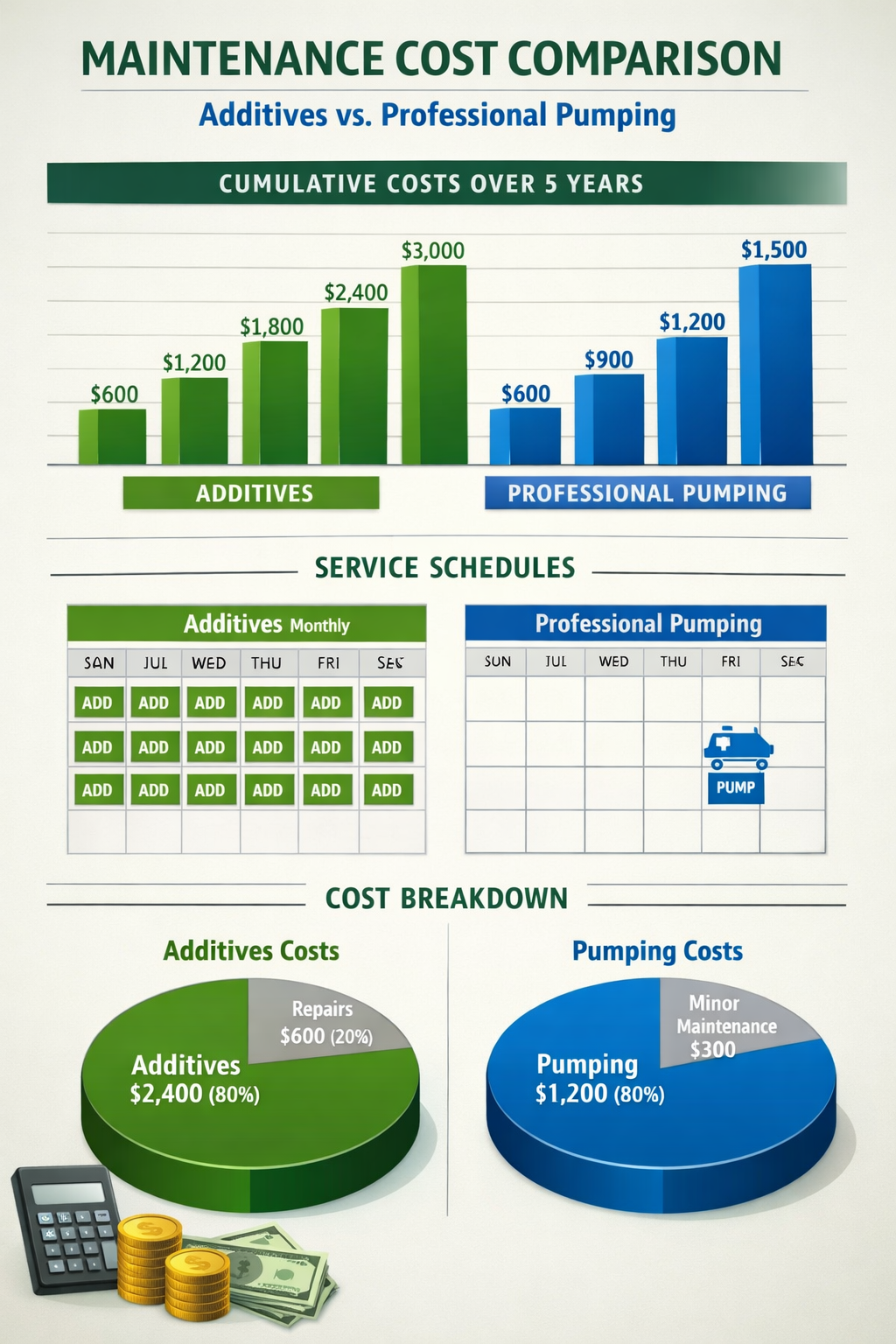
Annual additive costs:
- Basic bacterial supplements: $96-$180
- Enzyme treatments: $120-$240
- Advanced biological products: $240-$480
- Chemical additives: $180-$360
Professional maintenance costs:
- Pumping service: $250-$400 every 3-5 years
- Annual cost equivalent: $50-$133
- Inspection during service: Usually included
- Early problem detection: Prevents major repairs
5-year cost comparison:
| Maintenance Approach | Total Cost | Effectiveness |
|---|---|---|
| Monthly additives | $600-$2,400 | No proven benefit |
| Professional pumping | $250-$800 | Proven effective |
| Combined approach | $850-$3,200 | Unnecessary expense |
Hidden costs of additive dependency:
- False sense of security leading to delayed pumping
- Potential system damage from chemical products
- No actual extension of pumping intervals
- Opportunity cost of money spent on ineffective treatments
Value of professional service includes:
- Physical removal of accumulated solids
- System inspection and early problem detection
- Expert assessment of component condition
- Proper disposal of septic waste
- Documentation for property records
Budget allocation recommendation: Direct maintenance funds toward proven professional services rather than monthly additives. The $120-$240 annual cost of enzyme treatments could cover 30-60% of a professional pumping service that actually maintains system health.
For homeowners managing septic system budgets, learning about signs your septic tank needs maintenance helps optimize service timing and costs.
What Septic Professionals Actually Recommend
Reputable septic service providers consistently recommend pumping and proper usage over commercial additives. Industry professionals base their recommendations on decades of field experience and scientific research rather than marketing claims.
Professional consensus on additives:
- No additive eliminates pumping requirements
- Chemical products increase service call frequency
- Bacterial supplements provide no measurable benefits
- Enzyme treatments don’t extend pumping intervals
- Proper habits matter more than any commercial product
Recommended maintenance practices:
- Regular pumping every 3-5 years based on household size and usage
- Water conservation to prevent system overload
- Proper waste disposal – no grease, chemicals, or non-biodegradables
- Professional inspections during pumping services
- Prompt repair of any identified issues
What professionals see in the field:
- Tanks using additives require pumping at same intervals
- Chemical additive users experience more component failures
- Systems maintained through pumping alone show better longevity
- Additive marketing doesn’t match real-world performance
Industry perspective on specific products:
Bacterial additives: “Harmless but unnecessary – your tank already has optimal bacteria levels”
Enzyme treatments: “Lab results don’t translate to septic tank conditions”
Chemical additives: “We see more damage calls from customers using these products”
Advanced biological treatments: “More expensive but still can’t replace physical pumping”
Professional service value beyond pumping:
- Visual inspection of tank condition
- Assessment of inlet/outlet baffles
- Evaluation of scum and sludge layers
- Early detection of potential problems
- Proper waste disposal and environmental compliance
Most reputable companies focus on education about proper septic habits rather than selling additives. When professionals do offer enzyme products, they acknowledge these don’t extend pumping schedules but may provide minor grease management benefits.
For comprehensive guidance on professional maintenance, review our complete septic tank care routine guide for homeowners.
Natural Alternatives to Commercial Additives
Your septic system functions optimally without commercial additives when you support its natural biological processes. Simple household practices provide better results than expensive treatments while protecting your investment.
Natural bacterial sources:
- Regular toilet use introduces billions of beneficial bacteria
- Kitchen waste (in moderation) feeds existing microorganisms
- Yogurt and buttermilk contain helpful bacterial strains
- Yeast can boost bacterial activity during system stress
Household practices that support bacterial health:
- Moderate detergent use – Excessive soap kills beneficial bacteria
- Warm water for laundry – Cold water can slow bacterial activity
- Gradual introduction of changes – Sudden diet or routine changes stress the system
- Adequate water flow – Proper dilution maintains bacterial balance
Foods that naturally support septic bacteria:
- Organic kitchen scraps (small amounts)
- Dairy products past expiration (yogurt, milk)
- Bread and grain products
- Fruit and vegetable matter
Avoid these bacterial killers:
- Antibacterial soaps and cleaners
- Bleach and harsh chemicals
- Excessive amounts of any cleaning product
- Prescription antibiotics flushed down toilets
DIY maintenance approaches:
Monthly yeast treatment: Mix 1 cup warm water, 1/4 cup sugar, and 2 tablespoons active dry yeast. Let activate for 10 minutes, then flush. This costs under $1 monthly compared to $10-$20 for commercial products.
Bacterial feeding: Occasionally flush small amounts of expired dairy products to provide nutrients for existing bacteria populations.
System stress indicators to watch:
- Slow drains throughout the house
- Gurgling sounds from plumbing
- Sewage odors near the tank or drainfield
- Standing water over the absorption area
When natural approaches aren’t enough:
If you notice stress indicators, the solution isn’t additives but rather professional assessment. System problems typically result from overuse, improper waste disposal, or mechanical issues that require physical intervention.
Understanding why septic tanks need bacteria helps homeowners appreciate their system’s natural biological processes without relying on commercial supplements.
Simple Septic Maintenance Option
For homeowners who prefer a structured monthly routine, Septifix offers a simple tablet-based approach to septic maintenance. While not necessary for proper system function, this product provides peace of mind for those who want to take proactive steps.
What makes Septifix different:
- Single monthly tablet (no measuring or mixing)
- Bacterial-based formula without harsh chemicals
- Designed to work with your system’s natural processes
- Simple flush-and-forget application
Who might benefit:
- New septic system owners learning proper maintenance
- Homeowners who prefer routine maintenance schedules
- Properties with high-stress usage patterns
- Anyone wanting to avoid chemical additives
This approach won’t replace professional pumping but offers a harmless way to maintain a monthly septic care routine. The tablet format eliminates guesswork about proper dosing and ensures consistent application.
👉 Learn more about Septifix for hassle-free monthly septic maintenance.
Frequently Asked Questions
Do septic tank additives really work?
No, scientific research including EPA studies and peer-reviewed field trials show no consistent benefits from septic tank additives. Your system already contains optimal bacterial populations for waste breakdown.
Are bacterial additives safe for septic systems?
Yes, bacterial additives are harmless but unnecessary. They won’t damage your system but provide no measurable performance improvement since septic tanks already maintain billions of beneficial bacteria.
Can additives eliminate the need for pumping?
No additive can eliminate pumping requirements. Accumulated solids and sludge must be physically removed every 3-5 years regardless of any treatment used.
Which septic additives should I avoid?
Avoid all chemical-based additives containing acids, solvents, or alkaline compounds. These products kill beneficial bacteria, corrode pipes, and can push solids into drain fields.
How much do septic additives cost compared to pumping?
Additives cost $96-$480 annually while professional pumping costs $250-$400 every 3-5 years ($50-$133 annually equivalent). Pumping provides proven benefits while additives don’t.
Do enzyme treatments help with grease breakdown?
Enzyme products show minimal effectiveness in real septic tank conditions despite lab testing claims. The anaerobic environment and existing bacterial activity make supplemental enzymes largely ineffective.
What do septic professionals recommend instead of additives?
Professionals recommend regular pumping every 3-5 years, water conservation, proper waste disposal, and avoiding harsh chemicals. No reputable service provider considers additives essential.
Can I use yeast as a natural septic additive?
Yes, occasional yeast treatments (1/4 cup sugar + 2 tablespoons yeast monthly) are harmless and cost under $1. However, they provide no proven benefits beyond what your system already does naturally.
Will additives fix a failing septic system?
No, additives cannot repair mechanical problems, clogged drain fields, or structural damage. Failing systems require professional diagnosis and physical repairs, not chemical treatments.
Are expensive biological additives worth the cost?
Advanced biological products costing $20-$40 monthly offer no advantages over basic bacterial supplements or natural system processes. The higher cost doesn’t translate to better performance.
How often should I add bacteria to my septic tank?
You don’t need to add bacteria to your septic tank. Each toilet flush introduces more beneficial bacteria than commercial supplements can provide, making additional bacteria mathematically insignificant.
Do additives help with septic tank odors?
Proper system function eliminates odors naturally. If you’re experiencing odor problems, investigate ventilation, tank levels, or drain field issues rather than relying on additive products for masking symptoms.
Conclusion
Septic tank additives and treatments represent one of the most persistent myths in home maintenance. Despite decades of marketing claims, scientific research consistently shows these products provide no proven benefits for system performance, longevity, or maintenance requirements.
The evidence is clear: your septic tank already contains billions of beneficial bacteria that effectively break down waste without supplementation. Chemical additives actively harm your system by killing these bacteria and potentially damaging pipes or drain fields. Even harmless bacterial and enzyme products offer no measurable advantages while costing hundreds of dollars annually.
Your action plan for effective septic maintenance:
- Schedule professional pumping every 3-5 years – the only proven maintenance method
- Practice water conservation to prevent system overload
- Dispose of waste properly – no grease, chemicals, or non-biodegradables
- Avoid chemical additives entirely to prevent system damage
- Save money by redirecting additive costs toward professional services
The $120-$240 you might spend annually on ineffective additives could cover 30-60% of a professional pumping service that actually maintains your system’s health. Focus on proven maintenance practices rather than marketing promises, and your septic system will serve you reliably for decades.
For ongoing septic system guidance, explore our comprehensive resources on septic tank maintenance and troubleshooting common issues. Remember: the best additive for your septic tank is proper care and professional maintenance.
References
[1] Septic Tank Additives Do They Work – https://www.texassepticguide.com/learn/septic-tank-additives-do-they-work
[2] Septic Tank Additives Sacramento Guide – https://www.blueribbonseptic.com/blog/septic-tank-additives-sacramento-guide