Last updated: March 22, 2026
Quick Answer
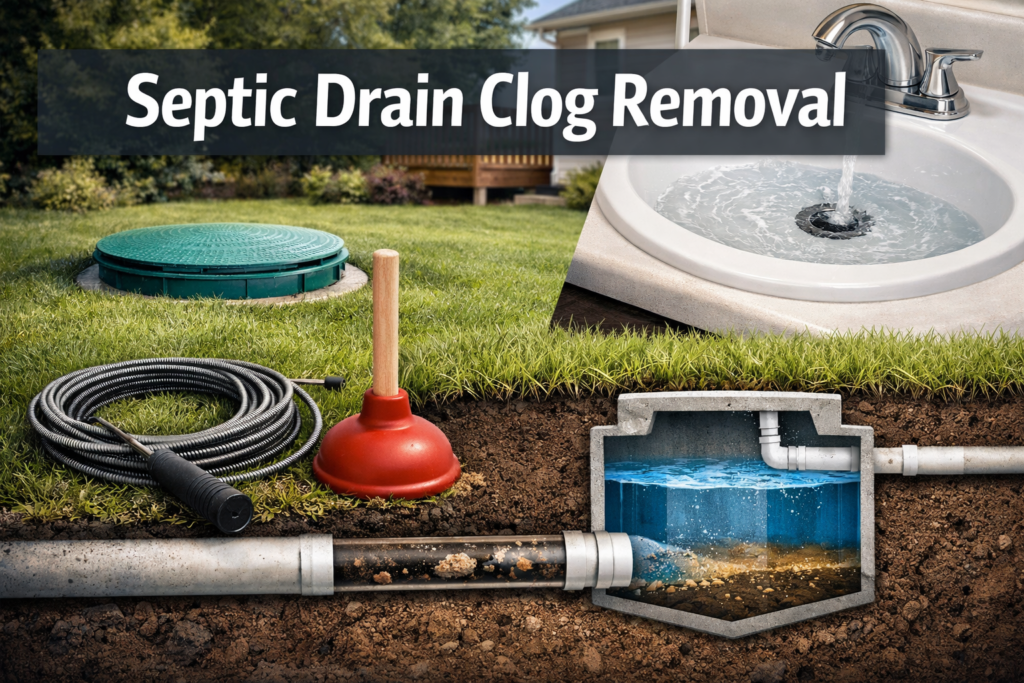
Septic Drain Clog Removal usually starts with simple, septic-safe methods: hot water, a plunger, a plastic drain snake, or a hand auger. Avoid chemical drain cleaners because they can damage the helpful bacteria in your septic system and may not solve the real blockage. If more than one drain is slow, sewage odors are strong, or the yard is wet near the drain field, the problem may be beyond a simple clog and you should call a septic or plumbing professional.
Septifix: Simple Septic Tank Care in One Tablet
Septifix tablets help break down waste, reduce bad smells, and keep your septic tank working properly. With one easy monthly flush, you can help prevent blockages, protect your plumbing, and avoid costly repairs.
👉 See how Septifix tablets can keep your septic system clean and efficient
Key Takeaways
- Septic Drain Clog Removal works best when you confirm where the clog is first.
- A single slow sink often points to a local drain clog, but multiple slow fixtures can mean a septic line or tank problem.
- Hot water, baking soda and vinegar, plungers, and drain snakes are common septic-safe unclogging methods.
- Do not use harsh chemical drain cleaners in a septic system.
- If wastewater backs up into tubs or toilets, stop heavy water use right away.
- A hand auger can help with stubborn line clogs, but use it carefully to avoid pipe damage.
- Heavy rain can mimic or worsen a clog by saturating the drain field.
- Regular pumping, filter care, and better flushing habits help Prevent Septic Drain Clogs Maintenance problems.
- If you’re unsure whether the tank is full, review the signs your septic tank needs pumping.
- If the issue keeps returning, schedule an inspection instead of repeating DIY fixes.
A septic-safe drain fix should clear the blockage without harming the bacteria your system needs to work.
Affiliate disclosure: Some articles on this site may include affiliate links. If you buy through those links, the site may earn a commission at no extra cost to you.
Quick Summary and checklist for busy homeowners
Septic Drain Clog Removal is easiest when you move in order: confirm symptoms, try safe tools, stop if the problem looks system-wide, and then prevent it from happening again.
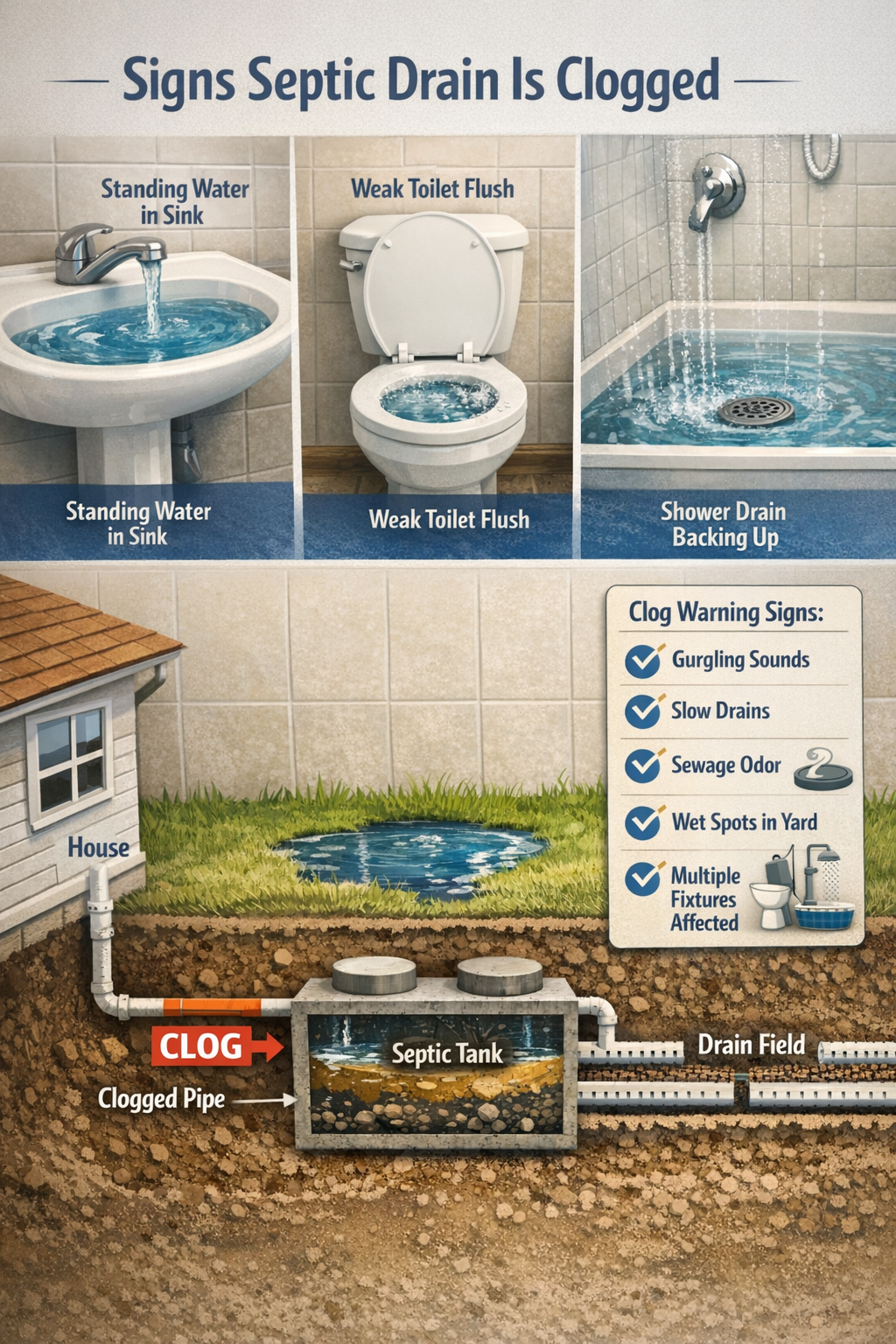
Signs Septic Drain Is Clogged Checklist
Use this quick checklist before you grab a tool:
- One sink or tub drains slowly
- Toilet flushes weakly
- Gurgling sounds come from nearby drains
- Bad odor near a drain or outside
- Water backs up into the shower when a toilet flushes
- More than one fixture is slow at the same time
- Wet or soggy soil appears near the septic area
- Problem got worse after heavy rain
Choose DIY first if: one fixture is affected and there is no sewage backup.
Call a pro first if: several fixtures are involved, sewage is surfacing, or the tank may be full.
What causes a septic drain clog?
A septic drain clog usually comes from grease, soap buildup, hair, wipes, paper overload, root intrusion, or a full septic tank that slows normal flow. The right fix depends on whether the clog is in one household drain, the main line, the septic tank inlet, or the drain field.
Here’s how I break it down:
Common household causes
- Kitchen drains: grease, food scraps, coffee grounds
- Bathroom drains: hair, soap scum, hygiene products
- Toilets: too much paper, wipes, paper towels, foreign objects
- Laundry lines: lint and heavy water use
Septic-specific causes
- Tank overdue for pumping
- Effluent filter blocked
- Main line partially obstructed
- Drain field saturated
- Solids pushed too far into the system
- Roots entering older lines
A useful rule: if one drain is slow, start local. If the whole house is struggling, think bigger than the fixture. For related background, see what happens if your septic tank is full.
How do I know if I need Septic Drain Clog Removal or septic pumping?
You can often tell the difference by the number of fixtures involved and how severe the backup is. Septic pumping may be needed when many drains are slow, toilets gurgle across the house, and wastewater has nowhere to go.
Clues that point to a simple drain clog
- One sink, tub, or shower is draining slowly
- Other fixtures still work normally
- No wet ground outside
- No strong sewage smell in the yard
Clues that point to a full tank or system issue
- Toilets and drains are slow together
- Tub or shower backs up when you run a sink
- Sewage odors are strong indoors or outside
- Wet spots appear over the tank or drain field
- The problem keeps coming back after snaking
If you suspect the tank is overdue, compare your timeline with this septic tank pumping frequency guide. If you need a broader diagnosis, the troubleshooting septic tank issues guide is a good next step.
What are the safest DIY Septic Drain Clog Removal steps?
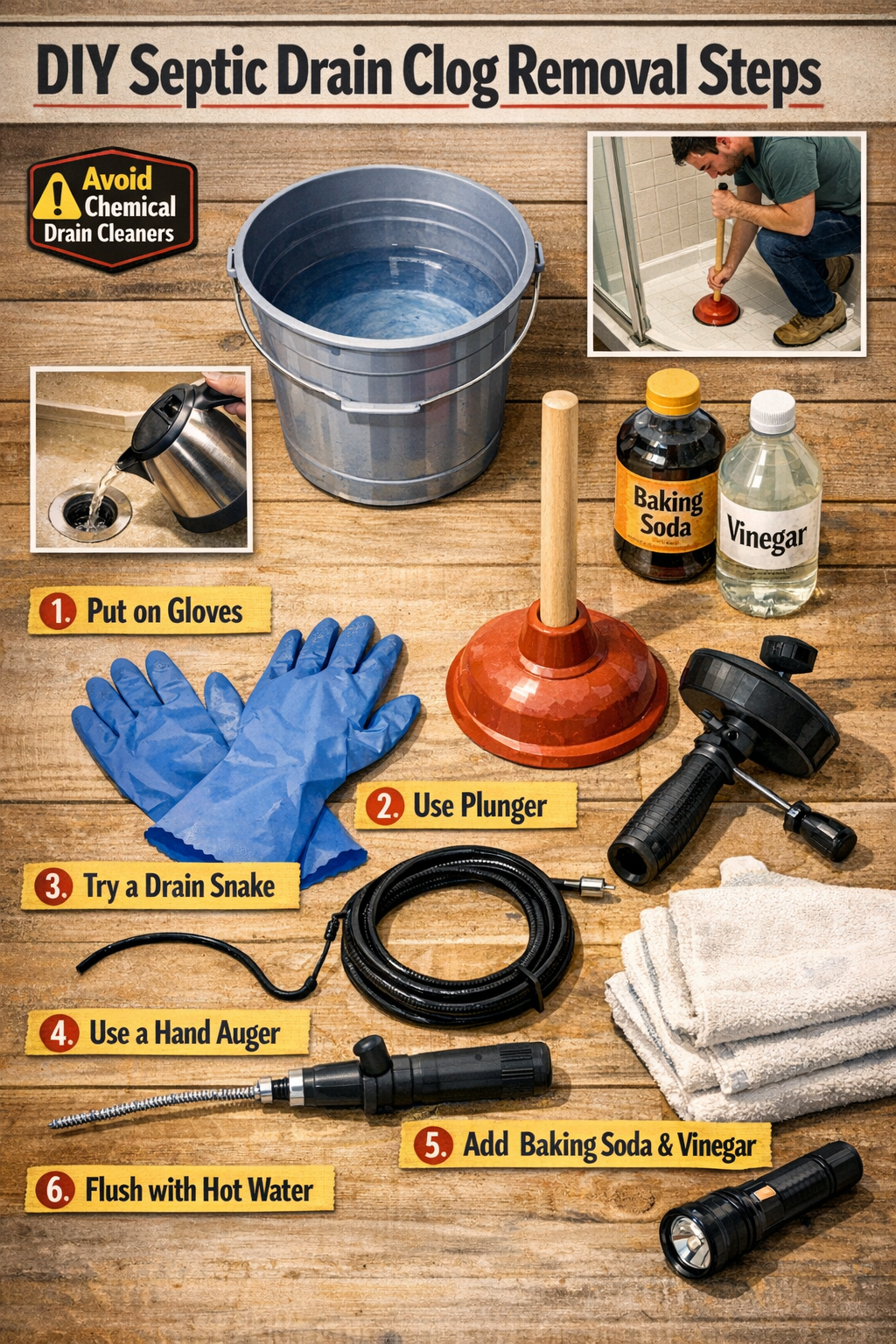
The safest DIY Septic Drain Clog Removal steps are simple: use hot water, try a plunger, use baking soda and vinegar if buildup is light, then move to a plastic snake or hand auger if needed. These methods are safer for septic bacteria than harsh drain chemicals.
DIY Septic Drain Clog Removal Steps
- Stop extra water use
- Don’t run the dishwasher, laundry, or long showers.
- This gives the line a chance to drain and prevents backup.
- Try hot water first
- Pour hot water in the 120-140°F range down the drain slowly.
- This can help loosen soap or grease.
- Don’t use boiling water on delicate pipes or porcelain fixtures.
- Use a plunger
- Create a tight seal over the drain.
- Use short, steady plunges.
- For sinks, block the overflow opening with a cloth.
- Try baking soda and vinegar
- Add baking soda, then vinegar, and let the mixture work before flushing with hot water.
- This is better for septic systems than caustic products.
- Use a plastic drain snake or hand auger
- Feed it slowly into the drain.
- Turn gently and pull debris back out.
- Wear gloves and keep a bucket nearby.
- Clean up and test
- Run a small amount of water.
- If flow improves, stop there and avoid over-testing with lots of water.
Common mistake
The biggest mistake is reaching for a chemical drain opener. Chemical cleaners may kill helpful bacteria and can sit in the line without removing the actual obstruction.
Quick example
If a bathroom sink is slow but the toilet and shower are normal, start with hot water, a plunger, and a small plastic snake. If the tub backs up when the toilet flushes, skip the sink-only fix and look at the main line or tank.
If you want a more detailed walk-through, read how to unclog a septic drain.
Can I unclog a septic drain without pro help?
Yes, you can often Unclog Septic Drain Without Pro Help when the blockage is minor and limited to one drain. You should not treat a whole-house backup, standing sewage, or suspected drain field failure as a DIY project.
Good DIY candidates
- One sink, tub, or shower is slow
- The clog is near the fixture
- There is no sewage coming up in lower drains
- The septic tank was pumped on schedule
Not a good DIY situation
- Multiple drains are blocked
- Wastewater is backing up into tubs or floor drains
- You notice soggy ground over the septic area
- You smell strong sewer gas outdoors
- You suspect roots, crushed pipe, or a full tank
Manual techniques such as rods, wooden poles, steel rods, or mechanical augers may be used on some septic line clogs, but they carry more risk if you don’t know the pipe layout. Choose a simple hand snake for accessible indoor drains. Choose a pro if the clog is in the main septic line.
Septifix: Simple Septic Tank Care in One Tablet
Septifix tablets help break down waste, reduce bad smells, and keep your septic tank working properly. With one easy monthly flush, you can help prevent blockages, protect your plumbing, and avoid costly repairs.
👉 See how Septifix tablets can keep your septic system clean and efficient
What should I never do during Septic Drain Clog Removal?
Never use harsh chemical cleaners, never keep forcing water into a backed-up system, and never dig into septic components without a plan. Bad choices can turn a cheap clog into a major repair.
Avoid these mistakes
- Chemical drain cleaners that can upset septic bacteria
- Flushing wipes, paper towels, cat litter, grease, or hygiene items
- Running repeated loads of laundry to “push through” a clog
- Driving over the drain field
- Opening a septic tank without proper safety steps
- Mixing DIY methods carelessly after using chemicals
Comparison table: safe vs unsafe methods
| Method | Septic-safe? | Best use | Notes |
|---|---|---|---|
| Hot water | Yes | Light grease or soap buildup | Use hot, not extreme boiling |
| Plunger | Yes | Sink, tub, toilet clogs | Good first tool |
| Baking soda + vinegar | Usually yes | Mild buildup | Flush with hot water after |
| Plastic drain snake | Yes | Hair and debris near drain | Gentle on pipes |
| Hand auger | Usually yes | Stubborn drain or line clog | Use carefully |
| Chemical cleaner | No | Not recommended | Can harm bacteria |
If your household habits may be causing repeat blockages, review what not to put in a septic tank.
When should I call a professional for Septic Drain Clog Removal?
Call a professional when the clog affects multiple fixtures, returns quickly, or appears tied to the tank, main line, or drain field. Professional service is also the right move when safety, property damage, or contamination is a concern.
Strong reasons to call now
- Sewage is backing up into the home
- You have standing wastewater near the septic area
- The tank may be full
- DIY snaking did not restore flow
- You suspect tree roots or a collapsed line
- The issue follows heavy rain and the yard is saturated
Professionals may use mechanical augers, inspection tools, or high-pressure water jetting for stubborn clogs [7]. The best choice depends on pipe condition and clog location. For a recurring issue, an inspection is often more useful than repeating the same unclogging step. See the complete septic system inspection guide if you want to know what that visit usually includes.
How much does Septic Drain Clog Removal cost and how long does it take?
Septic Drain Clog Removal costs and timing vary by location, clog severity, access, and whether the problem is a fixture drain, main line, or septic tank issue. A simple indoor clog is usually faster and cheaper than a septic line blockage or emergency backup.
Because pricing changes by region and service type, I won’t give a fixed national number without a current local quote. Instead, use these decision rules:
- Choose DIY if one drain is clogged and you can reach it safely.
- Choose a plumber if the clog is in the home’s drain line.
- Choose a septic company if the tank, outlet, filter, or drain field may be involved.
Typical timing by job type:
- Simple sink or tub clog: often same-day
- Main line snaking: often a short service visit
- Pumping plus diagnosis: may take longer
- Drain field or line repair: usually a larger job
If you think pumping may be part of the solution, compare local estimates with this cost to pump a septic tank guide.
How can I Prevent Septic Drain Clogs Maintenance problems?
The best way to prevent clogs is to reduce what enters the system, manage water use, and stay on top of pumping and filter cleaning. Prevention is cheaper than emergency cleanup, and it’s easier on the whole system.
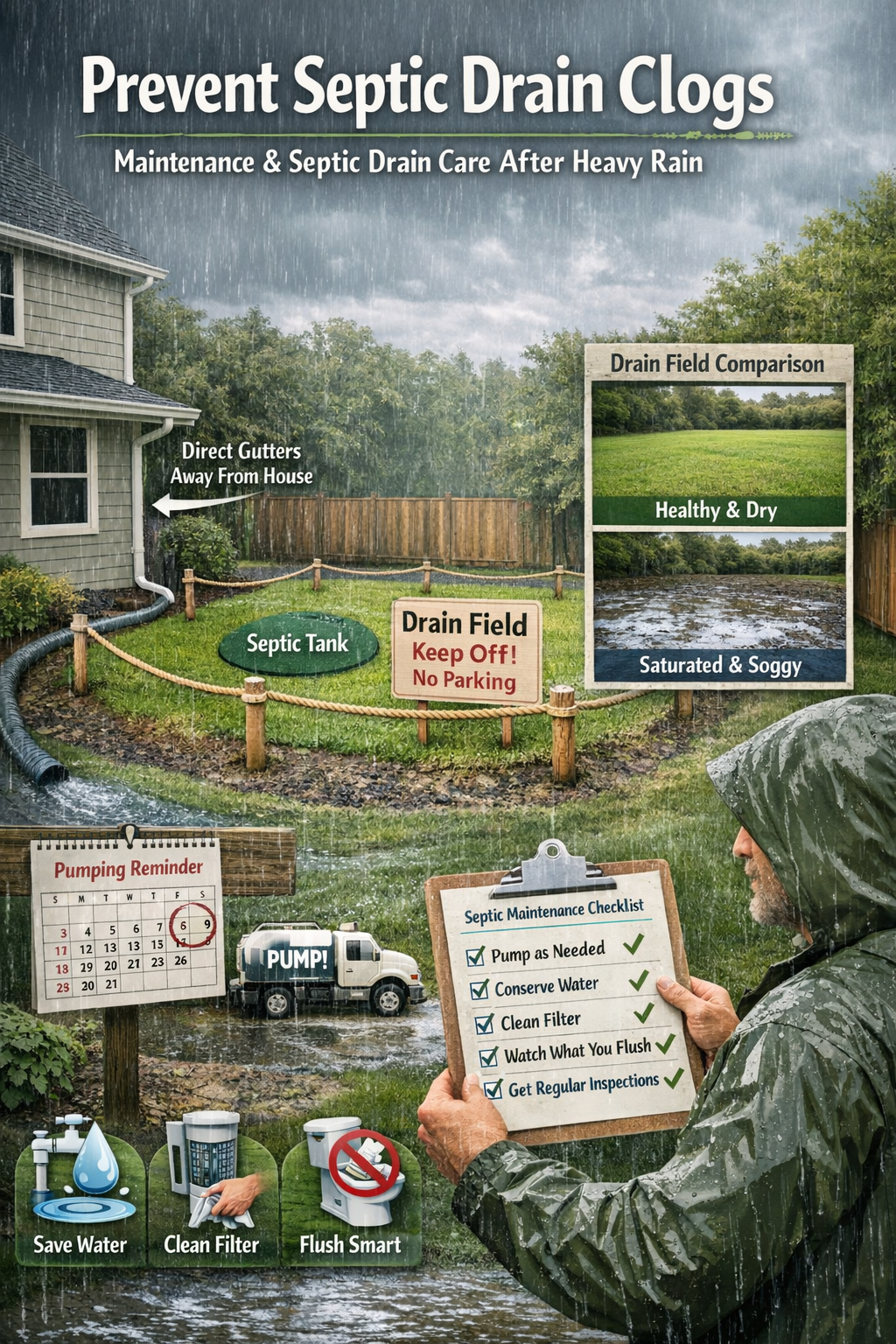
Prevent Septic Drain Clogs Maintenance checklist
- Pump the tank on schedule
- Clean the effluent filter as recommended
- Fix leaking toilets and faucets
- Spread laundry loads through the week
- Keep grease and food scraps out of the drain
- Use septic-safe paper habits
- Never flush wipes, even “flushable” ones
- Keep vehicles and heavy structures off the drain field
- Direct surface water away from septic components
- Schedule inspections if problems repeat
A strong routine matters more than additives for most homes. Helpful reads include septic tank filter maintenance tips, how to keep a septic tank clean, and a septic tank maintenance schedule.
What is the best Slow Septic Drain Quick Fix Guide after heavy rain?
A Slow Septic Drain Quick Fix Guide after rain starts with using less water and waiting for the soil to recover. Heavy rain can saturate the drain field, which makes a healthy septic system act clogged even when the indoor pipes are clear.
Septic Drain Care After Heavy Rain
- Cut back water use for a day or two if possible
- Pause laundry and long showers
- Check whether the yard is soggy above the drain field
- Watch for backups in the lowest fixtures first
- Do not pump the tank just because it rained unless a pro confirms it’s needed
- Keep roof runoff and sump discharge away from the septic area
Edge case to know
If the drains improve as the yard dries out, saturation was likely part of the problem. If the drains stay slow after the ground recovers, you may still have a clog or a tank issue.
For season-specific care, these guides can help: summer septic tank care tips and winter septic tank maintenance.
Related reading
If you want to go deeper, I’d start here:
- How to unclog a septic drain
- Signs your septic tank needs pumping
- Troubleshooting septic tank issues
- What not to put in a septic tank
- Septic tank filter maintenance tips
- Septic tank maintenance schedule
FAQ
What is the safest first step for Septic Drain Clog Removal?
The safest first step is to stop heavy water use and try hot water or a plunger on the affected drain.
Are chemical drain cleaners safe for septic systems?
No. Chemical drain cleaners are generally not recommended for septic systems because they can harm beneficial bacteria.
Can baking soda and vinegar help a septic drain clog?
Yes, baking soda and vinegar can help with mild buildup in some drains and are commonly suggested as a septic-safer option.
How do I know if the clog is in the septic line?
A septic line clog is more likely when multiple fixtures drain slowly, toilets gurgle, or wastewater backs up into lower drains.
Should I snake a septic drain myself?
You can snake a nearby fixture drain yourself, but use more caution with main lines because improper snaking can damage pipes or miss a larger septic issue.
Is a slow shower drain always a septic problem?
No. A slow shower drain is often just hair and soap scum near the drain, especially if other fixtures are working fine.
Can heavy rain make septic drains slow?
Yes. Heavy rain can saturate the drain field and slow the system’s ability to accept wastewater.
When should I stop DIY septic drain unclogging?
Stop DIY work when sewage backs up, several drains are affected, the yard is soggy, or your safe methods do not restore flow.
Will pumping the tank always fix a septic drain clog?
No. Pumping helps when the tank is full, but it won’t fix every local drain clog or damaged pipe.
What tool is best for a minor septic-safe drain clog?
A plunger or plastic drain snake is often the best starting tool for a minor indoor clog.
Septifix: Simple Septic Tank Care in One Tablet
Septifix tablets help break down waste, reduce bad smells, and keep your septic tank working properly. With one easy monthly flush, you can help prevent blockages, protect your plumbing, and avoid costly repairs.
👉 See how Septifix tablets can keep your septic system clean and efficient
Conclusion
Septic Drain Clog Removal is usually manageable when you identify the problem early and use septic-safe methods. For most homeowners, the right order is simple: check whether the issue is local or system-wide, use hot water or a plunger first, move to a snake or auger only when needed, and avoid chemical cleaners that can hurt the system.
If I were making a plan today, I’d do these three things:
- Use the checklist to confirm whether it’s a simple drain clog or a septic warning sign.
- Try one safe DIY fix at a time instead of flooding the system with repeated tests.
- Book pumping or inspection if multiple fixtures are involved or the problem keeps returning.
A clogged septic drain gets expensive when people wait too long or use the wrong fix. A calm, septic-safe approach usually gives you the best result.
References
[1] How Do You Unclog A Drain With A Septic System – https://www.wrenvironmental.com/blog/2022/may/how-do-you-unclog-a-drain-with-a-septic-system-/
[2] How To Safely Unclog A Drain On A Septic System – https://www.honey-wagonkc.com/blog/posts/how-to-safely-unclog-a-drain-on-a-septic-system.html
[3] Unclog Drains – https://supeckseptic.com/unclog-drains/
[4] How To Unclog Septic Tank Yourself – https://www.angi.com/articles/how-to-unclog-septic-tank-yourself.htm
[7] What Drain Cleaner Is Safe For Septic Systems – https://www.mrrooter.com/yavapai-and-coconino-counties/about-us/blog/what-drain-cleaner-is-safe-for-septic-systems-/