
Last updated: February 22, 2026
Key Takeaways
- Slow drainage and gurgling sounds are the first warning signs when your septic tank approaches capacity
- Sewage backup into your home represents the most serious consequence, requiring immediate professional intervention
- Drain field failure can cost $10,000-$20,000 or more to repair when tanks remain full too long
- Health hazards and property damage escalate quickly once sewage begins surfacing or backing up
- Regular pumping every 3-5 years prevents most full tank problems and costly emergency repairs
Quick Answer
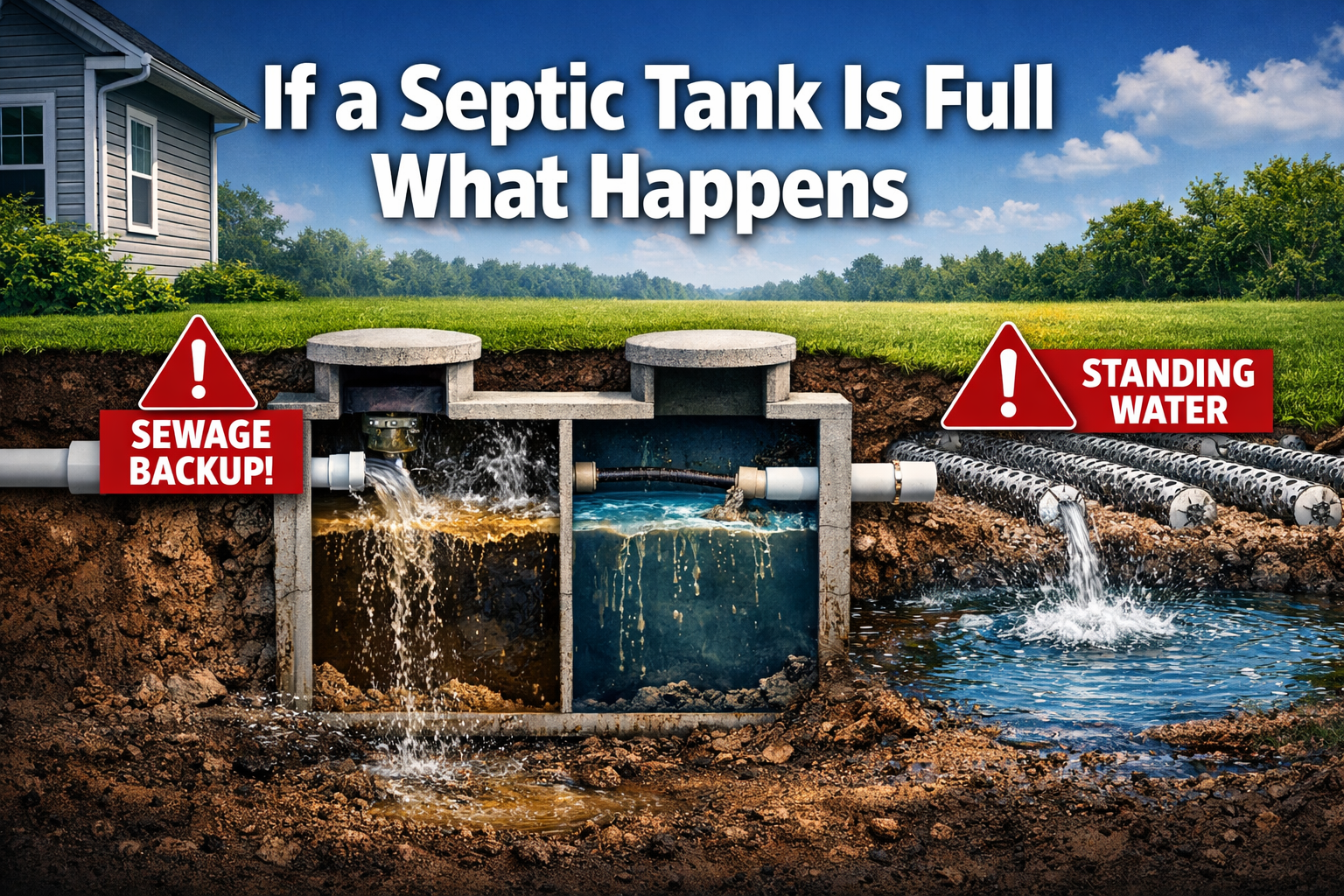
When a septic tank becomes full, wastewater has nowhere to go and begins backing up through your home’s drains, toilets, and sinks. The system stops processing waste effectively, leading to sewage odors, standing water in your yard, and potential health hazards. Without prompt pumping, you’ll face expensive drain field damage and extensive property contamination.
What Are the First Warning Signs When Your Septic Tank Gets Full?
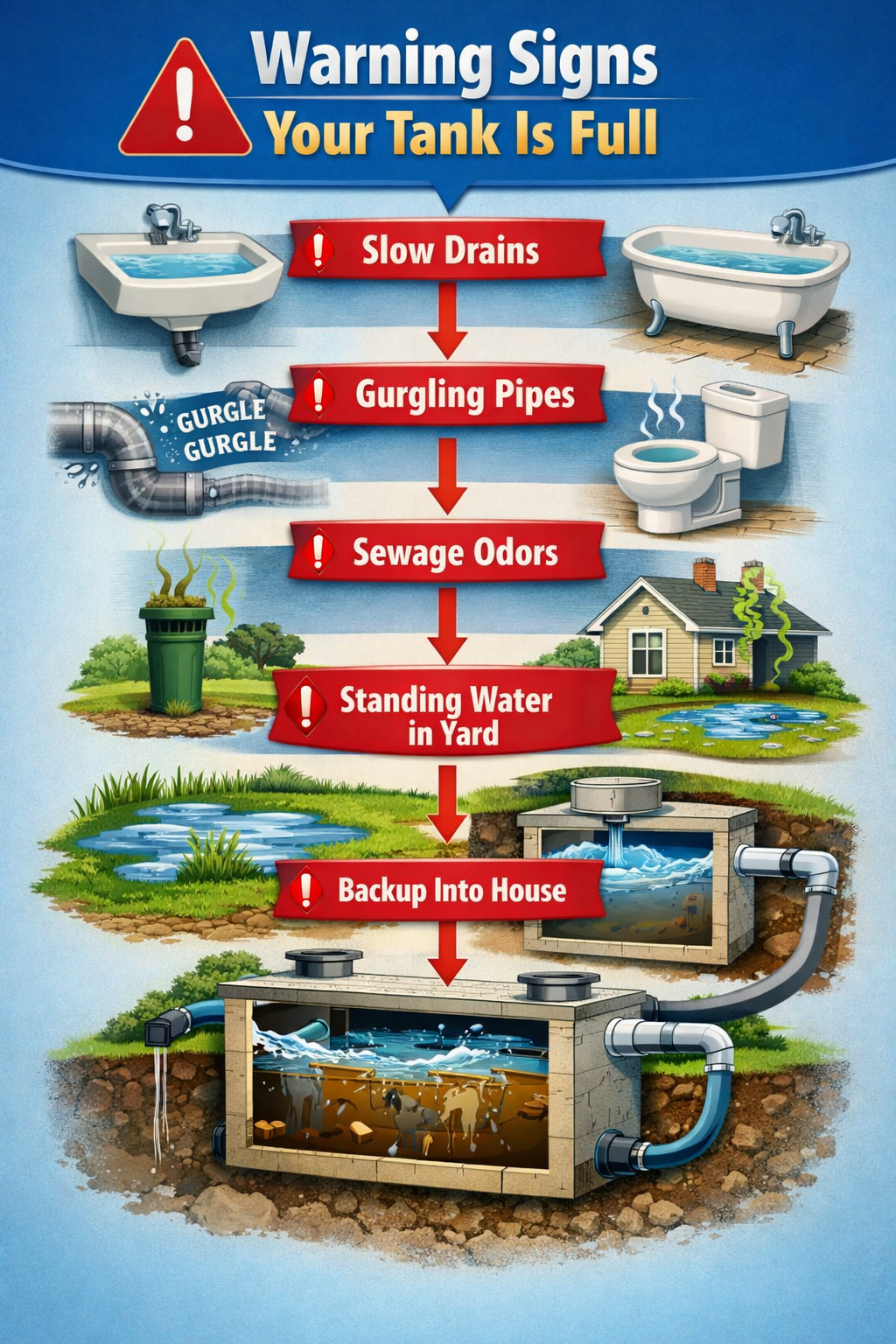
Slow drainage develops as the earliest indicator that your septic tank is reaching capacity. Sinks, bathtubs, and toilets begin draining sluggishly because wastewater has limited space to flow through the system.
The progression typically follows this pattern:
- Sluggish drains throughout the house, especially in lower-level fixtures
- Gurgling sounds from pipes as air gets trapped in the full system
- Persistent sewage odors both inside and outside your home
- Wet spots or standing water appearing near your drain field
Choose immediate pumping if you notice multiple warning signs occurring simultaneously. Many homeowners mistake these early symptoms for minor plumbing issues, but addressing them quickly prevents much costlier problems.
Common mistake: Ignoring slow drains and assuming they’re caused by regular clogs. If multiple fixtures drain slowly at once, your tank is likely approaching capacity rather than having individual blockages.
For detailed guidance on recognizing these warning signs, check our complete guide on how to tell if your septic tank is full.
If a Septic Tank Is Full What Happens to Your Home’s Plumbing?
Sewage backs up through your home’s lowest drains when the tank can no longer accept additional wastewater. This typically starts with basement floor drains, utility sinks, and ground-level bathrooms before affecting upper floors.
The backup sequence usually occurs in this order:
- Floor drains and utility sinks show sewage first
- Basement bathrooms experience toilet and shower backups
- Main floor fixtures begin backing up as pressure increases
- All drains eventually become unusable without immediate pumping
Property damage escalates rapidly once sewage enters your home. Contaminated water damages flooring, walls, furniture, and personal belongings. Cleanup costs often exceed thousands of dollars, and insurance may not cover septic-related flooding.
Health risks increase significantly when raw sewage enters living spaces. Harmful bacteria and pathogens cause gastrointestinal infections, respiratory illnesses, and skin conditions, with children and elderly family members facing the highest risk.
Choose emergency pumping services if any sewage backup occurs inside your home. Standard pumping appointments won’t address the immediate health and safety concerns.
What Happens to Your Drain Field When the Tank Stays Full?
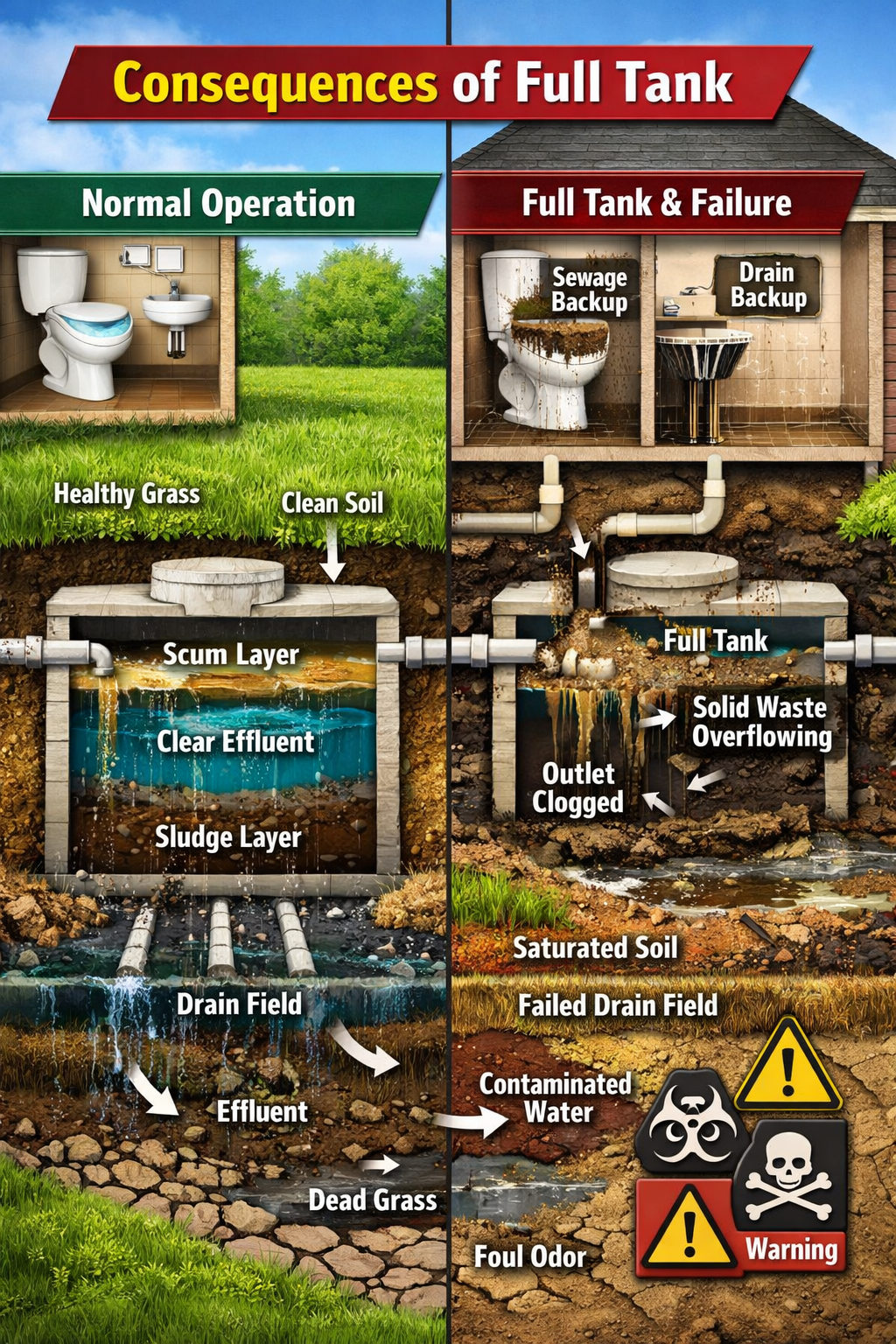
The drain field becomes overwhelmed and fails when septic tanks remain full for extended periods. Excess wastewater saturates the soil beyond its absorption capacity, causing permanent damage to this critical system component.
Drain field failure manifests through several serious problems:
- Soil saturation prevents proper wastewater filtration
- Standing water appears permanently above the drain field
- Sewage surfacing creates health hazards and foul odors
- System hydraulic overload occurs when adding normal household water use
Replacement costs range from $10,000 to $20,000 or more for failed drain fields, making this the most expensive consequence of neglected full tanks. The EPA identifies drain field failure as the costliest issue homeowners face with septic systems.
Soil contamination persists for years after drain field failure occurs. Sewage alters soil composition, reduces fertility, and disrupts local ecosystems, affecting your property’s value and usability.
Edge case consideration: Properties with clay soil or high water tables experience drain field failure more quickly than those with sandy, well-draining soil. Monitor these systems more closely during wet seasons.
Understanding how septic tank systems work helps you recognize why drain field protection is so critical.
If a Septic Tank Is Full What Happens to Your Property Value?
Property damage and contamination significantly reduce your home’s market value when septic tanks remain full too long. Real estate disclosure requirements mandate reporting septic system problems, and buyers often negotiate substantial price reductions or walk away entirely.
The financial impact includes:
- Immediate repair costs for sewage cleanup and property restoration
- Long-term contamination affecting soil quality and landscaping
- Insurance complications as many policies exclude septic-related damage
- Regulatory fines from local health departments for environmental violations
Basement flooding from sewage backup damages foundations, electrical systems, and finished living spaces. Restoration requires professional remediation services, new flooring, wall repairs, and often complete basement renovations.
Landscaping destruction occurs when sewage surfaces in yards. Grass dies, plants become contaminated, and soil requires replacement before new vegetation will grow properly.
Choose preventive maintenance over reactive repairs to protect your property investment. Regular pumping costs a fraction of emergency cleanup and restoration expenses.
What Health Risks Develop When Septic Tanks Overflow?
Raw sewage exposure creates serious health hazards for your family and neighbors when septic tanks overflow. Harmful bacteria, viruses, and parasites in untreated wastewater cause multiple types of infections and illnesses.
Primary health concerns include:
- Gastrointestinal infections from E. coli, Salmonella, and other bacteria
- Respiratory illnesses from inhaling sewage gases and airborne pathogens
- Skin conditions and infections from direct contact with contaminated water
- Hepatitis and other viral infections in severe exposure cases
Children and elderly family members face the highest risk due to developing or compromised immune systems. Even brief exposure to sewage backup can cause serious illness requiring medical treatment.
Neighborhood contamination occurs when overflowing septic systems affect groundwater, wells, and nearby properties. Local health departments may issue evacuation orders or restrict water use until contamination clears.
FYI: Some links may be affiliate links, which means I may earn a small commission at no extra cost to you.
For homeowners looking to prevent these health risks, Septifix tablets offer a simple monthly maintenance solution. These tablets help break down waste, reduce harmful bacteria buildup, and keep your septic system processing waste effectively. While not a replacement for regular pumping, Septifix can help maintain proper bacterial balance between professional services.
How Much Does It Cost When Full Septic Tanks Cause Damage?
Emergency repairs and cleanup costs typically range from $5,000 to $25,000 when full septic tanks cause property damage. The total expense depends on contamination extent, property damage severity, and required system repairs.
| Damage Type | Typical Cost Range |
|---|---|
| Emergency pumping | $300 – $800 |
| Sewage cleanup (basement) | $2,000 – $8,000 |
| Drain field replacement | $10,000 – $20,000+ |
| Property restoration | $3,000 – $15,000 |
| Health department fines | $500 – $5,000 |
Insurance coverage varies significantly for septic-related damage. Most homeowner policies exclude gradual sewage seepage but may cover sudden backups. Review your policy carefully and consider septic system riders for additional protection.
Regulatory penalties add substantial costs when full tanks cause environmental contamination. Local health departments assess fines for groundwater pollution, neighbor property damage, and failure to maintain systems properly.
Opportunity costs include temporary housing expenses if your home becomes uninhabitable, lost work time managing repairs, and decreased property values during contamination cleanup.
Choose regular maintenance over emergency repairs. Annual septic inspections cost $200-$400, while pumping every 3-5 years runs $300-$600—a fraction of emergency repair expenses.
Learn more about typical maintenance expenses in our complete guide to septic tank pumping costs.
What Should You Do Immediately If Your Septic Tank Is Full?
Contact a licensed septic pumping service immediately when you confirm your tank is full. Don’t wait for convenient scheduling—full tanks create health hazards and property damage that worsen rapidly.
Emergency action steps:
- Stop all water use in your home to prevent additional backup
- Avoid contact with any sewage or standing water
- Ventilate affected areas to reduce harmful gas exposure
- Document damage with photos for insurance claims
- Call professional pumping services for same-day or next-day service
Don’t attempt DIY solutions like drain cleaners, which can kill beneficial bacteria and worsen the problem. Chemical additives won’t address the fundamental issue of insufficient tank capacity.
Temporary water use restrictions help prevent additional backups while waiting for pumping services:
- Limit toilet flushes to essential use only
- Postpone laundry and dishwashing until after pumping
- Take shorter showers or use alternative facilities
- Fix any leaking faucets to reduce unnecessary water flow
Choose licensed, insured pumping contractors who can properly dispose of waste and inspect your system for damage. Unlicensed services may create additional problems or legal issues.
For guidance on recognizing when your tank needs immediate attention, see our signs of a full septic tank guide.
How Can You Prevent Your Septic Tank From Getting Full?
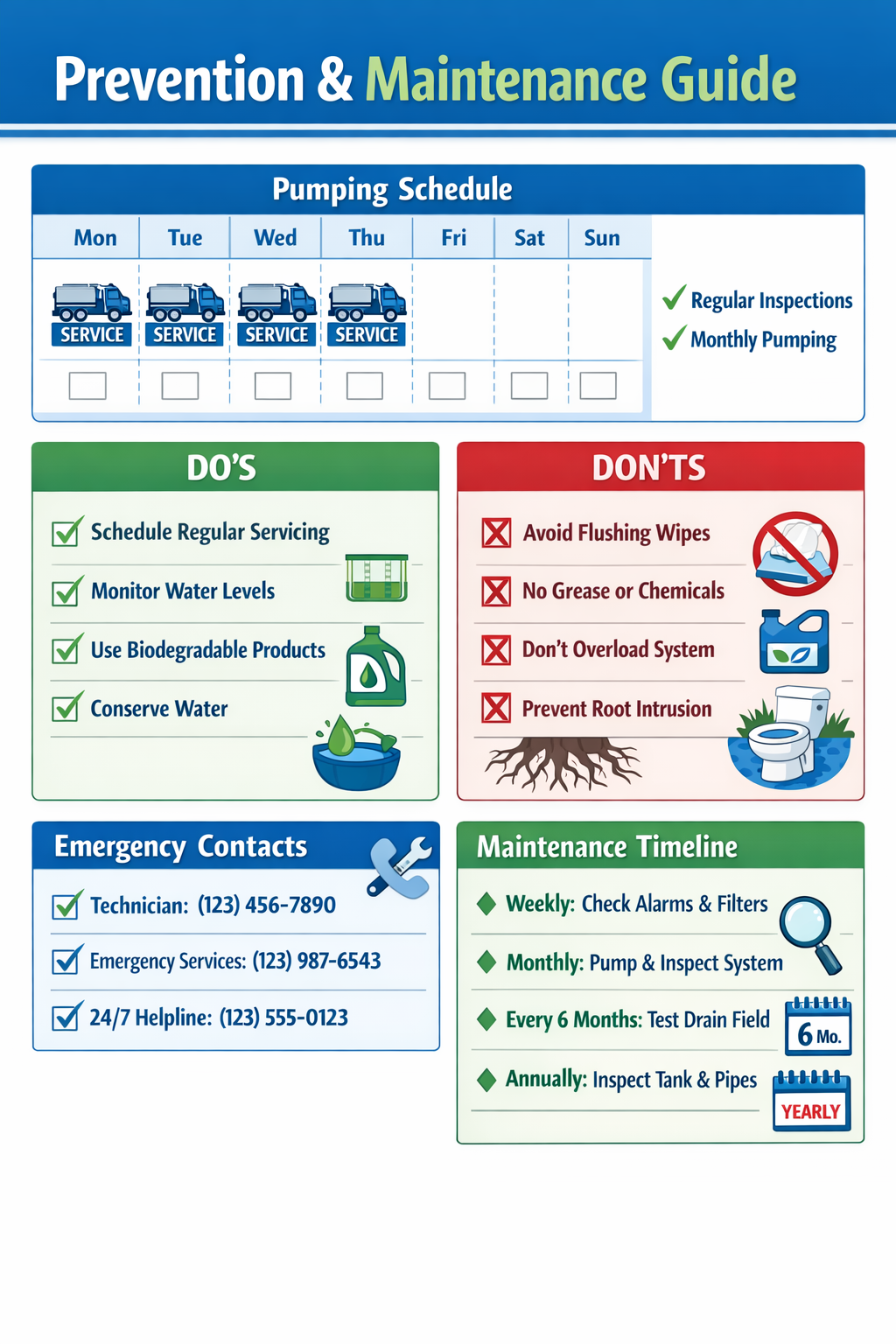
Regular pumping every 3-5 years prevents most full tank problems and maintains proper system function. The exact frequency depends on household size, tank capacity, and water usage patterns.
Pumping schedule guidelines:
- 1-2 people: Every 4-5 years
- 3-4 people: Every 3-4 years
- 5+ people: Every 2-3 years
- Heavy water use: More frequent pumping required
Water conservation reduces tank filling speed and extends time between pumping services:
- Fix leaks promptly to prevent unnecessary water flow
- Spread laundry loads throughout the week instead of doing multiple loads in one day
- Install low-flow fixtures to reduce daily water consumption
- Avoid long showers and running water unnecessarily
Proper waste disposal prevents premature tank filling and system damage:
- Never flush medications, chemicals, or non-biodegradable items
- Limit garbage disposal use as food waste increases sludge buildup
- Avoid harsh cleaning chemicals that kill beneficial bacteria
- Don’t flush feminine products, diapers, or cat litter
Regular inspections catch problems before they become emergencies. Annual professional inspections cost $200-$400 but identify issues like damaged baffles, clogged pipes, or early drain field problems.
For comprehensive maintenance guidance, check our best septic tank maintenance practices guide.
Helpful Resource for Septic Tank Maintenance
If you want a simple way to maintain your septic system between professional pumpings, Septifix tablets provide an easy monthly maintenance routine. These tablets help break down waste, reduce bad smells, and support the beneficial bacteria that keep your system working properly.
With one easy monthly flush, Septifix can help prevent blockages, protect your plumbing, and potentially extend time between expensive pumping services. While regular pumping remains essential, maintaining proper bacterial balance helps your system process waste more efficiently and reduces the risk of premature tank filling.
This simple addition to your maintenance routine costs far less than emergency repairs and gives you peace of mind that you’re actively protecting your septic investment.
FAQ
How quickly does a septic tank fill up?
Most residential septic tanks fill to capacity over 3-5 years with normal household use. Larger families, excessive water use, or system problems can reduce this timeframe significantly.
Can I pump my septic tank myself?
No, septic tank pumping requires specialized equipment and proper waste disposal permits. Licensed professionals have vacuum trucks and know how to safely handle hazardous waste materials.
What happens if I ignore a full septic tank?
Ignoring a full tank leads to sewage backup in your home, drain field failure, property damage, health hazards, and repair costs often exceeding $15,000-$25,000.
How do I know if my septic tank is full or just clogged?
Full tanks cause slow drainage throughout the house, while clogs typically affect individual fixtures. Multiple simultaneous drainage problems indicate a full tank rather than isolated blockages.
Will heavy rain make my full septic tank worse?
Yes, heavy rain adds groundwater pressure to an already full system, increasing the likelihood of sewage backup and drain field overflow.
Can a full septic tank damage my home’s foundation?
Yes, sewage backup can flood basements and saturate soil around foundations, potentially causing structural damage and requiring expensive repairs.
How long can I wait once I know my tank is full?
Don’t wait at all. Full tanks create immediate health hazards and property damage risks that worsen rapidly. Contact pumping services the same day you confirm the problem.
Does homeowner’s insurance cover full septic tank damage?
Coverage varies by policy. Most exclude gradual sewage problems but may cover sudden backups. Check your specific policy and consider septic system coverage riders.
What’s the difference between a full tank and a failing system?
Full tanks simply need pumping to restore normal function. Failing systems have damaged components like broken pipes or failed drain fields requiring major repairs.
Can I use my plumbing while waiting for septic pumping?
Minimize water use to prevent additional backup. Avoid laundry, dishwashing, and long showers until pumping is complete.
How often should I have my septic tank inspected?
Annual inspections help catch problems early. Professional inspections cost $200-$400 but prevent expensive emergency repairs.
What should I do if sewage backs up into my house?
Stop all water use immediately, avoid contact with sewage, ventilate affected areas, document damage for insurance, and call emergency pumping services right away.
Key Takeaways
- Recognize early warning signs like slow drains and gurgling sounds to prevent sewage backup emergencies
- Act immediately when you confirm your tank is full—delays cause exponentially more expensive damage
- Protect your drain field by maintaining proper pumping schedules, as replacement costs $10,000-$20,000 or more
- Understand health risks from sewage exposure and take contamination seriously, especially with children and elderly family members
- Invest in preventive maintenance through regular pumping every 3-5 years and annual inspections
- Practice water conservation to reduce tank filling speed and extend time between pumping services
- Know your insurance coverage for septic-related damage and consider additional protection riders
- Choose licensed professionals for all pumping and repair services to ensure proper waste disposal and system protection
- Document any damage immediately for insurance claims and regulatory compliance
- Consider maintenance supplements like bacterial treatments to support system health between professional services
Conclusion
Understanding what happens when your septic tank becomes full empowers you to take swift action and prevent costly disasters. The progression from slow drains to sewage backup can occur rapidly, making early recognition and immediate response critical for protecting your home, health, and financial investment.
Take action today by scheduling an inspection if you haven’t had one recently, or pumping if your tank is approaching its service interval. Don’t wait for warning signs to appear—preventive maintenance costs a fraction of emergency repairs and protects your family from serious health hazards.
Next steps: Contact a licensed septic professional for an inspection if you’re unsure about your system’s current condition, establish a regular pumping schedule based on your household size, and bookmark emergency pumping services for quick access if problems develop.
Remember, your septic system is a significant investment that requires regular attention. By staying proactive with maintenance and responding quickly to problems, you’ll avoid the expensive consequences of full tank emergencies and keep your system functioning reliably for decades.
For more detailed guidance on septic system maintenance, explore our comprehensive septic tank care resources to keep your system running smoothly year-round.
References
[1] Warning Signs Septic Tank Full – https://tlsepticpumper.com/septic-system-education/warning-signs-septic-tank-full/
[2] Signs Septic Tank Is Full – https://www.crystalhpe.com/signs-septic-tank-is-full/
[3] Scary Things That Can Happen If You Neglect Your – https://www.wrenvironmental.com/blog/2024/october/scary-things-that-can-happen-if-you-neglect-your/
[4] 5 Reasons Why Delaying Septic Tank Repairs Can Lead To Major Property Damage – https://www.epicplumbingllc.com/5-reasons-why-delaying-septic-tank-repairs-can-lead-to-major-property-damage
[5] Scary Things That Can Happen If You Neglect Your Septic System – https://www.septicblueraleigh.com/scary-things-that-can-happen-if-you-neglect-your-septic-system.html
[6] Don T Let Your Septic Tank Backfire The 2 3 Year Rule Explained – https://www.septiccheck.com/post/don-t-let-your-septic-tank-backfire-the-2-3-year-rule-explained
[7] Essential Facts About Buying Homes With Septic Systems In – https://www.amerisave.com/learn/essential-facts-about-buying-homes-with-septic-systems-in
[8] Signs Your Septic Tank Is Too Full When To Call The Pros – https://www.metroseptic.com/blog/signs-your-septic-tank-is-too-full-when-to-call-the-pros/
[9] What Happens If You Wait Too Long Between Septic Pump Outs – https://www.awsanitation.com/post/what-happens-if-you-wait-too-long-between-septic-pump-outs
[10] 7 Septic Myths Debunked Blog October 2025 – https://www.billsseweranddrain.com/7-septic-myths-debunked-blog-october-2025