
Last updated: March 22, 2026
Quick Answer
If you need to know How to Unclog Septic Drain, start by figuring out where the blockage is: a sink trap, a household drain line, the septic tank, or the drain field. For minor indoor clogs, use septic-safe methods like hot water, baking soda and vinegar, a sink plunger, or careful P-trap cleaning. If several drains are backing up at once, sewage is surfacing, or the drain field is wet, stop DIY work and call a septic professional because the problem may be deeper in the system.
Septifix: Simple Septic Tank Care in One Tablet
Septifix tablets help break down waste, reduce bad smells, and keep your septic tank working properly. With one easy monthly flush, you can help prevent blockages, protect your plumbing, and avoid costly repairs.
👉 See how Septifix tablets can keep your septic system clean and efficient
Key Takeaways
- A single slow sink usually points to a local clog, not a full septic system.
- Multiple slow drains, gurgling, and sewage smells often mean a bigger septic issue.
- Chemical drain cleaners are a bad choice for septic systems because they can harm the bacteria the system needs.
- For minor clogs, try 120–140°F hot water, then baking soda and vinegar, then a sink plunger.
- Many kitchen sink clogs sit in the P-trap, which you may be able to remove and clean safely.
- A manual snake or plastic drain tool can help when simple methods fail, but use care to avoid pipe damage.
- Unclog septic drain without digging is possible for some line and drain field problems, but not every case.
- If the septic tank or leach field is blocked, a pro may need an auger or sewer jetter.
- Prevention matters: avoid grease, wipes, and other non-flushables, and keep up with pumping and inspections.
Quick summary checklist
If you’re short on time, use this checklist first:
- Check whether one drain or many drains are slow
- Stop using lots of water right away
- Look for Signs Your Septic Drain Is Clogged
- Try septic-safe indoor methods only for minor clogs
- Avoid chemical drain cleaners
- Call for help if sewage backs up, the yard is wet, or toilets and tubs fail together
A simple rule: one fixture usually means a local clog, but several affected fixtures usually mean a septic system problem.
What are the signs your septic drain is clogged?
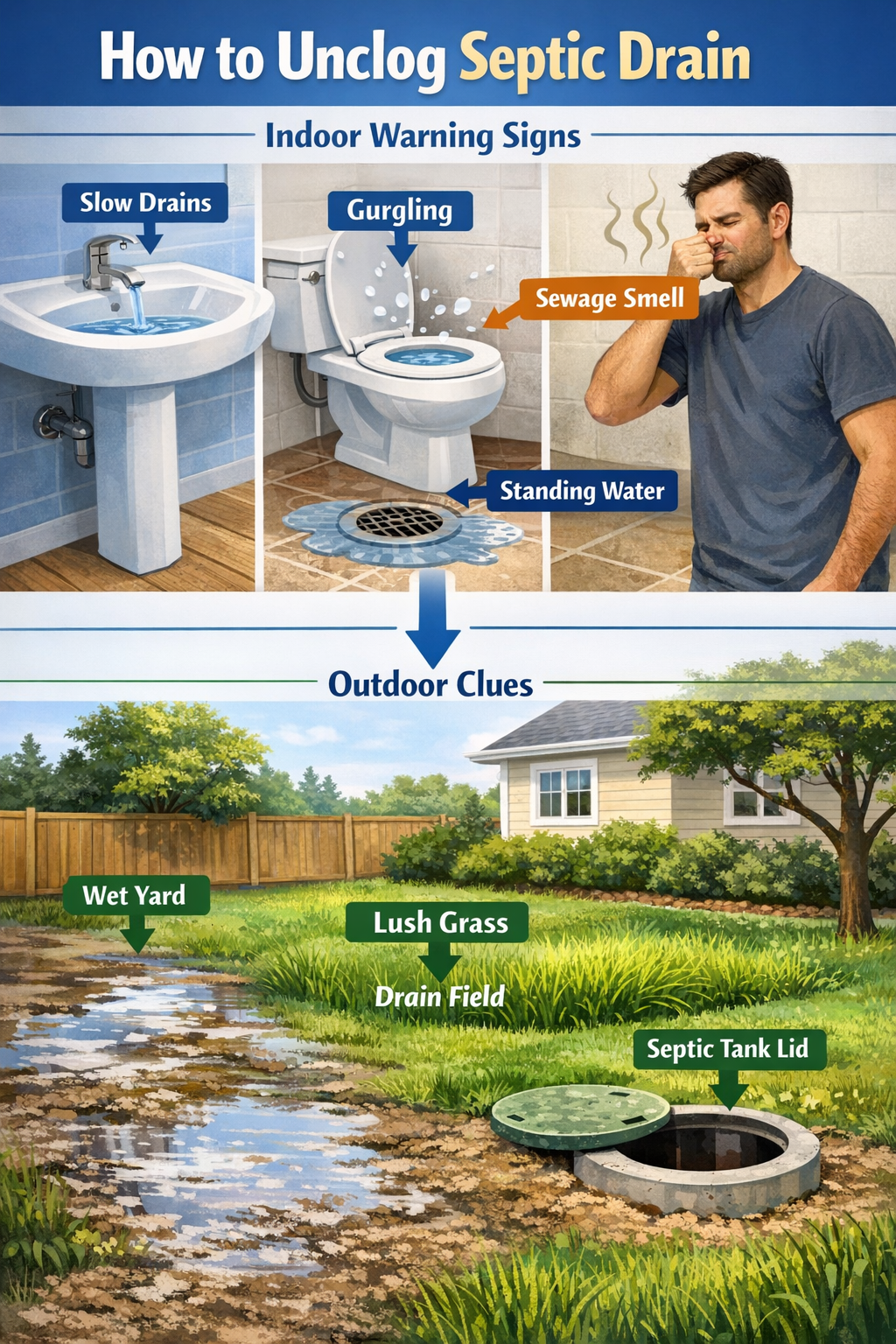
A clogged septic drain usually shows up as slow drains, gurgling sounds, sewage odors, backups, or wet ground near the tank or drain field. The pattern matters: one drain points to a local plumbing issue, while several fixtures acting up at once points to the septic system.
Common warning signs include:
- Kitchen sink drains slowly
- Bathtub or shower holds water
- Toilet bubbles or flushes poorly
- Floor drain backs up after laundry
- Sewage smell inside or near the yard
- Grass above the drain field looks unusually wet or lush
Signs Your Septic Drain Is Clogged indoors
Indoor signs usually come first:
- One sink only: likely grease, hair, soap scum, or food debris
- Kitchen and laundry both slow: possible main line issue
- Toilet plus tub backup: stronger sign of septic or main drain trouble
Outdoor warning signs
Outdoor clues matter even more for septic systems:
- Standing water near the drain field
- Spongy soil
- Odor near the tank or field
- Wastewater surfacing above ground
Choose DIY only if the issue is limited to one indoor drain and there is no sewage outside.
Call a pro if multiple drains are slow, sewage is backing up, or the drain field is wet.
If you’re unsure whether the tank may be full, see our guide on how to know if a septic tank is full and signs your septic tank needs maintenance.
Septic drain clogged: what to do first?
The first thing to do when a septic drain is clogged is reduce water use and identify the scope of the problem. Don’t keep flushing, running laundry, or taking long showers while you test the issue, because extra water can push a small clog into a messy backup.
Follow this order:
- Stop heavy water use
- Pause laundry and dishwasher cycles
- Limit toilet flushing
- Don’t run multiple fixtures at once
- Check how many drains are affected
- One drain = likely local clog
- Several drains = likely deeper line or septic issue
- Look and smell
- Any sewage odor?
- Any water backing up into a tub or floor drain?
- Any wet spots in the yard?
- Start with the safest method
- Hot water for grease or soap buildup
- Baking soda and vinegar for organic residue
- Plunger for mild blockage
Common mistake
A common mistake is treating every slow drain like a simple sink clog. A septic backup can get worse fast if you keep sending wastewater into a blocked system.
For a broader maintenance view, I’d also review How to Prevent Septic Backups and this complete septic system inspection guide.
How to unclog septic drain with safe DIY methods
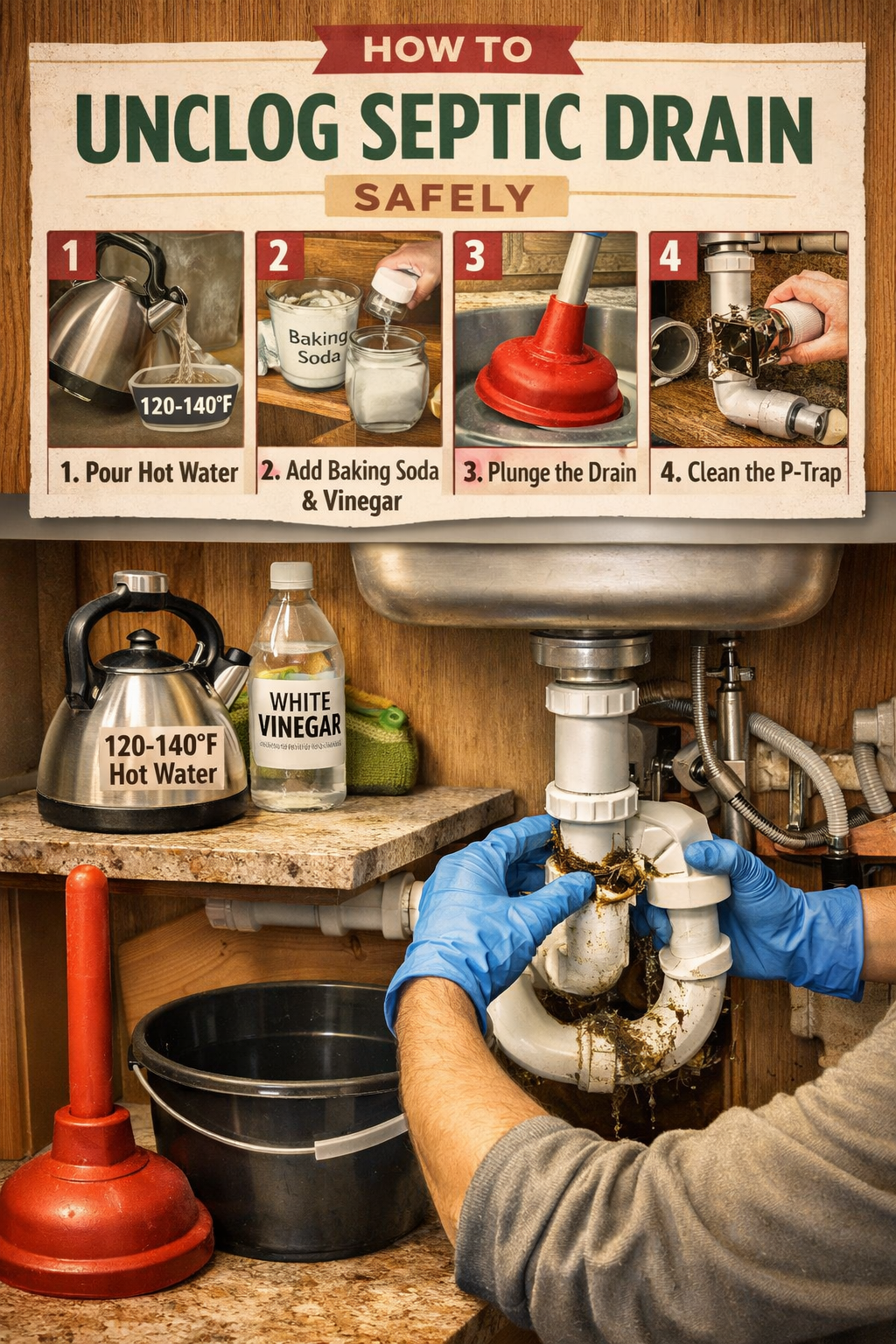
For minor indoor clogs, How to Unclog Septic Drain safely starts with low-risk methods that won’t damage pipes or harm septic bacteria. The best septic-safe order is hot water, baking soda and vinegar, plunging, then trap cleaning.
1. Try hot water first
Heated water can help dissolve soap scum, grease, and soft organic buildup in slow drains, especially in kitchen sinks and bathroom drains.
How to do it:
- Heat water to about 120–140°F, not boiling.
- Pour it slowly down the drain
- Wait a few minutes
- Test with warm tap water
Works best for: slow drains, not full blockages.
2. Use baking soda and vinegar
A mix of 1/2 cup baking soda and 1/2 cup white vinegar is considered septic-safe and can help break up organic material in a minor clog.
Steps:
- Pour in 1/2 cup baking soda
- Add 1/2 cup white vinegar
- Let it fizz and sit
- Rinse with hot water after waiting
This method is one of the best Natural Ways to Unclog Septic Drain because both ingredients are biodegradable.
3. Use the right plunger
A sink or drain plunger can dislodge soft clogs without hurting the septic system.
Tips:
- Use a sink plunger, not a toilet plunger, for sinks and tubs
- Add enough water for a seal
- Cover overflow openings if needed
- Plunge firmly several times
4. Clean the P-trap
Many sink clogs sit in the curved pipe below the drain. If the pipe has removable slip nuts, you may be able to clear it manually.
Basic process:
- Place a bucket under the trap
- Loosen the slip nuts counterclockwise
- Remove the trap carefully
- Clear debris and rinse
- Reinstall and test
Choose P-trap cleaning if one sink is clogged and the blockage seems close to the fixture.
For more fixture-level help, see our detailed How to Unclog Septic Drain article and DIY septic tank maintenance tips.
How to unclog septic drain without digging
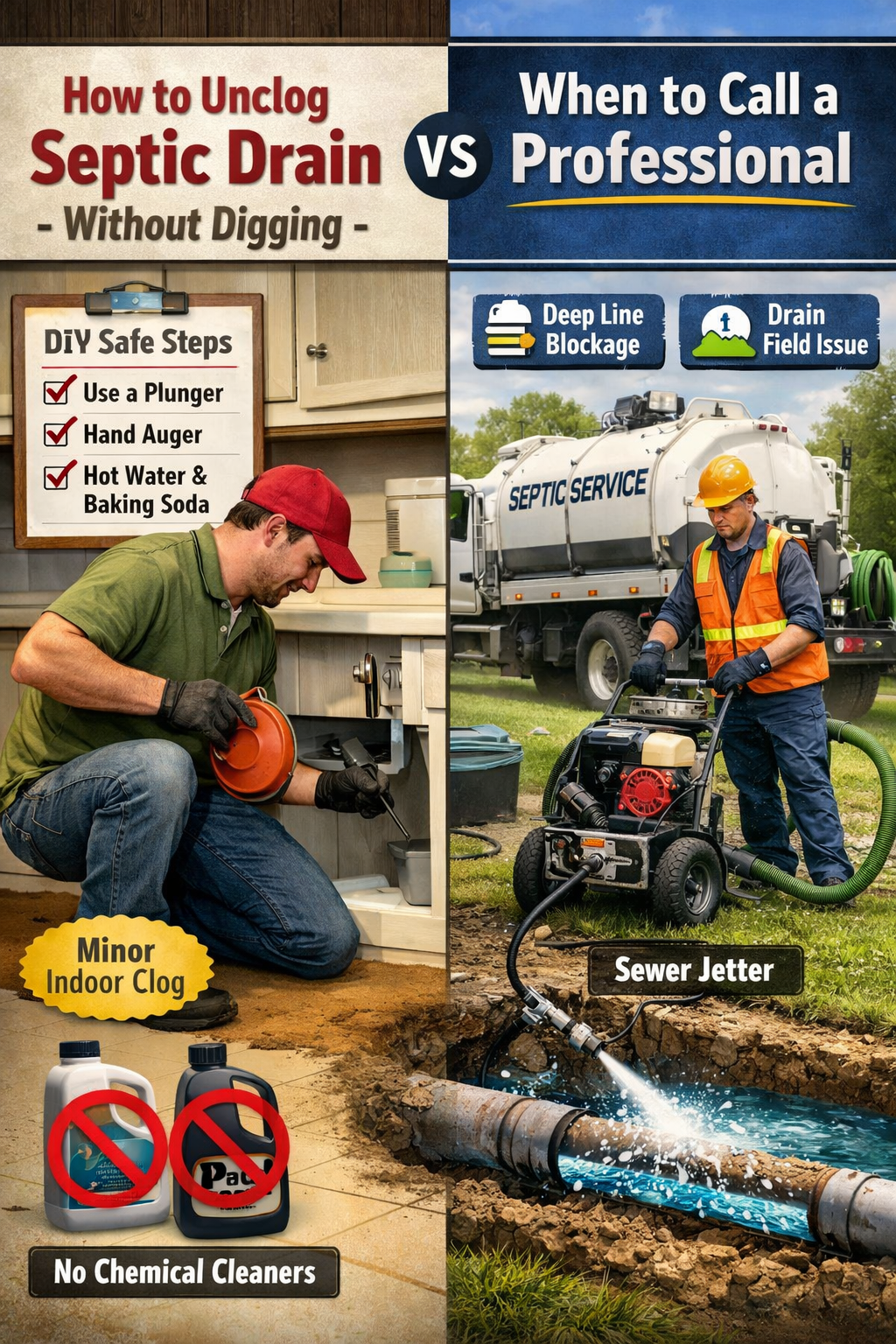
You can sometimes unclog septic drain without digging if the problem is in an indoor trap, a drain line, or certain accessible leach field lines. You usually cannot solve a collapsed pipe, crushed line, or badly failed drain field without professional repair.
No-dig options that may work
- Plastic drain cleaning tool for hair and debris
- Manual hand snake or plumber’s snake for deeper fixture clogs
- Mechanical auger for deeper, denser septic tank clogs, usually by a pro
- Sewer jetter for some perforated leach field PVC lines, when used with the right equipment
Decision rule
- Choose a hand tool if one fixture is slow and the clog seems in the branch line.
- Choose a pro with inspection equipment if the whole house is slow or wastewater is surfacing outside.
- Choose drain field service if indoor drains are slow and the field is soggy.
Important caution
Mechanical tools can damage old or weak pipes if used roughly. Septic tanks also contain dangerous gases, so tank entry and deep tank work are not safe DIY jobs.
Septifix: Simple Septic Tank Care in One Tablet
Septifix tablets help break down waste, reduce bad smells, and keep your septic tank working properly. With one easy monthly flush, you can help prevent blockages, protect your plumbing, and avoid costly repairs.
👉 See how Septifix tablets can keep your septic system clean and efficient
What if slow drains are coming from the septic system?
When slow drains from septic system problems affect more than one fixture, the issue may be a full tank, blocked outlet, clogged line, or failing drain field. At that point, treating a sink drain alone won’t solve the root problem.
Here’s how to think about it:
| Symptom | Most likely issue | Best next step |
|---|---|---|
| One slow sink | Local clog | Use septic-safe DIY steps |
| Kitchen and laundry slow | Main line issue | Inspect and consider snaking |
| Toilet, tub, and sinks all slow | Septic tank or main system issue | Call septic service |
| Wet yard near field | Drain field blockage/failure | Professional diagnosis |
| Sewage backup indoors | Serious blockage | Stop water use, call now |
Edge case: after heavy rain
A drain field can struggle after long wet weather. If drains slow down after storms and the yard is saturated, the field may not be absorbing well. That is not the same as a simple sink clog, and indoor drain cleaners will not fix it.
To understand the bigger picture, read How Septic Field Absorbs Wastewater and What Happens When a Septic Tank Backs Up.
When should you call a professional for How to Unclog Septic Drain?
You should call a professional for How to Unclog Septic Drain when multiple drains are affected, sewage is backing up, the tank may be full, or the drain field is involved. Deep clogs in the tank or leach field usually need specialized tools and safety gear.
Call for professional help if:
- Toilets and tubs back up together
- Sewage comes up in floor drains
- You smell sewage indoors or outside
- The yard over the field is wet or spongy
- DIY methods did nothing
- You suspect the septic tank is overdue for pumping
Tools pros may use
- Mechanical auger for deep or dense clogs in the septic tank area
- Sewer jetter for certain leach field line cleaning jobs
- Inspection methods to locate the exact blockage
A sewer jetter for septic leach lines needs the right pressure washer setup, and electric units may not provide enough power for septic sludge work.
Safety note
Never climb into a septic tank. Septic gases and low oxygen conditions can be deadly.
What should you never use on a septic drain?
You should never use chemical drain cleaners in a septic system because they can harm the beneficial bacteria that help break down waste. Some harsh products can also add unnecessary stress to older plumbing.
Avoid these:
- Chemical drain openers
- Large amounts of bleach
- Paints, solvents, fuels
- Flushable wipes
- Grease and cooking oil
- Feminine hygiene products
- Paper towels and similar non-flushables
Common mistake
A lot of homeowners pour in a strong chemical cleaner when a drain slows down. That may seem fast, but it can create a bigger septic problem later.
For a useful refresher, read What Not to Put in a Septic Tank and 25 do’s and don’ts of septic tank maintenance.
How do you prevent future septic drain clogs?
The best Prevent Clogged Septic Drain Tips are simple: watch what goes down the drain, spread out water use, and keep the system maintained. Prevention is much easier than dealing with a backup.
Prevent Clogged Septic Drain Tips
- Scrape food into the trash before washing dishes
- Never pour grease down the sink
- Use drain screens for hair and debris
- Fix leaking toilets and faucets
- Spread laundry loads through the week
- Pump the tank on the schedule recommended for your home
- Keep heavy vehicles off the drain field
- Don’t plant deep-rooted trees near septic lines
- Use septic-safe habits year-round
Seasonal note
Winter and heavy-rain seasons can make weak systems show symptoms sooner. Frozen or saturated soil can reduce drainage performance, so pay attention to changes.
Helpful next reads:
How to unclog septic drain: simple step-by-step checklist
If you want a clean process for How to Unclog Septic Drain, use this checklist from safest to most advanced. Stop as soon as you find signs of a larger septic problem.
Step-by-step checklist
Step 1: Confirm the scope
- Is one drain slow, or several?
Step 2: Reduce water use
- Stop laundry, dishwasher, and long showers
Step 3: Try septic-safe hot water
- Best for grease and soap buildup
Step 4: Try baking soda and vinegar
- Use 1/2 cup of each for minor organic clogs
Step 5: Plunge the drain
- Use a sink plunger with a good seal
Step 6: Inspect and clean the P-trap
- Best for kitchen and bathroom sink clogs
Step 7: Use a manual drain tool carefully
- Only if the blockage seems local
Step 8: Stop DIY if signs point to septic
- Multiple fixtures slow
- Sewage smell
- Wet drain field
- Indoor backup
FAQ
Can I use Drano or another chemical cleaner in a septic system?
No. Chemical drain cleaners can harm septic bacteria and are not recommended for septic systems.
What is the safest way to start unclogging a septic drain?
Start with reduced water use, then try hot water, baking soda and vinegar, or a sink plunger for a minor indoor clog.
How do I know if the clog is in the sink or the septic system?
If only one fixture is slow, the clog is often local. If several fixtures are slow or backing up, the septic system or main line is more likely.
Are natural ways to unclog septic drain actually effective?
Yes, for small clogs. Hot water and baking soda with vinegar can help with grease, soap scum, and organic buildup in slow drains.
Can I unclog septic drain without digging?
Sometimes, yes. Local drain clogs, some line blockages, and certain accessible leach field line issues can be addressed without digging, but not every septic failure can.
When should I stop DIY attempts?
Stop if sewage backs up, the yard is wet, multiple drains are affected, or basic methods do not work.
Is a plunger safe for septic drains?
Yes. A proper sink plunger is a safe first tool for many minor drain clogs.
Can a full septic tank cause slow drains?
Yes. A full or overloaded septic tank can make multiple household drains slow or back up.
Will pumping the tank fix every septic drain clog?
No. Pumping helps when the tank is full, but it will not repair a crushed pipe, root intrusion, or failed drain field.
Septifix: Simple Septic Tank Care in One Tablet
Septifix tablets help break down waste, reduce bad smells, and keep your septic tank working properly. With one easy monthly flush, you can help prevent blockages, protect your plumbing, and avoid costly repairs.
👉 See how Septifix tablets can keep your septic system clean and efficient
Conclusion
Learning How to Unclog Septic Drain starts with one smart move: figure out whether you’re dealing with a simple fixture clog or a bigger septic system problem. For a single slow sink or tub, septic-safe methods like hot water, baking soda and vinegar, plunging, and P-trap cleaning are often enough. For whole-house slow drains, sewage odors, backups, or a wet drain field, stop using water and call a septic professional.
If I were handling this at home, I’d do three things right away: reduce water use, test one safe DIY method at a time, and watch for signs that the issue is bigger than a sink drain. Then I’d put a prevention plan in place so the same problem doesn’t come back.
Next steps:
- Save the checklist above
- Review what not to flush or pour down drains
- Check your pumping and inspection schedule
- Get professional help early if the symptoms point to the tank or drain field
References
[1] How Do You Unclog A Drain With A Septic System – https://www.wrenvironmental.com/blog/2022/may/how-do-you-unclog-a-drain-with-a-septic-system-/
[2] Unclog Drains – https://supeckseptic.com/unclog-drains/
[3] How To Safely Unclog A Drain On A Septic System – https://www.honey-wagonkc.com/blog/posts/how-to-safely-unclog-a-drain-on-a-septic-system.html
[4] Unclog A Septic Leach Field – https://www.cloghog.com/tips/unclog-a-septic-leach-field.php
[5] How To Unclog Septic Tank Yourself – https://www.angi.com/articles/how-to-unclog-septic-tank-yourself.htm
[7] Never Flush List For 2026 – https://lakelandsepticcompany.com/never-flush-list-for-2026/