
Last updated: March 3, 2026
Key Takeaways
• Start with septic-safe methods only — baking soda and vinegar, hot water, or plunging to avoid damaging beneficial bacteria
• Never use chemical drain cleaners — they kill essential septic bacteria and can cause system failure
• Try the baking soda method first — 1 cup baking soda + 1 cup vinegar, wait 1 hour, flush with hot water
• Use proper plunging technique — create tight seal and plunge vigorously for 20-30 seconds with sink-specific plunger
• Call professionals for persistent clogs — multiple failed attempts may indicate deeper septic system issues
• Prevent future clogs — weekly baking soda treatments and avoiding grease, hair, and non-biodegradable items
• Know the warning signs — slow drainage, gurgling sounds, and bad odors indicate immediate attention needed
• Maintain your entire system — regular pumping and proper care prevent most drain problems
Quick Answer
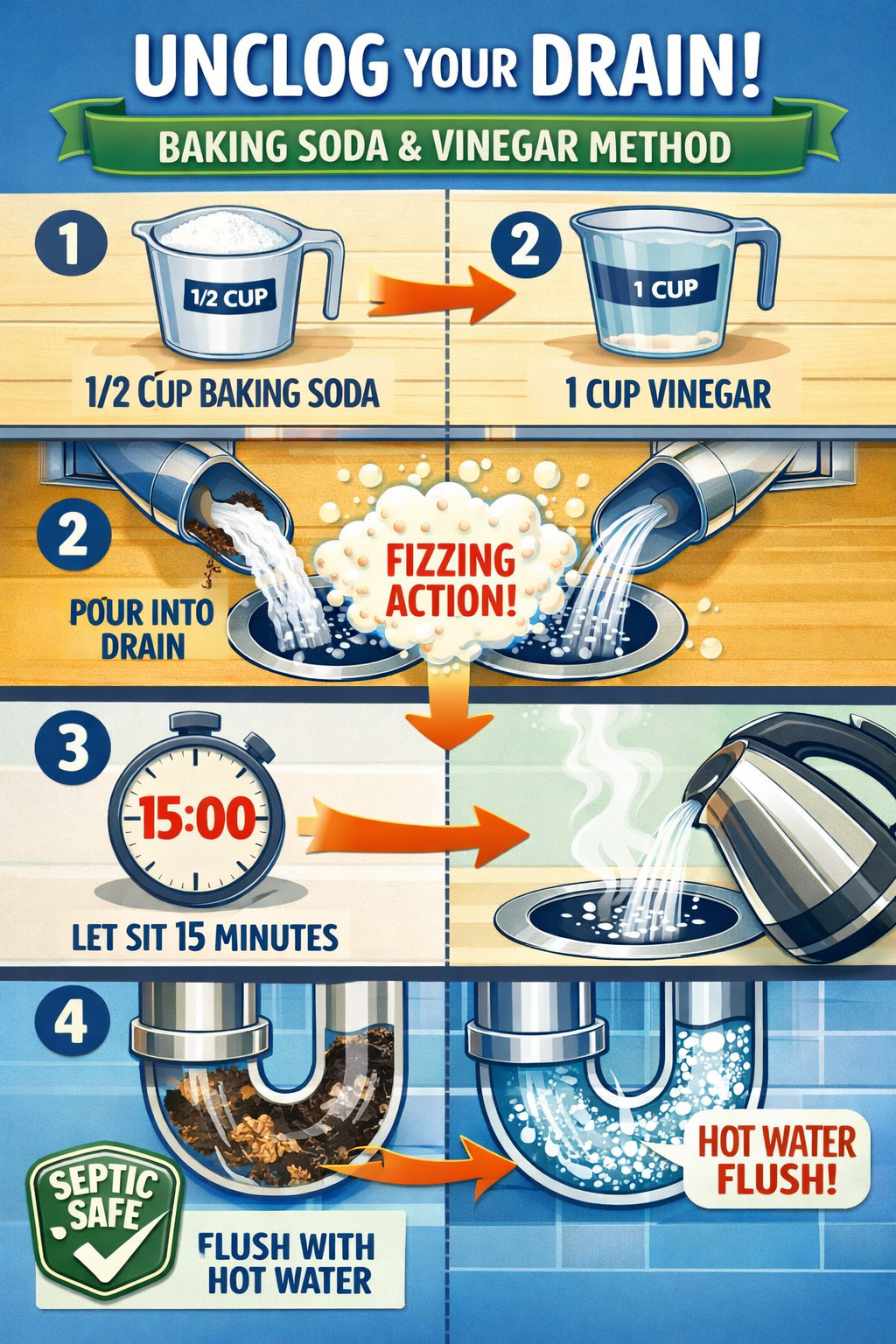
How to unclog septic drain safely: Use baking soda and vinegar (1 cup each), let sit for 1 hour, then flush with hot water. If that fails, try plunging with proper technique or use a drain snake. Never use chemical drain cleaners as they damage septic bacteria and can cause system failure.
What Makes Septic Drain Clogs Different from Regular Drains
Septic drain clogs require special handling because your drainage system connects to a delicate bacterial ecosystem. Unlike city sewer systems that can handle harsh chemicals, septic tanks rely on beneficial bacteria to break down waste naturally.
When you pour chemical drain cleaners down a septic-connected drain, these products kill the bacteria your system needs to function properly. This bacterial die-off can lead to:
Immediate problems:
• Incomplete waste breakdown
• Faster tank filling
• Bad odors throughout your property
• Backup into your home
Long-term consequences:
• Premature system failure
• Expensive repairs or replacement
• Environmental contamination
• Health hazards
Choose septic-safe methods if your home uses a septic system, has a private well nearby, or connects to any on-site wastewater treatment. Standard drain cleaners work for city sewer connections, but the risk isn’t worth it if you’re unsure about your system type.
Understanding how your septic tank works helps you make better decisions about drain care and prevents costly mistakes.
How to Unclog Septic Drain with Baking Soda and Vinegar
The baking soda and vinegar method works by creating a fizzing reaction that breaks down organic clogs like hair, soap scum, and food particles. This natural chemical reaction is completely safe for septic systems and costs less than $5.
Step-by-step process:
- Remove standing water — Use a cup or small bucket to clear visible water from the drain
- Pour 1 cup baking soda — Let it settle into the drain opening for 2-3 minutes
- Add 1 cup white vinegar — Pour slowly to maximize the fizzing reaction
- Cover the drain — Use a drain plug or wet cloth to contain the reaction
- Wait 1 hour minimum — For stubborn clogs, let it sit overnight
- Flush with hot water — Use the hottest tap water for 2-3 minutes
When this method works best: Grease buildup, soap scum, hair clogs, and food particles respond well to this treatment. The fizzing action physically breaks apart clogs while the acidic vinegar dissolves mineral deposits.
Common mistake: Using too little product or not waiting long enough. The reaction needs time to work through thick clogs, so patience improves your success rate.
FYI: Some links may be affiliate links, which means I may earn a small commission at no extra cost to you.
For ongoing septic health, consider Septifix tablets — these monthly treatments help break down waste and prevent the buildup that causes drain clogs in the first place. While not required for immediate unclogging, they can reduce how often you deal with this problem.
Hot Water Method for How to Unclog Septic Drain
Hot water works by melting grease clogs and flushing away loose debris. This simple method costs nothing and poses zero risk to septic bacteria, making it your safest first attempt for kitchen drain clogs.
Proper hot water technique:
- Heat water to near-boiling — Use your hottest tap setting or heat water in a kettle
- Pour in stages — Add 2-3 cups, wait 30 seconds, repeat 3-4 times
- Pour slowly down the center — Avoid splashing on porcelain sinks (cracking risk)
- Test drainage — Run cold water to check if the clog cleared
Best applications: Kitchen sinks with grease buildup, bathroom drains with soap residue, and minor hair clogs respond well to hot water treatment.
Important limitations: Avoid this method with PVC pipes in older homes, as excessive heat can soften pipe joints. Also skip hot water for toilet clogs, as it won’t help and may cause overflow.
Boost effectiveness: Add 1/4 cup liquid dish soap before the hot water. Let the soap sit for 20-30 minutes to break down grease, then follow with your hot water flush.
If hot water alone doesn’t work, it often softens clogs enough to make other methods more effective.
Using Plungers and Snakes to Unclog Septic Drains
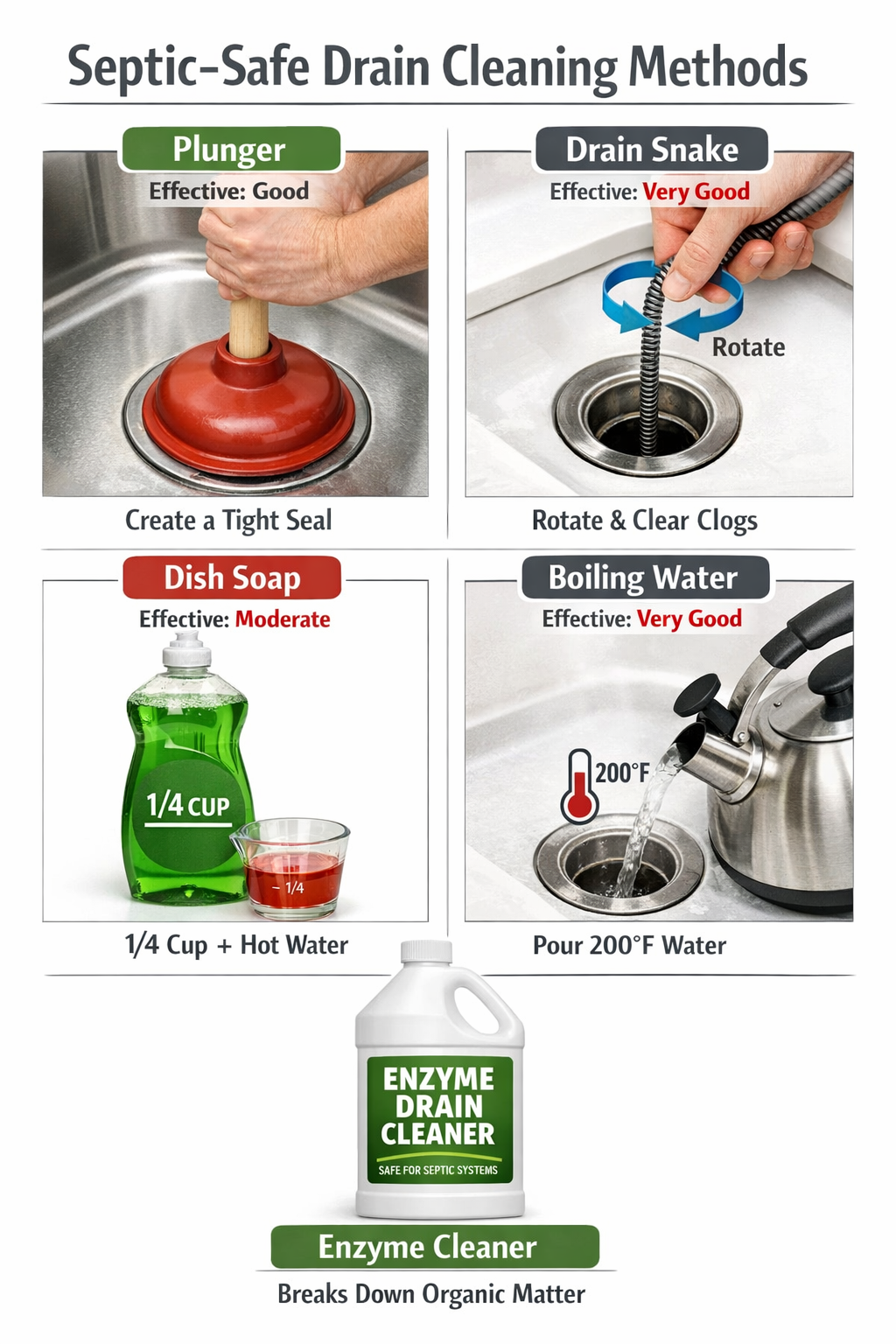
Mechanical methods like plunging and snaking physically break apart clogs without chemicals. These tools work on stubborn blockages that resist natural treatments and cost $10-30 for basic versions.
Proper plunging technique:
- Use the right plunger — Sink plungers have flat cups; toilet plungers have flanged cups
- Create a tight seal — Cover the drain opening completely
- Add water if needed — Fill sink with 2-3 inches of water for better suction
- Plunge vigorously — 20-30 seconds of rapid up-and-down motion
- Test and repeat — Check drainage and repeat 2-3 times if needed
Drain snake basics:
- Insert slowly — Feed the snake into the drain until you feel resistance
- Rotate clockwise — Turn the handle while pushing gently forward
- Break up the clog — Push and pull to fragment the blockage
- Flush thoroughly — Run hot water to clear loosened debris
When to use each tool: Plungers work best for soft clogs near the drain opening. Snakes handle deeper blockages and hard objects like jewelry or toys.
Safety tip: Never force a snake aggressively, as this can damage pipes. If you meet strong resistance, the clog may be too deep for DIY methods.
For persistent problems that resist these mechanical methods, check our guide on septic tank slow drains to identify deeper system issues.
When DIY Methods Fail: Professional Help for Septic Drain Issues
Call a professional when three different DIY methods fail, multiple drains clog simultaneously, or you notice sewage odors. These signs often indicate problems beyond simple drain clogs that require specialized equipment and expertise.
Clear indicators for professional help:
• Multiple drain backups — Kitchen, bathroom, and laundry drains all slow or blocked
• Sewage smells — Persistent odors from drains or around your property
• Gurgling sounds — Unusual noises from toilets or drains when water drains elsewhere
• Recurring clogs — Same drain blocks repeatedly despite successful clearing
What professionals can do that you can’t:
Professional plumbers have motorized drain snakes that reach 100+ feet into your system, high-pressure water jetting equipment, and camera inspection tools to identify exact blockage locations.
Cost expectations: Basic drain cleaning runs $150-300, while camera inspections add $200-400. Compare this to septic system replacement costs of $15,000-25,000 to understand why early professional intervention saves money.
Choosing the right service: Look for plumbers experienced with septic systems, as they understand the bacterial balance and use appropriate methods. Ask specifically about septic-safe practices before hiring.
If multiple drains show problems, the issue may be in your septic tank itself rather than individual drains. Our complete septic maintenance guide helps you identify when tank pumping or repairs are needed.
Preventing Future Septic Drain Clogs
Prevention costs far less than emergency repairs and keeps your septic system healthy long-term. Simple weekly maintenance and smart usage habits prevent 80% of common drain problems.
Weekly maintenance routine:
- Baking soda treatment — 1/2 cup baking soda down each drain
- Vinegar flush — 1 cup vinegar, wait 15-20 minutes
- Hot water rinse — 2-3 minutes of hot tap water
Items to never put down septic drains:
• Grease and cooking oils — Solidify and create stubborn blockages
• Coffee grounds — Don’t break down and accumulate in pipes
• Hair in large amounts — Use drain screens to catch hair before it goes down
• Non-biodegradable items — Dental floss, cotton swabs, feminine products
Smart usage habits:
Run cold water while using the garbage disposal to keep grease liquid until it reaches the septic tank. Scrape plates thoroughly before washing to minimize food particles entering your system.
Monthly deep cleaning: Use enzyme-based drain cleaners designed for septic systems. These products add beneficial bacteria while breaking down organic buildup.
Helpful Resource for Long-Term Septic Care
While these DIY methods handle immediate clogs effectively, maintaining your entire septic system prevents problems before they start. Septifix tablets offer a simple monthly routine that breaks down waste, reduces odors, and keeps your septic tank functioning properly.
With one easy tablet flushed monthly, you can help prevent the waste buildup that leads to drain clogs while protecting your plumbing investment. This isn’t required for emergency unclogging, but it’s useful if you want a structured approach to septic maintenance without complicated schedules or multiple products.
What Not to Use When Learning How to Unclog Septic Drain
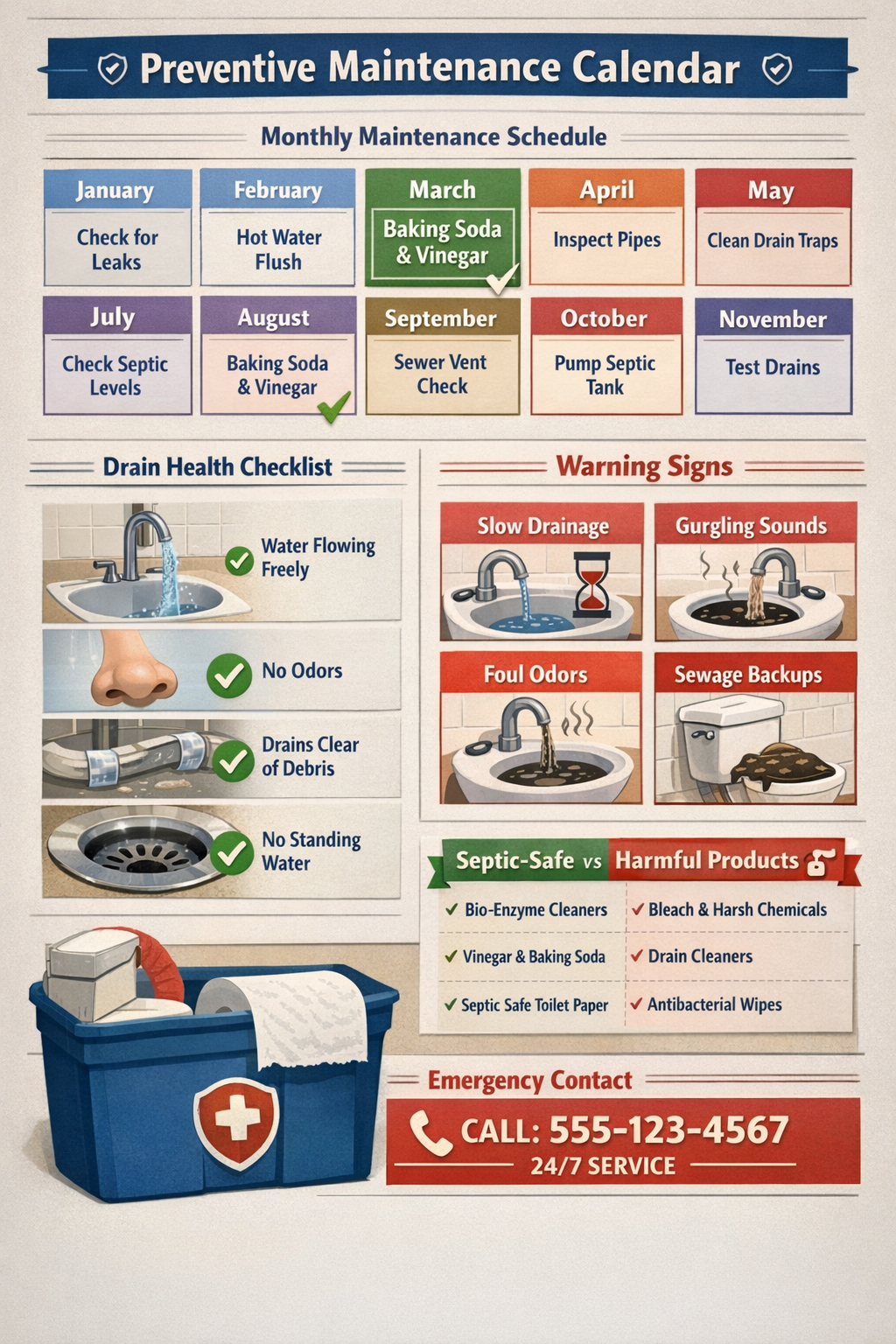
Avoiding harmful products protects your septic system and prevents expensive damage. Many common drain cleaners and household items can kill beneficial bacteria or damage pipes.
Never use these products:
• Chemical drain cleaners — Liquid Plumr, Drano, and similar products kill septic bacteria
• Bleach-based cleaners — Disrupt the bacterial balance needed for waste breakdown
• Caustic soda (lye) — Extremely harsh and dangerous to septic systems
• Hydrochloric acid products — Damage pipes and eliminate beneficial microorganisms
Household items to avoid:
• Excessive dish soap — Small amounts help, but too much creates excessive suds
• Fabric softener — Contains chemicals that don’t break down naturally
• Antibacterial soaps — Kill the bacteria your septic system needs
Why these products cause problems: Chemical drain cleaners work by generating heat and using caustic chemicals to dissolve clogs. In septic systems, these same chemicals kill the bacteria responsible for breaking down waste naturally.
Safe alternatives checklist:
✓ Baking soda and vinegar
✓ Hot water flushes
✓ Enzyme-based cleaners labeled “septic-safe”
✓ Mechanical methods (plunging, snaking)
✓ Liquid dish soap in small amounts
When in doubt, check product labels for “septic-safe” certification or stick to the natural methods outlined in this guide.
FAQ
How long does it take for baking soda and vinegar to unclog a septic drain?
Most minor clogs clear within 1 hour, but stubborn blockages may need overnight treatment. The fizzing reaction works immediately, but breaking down thick buildup takes time.
Can I use a regular toilet plunger on sink drains?
No, use a flat-cup sink plunger for proper sealing. Toilet plungers have flanged cups that won’t create the tight seal needed for effective sink plunging.
How often should I clean my septic drains preventively?
Weekly baking soda and vinegar treatments prevent most clogs. Monthly enzyme treatments provide deeper cleaning for heavy-use households.
What’s the difference between septic-safe and regular drain cleaners?
Septic-safe cleaners use enzymes and bacteria to break down clogs naturally, while regular cleaners use harsh chemicals that kill beneficial septic bacteria.
Why do my septic drains keep clogging repeatedly?
Recurring clogs often indicate deeper issues like a full septic tank, damaged pipes, or problems with your drain field that require professional diagnosis.
Is hot water safe for all types of pipes in septic systems?
Hot water works safely with most modern pipes, but avoid near-boiling water with old PVC systems as excessive heat can soften pipe joints.
How do I know if my clog is in the drain or the septic tank?
Single-drain clogs usually indicate local blockages, while multiple slow drains suggest septic tank issues requiring professional inspection.
Can coffee grounds really damage septic drains?
Yes, coffee grounds don’t break down naturally and accumulate in pipes over time, creating stubborn blockages that resist most DIY treatments.
What should I do if sewage backs up while unclogging?
Stop immediately and call a professional. Sewage backup indicates serious system problems that DIY methods can’t fix safely.
Are enzyme drain cleaners worth the extra cost?
For septic systems, yes. They cost more upfront but add beneficial bacteria while cleaning, supporting your system’s long-term health.
How can I tell if chemical drain cleaner damaged my septic system?
Signs include persistent bad odors, faster tank filling, incomplete waste breakdown, and recurring drain problems after using harsh chemicals.
Should I snake my own drains or hire a professional?
Basic drain snakes work for simple clogs within 10-15 feet of the drain opening. Deeper blockages or repeated problems need professional equipment.
Conclusion
Learning how to unclog septic drain safely protects both your immediate plumbing needs and long-term system health. Start with the baking soda and vinegar method for most clogs, as this natural approach costs under $5 and poses zero risk to your septic bacteria.
Remember that septic systems require different care than city sewer connections. Never use chemical drain cleaners, and always choose mechanical or natural methods that preserve the beneficial bacteria your system needs to function properly.
Your action plan:
- Try baking soda and vinegar first (1 cup each, wait 1 hour)
- Follow up with hot water flushing if needed
- Use plunging or snaking for stubborn clogs
- Call professionals if multiple drains show problems
- Implement weekly preventive treatments to avoid future issues
For ongoing septic health, consider our complete maintenance checklist and learn to recognize the signs of septic problems before they become expensive emergencies.
Taking care of your septic drains properly today prevents costly system failures tomorrow and keeps your home’s wastewater treatment working smoothly for years to come.
References
[1] Unclog Drains – https://supeckseptic.com/unclog-drains/
[2] Septic Safe Diy – https://speedyseptic.com/septic-services/drain-cleaning/septic-safe-diy/
[3] How To Safely Unclog A Drain On A Septic System – https://www.honey-wagonkc.com/blog/posts/how-to-safely-unclog-a-drain-on-a-septic-system.html
[4] Septic Life Hacks – https://lapinservices.com/service/septic-life-hacks
[5] How To Unclog A Drain – https://davidsuzuki.org/living-green/how-to-unclog-a-drain/