
How to Reduce Septic Tank Odors: Complete Homeowner’s Guide

Last updated: March 8, 2026
Key Takeaways
- Regular pumping every 3-5 years prevents sludge buildup that causes persistent odors
- Monthly bacterial treatments maintain healthy microbes that break down waste effectively
- Proper waste disposal habits prevent clogs and chemical damage that create smell problems
- Secure tank covers and check ventilation to stop odors from escaping into your yard
- Professional jetting services remove stubborn sludge and grease causing severe odor issues
- Avoid harsh chemicals that kill beneficial bacteria and worsen odor problems
- Monitor for warning signs like gurgling sounds, slow drains, and wet spots in your yard
- Consider shock treatments when extreme odor problems indicate major bacterial die-off
Quick Answer
How to reduce septic tank odors: Pump your tank every 3-5 years, add beneficial bacteria monthly, avoid flushing non-biodegradable items, secure loose covers, and check ventilation systems. For severe odors, professional jetting or shock bacterial treatments may be needed to restore proper function.
What Causes Septic Tank Odors in the First Place?
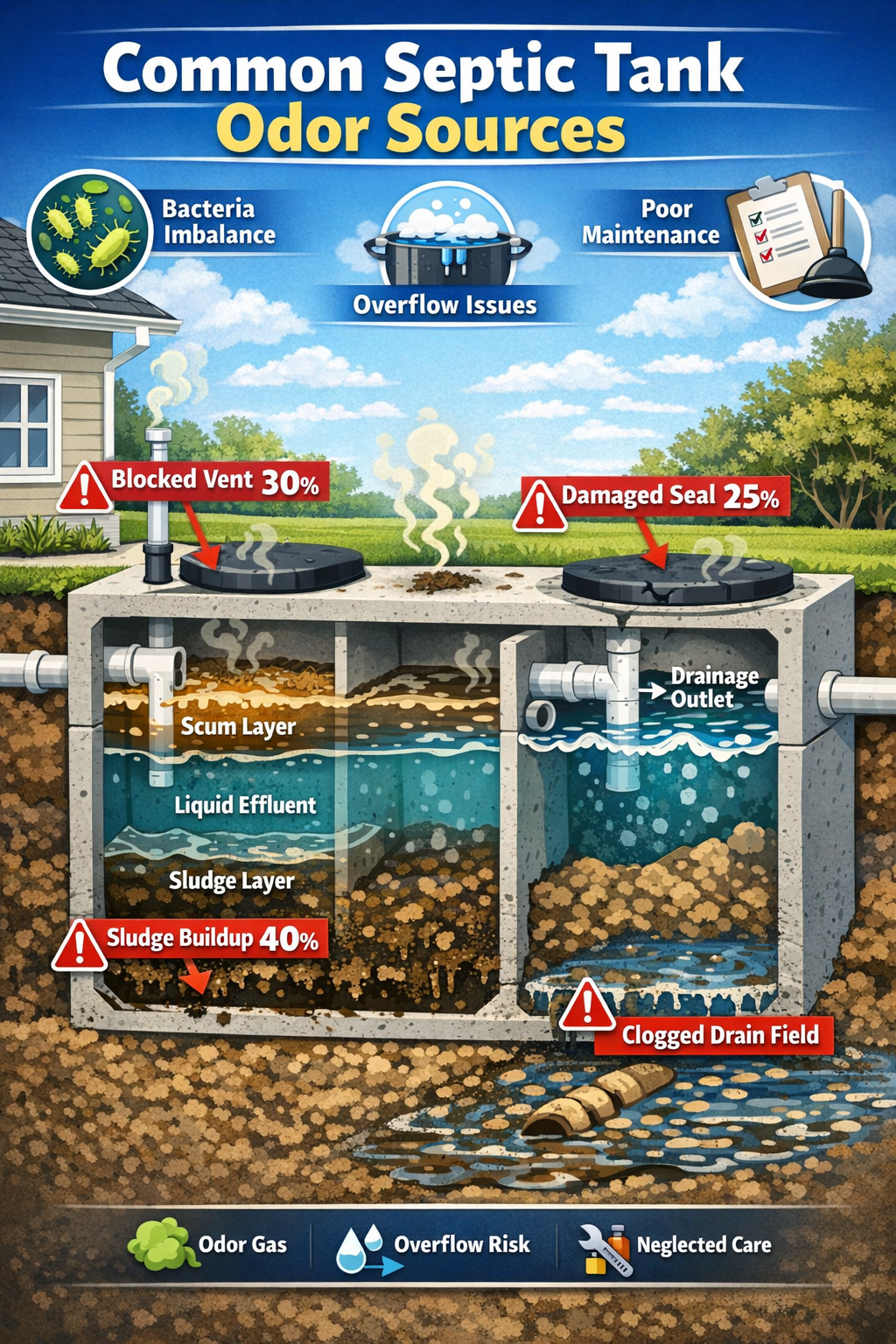
Septic tank odors stem from bacterial imbalances, physical blockages, and system malfunctions that disrupt normal waste processing. Understanding these root causes helps you target the right solutions.
Bacterial imbalance is the most common culprit. When beneficial bacteria die off from harsh chemicals or overloading, anaerobic bacteria take over and produce hydrogen sulfide gas with that characteristic “rotten egg” smell. Low oxygen levels force bacteria into less efficient anaerobic digestion, creating stronger odors.
Sludge and grease buildup creates another major odor source. Over time, solid waste accumulates at the bottom of your tank while grease floats on top. This buildup harbors odor-producing bacteria and prevents proper liquid flow.
Physical problems also contribute to smell issues:
- Loose or damaged covers allow gases to escape directly into your yard
- Blocked ventilation prevents proper air circulation
- Overfull tanks can’t process waste effectively
- Damaged seals between tank components create leak points
Common mistakes that worsen odors:
- Flushing coffee grounds, baby wipes, or kitchen scraps
- Using bleach-based cleaners regularly
- Ignoring pumping schedules
- Pouring grease down drains
Choose professional inspection if you notice multiple odor sources or can’t identify the problem. A qualified technician can diagnose complex issues like damaged baffles or distribution box problems that require specialized repair.
How Often Should You Pump Your Septic Tank to Prevent Odors?
Pump your septic tank every 3-5 years to prevent odor-causing sludge buildup and maintain proper bacterial balance. This expert-recommended frequency prevents tanks from becoming overfull and creating persistent smell problems.
Pumping frequency depends on several factors:
- Household size: 1-2 people can wait 4-5 years, while 4+ people need pumping every 2-3 years
- Tank size: Smaller tanks (under 1000 gallons) require more frequent pumping
- Water usage: High-efficiency appliances extend pumping intervals
- Waste habits: Heavy garbage disposal use shortens the schedule
Signs you need immediate pumping:
- Strong odors around the tank or in your house
- Slow draining fixtures throughout your home
- Gurgling sounds from drains
- Wet spots or standing water near the tank
- Sewage backing up into your home
What happens during professional pumping:
- Technician locates and opens tank access ports
- Pumps out liquid waste, sludge, and scum layers
- Inspects tank condition and components
- Measures remaining sludge levels
- Provides maintenance recommendations
Regular pumping costs $200-400 but prevents thousands in repair costs from tank overflow or system failure. Keep detailed records of pumping dates to track your system’s performance and plan future maintenance.
Pro tip: Schedule pumping in late spring or early fall when weather conditions are ideal and contractors have better availability.
What Bacterial Treatments Help Eliminate Septic Tank Odors?
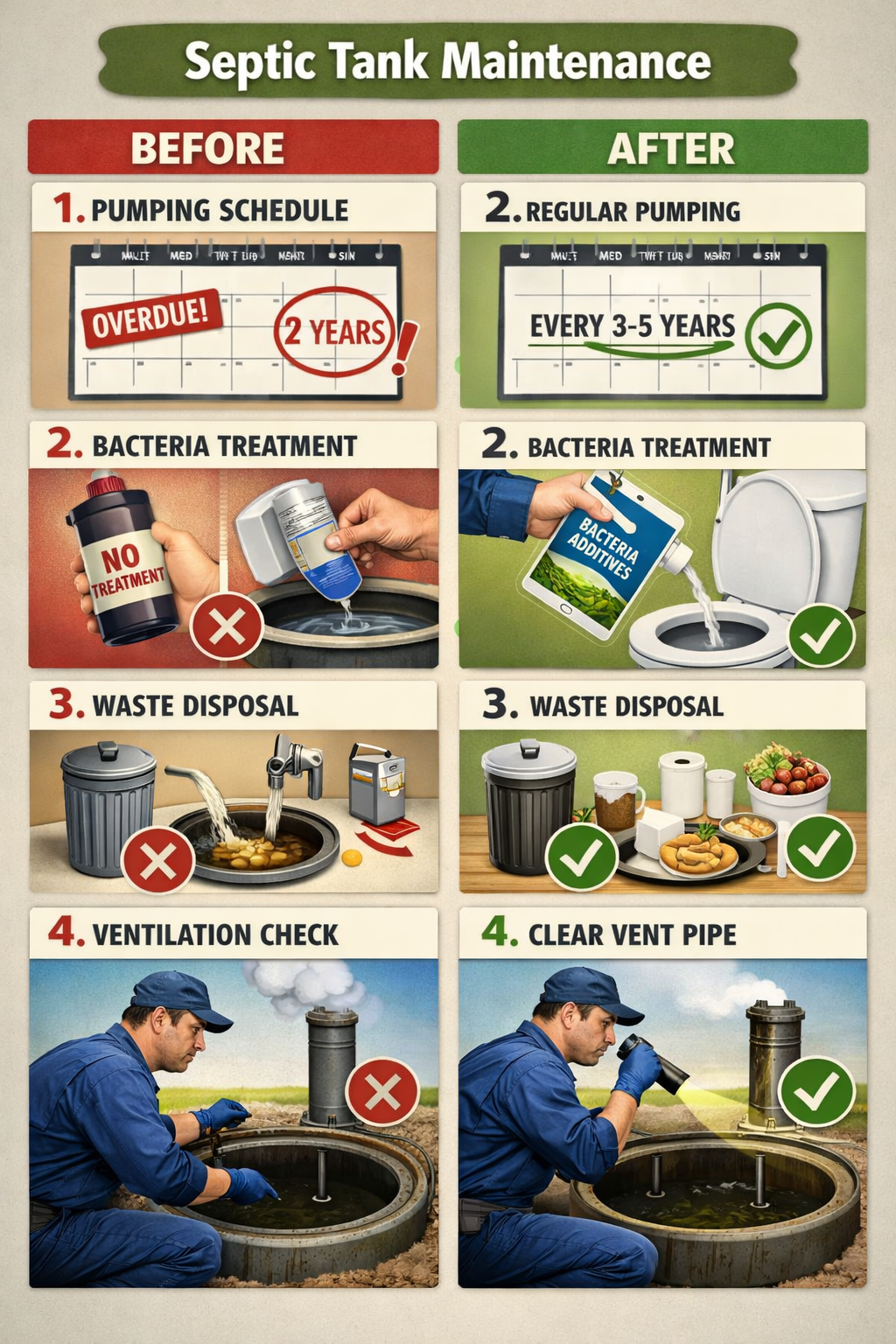
Add beneficial bacteria monthly to maintain healthy microbes that prevent odor problems before they start. Monthly maintenance doses containing 1.5 billion CFU per gram help sustain the microbial population needed for effective waste breakdown.
Types of bacterial treatments for odor control:
Monthly maintenance treatments work best for prevention. These contain a balanced mix of bacteria and enzymes that digest organic waste and maintain proper pH levels. Apply one packet or dose per month by flushing down your toilet.
Shock dose treatments address severe odor problems caused by major bacterial die-off. These concentrated treatments contain up to one trillion beneficial bacteria and can restore function to struggling systems. Use shock doses after antibiotic use, chemical spills, or extended periods without maintenance.
Oxygen boosters help when low oxygen levels cause sluggish bacterial activity. Slow-release oxygen sources help aerobic bacteria recover and reduce the anaerobic conditions that produce strong-smelling gases like hydrogen sulfide.
When to use each treatment type:
- Prevention: Monthly maintenance doses year-round
- After chemical exposure: Shock dose followed by monthly maintenance
- Persistent odors: Oxygen booster plus shock dose treatment
- Seasonal issues: Extra treatments during heavy-use periods
Application best practices:
- Flush treatments in the evening when water usage is low
- Avoid using harsh cleaners for 24-48 hours after treatment
- Spread applications across different drains if using multiple doses
- Monitor system performance for 2-3 weeks after shock treatments
FYI: Some links may be affiliate links, which means I may earn a small commission at no extra cost to you.
For homeowners wanting a simple, effective solution, Septifix tablets offer convenient monthly maintenance in one easy flush. These tablets help break down waste, reduce bad smells, and keep your septic tank working properly without the guesswork of measuring doses or mixing treatments.
Choose bacterial treatments over chemical additives, which can kill beneficial microbes and worsen odor problems long-term.
Which Household Items Should You Never Flush to Prevent Odors?
Avoid flushing non-biodegradable solids like coffee grounds, baby wipes, kitchen waste, and grease that create clogs and generate foul odors. These items prevent proper liquid waste flow and overwhelm your system’s bacterial capacity.
Never flush these common household items:
Kitchen waste: Coffee grounds, vegetable peels, eggshells, and food scraps don’t break down in septic systems. They accumulate as sludge and create anaerobic pockets that produce strong odors.
Personal care products: Baby wipes, feminine hygiene products, cotton swabs, and dental floss won’t decompose. Even “flushable” wipes cause problems in septic systems.
Chemicals and medications: Bleach, antibiotics, paint thinners, and cleaning chemicals kill beneficial bacteria that control odors. Dispose of these items at hazardous waste facilities.
Fats, oils, and grease (FOG): These substances solidify in your tank, creating a thick scum layer that blocks proper ventilation and harbors odor-producing bacteria.
Household items: Cat litter, cigarette butts, condoms, and paper towels don’t break down and can clog your system’s outlet.
Smart prevention strategies:
- Install drain screens to catch food particles before they enter your system
- Scrape plates thoroughly before washing
- Dispose of grease in the trash, not down drains
- Use septic-safe toilet paper that dissolves quickly
- Educate family members about proper disposal habits
What you CAN safely flush:
- Human waste and toilet paper only
- Small amounts of septic-safe cleaning products
- Biodegradable soap and shampoo in normal quantities
Warning signs of improper flushing:
- Frequent clogs in multiple drains
- Persistent odors despite recent pumping
- Slow drainage throughout your home
- Signs of a full tank appearing earlier than expected
Consider installing a garbage disposal only if your septic system is specifically designed to handle the additional organic load. Most standard systems can’t process the extra waste without more frequent pumping and maintenance.
How Do You Fix Ventilation Problems That Cause Septic Odors?
Check and secure loose riser covers, inspect vent pipes for blockages, and ensure proper air circulation to eliminate odors escaping from your septic system. Loose or misaligned covers are the most common ventilation issue, with odors becoming more persistent during windy conditions.
Common ventilation problems and solutions:
Loose tank covers allow gases to escape directly into your yard. Tighten covers with screws or replace with heavy concrete lids that create proper seals. Check covers seasonally, especially after freeze-thaw cycles that can shift components.
Blocked vent pipes prevent proper air circulation through your system. Remove debris like leaves, bird nests, or ice buildup from vent openings. Vent pipes should extend at least 6 inches above your roofline and remain unobstructed.
Damaged seals between tank components create leak points for odorous gases. Inspect rubber seals around risers, lids, and pipe connections. Replace cracked or deteriorated seals promptly to maintain system integrity.
Inadequate ventilation design in older systems may require upgrades. Modern codes require both inlet and outlet venting for proper air circulation. Consult a septic professional if your system lacks adequate ventilation.
Step-by-step ventilation inspection:
- Locate all access points including tank covers, pump chambers, and distribution boxes
- Check cover alignment and tighten loose hardware
- Inspect vent pipes from ground level and roof access
- Test for air flow by holding tissue paper near vent openings
- Look for damage signs like cracks, gaps, or missing components
Professional help needed when:
- Vent pipes require repositioning or extension
- Tank covers are cracked or damaged beyond repair
- Multiple ventilation issues exist simultaneously
- Odors persist despite fixing obvious problems
Seasonal maintenance tips:
- Clear snow and ice from vents during winter
- Remove fallen leaves and debris in autumn
- Check for settling or shifting after spring thaw
- Inspect covers before heavy storm seasons
Proper ventilation works with your septic tank’s natural processes to maintain aerobic conditions that reduce odor-producing anaerobic bacteria.
When Should You Call a Professional for Septic Tank Jetting?
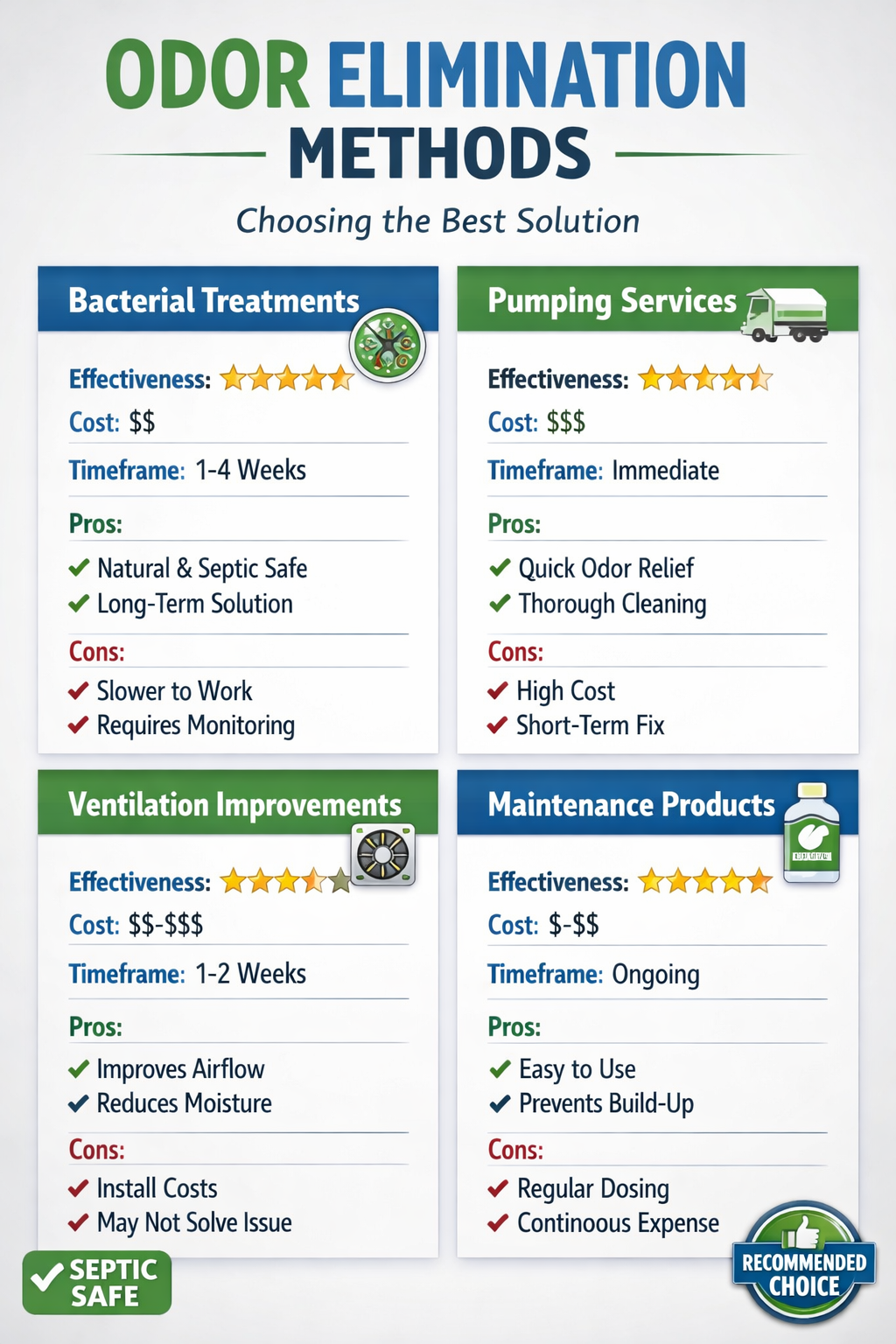
Call a professional for septic tank jetting when persistent odors continue despite regular pumping and bacterial treatments, indicating stubborn sludge and grease buildup that standard maintenance can’t remove. Professional high-pressure water jetting effectively breaks down and flushes away accumulated materials causing severe odor problems.
Signs you need professional jetting:
- Strong odors persist within weeks of recent pumping
- Multiple drain backups throughout your home
- Visible grease or scum layers during tank inspection
- System performance declining despite proper maintenance
- Septic tank backing up after recent pumping
What professional jetting accomplishes:
Specialized equipment delivers high-pressure water streams that break apart compacted sludge, dissolve grease deposits, and flush away materials that harbor odor-producing bacteria. This process reaches areas that standard pumping can’t access effectively.
Jetting process overview:
- System assessment to identify problem areas and blockage locations
- High-pressure water application targeting sludge and grease accumulations
- Material breakdown and removal of loosened debris and buildup
- System flushing to clear pipes and restore proper flow
- Performance testing to verify improved function
Cost considerations:
Professional jetting typically costs $300-800 depending on system size and complexity. While more expensive than standard pumping, jetting addresses root causes of persistent odor problems and can extend time between future services.
Choose jetting over replacement when:
- Tank structure remains sound with no major cracks
- System is less than 25-30 years old
- Problems stem from buildup rather than component failure
- Previous maintenance was irregular or inadequate
Alternative professional services:
- Bacterial shock treatments for severe microbial die-off
- System inspection with cameras to identify damage
- Component replacement for damaged baffles or pipes
- Drain field restoration if odors indicate field problems
Prevention after jetting:
Resume regular maintenance practices including scheduled pumping, monthly bacterial treatments, and proper waste disposal to prevent future buildup and odor issues.
Consider jetting as part of comprehensive system rehabilitation rather than a one-time fix. Combining professional cleaning with improved maintenance habits provides the best long-term odor control.
What Are the Warning Signs Your Septic System Needs Immediate Attention?
Watch for multiple warning signs occurring together, including persistent odors, slow drains throughout your home, gurgling sounds, and wet spots near your tank that indicate system failure requiring immediate professional intervention.
Critical warning signs requiring immediate action:
Multiple drain problems signal system-wide issues. When toilets, sinks, and showers all drain slowly or back up simultaneously, your tank is likely overfull or experiencing major blockages.
Persistent odors that don’t improve with basic maintenance indicate serious bacterial imbalance or structural problems. Odors inside your home are especially concerning and require immediate attention.
Visible sewage in your yard, basement, or around tank components means your system is failing and poses health risks. Stop using water fixtures and call professionals immediately.
Unusual sounds like gurgling from drains, bubbling from tank areas, or rushing water sounds when no fixtures are running indicate air displacement and system stress.
Physical changes around your tank area:
- Wet or soggy ground when weather has been dry
- Unusually green grass over the drain field
- Standing water or surface sewage
- Settling or sinking around tank locations
Inside your home warning signs:
- Sewage odors from drains or toilets
- Water backing up into lower-level fixtures
- Toilet paper or waste visible in floor drains
- Multiple fixtures backing up simultaneously
Timeline for professional help:
- Same day: Visible sewage, indoor backups, or health hazards
- Within 48 hours: Multiple drain problems or persistent strong odors
- Within one week: Single fixture issues or minor odor problems
- Schedule routine service: Preventive maintenance and inspections
Emergency steps before professionals arrive:
- Reduce water usage to minimum necessary amounts
- Avoid using chemicals that could worsen bacterial problems
- Document problems with photos for insurance or warranty claims
- Keep family and pets away from affected areas
- Ventilate indoor areas if odors are present
Don’t ignore early warning signs like occasional slow drains or mild odors. Early intervention prevents minor issues from becoming expensive emergencies requiring complete system replacement.
Systems showing multiple warning signs may need comprehensive evaluation including tank pumping, component inspection, and drain field assessment to determine the best repair approach.
Helpful Resource for Simple Septic Maintenance
If you want a straightforward approach to septic tank maintenance without measuring doses or complicated schedules, Septifix tablets provide an effective monthly solution. These convenient tablets help break down waste, reduce bad smells, and keep your septic tank working properly with one easy flush per month.
Septifix tablets work by delivering beneficial bacteria directly to your tank, supporting the natural waste breakdown process that prevents odor problems. With consistent monthly use, you can help prevent blockages, protect your plumbing, and avoid costly repairs while maintaining a fresh, odor-free property.
The simple monthly routine makes it easy to stay consistent with septic care, especially for busy homeowners who want reliable maintenance without the complexity of multiple products or varying application schedules.
Frequently Asked Questions
How quickly can I eliminate septic tank odors?
Minor odors from bacterial imbalance typically improve within 1-2 weeks of adding beneficial bacteria treatments. Severe odors from sludge buildup may require professional pumping or jetting, with full resolution taking 2-4 weeks after service.
Can I use baking soda to reduce septic tank odors?
Small amounts of baking soda won’t harm your septic system, but it doesn’t address root causes of odor problems. Focus on bacterial treatments and proper maintenance rather than masking odors with household remedies.
Why do septic odors get worse in hot weather?
Heat accelerates bacterial activity and increases gas production in your tank. Higher temperatures also cause gases to rise more readily, making odors more noticeable. Ensure proper ventilation and consider extra bacterial treatments during summer months.
How much does professional odor elimination cost?
Basic bacterial treatments cost $20-50 monthly. Professional pumping runs $200-400 every 3-5 years. Severe problems requiring jetting or shock treatments may cost $300-800. Prevention through regular maintenance is much cheaper than emergency repairs.
Are septic tank odors dangerous to my family’s health?
Hydrogen sulfide gas from septic systems can cause headaches, nausea, and respiratory irritation in high concentrations. While outdoor odors are typically not dangerous, indoor sewage smells require immediate attention as they may indicate harmful gas buildup.
Can heavy rain cause temporary septic odors?
Yes, saturated soil can prevent proper gas venting and cause temporary odor increases. Ensure your tank covers are secure and vent pipes are clear. If odors persist after soil dries, investigate other causes like system overloading or maintenance needs.
Should I add yeast or other home remedies to my septic tank?
Avoid home remedies like yeast, which can disrupt bacterial balance. Commercial bacterial treatments are specifically formulated for septic systems and provide better, more predictable results than household items.
How do I know if odors are coming from my septic tank or something else?
Septic odors typically smell like rotten eggs or sewage and are strongest near tank locations or drain fields. Check for other sources like garbage disposals, floor drains, or plumbing vents before assuming septic system problems.
Can I prevent odors if my septic tank is old?
Yes, proper maintenance can control odors in older systems. However, tanks over 25-30 years old may have structural issues that require professional evaluation. Regular pumping and bacterial treatments help maximize performance regardless of age.
What’s the difference between septic odors and sewer gas?
Septic odors come from your tank and drain field, while sewer gas typically originates from dried drain traps or plumbing vent issues. Pour water down unused drains to refill traps and check if odors persist before investigating septic causes.
How often should I inspect my septic system for odor prevention?
Perform monthly visual checks of tank covers, vent pipes, and drain field areas. Schedule professional inspections every 3-5 years during pumping services. Address any changes in system performance immediately to prevent odor problems.
Can landscaping around my septic tank cause odor issues?
Improper landscaping can block ventilation or damage tank components. Avoid planting trees near tanks, keep covers accessible, and don’t build structures over system components. Maintain clear areas around vents and access points for proper air circulation.
Conclusion
Learning how to reduce septic tank odors protects your property value, family health, and wallet from expensive emergency repairs. The most effective approach combines regular maintenance with prompt attention to warning signs.
Your action plan for odor-free septic systems:
Start with prevention: Schedule pumping every 3-5 years, add monthly bacterial treatments, and avoid flushing harmful items. These simple steps prevent most odor problems before they start.
Address problems quickly: Don’t ignore early warning signs like slow drains or mild odors. Early intervention costs much less than emergency repairs and prevents minor issues from becoming major headaches.
Know when to call professionals: Persistent odors despite proper maintenance, multiple system problems, or visible sewage require expert diagnosis and treatment.
Maintain proper habits: Educate your family about septic-safe practices and keep detailed maintenance records to track your system’s performance over time.
Remember that septic systems are living ecosystems requiring consistent care. With proper maintenance and attention, you can enjoy an odor-free property while protecting your investment for decades to come.
Take action today by scheduling any overdue maintenance and implementing the prevention strategies outlined in this guide. Your future self will thank you for the proactive approach to septic care.
References
[1] Press Release Tame Your Septic Tank Smells This Summer – https://www.cortecvci.com/press-release-tame-your-septic-tank-smells-this-summer/
[2] Eliminating Foul Odors How Septic Tank Jetting Clears The Air – https://www.cmattes.com/eliminating-foul-odors-how-septic-tank-jetting-clears-the-air
[3] Septic Tank Odors How To Avoid A Smelly Septic Tank – https://www.aaapumpingservice.net/septic-tank-odors-how-to-avoid-a-smelly-septic-tank