
Last updated: March 1, 2026
Key Takeaways
• Pump your septic tank every 3-5 years to prevent sludge buildup that causes backups
• Schedule regular professional inspections to catch problems before they become emergencies
• Watch what goes down your drains — avoid grease, chemicals, and non-biodegradable items
• Spread water usage throughout the week instead of doing all laundry in one day
• Install low-flow fixtures to reduce the strain on your septic system
• Use septic-safe products like biodegradable toilet paper and cleaners
• Consider adding an effluent filter and alarm system for early warning of potential issues
• Keep detailed maintenance records to track your system’s health over time
Quick Answer
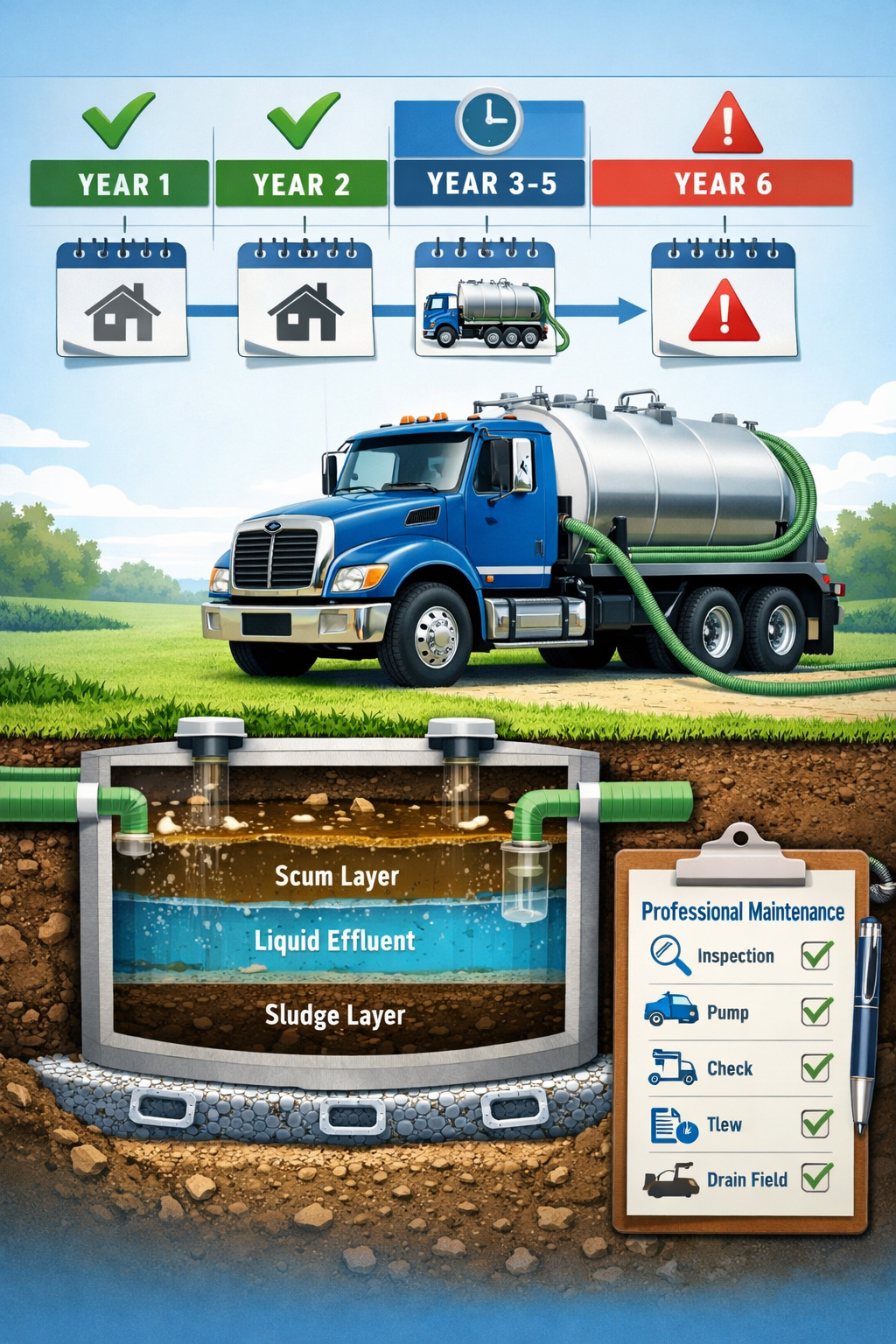
How to prevent septic backups: Regular pumping every 3-5 years, professional inspections, controlled water usage, and proper waste disposal are your best defenses. Avoid flushing anything except toilet paper and human waste, spread laundry loads across the week, and use septic-safe household products to maintain healthy bacteria levels.
What Causes Septic Backups and How Can You Stop Them?
Septic backups happen when your system can’t handle the waste load or when something blocks the normal flow. The main culprits include overfilled tanks, clogged pipes, damaged components, and overwhelming the system with too much water at once.
Common backup triggers:
- Accumulated sludge from infrequent pumping
- Non-biodegradable items flushing down toilets
- Excessive water usage during peak periods
- Chemical cleaners killing beneficial bacteria
- Root intrusion into pipes
- Damaged baffles or distribution boxes
Choose professional inspection if: You notice slow drains, gurgling sounds, or sewage odors. These early warning signs often indicate problems that can escalate to full backups.
A key mistake homeowners make is waiting until they see obvious problems. By then, you’re dealing with emergency repairs instead of simple prevention.
How Often Should You Pump Your Septic Tank to Prevent Backups?
Pump your septic tank every 3 to 5 years to remove accumulated sludge before it reaches critical levels. This timeline works for most average households, but your specific needs may vary based on tank size and household usage.
Pumping frequency guidelines:
- 1-2 people: Every 4-5 years
- 3-4 people: Every 3-4 years
- 5+ people: Every 2-3 years
- Heavy garbage disposal use: Reduce interval by 1 year
Maintain a log of pumping, inspections, and repairs to track system condition and plan proactive service. This record helps you identify patterns and prevents the “when did we last pump?” guessing game.
Choose more frequent pumping if: You have a smaller tank, use a garbage disposal regularly, or host frequent guests. The cost of extra pumping is minimal compared to backup cleanup and repairs.
A common edge case: vacation homes or seasonal properties may need pumping based on usage intensity rather than time intervals.
What Household Practices Help Prevent Septic System Backups?
Spread laundry loads across the week rather than washing everything in a single day to prevent sudden wastewater influxes. Your septic system processes waste gradually, and large water volumes can overwhelm the bacterial breakdown process.
Water management strategies:
- Install low-flow showerheads and faucet aerators to reduce unnecessary water use
- Take shorter showers (5-7 minutes maximum)
- Fix leaky faucets and running toilets immediately
- Schedule irrigation during early mornings or evenings and avoid saturating the drain field area
- Space out dishwasher and washing machine cycles
Smart usage timing:
- Monday: 1-2 loads of laundry
- Wednesday: 1-2 loads of laundry
- Saturday: 1 load of laundry
- Avoid: 6 loads on Sunday
Choose water-efficient appliances if: You’re replacing old units. Modern washers and dishwashers use significantly less water per cycle.
FYI: Some links may be affiliate links, which means I may earn a small commission at no extra cost to you.
For homeowners looking for an easy way to maintain their septic system health, Septifix tablets can be a helpful addition to your routine. These monthly tablets help break down waste more effectively and support the beneficial bacteria that prevent backups. While not a replacement for proper pumping and maintenance, they offer a simple way to give your system extra support between professional services.
Which Items Should Never Go Down Your Drains or Toilets?
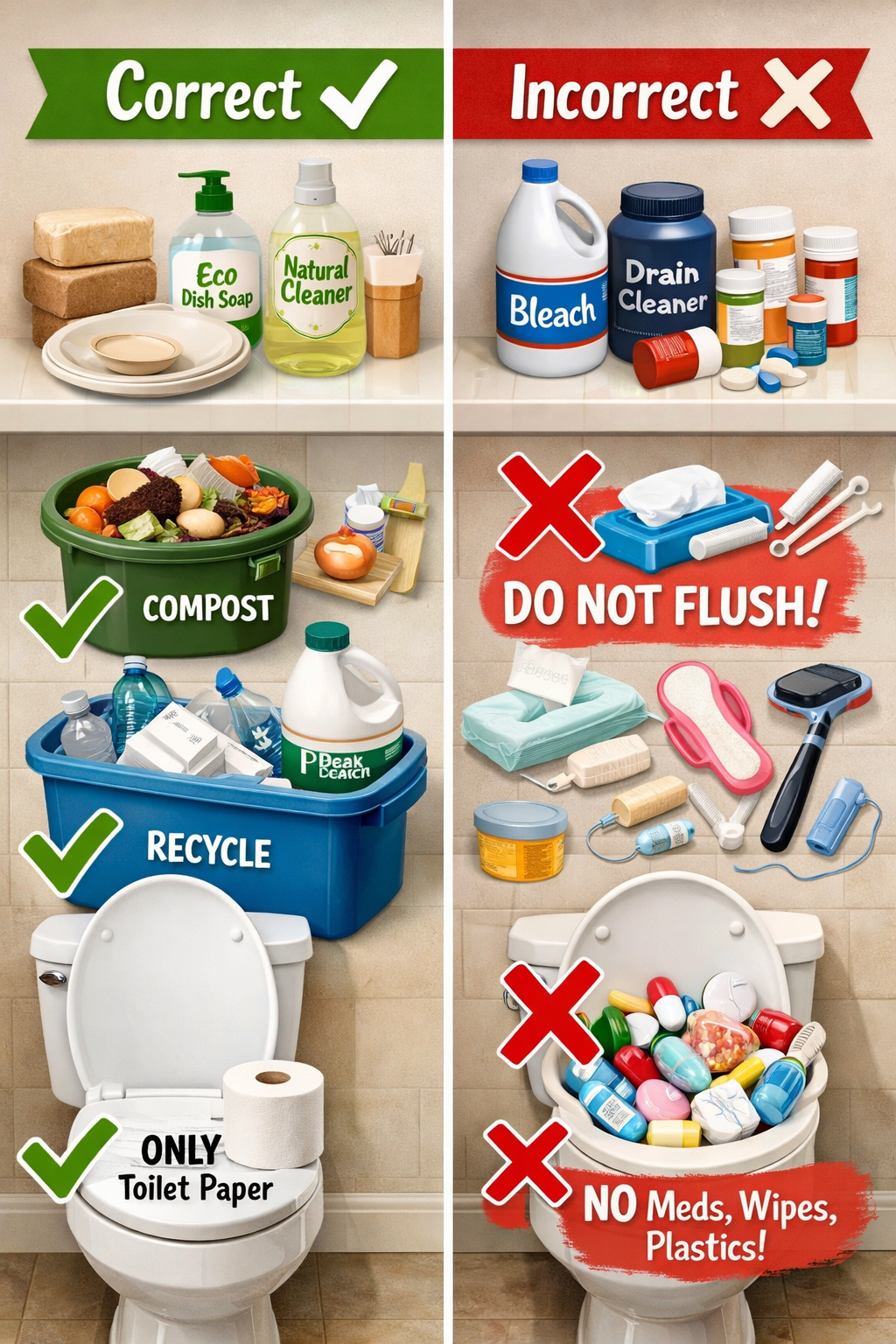
Do not pour fats, oils, and grease down drains, as they solidify and hinder bacterial digestion. These substances coat pipes and create blockages that force wastewater back into your home.
Never flush these items:
- Wipes (including “flushable” wipes) — they don’t break down like toilet paper
- Feminine products — tampons and pads cause immediate clogs
- Cat litter (even “flushable” types)
- Dental floss and cotton swabs
- Medications and chemicals
- Cigarette butts
- Hair in large quantities
Kitchen disposal rules:
- Coffee grounds (compost instead)
- Eggshells and nutshells
- Fruit pits and vegetable peels
- Cooking oils and butter
- Milk and dairy products
Switch to biodegradable toilet paper that breaks down more easily and prevents clogging. Look for septic-safe labels on packaging.
Choose composting if: You generate significant food waste. A small compost bin reduces what goes down your garbage disposal and protects your septic system.
The “flushable” wipe marketing is particularly misleading — these products cause thousands of septic backups annually because they don’t disintegrate like toilet paper.
How Do Professional Inspections Help Prevent Septic Backups?
Have a licensed professional inspect tank levels, baffles, and drain field absorption capacity to identify issues like root intrusion or cracked pipes early. These inspections catch problems when they’re still manageable and inexpensive to fix.
What inspectors check:
- Sludge and scum layer thickness
- Baffle condition and placement
- Inlet and outlet pipe integrity
- Distribution box function
- Drain field saturation levels
- Tank structural condition
Inspection frequency:
- Annual: For systems over 15 years old
- Every 2-3 years: For newer systems
- Before major events: Holiday gatherings or extended guest stays
- After problems: Slow drains or gurgling sounds
Choose immediate inspection if: You notice sewage odors, standing water over the drain field, or signs your septic tank needs maintenance. Waiting often turns minor repairs into major replacements.
Professional inspections typically cost $200-400 but can prevent thousands in emergency repairs and cleanup costs.
What Septic-Safe Products Should You Use?
Use septic-safe household cleaners instead of chemical drain cleaners, which harm beneficial bacteria. Your septic system depends on living organisms to break down waste, and harsh chemicals disrupt this natural process.
Recommended product types:
| Product Category | Septic-Safe Options | Avoid |
|---|---|---|
| Toilet Paper | Biodegradable, septic-labeled brands | Ultra-thick, quilted varieties |
| Cleaners | Plant-based, enzyme cleaners | Bleach-based, antibacterial |
| Laundry | Concentrated, phosphate-free | Powder detergents with fillers |
| Dish Soap | Biodegradable formulas | Antibacterial, degreasing types |
Septic-friendly cleaning alternatives:
- White vinegar for general cleaning
- Baking soda for scrubbing
- Castile soap for multiple uses
- Enzyme-based drain cleaners for maintenance
Choose enzyme cleaners if: You need to address minor clogs. These products actually help your septic system by adding beneficial bacteria.
A common mistake is assuming “natural” automatically means septic-safe. Some essential oils and natural antibacterials can still harm septic bacteria.
What Advanced Prevention Systems Can Protect Your Septic Tank?
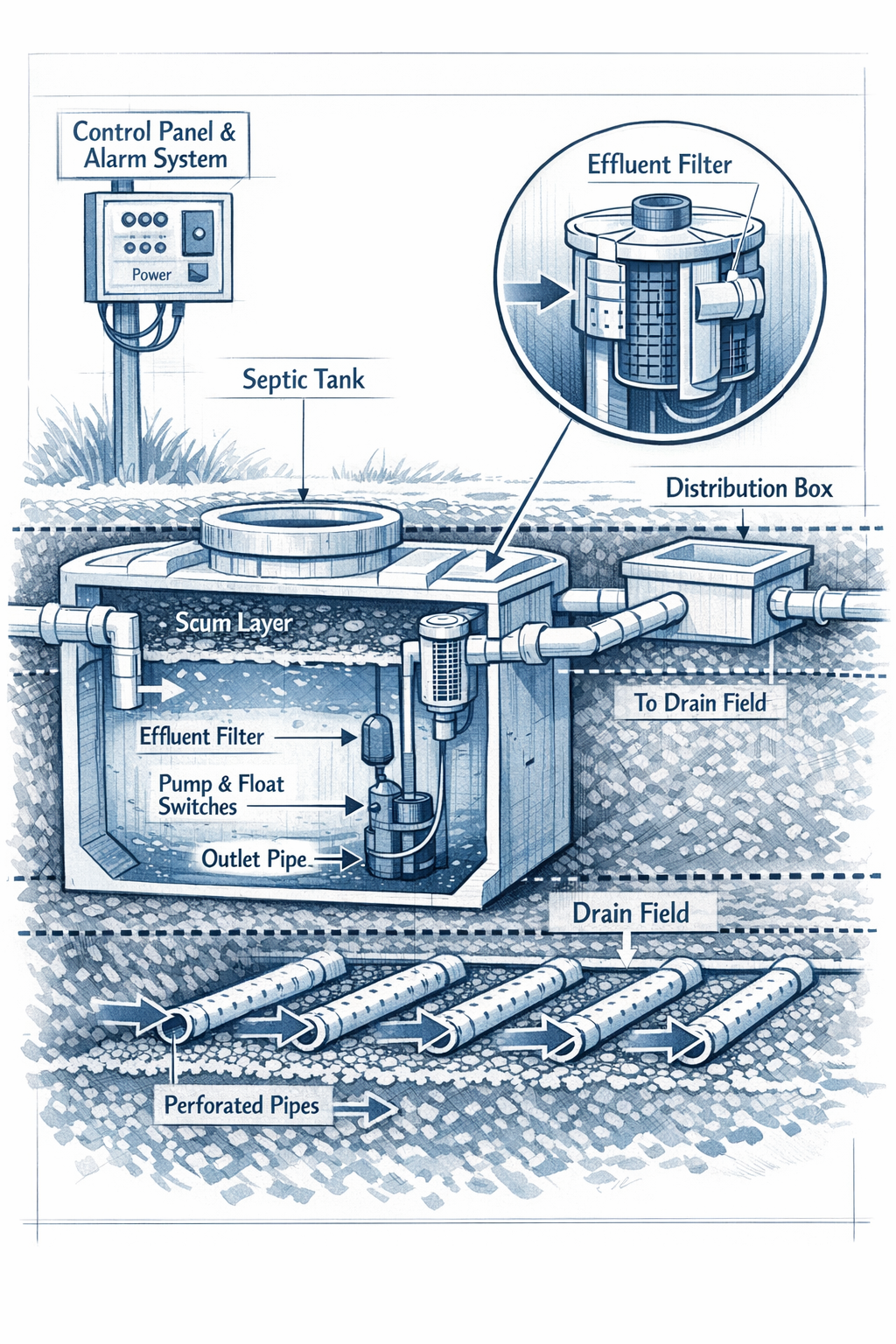
Install a septic tank alarm that provides early warning of high water levels and can notify users via smartphone. These systems alert you before backups occur, giving you time to reduce water usage or call for service.
Protective system options:
- Effluent filters: Capture solid waste and debris, reducing backup risk
- High water alarms: Sound when tank levels get too high
- Smart monitoring: Track usage patterns and send alerts
- Backup pumps: Provide redundancy for pump systems
Installation benefits:
- Early problem detection
- Reduced emergency service calls
- Protection during heavy rainfall
- Peace of mind during vacations
Choose smart monitoring if: You travel frequently or want detailed system data. Modern systems can track usage patterns and predict maintenance needs.
Add an effluent filter if: Your system doesn’t have one. This simple addition catches solids before they reach your drain field and cause expensive damage.
These systems typically pay for themselves by preventing a single major backup incident.
Helpful Resource for Simple Septic Maintenance
If you want a straightforward approach to supporting your septic system between professional services, Septifix tablets offer a convenient monthly solution. Each tablet contains beneficial bacteria and enzymes that help break down waste more effectively, reduce odors, and support the natural processes that prevent backups.
Simply flush one tablet monthly to give your septic system extra support. While regular pumping and proper usage habits remain essential, Septifix can be a useful tool in your overall septic maintenance strategy, especially during high-use periods or when you want added protection against potential problems.
Frequently Asked Questions
How quickly can a septic backup happen?
Backups can occur within hours if you overwhelm your system with excessive water use or flush inappropriate items. However, most backups result from gradual problems that develop over months or years.
Can heavy rainfall cause septic backups?
Yes, saturated soil prevents proper drainage from your septic system. Reduce water usage during heavy rain periods and ensure your drain field has proper grading.
What’s the first sign of a potential septic backup?
Slow drains throughout your home, especially in basement fixtures, often indicate rising septic levels before visible backups occur.
Should I use septic tank additives?
Quality bacterial additives can help, but they’re not necessary if you maintain proper usage habits. Avoid chemical additives that claim to eliminate pumping needs.
How much does septic backup cleanup cost?
Professional cleanup ranges from $2,000-10,000 depending on the extent of contamination. Prevention through regular maintenance costs a fraction of this amount.
Can I prevent backups during holiday gatherings?
Yes, by pumping beforehand if due, spacing out laundry and dishwashing, and asking guests to be mindful of water usage and what they flush.
What happens if I ignore early warning signs?
Minor issues like gurgling sounds or slow drains typically escalate to complete backups, requiring emergency service and potentially damaging your home.
How do I know when my septic tank is full?
Professional inspection is the most reliable method, but signs include slow drains, sewage odors, and standing water over your drain field.
Can tree roots cause septic backups?
Yes, roots seek water and nutrients in septic pipes, causing blockages and damage. Keep trees at least 30 feet from your septic system components.
Is it normal for septic systems to back up occasionally?
No, properly maintained septic systems should never back up. Any backup indicates a problem that needs professional attention.
What should I do immediately if my septic backs up?
Stop using water, avoid the affected areas, and call a professional septic service immediately. Don’t attempt DIY repairs with sewage present.
How can I maintain my septic system during winter?
Maintain normal water usage to keep bacteria active, avoid driving over frozen drain fields, and ensure tank access points remain clear of snow and ice.
Conclusion
Learning how to prevent septic backups protects both your home and your wallet. The key strategies — regular pumping every 3-5 years, professional inspections, mindful water usage, and proper waste disposal — work together to keep your system running smoothly.
Start with the basics: schedule your next pumping if it’s been more than three years, switch to septic-safe products, and spread your water usage throughout the week. These simple changes dramatically reduce your backup risk.
Take action this week:
- Check your septic maintenance records and schedule pumping if needed
- Replace harsh cleaners with septic-safe alternatives
- Install low-flow fixtures to reduce water usage
- Create a household septic-safe practices guide for family members
Remember, septic backup prevention is much cheaper and easier than cleanup and repairs. A few hundred dollars in annual maintenance prevents thousands in emergency costs and protects your family’s health and comfort.
References
[1] Septic Tank Backup Remedies – https://smartsepticpros.com/blog/septic-tank-backup-remedies/
[2] How To Prevent Septic Backups During Heavy Rainfall – https://www.unitedsewerservice.com/how-to-prevent-septic-backups-during-heavy-rainfall/
[3] Summer Septic Survival Guide How To Prevent Backups During High Use Months – https://gullettsanitation.com/2025/07/summer-septic-survival-guide-how-to-prevent-backups-during-high-use-months/
[4] Sewer Backups Homeowners – https://benjaminfranklinmb.com/sewer-backups-homeowners/
[5] Septictank Overflow Complete Guide – https://www.vdwws.com/blog/septictank-overflow-complete-guide
[6] Never Flush List For 2026 – https://lakelandsepticcompany.com/never-flush-list-for-2026/