Last updated: March 8, 2026
Key Takeaways
- Pump every 3-5 years based on household size and tank capacity to prevent system failure
- Inspect annually and have professional inspections every 1-3 years to catch problems early
- Limit water usage to 50 gallons per person daily to avoid overloading the system
- Never flush prohibited items like grease, chemicals, wipes, or non-biodegradable materials
- Protect your drain field by avoiding construction, heavy traffic, and excess water
- Skip commercial additives as they can disrupt natural bacterial processes
- Monitor warning signs like slow drains, odors, or standing water around the system
- Keep detailed maintenance records to track pumping schedules and system performance
Quick Answer
Proper septic tank maintenance requires pumping every 3-5 years, annual inspections, limiting daily water use to 50 gallons per person, and never flushing prohibited materials like grease or chemicals. Regular professional inspections every 1-3 years help catch problems before they become expensive repairs.
What Does Proper Septic Tank Maintenance Actually Involve?
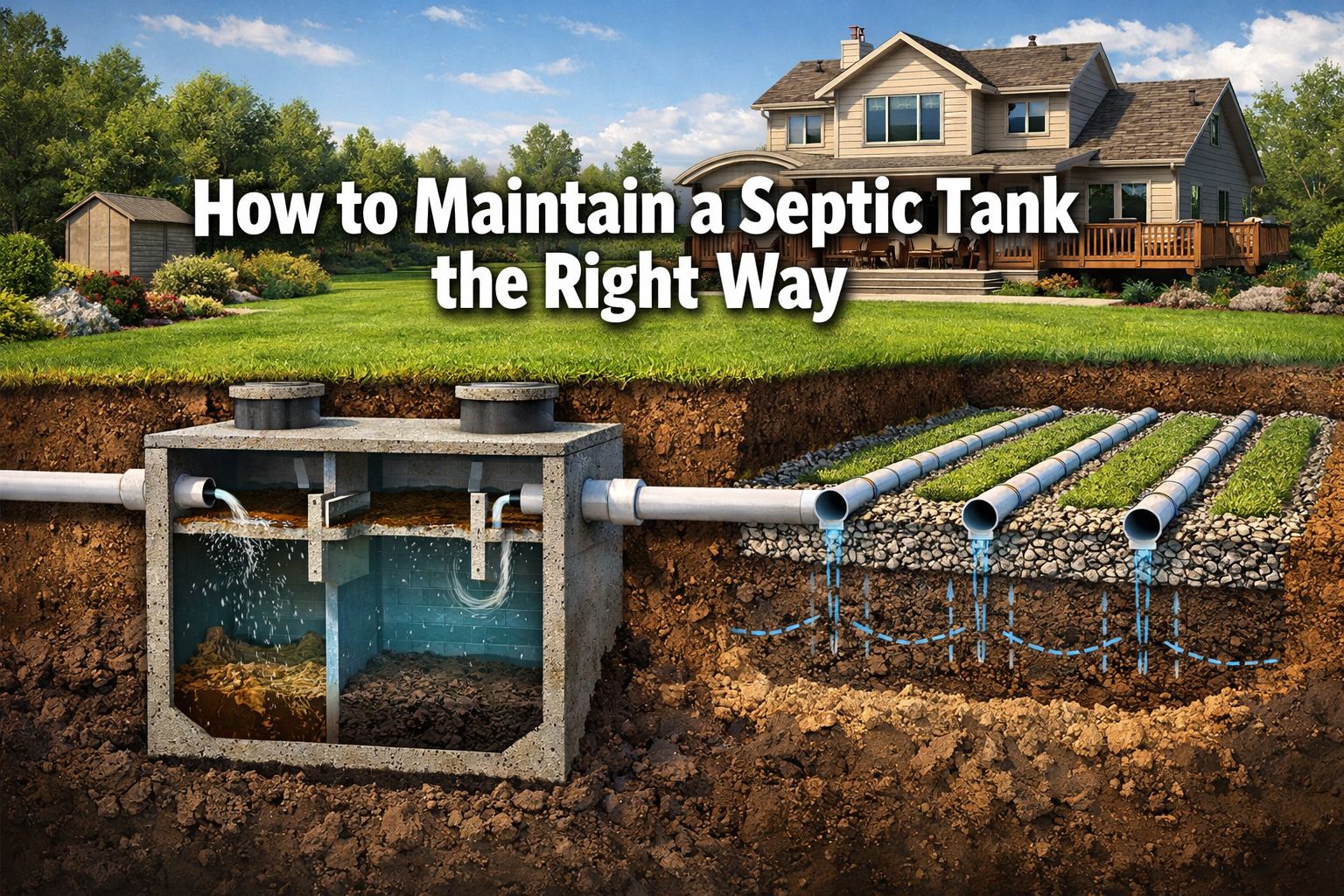
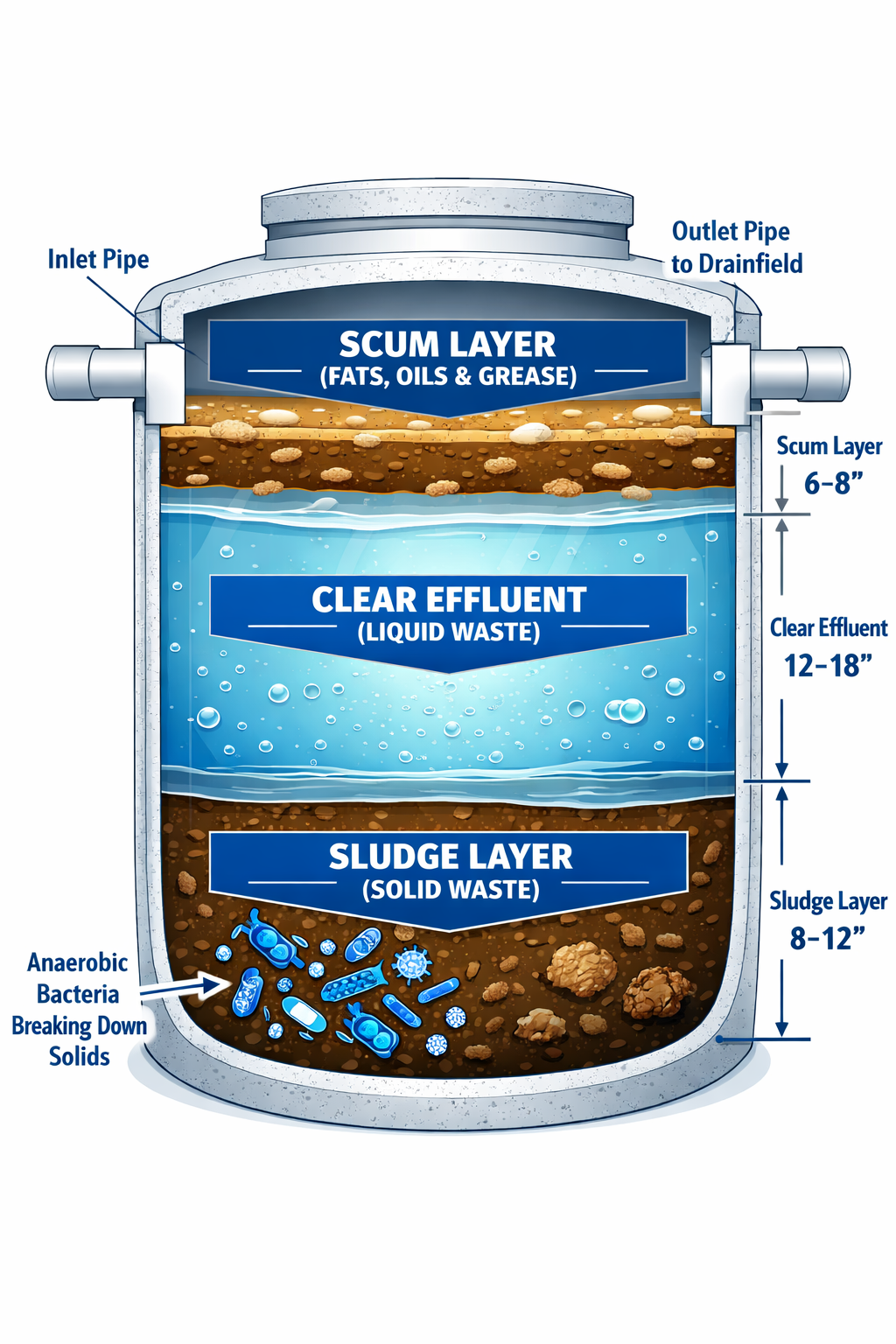
Learning how to maintain a septic tank the right way starts with understanding that your system is a living, biological wastewater treatment facility. Bacteria inside the tank break down organic waste, while solids settle to the bottom as sludge and oils float to the top as scum.
Essential maintenance tasks include:
- Regular pumping to remove accumulated sludge and scum
- Professional inspections to check tank integrity and component function
- Water usage management to prevent system overload
- Proper waste disposal to protect beneficial bacteria
- Drain field protection to ensure proper effluent filtration
The key is consistency. Small, regular maintenance efforts prevent major system failures that can cost thousands to repair. A well-maintained septic system can last 20-30 years, while neglected systems often fail within 10-15 years.
Choose professional inspection if you notice slow drains, unusual odors, or haven’t had service in over 3 years. Handle basic maintenance yourself by monitoring water usage and being mindful of what goes down your drains.
How Often Should You Pump Your Septic Tank?
Most residential septic tanks need pumping every 3-5 years, but the exact frequency depends on tank size and household occupancy. A 1,000-gallon tank serving 4 people requires pumping every 3 years, while the same tank serving 6 people needs pumping every 2 years.
Pumping frequency guidelines:
- 2-person household: Every 4-5 years
- 4-person household: Every 3-4 years
- 6-person household: Every 2-3 years
- 8+ person household: Annually
The tank should be pumped when sludge reaches within 25-33% of the tank’s liquid capacity or when the scum layer exceeds 4-6 inches thick. Professional technicians measure these levels during inspections.
Common mistake: Waiting for warning signs before pumping. By the time you notice problems, damage may already be occurring to your drain field. Preventive pumping based on household size prevents emergencies.
For detailed guidance on timing, check our complete pumping schedule guide.
What Should Never Go Down Your Drains?
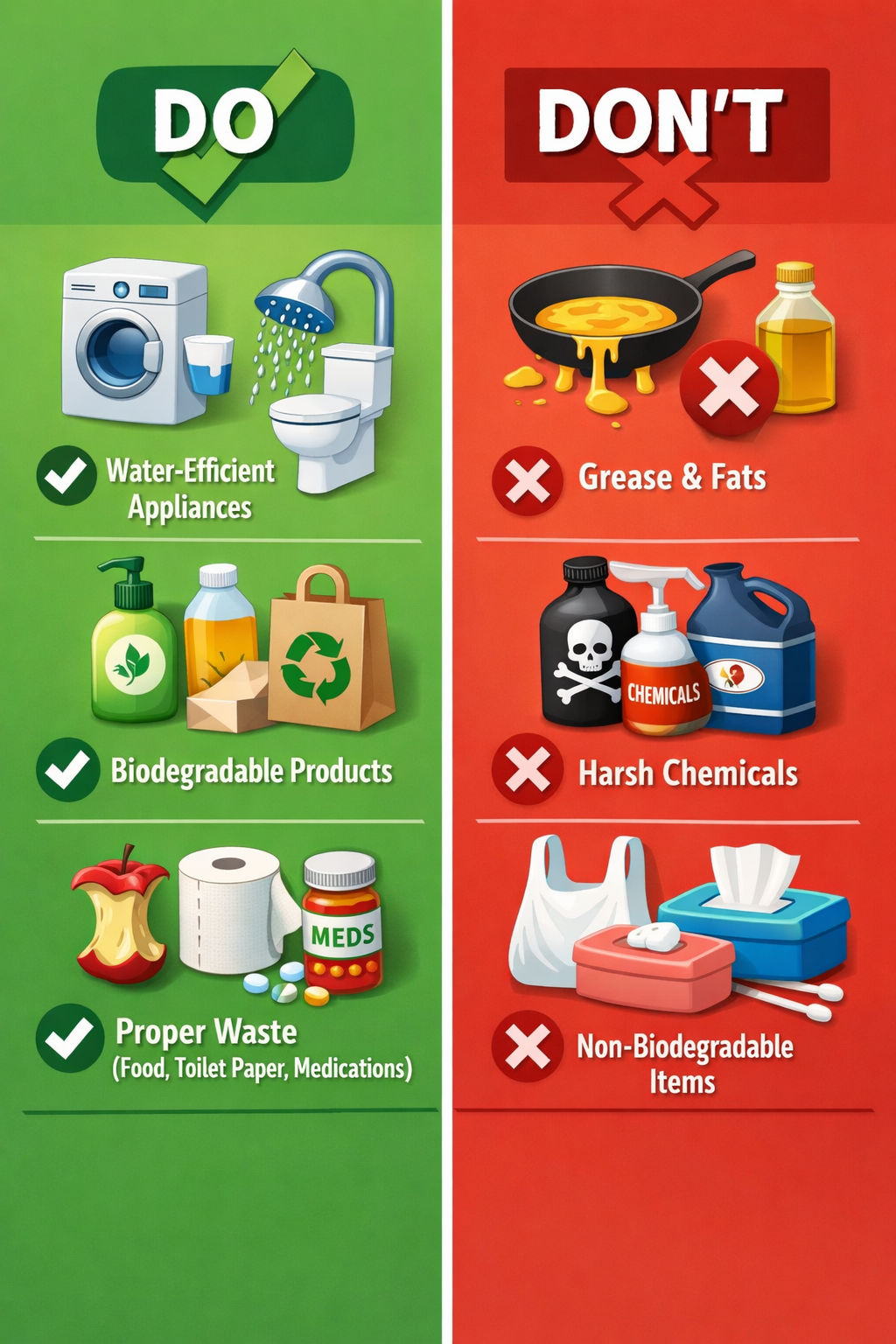
Understanding how to maintain a septic tank the right way means knowing what materials can destroy your system. Certain items kill beneficial bacteria, clog pipes, or create toxic conditions that prevent proper waste breakdown.
Never flush these items:
- Grease and cooking oils – solidify and clog pipes
- Chemicals and cleaners – kill beneficial bacteria
- Non-biodegradable items – cat litter, diapers, wipes
- Medications – disrupt bacterial balance
- Cigarette butts and dental floss – don’t decompose
- Paint and pesticides – toxic to system bacteria
Avoid garbage disposals entirely. They add up to 50% more solids to your tank, requiring much more frequent pump-outs. Compost food scraps instead or dispose of them in regular trash.
Bathroom products to avoid: Flushable wipes (they’re not truly flushable), tampons, condoms, and excessive toilet paper. Even “septic-safe” products can accumulate faster than bacteria can break them down.
Decision rule: If it’s not human waste, toilet paper, or greywater from sinks and showers, don’t put it in your septic system.
How Can You Reduce Water Usage to Protect Your System?
Excessive water use is the leading cause of septic system failure. Limiting daily water consumption to 50 gallons per person prevents system overload and gives bacteria time to properly break down waste.
High-impact water conservation strategies:
- Install low-flow fixtures – toilets using 1-1.6 gallons per flush can reduce water bills by one-third
- Limit laundry loads to 1-2 per day, spreading them throughout the week
- Fix leaks immediately – a running toilet can waste 200+ gallons daily
- Take shorter showers and install low-flow showerheads
- Run dishwashers only when full and use eco-mode settings
Laundry considerations: Each load uses up to 53 gallons of water. Doing multiple loads in one day can overwhelm your system. Space loads throughout the week and use appropriate water levels for load size.
FYI: Some links may be affiliate links, which means I may earn a small commission at no extra cost to you.
For homeowners looking for an easy way to support their septic system’s bacterial balance, Septifix tablets can be helpful. These monthly-use tablets help break down waste and reduce odors naturally, complementing your water conservation efforts without replacing proper maintenance practices.
Edge case: Homes with water softeners discharge extra sodium during regeneration cycles. Consider upgrading to more efficient units or timing regeneration when water usage is lowest.
What Are the Warning Signs Your System Needs Attention?
Recognizing early warning signs helps you address problems before they become expensive emergencies. Most septic issues start small but escalate quickly without intervention.
Immediate attention required:
- Sewage backup in toilets or drains
- Standing water around the tank or drain field
- Strong sewage odors inside or outside your home
- Unusually green grass over the drain field
- Gurgling sounds from drains or toilets
Schedule inspection soon:
- Slow-draining fixtures throughout the house
- Toilet paper or waste visible on the ground
- High nitrate levels in nearby wells
- Frequent drain clogs despite normal usage
Common mistake: Assuming slow drains are just normal aging. In septic systems, slow drainage often indicates the tank is full or the drain field is failing.
If you notice multiple warning signs, don’t wait. Contact a licensed septic professional immediately. Early intervention can often prevent complete system replacement.
Learn more about identifying problems in our guide on signs your septic tank is full.
How Do Professional Inspections Keep Your System Healthy?
Professional septic inspections should occur every 1-3 years, depending on system age and usage. Licensed technicians check tank integrity, measure sludge levels, inspect baffles, and test drain field function.
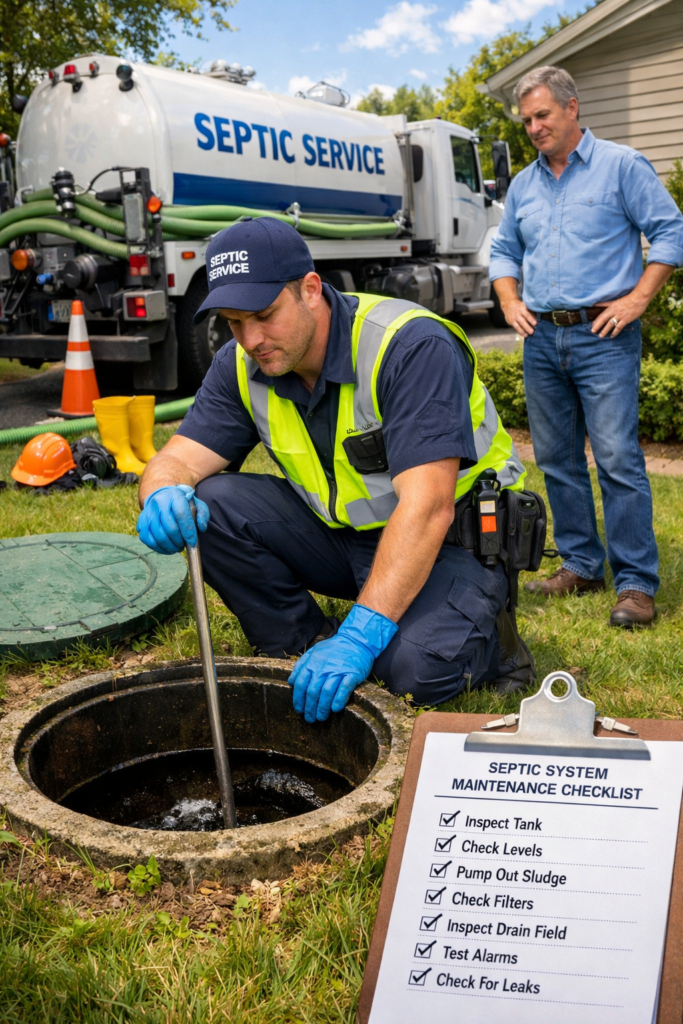
What inspectors examine:
- Sludge and scum levels to determine pumping needs
- Tank structural integrity for cracks or damage
- Inlet and outlet baffles for proper function
- Drain field condition and absorption rates
- System components like filters and alarms
Inspection frequency guidelines:
- New systems: Annual inspections for first 3 years
- Established systems: Every 2-3 years for routine monitoring
- Older systems (15+ years): Annual inspections recommended
Choose annual inspections if your system is over 15 years old, serves a large household, or has had previous problems. Stick to 3-year intervals if your system is newer, properly sized, and has no history of issues.
Professional inspections typically cost $200-400 but can prevent repairs costing thousands. Inspectors also provide pumping recommendations based on actual conditions rather than general guidelines.
For comprehensive maintenance tracking, see our complete septic maintenance checklist.
How Should You Protect Your Drain Field?
Your drain field (also called leach field) is where final wastewater treatment occurs. Protecting this area is crucial because drain field replacement can cost $5,000-10,000 or more.
Essential drain field protection:
- Never drive or park vehicles over the drain field
- Avoid construction or heavy equipment in the area
- Plant only grass – no trees, shrubs, or deep-rooted plants
- Divert surface water away from the area
- Don’t install pools, decks, or structures over the field
Water management around drain fields:
Redirect downspouts, irrigation systems, and surface runoff away from your drain field. Excess water prevents proper soil absorption and can cause system backup.
Landscaping guidelines: Tree roots can infiltrate and damage pipes. Keep trees at least 30 feet away from the drain field. Grass is ideal because it has shallow roots and helps prevent erosion.
Edge case: If you don’t know where your drain field is located, hire a professional to locate it before any yard work. Many homeowners accidentally damage their systems during landscaping projects.
Understanding how your septic system works helps you make better decisions about property use and maintenance.
Should You Use Septic Tank Additives or Treatments?
Most septic professionals advise against commercial septic tank additives, cleaners, or treatments. Your septic system contains naturally occurring bacteria that effectively break down waste without assistance.
Why to avoid most additives:
- Disrupt natural bacterial balance that develops over time
- May contain harsh chemicals that kill beneficial bacteria
- Create false sense of security while problems develop
- Often unnecessary expense for properly functioning systems
Exceptions that may help:
Some bacterial supplements can be beneficial after antibiotic use, chemical exposure, or extended periods without use. However, normal household bacteria typically reestablish naturally within weeks.
Natural alternatives that work:
- Proper water usage maintains ideal bacterial conditions
- Avoiding harsh chemicals preserves existing bacteria
- Regular pumping removes materials bacteria can’t process
Decision rule: If your system is functioning normally, skip additives. If you’ve recently used antibiotics extensively or had chemical exposure, consider bacterial supplements temporarily.
For homeowners who prefer a simple, monthly maintenance approach, Septifix tablets offer a gentle way to support waste breakdown and odor control. Unlike harsh chemical additives, these tablets work with your system’s natural processes rather than disrupting them.
How Do Seasonal Changes Affect Septic Maintenance?
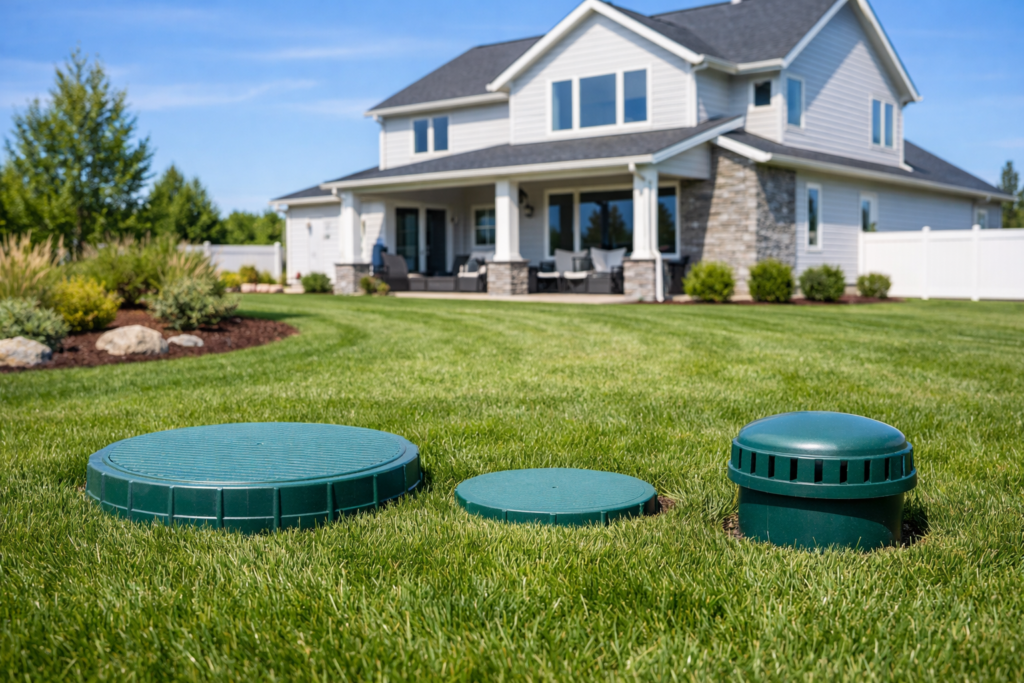
Different seasons present unique challenges for septic system maintenance. Adjusting your care routine seasonally helps prevent weather-related problems and maintains optimal system performance year-round.
Winter considerations:
- Insulate exposed components to prevent freezing
- Maintain regular water usage to keep pipes flowing
- Avoid driving on frozen drain fields – soil compaction increases
- Keep snow cover over the system for natural insulation
Summer challenges:
- Increased water usage from guests, pools, and irrigation
- Higher bacterial activity requires more oxygen
- Dry conditions can stress drain field absorption
- Vacation home reactivation after extended non-use
Spring and fall maintenance:
- Schedule annual inspections during moderate weather
- Check for winter damage to exposed components
- Prepare systems for seasonal usage changes
- Update maintenance records and plan pumping schedules
Common mistake: Assuming septic systems don’t need attention during certain seasons. Year-round awareness prevents seasonal failures.
For detailed seasonal guidance, check our winter septic maintenance tips and summer care strategies.
Helpful Resource for Simple Septic Care
If you want a straightforward way to support your septic system between professional services, Septifix tablets provide an easy monthly maintenance routine. Simply flush one tablet monthly to help break down waste, reduce odors, and support your system’s natural bacterial processes.
This isn’t a replacement for proper pumping and inspections, but it can be a useful addition to your regular maintenance routine. Many homeowners find the monthly schedule helps them stay mindful of their septic system care without complicated procedures.
FAQ
How much does septic tank pumping cost?
Septic tank pumping typically costs $200-500, depending on tank size and location. This cost is much less than emergency repairs or system replacement.
Can I pump my septic tank myself?
No, septic tank pumping requires specialized equipment and proper waste disposal. Always hire licensed professionals for pumping services.
How do I find my septic tank?
Check your home’s as-built drawings, look for the cleanout pipe, or hire a professional with locating equipment. Never guess – improper digging can damage the system.
What happens if I never pump my septic tank?
Eventually, accumulated solids will overflow into your drain field, causing expensive damage. Complete system replacement may be necessary.
Are septic tank additives necessary?
No, properly functioning septic systems don’t need commercial additives. Normal household bacteria effectively break down waste.
Can heavy rain damage my septic system?
Excessive water can overwhelm the system temporarily. Ensure proper drainage around your property and avoid using water-heavy appliances during storms.
How long do septic systems last?
Well-maintained septic systems typically last 20-30 years. Neglected systems often fail within 10-15 years.
What’s the difference between pumping and cleaning?
Pumping removes liquid and floating debris. Cleaning (or pump-out) removes all contents including sludge. Most residential systems need complete pump-outs.
Can I use bleach with a septic system?
Use bleach sparingly. Small amounts for cleaning won’t harm your system, but excessive use can kill beneficial bacteria.
Should I add bacteria to my septic tank?
Generally unnecessary. Normal household waste provides adequate bacteria. Consider bacterial supplements only after antibiotic use or chemical exposure.
How do I know if my drain field is failing?
Signs include standing water, sewage odors, unusually green grass, or sewage backup. Contact a professional immediately if you notice these symptoms.
Can I install a garbage disposal with a septic system?
Not recommended. Garbage disposals significantly increase solid waste, requiring much more frequent pumping and potentially damaging your system.
Conclusion
Learning how to maintain a septic tank the right way protects your investment and prevents costly emergencies. The fundamentals are straightforward: pump every 3-5 years based on household size, limit water usage to 50 gallons per person daily, never flush prohibited materials, and schedule professional inspections every 1-3 years.
Take these immediate steps:
- Schedule an inspection if you haven’t had one in the past 3 years
- Calculate your pumping schedule based on tank size and occupancy
- Audit your household products and eliminate septic-harmful items
- Install water-efficient fixtures to reduce system load
- Locate and protect your drain field from damage
Remember, your septic system is a living biological treatment facility that requires consistent care. Small, regular maintenance efforts prevent major failures and extend system life significantly. When in doubt, consult licensed septic professionals who can provide system-specific guidance.
For ongoing support and detailed maintenance guidance, explore our comprehensive septic care resources and stay informed about best practices for your specific system type.
References
[1] Septic Tanks Preventative Routine Maintenance – https://des.sc.gov/permits-regulations/septic-tanks/homeowner-resources/septic-tanks-preventative-routine-maintenance
[2] Septic Systems And Their Maintenance – https://content.ces.ncsu.edu/septic-systems-and-their-maintenance
[3] How Care Your Septic System – https://www.epa.gov/septic/how-care-your-septic-system