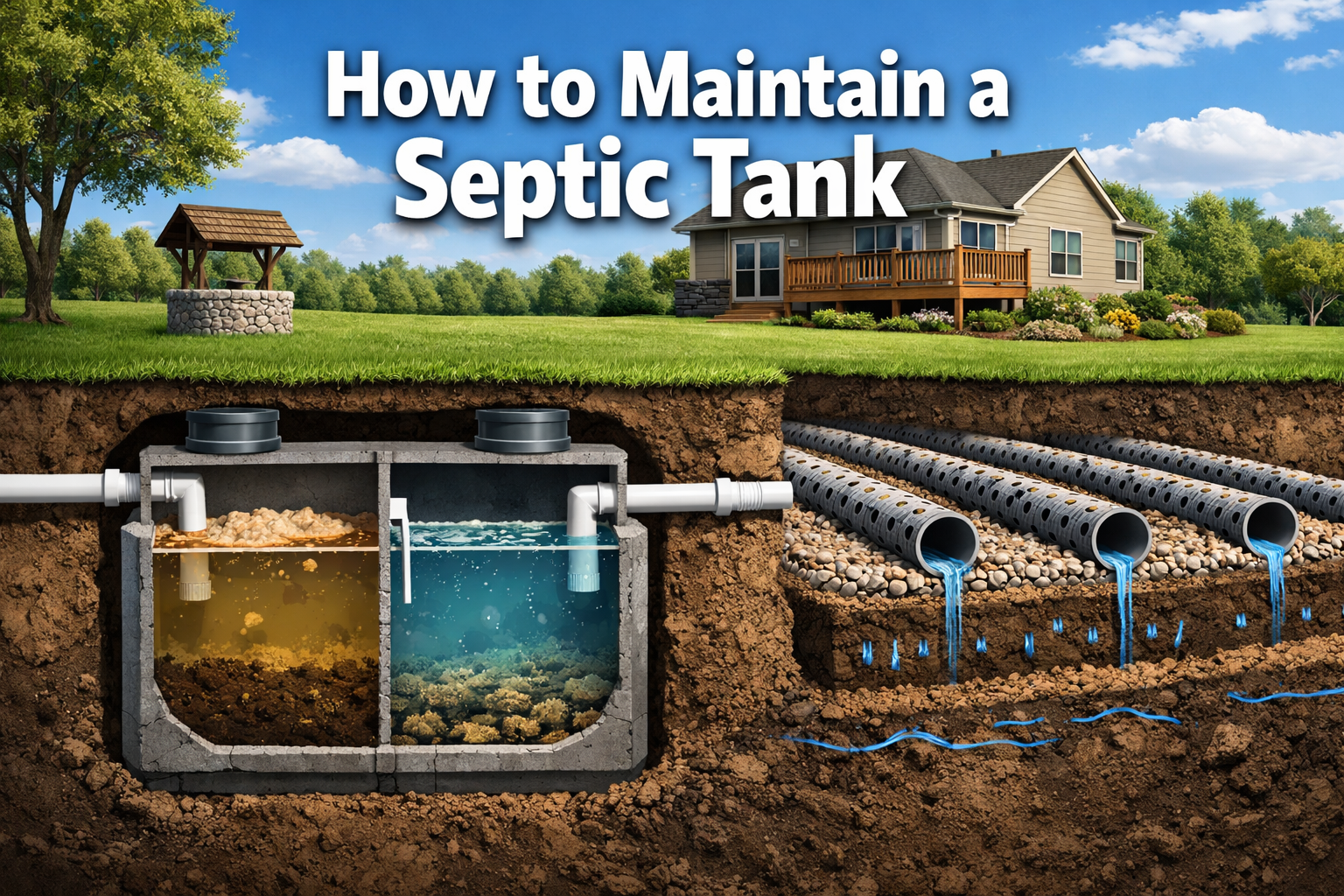
How to Maintain a Septic Tank: Complete Guide for Homeowners in 2026
Last updated: February 19, 2026
Key Takeaways
• Pump your septic tank every 3-5 years based on household size and usage patterns
• Schedule professional inspections annually or every 1-3 years depending on your system type
• Only flush human waste and septic-safe toilet paper down your drains
• Monitor warning signs like slow drains, odors, and soggy spots around your drain field
• Keep detailed maintenance records for system tracking and property value
Quick Answer
Proper septic tank maintenance involves regular pumping every 3-5 years, annual inspections, careful monitoring of what goes down your drains, and watching for early warning signs of system problems. The key is preventing issues before they become expensive repairs by following a consistent maintenance schedule and protecting your system from harmful substances.
What Is Septic Tank Maintenance and Why Does It Matter?
Septic tank maintenance means taking proactive steps to keep your wastewater treatment system functioning properly. This includes regular pumping, inspections, proper usage habits, and monitoring for potential problems.
Over 20% of U.S. households rely on septic systems for wastewater treatment. Unlike city sewer systems, your septic tank depends entirely on you for proper care. When maintained correctly, septic systems can last 20-30 years. When neglected, they can fail within just a few years, leading to expensive replacements that can cost $15,000 or more.
The three main components of septic maintenance are:
- Pumping: Removing accumulated solids every 3-5 years
- Inspection: Professional evaluation of system condition
- Protection: Daily habits that prevent damage
Understanding how a septic tank works helps you make better maintenance decisions. Your tank separates solids, liquids, and oils, allowing beneficial bacteria to break down waste naturally.
How Often Should You Pump Your Septic Tank?
Most septic tanks need pumping every 3-5 years, but the exact frequency depends on your household size, tank capacity, and water usage patterns.
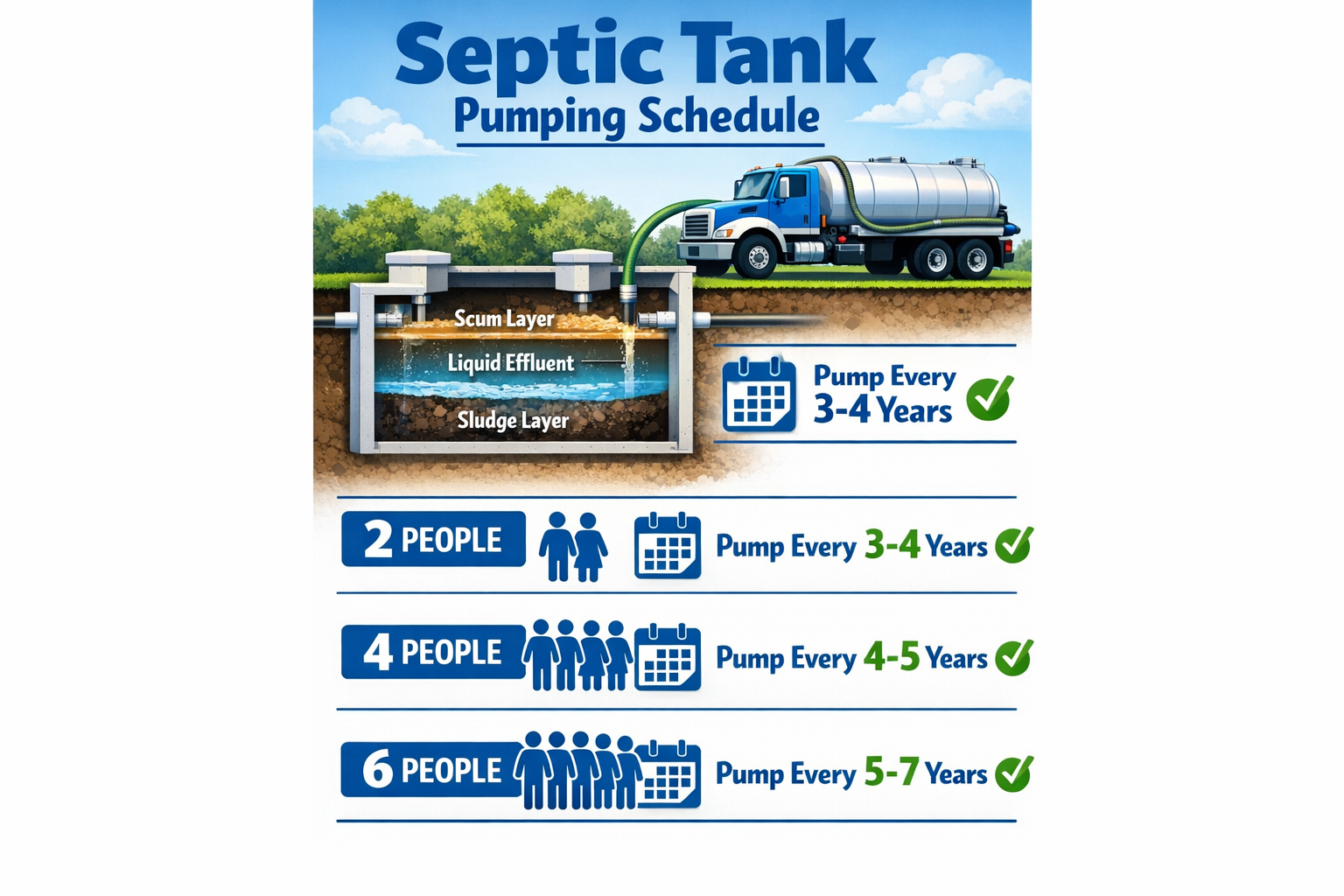
Pumping schedule by household size:
- 1-2 people: Every 4-5 years
- 3-4 people: Every 3-4 years
- 5+ people: Every 2-3 years
For a typical four-person household, pumping every 3 years prevents solids from accumulating to dangerous levels. The average household member uses 70 gallons of water daily, and most tanks hold 1,000 gallons of wastewater.
Choose more frequent pumping if you:
- Use a garbage disposal regularly
- Do large amounts of laundry
- Have frequent guests
- Use medications that kill beneficial bacteria
Professional pumpers measure sludge levels during service calls. Tanks should be pumped when the sludge layer reaches 25-33% of the tank’s liquid capacity. Waiting too long allows solids to enter your drain field, causing expensive damage.
Keep records of each pumping date, including the service company and any observations they share about your system’s condition.
What Are the Essential Steps to Maintain a Septic Tank?
Effective septic maintenance involves both regular professional services and daily protective habits that prevent system damage.
Professional maintenance tasks:
- Schedule pumping every 3-5 years based on usage
- Arrange annual inspections for systems with mechanical components
- Get comprehensive evaluations every 3 years minimum
- Document all services with dates and findings
Daily protection habits:
- Use only septic-safe toilet paper (single-ply, biodegradable)
- Spread laundry loads throughout the week
- Install low-flow fixtures to reduce water volume
- Never flush anything except human waste and toilet paper
Monthly monitoring:
- Check for slow drains or gurgling sounds
- Look for soggy spots or odors around your drain field
- Notice any unusually lush grass growth over the system
- Test water fixtures for proper drainage speed
FYI: Some links may be affiliate links, which means I may earn a small commission at no extra cost to you.
If you want a simple way to support your septic system between professional services, septic treatment tablets can help maintain healthy bacterial levels and reduce waste buildup. Products like Septifix tablets are designed to break down waste more efficiently and prevent common problems that lead to costly repairs.
The key is consistency. Small daily actions prevent major problems that could require thousands of dollars in repairs or complete system replacement.
How to Maintain a Septic Tank Through Proper Usage Habits
What you put down your drains directly impacts your septic system’s health and lifespan. Proper usage habits are the most cost-effective maintenance strategy available to homeowners.
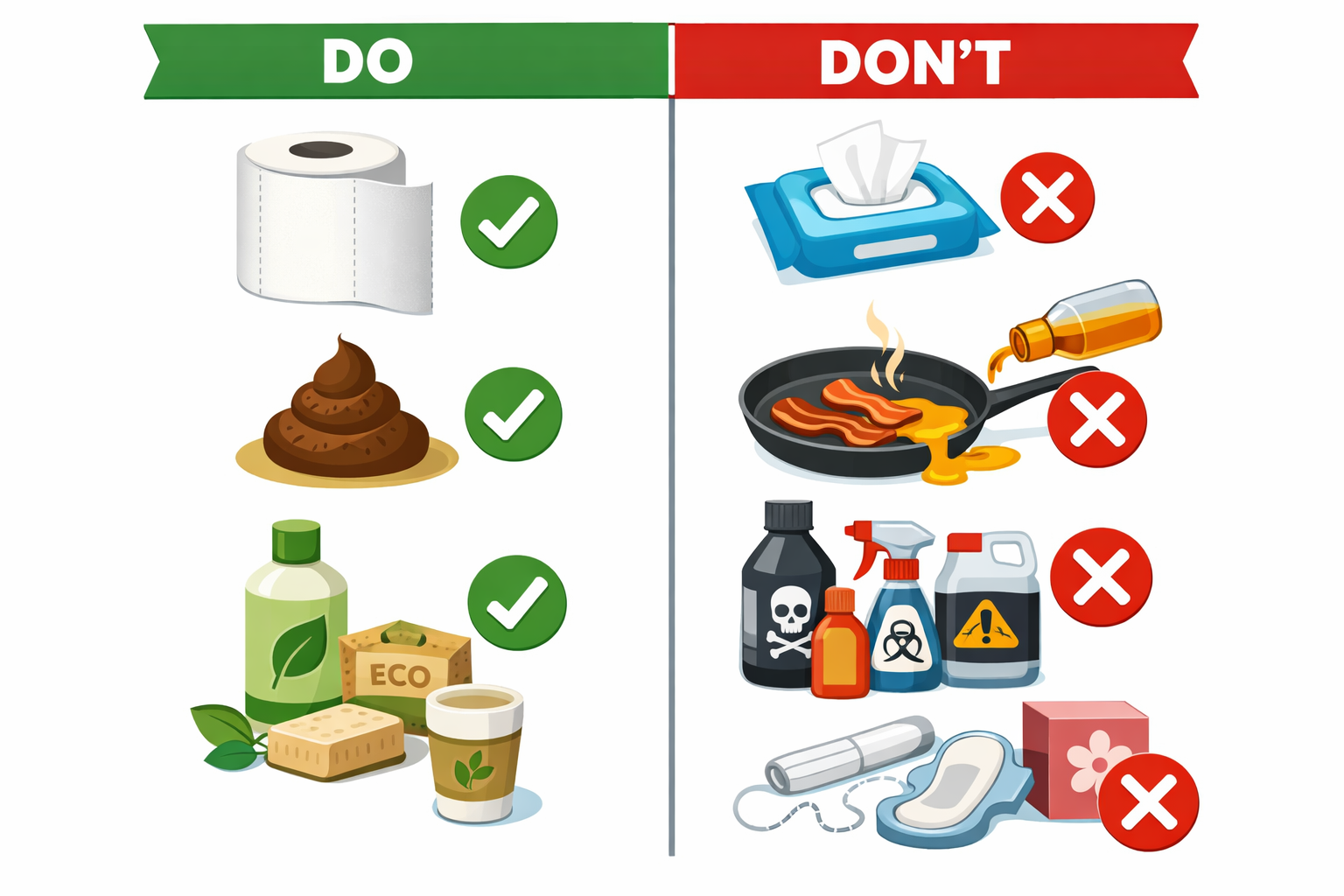
Safe items for septic systems:
- Human waste only
- Septic-safe toilet paper (single-ply, biodegradable)
- Reasonable amounts of biodegradable soap
- Normal food particles from dishwashing
Never flush or drain these items:
- Wipes (even those labeled “flushable”)
- Feminine hygiene products
- Grease, oil, or fat from cooking
- Paper towels or tissues
- Coffee grounds or food scraps
- Harsh chemicals or antibacterial soaps
- Medications or paint
Water management strategies:
- Spread laundry loads across the week instead of doing multiple loads in one day
- Install low-flow toilets and showerheads to reduce system stress
- Fix leaky faucets and running toilets immediately
- Avoid long showers or filling large tubs frequently
Kitchen best practices:
- Scrape plates thoroughly before washing
- Use minimal amounts of biodegradable dish soap
- Never pour grease down the drain—collect it in containers for disposal
- Run the dishwasher only with full loads
Choose septic-safe cleaning products whenever possible. Harsh chemicals can kill the beneficial bacteria that break down waste in your tank, leading to faster solid accumulation and more frequent pumping needs.
If you notice signs your septic tank is full like slow drains or odors, review your usage habits before calling for emergency service.
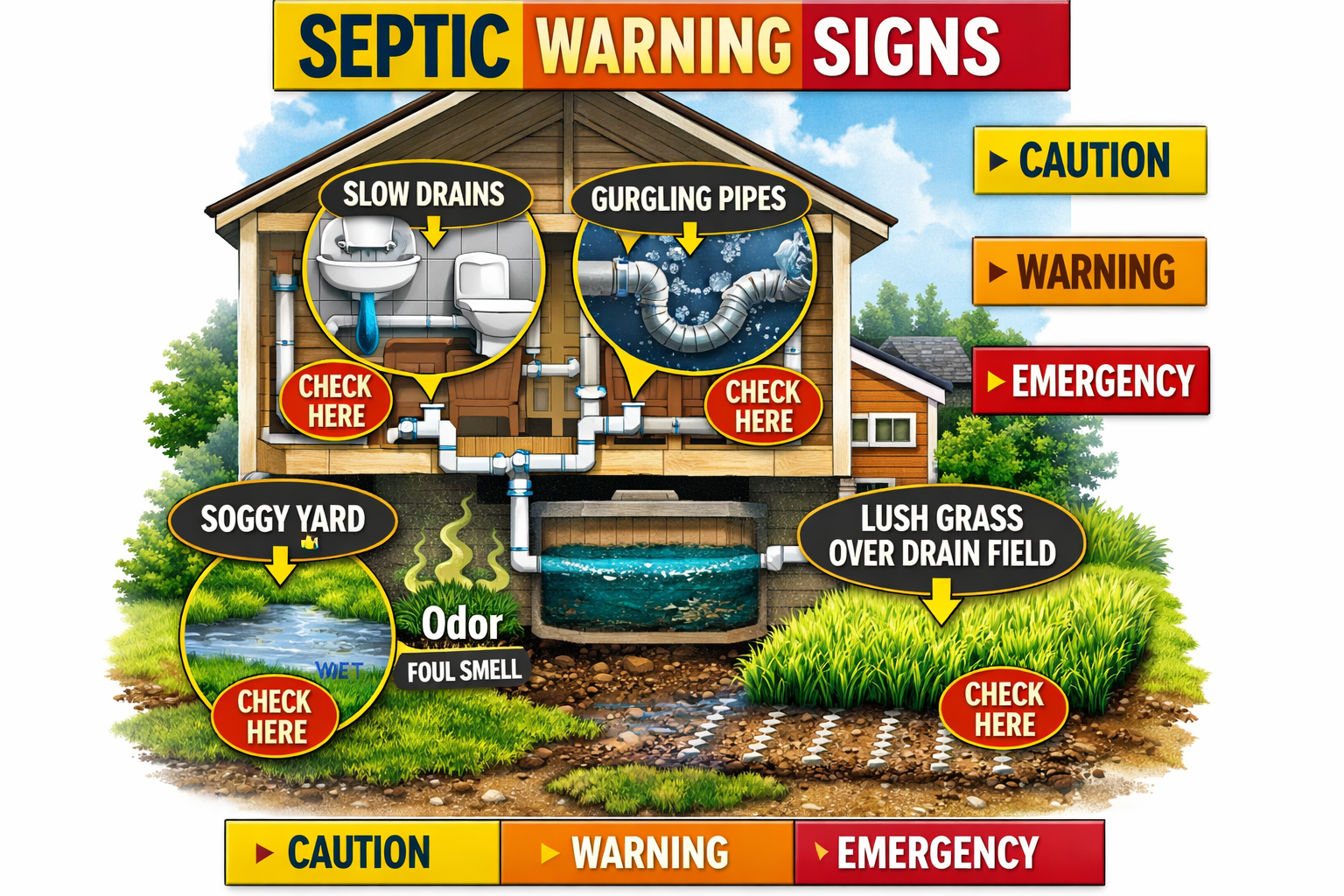
How to Identify Warning Signs That Your Septic Tank Needs Attention
Early detection of septic problems can save thousands of dollars in repair costs. Learning to recognize warning signs helps you address issues before they become emergencies.
Immediate attention required:
- Sewage backup in toilets, sinks, or floor drains
- Strong sewage odors inside or outside your home
- Standing water or soggy spots around the drain field
- Bright green, lush grass growing over the septic area
Schedule professional inspection soon:
- Slow-draining sinks, tubs, or toilets
- Gurgling sounds from plumbing fixtures
- Toilets that don’t flush completely
- Unusual sounds from the septic area
Monitor closely:
- Slightly slower drains than normal
- Occasional mild odors near the system
- Changes in grass color over the drain field
- Higher than normal water bills (indicating leaks)
Emergency situations requiring immediate professional help:
- Sewage surfacing in your yard
- Backup into living areas
- Complete drainage failure
- Strong chemical or gas odors
Understanding why your septic tank might be filling quickly can help you identify usage patterns that need adjustment.
Create a simple monitoring routine:
- Walk around your drain field weekly
- Notice drainage speed during daily use
- Check for odors when doing yard work
- Document any changes in system performance
Don’t ignore early warning signs hoping they’ll resolve on their own. Small problems become expensive emergencies when left untreated. If you’re experiencing multiple warning signs, contact a septic professional for evaluation rather than attempting DIY fixes.
How to Maintain a Septic Tank’s Drain Field and Surrounding Area
Your drain field (also called a leach field) is where treated wastewater from your septic tank gets filtered through soil. Protecting this area is crucial for system longevity and proper function.
Drain field protection rules:
- Never drive or park vehicles over the drain field area
- Avoid heavy equipment like swing sets or sheds on the field
- Keep roof gutters and drainage away from the septic area
- Plant only grass over the drain field—no trees or deep-rooted plants
Landscaping guidelines:
- Use shallow-rooted plants within 10 feet of the system
- Avoid planting trees within 30 feet of the drain field
- Never install sprinkler systems over the septic area
- Keep the area accessible for maintenance vehicles
Water management around your system:
- Direct surface water away from the drain field
- Ensure proper grading so water flows away from the system
- Fix any drainage issues that direct water toward the septic area
- Install French drains if necessary to redirect excess water
Seasonal maintenance tasks:
- Spring: Check for damage from winter freeze/thaw cycles
- Summer: Monitor for dry conditions that might crack soil
- Fall: Remove excess leaves that could block system access
- Winter: Avoid snow removal equipment over the system
Signs of drain field problems:
- Soggy or spongy ground over the field
- Sewage odors in the yard
- Unusually green or lush grass growth
- Standing water that doesn’t drain
If you notice septic tank overflow issues, the problem often starts with drain field saturation or damage.
Proper drain field maintenance extends your entire system’s life and prevents expensive soil remediation that can cost $10,000 or more.
What Professional Services Do You Need for Septic Tank Maintenance?
Professional septic services provide expertise and equipment that homeowners can’t replicate on their own. Understanding what services you need and when helps you budget effectively and maintain your system properly.
Essential professional services:
Pumping service (every 3-5 years):
- Complete removal of accumulated solids and scum
- Visual inspection of tank condition
- Measurement of sludge and scum layers
- Basic assessment of inlet and outlet baffles
Professional inspections:
- Annual inspections for systems with pumps or electrical components
- Every 3 years for conventional gravity-fed systems
- Pre-sale inspections when selling your home
- Post-repair evaluations after any system work
Comprehensive system evaluations include:
- Tank structural integrity assessment
- Drain field functionality testing
- Pipe and baffle condition checks
- Water level and flow rate measurements
- Soil percolation testing if needed
When to call professionals immediately:
- Any sewage backup into the house
- Standing water over the drain field
- Strong sewage odors that persist
- Complete drainage failure
Choosing a septic service provider:
- Verify proper licensing and insurance
- Ask for references from recent customers
- Get written estimates for all work
- Confirm they dispose of waste at approved facilities
Questions to ask during service calls:
- What’s the current condition of my tank?
- How do sludge levels compare to previous visits?
- Are there any developing problems I should watch for?
- What’s my recommended pumping schedule based on current usage?
Keep detailed records of all professional services, including dates, findings, and recommendations. This documentation helps track system performance and can be valuable when selling your home.
If you’re experiencing septic system drainage problems, professional diagnosis is essential before attempting any fixes.
How Much Does Septic Tank Maintenance Cost?
Understanding maintenance costs helps you budget appropriately and recognize the value of preventive care compared to emergency repairs or system replacement.
Typical maintenance costs:
| Service | Frequency | Average Cost Range |
|---|---|---|
| Pumping | Every 3-5 years | $200-$500 |
| Basic inspection | Annual | $100-$250 |
| Comprehensive evaluation | Every 3 years | $300-$600 |
| Minor repairs | As needed | $150-$1,500 |
| Drain field repair | If needed | $2,000-$10,000 |
| Complete system replacement | If failed | $15,000-$25,000+ |
Factors affecting maintenance costs:
- Tank size: Larger tanks cost more to pump
- Accessibility: Difficult-to-reach tanks increase service fees
- Regional pricing: Costs vary significantly by location
- System complexity: Advanced systems require specialized service
- Frequency: Regular maintenance costs less than emergency calls
Cost-saving strategies:
- Stick to regular pumping schedules to prevent emergency situations
- Address small problems before they become major repairs
- Maintain good usage habits to extend time between services
- Get multiple quotes for major repairs or replacements
- Keep detailed records to track system performance trends
Budget planning recommendations:
- Set aside $150-$200 annually for routine maintenance
- Create an emergency fund for unexpected repairs ($2,000-$5,000)
- Consider maintenance contracts with local providers for predictable costs
- Factor septic costs into home ownership budgets
The cost of regular maintenance is significantly less than replacing an entire system. A well-maintained septic system can last 20-30 years, while neglected systems often fail within 10-15 years.
Return on investment:
- Regular pumping: Prevents $15,000+ replacement costs
- Annual inspections: Catch problems when repairs cost hundreds instead of thousands
- Proper usage habits: Extend system life and reduce service frequency
- Professional maintenance: Maintains property value and prevents health hazards
Helpful Resource for Septic System Care
If you want a simple way to support your septic system between professional maintenance visits, consider using septic treatment products designed to maintain healthy bacterial levels and break down waste more effectively.
Septifix tablets can help keep your septic system clean and efficient by supporting the natural bacterial processes that break down waste. These easy-to-use tablets are trusted by many homeowners to maintain system health with minimal effort, potentially reducing buildup and helping prevent common problems that lead to costly repairs.
While not a replacement for regular pumping and professional maintenance, septic treatments can be a useful addition to your overall maintenance routine, especially if you have high water usage or want extra protection for your investment.
FAQ
How often should I pump my septic tank?
Most septic tanks need pumping every 3-5 years, depending on household size and water usage. A four-person household typically needs pumping every 3 years to prevent solids accumulation.
What should never go down a septic system?
Never flush wipes, feminine products, grease, paper towels, coffee grounds, harsh chemicals, or anything other than human waste and septic-safe toilet paper. These items can clog your system or kill beneficial bacteria.
How do I know if my septic tank is full?
Warning signs include slow drains, gurgling sounds, sewage odors, soggy spots around the drain field, or unusually lush grass over the septic area. Any of these symptoms warrant professional inspection.
Can I use regular toilet paper in a septic system?
Use single-ply toilet paper labeled “septic safe” or “biodegradable” to prevent clogs and ensure proper breakdown in your system. Avoid thick, quilted, or multi-ply papers.
How much does septic tank pumping cost?
Septic tank pumping typically costs $200-$500, depending on tank size, location, and accessibility. This cost is much less than the $15,000+ expense of replacing a failed system.
Do I need professional inspections if my system seems fine?
Yes, professional inspections every 1-3 years can catch problems before they become expensive emergencies. Systems with pumps need annual inspections, while gravity-fed systems need inspection every 3 years.
Can I drive over my drain field?
Never drive or park vehicles over your drain field. The weight can compact soil and damage pipes, leading to expensive repairs and potential system failure.
What cleaning products are safe for septic systems?
Use biodegradable, phosphate-free cleaning products in moderate amounts. Avoid antibacterial soaps and harsh chemicals that can kill the beneficial bacteria your system needs to function.
How long do septic systems last with proper maintenance?
Well-maintained septic systems typically last 20-30 years. Systems that receive regular pumping, inspections, and proper care can often exceed this lifespan.
Should I add bacteria or enzymes to my septic tank?
While not always necessary, septic treatments can help maintain bacterial balance, especially after antibiotic use or if you have high water usage. Choose products specifically designed for septic systems.
What happens if I ignore septic maintenance?
Neglecting maintenance can lead to system failure, sewage backups, drain field damage, and replacement costs of $15,000 or more. Regular maintenance prevents these expensive problems.
Can heavy rain affect my septic system?
Excessive rainfall can saturate your drain field and cause temporary drainage problems. Ensure surface water drains away from your system and avoid heavy water use during wet periods.
Key Takeaways
• Pump every 3-5 years based on household size—four-person homes need pumping every 3 years to prevent dangerous solids accumulation
• Schedule professional inspections annually for systems with mechanical components, or every 3 years for gravity-fed systems
• Only flush human waste and septic-safe toilet paper—everything else can damage your system or kill beneficial bacteria
• Protect your drain field by avoiding vehicle traffic, directing water away from the area, and planting only grass over the system
• Monitor warning signs like slow drains, odors, soggy spots, or lush grass growth that indicate potential problems
• Keep detailed maintenance records including pumping dates, inspection results, and any repairs for system tracking and property value
• Use water conservation measures like low-flow fixtures and spreading laundry loads to reduce system stress
• Budget $150-$200 annually for routine maintenance to prevent $15,000+ replacement costs
• Address problems early when repairs cost hundreds instead of thousands of dollars
• Choose septic-safe products for cleaning and personal care to maintain system bacterial balance
Conclusion
Learning how to maintain a septic tank properly protects your investment, prevents expensive emergencies, and ensures your system serves your family reliably for decades. The key is consistency—regular pumping every 3-5 years, annual inspections, careful monitoring of what goes down your drains, and watching for early warning signs.
Remember that preventive maintenance costs far less than emergency repairs or system replacement. By following the guidelines in this guide and working with qualified professionals, you can extend your septic system’s life and avoid the stress and expense of system failure.
Start by scheduling your next pumping service if it’s been more than 3-5 years, and create a simple monitoring routine to check for warning signs monthly. Your septic system is a significant investment in your property—treat it with the care it deserves, and it will serve you well for many years to come.
For more detailed information about septic system care, explore our complete maintenance and pumping resources to keep your system running smoothly.
References
[1] Your Complete Guide To Septic Systems Care Maint – https://www.wrenvironmental.com/blog/2025/july/your-complete-guide-to-septic-systems-care-maint/
[2] Septic Tank Maintenance – https://safetyculture.com/topics/septic-tank-maintenance
[3] Septic Tank Maintenance – https://www.vdwws.com/blog/septic-tank-maintenance
[4] How Often To Pump A Septic Tank – https://clearriverenvironmental.com/how-often-to-pump-a-septic-tank/
[5] Be Septic Safe Best Practices For Septic System Maintenance – https://hgic.clemson.edu/factsheet/be-septic-safe-best-practices-for-septic-system-maintenance/
[6] Keep Your Septic System In Working Order – https://extension.okstate.edu/fact-sheets/keep-your-septic-system-in-working-order.html
[7] How Often To Clean Septic Tanks Essential Guide – https://www.rciseptic.com/how-often-to-clean-septic-tanks-essential-guide
[8] How Care Your Septic System – https://www.epa.gov/septic/how-care-your-septic-system