

Last updated: February 25, 2026
Key Takeaways
• Slow drains throughout your home are the most common early warning sign of a full septic tank
• Gurgling sounds from toilets and drains indicate trapped air caused by an overfilled tank
• Foul sewage odors near drains or in your yard signal dangerous sludge buildup
• Standing water or wet spots around your drain field show overflow and system failure
• Unusually green grass over your septic tank indicates nutrient leakage from overflow
• Regular inspections every 3-5 years help catch problems before costly repairs are needed
• Professional pumping is typically required when sludge reaches one-third of tank capacity
Quick Answer

A full septic tank shows clear warning signs: slow drains throughout your home, gurgling sounds in pipes, sewage odors, wet spots in your yard, and unusually lush grass over the tank area. When sludge accumulates to one-third of your tank’s capacity or wastewater can’t drain properly into the absorption field, it’s time for professional pumping to prevent costly backups and system failure.
What Does It Mean When Your Septic Tank Is Full?
Your septic tank can be “full” in three different ways, and understanding these distinctions helps you know when to take action. A normally functioning septic tank maintains a consistent liquid level while allowing wastewater to flow in and out properly.
Normal Full Level: Your tank operates at its designed liquid capacity with proper intake and discharge function. This is healthy and expected.
Sludge-Full: Solid waste accumulates until it occupies one-third or more of the tank’s total capacity. At this point, the tank can’t separate solids effectively, and you need pumping.
Overfull: Wastewater can’t drain into the absorption field due to clogs, system failure, or excessive input. This creates immediate problems and requires urgent attention.
The key difference is functionality. A tank at normal capacity works fine, but sludge buildup or drainage problems create the warning signs homeowners need to recognize.
Early Warning Signs: How to Know When Septic Tank Is Full
Multiple drains backing up simultaneously is your first and most reliable indicator of septic tank problems. Unlike a single clogged drain, septic-related issues affect your entire plumbing system at once.
Multiple Slow Drains:
• Sinks, toilets, and showers all drain slowly
• Problems occur throughout the house, not just one location
• Drainage gets progressively worse over time
• Using one fixture affects others (toilet flush causes sink to gurgle)
Gurgling and Bubbling Sounds:
• Toilets make unusual noises when not in use
• Drains bubble or gurgle during normal operation
• Sounds occur when using fixtures elsewhere in the house
• Air trapped in pipes creates these warning noises
Common Mistake: Don’t ignore these early signs hoping they’ll resolve on their own. Early intervention prevents expensive emergency repairs and sewage cleanup.
Choose professional inspection if: You notice two or more of these symptoms occurring together, especially if your tank hasn’t been pumped in over three years.
Obvious Physical Signs of a Full Septic Tank
Strong sewage odors and visible water problems in your yard indicate advanced septic tank issues that require immediate attention. These signs mean your system is already failing and poses health risks.
Sewage Odors:
• Strong sewer smells near drains, toilets, or outside
• Odors that persist despite cleaning efforts
• Smells that worsen during humid weather or after heavy use
• Gas escape indicates dangerous bacterial buildup
Yard Warning Signs:
• Standing water or wet spots near the tank or drain field
• Unusually green grass growing over the septic area
• Soggy ground that doesn’t dry out between rain events
• Visible sewage surfacing in the yard (emergency situation)
Well Water Issues:
• High nitrate levels detected in drinking water tests
• Contamination indicates septic leakage affecting groundwater
• Requires immediate professional testing and system repair
Edge Case: Extremely green grass over your septic tank isn’t always problematic. Drain fields naturally create greener grass due to nutrients, but overly lush growth combined with other symptoms indicates overflow.
How to Check Your Septic Tank Sludge Levels

Professional assessment uses specialized tools to measure sludge accumulation, but homeowners can perform basic visual inspections safely. Never enter or lean over an open septic tank due to dangerous gases.
Professional Measurement Methods:
• Sludge judges: Long poles with measurement markings
• Core sampling: Tubes that extract sludge samples for analysis
• Electronic sensors: Digital tools that detect sludge depth
• Inspection cameras: Visual assessment of tank conditions
Safe Homeowner Inspection:
- Locate your tank using property records or professional help
- Find the inspection port (usually a smaller access point)
- Look for obvious problems like standing water or strong odors
- Check surrounding area for wet spots or unusual grass growth
- Document any concerns for professional evaluation
Decision Rule: Schedule professional pumping when sludge reaches one-third of your tank’s total capacity, typically every 3-5 years for most households.
Safety Note: Professional inspection costs $200-400 but prevents thousands in repair costs and protects your family’s health.
FYI: Some links may be affiliate links, which means I may earn a small commission at no extra cost to you.
For homeowners looking to maintain their septic system between professional services, Septifix tablets offer a simple monthly maintenance solution. These tablets help break down waste, reduce odors, and support healthy bacterial activity in your tank. While not a replacement for regular pumping, they can help extend time between services and keep your system running smoothly.
What Happens When Your Septic Tank Gets Too Full
An overfilled septic tank creates a cascade of problems that get progressively more expensive and dangerous. Understanding these consequences helps homeowners prioritize timely maintenance and recognize emergency situations.
Immediate Problems:
• Sewage backup into your home through toilets and drains
• Complete plumbing failure affecting all fixtures
• Health hazards from exposure to raw sewage and toxic gases
• Property damage to floors, walls, and belongings
Long-term Consequences:
• Drain field failure requiring expensive replacement ($5,000-15,000)
• Soil contamination affecting your property value
• Groundwater pollution creating environmental liability
• System replacement costs reaching $15,000-25,000 or more
Environmental Impact:
Untreated wastewater contains harmful bacteria, viruses, and chemicals that contaminate soil and water sources. This affects not just your property but neighboring wells and local ecosystems.
Emergency Indicators: If you see sewage backing up into your house or pooling in your yard, stop using all plumbing immediately and call a septic professional. Continued use will worsen the damage and increase cleanup costs.
Learn more about what happens when septic tanks back up and the steps to take during emergency situations.
How Often Should You Check and Pump Your Septic Tank
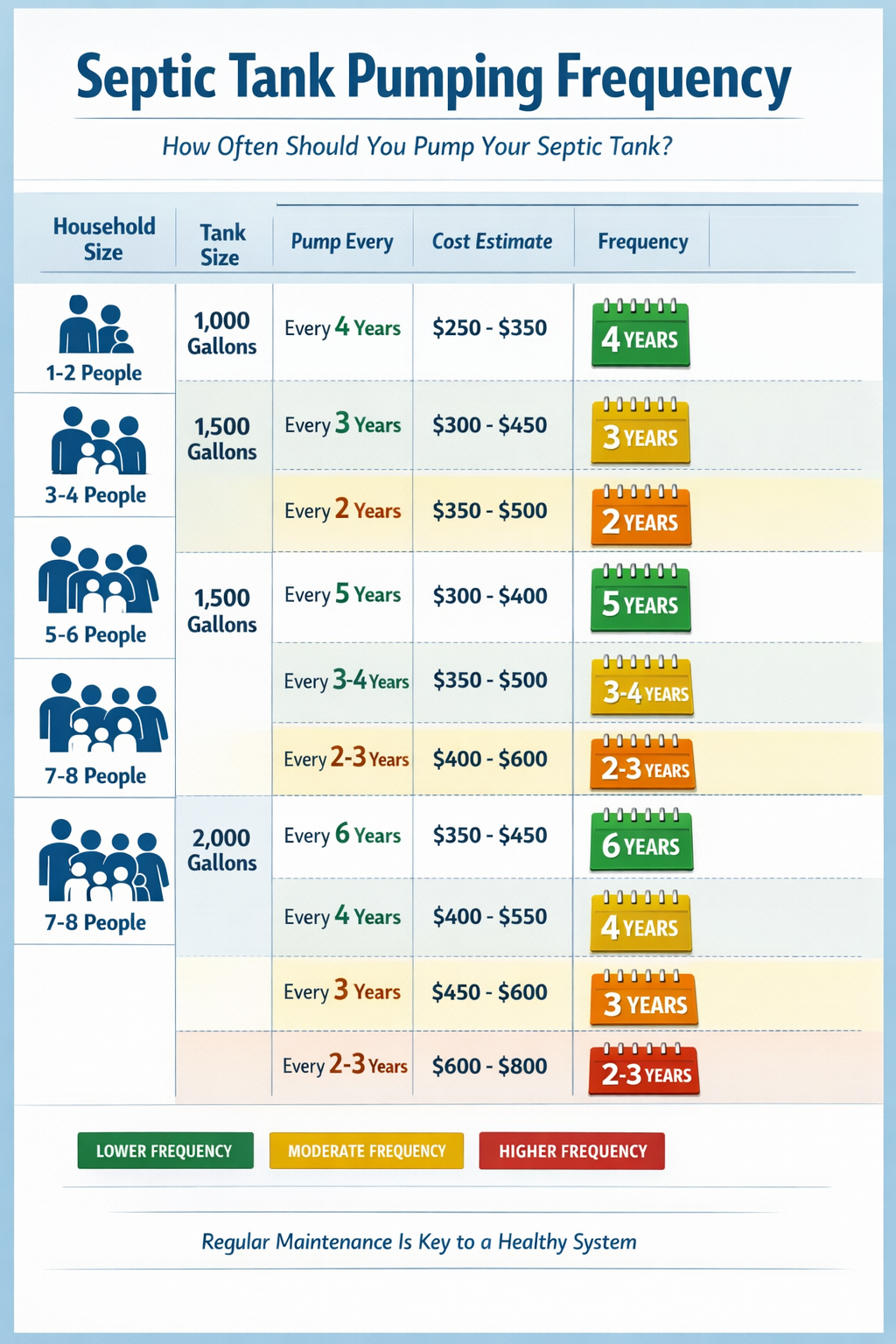
Regular maintenance schedules prevent most septic tank problems and save thousands in emergency repairs. Pumping frequency depends on your household size, tank capacity, and water usage patterns.
Standard Pumping Schedule:
• 1-2 people: Every 3-5 years
• 3-4 people: Every 2-4 years
• 5+ people: Every 1-3 years
• Heavy usage homes: Annual or bi-annual pumping
Inspection Frequency:
• Professional inspection: Every 3 years minimum
• Homeowner visual checks: Monthly during routine yard maintenance
• After heavy usage periods: Holidays, parties, extended guest stays
• Seasonal checks: Before and after winter in cold climates
Factors That Affect Timing:
• Garbage disposal use increases solid waste accumulation
• Water softener discharge adds extra liquid volume
• Household chemicals can kill beneficial bacteria
• Age of system affects efficiency and capacity
Cost Comparison: Regular pumping costs $300-600 every few years, while emergency repairs and system replacement can cost $15,000-25,000 or more.
For detailed guidance on maintenance schedules, see our complete guide on how often to pump septic tanks.
Professional vs DIY: When to Call the Experts
While homeowners can perform basic visual inspections and maintenance, septic tank assessment and pumping require professional expertise and specialized equipment. Knowing when to call professionals protects your safety and prevents costly mistakes.
Safe DIY Tasks:
• Visual inspection of yard for wet spots or odors
• Monitoring drain performance throughout your home
• Basic maintenance like water conservation
• Keeping records of pumping and inspection dates
Professional-Only Tasks:
• Tank pumping and cleaning requires vacuum trucks and proper disposal
• Sludge level measurement needs specialized tools and expertise
• System repairs involve permits, regulations, and technical knowledge
• Tank opening and entry poses serious safety risks from toxic gases
When to Call Immediately:
• Sewage backup into your home
• Strong sewage odors that won’t dissipate
• Standing water or wet spots in your drain field
• Multiple drains backing up simultaneously
• Well water contamination detected
Choosing a Professional:
Look for licensed septic contractors with insurance, positive reviews, and transparent pricing. Get quotes from multiple companies for major repairs, but don’t delay emergency services to shop around.
Understanding signs your septic tank needs maintenance helps you communicate effectively with professionals and avoid unnecessary services.
Helpful Resource for Ongoing Septic Care
Maintaining a healthy septic system between professional services doesn’t have to be complicated. Septifix tablets provide an easy monthly maintenance routine that supports your tank’s natural processes. Simply flush one tablet monthly to help break down waste, control odors, and maintain beneficial bacteria levels.
While regular pumping and professional inspections remain essential, these tablets can help extend the time between services and keep your system functioning efficiently. They’re particularly useful for households with heavy usage or homes that have experienced minor septic issues in the past.
Frequently Asked Questions
How quickly can a septic tank go from normal to full?
A septic tank typically takes 3-5 years to accumulate enough sludge for pumping under normal usage. However, heavy usage, garbage disposal waste, or system problems can fill a tank in 1-2 years or less.
Can I pump my septic tank myself?
No, septic tank pumping requires specialized vacuum trucks, proper disposal methods, and safety equipment. DIY pumping is dangerous and often illegal due to waste disposal regulations.
What’s the difference between a full tank and a clogged drain?
A clogged drain affects one fixture, while septic tank problems cause slow drainage throughout your entire home. Multiple simultaneous drain issues indicate septic problems, not individual clogs.
How much does emergency septic pumping cost?
Emergency septic services typically cost 50-100% more than scheduled maintenance, ranging from $500-1,200 depending on your location and the severity of the problem.
Will a full septic tank fix itself?
No, septic tanks don’t self-empty. Sludge accumulation only gets worse over time, and delaying pumping leads to system failure and expensive repairs.
Can heavy rain cause septic tank problems?
Yes, excessive groundwater can overwhelm your drain field and cause backup issues. However, a properly functioning system should handle normal rainfall without problems.
How do I find my septic tank location?
Check your property records, house plans, or contact your local health department. You can also follow the main sewer line from your house, which leads to the tank.
What kills bacteria in septic tanks?
Antibacterial cleaners, bleach, excessive amounts of household chemicals, and some medications can disrupt the bacterial balance needed for proper waste breakdown.
Should septic tanks be completely emptied?
No, septic tanks should retain some liquid and sludge to maintain bacterial activity. Professional pumping removes excess sludge while leaving enough material for proper function.
How long do septic systems last?
Well-maintained septic systems typically last 20-30 years. Poor maintenance, heavy usage, or system abuse can reduce lifespan to 10-15 years or less.
Can I use additives to avoid pumping?
Commercial septic additives cannot replace regular pumping. While some products may help maintain bacterial balance, they don’t eliminate the need for professional sludge removal.
What happens if I ignore the warning signs?
Ignoring septic tank warning signs leads to sewage backup, property damage, health hazards, and system failure requiring expensive replacement rather than simple maintenance.
Conclusion
Recognizing how to know when septic tank is full protects your home, health, and wallet from expensive emergency repairs. The warning signs are clear: slow drains throughout your house, gurgling sounds in pipes, sewage odors, and wet spots in your yard all indicate your tank needs immediate attention.
Take action now by scheduling a professional inspection if you’ve noticed any of these symptoms or if your tank hasn’t been pumped in over three years. Regular maintenance costs a few hundred dollars every few years, while system failure and replacement can cost $15,000-25,000 or more.
Next steps:
- Inspect your property for the warning signs discussed in this guide
- Schedule professional assessment if you notice multiple symptoms
- Establish a regular pumping schedule based on your household size and usage
- Keep detailed records of all maintenance and inspections
- Learn your tank’s location and basic system layout for future reference
Remember, septic tank problems don’t resolve themselves and only get worse with time. Early detection and professional maintenance keep your system running efficiently and protect your property investment for decades to come.
For more detailed information about septic system maintenance, explore our comprehensive septic tank care resources and maintenance best practices guide.
References
[1] How To Tell If Your Septic Tank Is Full – https://www.bdpplumbing.com/how-to-tell-if-your-septic-tank-is-full
[2] Signs Of A Full Septic Tank – https://efcnetwork.org/signs-of-a-full-septic-tank/
[3] Signs Your Septic Tank Is Full And Needs Emptying – https://farmersseptic.com/signs-your-septic-tank-is-full-and-needs-emptying/
[4] Signs Your Septic Tank Is Too Full When To Call The Pros – https://www.metroseptic.com/blog/signs-your-septic-tank-is-too-full-when-to-call-the-pros/
[5] Septic Tank Full – https://www.adt.com/resources/septic-tank-full