
How to Know Septic Tank Is Failing: Essential Warning Signs Every Homeowner Must Recognize
Last updated: January 15, 2026
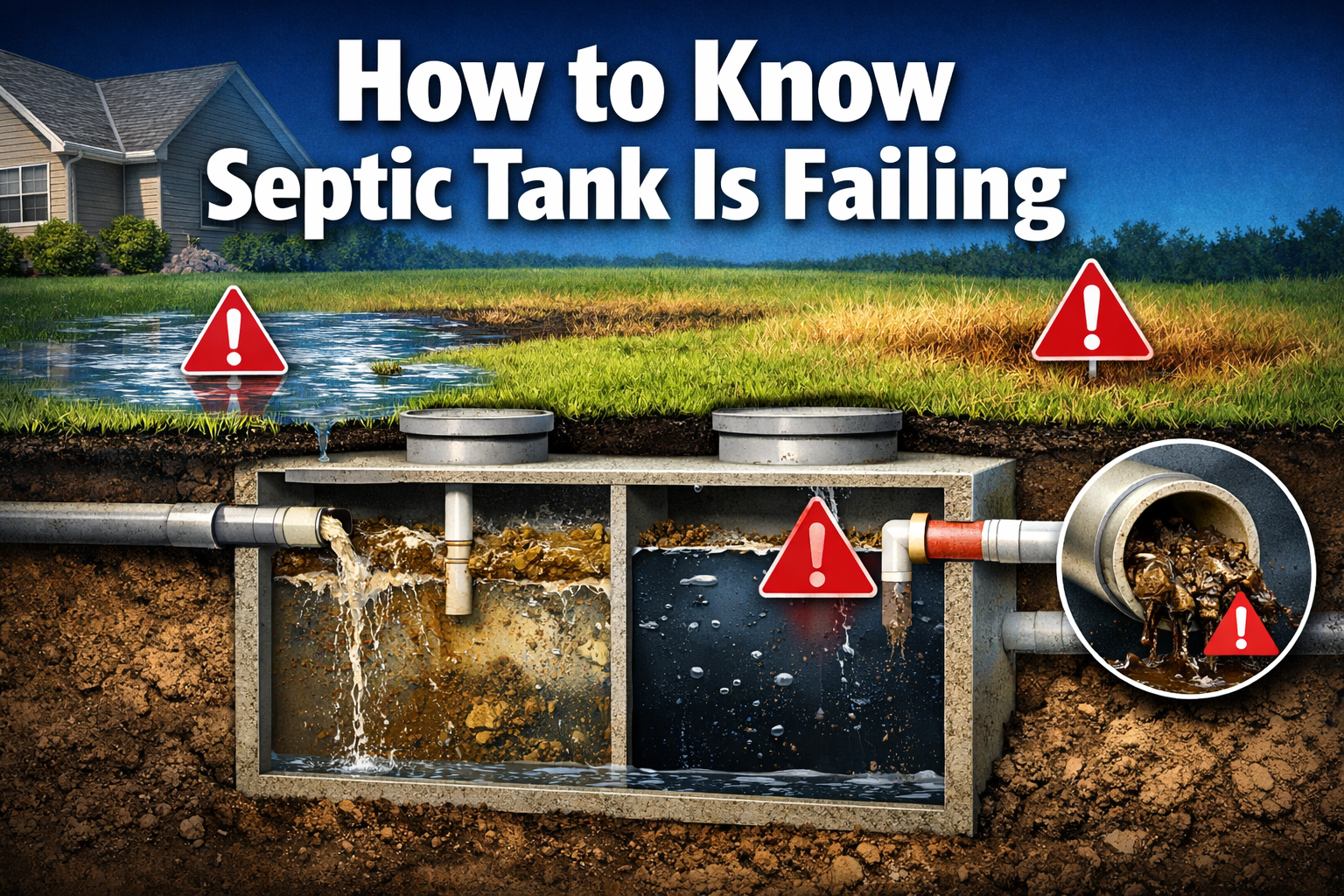
Picture this: you wake up to sewage backing up into your basement, or you notice your yard smells like a sewer after a rainy day. These aren’t just inconveniences—they’re red flags that your septic system is crying for help. Learning how to know septic tank is failing can save you thousands of dollars in emergency repairs and protect your family’s health.
Key Takeaways
- Sewage backups and slow drains throughout multiple fixtures are the most critical early warning signs requiring immediate attention
- Foul odors, standing water, and unusually green grass over your drain field indicate serious system problems
- Gurgling sounds and septic alarms warn of blockages or high water levels before major failures occur
- Early detection can prevent costly emergency repairs that often exceed $10,000-$20,000
- Professional inspection is essential when multiple warning signs appear simultaneously
Quick Answer
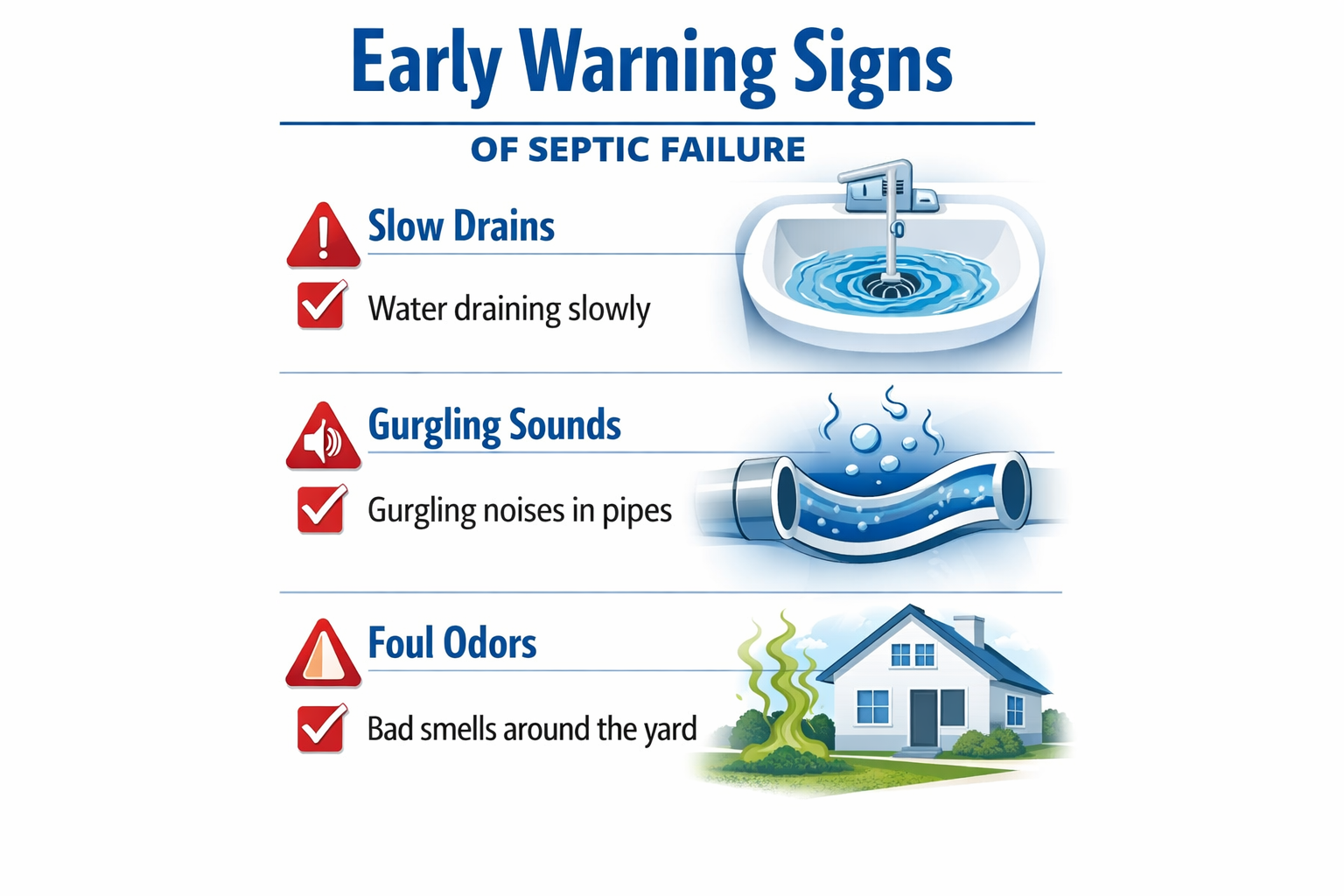
A failing septic tank shows clear warning signs: sewage backing up into your home, slow drains in multiple fixtures, foul odors indoors or outside, standing water over the drain field, and unusually lush grass patches above the system. If you notice gurgling sounds in pipes, frequent need for pumping, or your septic alarm activating, your system needs immediate professional attention to prevent costly emergency repairs.
What Are the Most Critical Early Warning Signs?
Sewage backups in lower-level fixtures represent the most urgent warning sign of septic failure. When wastewater starts flowing back into your basement drains, laundry room, or ground-floor bathrooms, your septic tank is either completely full, your drain field is saturated, or there’s a major blockage in the system.
Immediate Red Flags That Demand Action
- Multiple slow drains simultaneously – When sinks, showers, and toilets all drain slowly at the same time, this indicates your septic tank is near capacity or your drain field is failing
- Sewage backup in basement or lower fixtures – This requires immediate professional intervention and signals direct system failure
- Standing water over drain field during dry weather – Indicates advanced drain field failure where soil can no longer absorb wastewater
- Strong sewage odors inside your home – Suggests unprocessed waste and potential dangerous gas buildup
Choose immediate professional help if you experience sewage backups or multiple fixtures draining slowly simultaneously. These aren’t DIY situations and can pose serious health risks.
Common mistake: Homeowners often assume slow drains are simple clogs and use chemical drain cleaners, which can actually damage septic systems and make problems worse.
For more guidance on recognizing when your tank reaches capacity, check our detailed guide on how to tell if your septic tank is full.
How to Know Septic Tank Is Failing Through Drain and Plumbing Issues
Widespread drainage problems throughout your home indicate septic system failure rather than isolated plumbing issues. When multiple fixtures drain slowly or make unusual sounds, your septic tank can’t handle the incoming wastewater properly.
Drainage Warning Signs to Monitor
Gurgling and bubbling sounds in your pipes when you flush toilets or drain sinks indicate trapped air from blockages or backup in your septic system. These sounds occur because air gets displaced when wastewater can’t flow freely through the system.
Toilet flushing problems become noticeable when your septic tank approaches capacity. You might notice:
- Toilets that won’t flush completely
- Water levels that rise higher than normal before draining
- Frequent toilet clogs without obvious cause
- Weak flushing action even after plumbing repairs
Kitchen and bathroom sink issues often appear together when septic systems fail:
- Water backing up in multiple sinks
- Slow drainage that affects the whole house
- Unusual sounds coming from drain pipes
- Water appearing in floor drains
Decision rule: If drainage problems affect multiple fixtures simultaneously, suspect septic failure. If only one fixture has issues, it’s likely a localized plumbing problem.
Edge case: Sometimes partial blockages in the main line to the septic tank can mimic septic failure. A professional can determine whether the issue is in your plumbing or the septic system itself.
Understanding how septic systems work helps you distinguish between normal operation and failure symptoms.
What Outdoor Signs Indicate How to Know Septic Tank Is Failing?
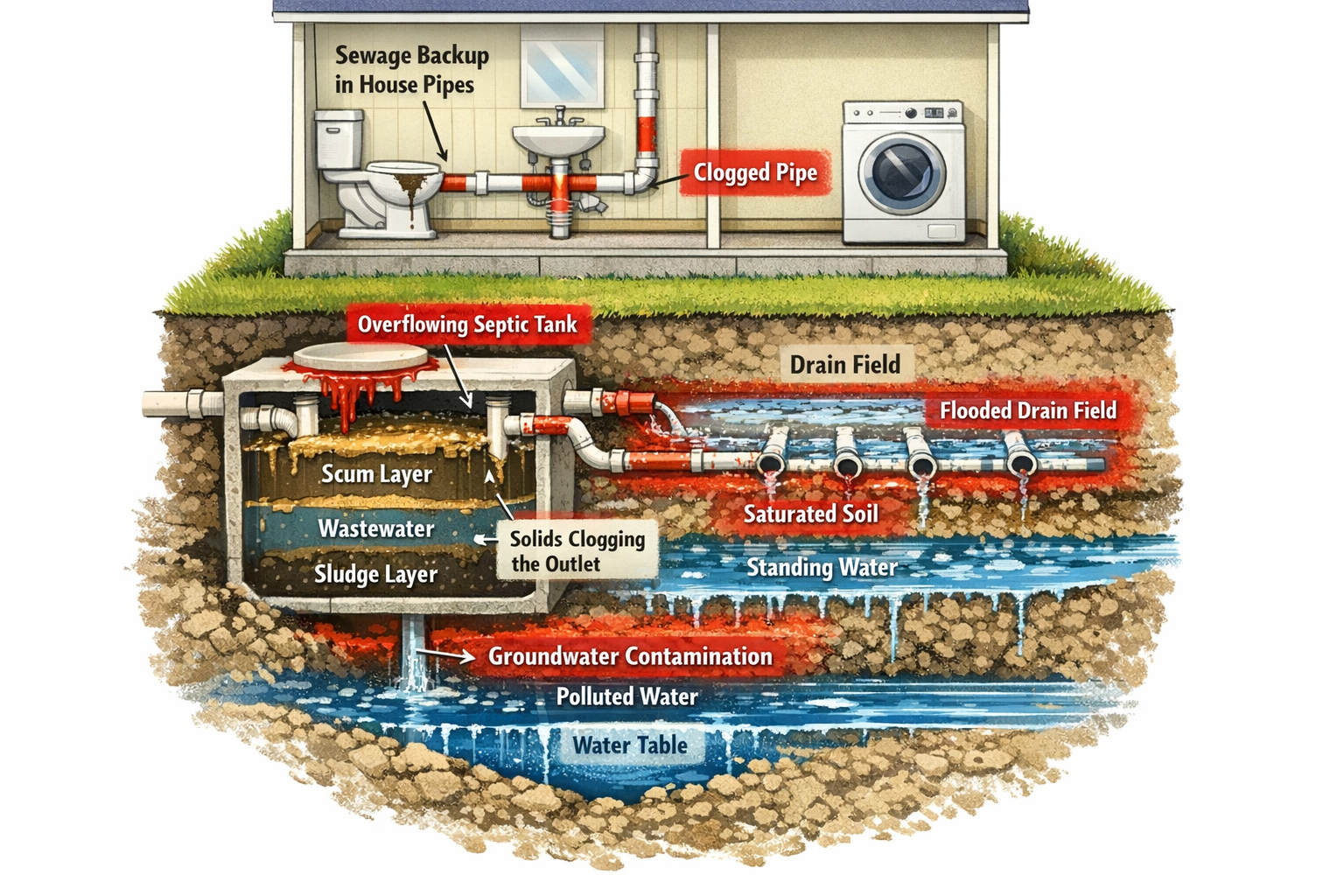
Standing water and sewage surfacing in your yard represent advanced septic system failure requiring urgent repairs. These outdoor warning signs indicate your drain field can no longer process wastewater effectively, causing it to surface above ground.
Yard and Landscape Warning Signs
Pooling water over the drain field during dry weather signals that your soil absorption system has failed. The ground becomes saturated because:
- Drain field pipes are clogged or broken
- Soil has become compacted and can’t absorb water
- The biomat layer has become too thick, blocking absorption
- Tree roots have damaged the distribution system
Unusually lush, dark green grass patches over your septic system or drain field indicate excess nutrients from unprocessed wastewater. While some greening is normal, dramatic differences in grass color and growth rate signal problems.
Sunken or soggy ground around your septic tank or drain field suggests broken or leaking underground piping[5]. This creates:
- Uneven ground surfaces
- Consistently wet soil even during dry periods
- System inefficiencies that worsen over time
- Potential safety hazards from unstable ground
Odor-Related Outdoor Signs
Sewage or rotten-egg smells around your septic system indicate unprocessed waste and potential system failure. These odors become more noticeable:
- During humid or rainy weather
- Near the septic tank lid or drain field
- Around plumbing vents on your roof
- In areas where sewage has surfaced
Choose professional inspection if you notice any combination of standing water, unusual grass growth, and foul odors. These signs together indicate serious system problems.
Common mistake: Homeowners sometimes assume wet spots in the yard are from irrigation problems or natural drainage issues, delaying necessary septic repairs.
For specific guidance on addressing septic-related drainage issues, see our comprehensive guide on septic tank slow drains problems.
How Do Septic Alarms and Mechanical Signs Help You Know Your Tank Is Failing?
Septic alarm activation warns of high water levels, pump failure, or aeration issues that can lead to system backups and surface discharge. Modern septic systems include alarm systems designed to alert homeowners before major failures occur.
Understanding Your Septic Alarm System
High water level alarms activate when wastewater rises too high in your septic tank or pump chamber. This happens when:
- The drain field becomes saturated and can’t accept more water
- Pumps fail in systems that require them
- Blockages prevent normal water flow
- Heavy rainfall overwhelms the system capacity
Pump failure indicators in systems with effluent pumps or grinder pumps include:
- Continuous alarm activation
- No sound from the pump when it should be running
- Electrical issues affecting pump operation
- Mechanical wear causing pump breakdown
Maintenance-Related Warning Signs
Frequent pumping requirements indicate reduced tank capacity or drain field problems. Normal septic tanks need pumping every 3-5 years, but failing systems may require pumping:
- Every 6-12 months
- After heavy rainfall
- When household water usage hasn’t increased
- Despite proper maintenance schedules
Unexpected water bill increases can reflect system inefficiencies causing repeated water use due to ineffective flushing and draining. You might notice:
- Higher bills without increased usage
- Water running continuously to achieve proper drainage
- Repeated flushing needed for toilets
- Extended shower times due to slow drains
Decision rule: If you need septic pumping more than twice as often as previously required, your system likely has drain field or capacity problems requiring professional evaluation.
FYI: Some links may be affiliate links, which means I may earn a small commission at no extra cost to you.
For homeowners looking to support their septic system health between professional services, Septifix tablets offer a simple monthly maintenance solution. These tablets help break down waste, reduce bad smells, and support proper septic function with just one easy flush per month. While not a fix for serious system failures, Septifix can be helpful for maintaining system health and potentially extending the time between pumpings when used as part of regular septic care.
When Should You Test Water Quality to Confirm Septic Failure?
High nitrate levels in well water can indicate septic system failure affecting your drinking water supply. If your home uses well water and you notice changes in taste, smell, or appearance, water testing becomes crucial for both system diagnosis and health protection.
Water Quality Testing Indicators
Well water contamination signs that may relate to septic failure include:
- Unusual taste or odor in drinking water
- Cloudy or discolored water appearance
- Higher than normal nitrate levels in water tests
- Bacterial contamination in water samples
When to test your water:
- After noticing other septic failure signs
- Following heavy rainfall or flooding
- When neighbors report septic problems
- During routine annual water quality checks
- Before and after septic system repairs
Professional Water Testing
Laboratory analysis provides definitive answers about water quality and potential septic contamination. Professional testing checks for:
- Nitrate and nitrite levels
- Bacterial contamination (E. coli, coliform)
- Chemical contaminants
- pH and mineral content changes
Choose immediate water testing if you notice taste or odor changes in your well water combined with other septic failure signs. Contaminated drinking water poses serious health risks requiring immediate attention.
Edge case: Sometimes high nitrate levels result from agricultural runoff or other sources rather than septic failure. Professional testing can help determine the contamination source.
Learn more about maintaining your septic system to prevent water contamination in our guide on septic tank treatment methods.
What Should You Do When You Confirm Your Septic Tank Is Failing?
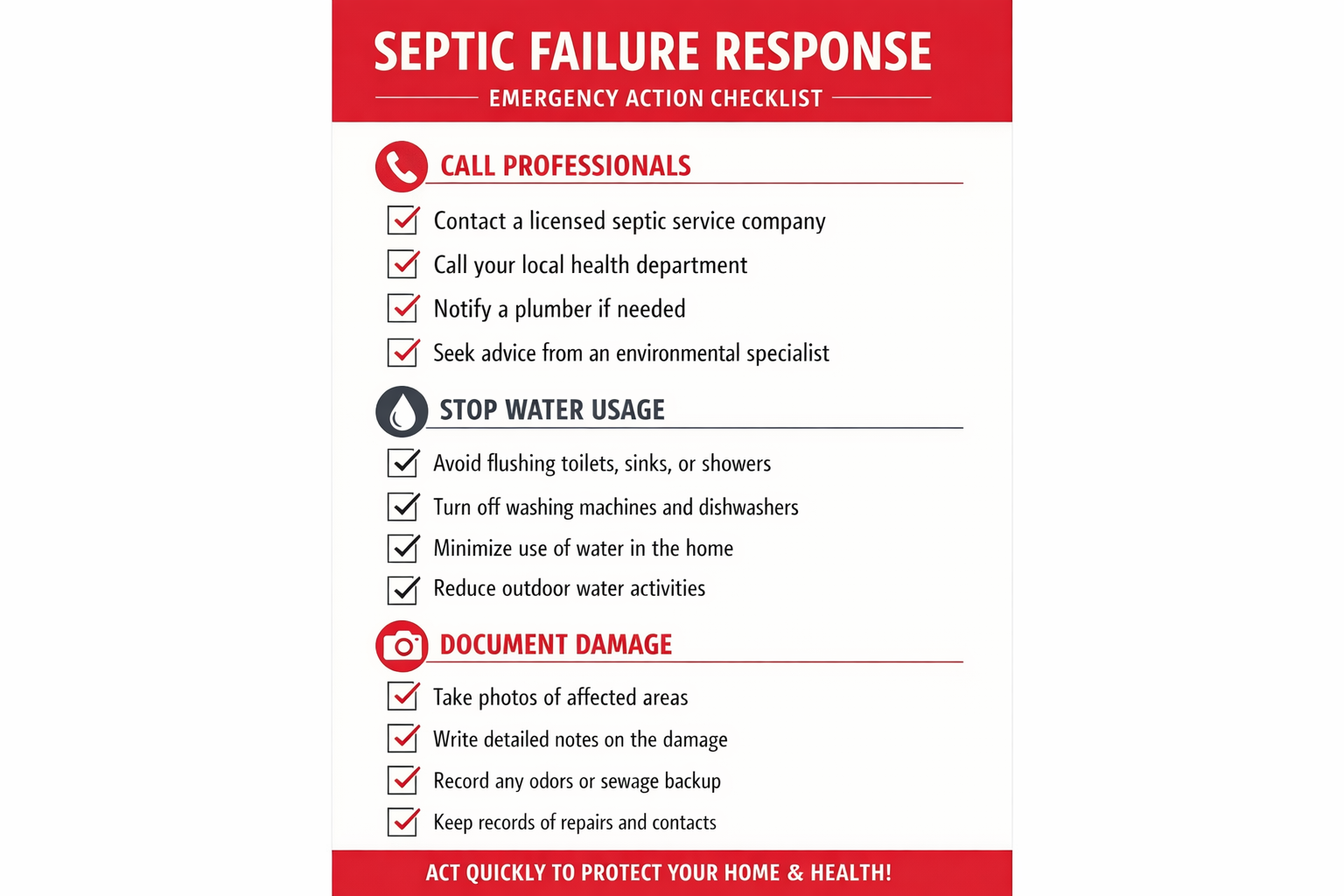
Stop using water immediately and contact a licensed septic professional when you confirm system failure. Taking quick action prevents further damage and reduces health risks while minimizing repair costs.
Immediate Emergency Steps
Reduce water usage to essential needs only:
- Stop doing laundry and running dishwashers
- Take shorter showers or use alternative facilities
- Avoid flushing toilets unless absolutely necessary
- Don’t drain bathtubs or run unnecessary water
Document the problems for insurance and repair purposes:
- Take photos of standing water, sewage backups, or damaged areas
- Note dates and times when problems occurred
- Record which fixtures are affected
- Keep receipts for any emergency cleanup costs
Professional Intervention Required
Licensed septic contractors can diagnose the exact problem and recommend appropriate solutions. They will:
- Inspect the entire septic system
- Determine whether repair or replacement is needed
- Provide cost estimates for different options
- Handle necessary permits and inspections
System repair vs. replacement decisions depend on several factors:
- Age of the current system (systems over 20-30 years old often need replacement)
- Extent of drain field damage
- Local soil conditions and regulations
- Cost comparison between major repairs and new installation
Cost Considerations
Drain field replacement typically costs $8,000-$20,000 plus engineering and permit fees. However, costs vary based on:
- Property size and soil conditions
- Local permit requirements
- Access difficulties for equipment
- Need for engineered systems in challenging locations
Choose repair if the septic tank is in good condition and only the drain field needs attention. Choose replacement if both tank and drain field show significant problems or the system is very old.
Common mistake: Delaying professional help to save money often results in more expensive emergency repairs and potential property damage.
For ongoing septic maintenance after repairs, explore our comprehensive guide on septic tank bacteria treatments to support system health.
How Can You Prevent Future Septic Tank Failure?
Regular maintenance and proper usage habits prevent most septic system failures and extend system life significantly. Preventive care costs far less than emergency repairs and protects your investment in your septic system.
Essential Maintenance Practices
Schedule regular pumping every 3-5 years based on household size and tank capacity. Factors affecting pumping frequency include:
- Number of people in the household
- Tank size and age
- Garbage disposal usage
- Water consumption habits
Protect your drain field from damage that causes premature failure:
- Never drive or park vehicles over the drain field
- Avoid planting trees or large shrubs near the system
- Don’t build structures over septic components
- Redirect surface water away from the drain field
Monitor what goes down your drains to prevent system overload:
- Use septic-safe toilet paper and cleaning products
- Never flush medications, chemicals, or non-biodegradable items
- Limit garbage disposal use or eliminate it entirely
- Spread laundry loads throughout the week rather than doing multiple loads in one day
Water Conservation Benefits
Reducing household water usage helps prevent system overload and extends septic life:
- Install low-flow fixtures and efficient appliances
- Fix leaks promptly to prevent continuous water flow
- Use water-efficient landscaping that doesn’t require excessive irrigation
- Consider greywater systems for irrigation where permitted
Professional Inspection Schedule
Annual or bi-annual inspections catch problems before they become failures:
- Check tank levels and condition
- Inspect drain field for early warning signs
- Test system components like pumps and alarms
- Identify maintenance needs before they become emergencies
Decision rule: Invest in preventive maintenance if your system is less than 15 years old and showing no major problems. Consider replacement planning if your system is over 20 years old or requires frequent repairs.
For homeowners committed to proactive septic care, Septifix tablets provide an easy monthly maintenance routine that supports waste breakdown and system health. With just one tablet flushed monthly, you can help maintain proper bacterial balance and reduce the buildup that leads to system problems. This simple addition to your septic care routine, combined with regular professional maintenance, helps protect your investment and avoid costly failures.
FAQ
How often should I have my septic tank inspected?
Have your septic tank inspected every 1-3 years and pumped every 3-5 years, depending on household size and usage. Annual inspections are recommended for older systems or those with previous problems.
Can I fix septic tank problems myself?
No, septic system repairs require licensed professionals due to health risks, permit requirements, and technical complexity. DIY attempts often worsen problems and may violate local regulations.
How much does septic tank failure repair cost?
Minor repairs range from $500-$2,000, while drain field replacement costs $8,000-$20,000. Complete system replacement can exceed $15,000-$30,000 depending on site conditions and local requirements.
What causes septic tanks to fail prematurely?
Common causes include lack of regular pumping, flushing inappropriate items, excessive water usage, damage from vehicles or construction, and poor initial installation or design.
How long do septic systems typically last?
Well-maintained septic systems last 20-30 years, with some lasting longer. Drain fields may need replacement every 15-25 years, while tanks can last 30+ years with proper care.
Is it safe to stay in my home with a failing septic system?
Sewage backups create serious health hazards requiring immediate evacuation of affected areas. Reduce water usage and seek professional help immediately when sewage enters your home.
Can heavy rain cause septic system failure?
Heavy rain can overwhelm failing systems or those with poor drainage, but shouldn’t cause problems in healthy systems. Rain-related issues often indicate existing problems with the drain field.
What’s the difference between a full tank and a failing system?
A full tank needs pumping but functions normally afterward. A failing system shows persistent problems like slow drains, odors, and backups even after pumping, indicating structural or drain field issues.
Should I use septic additives or treatments?
Quality bacterial treatments can support system health, but they don’t fix mechanical problems or replace regular pumping. Avoid chemical additives that can harm beneficial bacteria or damage system components.
How do I find a qualified septic contractor?
Look for licensed contractors with local experience, good references, and proper insurance. Check with your health department for approved contractors and required permits for septic work.
Can I sell a house with a failing septic system?
You can sell, but must disclose known problems. Buyers may require repairs before closing or negotiate price reductions. Some areas require septic inspections before property transfers.
What happens if I ignore septic system warning signs?
Ignoring problems leads to complete system failure, sewage backups, environmental contamination, health hazards, and repair costs that can exceed $20,000-$30,000 for emergency replacement.
Key Takeaways
- Sewage backups and multiple slow drains are the most critical warning signs requiring immediate professional attention to prevent health hazards and property damage
- Outdoor signs like standing water, unusual grass growth, and foul odors indicate advanced system problems that need urgent repair before complete failure occurs
- Septic alarms and frequent pumping needs warn of mechanical problems or capacity issues that professional inspection can diagnose and address
- Water quality testing becomes essential when septic problems may affect well water, protecting your family’s health and confirming system failure
- Immediate action and professional help prevent minor problems from becoming major failures costing $15,000-$30,000 or more in emergency repairs
- Regular maintenance and proper usage prevent most septic failures and extend system life to 20-30 years with proper care
- Early detection saves money by allowing planned repairs instead of emergency replacements during the worst possible circumstances
- Professional diagnosis distinguishes between simple maintenance needs and serious system failures requiring different solutions and investment levels
Understanding how to know septic tank is failing protects your home, health, and finances. When you notice multiple warning signs, don’t wait—contact a licensed septic professional immediately to assess your system and recommend the best course of action. Your quick response today can prevent a septic emergency tomorrow.
For ongoing septic system support and maintenance, explore our complete septic care resources to keep your system running smoothly for years to come.
Helpful Resource
If you want a simple way to support your septic system between professional services, Septifix tablets offer hassle-free monthly maintenance that helps break down waste and reduce odors. While professional care remains essential for serious problems, these tablets provide an easy way to support your system’s bacterial balance and potentially extend the time between pumpings. With just one monthly flush, you can take a proactive step in septic care that fits easily into any homeowner’s routine.
👉 Discover the benefits of using Septifix for hassle-free septic maintenance
References
[1] 10 Signs Your Septic System Is Failing And What To Do About It – https://www.atsenvironmental.com/blog/10-signs-your-septic-system-is-failing-and-what-to-do-about-it/
[2] How To Identify Early Signs Of Septic System Failure – https://decentralizedwastewater.org/how-to-identify-early-signs-of-septic-system-failure/
[3] Signs Your Septic System Is Failing Blog September 2025 – https://www.billsseweranddrain.com/signs-your-septic-system-is-failing-blog-september-2025
[4] 8 Signs It S Time For A Septic Tank Replacement – https://www.superiorsewerco.com/8-signs-it-s-time-for-a-septic-tank-replacement
[5] Signs Your Septic System Is Failing – https://www.scorpionsepticservices.com/blog/signs-your-septic-system-is-failing
[6] Septic System Problems Warning Signs Every Homeowner Should Know – https://brighteyestexas.com/2026/01/06/septic-system-problems-warning-signs-every-homeowner-should-know/
[7] Signs It Is Time To Replace Your Septic Tank – https://www.arrowsewernj.com/blog/signs-it-is-time-to-replace-your-septic-tank/