
Last updated: March 4, 2026
When your home’s plumbing starts acting up, knowing how to know if your septic tank is full can save you from costly emergency repairs and health hazards. A full septic tank doesn’t announce itself with a convenient warning light—instead, it sends subtle signals that many homeowners miss until it’s too late.
Key Takeaways
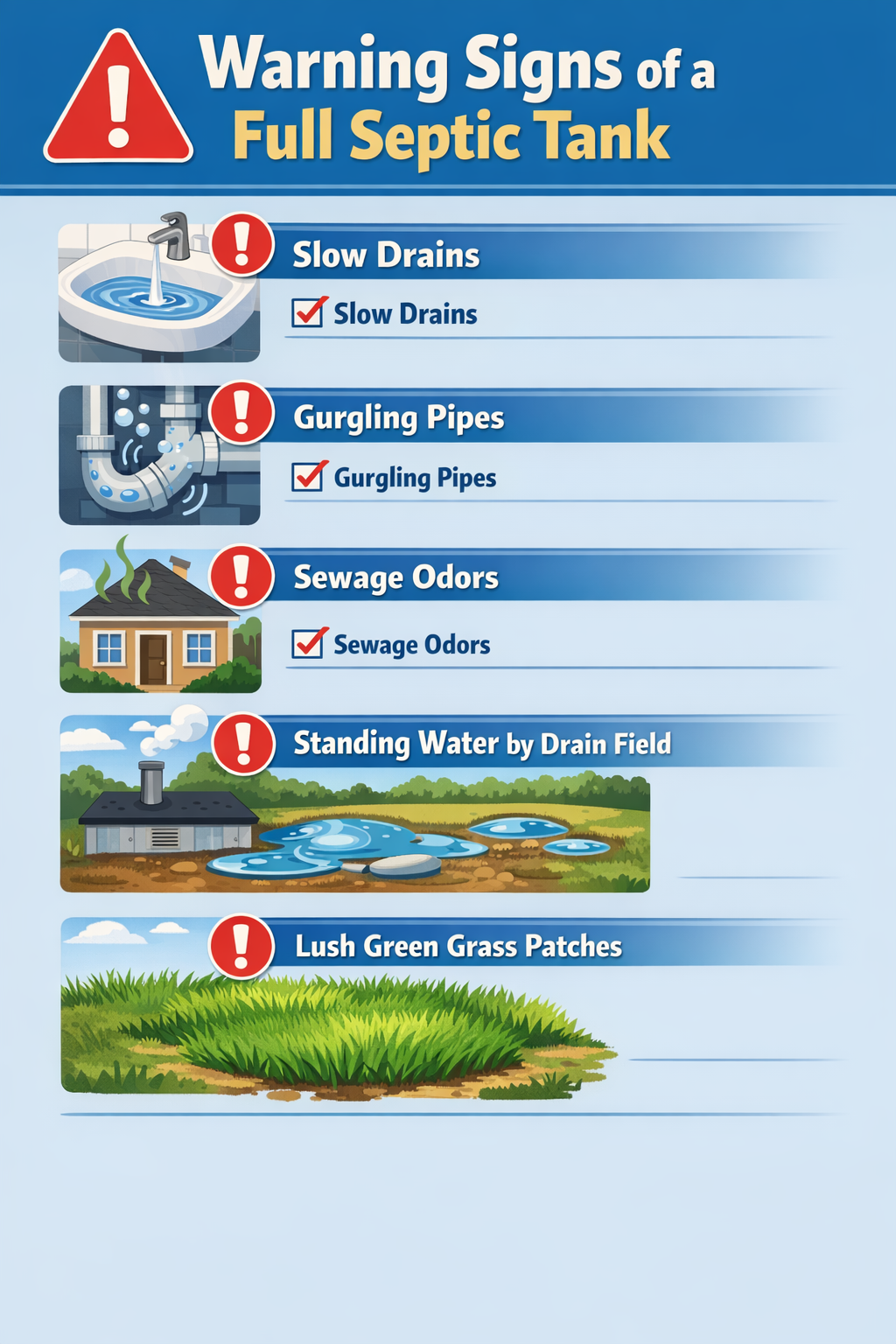
• Slow drains across multiple fixtures are the most immediate warning sign of a full septic tank
• Gurgling sounds in pipes indicate trapped air and often precede sewage backup
• Foul sewage odors inside or outside your home require immediate attention
• Standing water near the drain field signals serious system failure
• Unusually green grass over your septic area during dry periods indicates excess moisture
• Professional pumping is typically needed every 3-5 years depending on household size
• Emergency backup into your home requires immediate professional intervention
• Regular inspections every 1-2 years help catch problems early
Quick Answer
A septic tank is full when you notice slow drains across multiple fixtures, hear gurgling sounds in pipes, smell sewage odors, or see standing water near your drain field. These warning signs indicate your tank has reached capacity and needs professional pumping to prevent sewage backup into your home.
What Are the Most Common Warning Signs Your Septic Tank Is Full?
The most reliable indicators that your septic tank has reached capacity appear as plumbing problems throughout your home. Slow drains across multiple fixtures—sinks, showers, and toilets—represent the earliest and most common warning sign.
Primary warning signs include:
• Slow drainage in sinks, tubs, and showers
• Gurgling sounds from drains and toilets
• Sewage odors inside or outside your home
• Standing water pooling near the septic tank or drain field
• Unusually lush grass over the septic area during dry periods
• Sewage backup into toilets, sinks, or floor drains
Choose immediate action if: You notice multiple signs occurring together, especially if gurgling sounds accompany slow drains. This combination often precedes sewage backup within 24-48 hours.
A common mistake homeowners make is assuming slow drains indicate a simple clog. However, when drainage issues affect multiple fixtures simultaneously, the problem typically originates from your septic system rather than individual drain blockages.
How Can You Physically Check If Your Septic Tank Needs Pumping?
Professional inspection provides the most accurate assessment of your septic tank’s condition, but homeowners can perform basic visual checks around their property. A properly functioning septic tank should show no visible signs of distress in your yard or around your home.
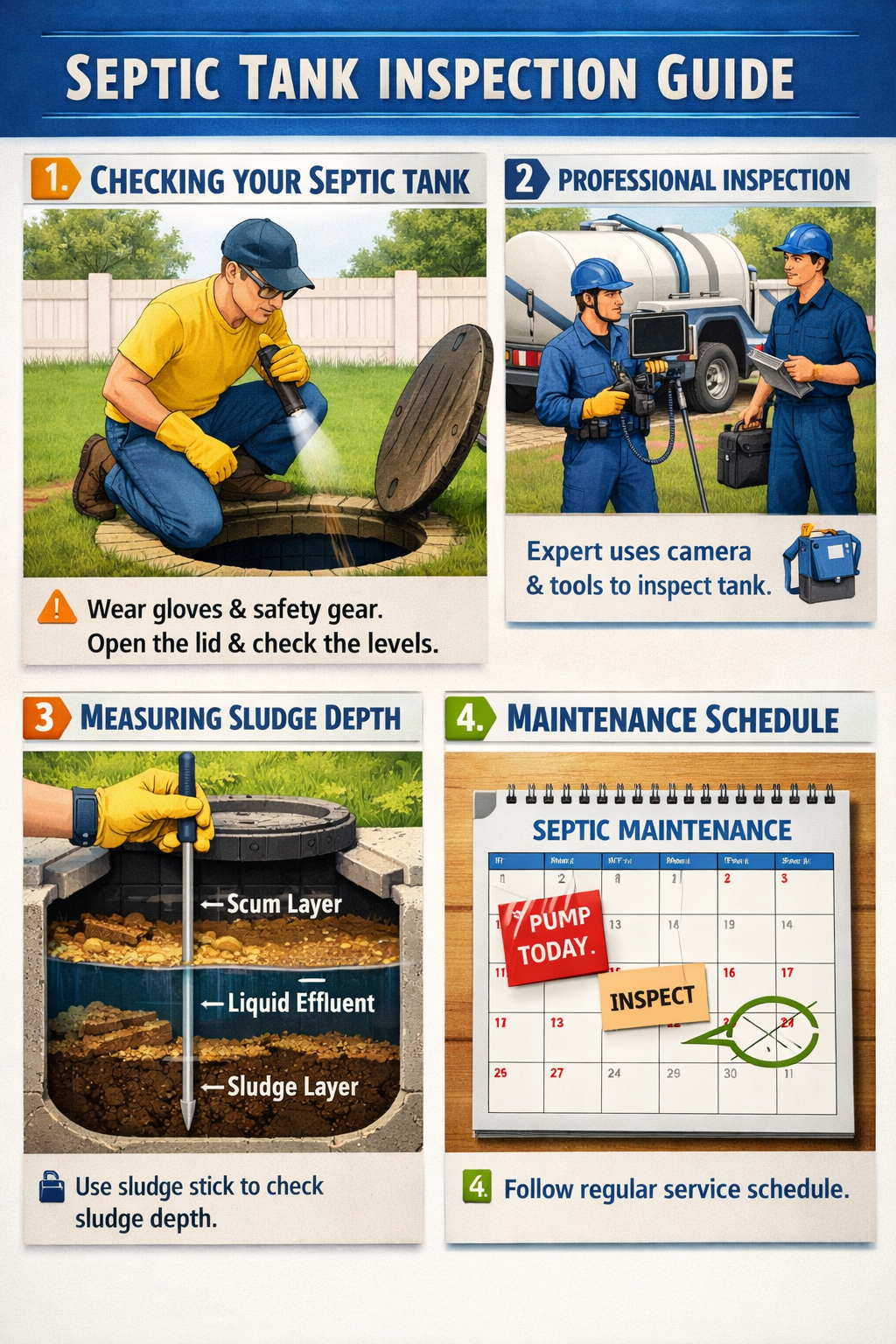
Visual inspection checklist:
• Locate your septic tank and drain field using property records or previous service documentation
• Check for standing water or wet spots over the tank and drain field area
• Look for unusually green or lush grass during dry periods
• Inspect around your home’s foundation for sewage odors or moisture
• Listen for gurgling sounds when running water or flushing toilets
Professional measurement involves:
• Sludge depth testing using specialized measuring tools
• Scum layer assessment at the tank’s surface
• Inlet and outlet pipe inspection for proper flow
• Drain field evaluation for absorption capacity
Choose professional inspection if: You’re unsure about any visual signs or haven’t had your system inspected in over two years. Attempting to open septic tank lids without proper safety equipment poses serious health risks.
FYI: Some links may be affiliate links, which means I may earn a small commission at no extra cost to you.
For homeowners looking to maintain their septic system between professional services, Septifix tablets can help break down waste and reduce buildup, potentially extending the time between pumpings when used as part of regular maintenance.
What Happens When Your Septic Tank Becomes Overfull?
An overfull septic tank creates a cascade of problems that escalate quickly from minor inconveniences to serious health hazards. When your tank reaches capacity, wastewater has nowhere to go except back toward your home or up to ground surface.
Immediate consequences include:
• Sewage backup into your home through toilets and drains
• Surface pooling of contaminated water in your yard
• Drain field failure as the system becomes overwhelmed
• Groundwater contamination posing environmental and health risks
• Structural damage to your septic system components
Health and safety risks:
• Bacterial contamination from exposure to raw sewage
• Toxic gas emissions including methane and hydrogen sulfide
• Pest attraction as insects and rodents are drawn to waste
• Property damage from sewage infiltration into your home
Financial impact:
Emergency septic repairs typically cost 3-5 times more than routine maintenance. A complete system replacement can range from $15,000 to $30,000, while regular pumping costs between $300-600 every few years.
Choose emergency service if: Sewage backs up into your home or you see standing water containing waste material in your yard. These situations require immediate professional intervention to protect your family’s health.
For more detailed information about the consequences of septic system failure, see our guide on what happens when your septic tank is full.
How Often Should You Check and Pump Your Septic Tank?
Regular maintenance prevents most septic emergencies and extends your system’s lifespan significantly. The frequency of pumping depends on your household size, tank capacity, and water usage patterns.
Recommended pumping schedule:
| Household Size | Tank Size | Pumping Frequency |
|---|---|---|
| 1-2 people | 1,000 gallons | Every 5-7 years |
| 3-4 people | 1,000 gallons | Every 3-5 years |
| 5-6 people | 1,000 gallons | Every 2-3 years |
| 3-4 people | 1,500 gallons | Every 4-6 years |
Inspection frequency:
• Professional inspection: Every 1-2 years
• Visual property check: Monthly during growing season
• Post-heavy usage inspection: After holidays or large gatherings
Factors that increase pumping frequency:
• High water usage from large families or frequent guests
• Garbage disposal use adds significant organic matter
• Harsh cleaning chemicals that kill beneficial bacteria
• Non-biodegradable items flushed down drains
Choose more frequent service if: Your household uses significantly more water than average, you have a garbage disposal, or you’ve experienced previous septic problems.
A common edge case occurs during extended dry periods when homeowners assume their system is fine because grass appears normal. However, reduced groundwater levels can mask underlying problems that become apparent when normal rainfall resumes.
What Should You Do Immediately If Your Septic Tank Is Full?
When you confirm your septic tank is full, immediate action prevents minor problems from becoming major disasters. The key is reducing system stress while arranging professional service as quickly as possible.
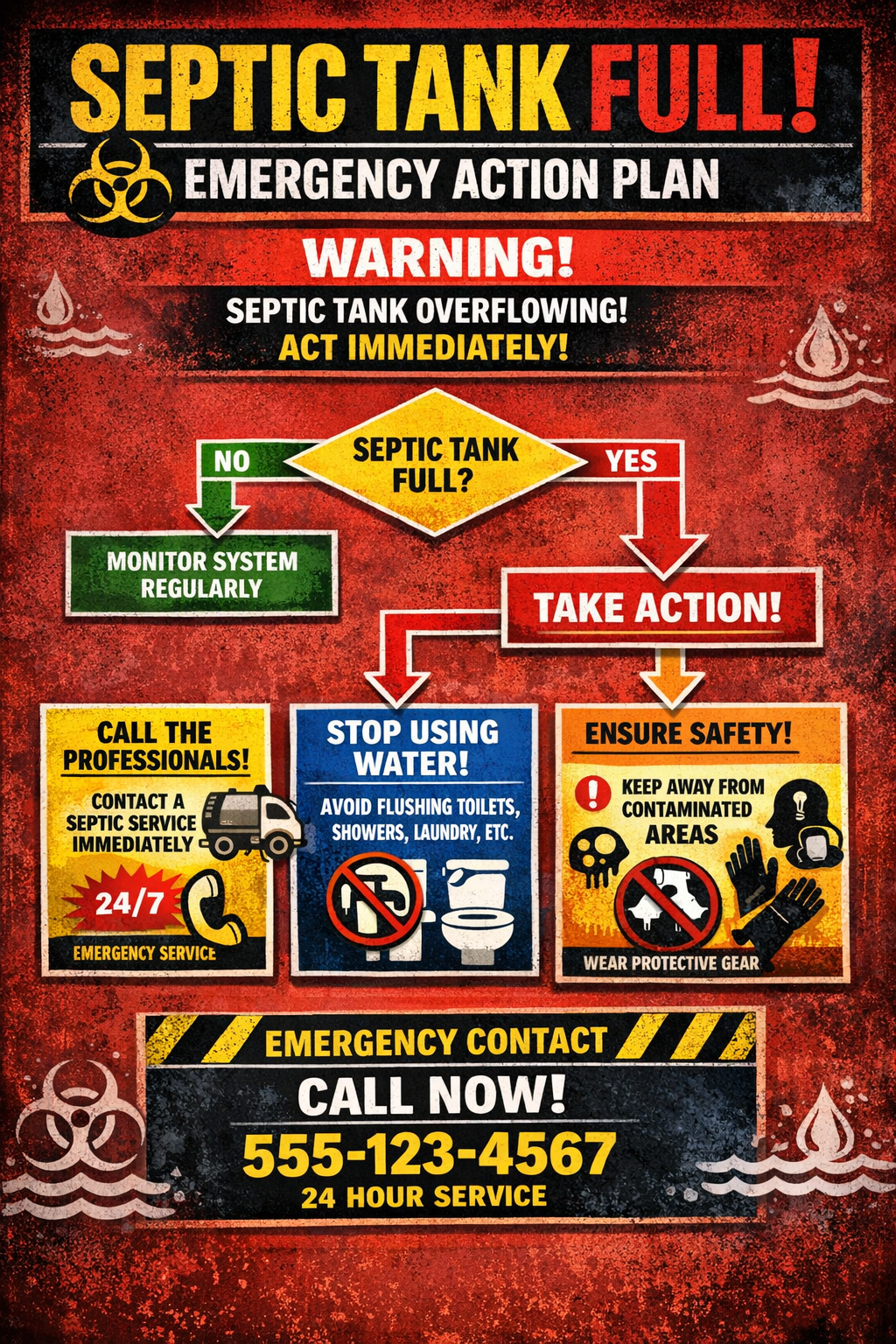
Immediate steps to take:
- Stop all water usage except essential needs
- Avoid flushing toilets unless absolutely necessary
- Don’t run washing machines or dishwashers
- Take shorter showers or use alternative facilities if possible
- Contact a licensed septic professional for emergency pumping
What NOT to do:
• Don’t use chemical drain cleaners which can damage your system
• Avoid adding septic additives claiming to solve full tank problems
• Don’t ignore the problem hoping it will resolve itself
• Never attempt DIY pumping without proper equipment and training
Emergency prioritization:
If sewage backs up into your home, treat it as a health emergency. Evacuate affected areas, avoid contact with contaminated water, and call both septic professionals and potentially your local health department.
Temporary measures:
While waiting for professional service, you can use proven septic treatments to help break down waste, though these won’t solve an overfull tank requiring immediate pumping.
Choose emergency service if: You see sewage backup, smell strong sewage odors inside your home, or notice rapid changes in multiple warning signs. Most reputable septic companies offer 24/7 emergency services for these situations.
For comprehensive guidance on septic emergencies, check our detailed resource on signs your septic tank needs maintenance.
How Can You Prevent Your Septic Tank From Getting Full Too Quickly?
Prevention costs far less than emergency repairs and keeps your septic system functioning efficiently for decades. Smart household practices significantly extend the time between pumpings while protecting your investment.[5]
Water conservation strategies:
• Install low-flow fixtures to reduce daily water volume
• Fix leaks immediately as even small drips add up over time
• Spread laundry loads throughout the week rather than doing multiple loads in one day
• Take shorter showers and consider water-efficient appliances
Waste management practices:
• Use septic-safe toilet paper that breaks down quickly
• Avoid flushing non-biodegradable items including feminine products and wipes
• Limit garbage disposal use or eliminate it entirely
• Dispose of grease and oils in trash rather than down drains
Chemical considerations:
• Choose biodegradable cleaning products that won’t kill beneficial bacteria
• Limit antibacterial soaps which can disrupt your tank’s natural processes
• Avoid harsh drain cleaners that damage pipes and tank components
Maintenance routine:
Regular use of bacterial treatments like Septifix tablets helps maintain healthy bacteria levels that break down waste efficiently, potentially extending time between professional pumpings when combined with proper household practices.
Choose professional guidance if: You’re unsure about any products or practices, or if your system requires pumping more frequently than expected despite following best practices.
For a complete maintenance strategy, see our essential septic tank care guide.
Helpful Resource for Septic System Maintenance
Maintaining a healthy septic system between professional services doesn’t have to be complicated. Septifix tablets offer a simple way to support your system’s natural waste breakdown process, helping reduce buildup and maintain proper bacterial balance. These easy-to-use treatments can be particularly helpful for busy homeowners who want to protect their septic investment with minimal effort.
While not a substitute for regular pumping and professional maintenance, quality bacterial treatments can help optimize your system’s performance and potentially extend the time between expensive pump-outs.
Conclusion
Knowing how to know if your septic tank is full empowers you to catch problems early and avoid costly emergencies. Watch for slow drains across multiple fixtures, gurgling sounds in pipes, sewage odors, and standing water near your drain field—these warning signs typically appear before serious backup occurs.
Take action now by:
• Scheduling a professional inspection if you haven’t had one in the past two years
• Creating a maintenance calendar based on your household size and usage patterns
• Implementing water conservation and waste management best practices
• Keeping contact information for licensed septic professionals readily available
Remember that approximately one in five households relies on septic systems, making proper maintenance a widespread responsibility. Regular attention to your system protects not only your property but also local groundwater and environmental health.
Don’t wait for emergency signs to appear. Proactive septic care costs a fraction of emergency repairs and keeps your home’s wastewater system functioning reliably for decades. Start with a professional inspection to establish your system’s current condition, then follow a regular maintenance schedule tailored to your specific situation.
FAQ
How do I know if my septic tank is full without calling a professional?
Look for slow drains in multiple fixtures, gurgling sounds from pipes, sewage odors inside or outside your home, and standing water near your drain field. These signs typically indicate a full tank requiring attention.
What’s the difference between a full septic tank and a clogged drain?
A clogged drain affects one fixture, while a full septic tank causes slow drainage across multiple fixtures simultaneously. Septic problems also produce gurgling sounds and sewage odors throughout your home.
How quickly can a septic tank go from normal to overfull?
Depending on usage and existing sludge levels, a septic tank can progress from normal operation to problematic fullness within weeks, especially during high-usage periods or after heavy rains.
Can I use my washing machine if my septic tank is full?
Avoid using your washing machine when your septic tank is full, as the additional water volume can cause immediate sewage backup into your home. Wait until after professional pumping.
How much does emergency septic pumping cost compared to routine service?
Emergency septic pumping typically costs 2-3 times more than scheduled service, often ranging from $800-1,500 compared to $300-600 for routine maintenance pumping.
What time of year is best for septic tank pumping?
Spring and fall offer ideal conditions for septic pumping, avoiding frozen ground in winter and peak usage periods during summer when many families host gatherings.
How long does septic tank pumping take?
Professional septic tank pumping typically takes 2-4 hours, including inspection time. The actual pumping process usually requires 30-60 minutes depending on tank size and access.
Can heavy rain cause my septic tank to appear full?
Yes, heavy rain can overwhelm your drain field and cause temporary backup symptoms. However, if problems persist after dry weather returns, your tank likely needs pumping.
Is it normal to smell septic odors occasionally?
Occasional faint odors during windy conditions may be normal, but persistent or strong sewage smells inside your home always indicate a problem requiring immediate attention.
What happens if I ignore signs that my septic tank is full?
Ignoring a full septic tank leads to sewage backup into your home, drain field failure, environmental contamination, and repair costs that can exceed $20,000 for complete system replacement.
How do I find my septic tank location?
Check your property survey, contact your local health department for permit records, or hire a professional with locating equipment. Most tanks are 10-25 feet from your home.
Can I pump my septic tank myself?
DIY septic pumping is dangerous and typically illegal due to health and environmental regulations. Professional pumping ensures proper waste disposal and system inspection.
References
[1] Signs Septic Tank Is Full – https://www.crystalhpe.com/signs-septic-tank-is-full/
[2] Warning Signs Septic Tank Full – https://tlsepticpumper.com/septic-system-education/warning-signs-septic-tank-full/
[3] Septic Tank Problems Signs 2025 – https://www.lanikseptic.com/septic-tank-problems-signs-2025/
[4] Signs Your Septic Tank Is Full And Needs Emptying – https://farmersseptic.com/signs-your-septic-tank-is-full-and-needs-emptying/
[5] Septic Tank Full – https://www.adt.com/resources/septic-tank-full