Last updated: March 8, 2026
Key Takeaways
- Regular pumping every 3-5 years prevents system failure and costly repairs
- Avoid flushing harmful items like wipes, grease, and chemicals that disrupt bacterial balance
- Professional inspections every 3 years catch problems before they become expensive emergencies
- Water conservation reduces strain on your system and extends its lifespan
- Proper drain field maintenance protects the final stage of waste treatment
- Skip commercial additives – they’re unnecessary and potentially harmful
- Keep detailed records of all maintenance for warranty and regulatory compliance
- Early problem detection saves thousands compared to full system replacement
Quick Answer
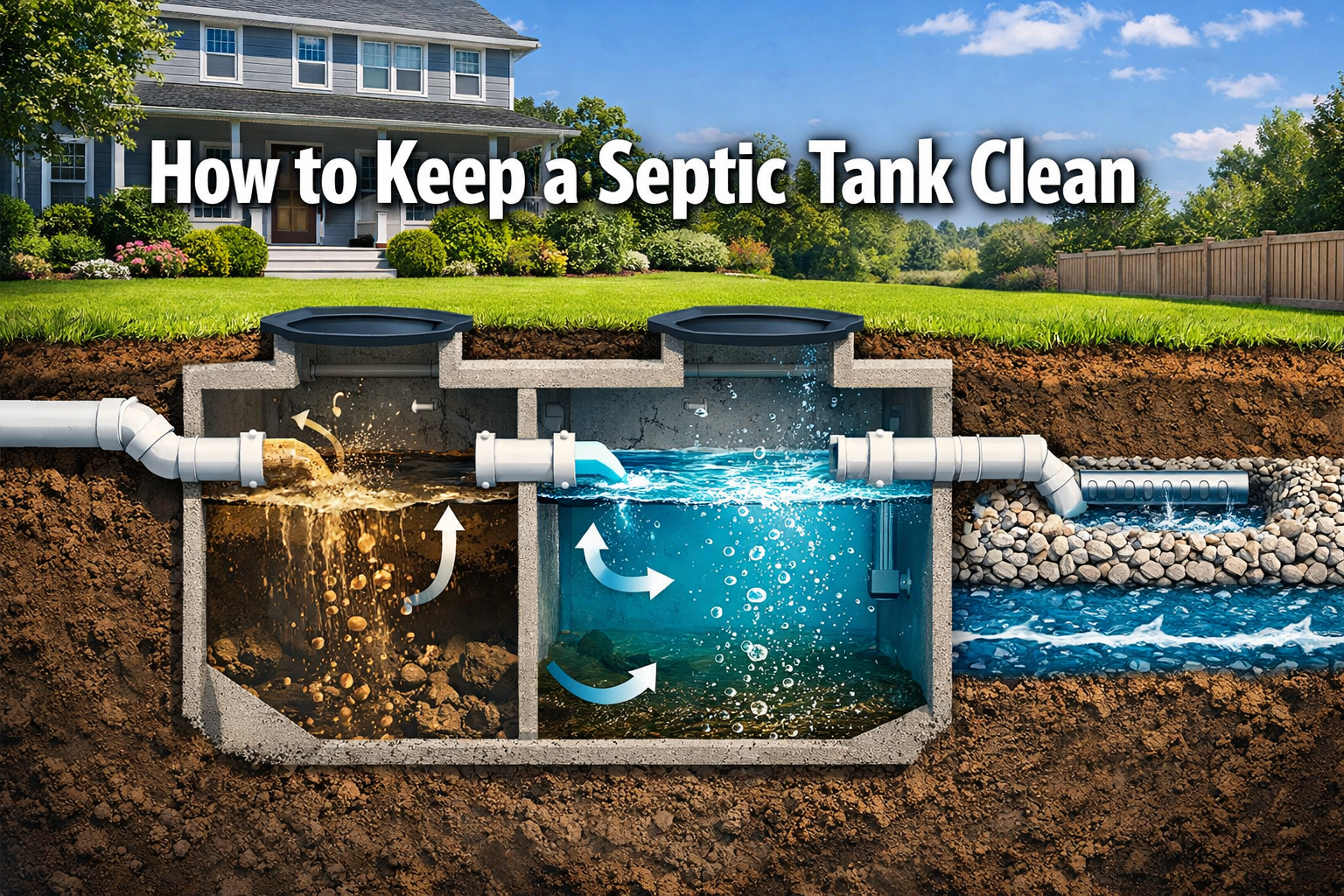
Learning how to keep a septic tank clean involves three essential practices: schedule regular pumping every 3-5 years, avoid flushing harmful materials that kill beneficial bacteria, and maintain your drain field properly. Professional inspections every three years help catch issues early, while simple daily habits like conserving water and using septic-safe products keep your system running efficiently for decades.
How Often Should You Pump to Keep a Septic Tank Clean?
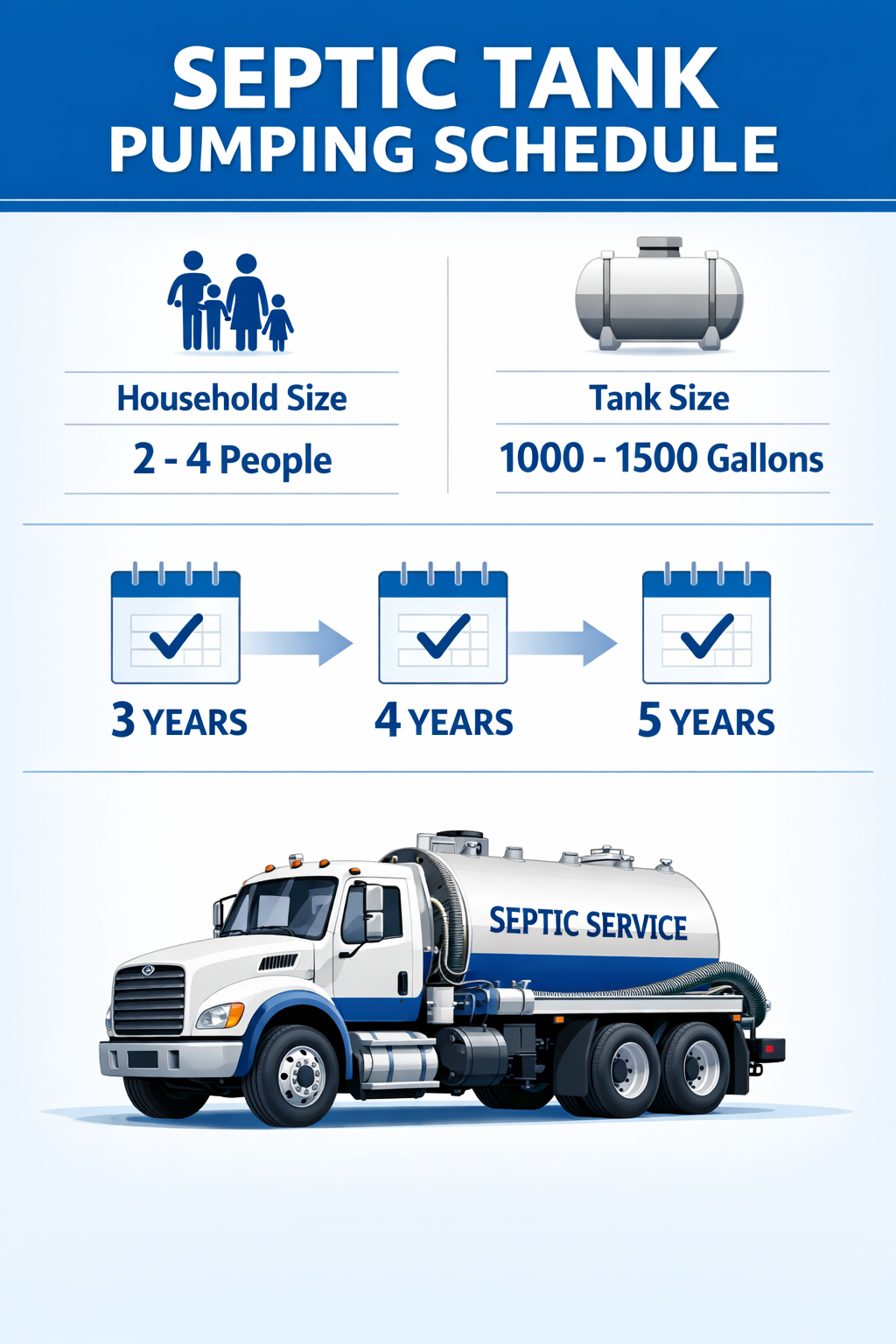
Most residential septic tanks need pumping every 3-5 years to maintain proper function. The exact schedule depends on your household size, tank capacity, and water usage patterns.
Here’s the breakdown by tank size and household:
- 1,000-gallon tank with 4 residents: Pump every 3 years
- 1,500-gallon tank with 4 residents: Pump every 4 years
- Smaller households (1-2 people): Can often extend to 5 years
- Larger households (5+ people): May need pumping every 2-3 years
Professional pumping costs a few hundred dollars but prevents system replacement costs of $15,000-$50,000. During pumping, technicians also inspect your tank for cracks, check baffles, and measure sludge levels.
Common mistake: Waiting for warning signs like slow drains or odors means you’ve already waited too long. Stick to the schedule based on your household size, not symptoms.
Pro tip: If you use a garbage disposal, reduce your pumping interval by one year. Garbage disposals add up to 50% more solids to septic tanks.
For more specific guidance on timing, check our complete pumping schedule guide.
What Should You Never Put Down the Drain?
Never flush wipes (even “flushable” ones), grease, chemicals, or non-biodegradable items that kill beneficial bacteria or cause clogs. These materials disrupt the natural waste breakdown process and require more frequent pump-outs.
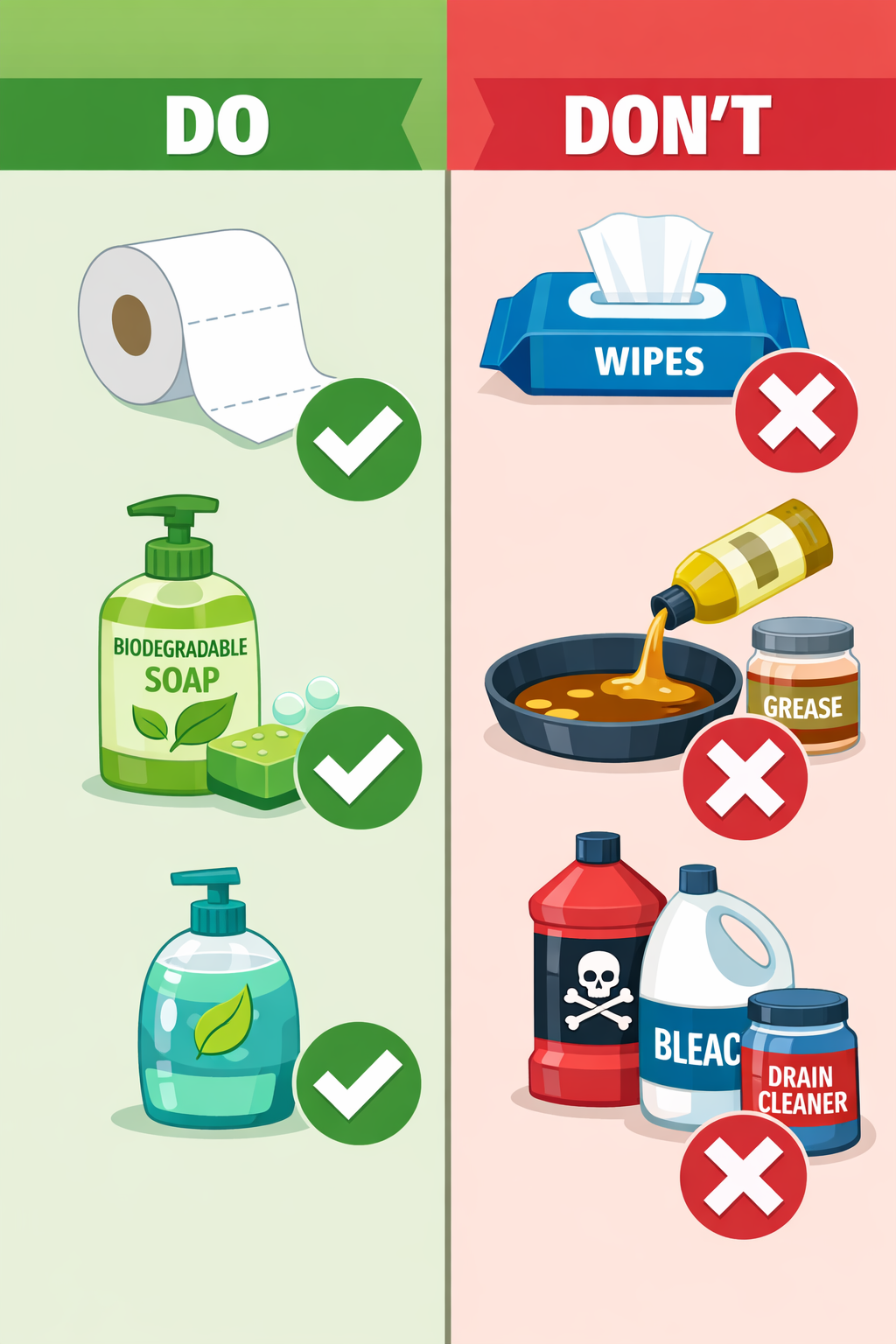
Prohibited Items That Damage Your System:
Bathroom items:
- Baby wipes, disinfecting wipes, feminine hygiene products
- Cat litter, dental floss, contact lenses
- Medications (they kill beneficial bacteria)
Kitchen waste:
- Cooking grease and oils
- Coffee grounds, eggshells
- Food scraps (even with garbage disposal)
Household chemicals:
- Bleach, antibacterial soaps in large quantities
- Paint, solvents, pesticides
- Chemical drain cleaners
Safe alternatives: Use boiling water or a drain snake for clogs instead of chemical drain openers. Choose biodegradable soaps and detergents when possible.
Water conservation tip: Limit laundry to 1-2 loads daily and fix leaky faucets immediately. Each laundry load uses about 53 gallons of water, and leaks can overwhelm your system.
FYI: Some links may be affiliate links, which means I may earn a small commission at no extra cost to you.
If you want a simple way to maintain bacterial balance while following these guidelines, Septifix tablets can help break down waste naturally with just one monthly flush. This isn’t required, but many homeowners find it useful for preventing odors and maintaining proper waste breakdown between professional services.
For a comprehensive list of items to avoid, see our complete guide on what not to put in septic tanks.
How Do Professional Inspections Keep Your Tank Clean?
Professional inspections every 3 years identify problems before they cause system failure. Technicians check sludge levels, inspect baffles, and test the drain field to ensure everything functions properly.
What inspectors check:
- Sludge and scum levels: Tanks need pumping if scum is within 6 inches of the outlet or sludge is within 12 inches
- Structural integrity: Cracks, loose lids, damaged baffles
- Drain field condition: Standing water, odors, or soggy areas
- Inlet and outlet pipes: Proper flow and no blockages
Alternative systems with mechanical components (like pumps or aerators) need annual inspections or more frequent checks per manufacturer recommendations.
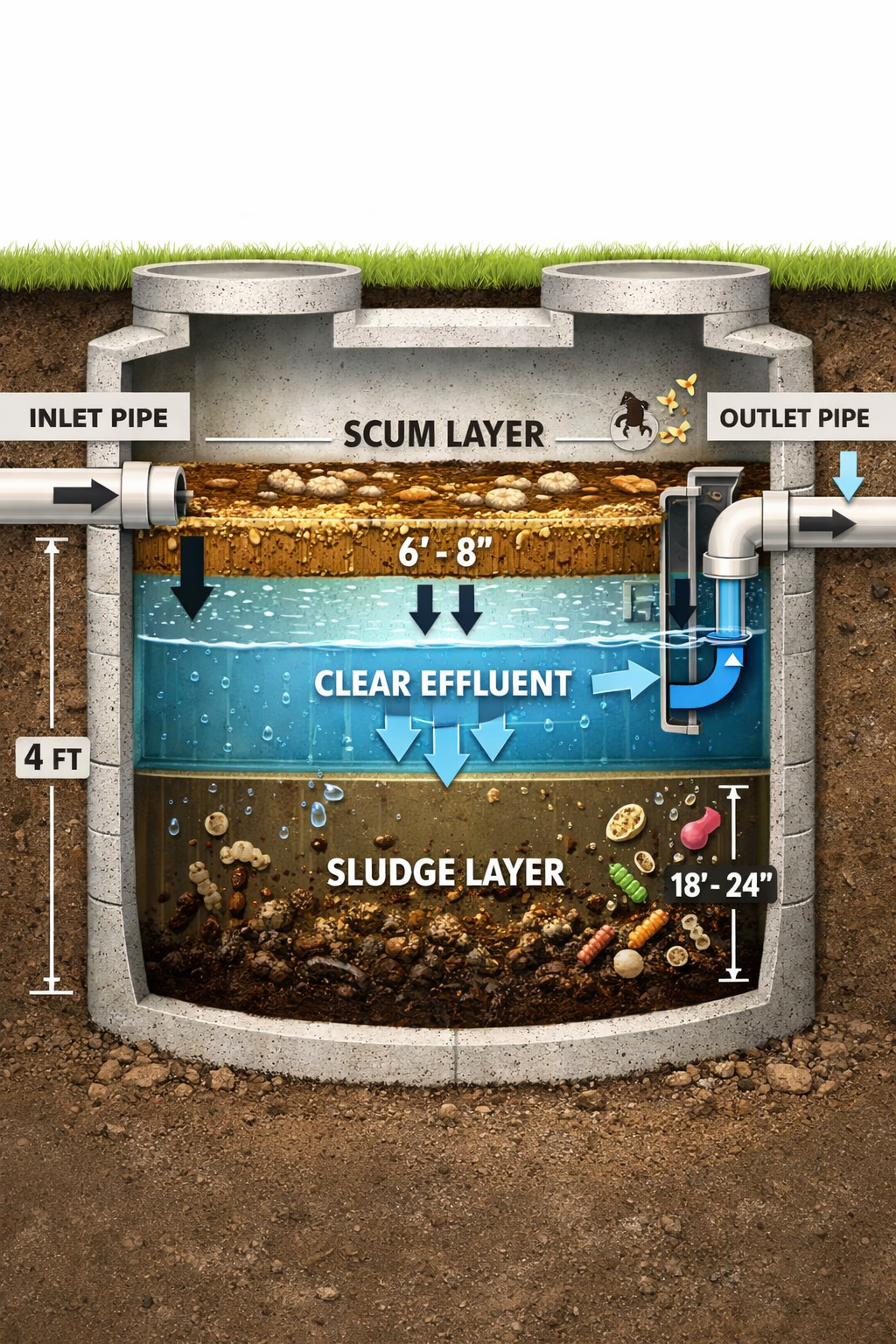
Record keeping matters: Many states now require documentation of all inspections and pumping. Keep receipts and inspection reports for warranty claims and regulatory compliance.
Cost comparison: Annual inspections cost $100-300 but catch issues that could lead to $15,000+ system replacements.
Choose wisely: Hire certified septic professionals who provide detailed written reports. Avoid companies that push unnecessary additives or treatments during inspections.
Learn more about essential maintenance checklists to stay on top of your system’s needs.
How Does Proper Drain Field Care Support Tank Cleanliness?
Protecting your drain field ensures the final treatment stage works correctly, preventing backup into your tank. A failing drain field forces waste back into the tank, disrupting the entire cleaning process.
Essential drain field protection:
- Divert surface water from downspouts and irrigation away from the area
- Plant only grass over the drain field – no trees, shrubs, or gardens
- Never drive or park vehicles over the drain field
- Avoid compacting soil with heavy equipment or foot traffic
Warning signs of drain field problems:
- Standing water or soggy areas above the field
- Strong sewage odors outdoors
- Unusually green grass over the drain field
- Sewage backup in the house
Water management tip: Excess water from heavy rains or irrigation can saturate the drain field, causing system failure. Install gutters and redirect water at least 10 feet away from the system.
Recovery time: If your drain field becomes saturated, it may need several weeks to dry out before functioning properly again. During this time, reduce water usage significantly.
For more details on drain field issues, check our guide on septic tank overflow causes and prevention.
Why Should You Avoid Commercial Septic Additives?
Commercial septic tank additives, cleaners, yeast, and sugar are unnecessary and potentially harmful to your system. Your septic tank naturally contains all the bacteria needed for proper waste breakdown.
Problems with additives:
- May disrupt the natural bacterial balance
- Can damage tank components or pipes
- Often make false claims about reducing pumping needs
- Waste money on unnecessary products
What actually works: Regular pumping, proper waste disposal, and water conservation maintain your system better than any additive.
The science: Septic tanks develop their own ecosystem of beneficial bacteria from human waste. Adding external products can upset this balance and reduce efficiency.
Save your money: Instead of buying additives, invest in professional maintenance and water-efficient fixtures. These provide real, measurable benefits.
For natural maintenance approaches, see our guide on eco-friendly septic care methods.
What Daily Habits Keep Your Septic Tank Functioning Well?
Simple daily practices prevent most septic problems and extend your system’s lifespan significantly. Consistency with these habits matters more than any single major action.
Water conservation habits:
- Take shorter showers (save 10-25 gallons per shower)
- Run dishwashers and washing machines only with full loads
- Install low-flow toilets (1-1.6 gallons per flush vs. older 3-5 gallon models)
- Fix leaks immediately – a running toilet can waste 200+ gallons daily
Bathroom practices:
- Use toilet paper sparingly and choose septic-safe brands
- Avoid antibacterial soaps that kill beneficial bacteria
- Space out laundry loads throughout the week
Kitchen habits:
- Scrape plates instead of rinsing food down the drain
- Collect cooking grease in containers for trash disposal
- Use biodegradable dish soap when possible
Maintenance reminders:
- Keep pumping and inspection records easily accessible
- Monitor for warning signs of a full tank
- Schedule services before problems develop
These simple changes can extend your system’s life from 20-30 years to 30-40 years with proper care.
Helpful Resource for Simple Maintenance
If you want a straightforward approach to ongoing septic care, Septifix tablets offer a convenient monthly maintenance option. Each tablet contains beneficial bacteria that help break down waste, reduce odors, and support your system’s natural processes. Simply flush one tablet monthly – no measuring, mixing, or complicated schedules required.
While not essential, many homeowners appreciate having this simple backup for maintaining bacterial balance, especially after heavy antibiotic use or when hosting guests who might stress the system.
How to Recognize When Your Tank Needs Immediate Attention
Act quickly if you notice slow drains, sewage odors, or wet spots in your yard – these indicate serious problems requiring immediate professional help. Ignoring these signs leads to expensive emergency repairs.
Emergency warning signs:
- Sewage backing up into the house
- Strong odors inside or outside the home
- Gurgling sounds from drains or toilets
- Standing water around the septic area
Immediate actions:
- Reduce water usage to minimum levels
- Call a septic professional within 24 hours
- Avoid chemical drain cleaners that worsen problems
- Document the issue with photos for insurance claims
Preventive monitoring: Check your system monthly for early warning signs. Look for unusually green grass, soft spots in the yard, or any sewage odors during routine yard work.
Learn more about recognizing full tank symptoms and what happens when systems back up.
FAQ
How often should I pump my septic tank?
Most residential tanks need pumping every 3-5 years, depending on household size and tank capacity. A 1,000-gallon tank serving 4 people requires pumping every 3 years, while a 1,500-gallon tank serving the same household needs pumping every 4 years.
Can I use bleach with a septic system?
Use bleach sparingly. Small amounts for cleaning won’t harm your system, but large quantities kill beneficial bacteria. Choose biodegradable cleaners when possible and avoid antibacterial products for daily use.
Are flushable wipes really safe for septic tanks?
No. “Flushable” wipes don’t break down like toilet paper and can clog pipes or accumulate in your tank. Stick to septic-safe toilet paper only.
How much does septic tank pumping cost?
Professional pumping typically costs a few hundred dollars, depending on your location and tank size. This investment prevents system failure that could cost $15,000-$50,000 to replace.
Do I need septic tank additives?
No. Commercial additives are unnecessary and potentially harmful. Your septic tank naturally develops the bacteria needed for proper waste breakdown. Regular pumping and proper usage maintain your system effectively.
What should I do if my septic system backs up?
Immediately reduce water usage, avoid chemical drain cleaners, and call a septic professional within 24 hours. Document the problem with photos for potential insurance claims.
How can I tell if my drain field is failing?
Watch for standing water above the drain field, strong sewage odors outdoors, unusually green grass over the field, or sewage backup in your house. These signs require immediate professional attention.
Is it safe to plant trees near my septic system?
Plant trees at least 30 feet away from your septic system. Tree roots can damage pipes and tanks. Only plant grass over the drain field area.
How long do septic systems typically last?
Well-maintained septic systems can last 30-40 years. Poor maintenance reduces lifespan to 15-20 years and increases the likelihood of expensive emergency repairs.
Can I install a garbage disposal with a septic system?
While possible, garbage disposals add up to 50% more solids to your tank and require more frequent pumping. If you install one, reduce your pumping interval by one year.
What records should I keep for my septic system?
Maintain records of all pumping services, inspections, repairs, and any system modifications. Many states require documentation for regulatory compliance, and records help with warranty claims.
How do I find my septic tank for maintenance?
Check your home’s original building permits or contact your local health department for system records. You can also hire a septic professional to locate and mark your tank and drain field boundaries.
Conclusion
Learning how to keep a septic tank clean doesn’t require complex procedures or expensive products – just consistent good habits and regular professional maintenance. The three pillars of septic care are scheduling pumping every 3-5 years, avoiding harmful materials that disrupt bacterial balance, and protecting your drain field from damage.
Your next steps:
- Schedule an inspection if it’s been more than 3 years since your last one
- Calculate your pumping schedule based on household size and tank capacity
- Audit your household habits and eliminate septic-damaging products
- Create a maintenance calendar with reminders for inspections and pumping
- Locate and document your septic system components for future reference
Remember that preventive maintenance costs hundreds of dollars but prevents system replacement costs of $15,000-$50,000. The small investment in regular care pays enormous dividends in system longevity and peace of mind.
For ongoing support with your septic system care, explore our comprehensive maintenance tips and essential care guides to keep your system running smoothly for decades.
References
[1] How Care Your Septic System – https://www.epa.gov/septic/how-care-your-septic-system
[2] Septic Tanks Preventative Routine Maintenance – https://des.sc.gov/permits-regulations/septic-tanks/homeowner-resources/septic-tanks-preventative-routine-maintenance
[3] Why Regular Septic Maintenance Can Save You Thousands In 2026 – https://www.metroseptic.com/blog/why-regular-septic-maintenance-can-save-you-thousands-in-2026/
[4] Septic Tanks In New Jersey What You Need To Know – https://www.arrowsewernj.com/blog/septic-tanks-in-new-jersey-what-you-need-to-know/
[5] Nj Septic Regulations For 2026 – https://www.atsenvironmental.com/blog/nj-septic-regulations-for-2026/