
How to Find Septic Tank Lid: Complete Guide for Homeowners

Last updated: February 20, 2026
Key Takeaways
• Septic tank lids are typically buried 1 foot deep on average, ranging from 4 inches to 4 feet underground
• Modern systems have two lids (inlet and outlet), while older tanks usually have one central access point
• Start by checking property records and as-built diagrams for the most reliable location information
• Use visual indicators like raised areas, unusual vegetation, or rectangular depressions to narrow your search
• Professional soil probes and metal detectors can help locate buried lids without extensive digging
Quick Answer
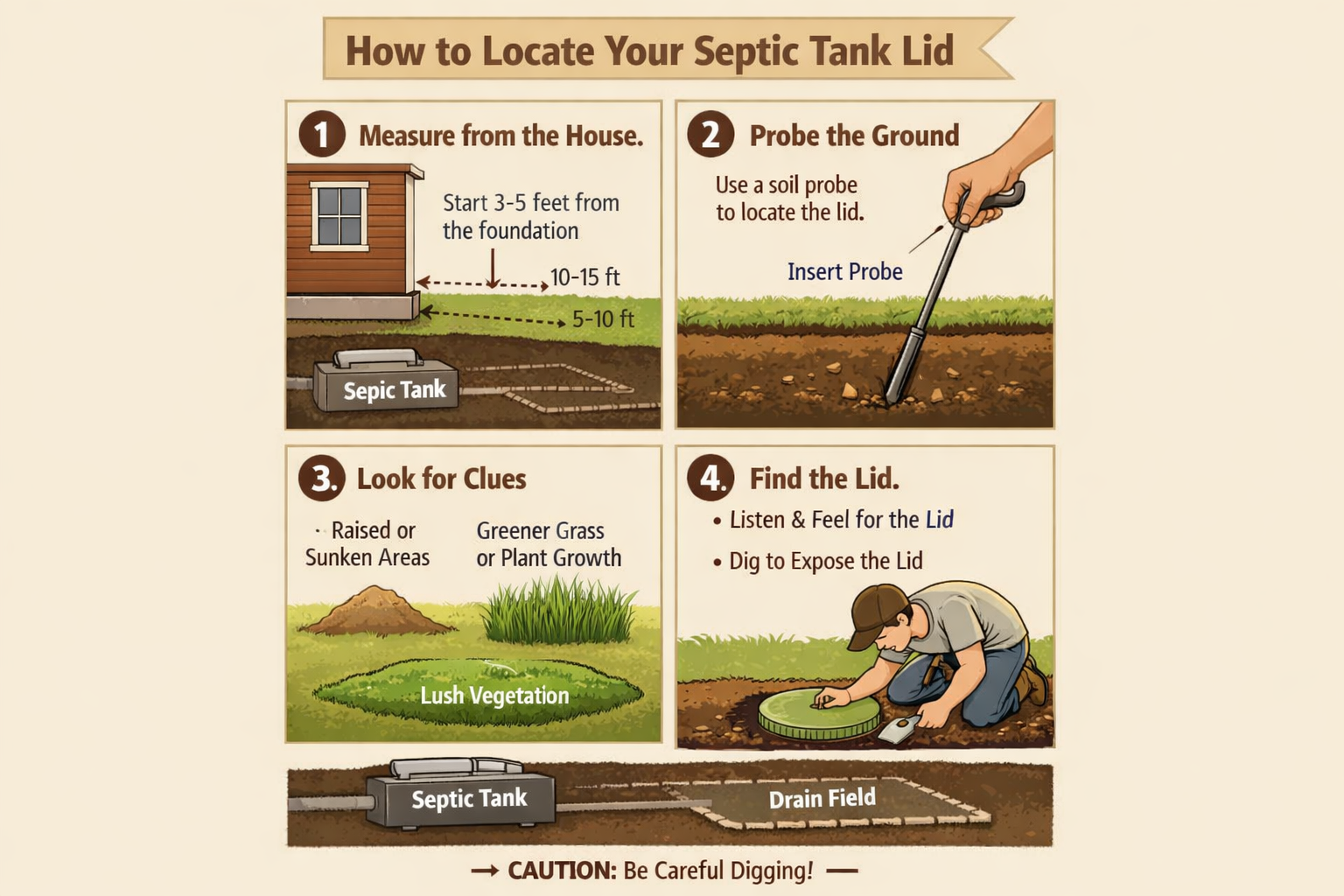
Finding your septic tank lid starts with checking your property records for tank location diagrams, then looking for visual clues like slightly raised ground or lush vegetation in your yard. Most lids are buried about 1 foot deep and located 5-25 feet from your house. You can use a soil probe in a grid pattern to locate the tank boundaries, then dig carefully to expose the access points.
Picture this: you need to schedule septic maintenance, but you’re staring at your yard with no idea where your tank lid is buried. This common homeowner challenge doesn’t have to turn into an expensive guessing game. Learning how to find septic tank lid locations saves you time, money, and prevents the frustration of unnecessary digging.
What Is a Septic Tank Lid and Why Do You Need to Find It?
A septic tank lid is the access point that allows professionals to inspect, pump, and maintain your septic system. These lids provide entry to the tank’s interior where waste separation and initial treatment occur.
Modern septic systems typically feature two lids – one at the inlet where waste enters from your house, and another at the outlet where partially treated water flows to the drain field. Older systems installed before 1975 usually have just one central access point.
Tank lids serve several critical functions:
• Inspection access for checking waste levels and tank condition
• Pumping entry point for removing accumulated solids every 3-5 years
• Repair access when system components need maintenance
• Safety barrier to prevent accidental entry into the tank
Choose professional maintenance over DIY repairs if your system shows signs of backup or failure. However, knowing your lid locations helps you prepare for service calls and reduces technician search time.
Where Are Septic Tank Lids Typically Located?
Septic tank lids are positioned 5-25 feet from your home’s foundation, following local code requirements that ensure proper distance from the house while maintaining reasonable access for maintenance.
Standard placement patterns include:
• Distance from house: 5-25 feet from the foundation
• Burial depth: 1 foot deep on average, ranging from 4 inches to 4 feet
• Tank orientation: Usually rectangular, approximately 5 by 8 feet in size
• Lid positioning: Modern tanks have lids at opposite ends (inlet/outlet)
Common location factors:
The tank is typically positioned downhill from your house to allow gravity flow, and located where soil conditions support proper drainage. Avoid searching near driveways, patios, or other paved areas where tanks are rarely installed.
Edge case consideration: In areas with high water tables or rocky soil, tanks may be installed at shallower depths or in alternative configurations that don’t follow standard patterns.
How to Find Septic Tank Lid Using Property Records
Consulting your property records and as-built diagrams represents the easiest and most reliable method for locating septic tank lids. This approach saves hours of searching and prevents unnecessary yard damage.
Start with these document sources:
• Building permits from your local building department
• As-built drawings filed with permit applications
• Property surveys that show septic system placement
• Home inspection reports from when you purchased the property
• Previous service records from septic companies
What to look for in the documents:
Property diagrams typically show the tank as a rectangle with measurements from fixed reference points like your house corners, driveway edges, or property lines. Look for notations indicating “ST” (septic tank), “access,” or specific measurements.
If records are unavailable: Contact your local health department or building office, as they often maintain septic system records even when homeowners don’t have copies. Many jurisdictions require system diagrams for permit approval.
Pro tip: Create your own reference map once you locate the lids, including measurements from permanent landmarks. This documentation helps future service providers and adds value if you sell your home.
For ongoing septic system care, consider learning about proper maintenance practices to keep your system functioning efficiently between service visits.
Visual Signs That Indicate Septic Tank Lid Locations
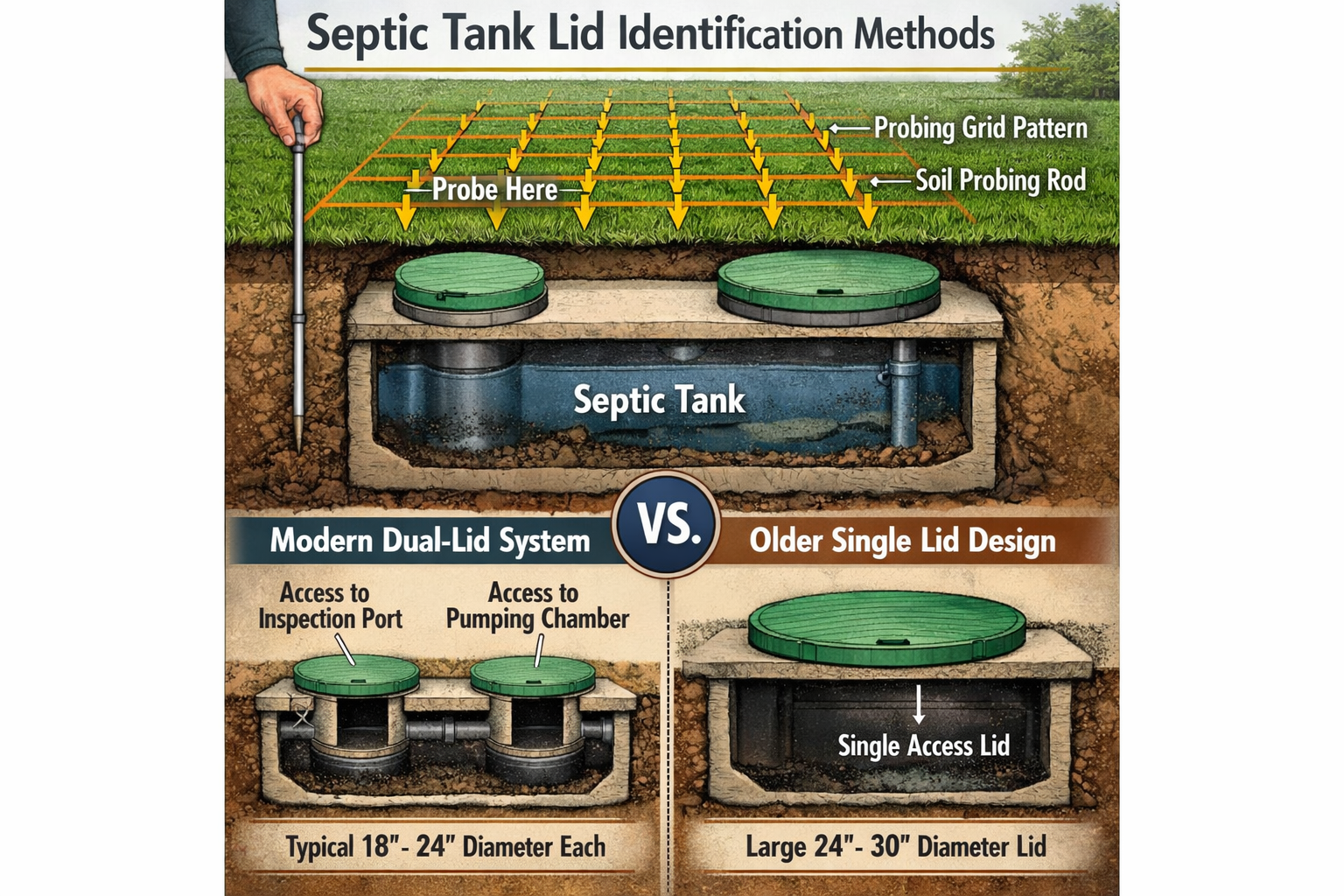
Visual indicators in your yard can reveal septic tank lid locations without any digging. These surface clues result from the tank’s presence underground and the settling that occurs around buried structures.
Look for these telltale signs:
• Slightly raised areas where soil has settled differently over the tank
• Rectangular depressions that outline the tank’s footprint
• Unusually lush vegetation due to nutrient-rich soil above the tank
• Bare patches where grass struggles to grow over compacted fill
• Linear patterns in grass color or growth that follow tank edges
Seasonal timing matters: Spring and fall often provide the clearest visual contrast as grass growth patterns become more apparent. Snow melt can also reveal ground temperature differences that highlight buried structures.
Vegetation patterns to notice:
Grass directly above septic tanks often appears greener and grows faster due to the nutrient content below. However, in some cases, you might see slower growth if the tank is buried too shallow and restricts root development.
Common mistake: Don’t assume the first raised area you find is the tank lid. Buried utility lines, old foundations, or other structures can create similar surface patterns. Confirm your findings with probing before digging.
FYI: Some links may be affiliate links, which means I may earn a small commission at no extra cost to you.
Once you locate your tank, maintaining proper bacterial balance becomes essential for system health. If you want something structured to support your septic system’s biological processes, Septifix tablets can help keep your system clean and efficient by breaking down waste and reducing buildup with minimal effort.
Step-by-Step Guide: How to Find Septic Tank Lid with Basic Tools
This systematic approach helps you locate buried septic tank lids using common tools and methodical searching techniques. Start with the least invasive methods before progressing to physical probing.
Tools you’ll need:
• Soil probe or long metal rod (5-6 feet)
• Measuring tape
• Spray paint or flags for marking
• Shovel for final excavation
• Work gloves and safety glasses
Step 1: Establish your search area
Based on property records or the 5-25 foot rule from your house, mark a search zone using spray paint or flags. Focus on areas that align with your main sewer line’s path.
Step 2: Create a probing grid
Mark a grid pattern with 2-foot intervals across your search area. This systematic approach ensures you don’t miss the tank while avoiding excessive probing.
Step 3: Probe methodically
Push your soil probe straight down at each grid point. You’ll feel a solid surface when you hit the tank top, typically 1-4 feet down. The probe will penetrate soil easily but stop abruptly at concrete or fiberglass.
Step 4: Map the tank boundaries
Once you hit the tank, probe around the edges to determine its size and orientation. Most tanks are rectangular, so finding one corner helps you locate the others.
Step 5: Locate the lid positions
Modern tanks have lids at opposite ends, while older systems typically have one central access point. Probe the tank surface to find areas where your rod penetrates slightly – these indicate lid locations.
Step 6: Excavate carefully
Dig down to expose the lid, working slowly to avoid damaging the tank or lid structure. Clear enough area around the lid for safe access during maintenance.
Safety reminder: Never enter a septic tank or remove lids without proper safety equipment and professional supervision. Tank gases can be deadly.
For comprehensive guidance on septic system location techniques, check our detailed guide on how to locate septic tanks for maintenance.
Tools and Equipment for Locating Buried Septic Tank Lids
The right tools make septic tank lid location faster, more accurate, and less damaging to your landscape. Choose equipment based on your soil conditions and the depth of your buried tank.
Essential hand tools:
• Soil probe: 5-6 foot steel rod with pointed tip for penetrating soil
• Metal detector: Detects metal components in tank lids and fittings
• Measuring tape: 25-50 foot tape for accurate distance measurements
• Marking supplies: Spray paint, flags, or stakes for grid layout
Soil probe selection:
Choose a probe with comfortable grip and sufficient length for your area’s typical burial depths. A 1/4-inch diameter steel rod works well in most soil types, while sandy areas may require a wider probe for better feedback.
Metal detector considerations:
Standard metal detectors can locate tanks with metal components, but many modern tanks use plastic or fiberglass construction. Focus on detecting metal risers, lids, or reinforcement materials rather than the tank itself.
Professional equipment options:
Electronic locating equipment provides rapid identification of buried structures, though this typically requires professional service. Ground-penetrating radar offers the most accurate results but involves significant cost for occasional use.
When to upgrade tools:
If basic probing fails after systematic searching, consider renting professional-grade equipment or hiring a locating service. Rocky soil, deep burial, or large search areas may justify equipment rental costs.
Tool maintenance tip: Clean and dry metal tools after use to prevent rust. Store probes in a dry location and check metal detector batteries regularly if you own one for ongoing property maintenance.
Common Mistakes When Searching for Septic Tank Lids
Avoiding these frequent errors saves time, prevents property damage, and ensures you locate the correct access points for your septic system maintenance needs.
Mistake #1: Starting with digging instead of research
Many homeowners immediately start digging based on guesswork rather than checking property records first. This approach often results in multiple holes and landscape damage without finding the actual tank location.
Mistake #2: Assuming all tanks have the same configuration
Older septic systems (pre-1975) typically have one central lid, while modern systems feature two lids at opposite ends. Searching for the wrong configuration wastes time and effort.
Mistake #3: Probing too close to the house
Tanks must be positioned at least 5 feet from your foundation, but many people search immediately adjacent to their house. Focus your initial efforts in the 10-25 foot range for better results.
Mistake #4: Ignoring seasonal timing
Ground conditions significantly affect both visual indicators and probing success. Frozen ground makes probing nearly impossible, while overly wet conditions can obscure visual clues.
Mistake #5: Using inadequate tools
Short garden tools or thin rods often fail to reach buried tanks or provide clear feedback when contact occurs. Invest in proper soil probes for reliable results.
Mistake #6: Searching alone without marking progress
Working without a systematic grid pattern leads to redundant searching and missed areas. Always mark your progress and maintain organized search patterns.
Edge case warning: In areas with multiple buried utilities or previous construction, you may encounter false positives from other buried structures. Always verify tank identification before extensive excavation.
Understanding signs that indicate when your septic tank needs attention helps you prioritize lid location efforts when maintenance becomes urgent.
When to Call Professionals for Septic Tank Lid Location
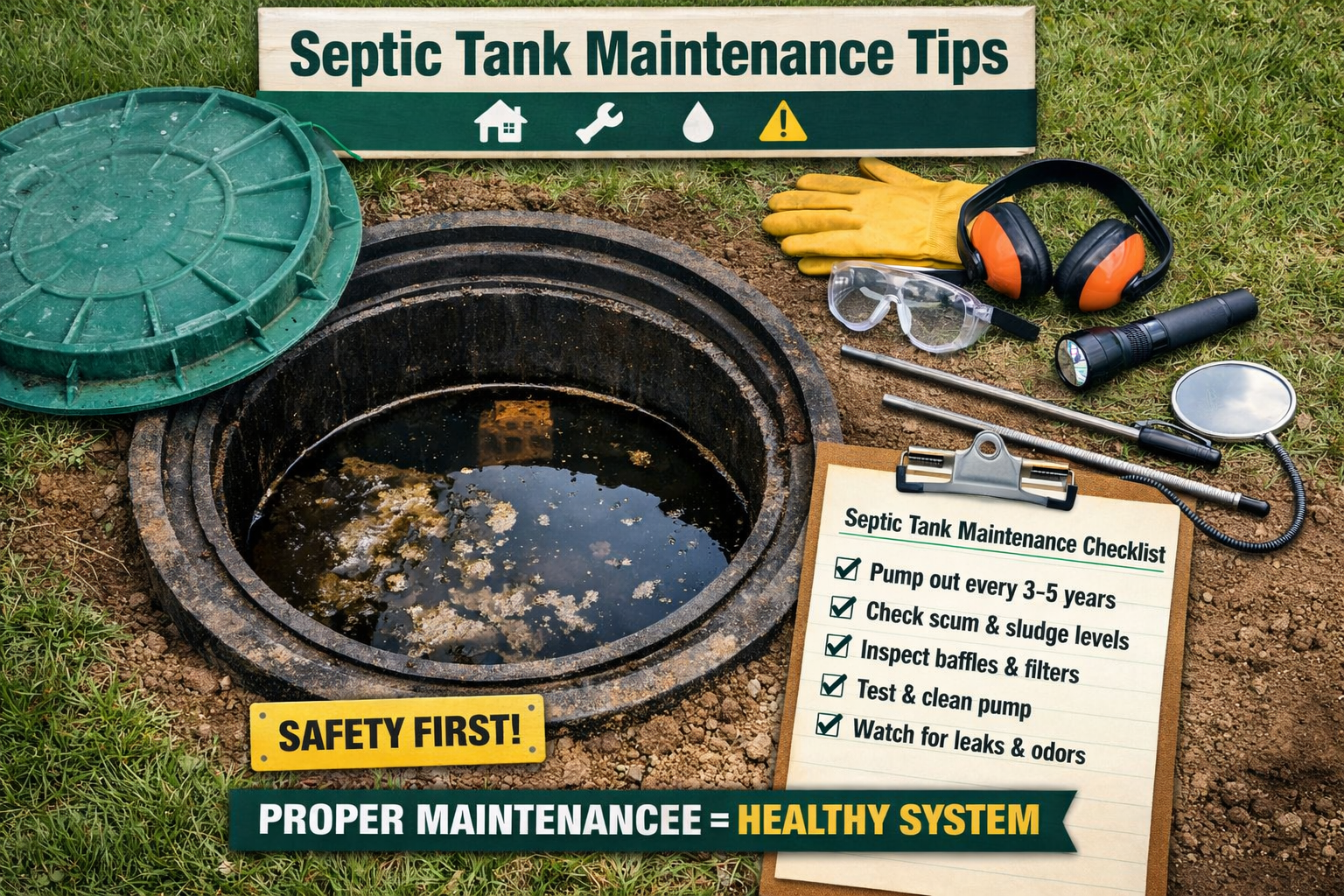
Professional septic locating services become necessary when standard homeowner methods fail or when specific conditions make DIY searching impractical or unsafe.
Call professionals if you encounter:
• Rocky or extremely hard soil that prevents effective probing
• Large search areas where systematic searching becomes time-prohibitive
• Multiple failed attempts using proper tools and techniques
• Urgent maintenance needs where quick location is critical
• Utility line conflicts that require specialized detection equipment
Professional advantages:
Licensed septic professionals use ground-penetrating radar, electronic locators, and specialized probing equipment that provides faster, more accurate results than homeowner tools. They also carry insurance for any accidental damage during the search process.
Cost considerations:
Professional locating services typically cost $150-400, which often proves less expensive than extensive DIY excavation, landscape repair, or delayed maintenance issues. Compare this cost against potential property damage from extensive searching.
When timing matters:
If your system shows signs of being full or backing up, professional location services can expedite necessary pumping or repairs. Emergency situations justify professional costs to prevent system failure.
Choosing the right service:
Select septic contractors with locating experience rather than general excavation companies. Ask about their success rates and whether they guarantee location results before beginning work.
What professionals provide:
Beyond just finding lids, professional services often include marking lid locations permanently, assessing lid condition, and providing maintenance recommendations based on system age and configuration.
Maintenance Tips After Finding Your Septic Tank Lid
Once you’ve successfully located your septic tank lids, proper maintenance and documentation ensure easy access for future service needs while protecting your investment in the location process.
Immediate documentation steps:
• Photograph lid locations with reference points visible in the frame
• Measure distances from permanent landmarks like house corners or driveways
• Create a simple map showing lid positions relative to your property
• Note burial depth and lid condition for service providers
Marking for future access:
Install permanent markers like small stakes or buried magnets near lid locations, but avoid anything that interferes with lawn maintenance. Some homeowners place decorative stones or plants as subtle reference points.
Lid condition assessment:
Check for cracks, proper fit, and structural integrity. Damaged lids should be replaced promptly to prevent safety hazards and maintain system function. Note any issues for discussion during professional maintenance visits.
Access preparation:
Keep the area above lids clear of permanent structures, heavy equipment, or deep-rooted plants. Maintain reasonable access for service vehicles and equipment during regular maintenance visits.
Seasonal considerations:
Mark lid locations before winter to facilitate emergency access if needed. Consider the impact of snow removal, lawn care, and seasonal decorations on your ability to locate lids quickly.
Maintenance scheduling:
With easy lid access established, maintain your regular pumping schedule every 3-5 years[4]. Document service dates and any recommendations from technicians for future reference.
For ongoing system health between professional services, maintaining proper bacterial balance supports efficient waste breakdown. Septifix tablets offer a simple way to support your septic system’s biological processes, helping prevent buildups that could lead to costly repairs down the road.
Learn more about comprehensive septic tank maintenance practices to maximize your system’s lifespan and performance.
Frequently Asked Questions
How deep are septic tank lids typically buried?
Septic tank lids are buried 1 foot deep on average, with a typical range from 4 inches to 4 feet underground depending on local codes and soil conditions.
How many lids does a septic tank have?
Modern septic systems typically have two lids (inlet and outlet), while older tanks installed before 1975 usually have one central access point.
Can I use a metal detector to find my septic tank lid?
Yes, metal detectors can locate tanks with metal components, but many modern tanks use plastic or fiberglass construction that won’t register on standard detectors.
How far from my house should I look for the septic tank?
Septic tanks are typically located 5-25 feet from your home’s foundation, following local building codes for proper separation distances.
What size is a typical septic tank?
Most residential septic tanks are rectangular and approximately 5 by 8 feet in size, though dimensions vary based on household size and local requirements.
Is it safe to open septic tank lids myself?
No, septic tanks contain dangerous gases and should only be opened by trained professionals with proper safety equipment. Homeowners should locate lids but leave opening to service providers.
What should I do if I can’t find my septic tank lid?
Start by checking property records and as-built diagrams, then try systematic probing with a soil probe. If these methods fail, contact a professional septic locating service.
How often do I need to access my septic tank lid?
Most septic tanks require pumping every 3-5 years, which requires lid access. You may also need access for inspections or repairs as needed.
Can heavy equipment drive over buried septic tank lids?
Avoid driving heavy vehicles or equipment over septic tank areas, as this can damage lids, tanks, or internal components even when properly buried.
What’s the difference between inlet and outlet lids?
The inlet lid provides access where waste enters from your house, while the outlet lid accesses where partially treated water flows to the drain field. Both require periodic inspection and maintenance.
Should I mark my septic tank lid location permanently?
Yes, marking lid locations with measurements and simple maps helps future service providers and prevents repeated searching. Use subtle markers that don’t interfere with lawn maintenance.
What tools do I need to locate a buried septic tank lid?
Essential tools include a 5-6 foot soil probe, measuring tape, marking supplies (paint or flags), and basic digging tools for final excavation once you’ve located the tank.
Key Takeaways
• Start with documentation: Property records and as-built diagrams provide the most reliable starting point for septic tank lid location
• Use systematic searching: Create a grid pattern and probe methodically rather than random digging to locate buried tanks efficiently
• Recognize visual indicators: Look for raised areas, unusual vegetation patterns, or rectangular depressions that indicate buried tank locations
• Understand your system type: Modern tanks have two lids while older systems typically feature one central access point
• Maintain proper tools: Invest in a quality soil probe and measuring equipment for accurate, efficient searching
• Document your findings: Create maps and measurements once you locate lids to facilitate future maintenance access
• Know when to call professionals: Rocky soil, large search areas, or repeated failed attempts justify professional locating services
• Prioritize safety: Never attempt to open or enter septic tanks yourself – locate lids but leave access to trained professionals
• Plan for ongoing maintenance: Clear access paths and schedule regular pumping every 3-5 years to maintain system health
• Keep records updated: Maintain documentation of lid locations, service dates, and system condition for future reference
Helpful Resource
Maintaining your septic system goes beyond just finding the lids. Once you have easy access established, keeping your system’s bacterial balance healthy prevents costly problems down the road.
If you want a simple option for ongoing septic care, Septifix tablets can help maintain optimal bacterial levels in your tank. These easy-to-use treatments break down waste effectively and help prevent the buildups that lead to expensive repairs or premature pumping needs.
This approach works well alongside regular professional maintenance to keep your system running efficiently between service visits.
Here are some of the most reliable septic tank treatment options for keeping your system clean, odor-free, and working properly—from breaking down waste and reducing buildup to helping prevent blockages and costly repairs. These easy-to-use tablets are trusted by many homeowners to maintain a healthy, efficient septic system with minimal effort.
👉 See how Septifix tablets can keep your septic system clean and efficient
References
[1] How To Locate A Septic Tank Lid A 6 Step Guide – https://wilsonservices.com/resources/how-to-locate-a-septic-tank-lid-a-6-step-guide/
[2] How To Find Your Septic Tank Lid – https://smartsepticpros.com/blog/how-to-find-your-septic-tank-lid/
[3] How To Find And Care For Your Home S Septic Tank – https://www.reliableseptic.net/how-to-find-and-care-for-your-home-s-septic-tank
[4] Finding Septic Tank Lid – https://www.vdwws.com/blog/finding-septic-tank-lid
[7] Finding Your Septic Tank – https://westcoastsanitationinc.com/finding-your-septic-tank/