

Last updated: March 2, 2026
Key Takeaways
• Check septic levels every 1-3 years to prevent costly backups and system failures
• Use a measuring stick method to determine sludge and scum layer thickness safely
• Professional inspection recommended when combined layers reach 30% of tank volume
• Safety first approach – wear protective gear and never enter the tank
• Warning signs include slow drains, odors, and standing water in the yard
• Pumping needed when sludge and scum layers total 14+ inches in a standard tank
• Visual inspection can reveal surface-level problems before they worsen
• Document measurements to track accumulation patterns over time
Quick Answer
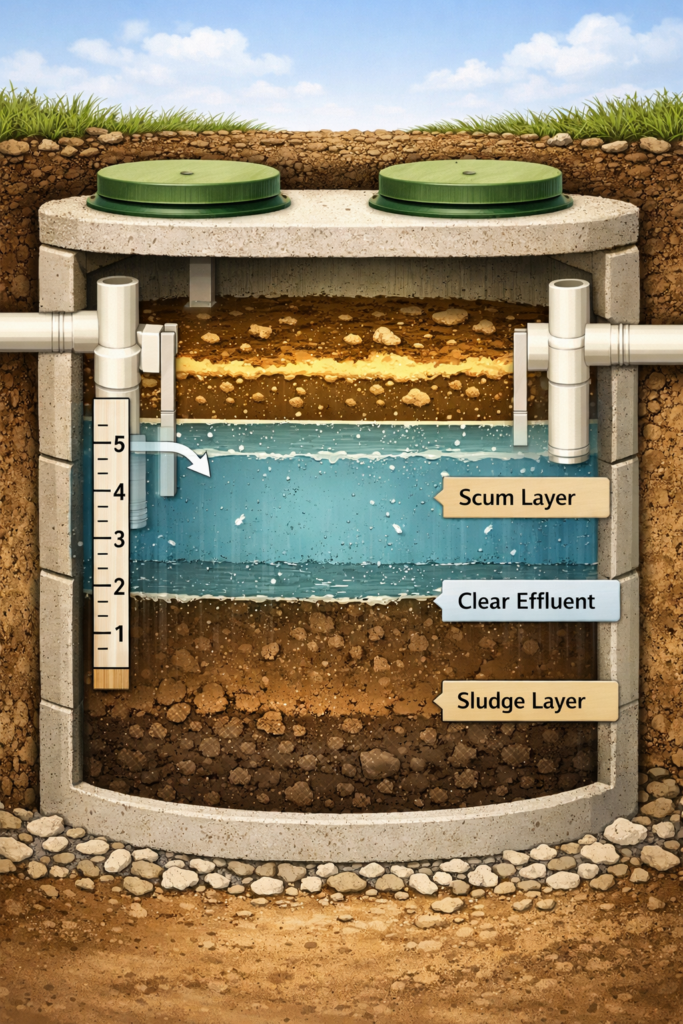
How to check septic system level: Remove the tank access cover, use a measuring stick wrapped in white cloth to check sludge depth at the bottom and scum thickness at the top. When combined layers reach 30% of your tank’s volume (typically 14 inches total), schedule professional pumping. Always wear protective gear and never enter the tank.
Why You Need to Check Your Septic System Level Regularly
Checking your septic tank level prevents expensive emergencies and extends system life. Most homeowners wait until problems appear, but regular monitoring catches issues early when they’re cheaper to fix.
Your septic tank works by separating waste into three layers: scum floats on top, liquid effluent sits in the middle, and sludge settles at the bottom. Over time, sludge and scum accumulate faster than they break down. When these layers get too thick, they push into the effluent zone and can flow into your drain field, causing system failure.
Choose regular monitoring if you want to avoid emergency repairs that can cost $3,000-$10,000. Skip it if you prefer reactive maintenance, but expect higher long-term costs.
Professional septic services recommend checking levels every 1-3 years, depending on household size and usage patterns. A family of four typically needs monitoring every 2 years, while smaller households can wait 3 years between checks.
For comprehensive guidance on septic system care, see our complete septic tank maintenance checklist.
How to Check Septic System Level: Step-by-Step Method
The measuring stick method provides accurate readings when done correctly. You’ll need a long stick or pole, white cloth strips, rubber gloves, and safety glasses.
Step 1: Locate and Open the Access Port
Find your septic tank access cover using property records or a metal detector. Remove the cover carefully – it’s heavy and can cause injury if dropped. Never work alone and ensure good ventilation.
Step 2: Prepare Your Measuring Tool
Wrap white cloth around the bottom 3 feet of a long stick or measuring pole. The cloth will show staining patterns that indicate different waste layers.
Step 3: Measure Sludge Depth
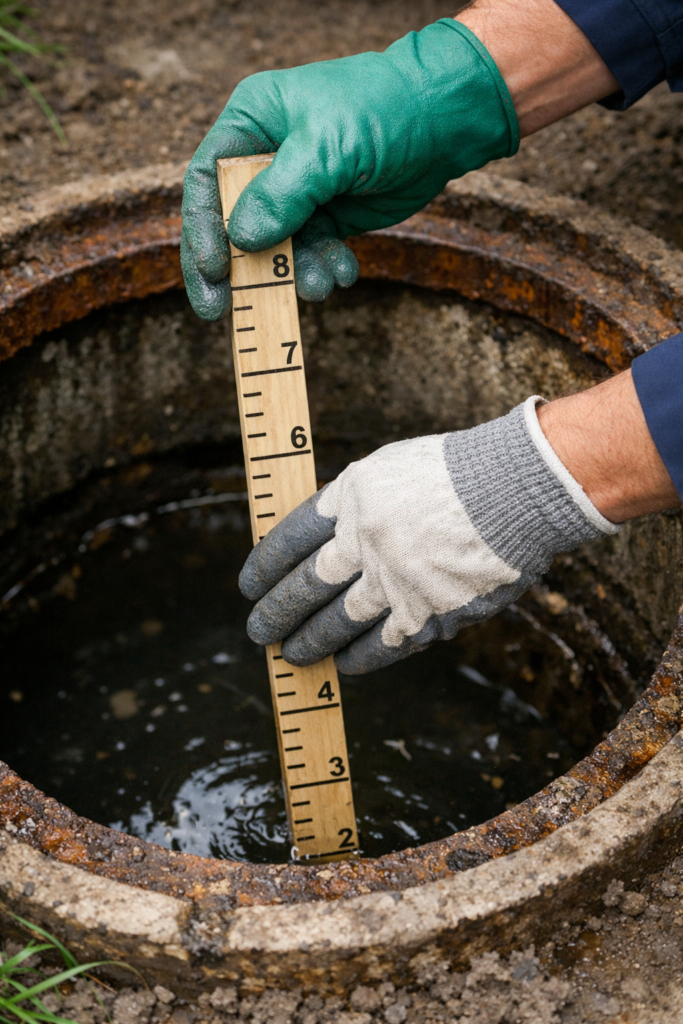
Lower the stick slowly to the tank bottom. Hold it there for 3-5 minutes, then lift carefully. The dark staining on the cloth shows sludge depth. Measure from the bottom up to where staining changes color.
Step 4: Check Scum Layer Thickness
Use a separate cloth-wrapped stick to push down through the floating scum layer until you hit liquid. The resistance change indicates scum thickness.
Step 5: Calculate Total Accumulation
Add sludge depth plus scum thickness. When this total reaches one-third of your tank’s depth (usually 14-16 inches), schedule pumping.
Common mistake: Don’t rush the measurement. Sludge needs time to stain the cloth properly, or you’ll get inaccurate readings.
What Septic System Level Measurements Mean
Normal levels show sludge depth under 12 inches and scum layer under 6 inches in a standard residential tank. These measurements indicate healthy bacterial activity and proper waste breakdown.
Warning zone measurements occur when combined sludge and scum layers reach 25-30% of tank volume. This typically means 12-14 inches total accumulation in a standard tank with 48 inches of liquid depth.
Critical levels requiring immediate action happen when layers exceed 30% of tank volume. At this point, solids can escape into your drain field and cause expensive damage.
Measurement interpretation guidelines:
- 0-8 inches combined: Excellent condition, check again in 2-3 years
- 8-12 inches combined: Good condition, monitor annually
- 12-14 inches combined: Schedule pumping within 6 months
- 14+ inches combined: Pump immediately to prevent system failure
Edge case: Tanks with high groundwater or heavy usage may need pumping at lower accumulation levels. Properties near the coast or with seasonal water table changes require more frequent monitoring.
For detailed information about recognizing full tank conditions, check our guide on signs of a full septic tank.
Safety Precautions When Checking Septic Levels
Never enter or lean over an open septic tank – toxic gases can cause unconsciousness or death within seconds. Hydrogen sulfide and methane gases are odorless killers that accumulate in confined spaces.
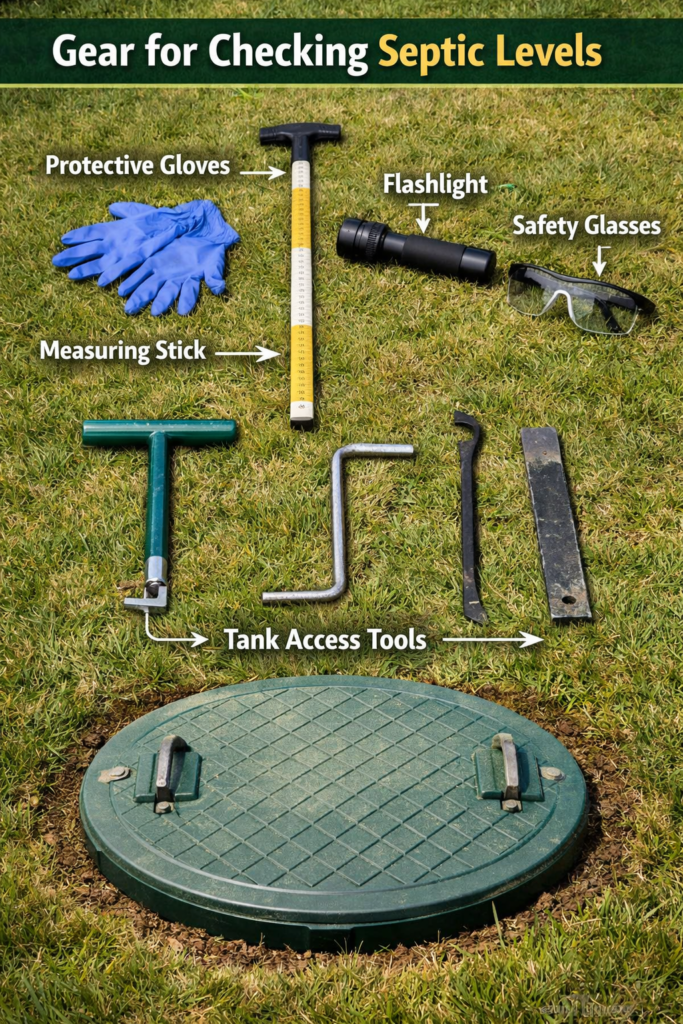
Essential safety equipment includes:
- Rubber gloves and eye protection
- Long-handled measuring tools (minimum 8 feet)
- Flashlight or headlamp
- Cell phone for emergency calls
- Second person present as safety backup
Proper ventilation matters. Open the tank cover and wait 15 minutes before starting measurements. Position yourself upwind from the opening to avoid gas exposure.
Weather considerations: Avoid checking levels during heavy rain, snow, or high winds. Wet conditions make covers slippery and increase accident risk.
Professional alternative: If you’re uncomfortable with DIY measurement, septic inspectors charge $200-$400 for level checks and provide detailed reports.
FYI: Some links may be affiliate links, which means I may earn a small commission at no extra cost to you.
Maintenance tip: While you’re monitoring levels, consider using Septifix tablets to help maintain proper bacterial balance in your tank. These monthly tablets break down waste more efficiently and can help extend time between pumpings, making your level checks show better results over time.
Signs Your Septic Tank Needs Professional Attention
Immediate warning signs that override normal measurement schedules include sewage backups in your home, standing water over the drain field, or strong sewage odors around the tank area.
Slow drainage symptoms appear before complete backups. If multiple drains run slowly simultaneously, your tank may be overfull regardless of your last measurement. This happens when solids block the outlet pipe.
Yard indicators include unusually green grass over the drain field, soggy soil, or visible effluent on the surface. These signs mean your system is failing and needs immediate professional evaluation.
Indoor warning signals:
- Gurgling sounds from drains or toilets
- Sewage odors from drains
- Water backing up in basement floor drains
- Toilets that drain slowly or incompletely
Seasonal factors can accelerate problems. Heavy spring rains or rapid snowmelt can overwhelm a tank that tested normal during dry conditions[5].
Professional inspection timing: Schedule immediately if you notice any warning signs, regardless of your measurement results. Sometimes problems occur between the tank and drain field that level checks won’t detect.
Learn more about identifying problems in our septic system problems guide.
Tools and Equipment for Accurate Level Checking
Basic measurement tools include a measuring stick (8-10 feet long), white cotton cloth strips, permanent marker, and measuring tape. Avoid metal tools that can damage tank walls or create sparks.
Professional-grade equipment like septic tank level gauges provide more accurate readings. These tools have built-in measurement markings and designed specifically for waste level detection.
Digital monitoring options are available for homeowners who want continuous monitoring. Smart septic sensors can track levels remotely and send alerts to your phone when pumping is needed.
Tool preparation checklist:
- Clean measuring stick with disinfectant
- Attach fresh white cloth securely
- Mark measurement increments clearly
- Test cloth attachment strength
- Prepare backup measuring materials
Improvised alternatives: A long wooden pole works if you don’t have a proper measuring stick. Pool cleaning poles or paint extension handles can substitute in emergencies.
Maintenance after use: Clean all tools with bleach solution and store in a dedicated area away from household items. Never use septic measurement tools for other purposes.
When to Call Professionals vs DIY Checking
DIY checking works well for routine monitoring when you’re comfortable with safety procedures and have proper equipment. Most homeowners can safely measure levels 2-3 times before needing professional pumping.
Professional inspection required when you find concerning measurements, notice system problems, or haven’t checked levels in over 3 years. Professionals can also inspect tank integrity and drain field condition[10].
Cost comparison considerations:
- DIY monitoring: $50-100 in equipment, ongoing time investment
- Professional inspection: $200-400 per visit, includes detailed assessment
- Emergency repairs: $3,000-10,000 when problems aren’t caught early
Choose professional service if:
- You’re uncomfortable with safety requirements
- Tank access is difficult or dangerous
- Previous measurements showed concerning trends
- You need documentation for property sales
- Local regulations require professional inspection
Hybrid approach: Many homeowners do basic level checks themselves but schedule professional inspections every 3-5 years for comprehensive system evaluation.
For guidance on professional services, see our septic inspection guide.
Helpful Resource for Septic Maintenance
Keeping your septic system healthy goes beyond just checking levels. Septifix tablets offer a simple way to maintain proper bacterial balance in your tank between inspections. With one easy monthly flush, these tablets help break down waste more efficiently, reduce odors, and can help extend the time between necessary pumpings. While not required, they’re useful for homeowners who want a structured approach to ongoing septic care without complex maintenance routines.
Frequently Asked Questions
How often should I check my septic tank level?
Check every 1-3 years depending on household size. Families of 4+ should check every 1-2 years, while smaller households can wait 2-3 years between measurements.
What does it mean when my septic tank level is high?
High levels indicate accumulated sludge and scum layers are approaching capacity. When combined layers reach 30% of tank volume (typically 14+ inches), schedule pumping to prevent system failure.
Can I check septic levels myself safely?
Yes, with proper safety equipment and procedures. Always wear protective gear, work with a partner, ensure good ventilation, and never enter the tank. When in doubt, hire professionals.
How do I know if my measurements are accurate?
Use the cloth-staining method and allow 3-5 minutes for proper staining. Consistent results across multiple measurements indicate accuracy. Professional verification recommended every few years.
What should I do if my septic tank level is too high?
Schedule professional pumping immediately when levels exceed 30% of tank volume. Avoid heavy water usage and don’t add more waste until pumping is complete.
How much does professional septic level checking cost?
Professional inspections typically cost $200-400 and include level measurement, tank condition assessment, and detailed reporting. Emergency inspections may cost more.
What tools do I need to check septic levels?
Essential tools include a long measuring stick (8+ feet), white cotton cloth, rubber gloves, safety glasses, and a flashlight. Optional: measuring tape and permanent marker for marking depths.
Can weather affect septic level measurements?
Yes, heavy rain can temporarily raise liquid levels and make measurements less accurate. Check during dry conditions for most reliable readings. Avoid measurements during storms or high winds.
How deep should sludge be in a septic tank?
Normal sludge depth ranges from 6-12 inches. Depths over 12 inches indicate approaching pump-out time, while 16+ inches requires immediate professional attention.
What’s the difference between sludge and scum layers?
Sludge is heavy waste that settles at the tank bottom, while scum consists of oils and floating debris at the surface. Both layers grow over time and must be pumped out periodically.
Should I measure levels before or after pumping?
Measure levels to determine when pumping is needed, not after. Post-pumping measurements aren’t useful since levels will be minimal. Resume monitoring 1-2 years after pumping.
Can I use a regular stick to measure septic levels?
Yes, any long wooden pole works if wrapped with white cloth. Avoid metal tools that might damage the tank or create sparks near potentially explosive gases.
Conclusion
Learning how to check septic system level empowers you to prevent costly emergencies and extend your system’s lifespan. The measuring stick method provides reliable results when you follow proper safety procedures and interpret measurements correctly.
Take action now by locating your septic tank access points and gathering the necessary safety equipment. Schedule your first level check within the next month if you haven’t measured levels in over two years.
Remember the key thresholds: combined sludge and scum layers totaling 14+ inches in a standard tank require immediate pumping. Measurements between 8-12 inches indicate good condition with annual monitoring recommended.
Stay proactive with regular measurements every 1-3 years, depending on your household size and usage patterns. Document your findings to track accumulation trends and optimize your pumping schedule.
For ongoing septic system care, explore our complete septic tank maintenance guide and learn about proper septic maintenance practices.
References
[1] Estimating High Groundwater Levels – https://www.capecodcommission.org/our-work/estimating-high-groundwater-levels/
[5] Scientists Rise To The Challenge Of Coastal Septic Systems – https://www.scseagrant.org/scientists-rise-to-the-challenge-of-coastal-septic-systems/
[7] Engineered Septic System Design – https://landperc.com/engineered-septic-system-design/
[8] The Ultimate Guide To Septic Tank Pumping And System Longevity – https://www.antorinoandsons.com/blog/the-ultimate-guide-to-septic-tank-pumping-and-system-longevity/
[10] Guidance For The Inspection Of On Site Sewage Disposal Systems – https://www.mass.gov/guides/guidance-for-the-inspection-of-on-site-sewage-disposal-systems