
Last updated: March 3, 2026
Your septic tank needs healthy bacteria to break down waste effectively, but knowing how to add bacteria to septic tank systems properly can save you thousands in repairs and prevent embarrassing backups. Adding bacterial treatments to your septic system is a simple monthly task that keeps waste-digesting microorganisms thriving and your system running smoothly.
Key Takeaways
- Monthly treatment schedule: Add bacterial supplements once per month for optimal septic system health
- Simple application method: Most bacterial treatments flush directly down the toilet – no special tools needed
- Cost-effective prevention: Bacterial additives cost $10-30 monthly but prevent $3,000-8,000 repair bills
- Natural waste breakdown: Beneficial bacteria digest solid waste, reducing sludge buildup and extending pumping intervals
- Multiple product types: Choose from liquid concentrates, powder treatments, or convenient tablet forms
- Timing matters: Add treatments during low-usage periods (bedtime) for maximum bacterial colonization
- Household chemical impact: Antibacterial cleaners and bleach kill beneficial bacteria, making supplements essential
- System compatibility: Bacterial treatments work with all septic tank types and sizes
Quick Answer
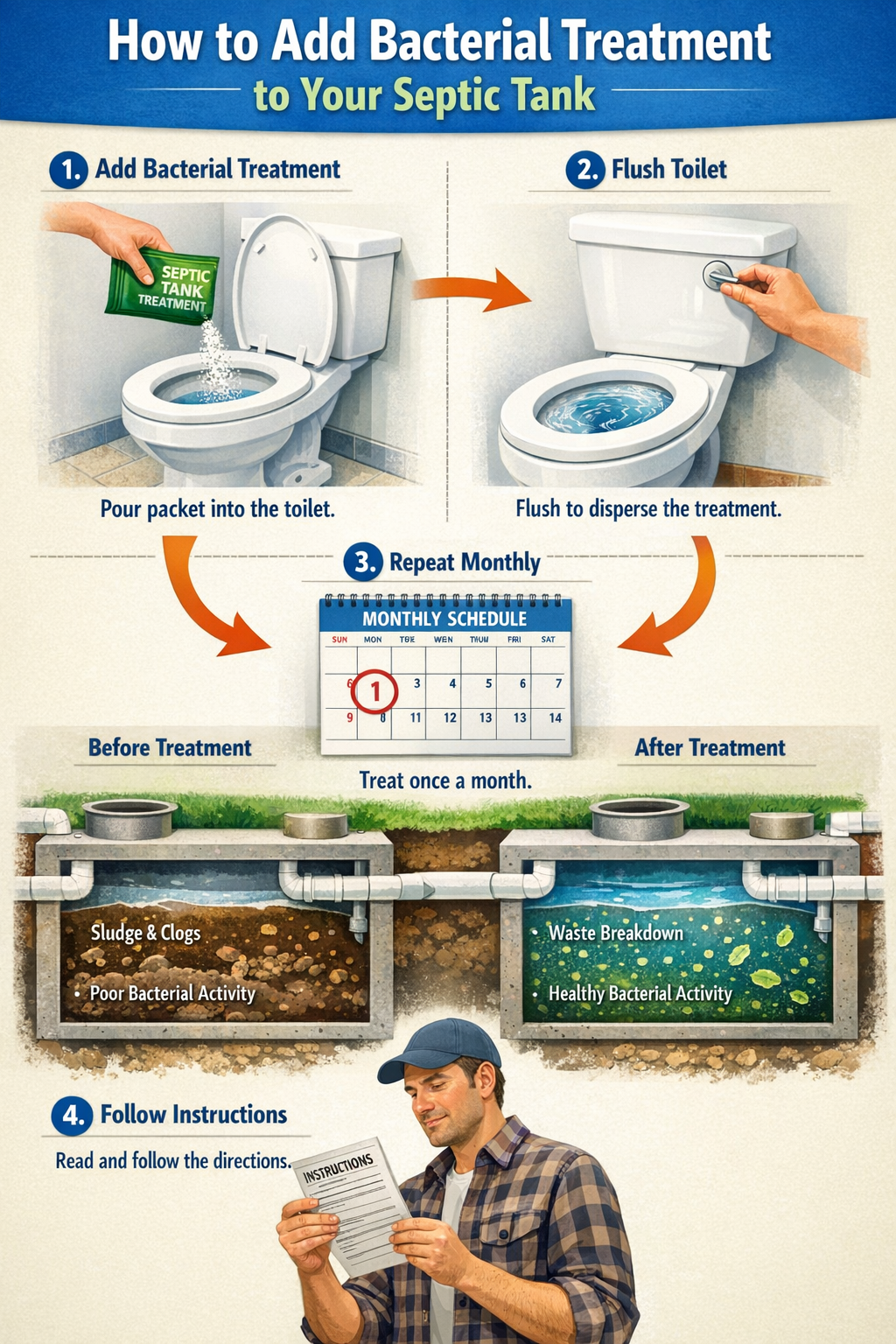
Add bacterial supplements to your septic tank monthly by flushing liquid, powder, or tablet treatments down the toilet during low-usage periods. Most homeowners should add treatments at bedtime when the system has 6-8 hours for bacteria to establish before new waste enters. Choose products containing multiple bacterial strains and enzymes for comprehensive waste breakdown.
Why Your Septic Tank Needs Additional Bacteria
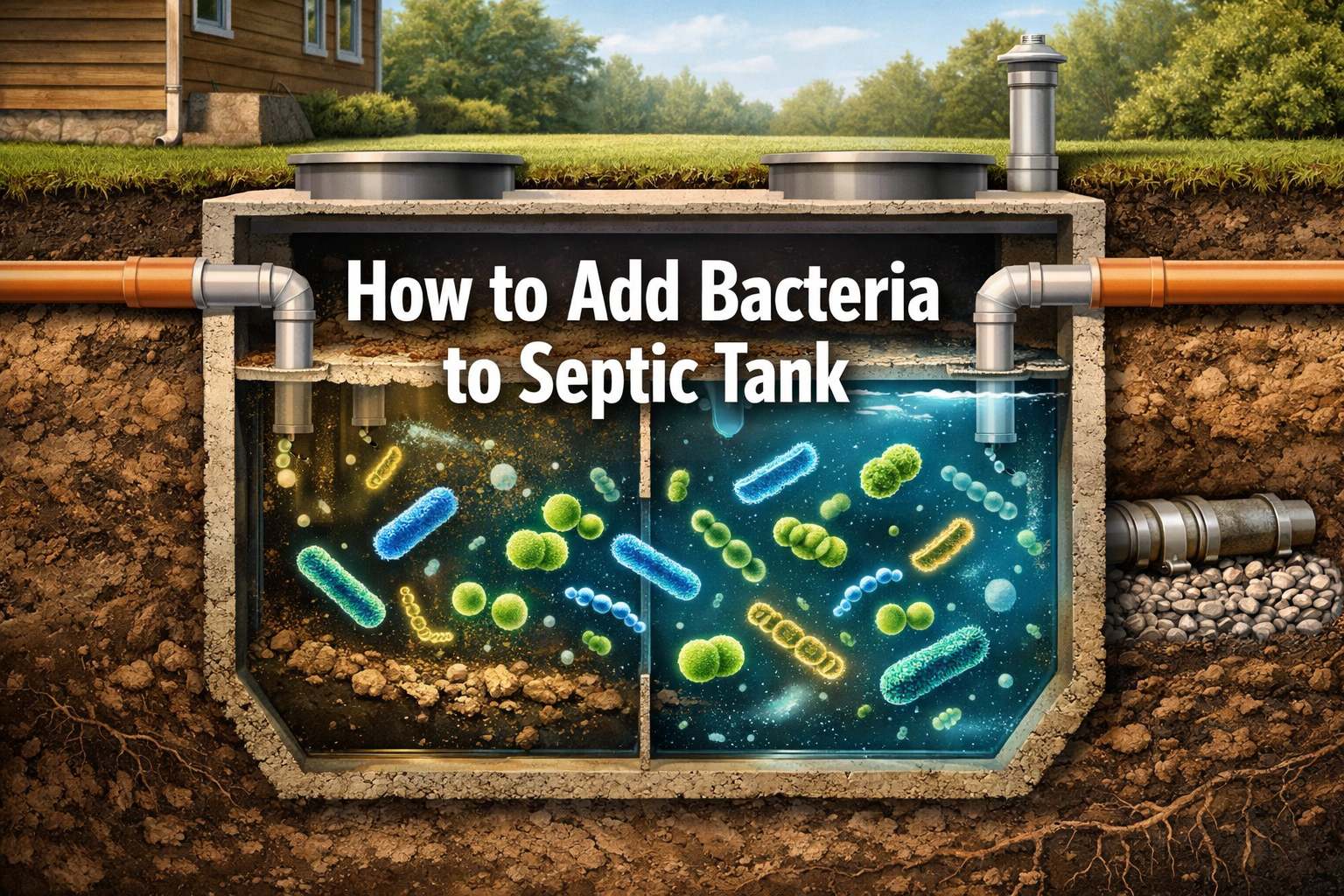
Your septic tank naturally contains bacteria that digest organic waste, but modern household products often kill these beneficial microorganisms. Antibacterial soaps, bleach-based cleaners, and prescription medications reduce bacterial populations below effective levels.
Bacterial supplements restore the microbial balance your septic system needs for proper waste decomposition. Without adequate bacteria, solid waste accumulates faster, requiring more frequent pumping and increasing the risk of system failure.
Choose bacterial additives if you:
- Use antibacterial cleaning products regularly
- Take prescription antibiotics or medications
- Notice slow drains or gurgling sounds
- Want to extend time between pumping services
- Have a newer septic system still establishing bacterial colonies
Common household items that kill septic bacteria include chlorine bleach, antibacterial dish soap, toilet bowl cleaners with disinfectants, and fabric softeners with antimicrobial agents.
What Types of Septic Tank Bacteria Treatments Are Available
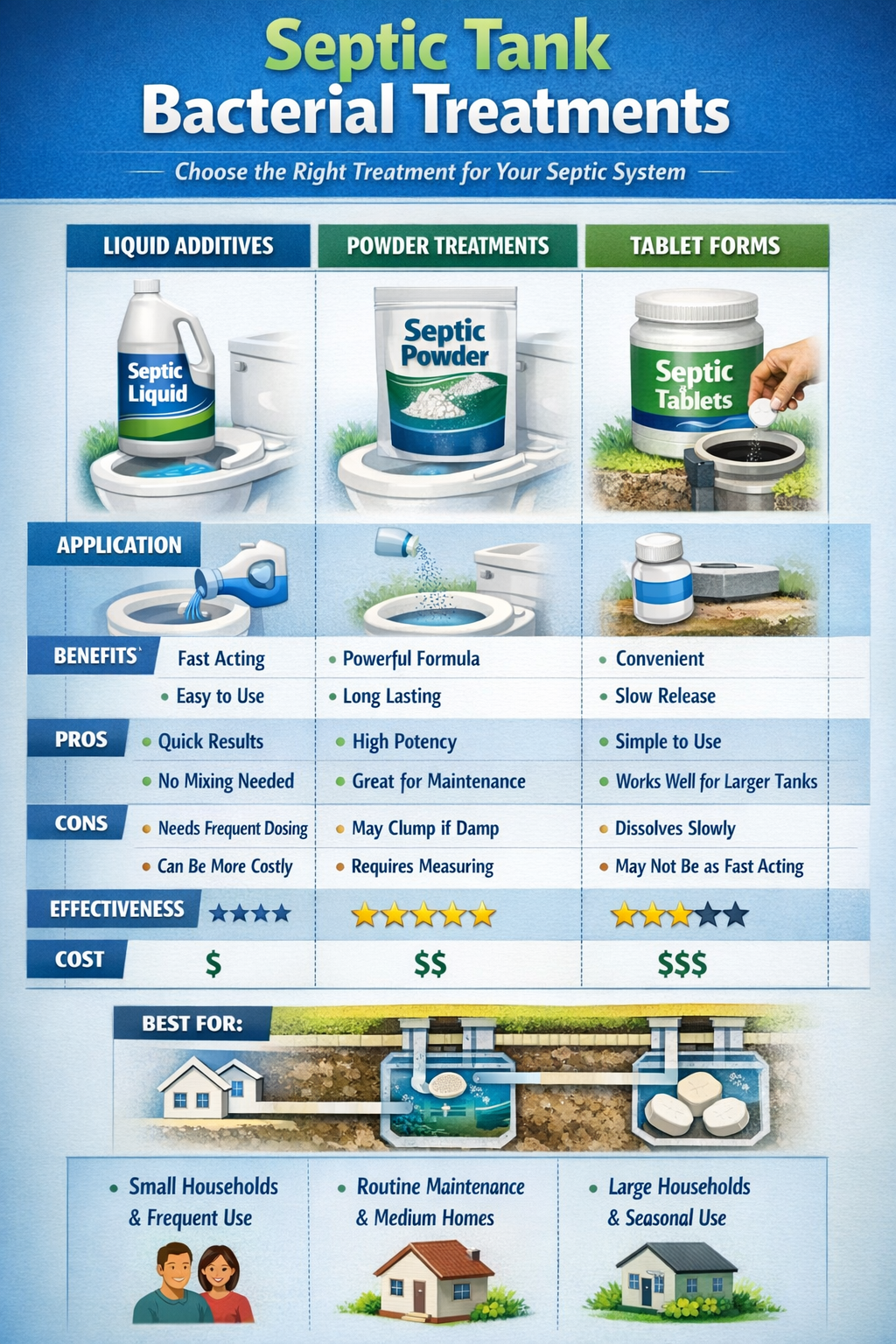
Bacterial treatments come in three main forms: liquid concentrates, powder formulations, and tablet systems. Each type delivers live bacteria and enzymes to your septic tank but differs in application method and storage requirements.
Liquid Bacterial Treatments
Liquid concentrates contain high concentrations of live bacteria in a shelf-stable solution. Most products require measuring specific amounts based on tank size and household occupancy.
Benefits of liquid treatments:
- Fast-acting bacterial activation
- Easy measurement for precise dosing
- Often include multiple bacterial strains
- Mix well with tank contents
Drawbacks include shorter shelf life after opening and potential for spills during storage.
Powder Bacterial Supplements
Powder formulations offer concentrated bacteria in a dry, stable format. These products typically dissolve quickly in water and provide extended shelf life.
Powder advantages:
- Long storage life when kept dry
- Lightweight for easy handling
- Often more economical per treatment
- Less packaging waste than liquids
Consider powder treatments if you treat multiple properties or want to buy treatments in bulk for cost savings.
Tablet Bacterial Systems
Tablet treatments provide pre-measured doses in convenient, mess-free packaging. Simply drop tablets in the toilet and flush – no measuring or mixing required.
Tablet benefits:
- Foolproof dosing eliminates guesswork
- Clean application with no spills
- Extended shelf life in sealed packaging
- Travel-friendly for vacation properties
FYI: Some links may be affiliate links, which means I may earn a small commission at no extra cost to you.
For homeowners wanting a simple, no-mess solution, Septifix tablets offer convenient monthly septic care in pre-measured doses. These tablets help break down waste, reduce odors, and maintain bacterial balance with one easy flush per month.
Step-by-Step Guide: How to Add Bacteria to Septic Tank Systems
Add bacterial treatments during low-usage periods when your septic tank has 6-8 hours to process the supplement without interference from new waste. The best time is typically at bedtime when household water usage stops until morning.
Preparation Steps
- Check product expiration dates – expired bacterial treatments contain fewer live microorganisms
- Read dosage instructions based on your tank size and household occupancy
- Gather measuring tools if using liquid or powder treatments
- Choose the toilet closest to your septic tank location for faster delivery
Application Process
For liquid treatments:
- Measure the recommended amount using the product’s measuring cup
- Pour directly into toilet bowl
- Flush once to send treatment to the septic tank
- Avoid using that toilet for 2-3 hours if possible
For powder supplements:
- Measure powder according to package directions
- Sprinkle directly into toilet bowl water
- Allow 2-3 minutes for complete dissolution
- Flush normally to deliver treatment
For tablet systems:
- Drop the recommended number of tablets into toilet bowl
- Wait 30 seconds for tablets to begin dissolving
- Flush once to send treatment to septic tank
- Resume normal toilet use after 1-2 hours
Post-Application Best Practices
Avoid heavy water usage for 6-8 hours after adding bacterial treatments. This includes running dishwashers, washing machines, or taking multiple showers, which can dilute the bacterial concentration before colonies establish.
Common mistake: Adding treatments during busy morning hours when showers, dishwashing, and laundry quickly flush bacteria through the system before they can colonize tank surfaces.
For comprehensive septic system understanding, review our guide on how septic tanks work to see where bacteria fit in the waste treatment process.
When and How Often to Add Bacterial Supplements
Add bacterial supplements monthly for optimal septic system performance. Most bacterial treatments provide 30 days of enhanced waste digestion before populations naturally decline due to household chemical exposure and normal die-off.
Monthly Treatment Schedule
Establish a consistent monthly routine by choosing the same date each month for bacterial treatments. Many homeowners use the first day of each month or align treatments with other monthly maintenance tasks.
Optimal timing considerations:
- Evening application: Best bacterial colonization occurs during overnight low-usage periods
- Weekend treatments: Allow extra recovery time when household usage patterns are more flexible
- Pre-vacation dosing: Add treatments 2-3 days before extended absences for continued waste processing
Increased Treatment Frequency
Double your treatment frequency (bi-weekly) if you:
- Recently completed antibiotic treatments that killed beneficial bacteria
- Use antibacterial cleaning products heavily
- Have a large household (5+ people) generating significant waste
- Notice signs of bacterial imbalance like slow drains or odors
Seasonal Considerations
Cold weather reduces bacterial activity in septic systems, making winter treatments more critical. Bacteria work slower in cold soil temperatures, so consistent supplementation maintains waste processing efficiency.
Increase treatments during:
- Extended cold snaps below 40°F
- Holiday periods with increased household occupancy
- Spring startup after winter dormancy
- After heavy chemical cleaning sessions
Reduce frequency only if your septic system shows excellent performance indicators and you use minimal antibacterial products. Even well-functioning systems benefit from quarterly bacterial maintenance.
Understanding signs your septic tank needs attention helps determine if your current bacterial treatment schedule provides adequate system support.
Choosing the Right Bacterial Treatment for Your System
Select bacterial treatments containing multiple bacterial strains and enzymes for comprehensive waste breakdown. The most effective products include aerobic bacteria for oxygen-rich zones, anaerobic bacteria for deep tank areas, and specialized enzymes targeting fats, proteins, and starches.
Key Ingredients to Look For
Multi-strain bacterial formulations provide broader waste processing capabilities than single-strain products. Look for treatments containing:
- Bacillus bacteria strains for protein and organic matter digestion
- Cellulase enzymes for breaking down toilet paper and plant materials
- Lipase enzymes for fat and grease processing
- Protease enzymes for protein waste decomposition
- Amylase enzymes for starch and carbohydrate breakdown
Tank Size Considerations
Match treatment dosage to your septic tank capacity for optimal bacterial concentration. Standard residential tanks range from 750 to 1,500 gallons, with larger households requiring higher-capacity systems.
| Tank Size | Monthly Treatment Amount | Household Size |
|---|---|---|
| 750-1,000 gallons | 1 standard dose | 1-3 people |
| 1,000-1,250 gallons | 1.5 standard doses | 3-4 people |
| 1,250-1,500 gallons | 2 standard doses | 4-6 people |
| 1,500+ gallons | 2.5+ standard doses | 6+ people |
Product Quality Indicators
Choose treatments from established septic care companies with specific bacterial count guarantees. Quality products list exact bacterial concentrations (measured in CFU – colony forming units) and provide clear storage instructions.
Avoid products that:
- Make unrealistic claims about eliminating pumping needs
- Contain harsh chemicals or artificial fragrances
- Lack specific bacterial strain information
- Promise instant results or “miracle” performance
Budget considerations: Effective bacterial treatments cost $10-30 monthly but prevent repair bills averaging $3,000-8,000 for system failures. The investment in quality bacterial supplements pays for itself by extending system life and reducing maintenance costs.
For homeowners seeking proven septic care, our complete septic tank bacteria treatment guide provides detailed product comparisons and selection criteria.
Common Mistakes When Adding Bacteria to Septic Tanks
The most common mistake is adding bacterial treatments during high-usage periods when immediate water flow dilutes and flushes bacteria before they can establish colonies. Morning applications followed by showers and dishwashing reduce treatment effectiveness by 60-80%.
Timing and Application Errors
Avoid these timing mistakes:
- Adding treatments before morning routines with heavy water usage
- Applying supplements immediately before laundry or dishwasher cycles
- Using treatments during parties or high-occupancy periods
- Forgetting treatments for 2-3 months, then expecting immediate results
Application errors include:
- Using expired products with reduced bacterial viability
- Measuring incorrect doses for tank size
- Mixing treatments with chlorinated water before application
- Adding treatments to toilets with automatic bowl cleaners
Product Selection Problems
Choose treatments specifically designed for septic systems rather than general drain cleaners or bacterial products for other applications. Septic-specific formulations contain bacteria strains optimized for anaerobic waste processing.
Avoid products containing:
- Bleach or disinfectant chemicals
- Artificial fragrances that can disrupt bacterial balance
- Harsh solvents or acids
- Claims about eliminating the need for pumping
Household Chemical Conflicts
Coordinate bacterial treatments with your cleaning schedule to minimize conflicts between beneficial bacteria and antimicrobial products. Wait 24-48 hours after heavy bleach cleaning before adding bacterial supplements.
Common chemical conflicts:
- Toilet bowl cleaners with bleach kill bacteria within hours
- Antibacterial hand soaps reduce bacterial populations
- Fabric softeners contain antimicrobial agents
- Prescription antibiotics eliminate beneficial microorganisms
Best practice: Switch to septic-safe cleaning products and coordinate bacterial treatments with your household’s chemical usage patterns for maximum effectiveness.
Learn more about proper septic tank maintenance practices to avoid common care mistakes that compromise system performance.
Signs Your Septic Tank Bacteria Levels Need Attention
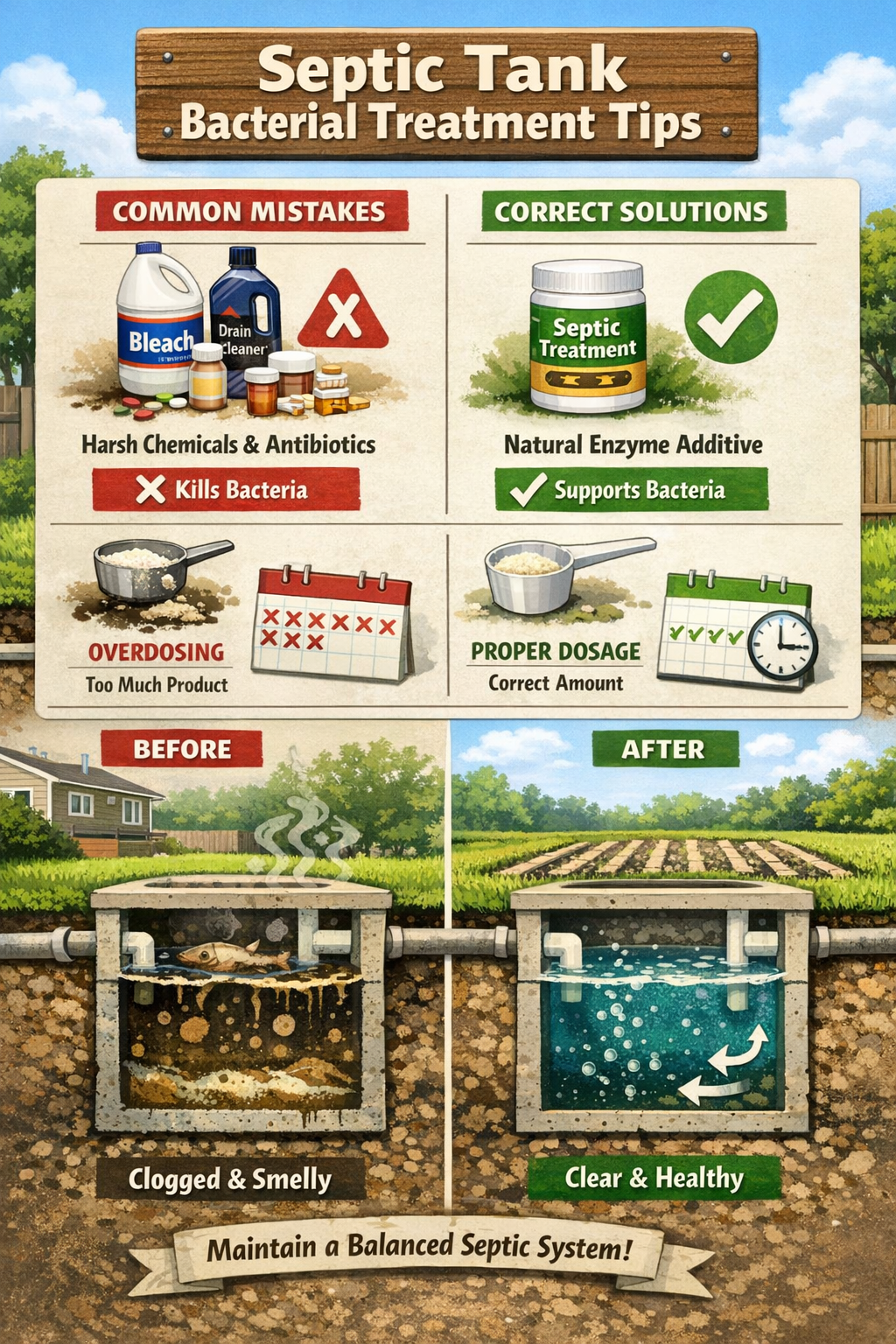
Slow drains throughout your home indicate insufficient bacterial activity in your septic tank. When beneficial bacteria populations drop, solid waste accumulates faster and reduces the tank’s processing capacity, causing backups and sluggish drainage.
Early Warning Indicators
Watch for these bacterial imbalance signs:
- Gurgling sounds from drains or toilets
- Sewage odors near the septic tank or drain field
- Slow-draining sinks, tubs, or floor drains
- Toilet paper not breaking down properly
- Greasy scum buildup on tank surfaces
Advanced System Stress Symptoms
More serious indicators requiring immediate bacterial treatment:
- Sewage backups in basement drains or lowest fixtures
- Standing water or wet spots over the drain field
- Bright green grass growth above the septic system
- Strong sewage smells inside your home
- Frequent need for drain clearing or plumbing service
Testing and Monitoring
Professional septic inspections can measure bacterial activity levels and sludge accumulation rates. Most septic service companies offer bacterial testing as part of routine maintenance visits.
DIY monitoring methods:
- Track drainage speed changes over time
- Note odor patterns and intensity
- Monitor toilet paper breakdown rates
- Document any recurring drain problems
- Keep records of bacterial treatment schedules
Emergency bacterial treatment may require daily applications for 5-7 days to restore adequate bacterial populations after severe chemical exposure or antibiotic use.
Understanding what happens when septic tanks are full helps distinguish between bacterial issues and capacity problems requiring different solutions.
Helpful Resource for Simple Septic Care
If you want a straightforward approach to septic tank bacterial maintenance, Septifix tablets provide an easy monthly solution that takes the guesswork out of proper dosing. These tablets help break down waste, reduce bad smells, and keep your septic tank working properly with beneficial bacteria and enzymes.
The convenience of pre-measured tablets eliminates measuring mistakes and ensures consistent bacterial treatment every month. Simply flush one tablet monthly during low-usage periods for ongoing septic system support.
FAQ
How often should I add bacteria to my septic tank?
Add bacterial supplements monthly for optimal septic system performance. Increase to bi-weekly treatments if you use antibacterial products heavily or have a large household generating significant waste.
Can I add too much bacteria to my septic tank?
Excess bacterial treatments won’t harm your septic system but waste money. Follow manufacturer dosing guidelines based on tank size and household occupancy for cost-effective treatment.
What time of day is best for adding septic tank bacteria?
Add bacterial treatments at bedtime when household water usage stops for 6-8 hours. This allows bacteria to establish colonies before new waste and water dilute the treatment.
Do bacterial treatments eliminate the need for septic pumping?
No, bacterial treatments reduce sludge buildup and extend pumping intervals but don’t eliminate pumping needs. Most systems still require pumping every 3-5 years depending on usage and tank size.
Which household products kill septic tank bacteria?
Antibacterial soaps, bleach-based cleaners, toilet bowl disinfectants, and prescription antibiotics kill beneficial septic bacteria. Use septic-safe products when possible and increase bacterial treatments after chemical exposure.
How long does it take for bacterial treatments to work?
Bacterial treatments begin working within 24-48 hours but require 2-3 weeks to establish stable colonies. You may notice improved drainage and reduced odors within the first week of consistent treatment.
Can I use bacterial treatments in all septic system types?
Yes, bacterial supplements work with conventional septic tanks, advanced treatment units, and alternative septic systems. Adjust dosing based on system capacity and manufacturer recommendations.
Should I add bacteria after septic pumping?
Yes, add bacterial treatments immediately after pumping to re-establish beneficial microorganisms in the clean tank. The fresh environment allows rapid bacterial colonization for optimal waste processing.
Do bacterial treatments work in cold weather?
Bacterial treatments work in cold weather but more slowly. Cold soil temperatures reduce bacterial activity, making consistent winter treatments more important for maintaining waste processing efficiency.
How do I know if bacterial treatments are working?
Effective bacterial treatments improve drainage speed, reduce sewage odors, and extend time between drain problems. Professional septic inspections can measure bacterial activity levels and sludge reduction rates.
Can I make homemade septic tank bacteria treatments?
Avoid homemade bacterial treatments as they lack the specific bacterial strains and concentrations needed for septic systems. Commercial treatments undergo testing to ensure effectiveness and safety for septic environments.
What happens if I forget monthly bacterial treatments?
Missed treatments allow bacterial populations to decline, potentially causing slow drains and odors. Resume regular monthly treatments and consider bi-weekly applications for 2-3 months to restore optimal bacterial levels.
Conclusion
Learning how to add bacteria to septic tank systems properly protects your investment and prevents costly repairs. Monthly bacterial treatments maintain the microbial balance essential for effective waste processing, especially when household chemicals and medications disrupt natural bacterial populations.
Start your bacterial treatment routine today by choosing a high-quality supplement that matches your tank size and household needs. Establish a consistent monthly schedule, apply treatments during low-usage periods, and monitor your system’s performance for signs of improvement.
Take action now:
- Select appropriate bacterial treatments for your septic system
- Mark monthly treatment dates on your calendar
- Switch to septic-safe household cleaning products
- Schedule a professional inspection to assess current system health
Remember that bacterial treatments complement but don’t replace regular septic maintenance including periodic pumping and professional inspections. For comprehensive septic care guidance, explore our complete septic tank maintenance checklist to keep your system running efficiently for decades.