How Septic Tank Treatment Works: Your Complete Guide to Understanding the Process
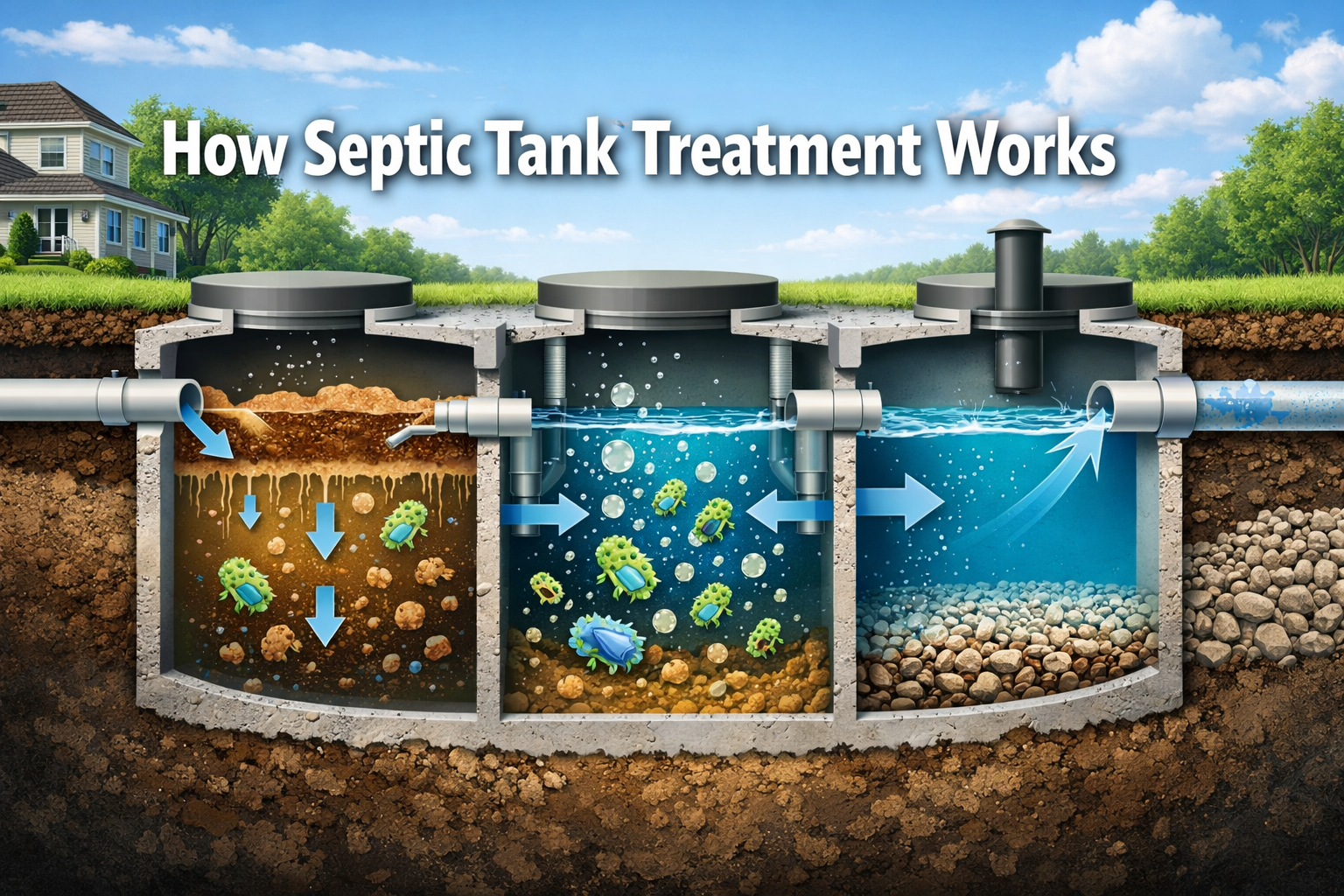
Imagine flushing your toilet and never thinking about where that waste goes—until one day, you notice slow drains, unpleasant odors, or worse, sewage backing up into your home. For the 25% of American households that rely on septic systems, understanding how septic tank treatment works isn’t just helpful—it’s essential for protecting your property, your health, and your wallet from costly emergency repairs.
Whether you’re a new homeowner with a septic system or a property manager overseeing multiple units, knowing the treatment process helps you maintain your system properly and spot problems before they become disasters. In this comprehensive guide, I’ll walk you through every stage of septic treatment, from the moment waste enters your tank to the final cleaned water that safely returns to the environment.
Key Takeaways
• Septic treatment happens in three main stages: primary settling and separation, secondary bacterial breakdown, and tertiary advanced filtration (in modern systems)
• Beneficial bacteria are the heart of the process—they break down organic waste naturally, but need proper conditions and regular maintenance to thrive
• Modern systems can produce effluent up to 10 times cleaner than basic septic tanks through advanced technologies like UV disinfection and membrane filtration
• Smart monitoring technology now allows real-time tracking of system performance, helping prevent failures before they happen
• Regular maintenance and proper usage are critical—what you put down your drains directly affects how well your septic treatment works
Understanding the Basics: What Happens in Your Septic Tank
Before diving into the specific treatment stages, let’s establish what a septic system actually does. At its core, septic tank treatment mimics nature’s own waste processing methods, just in a controlled, underground environment.
The Foundation of Septic Treatment
Your septic tank serves as a biological treatment facility right in your backyard. Unlike city sewer systems that transport waste to distant treatment plants, septic systems handle everything on-site through a carefully orchestrated process of:
- Physical separation of solids, liquids, and oils
- Biological breakdown using naturally occurring bacteria
- Chemical processes that neutralize harmful substances
- Filtration and absorption through soil layers
The entire process relies on anaerobic bacteria—microorganisms that thrive without oxygen. These tiny workers break down organic matter, converting complex waste into simpler, less harmful compounds.
Why Understanding Treatment Matters
When you know how septic tank treatment works, you can:
✅ Prevent system failures by avoiding harmful substances
✅ Extend your system’s lifespan through proper maintenance
✅ Save thousands on emergency repairs and replacements
✅ Protect groundwater and your local environment
✅ Recognize warning signs before major problems develop
Stage 1: Primary Treatment – How Septic Tank Treatment Works Through Separation
The first stage of septic treatment begins the moment wastewater enters your tank. This primary treatment phase focuses on physical separation and initial breakdown—think of it as sorting waste into manageable categories.
The Three-Layer System
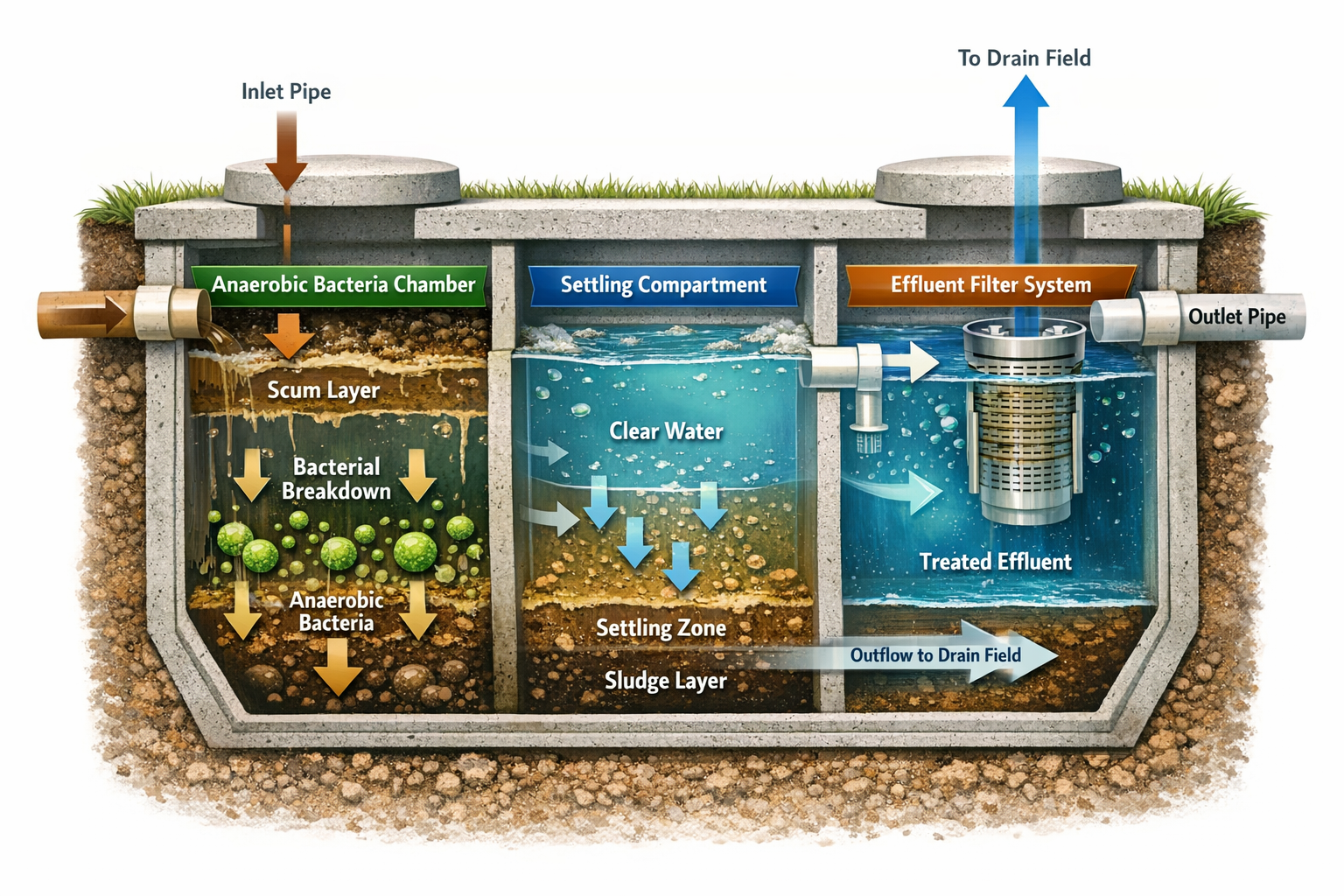
Inside your septic tank, gravity and time work together to create three distinct layers:
🔝 Scum Layer (Top)
- Oils, grease, and floating debris
- Lighter materials that rise to the surface
- Forms a protective barrier that helps maintain anaerobic conditions
💧 Effluent Zone (Middle)
- Clarified liquid wastewater
- Where most bacterial activity occurs
- The cleanest water that eventually exits the tank
🟤 Sludge Layer (Bottom)
- Heavy solids that sink and settle
- Organic matter undergoing decomposition
- Requires periodic pumping when it accumulates
How Primary Treatment Removes Contaminants
During this stage, your septic tank removes approximately 30-40% of pollutants through several processes:
| Process | What It Removes | Effectiveness |
|---|---|---|
| Settling | Heavy solids, sediment | 60-70% |
| Flotation | Oils, grease, light debris | 50-60% |
| Decomposition | Organic matter | 25-35% |
| Retention | Pathogens (partial) | 10-20% |
Bacterial Breakdown Begins
Even in this early stage, anaerobic bacteria start working on organic waste. These microorganisms:
- Break down proteins into amino acids
- Convert carbohydrates into simpler sugars
- Produce gases (methane, carbon dioxide) as byproducts
- Create enzymes that accelerate decomposition
The key to effective primary treatment is retention time—wastewater typically stays in your tank for 24-48 hours, giving bacteria time to begin their work.
Signs Your Primary Treatment Is Working
A healthy primary treatment stage shows these characteristics:
✅ Clear separation between the three layers
✅ Minimal odors (some gas production is normal)
✅ Steady effluent flow to the drain field
✅ Proper water levels in the tank
If you’re noticing signs of a full septic tank or unusual odors, your primary treatment may be compromised.
Stage 2: Secondary Treatment – Advanced Biological Processing
Secondary treatment is where how septic tank treatment works becomes truly fascinating. This stage takes the partially treated effluent from primary treatment and subjects it to intensive biological processing that dramatically improves water quality.
Enhanced Bacterial Activity
While primary treatment relies mainly on settling and basic decomposition, secondary treatment supercharges the biological processes:
Aerobic Treatment Units (ATUs)
Modern systems often include aerobic treatment units that introduce oxygen into the process. This creates an environment where aerobic bacteria can thrive, offering several advantages over traditional anaerobic-only systems:
- Faster decomposition of organic matter
- Better pathogen reduction (up to 99% removal)
- Reduced odor production
- Clearer effluent quality
Biofilm Reactor Technology
Advanced secondary systems use fixed-film technology where beneficial microorganisms grow on support media. This approach provides:
- Compact, space-efficient treatment
- Consistent bacterial populations
- Enhanced nutrient removal capabilities
- Energy-efficient operation
The Role of Different Bacterial Communities
Secondary treatment harnesses multiple types of bacteria working in harmony:
🦠 Nitrifying Bacteria: Convert ammonia to nitrites and nitrates
🦠 Denitrifying Bacteria: Remove nitrogen compounds
🦠 Phosphorus-Accumulating Bacteria: Reduce phosphorus levels
🦠 Cellulose-Degrading Bacteria: Break down paper and organic fibers
Treatment Performance Improvements
Secondary treatment systems achieve significantly better contaminant removal:
| Contaminant | Primary Only | With Secondary | Improvement |
|---|---|---|---|
| BOD (Biological Oxygen Demand) | 30-40% | 85-95% | +150% |
| Total Suspended Solids | 50-60% | 90-95% | +75% |
| Pathogens | 10-20% | 90-99% | +400% |
| Nitrogen | 5-15% | 50-70% | +350% |
Maintenance Considerations for Secondary Systems
Secondary treatment systems require more attention but offer superior performance:
Regular Monitoring Needs:
- Air pump functionality (for aerobic units)
- Bacterial health indicators
- Effluent quality testing
- Mechanical component inspection
FYI: Some links may be affiliate links, which means I may earn a small commission at no extra cost to you.
For homeowners looking to support their system’s bacterial health, products like Septifix tablets can help maintain optimal bacterial populations. These easy-to-use treatments are designed to boost beneficial bacteria, reduce buildup, and keep your secondary treatment processes running efficiently—especially helpful if you’ve had recent antibiotic use or harsh chemical exposure that might have disrupted your system’s natural bacterial balance.
Smart Technology Integration
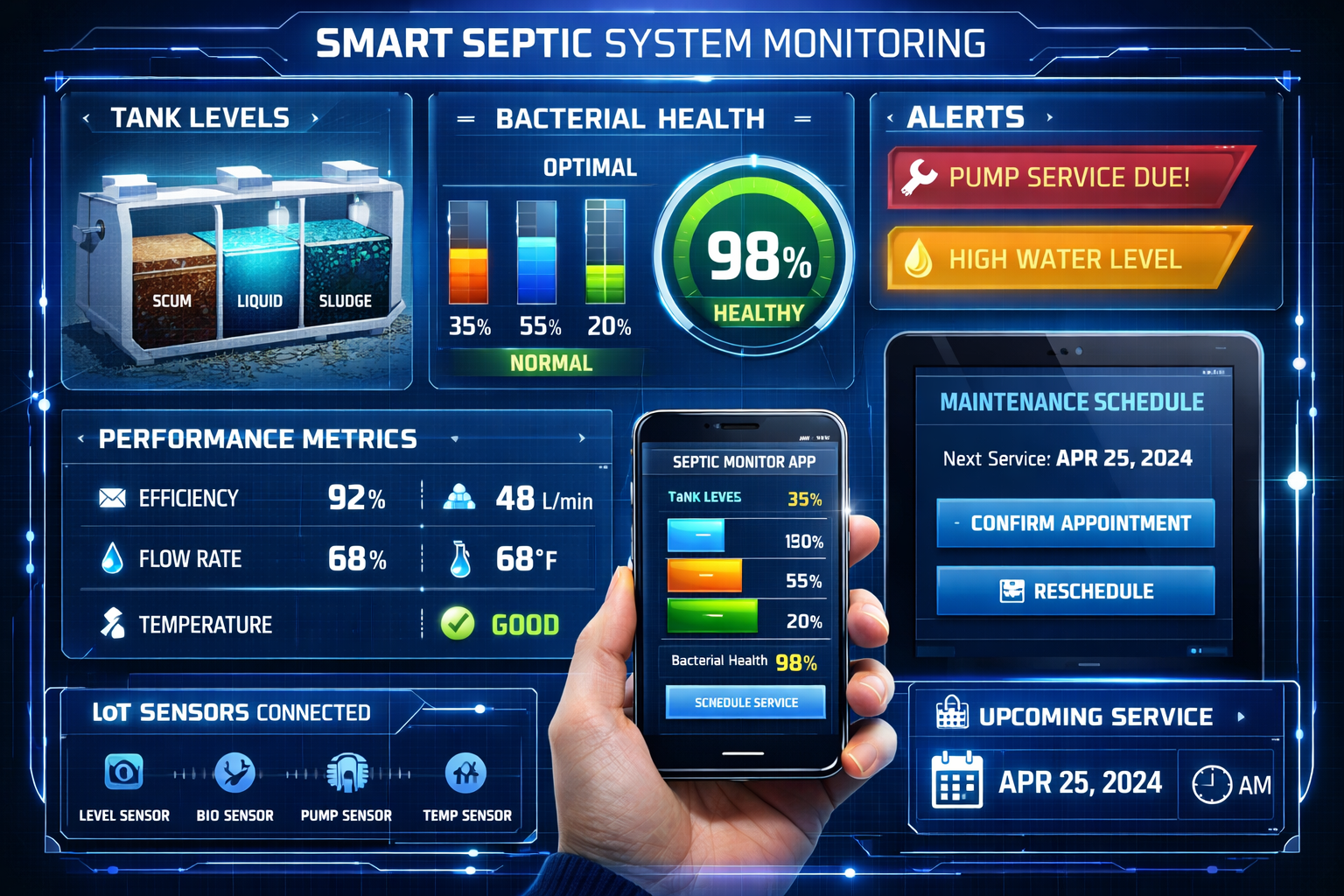
Modern secondary treatment systems increasingly incorporate IoT-enabled sensors and remote monitoring capabilities. These systems can:
- Track bacterial activity levels in real-time
- Alert you to performance issues before they become problems
- Optimize treatment processes automatically
- Provide maintenance scheduling recommendations
Understanding what happens in a septic tank during secondary treatment helps you appreciate why these systems require more sophisticated maintenance but deliver dramatically better results.
Stage 3: Tertiary Treatment – The Ultimate in Septic Technology
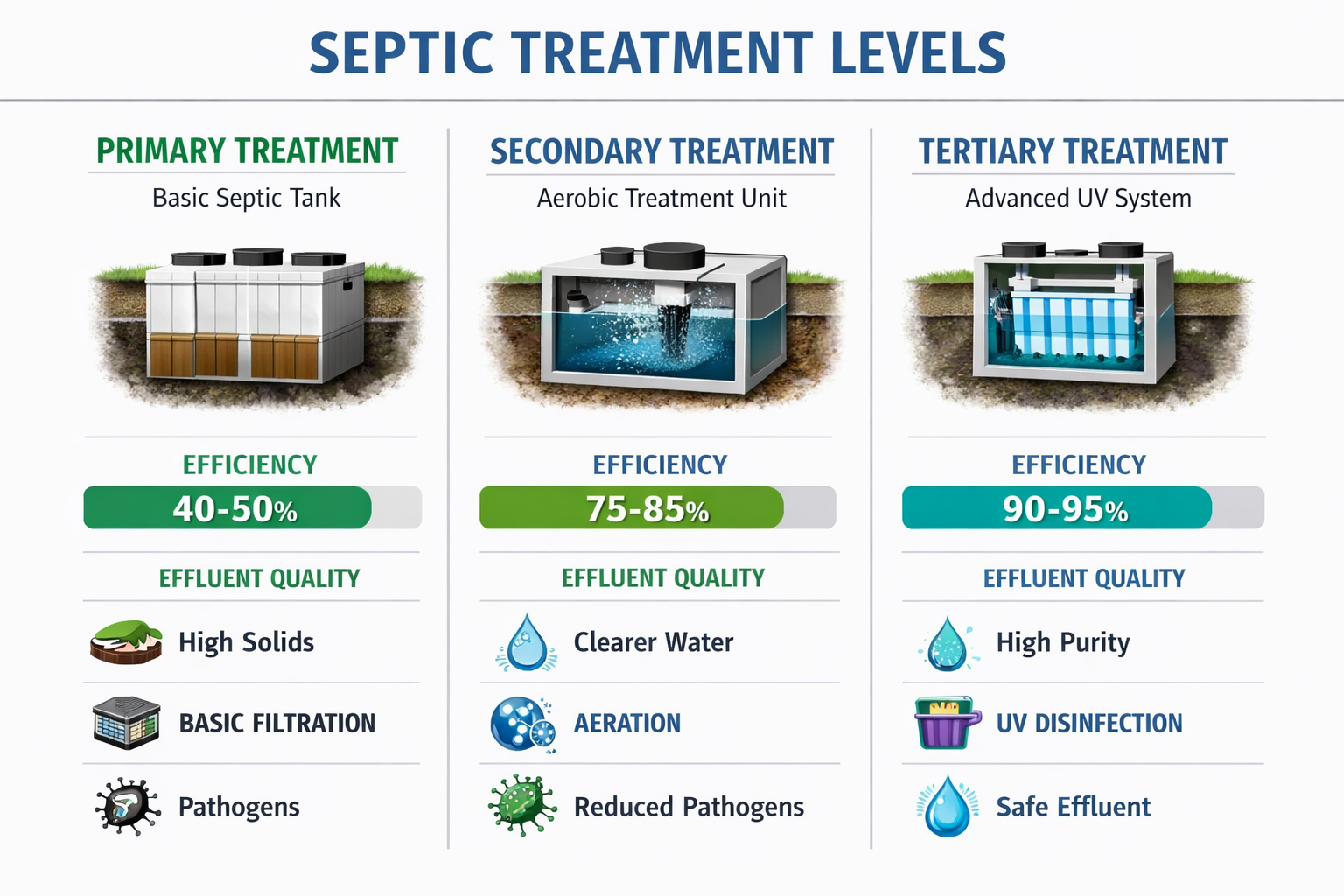
Tertiary treatment represents the pinnacle of how septic tank treatment works in 2026. These advanced systems can produce effluent up to 10 times cleaner than basic septic systems, making them essential for environmentally sensitive areas and increasingly required by modern regulations.
Advanced Treatment Technologies
Tertiary systems employ cutting-edge technologies that go far beyond traditional biological treatment:
UV Disinfection Systems
Ultraviolet light provides the final pathogen elimination step:
- 99.99% pathogen destruction including viruses, bacteria, and parasites
- No chemical additives required
- Immediate treatment with no contact time needed
- Environmentally safe with no harmful byproducts
Membrane Bioreactor (MBR) Technology
These systems combine biological treatment with advanced filtration:
- Membrane filtration removes particles down to 0.1 microns
- Consistent high-quality effluent regardless of input variations
- Reduced system footprint compared to conventional systems
- Enhanced nutrient removal capabilities
Nutrient Removal Systems
Specialized designs target nitrogen and phosphorus reduction:
- Enhanced nitrogen-reducing systems minimize groundwater contamination
- Phosphorus precipitation prevents algae growth in water bodies
- Biological nutrient removal through optimized bacterial processes
Regulatory Requirements Driving Adoption
Modern environmental regulations increasingly mandate tertiary treatment:
New Jersey 2026 Regulations
New Jersey now requires enhanced treatment systems for properties:
- Within 200 feet of surface water bodies
- In watershed protection areas
- Near public water supplies
- In environmentally sensitive zones
Permitting and Installation
The approval process typically requires 4-12 weeks from initial soil testing to final permit approval, with winter installations taking longer due to ground conditions[1].
Real-World Implementation Success
Washington State Case Study
Fall City’s underground pre-treatment facility, approved in October 2025, demonstrates tertiary treatment effectiveness:
- Serves 46 private properties with centralized treatment
- Features engineered drainfield systems
- Installation completing through June 2026
- Provides superior environmental protection
Performance Comparison: Basic vs. Tertiary Systems
| Treatment Level | BOD Removal | Pathogen Reduction | Nitrogen Removal | Suitable Applications |
|---|---|---|---|---|
| Basic Primary | 30-40% | 10-20% | 5-15% | Rural areas, large lots |
| Secondary | 85-95% | 90-99% | 50-70% | Suburban developments |
| Tertiary | 95-99% | 99.99% | 80-95% | Sensitive environments, water reuse |
Cost-Benefit Analysis
While tertiary systems require higher upfront investment, they offer significant long-term benefits:
Initial Costs:
- Equipment: $15,000-$30,000
- Installation: $5,000-$10,000
- Permitting: $1,000-$3,000
Long-term Benefits:
- Regulatory compliance avoiding fines and forced upgrades
- Property value protection in areas requiring advanced treatment
- Environmental stewardship protecting local water resources
- Future-proofing against evolving regulations
Maintenance Requirements
Tertiary systems need specialized maintenance but offer predictable operation:
Professional Service Needs:
- UV lamp replacement (annually)
- Membrane cleaning/replacement (2-5 years)
- Control system calibration (bi-annually)
- Effluent quality testing (as required)
Homeowner Responsibilities:
- Regular visual inspections
- Alarm system monitoring
- Proper household chemical management
- Scheduled professional maintenance
Understanding these advanced treatment stages helps explain why modern septic systems can achieve such impressive results and why they’re becoming the standard for new installations in many areas.
Modern Innovations: How Technology Is Revolutionizing Septic Treatment
The septic industry has undergone dramatic technological advancement in recent years. Understanding how septic tank treatment works today means appreciating both traditional biological processes and cutting-edge innovations that make systems smarter, more efficient, and more reliable.
Smart Monitoring and IoT Integration
Real-Time Performance Tracking
Modern septic systems increasingly feature IoT-enabled sensors that provide continuous monitoring:
- Tank level sensors track sludge accumulation and effluent levels
- Flow meters monitor daily usage patterns and detect anomalies
- Bacterial health indicators measure biological activity
- pH and dissolved oxygen sensors optimize treatment conditions
Predictive Maintenance Capabilities
Smart systems can predict problems before they occur:
- Early warning alerts for potential failures
- Maintenance scheduling based on actual usage patterns
- Performance optimization through automated adjustments
- Remote diagnostics reducing service call needs
Advanced Materials and Construction
High-Density Polyethylene (HDPE) Tanks
Modern tank materials offer superior durability:
- Corrosion resistance lasting 50+ years
- Root intrusion protection preventing system damage
- Lightweight installation reducing excavation costs
- Seamless construction eliminating leak points
Fiberglass Technology
Advanced fiberglass tanks provide:
- Chemical resistance to household cleaners
- Structural integrity in challenging soil conditions
- Thermal stability in extreme climates
- Smooth interior surfaces promoting better flow
Water Efficiency Integration
Leak Detection Systems
Modern homes integrate septic-friendly water management:
- Smart water meters detecting unusual usage patterns
- Leak alert systems preventing system overload
- High-efficiency appliances reducing septic strain
- Greywater diversion for appropriate applications
Enhanced Bacterial Support Systems
Controlled Environment Optimization
Advanced systems create ideal conditions for bacterial treatment:
- Temperature regulation maintaining optimal bacterial activity
- Nutrient dosing supporting bacterial populations during low-use periods
- pH buffering preventing bacterial die-offs from chemical shocks
For homeowners wanting to support their system’s bacterial health naturally, Septifix tablets offer a convenient solution. These specialized treatments help maintain robust bacterial populations, reduce waste buildup, and support optimal treatment performance—particularly valuable in modern systems where consistent bacterial health is crucial for meeting strict effluent standards.
Future Technologies on the Horizon
Artificial Intelligence Integration
AI-powered systems are beginning to appear in septic treatment:
- Machine learning algorithms optimizing treatment processes
- Usage pattern analysis predicting maintenance needs
- Automated chemical dosing maintaining optimal conditions
- Energy optimization reducing operational costs
Modular Treatment Systems
Flexible, expandable treatment solutions:
- Scalable capacity adapting to changing household needs
- Plug-and-play components simplifying upgrades
- Standardized interfaces reducing maintenance complexity
Environmental Impact Improvements
Carbon Footprint Reduction
Modern systems focus on sustainability:
- Energy-efficient pumps and blowers
- Solar-powered components for remote installations
- Methane capture systems for energy recovery
- Reduced chemical usage through biological optimization
Water Reuse Capabilities
Advanced treatment enables safe water reuse:
- Irrigation-quality effluent for landscape watering
- Toilet flushing applications in commercial settings
- Groundwater recharge supporting local water supplies
These innovations demonstrate how septic technology continues evolving to meet modern environmental standards while providing reliable, cost-effective wastewater treatment for millions of homes.
Maintenance and Optimization: Keeping Your Treatment System Running Smoothly
Understanding how septic tank treatment works is only valuable if you know how to maintain the system properly. Even the most advanced treatment technology fails without proper care, while a well-maintained basic system can provide decades of reliable service.
Essential Maintenance Tasks by Treatment Level
Primary Treatment System Maintenance
Monthly Tasks:
- Visual inspection of drain field for standing water or odors
- Check for slow drains or backups in the house
- Monitor water usage patterns
Annual Tasks:
- Professional tank inspection and pumping assessment
- Baffle and filter cleaning
- Inlet and outlet pipe inspection
Every 3-5 Years:
- Complete tank pumping and cleaning
- Drain field evaluation
- System component replacement as needed
Secondary Treatment System Maintenance
Additional Monthly Tasks:
- Air pump operation verification (for aerobic systems)
- Alarm system testing
- Effluent clarity visual inspection
Additional Quarterly Tasks:
- Bacterial additive treatments (if recommended)
- Control panel inspection
- Air diffuser cleaning
Tertiary Treatment System Maintenance
Additional Monthly Tasks:
- UV lamp operation indicator checks
- Membrane pressure differential monitoring
- Automated system log review
Additional Tasks:
- UV lamp replacement (annually)
- Membrane cleaning or replacement (2-5 years)
- Professional effluent testing (as required by regulations)
Protecting Your System’s Bacterial Health
The biological treatment processes depend entirely on healthy bacterial populations. Here’s how to protect them:
✅ Bacterial-Friendly Practices:
- Use biodegradable soaps and detergents
- Limit antibiotic disposal through drains
- Maintain consistent water temperatures
- Avoid chemical drain cleaners
❌ Bacterial-Harmful Practices:
- Excessive bleach or disinfectant use
- Disposal of medications down drains
- Hot water system flushes into septic
- Antibacterial soap overuse
Troubleshooting Common Treatment Issues
Slow Treatment Performance
If you notice septic tank slow drains, the problem often lies in compromised treatment processes:
Potential Causes:
- Bacterial population disruption
- Excessive sludge accumulation
- Drain field saturation
- System overloading
Solutions:
- Bacterial restoration treatments
- Professional pumping and cleaning
- Water usage reduction
- System component inspection
Odor Problems
Understanding why your septic tank smells helps identify treatment issues:
Common Causes:
- Inadequate bacterial activity
- Improper ventilation
- System overloading
- Chemical interference
Seasonal Maintenance Considerations
Winter Protection
- Insulate exposed components
- Maintain consistent water flow to prevent freezing
- Avoid driving on frozen drain fields
- Schedule pumping before ground freezes
Spring Inspection
- Check for winter damage
- Assess drain field condition after snow melt
- Test system capacity before heavy usage seasons
- Schedule professional inspections
Summer Optimization
- Monitor increased usage from guests/activities
- Maintain bacterial health during hot weather
- Check irrigation systems for proper effluent use
- Inspect landscaping for root intrusion
Fall Preparation
- Complete necessary repairs before winter
- Schedule final pumping if needed
- Clear vegetation from system components
- Prepare emergency contact information
Creating a Maintenance Schedule
Monthly Checklist:
□ Visual inspection of drain field area
□ Check household drains for slow flow
□ Monitor water usage patterns
□ Test alarm systems (if equipped)
□ Note any unusual odors
Quarterly Checklist:
□ Professional system inspection (for advanced systems)
□ Bacterial additive treatment (if recommended)
□ Filter cleaning or replacement
□ Control system calibration check
Annual Checklist:
□ Complete professional inspection
□ Pumping assessment and service if needed
□ UV lamp replacement (tertiary systems)
□ Drain field evaluation
□ System performance testing
Record Keeping for Optimal Performance
Maintaining detailed records helps optimize your system’s treatment performance:
Essential Records:
- Pumping dates and sludge levels
- Maintenance service reports
- Water usage patterns
- System performance issues
- Repair and replacement history
Benefits of Good Records:
- Predictive maintenance scheduling
- Warranty protection for system components
- Regulatory compliance documentation
- Property value documentation for resale
Regular maintenance ensures that your understanding of how septic tank treatment works translates into decades of reliable, efficient wastewater processing.
Helpful Resource: Supporting Your Septic Treatment System
Throughout this guide, we’ve explored the complex biological and mechanical processes that make septic treatment effective. One key factor in maintaining optimal treatment performance is supporting the beneficial bacteria that do the heavy lifting in your system.
Simple Solutions for Bacterial Health
While professional maintenance and proper usage habits form the foundation of good septic care, many homeowners find value in bacterial support products that help maintain robust treatment performance between service visits.
Septifix tablets represent a convenient approach to supporting your system’s bacterial health. These treatments are designed to:
- Boost beneficial bacteria populations that drive the treatment process
- Reduce waste buildup that can compromise treatment efficiency
- Help prevent blockages that disrupt normal treatment flow
- Support system recovery after bacterial disruption from chemicals or medications
This type of bacterial support can be particularly helpful if you’ve recently had household members on antibiotics, used strong cleaning chemicals, or noticed early signs that your treatment processes might be struggling.
When Bacterial Support Makes Sense
Consider bacterial treatments when:
- Your household has recently used antibiotics or strong medications
- You’ve had to use harsh cleaning chemicals or drain cleaners
- You’re noticing early signs of treatment issues like slow drains or minor odors
- Your system is recovering from overloading or other stress
- You want to maintain optimal bacterial populations between professional services
Integration with Overall Maintenance
Bacterial support products work best as part of a comprehensive maintenance approach that includes:
- Regular professional inspections and pumping
- Proper household chemical management
- Appropriate water usage patterns
- Seasonal system preparation and protection
Remember, no treatment product replaces the need for proper system maintenance, but the right bacterial support can help maintain the biological processes that make septic treatment effective.
Conclusion: Mastering How Septic Tank Treatment Works
Understanding how septic tank treatment works empowers you to protect one of your property’s most critical systems while safeguarding your local environment. From the basic three-layer separation in primary treatment to the sophisticated bacterial processes in secondary systems, and finally to the advanced filtration and disinfection of tertiary treatment, each stage plays a vital role in converting household wastewater into clean, safe effluent.
The key insights to remember:
🔬 Biology is the foundation – Beneficial bacteria drive the entire treatment process, making their health crucial to system performance
⚙️ Technology enhances nature – Modern systems use smart monitoring, advanced materials, and optimized processes to achieve treatment levels up to 10 times cleaner than basic systems
🛠️ Maintenance prevents problems – Regular care, proper usage, and understanding warning signs keep treatment processes running smoothly and prevent costly failures
🌱 Environmental protection matters – Properly functioning treatment protects groundwater, surface water, and your local ecosystem while meeting increasingly strict regulations
Your Next Steps
- Assess your current system – Determine what level of treatment you have and whether it meets local requirements
- Establish a maintenance routine – Create monthly, quarterly, and annual inspection and care schedules
- Monitor performance indicators – Learn to recognize signs that your treatment processes are working properly
- Plan for the future – Consider upgrades if regulations change or if your current system shows signs of aging
- Build your support team – Establish relationships with qualified septic professionals in your area
Final Thoughts
Septic treatment technology continues advancing rapidly, with smart monitoring, enhanced bacterial processes, and environmental protection driving innovation. Whether you’re managing a basic system or an advanced tertiary treatment facility, understanding the underlying processes helps you make informed decisions about maintenance, upgrades, and daily usage patterns.
The investment you make in understanding and maintaining your septic treatment system pays dividends in reliable performance, environmental protection, and peace of mind. When you know how the process works, you’re equipped to keep it working effectively for decades to come.
For more detailed information about septic system fundamentals, explore our complete guide to how septic systems work and learn to recognize the signs when your septic tank needs attention.
References
[1] Nj Septic Regulations For 2026 – https://www.atsenvironmental.com/blog/nj-septic-regulations-for-2026/
[2] Fall City Gets Green Light From State For Final Phase Of Septic Project – https://kingcountylocalblog.com/2025/10/15/fall-city-gets-green-light-from-state-for-final-phase-of-septic-project/
[3] The Future Of Septic Systems Emerging Technologies To Watch – https://www.lanikseptic.com/the-future-of-septic-systems-emerging-technologies-to-watch/
[4] The Future Of Septic Systems Embracing Smart Technology And Eco Friendly Solutions – https://www.pumper.com/bytes/2024/08/the-future-of-septic-systems-embracing-smart-technology-and-eco-friendly-solutions
[5] How Modern Septic Technology Is Changing The Game – https://www.septicblue.com/how-modern-septic-technology-is-changing-the-game
[6] Septic System Types – https://www.premiertechaqua.com/en-us/blog/septic-system-types