
How Septic Tank System Works: A Complete Guide for Homeowners
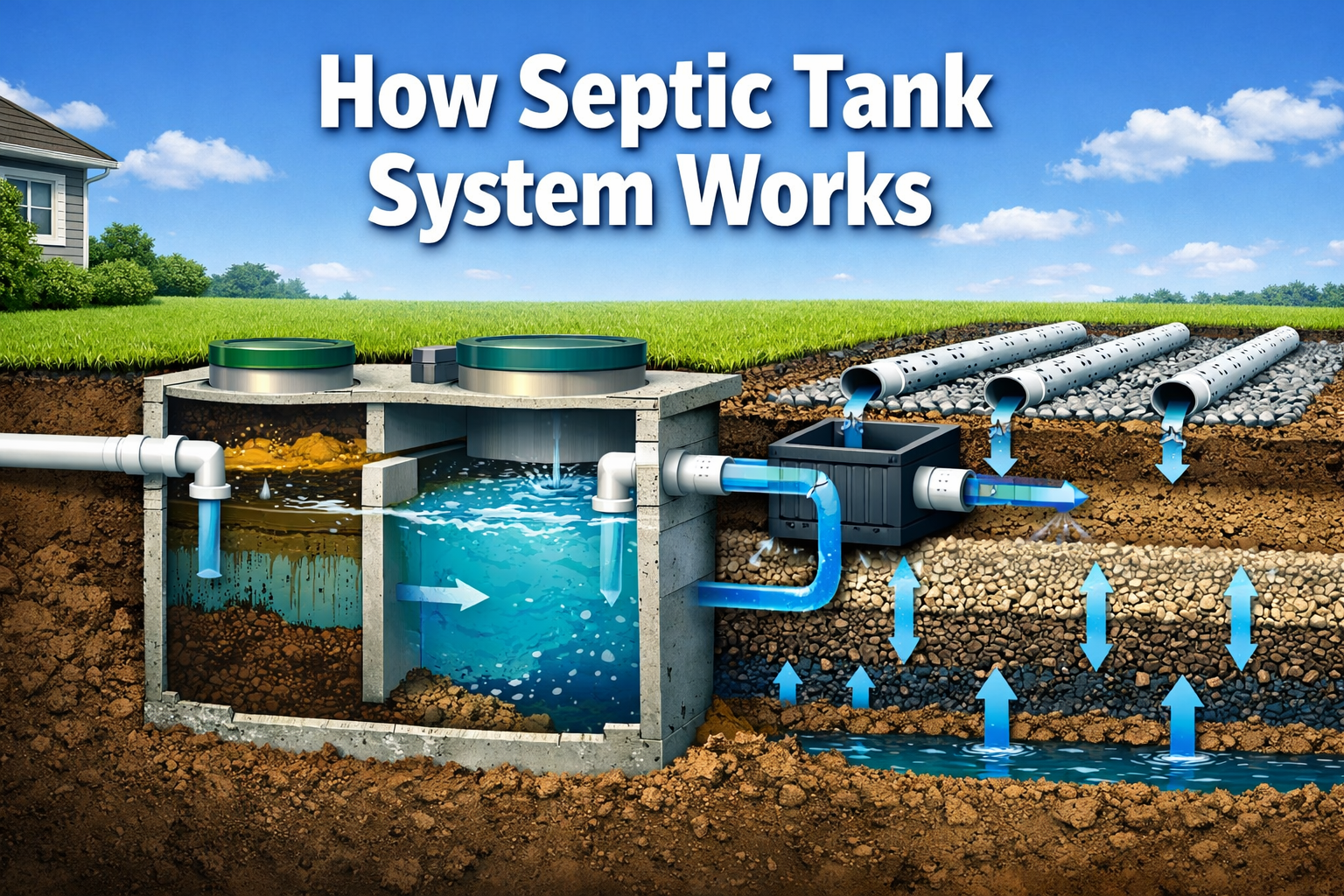
Picture this: you’re enjoying a quiet evening at home when suddenly your drains start backing up, and an unpleasant odor wafts from your yard. If you’re one of the 25% of North American households that rely on septic systems, understanding how septic tank system works could save you from this nightmare scenario—and thousands of dollars in emergency repairs.
As a homeowner who’s dealt with septic systems for over a decade, I’ve learned that most septic problems stem from one simple issue: people don’t understand how their system actually works. When you know the science behind your septic tank, you can spot warning signs early, maintain it properly, and avoid costly disasters.
Key Takeaways
• Septic systems use natural bacterial processes to break down waste in three distinct layers within the tank
• Proper maintenance prevents 90% of septic failures and extends system life by decades
• Smart monitoring technology is revolutionizing septic care with IoT sensors and real-time tracking
• Enhanced nutrient-reducing systems are becoming mandatory in many areas to protect water quality
• Regular pumping every 3-5 years is essential, but understanding your system helps optimize timing
Understanding the Basics: How Septic Tank System Works
What Is a Septic System? 🏠
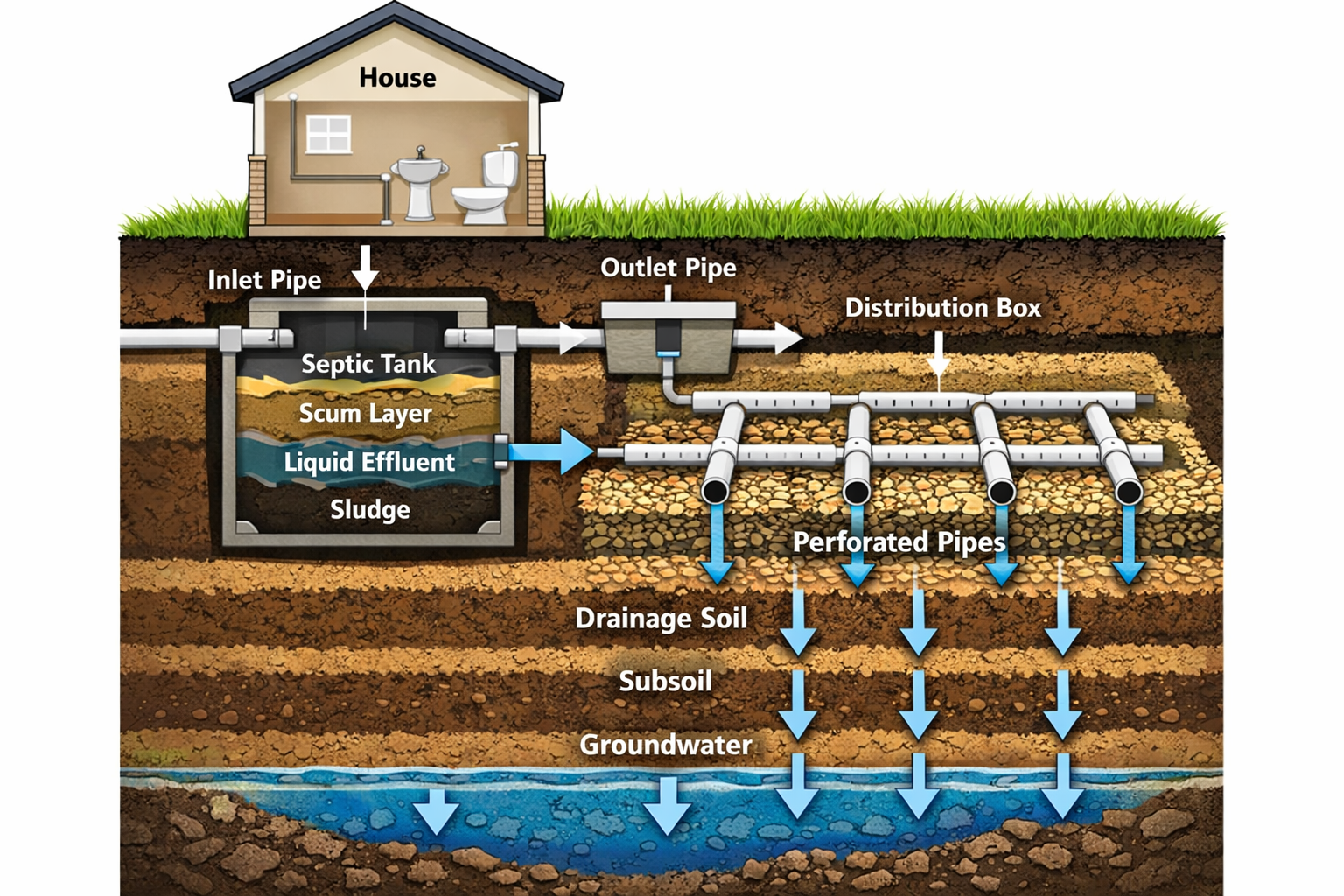
A septic system is your home’s personal wastewater treatment plant. Unlike city sewer systems that transport waste to centralized facilities, septic systems treat and dispose of wastewater right on your property. The system consists of two main components:
- Septic tank – where initial treatment occurs
- Drain field (leach field) – where final filtration happens
The beauty of understanding how septic tank system works lies in its simplicity. It’s essentially a natural process that humans have harnessed to safely manage household waste.
The Science Behind Septic Treatment
When wastewater enters your septic tank, gravity and biology do most of the work. Beneficial bacteria naturally present in human waste begin breaking down organic matter immediately. This biological process is so effective that a properly functioning septic system can remove up to 97% of harmful bacteria from wastewater.
The key is maintaining the right environment for these helpful microorganisms to thrive. They need:
- Proper pH levels (slightly acidic to neutral)
- Adequate time to process waste
- Protection from harsh chemicals that kill beneficial bacteria
The Complete Process: How Septic Tank System Works Step by Step
Stage 1: Waste Enters the Tank
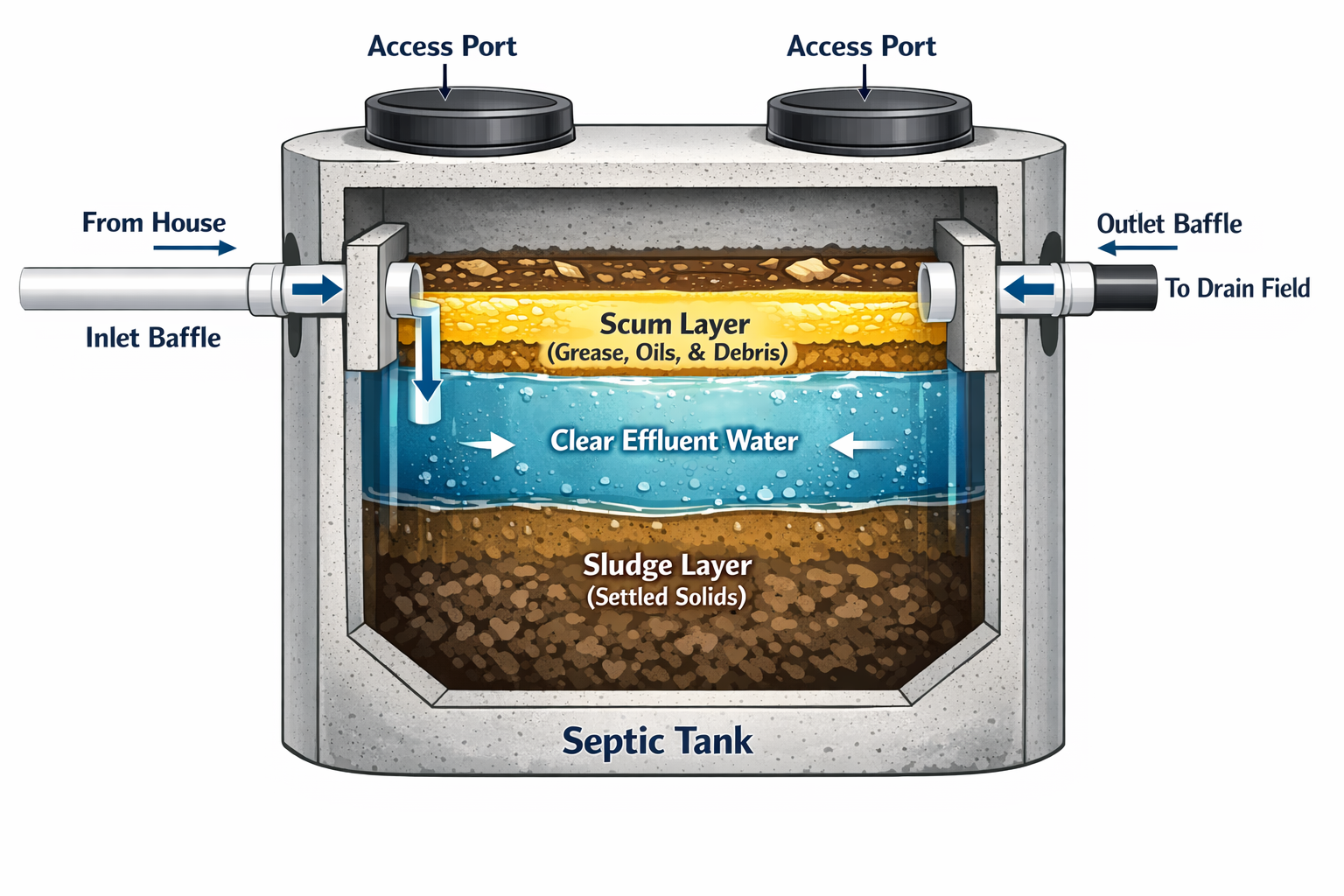
All wastewater from your home—toilets, sinks, showers, and laundry—flows into the septic tank through the inlet pipe. Modern tanks include an inlet baffle that prevents turbulence and protects the natural settling process.
Here’s what happens immediately:
- Heavy solids sink to the bottom
- Oils and grease float to the top
- Liquid wastewater settles in the middle
Stage 2: The Three-Layer System Forms
Within hours, your septic tank naturally separates into three distinct layers:
| Layer | Contents | Function |
|---|---|---|
| Scum Layer (Top) | Oils, grease, soap residue | Floats and slowly decomposes |
| Effluent Layer (Middle) | Clarified liquid | Ready for drain field treatment |
| Sludge Layer (Bottom) | Heavy solids, organic matter | Bacterial decomposition zone |
This layered system is crucial to how septic tank system works effectively. Each layer serves a specific purpose in the treatment process.
Stage 3: Bacterial Breakdown
Anaerobic bacteria (bacteria that don’t need oxygen) go to work in the sludge layer. These microscopic workers break down organic matter into:
- Gases (vented through your roof)
- Liquids (join the middle effluent layer)
- Inorganic solids (remain as sludge)
This process typically takes 24-48 hours for initial treatment, though complete breakdown can take weeks.
Stage 4: Effluent Discharge
Once the middle layer reaches capacity, clarified effluent flows out through the outlet pipe to your drain field. The outlet baffle prevents scum and sludge from escaping the tank.
FYI: Some links may be affiliate links, which means I may earn a small commission at no extra cost to you.
Understanding this process helps you see why maintaining proper bacterial balance is so important. If you’re looking for a simple way to support your system’s bacterial health, many homeowners find success with monthly septic treatments. These convenient tablets can help break down sludge, reduce odors, and support the natural bacterial processes that keep your system running smoothly.
Advanced Septic Technologies: How Modern Systems Work
Smart Septic Monitoring in 2026
The septic industry is experiencing a technological revolution. IoT-enabled septic monitoring systems are experiencing rapid adoption, with real-time sensors tracking sludge levels and optimizing service schedules. The smart septic technology segment is projected to grow by 12% annually through 2030.
Modern smart systems offer:
- Real-time sludge level monitoring
- Automated service scheduling
- Early warning alerts for potential problems
- Efficiency improvements of 25-30% in commercial applications
Enhanced Nutrient-Reducing Septic Systems (ENRS)
Environmental concerns are driving innovation in how septic tank system works. Enhanced nutrient-reducing septic systems (ENRS) are being promoted as an affordable solution to reduce excess nitrogen pollution[4].
Florida’s new regulations require enhanced nutrient-reducing systems to achieve at least 65% nitrogen reduction in certain areas. These advanced systems include:
- Additional treatment chambers
- Specialized bacterial cultures
- Advanced filtration media
- Recirculation pumps for enhanced treatment
Types of Modern Septic Systems
Different properties require different approaches to how septic tank system works:
Conventional Systems:
- Standard gravity-fed design
- Most common and cost-effective
- Suitable for most soil types
Advanced Treatment Units (ATUs):
- Mechanical aeration systems
- Higher treatment quality
- Required in sensitive environmental areas
Pressure Distribution Systems:
- Pump-assisted effluent distribution
- Better for challenging soil conditions
- More uniform drain field loading
Constructed Wetland Systems:
- Natural biological treatment
- Excellent for nitrogen reduction
- Higher maintenance requirements
Maintaining Your System: Keeping Everything Working Properly
Essential Maintenance Tasks 🔧
Understanding how septic tank system works makes maintenance much clearer. Here are the critical tasks every homeowner should follow:
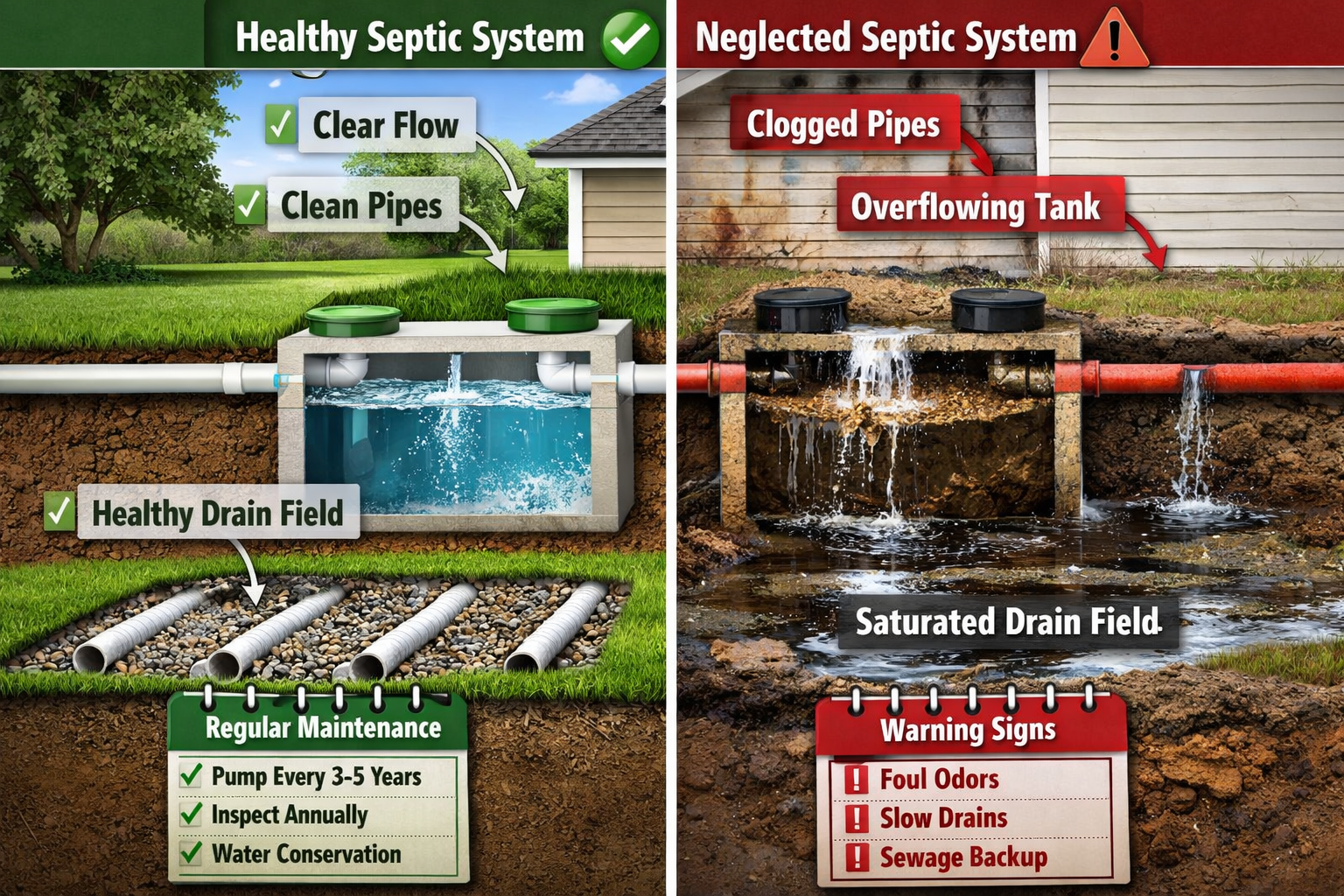
Monthly:
- Monitor water usage patterns
- Check for slow drains or odors
- Avoid excessive chemical use
Annually:
- Professional system inspection
- Pump maintenance (if applicable)
- Drain field assessment
Every 3-5 Years:
- Professional pumping service
- Comprehensive system evaluation
- Component replacement as needed
Signs Your System Needs Attention
Knowing how septic tank system works helps you recognize problems early:
Immediate Action Required:
- 🚨 Sewage backup in home
- 🚨 Standing water over drain field
- 🚨 Strong sewage odors outside
Schedule Service Soon:
- ⚠️ Slow draining fixtures
- ⚠️ Gurgling sounds in pipes
- ⚠️ Unusually green grass over drain field
- ⚠️ High nitrate levels in well water
The Pumping Process Explained
Mechanical cleaning methods represent 38% of the 2025 market share, and understanding when and why pumping is necessary is crucial.
Your septic tank needs pumping when:
- Sludge layer exceeds 1/3 of tank depth
- Scum layer is within 6 inches of outlet
- System shows signs of backup
The pumping process involves:
- Locating and opening tank access ports
- Measuring sludge and scum levels
- Complete tank evacuation using vacuum trucks
- Visual inspection of tank condition
- System testing before closure
Environmental Impact and Regulations
Water Quality Protection
Understanding how septic tank system works is increasingly important for environmental protection. The US and EU now mandate biodegradable treatment for 92% of extracted sludge, reflecting growing environmental awareness.
Properly functioning septic systems:
- Remove 97% of harmful bacteria from wastewater
- Reduce nitrogen pollution through soil filtration
- Protect groundwater quality when maintained correctly
- Prevent surface water contamination
Regulatory Changes in 2026
Environmental regulations continue evolving. Recent developments include:
- Enhanced nitrogen reduction requirements in sensitive watersheds
- Mandatory inspection programs in many jurisdictions
- Stricter setback requirements from water bodies
- Professional licensing requirements for service providers
Global Market Trends
The septic industry reflects growing environmental awareness. The global septic tank cleaning and pumping market was valued at $474 million in 2025 and is projected to reach $679 million by 2034, representing a 5.3% CAGR.
This growth is driven by:
- Increased environmental regulations
- Growing rural populations
- 60% of rural homes in developing nations lack proper wastewater solutions
- Rising awareness of groundwater protection
Troubleshooting Common Problems
Drain Field Issues
The drain field is where final treatment occurs, making it critical to how septic tank system works overall. Common problems include:
Hydraulic Overload:
- Cause: Too much water entering system
- Solution: Reduce water usage, fix leaks
- Prevention: Install high-efficiency fixtures
Biomat Failure:
- Cause: Excessive solids reaching drain field
- Solution: Professional cleaning, possible replacement
- Prevention: Regular pumping, proper tank maintenance
Soil Saturation:
- Cause: Poor soil drainage, system overload
- Solution: Rest system, improve drainage
- Prevention: Proper system sizing, water conservation
Tank-Specific Problems
Understanding how septic tank system works helps identify tank issues:
Excessive Sludge Buildup:
- Usually indicates infrequent pumping
- Can lead to solids carryover
- Requires immediate professional attention
Bacterial Imbalance:
- Often caused by antibiotics or harsh chemicals
- Results in poor waste breakdown
- May benefit from bacterial additives
Structural Damage:
- Cracks, loose baffles, damaged pipes
- Requires professional repair
- Can cause system failure if ignored
When to Call Professionals
While understanding how septic tank system works empowers homeowners, some situations require professional intervention:
Immediate Professional Help:
- Any sewage backup into home
- Standing water over drain field
- System hasn’t been pumped in 5+ years
- Strong sewage odors persisting
Annual Professional Services:
- Comprehensive system inspection
- Pump and control panel maintenance
- Drain field assessment
- Regulatory compliance checks
Cost-Effective System Management
Budget Planning for Septic Maintenance
Understanding how septic tank system works helps you budget effectively:
Annual Costs:
- Routine inspection: $200-400
- Minor repairs: $150-500
- Bacterial treatments: $50-150
Major Expenses (Every 3-5 Years):
- Professional pumping: $300-600
- Component replacement: $500-2,000
- System upgrades: $3,000-10,000
Money-Saving Tips
Knowing how septic tank system works reveals several cost-saving opportunities:
- Extend pumping intervals through proper maintenance
- Prevent expensive repairs with early problem detection
- Optimize water usage to reduce system stress
- Use septic-safe products to maintain bacterial balance
For homeowners looking for an easy way to support their septic system between professional services, monthly treatment tablets can be a cost-effective investment. These products help maintain bacterial balance, reduce sludge buildup, and may extend the time between expensive pumping services.
Return on Investment
Proper septic maintenance offers excellent ROI:
- Prevents system replacement ($15,000-30,000)
- Maintains property value
- Avoids emergency repairs (often 3x normal cost)
- Protects family health and environment
Future of Septic Technology
Emerging Innovations
The future of how septic tank system works includes exciting developments:
Artificial Intelligence:
- Predictive maintenance algorithms
- Automated system optimization
- Smart scheduling based on usage patterns
Advanced Materials:
- Longer-lasting tank materials
- Improved filtration media
- Self-cleaning components
Integration with Smart Homes:
- Whole-house water management
- Automated leak detection
- Energy-efficient operation
Sustainability Trends
Environmental consciousness is reshaping how septic tank system works:
- Carbon-neutral treatment processes
- Resource recovery systems (water, nutrients)
- Renewable energy integration
- Circular economy principles
Helpful Resources for Septic System Maintenance
If you want a structured approach to septic system care, here are some convenient septic tank treatment solutions for keeping your system clean, odor-free, and running smoothly—from breaking down sludge and reducing unpleasant smells to helping prevent clogs, backups, and expensive pumping costs. These easy monthly tablets are trusted by many homeowners to maintain a cleaner, healthier septic system with minimal effort.
👉 Check the latest price and see how Septifix can protect your septic system today
These treatments aren’t required for every system, but can be helpful if you’re dealing with odors, slow drainage, or want to support your system’s natural bacterial processes between professional services.
Conclusion
Understanding how septic tank system works transforms you from a passive homeowner into an informed system manager. The key principles are surprisingly simple: gravity separates waste, bacteria break down organics, and soil provides final filtration. Yet this elegant process requires respect and proper maintenance to function reliably.
The septic industry is evolving rapidly, with smart monitoring systems, enhanced treatment technologies, and stricter environmental regulations reshaping how we manage wastewater. IoT integration is improving efficiency by 25-30%, while enhanced nutrient-reducing systems are becoming standard in environmentally sensitive areas.
Your next steps should be:
- Schedule a professional inspection if your system hasn’t been evaluated recently
- Implement a maintenance calendar based on your system type and usage
- Monitor your system regularly for early warning signs
- Consider smart monitoring technology for newer installations
- Stay informed about local regulations that may affect your system
Remember, a well-maintained septic system can last 25-30 years or more, while a neglected system may fail in just a few years. The choice is yours, but now you have the knowledge to make informed decisions about your septic system’s care.
By understanding how septic tank system works, you’re not just protecting your investment—you’re safeguarding your family’s health and the environment for future generations.
References
[1] Global Septic Tank Cleaningpumping Forecast Market 26825 – https://www.intelmarketresearch.com/global-septic-tank-cleaningpumping-forecast-market-26825
[2] 2026s01510.pre.en – https://www.flsenate.gov/Session/Bill/2026/1510/Analyses/2026s01510.pre.en.PDF
[3] Florida Well Septic Placement 2025 – https://flengineeringllc.com/florida-well-septic-placement-2025/
[4] Enhanced Nutrient Reducing Septic Systems Enrs Florida Sewage Treatment Plants Water Pollution – https://www.theinvadingsea.com/2026/02/06/enhanced-nutrient-reducing-septic-systems-enrs-florida-sewage-treatment-plants-water-pollution/
[5] Septic System Types – https://www.premiertechaqua.com/en-us/blog/septic-system-types
[6] Aging Septic Systems Fuel Floridas Growing Water Quality Crisis Column – https://www.tampabay.com/viewpoints/2026/02/02/aging-septic-systems-fuel-floridas-growing-water-quality-crisis-column/
[7] 5 New Years Resolutions For A Healthier Septic System In 2026 – https://www.metroseptic.com/blog/5-new-years-resolutions-for-a-healthier-septic-system-in-2026/
[8] Florida 2026 S0698 Senate Committee Amendment 732922 – https://legiscan.com/FL/amendment/S0698/id/267177/Florida-2026-S0698-Senate_Committee_Amendment_732922.html