Last updated: March 4, 2026
Key Takeaways
• Anaerobic bacteria break down organic waste in your septic tank without oxygen, creating a natural digestion process
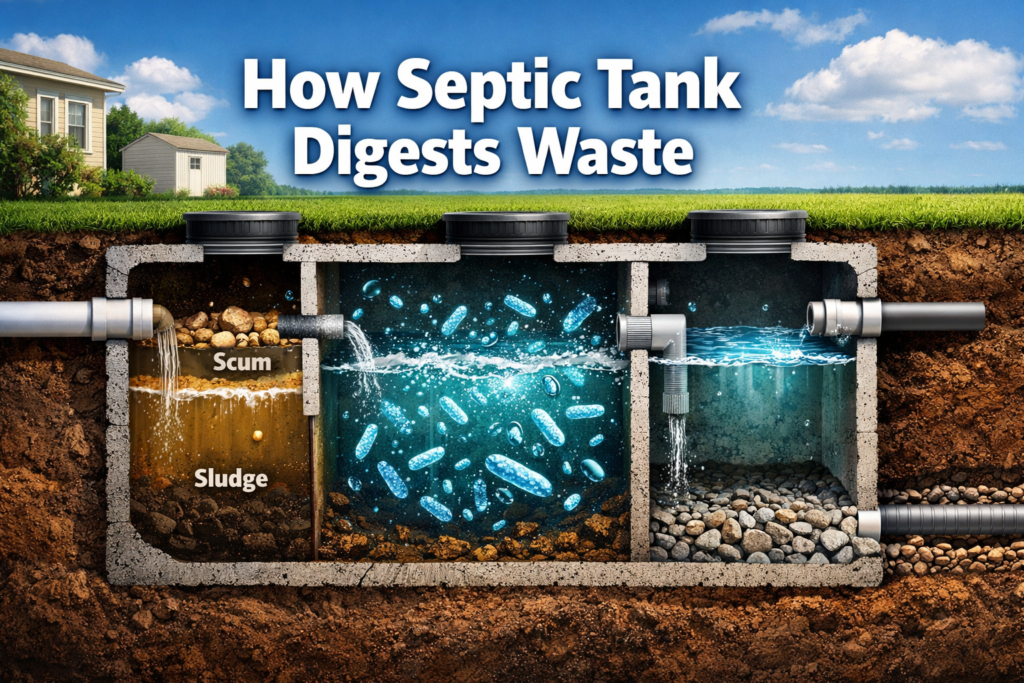
• Three distinct layers form during digestion: scum on top, liquid effluent in middle, and solid sludge at bottom
• Waste separation happens through gravity and bacterial action, with solids settling and liquids flowing to the drain field
• Digestion takes 24-48 hours for initial breakdown, with ongoing bacterial processing for complete waste treatment
• Proper bacterial balance is essential for effective digestion and preventing system backups or failures
• Regular maintenance including pumping every 3-5 years keeps the digestion process working efficiently
• Chemical interference from harsh cleaners can disrupt bacterial colonies and slow waste digestion
Quick Answer
Your septic tank digests waste through anaerobic bacterial decomposition in a sealed underground chamber. Bacteria break down organic matter without oxygen, separating waste into three layers: floating scum, liquid effluent, and settled sludge. This natural process transforms solid waste into liquid that flows to your drain field, while remaining solids accumulate as sludge that requires periodic pumping.
What Is the Septic Tank Waste Digestion Process?
Septic tank waste digestion is a biological treatment process where anaerobic bacteria decompose organic waste materials in an oxygen-free environment. The process transforms solid human waste and organic matter into liquid effluent and biogas through natural bacterial action.
Your septic tank creates the perfect conditions for this digestion by maintaining a sealed, dark environment where beneficial bacteria can thrive. These microorganisms consume organic matter, breaking down proteins, fats, and carbohydrates into simpler compounds.
The digestion process happens continuously as new waste enters your tank. Key factors that influence digestion effectiveness include:
- Temperature stability – bacteria work best in consistent temperatures
- pH balance – neutral conditions support optimal bacterial growth
- Retention time – waste needs sufficient contact time with bacteria
- Chemical balance – harsh cleaners can kill beneficial bacteria
Understanding how septic tanks work helps you maintain proper conditions for effective waste digestion.
How Do Septic Tank Layers Form During Digestion?
Three distinct layers develop in your septic tank as waste digestion occurs, each serving a specific function in the treatment process.
Scum Layer (Top)
The top layer consists of oils, grease, and floating debris that’s lighter than water. This layer forms naturally as fats and oils rise to the surface. Bacteria in this layer work to break down these materials, though the process is slower than in other zones.
Effluent Layer (Middle)
The middle zone contains partially clarified liquid where most active digestion happens. Suspended particles settle out while bacteria continue breaking down dissolved organic matter. This liquid eventually flows to your drain field.
Sludge Layer (Bottom)
Heavy solids settle to the bottom, forming a dense sludge layer. Bacteria here work on the most concentrated waste materials, breaking them down into simpler compounds. This layer grows over time and requires periodic removal through pumping.
Layer Separation Process:
- Gravity pulls heavier materials downward
- Bacterial action breaks down organic matter at different rates
- Natural settling creates distinct zones with different treatment functions
- Proper layer formation indicates healthy digestion
Choose a tank with adequate capacity if you have a large household – insufficient volume prevents proper layer formation and reduces digestion efficiency.
What Role Do Bacteria Play in How Septic Tank Digests Waste?
Anaerobic bacteria are the primary workers that make waste digestion possible in your septic tank. These microorganisms thrive in oxygen-free environments and consume organic matter as their food source.
Types of Beneficial Bacteria:
- Acidogenic bacteria – break down complex organic compounds into organic acids
- Methanogenic bacteria – convert organic acids into methane and carbon dioxide
- Proteolytic bacteria – decompose proteins into amino acids
- Lipolytic bacteria – break down fats and oils
Bacterial Digestion Process:
- Initial breakdown – bacteria attack fresh organic matter within hours
- Acid production – organic compounds convert to organic acids
- Gas formation – methane and CO2 develop as byproducts
- Stabilization – remaining materials become stable sludge
The bacterial population in your tank needs proper conditions to function effectively:
- Consistent temperature between 60-90°F for optimal activity
- Neutral pH around 6.8-7.2 for bacterial survival
- Adequate nutrients from incoming organic waste
- Protection from chemicals that can kill beneficial bacteria
FYI: Some links may be affiliate links, which means I may earn a small commission at no extra cost to you.
If you want to support healthy bacterial activity, consider using septic-safe treatments. Septifix tablets can help maintain beneficial bacteria levels and keep your digestion process working efficiently without harsh chemicals that disrupt the natural bacterial balance.
Common mistake: Using antibacterial soaps and harsh cleaners regularly can devastate your bacterial population, leading to poor digestion and system backups.
How Long Does the Septic Tank Waste Digestion Take?
Initial waste breakdown begins within 24-48 hours of waste entering your septic tank, but complete digestion is an ongoing process that continues for weeks or months depending on waste composition.
Digestion Timeline:
- 0-24 hours – Fresh waste settles into appropriate layers
- 1-3 days – Active bacterial colonization begins
- 1-2 weeks – Primary decomposition of easily digestible materials
- 1-6 months – Complete breakdown of complex organic matter
- Ongoing – Continuous processing as new waste enters
Factors Affecting Digestion Speed:
- Waste type – food scraps digest faster than toilet paper
- Temperature – warmer conditions accelerate bacterial activity
- Bacterial population – healthy colonies work more efficiently
- Tank capacity – adequate volume provides sufficient retention time
- Chemical interference – cleaners and medications can slow the process
What Digests Quickly:
- Human waste and toilet paper (2-4 weeks)
- Food particles from garbage disposals (1-3 weeks)
- Soap residues and organic matter (days to weeks)
What Takes Longer:
- Fats and grease (months)
- Non-organic materials like cat litter (may not digest completely)
- Large food particles (weeks to months)
Choose septic-safe products if you want faster digestion – harsh chemicals can extend processing time by disrupting bacterial activity. Regular septic tank maintenance ensures optimal digestion timing.
What Byproducts Form When Septic Tank Digests Waste?
Three primary byproducts result from the septic tank digestion process: treated effluent, biogas, and stabilized sludge.
Treated Effluent (Liquid Output)
The main product is partially treated wastewater that flows to your drain field. This liquid contains:
- Dissolved nutrients like nitrogen and phosphorus
- Reduced organic matter compared to raw sewage
- Some suspended particles that require soil filtration
- Bacteria and pathogens that soil treatment removes
Biogas Production
Anaerobic digestion creates gas byproducts including:
- Methane (50-70%) – flammable gas that typically vents safely
- Carbon dioxide (30-40%) – harmless gas that disperses
- Hydrogen sulfide – creates the characteristic “rotten egg” smell
- Other trace gases in small quantities
Stabilized Sludge
The bottom layer accumulates as:
- Organic solids that resist further breakdown
- Inorganic materials like sand and grit
- Concentrated nutrients from decomposed waste
- Bacterial biomass from the digestion process
Byproduct Management:
- Effluent flows naturally to the drain field for final treatment
- Gases vent through your home’s plumbing stack
- Sludge requires periodic removal every 3-5 years through pumping
Edge case: If your tank produces excessive gas odors, it may indicate incomplete digestion due to bacterial imbalance or system overload. This requires professional inspection to identify the cause.
Understanding what happens to septic tank waste helps you recognize when byproduct formation indicates healthy or problematic digestion.
What Can Disrupt How Septic Tank Digests Waste?
Chemical interference is the most common disruptor of septic tank waste digestion, followed by physical overloading and improper maintenance practices.
Chemical Disruptors:
- Antibacterial products – kill beneficial bacteria needed for digestion
- Bleach and harsh cleaners – create toxic conditions for microorganisms
- Prescription medications – antibiotics can reduce bacterial populations
- Paint thinners and solvents – poison bacterial colonies
- Excessive detergents – alter pH and chemical balance
Physical Overloading:
- Too much water – reduces retention time for proper digestion
- Large food particles – overwhelm bacterial capacity
- Non-biodegradable items – accumulate without breaking down
- Grease and fats – can solidify and block bacterial access
Maintenance Issues:
- Infrequent pumping – allows sludge to overwhelm the system
- Damaged baffles – disrupt proper flow and settling
- Temperature extremes – slow or stop bacterial activity
- pH imbalances – create hostile conditions for bacteria
Warning Signs of Disrupted Digestion:
- Slow drains throughout your home
- Sewage odors around the tank or in your house
- Wet spots or standing water over the drain field
- Gurgling sounds from plumbing fixtures
Choose septic-safe alternatives if you want to protect your digestion process – look for products labeled “septic system friendly” or “biodegradable.”
Common mistake: Thinking that “flushable” wipes are safe for septic systems. These products don’t break down effectively and can clog your system even if they claim to be biodegradable.
For signs your system needs attention, check our guide on signs septic tank needs pumping.
How Can You Support Proper Septic Tank Waste Digestion?
Regular maintenance and careful household practices are essential for supporting healthy waste digestion in your septic tank.
Daily Habits That Help:
- Use septic-safe products – choose biodegradable cleaners and detergents
- Limit water usage – spread laundry and dishwashing throughout the week
- Avoid harsh chemicals – use natural cleaning alternatives when possible
- Dispose of grease properly – collect cooking oils instead of pouring down drains
- Use toilet paper sparingly – choose septic-safe brands that break down quickly
Monthly Maintenance:
- Monitor water usage – fix leaks promptly to prevent system overload
- Check for warning signs – look for odors, slow drains, or wet spots
- Use bacterial additives if needed – supplement natural bacteria populations
- Inspect accessible components – ensure lids are secure and vents are clear
Annual Professional Care:
- Schedule inspections every 1-3 years depending on usage
- Plan pumping every 3-5 years or when sludge reaches 1/3 tank capacity
- Test system components – verify baffles, pipes, and drain field function
- Document maintenance – keep records for warranty and resale purposes
Septic-Safe Product Choices:
- Biodegradable dish soap and laundry detergent
- Natural cleaning products with minimal chemicals
- Septic-safe toilet paper that dissolves quickly
- Enzyme-based drain cleaners instead of chemical products
If You Want Additional Support:
Consider Septifix tablets for maintaining optimal bacterial balance and waste digestion. These tablets help break down waste buildup and support the natural bacterial processes that keep your septic system functioning efficiently.
For comprehensive maintenance guidance, see our complete septic tank care routine.
When Should You Be Concerned About Waste Digestion Problems?
Immediate attention is needed when you notice sewage backups, strong odors, or standing water around your septic system – these indicate serious digestion problems.
Emergency Warning Signs:
- Sewage backing up into your home through drains or toilets
- Strong sewage odors inside your house or near the tank
- Standing water or wet spots over the drain field
- Gurgling sounds from multiple plumbing fixtures
Developing Problems to Monitor:
- Slow drains in multiple fixtures throughout your home
- Frequent clogs in toilets or main drain lines
- Unusual odors around the tank area or drain field
- Lush grass growth over the septic system (indicates effluent surfacing)
- High water levels visible when checking tank through access port
Timeline for Professional Help:
- Within 24 hours – sewage backups or strong indoor odors
- Within 1 week – multiple slow drains or outdoor odors
- Within 1 month – single fixture problems or minor drain field issues
DIY Assessment Steps:
- Check water usage – reduce load temporarily to see if problems improve
- Inspect visible components – look for obvious damage or blockages
- Review recent activities – identify potential chemical or physical causes
- Document symptoms – note timing, location, and severity for professionals
When NOT to Wait:
- Any sewage backup into living spaces requires immediate professional help
- Strong hydrogen sulfide odors can indicate dangerous gas buildup
- Standing water over drain fields may signal complete system failure
Choose professional inspection if problems persist after reducing water usage and eliminating chemical inputs. Learn more about what happens when septic tanks fail to understand serious warning signs.
Edge case: If problems occur shortly after pumping, the issue may be damaged components rather than poor digestion, requiring different solutions than bacterial treatments.
Helpful Resource for Septic Tank Digestion Support
Maintaining proper waste digestion in your septic tank requires consistent care and the right approach. While regular maintenance and septic-safe practices form the foundation of system health, sometimes your bacterial population needs additional support.
Septifix tablets offer a convenient way to boost bacterial activity and support efficient waste breakdown. These tablets help maintain the delicate bacterial balance needed for proper digestion, especially after antibiotic use, harsh cleaning, or periods of heavy system use.
Not required for every system, but useful if you’ve noticed slower digestion, minor odors, or want to maintain optimal bacterial levels between pumpings. The tablets work with your tank’s natural processes rather than replacing them.
For ongoing system care, combine bacterial support with regular septic tank maintenance practices and professional inspections to keep your waste digestion process working effectively.
FAQ
How often does waste digestion occur in a septic tank?
Waste digestion happens continuously in your septic tank. New waste begins breaking down within 24-48 hours, while the overall process runs 24/7 as bacteria work on organic matter at different stages of decomposition.
Can I speed up septic tank waste digestion?
You can support faster digestion by maintaining proper bacterial populations, avoiding harsh chemicals, spreading water usage throughout the day, and using septic-safe products. However, the natural bacterial process has its own timeline that can’t be rushed significantly.
What temperature is best for septic tank digestion?
Bacterial digestion works optimally between 60-90°F. Most underground septic tanks maintain stable temperatures year-round, but extremely cold weather can slow digestion while very hot conditions may stress bacterial populations.
Does toilet paper affect waste digestion?
Yes, toilet paper impacts digestion speed and efficiency. Septic-safe toilet paper breaks down quickly and supports smooth digestion, while thick or quilted papers can accumulate and slow the process.
How do I know if waste digestion is working properly?
Proper digestion shows no sewage odors, normal drain speeds, clear effluent in the tank, and distinct layer formation. Problems include slow drains, odors, backups, or excessive sludge accumulation.
Can medications disrupt septic tank digestion?
Antibiotics and some medications can reduce beneficial bacteria populations, slowing waste digestion. The effect is usually temporary, but heavy medication use may require bacterial supplements to restore normal function.
What happens if digestion stops completely?
Complete digestion failure leads to rapid sludge accumulation, system backups, strong odors, and potential drain field failure. This requires immediate professional intervention and often bacterial restoration treatments.
How much waste can a septic tank digest daily?
A properly sized septic tank can handle normal household waste production, typically 50-100 gallons per person daily. Exceeding this capacity overwhelms bacterial digestion and causes system problems.
Do garbage disposals affect waste digestion?
Garbage disposals increase organic load and can overwhelm bacterial capacity if overused. Limit disposal use and avoid putting grease, bones, or large food particles down the drain to maintain proper digestion.
Can I add bacteria to improve digestion?
Yes, bacterial additives can help restore populations after chemical exposure or antibiotic use. However, a healthy system typically maintains adequate bacteria naturally through incoming waste.
How long do bacteria live in septic tanks?
Beneficial bacteria populations are self-sustaining in healthy septic tanks, reproducing continuously as long as conditions remain favorable. Individual bacteria have short lifespans, but the colony persists indefinitely with proper care.
What kills bacteria in septic tanks?
Antibacterial products, bleach, harsh cleaners, paint thinners, excessive detergents, and some medications can kill beneficial bacteria. Temperature extremes and pH imbalances also harm bacterial populations.
Conclusion
Understanding how septic tank digests waste empowers you to maintain a healthy, efficient system that serves your home reliably for decades. The natural bacterial digestion process transforms waste through distinct layers, creating treated effluent while producing manageable byproducts.
Key actions to support proper digestion:
- Use septic-safe products and avoid harsh chemicals
- Monitor water usage to prevent system overload
- Schedule regular pumping every 3-5 years
- Watch for warning signs like slow drains or odors
- Consider bacterial supplements when needed
Your septic tank’s waste digestion depends on maintaining the right conditions for beneficial bacteria. By protecting these microorganisms and following proper maintenance practices, you’ll avoid costly repairs and ensure effective waste treatment.
Start with a professional inspection if you’re unsure about your system’s current condition, then establish a regular maintenance routine that supports healthy bacterial digestion for years to come.
References
[1] Biodigester Septic Systems – https://www.blueflamebiodigesters.com/biodigester-septic-systems/
[2] Watch – https://www.youtube.com/watch?v=_BrGUdbCdQk