Last updated: February 24, 2026
Key Takeaways
• Septic tanks use natural bacterial breakdown to decompose solid waste into liquid effluent and settleable sludge
• Three-layer separation system allows scum to float, effluent to flow, and sludge to settle for proper waste processing
• Anaerobic bacteria naturally present in the tank break down organic matter without requiring oxygen or electricity
• Effluent flows to drain field where soil filtration removes remaining contaminants before reaching groundwater
• Regular pumping every 3-5 years removes accumulated sludge that bacteria cannot fully decompose
• Proper maintenance prevents system failure and protects both your home and the environment from contamination
• Modern systems can remove up to 90% of contaminants when functioning correctly with adequate soil filtration
• Smart monitoring technology now helps homeowners track tank levels and prevent overflow emergencies
Quick Answer
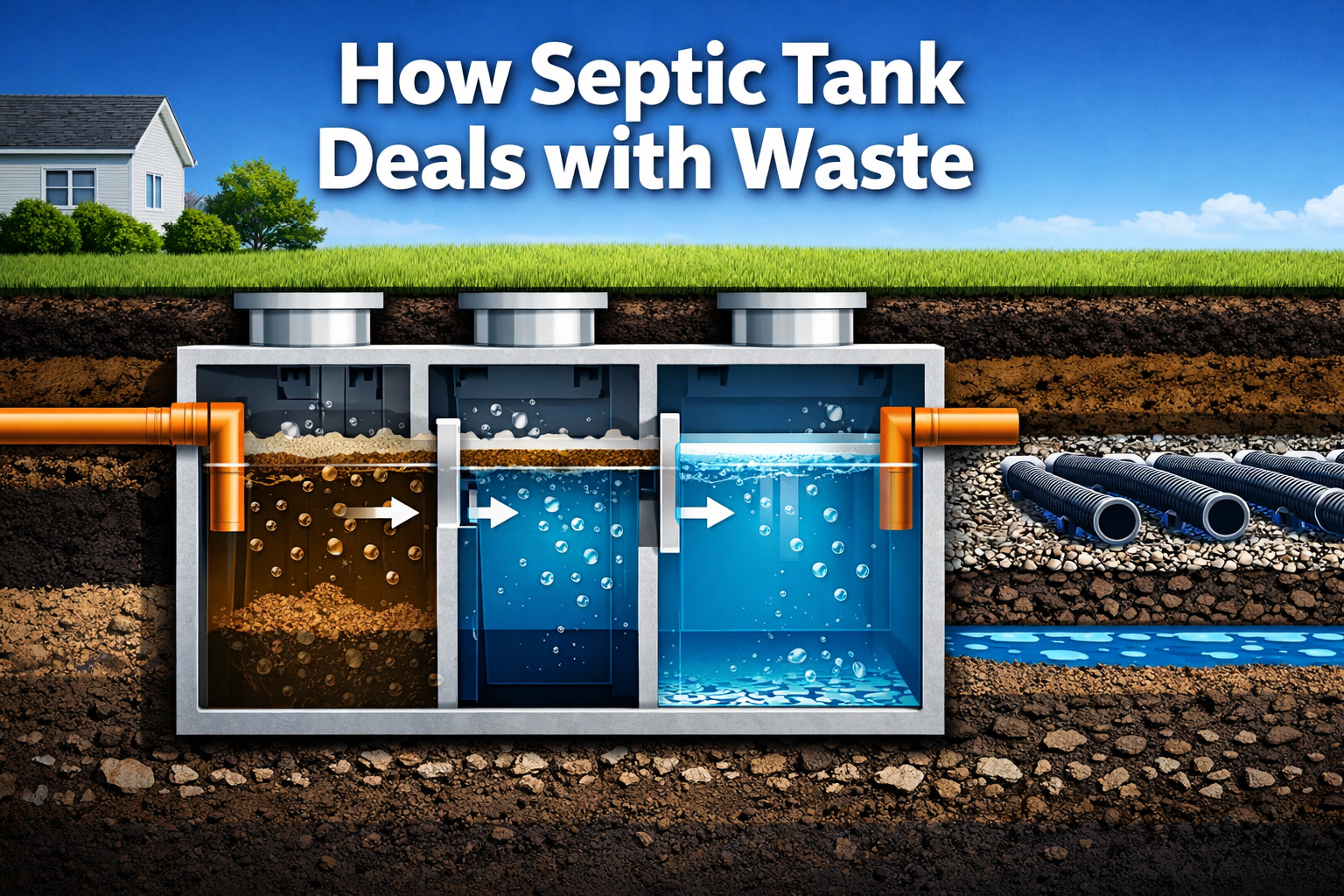
A septic tank deals with waste through a natural biological process where bacteria break down solid matter into liquid effluent. Waste separates into three layers—floating scum, middle liquid, and bottom sludge—while anaerobic bacteria decompose organic materials. The treated liquid then flows to a drain field where soil provides final filtration before the clean water reaches groundwater.
What Is the Basic Process of How Septic Tank Deals with Waste?
Septic tanks process waste through biological decomposition and physical separation. When wastewater enters your tank from toilets, sinks, and drains, gravity and natural bacterial action work together to break down solid materials and separate different waste components.
The process begins when waste flows through the inlet pipe into the first chamber of your septic tank. Immediately, gravity causes heavier solids to sink while lighter materials like oils and grease float to the surface. This creates the foundation for the three-layer system that makes waste treatment possible.
Anaerobic bacteria naturally present in the tank begin breaking down organic matter without requiring oxygen. These beneficial microorganisms digest proteins, fats, and other biodegradable materials, converting solid waste into liquid form and gases that escape through your home’s plumbing vents.
The Three-Layer Waste Separation System
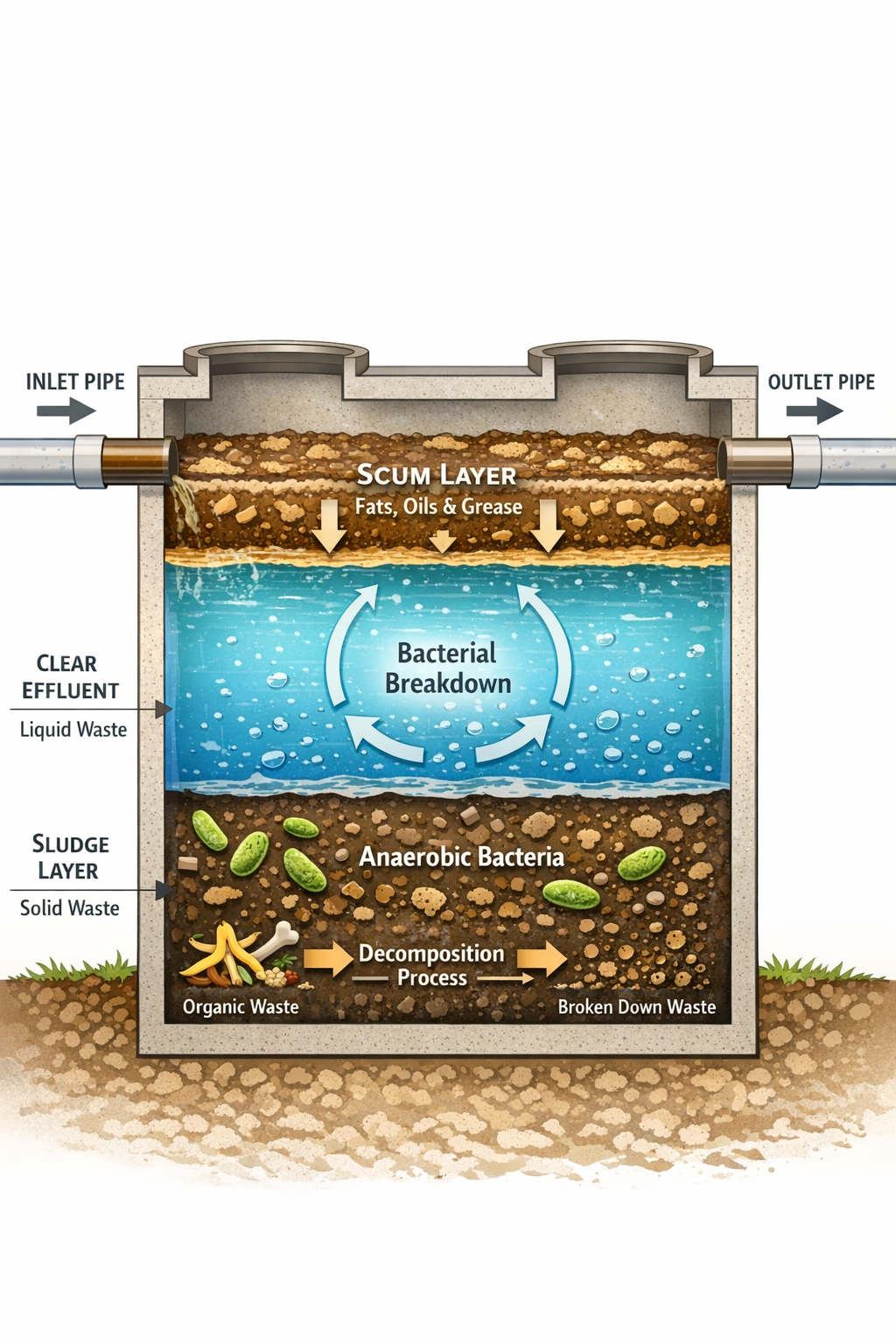
Your septic tank creates distinct zones for different types of waste:
- Scum layer (top): Oils, grease, and floating debris
- Effluent zone (middle): Partially treated liquid wastewater
- Sludge layer (bottom): Heavy solids and bacterial byproducts
Choose a tank with proper capacity if you’re installing a new system—undersized tanks can’t maintain these layers effectively, leading to premature failure and costly repairs.
For homeowners wanting to support this natural process, bacterial treatments can help maintain healthy decomposition when used appropriately.
How Does Bacterial Action Break Down Waste in Septic Systems?
Beneficial bacteria naturally colonize your septic tank and digest organic waste materials. These anaerobic microorganisms thrive in the oxygen-free environment inside your tank, breaking down proteins, carbohydrates, and fats into simpler compounds that can be safely processed.
The bacterial breakdown process happens in stages. Primary bacteria attack large organic particles, breaking them into smaller molecules. Secondary bacteria then convert these molecules into basic compounds like water, carbon dioxide, and methane gas. This biological process can reduce solid waste volume by up to 50% when the system functions properly.
Temperature and pH levels affect bacterial efficiency. Cold weather slows bacterial activity, which is why some homeowners notice slower drainage during winter months. Maintaining proper pH levels between 6.8 and 7.2 keeps bacteria healthy and active.
Factors That Support Healthy Bacterial Action
Several conditions help bacteria thrive in your septic tank:
- Consistent water temperature above 50°F for active decomposition
- Balanced pH levels maintained by avoiding harsh chemicals
- Regular feeding through normal household waste (bacteria need organic matter)
- Proper tank sizing that allows adequate retention time for breakdown
Avoid antibacterial cleaners and excessive bleach as these products can kill beneficial bacteria and disrupt the waste treatment process. Choose septic-safe household products to protect your system’s biological balance.
FYI: Some links may be affiliate links, which means I may earn a small commission at no extra cost to you.
If you want to support your tank’s bacterial health, Septifix tablets can help maintain optimal bacterial levels for efficient waste breakdown. These treatments provide beneficial bacteria and enzymes that enhance the natural decomposition process, especially useful after heavy cleaning or when bacterial populations need replenishment.
What Happens to Different Types of Waste in Your Septic Tank?
Different waste materials follow specific pathways based on their physical properties and biodegradability. Understanding how various waste types are processed helps you make better decisions about what goes down your drains and toilets.
Organic solids like food particles and human waste sink to the bottom where bacteria actively decompose them into sludge. This process works well for biodegradable materials but struggles with non-organic items that resist bacterial breakdown.
Fats, oils, and grease (FOG) float to the surface forming the scum layer. While some bacterial action occurs here, excessive FOG can create thick barriers that interfere with proper waste flow and gas release.
Waste Processing by Material Type
| Waste Type | Processing Method | End Result | Time Frame |
|---|---|---|---|
| Human waste | Bacterial decomposition | Liquid effluent + minimal sludge | 2-4 weeks |
| Toilet paper | Breaks down naturally | Dissolves into effluent | 1-2 weeks |
| Food scraps | Bacterial breakdown | Sludge accumulation | 4-8 weeks |
| Grease/oils | Surface separation | Scum layer buildup | Permanent until pumped |
| Detergents | Chemical dilution | Flows to drain field | 24-48 hours |
Non-biodegradable items like wipes, feminine products, and cat litter don’t break down and accumulate as solid waste. These materials fill your tank faster and can cause blockages in pipes or the drain field.
Choose septic-safe products when possible—look for items labeled as biodegradable or septic-system compatible to reduce strain on your waste treatment process.
How Does the Drain Field Complete the Waste Treatment Process?
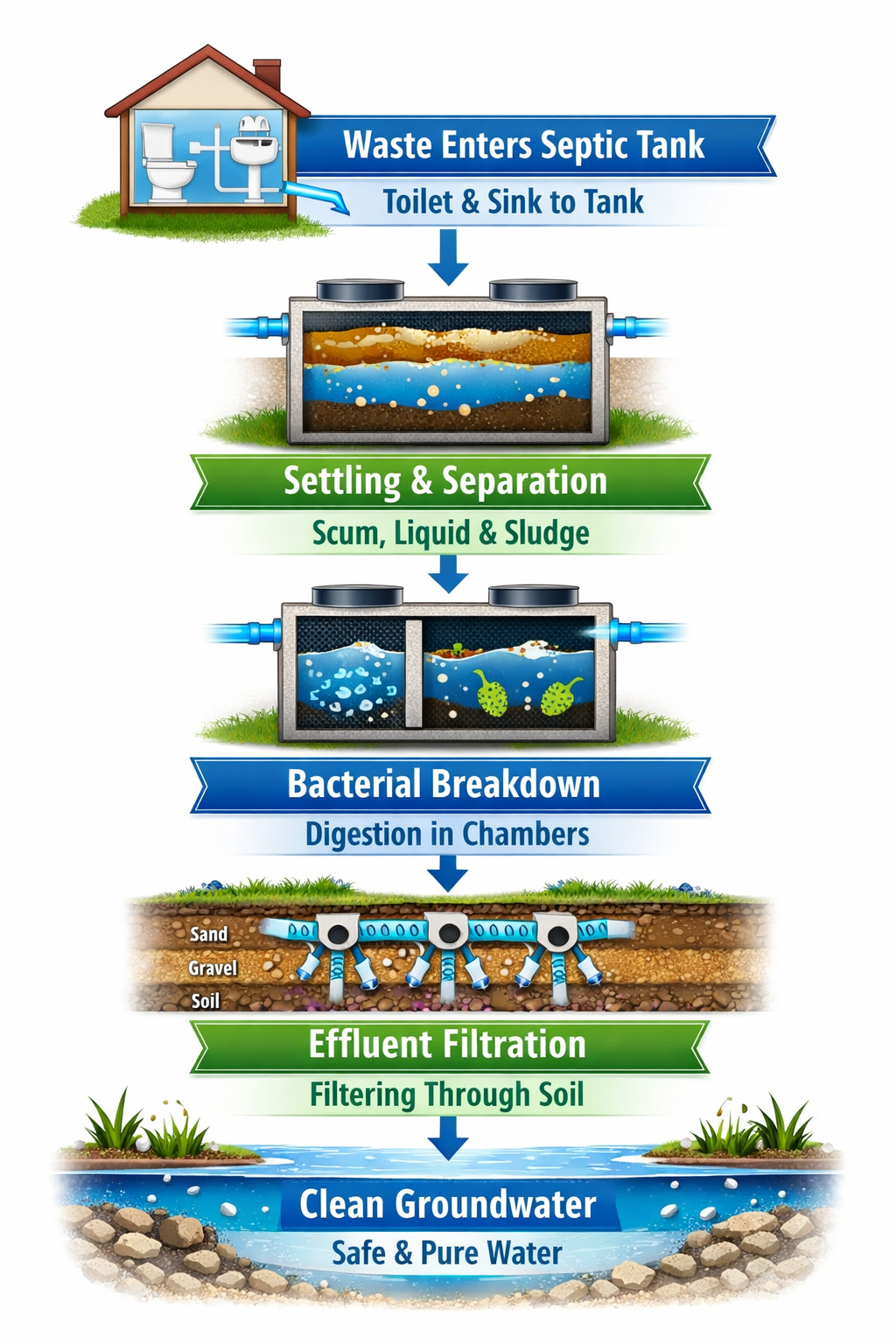
The drain field provides final treatment through soil filtration after effluent leaves your septic tank. This underground network of perforated pipes distributes partially treated wastewater across a designated soil area where natural filtration removes remaining contaminants.
Soil acts as a living filter containing beneficial microorganisms that further break down harmful bacteria, viruses, and nutrients. As effluent percolates through soil layers, physical straining and biological processes remove up to 99% of remaining pathogens.
Proper soil conditions are essential for effective treatment. Sandy loam soils with good drainage work best, while clay soils may require special systems or soil amendments to achieve adequate filtration rates.
Drain Field Treatment Stages
The soil treatment process happens in distinct phases:
- Distribution: Effluent flows evenly through perforated pipes
- Infiltration: Liquid enters soil pore spaces around pipes
- Filtration: Soil particles strain out suspended solids
- Biological treatment: Soil bacteria eliminate pathogens
- Groundwater protection: Clean water reaches aquifer safely
Protect your drain field by avoiding parking, construction, or planting trees over the area. Soil compaction reduces oxygen levels needed for biological treatment and can damage distribution pipes.
Modern drip dispersal systems improve absorption efficiency and work effectively on challenging sites with slopes or limited space.
What Are the Warning Signs That Your Septic Tank Isn’t Processing Waste Properly?
System backups, slow drains, and sewage odors indicate waste processing problems that require immediate attention. Early recognition of these warning signs helps prevent complete system failure and expensive emergency repairs.
Gurgling sounds from drains or toilets often signal that your tank is approaching capacity or experiencing drainage issues. This happens when waste levels rise high enough to interfere with normal water flow.
Wet spots or standing water over your drain field suggest that soil filtration isn’t keeping pace with effluent flow. This can indicate system overload, soil saturation, or drain field failure.
Critical Warning Signs Requiring Professional Help
Watch for these indicators that waste processing has become compromised:
- Sewage backing up into house through lowest drains or toilets
- Strong sewage odors around tank or drain field areas
- Bright green grass over drain field (indicates nutrient overload)
- Slow drainage throughout house affecting multiple fixtures
- Visible sewage surfacing in yard or basement
Call a septic professional immediately if you notice sewage backups or surface discharge. These conditions pose health risks and may violate local environmental regulations.
Regular inspections help catch problems early—professional assessments every 3-5 years can identify issues before they become emergencies.
How Can You Support Proper Waste Processing in Your Septic System?
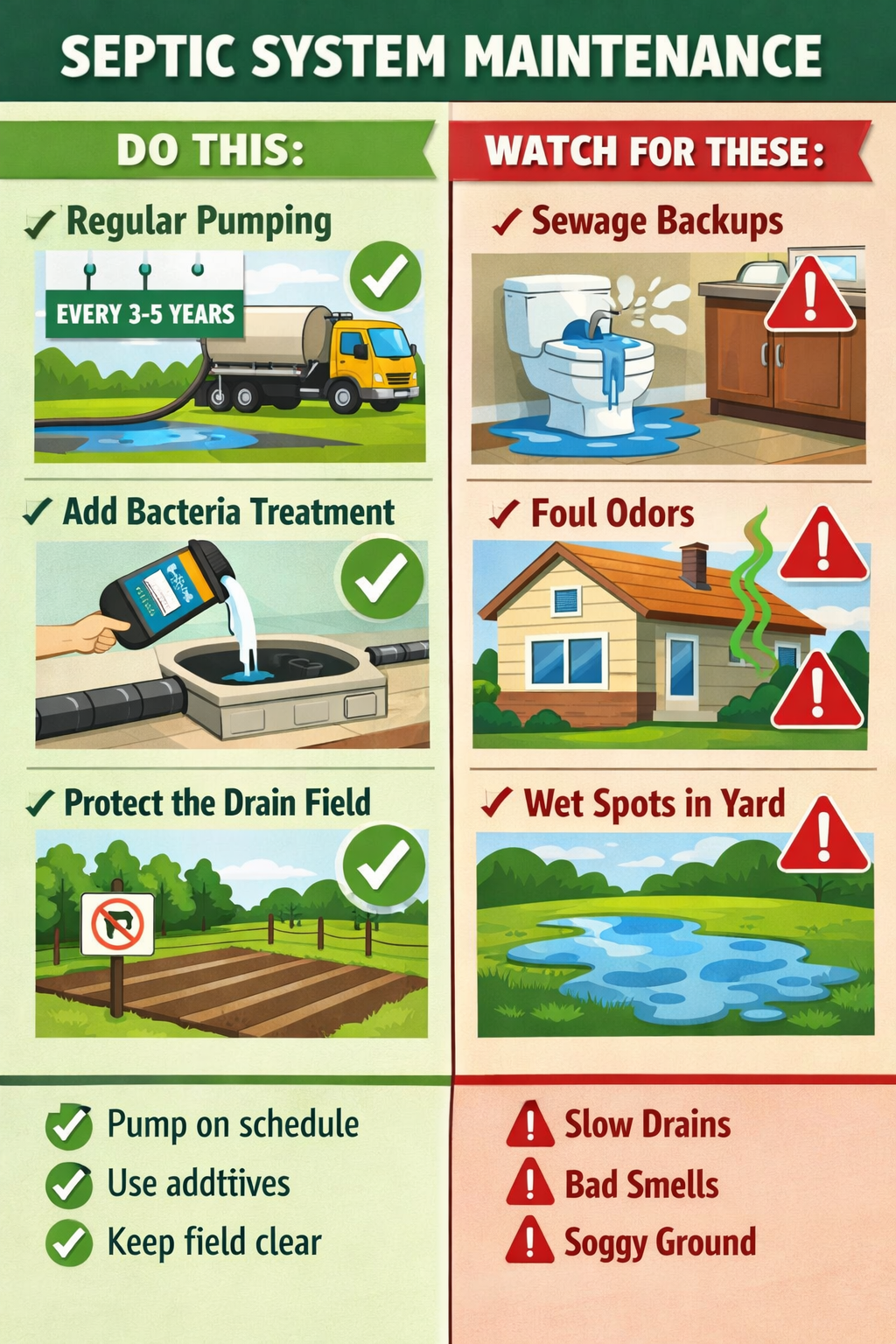
Regular maintenance and mindful usage habits keep your septic tank processing waste efficiently for decades. Simple preventive measures cost far less than system repairs or replacement.
Pump your tank every 3-5 years to remove accumulated sludge that bacteria cannot fully decompose. Household size and water usage determine exact pumping frequency—larger families need more frequent service.
Use water efficiently to avoid overwhelming your system’s treatment capacity. Spread laundry loads throughout the week rather than doing multiple loads in one day, and fix leaky fixtures that add unnecessary water volume.
Best Practices for Supporting Waste Processing
Follow these guidelines to maintain optimal system performance:
- Use septic-safe toilet paper that breaks down quickly
- Avoid garbage disposal use or limit to small amounts of organic waste
- Choose phosphate-free detergents that won’t disrupt bacterial balance
- Never flush non-biodegradable items like wipes or feminine products
- Limit antibacterial products that can kill beneficial bacteria
Consider bacterial treatments during high-stress periods like after parties, holidays, or when family visits increase system usage. Septifix tablets provide an easy way to boost bacterial populations when your system needs extra support for breaking down increased waste loads.
Protect your drain field by redirecting surface water away from the area and avoiding activities that compact soil or damage pipes.
Recommended Septic System Support
Maintaining proper bacterial balance is crucial for effective waste processing in your septic tank. If you want a simple way to support your system’s natural waste breakdown process, Septifix tablets offer convenient bacterial supplementation that many homeowners find helpful for keeping their systems running efficiently.
These tablets contain beneficial bacteria and enzymes designed to enhance waste decomposition, reduce odors, and help prevent the buildup that can lead to costly repairs. They’re particularly useful after periods of heavy system use or when you’ve used cleaning products that might affect bacterial populations.
Not required for every system, but useful for homeowners who want extra peace of mind about their septic tank’s waste processing capabilities.
FAQ
How long does it take for waste to break down in a septic tank?
Most organic waste breaks down within 2-4 weeks through bacterial action, but complete processing depends on waste type, tank temperature, and bacterial health. Non-biodegradable items never break down and accumulate until pumping.
Can I use regular toilet paper in my septic system?
Yes, most standard toilet paper works fine in septic systems. Choose brands that dissolve quickly and avoid ultra-thick or quilted varieties that break down slowly and can contribute to sludge buildup.
What kills bacteria in septic tanks?
Antibacterial cleaners, excessive bleach, paint, solvents, and certain medications can kill beneficial bacteria. Use septic-safe products and avoid flushing chemicals or pharmaceuticals down drains.
How full should my septic tank be?
A properly functioning septic tank should be about one-third full of liquid effluent. If your tank appears completely full, it likely needs pumping to remove accumulated sludge and scum layers.
Why does my septic tank smell?
Septic odors usually indicate problems with gas venting, bacterial imbalance, or system overload. Check that plumbing vents aren’t blocked and consider bacterial treatments if the system seems stressed.
Can heavy rain affect waste processing?
Yes, excessive groundwater can saturate soil around your drain field, reducing filtration efficiency and potentially causing backups. Ensure proper drainage around your system and avoid water softener discharge to the septic tank.
What happens if I don’t pump my septic tank?
Without regular pumping, sludge accumulates and reduces tank capacity for waste processing. Eventually, solids can flow to the drain field, causing expensive damage and potential system failure.
How do I know if my drain field is failing?
Signs include wet spots over the drain field, sewage odors outside, slow drainage throughout the house, and unusually green grass over the system area. Professional inspection can confirm drain field problems.
Can I add bacteria to my septic tank?
Yes, bacterial additives can help maintain healthy populations, especially after antibiotic use, heavy cleaning, or system stress. Choose products specifically designed for septic systems rather than general bacterial supplements.
What’s the difference between septic-safe and regular cleaning products?
Septic-safe products avoid ingredients that kill beneficial bacteria or interfere with waste breakdown. They typically contain biodegradable surfactants and avoid phosphates, antibacterial agents, and harsh chemicals.
How does cold weather affect waste processing?
Cold temperatures slow bacterial activity and waste breakdown. Some homeowners notice slower drainage in winter. Insulating exposed pipes and maintaining steady household routines help systems function better in cold weather.
Can I install a garbage disposal with a septic system?
While possible, garbage disposals increase solid waste entering your tank and may require more frequent pumping. If you use one, limit it to small amounts of organic waste and consider bacterial treatments to help with increased decomposition needs.
References
[1] Septic Solutions Large Developments 2025 – https://flengineeringllc.com/septic-solutions-large-developments-2025/
[2] Making Septic Systems Cleaner For The Environment – https://news.miami.edu/stories/2025/10/making-septic-systems-cleaner-for-the-environment.html
[3] How Technology Is Changing The Future Of Wastewater Management – https://mathisandsonsseptic.com/mathis-sons-septic-blog-orlando-fl/how-technology-is-changing-the-future-of-wastewater-management/
[4] The Future Of Septic Systems Embracing Smart Technology And Eco Friendly Solutions – https://www.pumper.com/bytes/2024/08/the-future-of-septic-systems-embracing-smart-technology-and-eco-friendly-solutions
[6] Revolutionizing Wastewater Treatment Expert Insights On Pennsylvanias Top Alternate Septic Technologies – https://tricowater.com/revolutionizing-wastewater-treatment-expert-insights-on-pennsylvanias-top-alternate-septic-technologies/
[7] Septic System Types – https://www.premiertechaqua.com/en-us/blog/septic-system-types