Last updated: March 4, 2026
Your septic field absorbs wastewater through a carefully engineered soil filtration process that removes harmful bacteria and nutrients before water reaches groundwater. Understanding how septic field absorbs wastewater can help you maintain your system properly and avoid costly repairs that average thousands of dollars.
Key Takeaways
• Septic fields use gravity and soil filtration to process effluent from your septic tank through perforated pipes and gravel beds
• Soil type determines absorption capacity – sandy soils drain quickly while clay soils may require enhanced systems
• Biomat formation is normal but excessive buildup can block absorption and cause system failure
• Proper spacing and sizing are critical for effective wastewater treatment and preventing groundwater contamination
• Regular maintenance prevents absorption problems including pumping every 3-5 years and protecting the drain field area
• Warning signs include soggy ground, odors, and slow drains which indicate absorption field problems requiring immediate attention
• Professional installation and soil testing ensure your system meets local health codes and environmental requirements
Quick Answer
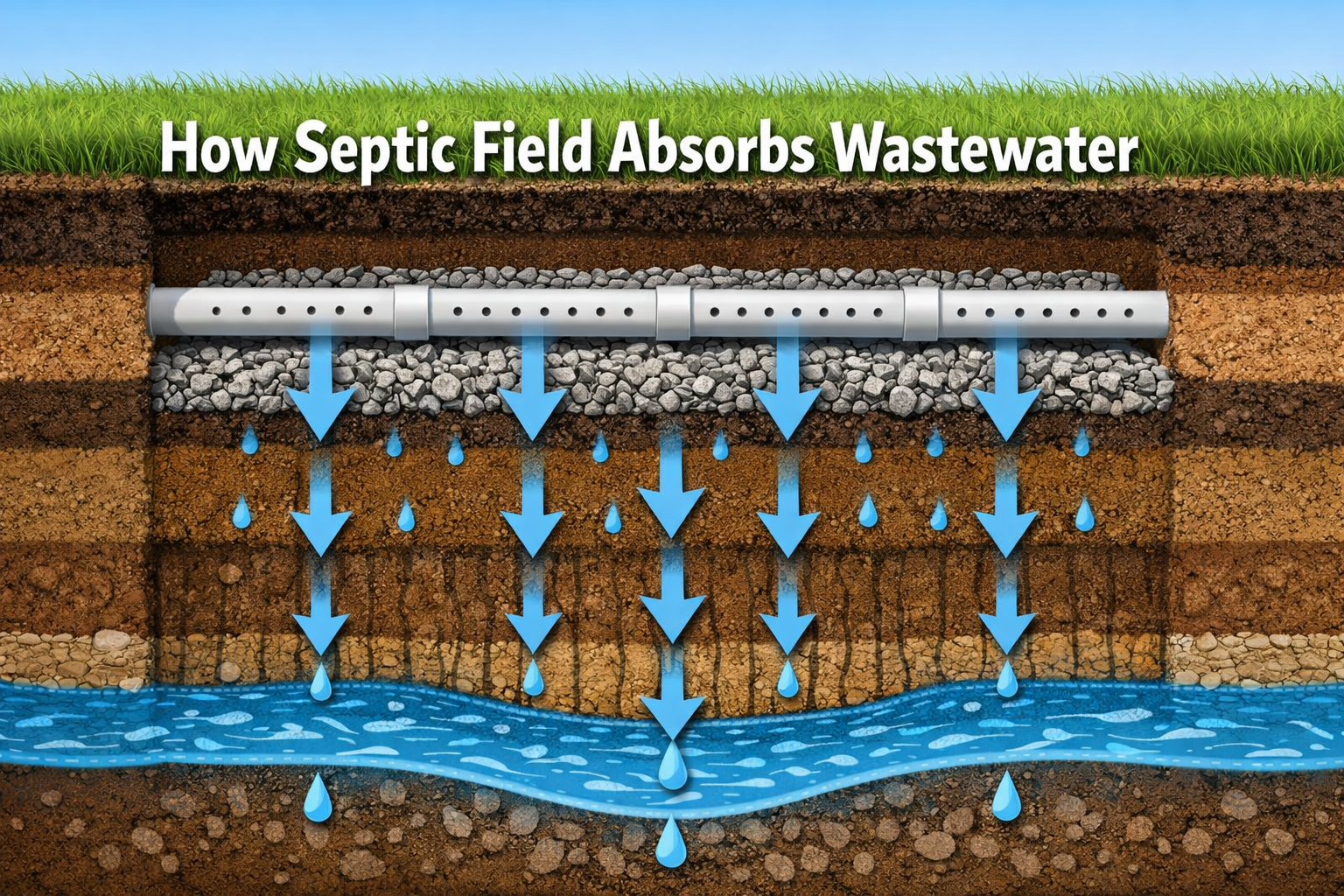
A septic field absorbs wastewater by distributing partially treated effluent from your septic tank through perforated pipes buried in gravel beds. The effluent slowly percolates through soil layers where beneficial bacteria remove harmful pathogens and excess nutrients. This natural filtration process cleans the water before it reaches groundwater sources.
What Is a Septic Field and How Does It Work?
A septic field, also called a drain field or leach field, is the final treatment component of your septic system. After wastewater gets treated in your septic tank, the clarified liquid (effluent) flows to the absorption field for final purification.
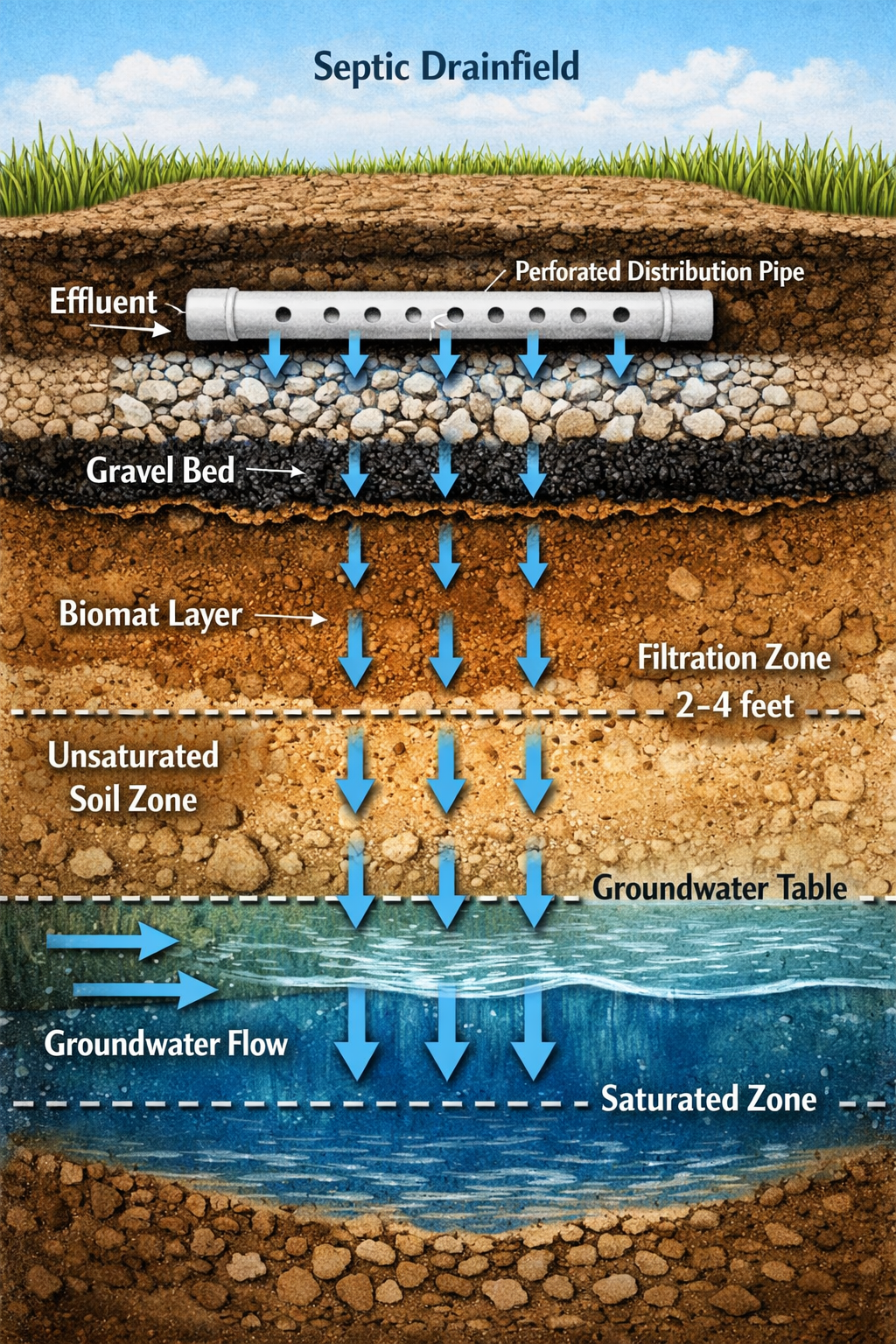
The field consists of perforated distribution pipes buried in gravel trenches about 18-36 inches below ground. These pipes release effluent slowly into surrounding soil where natural processes complete the treatment cycle.
Key components include:
• Distribution box – divides effluent evenly among field lines
• Perforated pipes – release effluent gradually into gravel bed
• Gravel bed – provides initial filtration and prevents soil compaction
• Soil matrix – performs biological and physical filtration
• Unsaturated zone – critical area where most treatment occurs
The system relies on gravity flow and proper soil conditions to function effectively. Without adequate absorption capacity, your septic tank can back up into your house or create surface water problems.
How Septic Field Absorbs Wastewater Through Soil Filtration
Septic field absorption works through a multi-stage soil filtration process that removes contaminants as effluent moves downward through different soil layers. This natural treatment system can remove up to 99% of harmful bacteria when properly designed and maintained.
The absorption process begins when effluent exits perforated pipes and enters the gravel bed. From there, several treatment mechanisms work simultaneously:
Physical filtration removes suspended particles as water moves through soil pores. Smaller particles get trapped while clean water continues downward.
Biological treatment occurs when beneficial bacteria in soil consume organic matter and pathogens in the effluent. This process requires oxygen, which is why the unsaturated soil zone above groundwater is crucial.
Chemical adsorption happens when soil particles bind phosphorus and other nutrients, preventing them from reaching groundwater.
Common mistake: Many homeowners think faster drainage is always better. However, effluent needs adequate contact time with soil to achieve proper treatment. Sandy soils that drain too quickly may require enhanced treatment systems.
The biomat layer that forms around pipes actually helps regulate flow rates. A thin, healthy biomat improves treatment by slowing effluent movement and increasing soil contact time.
Choose enhanced treatment if: Your property has sandy soils, high groundwater, or is near sensitive water bodies where standard absorption may not provide adequate protection.
What Factors Affect How Septic Field Absorbs Wastewater?
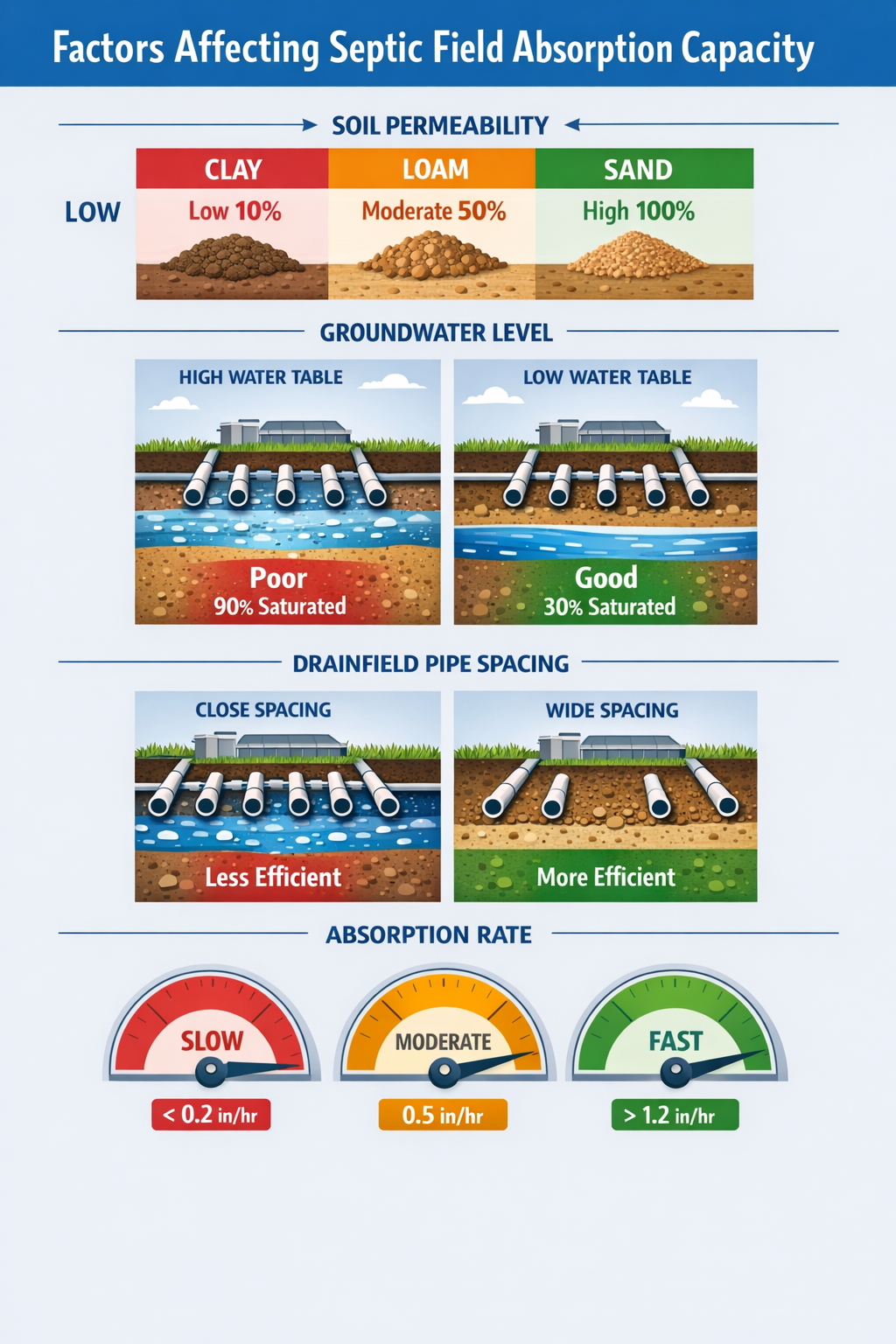
Soil permeability is the primary factor determining absorption capacity in septic fields. Different soil types absorb effluent at dramatically different rates, affecting system design and performance.
Soil type characteristics:
• Sandy soils – absorb 1-3 gallons per square foot daily but may need enhanced treatment
• Loamy soils – ideal balance of drainage and treatment, absorbing 0.5-1 gallon per square foot daily
• Clay soils – slow absorption (less than 0.2 gallons per square foot daily) often requiring alternative systems
Groundwater level significantly impacts absorption effectiveness. The system needs at least 2-4 feet of unsaturated soil between the bottom of the absorption area and seasonal high groundwater for proper treatment.
System sizing must match household wastewater production and soil conditions. Undersized fields become saturated and fail prematurely, while oversized systems waste money and land area.
Slope and topography affect effluent distribution. Steep slopes can cause uneven loading, while flat areas may have drainage challenges during wet periods.
Decision rule: If your property has clay soils or high groundwater, consider alternative systems like sand mounds or constructed wetlands rather than trying to force a conventional absorption field to work.
Weather patterns also influence absorption. Extended wet periods can saturate soil and temporarily reduce absorption capacity, which is why proper system sizing includes safety factors for peak loading conditions.
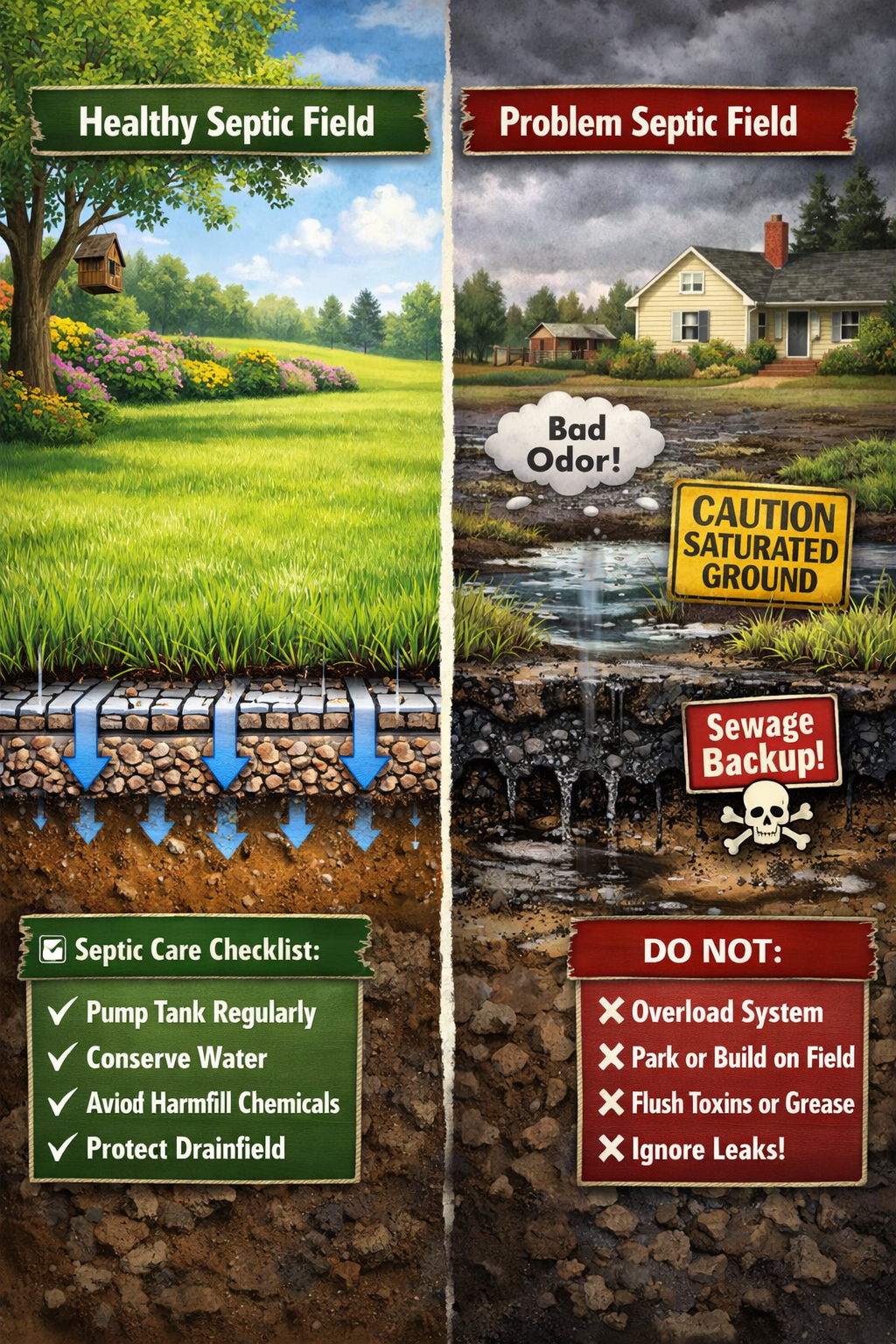
Signs Your Septic Field Isn’t Absorbing Wastewater Properly
Surface water pooling over your drain field is the most obvious sign of absorption failure. When soil becomes saturated or pipes become clogged, effluent has nowhere to go and may surface in your yard.
Early warning signs include:
• Soggy ground over the absorption area, especially during dry weather
• Unusual grass growth – either dead patches or unusually lush green areas
• Sewage odors around the drain field or in your home
• Slow drains throughout the house, particularly floor drains and toilets
• Gurgling sounds from plumbing fixtures when water drains
Advanced problems develop when absorption issues persist. You may notice signs your septic tank is failing including sewage backups, strong odors, or contaminated well water if you have on-site water supply.
Biomat problems can severely reduce absorption capacity. While a thin biomat is normal and beneficial, excessive buildup from overloading or poor maintenance creates an impermeable barrier that blocks effluent absorption.
Common mistake: Ignoring early warning signs and continuing normal water use. This accelerates system failure and increases repair costs significantly.
Edge case consideration: Seasonal absorption problems may occur during wet periods even in properly functioning systems. However, problems that persist during dry weather indicate serious issues requiring professional evaluation.
Take action immediately if: You see surface sewage, smell persistent odors, or experience multiple slow drains simultaneously. These indicate imminent system failure that poses health risks and requires emergency service.
FYI: Some links may be affiliate links, which means I may earn a small commission at no extra cost to you.
For homeowners dealing with absorption issues, maintaining healthy bacteria levels in your septic system can help optimize treatment efficiency. Septifix tablets can keep your septic system clean and efficient by supporting beneficial bacterial populations that break down waste and prevent excessive biomat formation.
How to Maintain Proper Septic Field Absorption
Regular septic tank pumping every 3-5 years is essential for maintaining absorption field performance. When tanks aren’t pumped regularly, solids overflow into the drain field and clog soil pores, permanently reducing absorption capacity.
Protect your absorption area by:
• Avoiding heavy traffic – no vehicles, equipment, or structures over drain field lines
• Managing surface water – direct roof gutters and surface drainage away from the absorption area
• Planting appropriate vegetation – grass is ideal, but avoid trees and deep-rooted plants near pipes
• Controlling water usage – spread laundry and dishwashing throughout the week rather than doing multiple loads in one day
Water conservation directly impacts absorption field longevity. High-efficiency fixtures, fixing leaks promptly, and avoiding excessive water use help prevent soil saturation that leads to system failure.
Household practices significantly affect absorption field health. What happens to toilet paper in your septic tank and other waste products determines how much solid material reaches your drain field.
Avoid flushing or draining:
• Grease, oils, and fats that can clog soil pores
• Harsh chemicals that kill beneficial bacteria
• Non-biodegradable items that accumulate in pipes
• Excessive amounts of household cleaners or bleach
Professional maintenance should include periodic system inspections to check distribution boxes, pipe integrity, and absorption area conditions. Early detection of problems allows for less expensive repairs compared to complete system replacement.
Monitor your system by watching for the warning signs mentioned earlier and keeping records of pumping dates, water usage patterns, and any problems you notice.
Alternative Systems When Standard Absorption Fails
Sand mound systems elevate the absorption area above natural soil when groundwater is high or soil permeability is poor. These systems pump effluent to an engineered sand bed that provides enhanced treatment before reaching natural soil.
Sand mounds work well for challenging sites but require more maintenance and higher installation costs. The sand medium needs replacement every 15-20 years as it becomes clogged with filtered particles.
Constructed wetlands use plant roots and specialized microbes to treat effluent in a controlled environment. These systems handle varying flow rates well and provide excellent nutrient removal, making them suitable for environmentally sensitive areas.
Evapotranspiration beds release treated wastewater through evaporation and plant transpiration rather than soil infiltration. This approach works in arid climates or areas with impermeable soils where traditional absorption isn’t feasible.
Biofilters use bacterial-rich filtering media to treat wastewater before soil absorption. These systems provide additional treatment for challenging sites or where enhanced water quality protection is required.
Recirculating sand filters pump effluent through sand beds multiple times before final disposal. This approach achieves high treatment levels but requires electrical components and more complex maintenance.
Choose alternative systems if: Your property has clay soils, shallow bedrock, high groundwater, or steep slopes that prevent effective standard absorption field installation.
Cost considerations for alternative systems typically range from 50-200% more than conventional fields, but they may be your only option for difficult sites or areas with strict environmental regulations.
Professional Installation and Soil Testing Requirements
Soil percolation tests determine absorption rates and guide proper system sizing for your specific site conditions. Licensed professionals conduct these tests by digging test holes and measuring how quickly water drains from saturated soil.
Percolation test results dictate absorption area size requirements. Slower-draining soils need larger absorption areas to handle the same amount of effluent that faster-draining soils can process in smaller areas.
Site evaluation includes slope analysis, groundwater depth measurement, and identification of any restrictive soil layers that could impede drainage. This comprehensive assessment ensures your system will function properly long-term.
Local regulations vary significantly regarding septic system requirements. Some areas mandate enhanced treatment systems near water bodies, while others have specific setback requirements from wells, property lines, or buildings.
Installation standards require proper pipe slope, adequate gravel depth, and correct spacing between absorption lines. Poor installation can cause uneven effluent distribution and premature system failure regardless of soil conditions.
Professional design considers household size, water usage patterns, soil conditions, and local climate to size your system appropriately. Undersized systems fail quickly, while oversized systems waste money and land area.
Permits and inspections ensure your system meets health department requirements and environmental protection standards. Most areas require multiple inspections during installation to verify proper construction.
Choose experienced installers who understand local soil conditions and regulations. Poor installation is expensive to correct and may require complete system replacement if not caught during initial inspections.
Helpful Resource for Septic System Health
Maintaining optimal bacterial balance in your septic system supports proper effluent treatment before it reaches your absorption field. When beneficial bacteria populations are healthy, they break down waste more completely and reduce the risk of biomat problems that can clog your drain field.
If you want a simple way to support your septic system’s bacterial health, Septifix tablets provide an easy monthly treatment that many homeowners find helpful for maintaining system efficiency and preventing absorption field problems.
FAQ
How deep should septic field pipes be buried?
Septic field pipes are typically buried 18-36 inches deep, depending on local frost depth requirements and soil conditions. Deeper installation provides better treatment but may encounter groundwater or restrictive soil layers.
Can I drive over my septic field?
No, you should never drive vehicles or heavy equipment over your septic field. The weight can crush pipes, compact soil, and reduce absorption capacity permanently.
How long do septic absorption fields last?
Well-maintained septic fields can last 20-30 years or longer. However, fields that receive poor maintenance or excessive loading may fail within 10-15 years and require replacement.
What happens if my septic field gets saturated?
Saturated septic fields cannot absorb additional effluent, causing backups in your home or surface sewage in your yard. You must reduce water usage immediately and contact a septic professional for evaluation.
Can I plant trees near my septic field?
Avoid planting trees within 25-50 feet of your septic field, depending on the tree species. Tree roots can infiltrate and clog pipes, while large trees may interfere with soil absorption patterns.
How much does septic field replacement cost?
Septic field replacement typically costs $3,000-$10,000 depending on system size, soil conditions, and local labor rates. Alternative systems for challenging sites may cost significantly more.
Why is my septic field soggy after rain?
Some surface moisture after heavy rain is normal, but persistent soggy conditions indicate absorption problems. This could result from system overloading, biomat buildup, or soil saturation issues.
Can I use water softener with my septic system?
Modern water softeners can be used safely with septic systems when operated efficiently. However, excessive salt discharge may affect soil structure and plant growth in the absorption area.
How often should I inspect my septic field?
Visually inspect your septic field monthly for signs of problems like soggy ground, odors, or unusual vegetation growth. Professional inspections should occur every 3-5 years during routine maintenance.
What soil type is best for septic absorption?
Sandy loam soils provide the ideal balance of drainage and treatment for septic absorption. These soils drain adequately while providing sufficient contact time for proper effluent treatment.
Can I repair a failing septic field?
Some septic field problems can be repaired through techniques like biomat removal, pipe replacement, or soil restoration. However, severely damaged fields typically require complete replacement.
How do I know if my septic field is properly sized?
Proper septic field sizing depends on household size, soil percolation rates, and local regulations. A licensed septic professional can evaluate whether your current system is appropriately sized for your needs.
Conclusion
Understanding how septic field absorbs wastewater helps you maintain your system effectively and avoid expensive repairs. Your absorption field works through natural soil filtration processes that remove harmful bacteria and nutrients from septic tank effluent before it reaches groundwater.
Key actions for optimal absorption:
• Pump your septic tank every 3-5 years to prevent solids from reaching the drain field
• Protect the absorption area from heavy traffic and surface water infiltration
• Monitor for warning signs like soggy ground, odors, or slow drains
• Practice water conservation to prevent soil saturation
• Schedule professional inspections to catch problems early
Remember that proper septic system maintenance extends far beyond just pumping your tank. Your absorption field requires ongoing protection and monitoring to function properly for decades.
If you notice any signs of absorption problems, contact a licensed septic professional immediately. Early intervention can often resolve issues with less expensive repairs compared to waiting until complete system failure occurs.
Take action today by scheduling your next septic pumping if it’s been more than three years, and walk your property to check for any warning signs around your drain field area.