
Last updated: February 25, 2026
Key Takeaways
• Most homes need septic pumping every 3-5 years as a general guideline
• Household size matters most – larger families need more frequent pumping (every 1-2 years for 8+ people)
• Tank size affects frequency – smaller tanks (500-750 gallons) need pumping every 1-5 years depending on usage
• Warning signs include slow drains, bad odors, and sewage backups that indicate immediate pumping needs
• Regular maintenance prevents costly repairs and extends your septic system’s lifespan
• Professional inspection during pumping helps catch problems early
• Water conservation and proper waste disposal can extend time between pumpings
Quick Answer
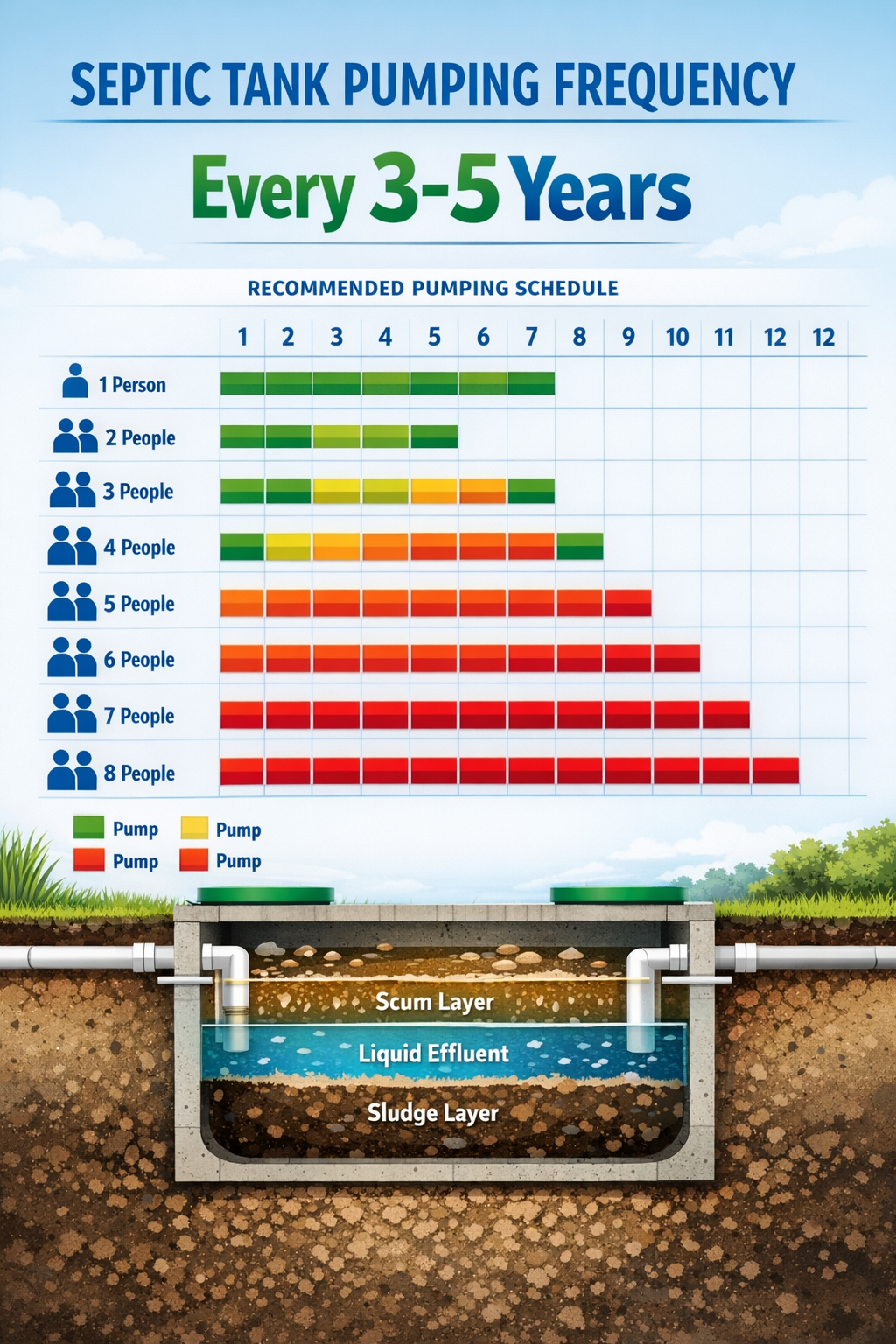
Most septic tanks should be pumped every 3-5 years for typical households. However, the frequency depends on your household size, tank capacity, and water usage patterns. Smaller households with larger tanks can wait 6-8 years, while large families may need annual pumping.
What Determines How Often Should You Pump Your Septic Tank
The pumping frequency for your septic tank isn’t one-size-fits-all. Several key factors work together to determine your specific schedule.
Household size is the primary factor. More people create more wastewater and solid waste, which fills your tank faster. A single person might only need pumping every 9-12 years, while a family of eight requires annual pumping.
Tank size directly affects pumping intervals. Common residential tanks range from 500 to 1,500 gallons:
- 500-750 gallon tanks: Every 1-5 years depending on household size
- 1,000 gallon tanks: Every 2-8 years based on occupancy
- 1,500 gallon tanks: Every 2-7 years for most families
Water usage patterns matter significantly. High water usage from long showers, frequent laundry, or leaky fixtures increases the volume flowing through your system. This pushes solids through faster and can overwhelm the natural breakdown process.
Garbage disposal use accelerates filling. Food waste adds 25-50% more solids to your tank compared to homes without disposals. If you use a garbage disposal regularly, plan to pump 25% more frequently than standard recommendations.
Common mistake: Assuming all homes follow the same 3-5 year rule. A household of two with a 1,500-gallon tank and conservative water use might safely wait 7-8 years, while a family of six with a 1,000-gallon tank may need pumping every 2-3 years.
Standard Pumping Schedule: How Often Should You Pump Your Septic Tank by Household Size
Here’s a practical pumping schedule based on household size and tank capacity, derived from industry standards:
For 1,000-gallon tanks (most common):
- 1 person: Every 8-9 years
- 2 people: Every 6-7 years
- 3 people: Every 4-5 years
- 4 people: Every 3-4 years
- 5 people: Every 2-3 years
- 6+ people: Every 1-2 years
Conservative approach: Penn State Extension recommends pumping every 2-3 years regardless of household size for maximum system protection. This approach costs more upfront but prevents most emergency situations.
Extended intervals for optimal conditions: Santa Cruz County Environmental Health suggests 5-10 year intervals are possible with proper maintenance, conservative water use, and larger tank capacity.
Choose the 3-year schedule if you:
- Use a garbage disposal regularly
- Have high water usage habits
- Want maximum protection against backups
- Live in an area with strict environmental regulations
Consider longer intervals (4-6 years) if you:
- Have a large tank relative to household size
- Practice water conservation
- Avoid putting inappropriate items down drains
- Have had consistent inspection results showing slow accumulation
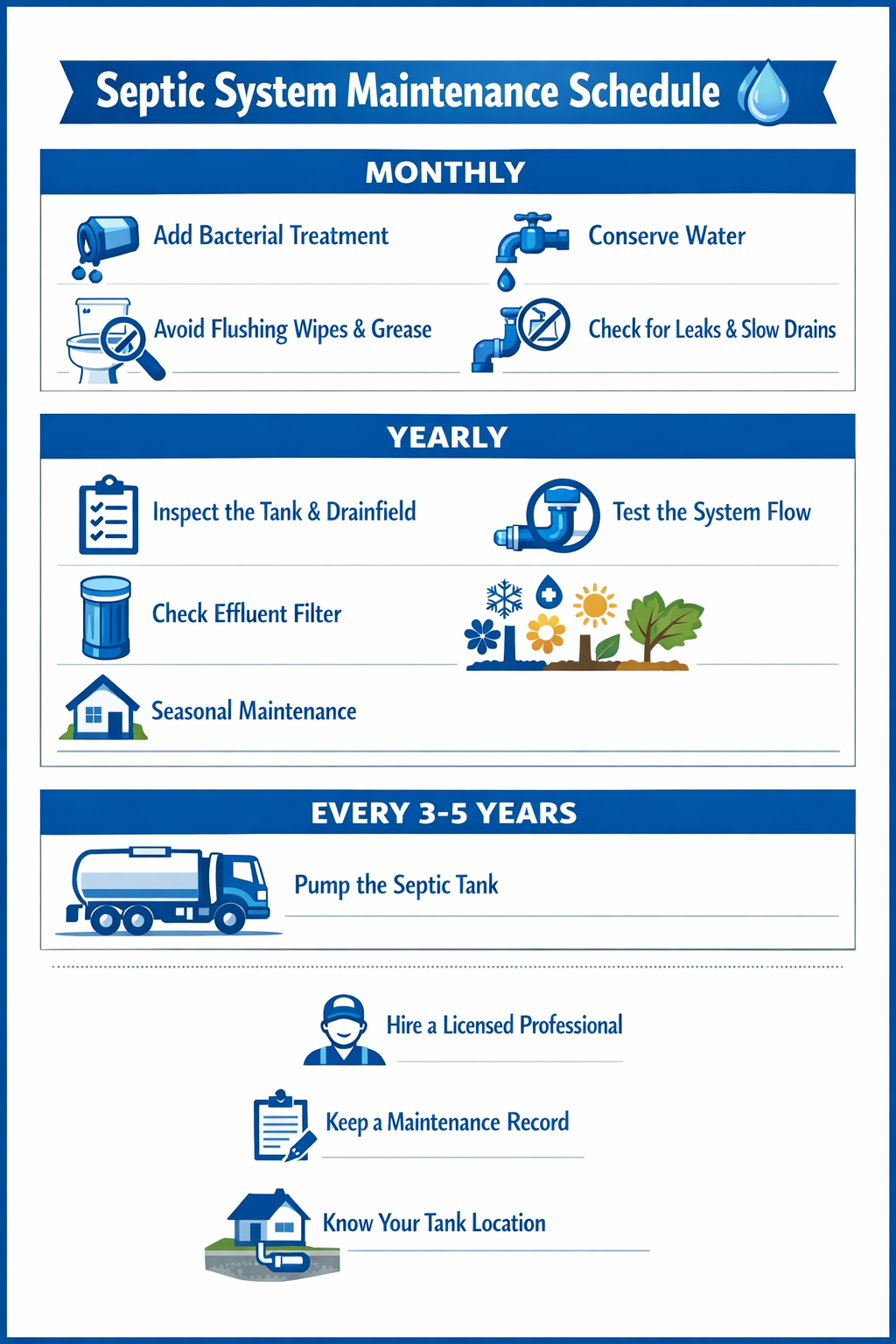
To help maintain your septic system between pumpings, consider using products like Septifix tablets. These monthly treatments help break down waste naturally and can extend the time between required pumpings.
FYI: Some links may be affiliate links, which means I may earn a small commission at no extra cost to you.
Here are some of the most reliable septic tank treatment options for keeping your system clean, odor-free, and working properly—from breaking down waste and reducing buildup to helping prevent blockages and costly repairs. These easy-to-use tablets are trusted by many homeowners to maintain a healthy, efficient septic system with minimal effort.
👉 See how Septifix tablets can keep your septic system clean and efficient
Warning Signs That You Need Immediate Pumping
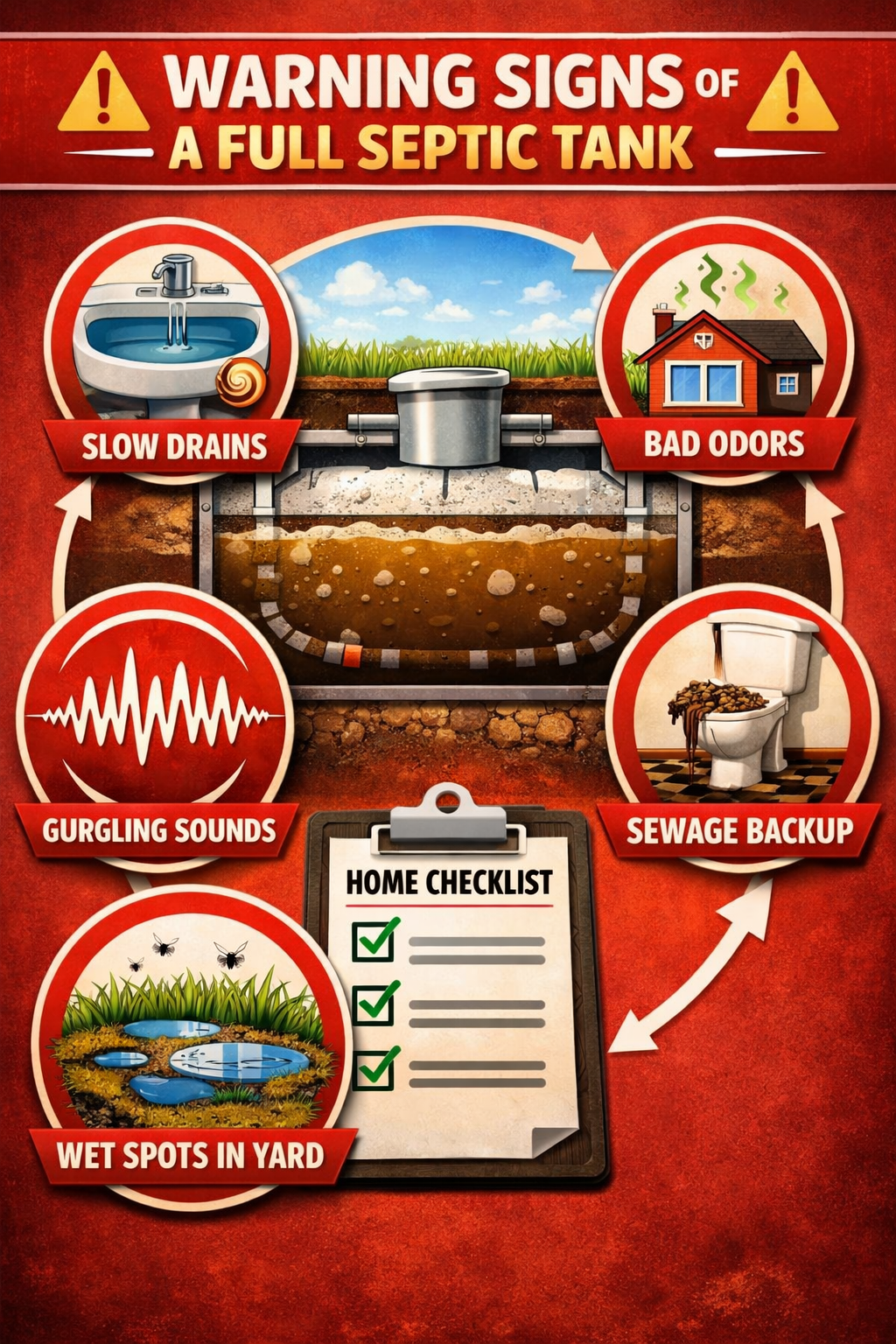
Don’t wait for your scheduled pumping if you notice these warning signs. Your septic tank may be approaching or exceeding capacity, requiring immediate attention.
Slow drains throughout the house indicate your tank is likely full. When wastewater can’t exit the tank efficiently, it backs up into your plumbing. This affects multiple fixtures, not just one sink or toilet.
Sewage odors around your property signal that waste isn’t being contained properly. You might smell these odors near the tank location, drain field, or even inside your home near plumbing fixtures.
Sewage backup in your home is an emergency situation requiring immediate pumping. This typically starts in the lowest drains first – basement sinks, floor drains, or ground-level bathrooms.
Standing water or wet spots in your drain field suggest your tank is overflowing into the soil absorption area. The grass may be unusually green in these areas due to the excess nutrients.
Gurgling sounds from plumbing fixtures occur when air bubbles are forced through the system due to poor drainage. This often accompanies slow drains and indicates your tank is nearing capacity.
High nitrate levels in nearby wells can indicate septic system failure. If you have a private well, annual water testing can catch this early warning sign.
Decision rule: If you experience any combination of these signs, schedule pumping within 1-2 weeks. Don’t attempt to “flush” the problem with additives or increased water usage, which will only worsen the situation.
For more information about recognizing these warning signs, see our guide on how to tell if your septic tank is full.
Factors That Change Your Pumping Schedule
Several lifestyle and system factors can significantly alter your standard pumping frequency. Understanding these helps you adjust your maintenance schedule appropriately.
Water usage patterns have the biggest impact. High-efficiency appliances, shorter showers, and fixing leaks can extend pumping intervals by 1-2 years. Conversely, large families with teenagers, frequent guests, or water-intensive hobbies may need 25-50% more frequent pumping.
Garbage disposal use adds substantial solids. Food waste doesn’t break down as efficiently as human waste, accumulating faster in your tank. Homes with garbage disposals typically need pumping every 2-3 years instead of 3-5 years.
Septic additives and treatments can help extend intervals. Products containing beneficial bacteria help break down solids more efficiently. However, avoid harsh chemicals, antibacterial soaps, and bleach, which kill beneficial bacteria and slow decomposition.
Seasonal occupancy affects accumulation rates. Vacation homes used only part-time can often extend pumping to 5-7 years, while homes that host frequent guests during peak seasons may need more frequent service.
Age and condition of your system matter. Older systems with damaged baffles or compromised tank integrity may require more frequent pumping to prevent backups. Well-maintained newer systems often perform better than their rated capacity.
Soil conditions around your drain field influence system performance. Clay soils that drain poorly can cause backups even with properly pumped tanks, while sandy soils may require more frequent pumping to prevent groundwater contamination.
Common mistake: Dramatically changing your pumping schedule based on one factor alone. Consider the combination of all factors affecting your specific situation, and consult with your septic professional about appropriate adjustments.
Cost Considerations and Budgeting for Regular Pumping
Understanding the financial aspects of regular septic pumping helps you budget appropriately and avoid emergency expenses.
Routine pumping typically costs $200-500 depending on your location, tank size, and accessibility. This preventive maintenance is significantly cheaper than emergency pumping or system repairs.
Emergency pumping costs 50-100% more than scheduled service. Weekend, holiday, or urgent calls often include premium pricing, and you may need additional services like drain cleaning or system inspection.
Frequency affects annual costs significantly:
- Pumping every 3 years: $67-167 annually
- Pumping every 5 years: $40-100 annually
- Emergency pumping: $300-800 per incident
Additional services during pumping add value. Most professionals offer tank inspection, baffle checks, and system evaluation for $50-150 extra. This early detection can prevent $3,000-10,000 in system replacement costs.
Budget for unexpected expenses. Set aside $100-200 annually for septic maintenance beyond pumping. This covers minor repairs, bacterial treatments, and system improvements that extend your system’s life.
Choose pumping frequency based on total cost of ownership. While less frequent pumping saves money short-term, the risk of emergency repairs and system damage often makes moderate pumping schedules (every 3-4 years) the most economical long-term choice.
For detailed pricing information, check our complete guide to septic pumping costs.
What Happens During Professional Pumping
Understanding the pumping process helps you prepare for service and know what to expect from your septic professional.
Pre-pumping inspection takes 10-15 minutes. The technician locates your tank, removes the access cover, and measures sludge and scum layers. This determines how much pumping is needed and identifies any obvious problems.
Pumping typically takes 30-60 minutes depending on tank size and contents. The truck-mounted vacuum system removes all liquid and solid waste, leaving your tank empty for inspection.
Post-pumping inspection is crucial for system health. With the tank empty, technicians can check for cracks, damaged baffles, or other structural issues. They’ll also examine inlet and outlet pipes for blockages or damage.
Tank refilling happens naturally. Don’t add water to your empty tank – normal household use will refill it within a few days. The system needs this gradual refilling to reestablish proper bacterial balance.
Documentation should include pumping date, tank condition, and recommendations. Keep these records for warranty purposes and to track your system’s performance over time.
Common mistake: Scheduling pumping without ensuring access to your tank. Locate and clear the access cover beforehand to avoid additional charges for digging or locating services.
The inspection often reveals maintenance needs. Your technician might recommend bacterial treatments like Septifix tablets to help maintain proper waste breakdown between pumpings.
Helpful Resource for Septic Maintenance
If you want a simple way to maintain your septic system between pumpings, Septifix tablets offer an easy monthly solution. These tablets help break down waste, reduce bad smells, and keep your septic tank working properly. With one easy monthly flush, you can help prevent blockages, protect your plumbing, and avoid costly repairs.
While not a replacement for regular pumping, Septifix can help extend the time between pumpings and maintain optimal system performance. This is especially helpful for households with high water usage or garbage disposal use.
Conclusion
Determining how often should you pump your septic tank depends on your specific situation, but most homes benefit from pumping every 3-5 years. Consider your household size, tank capacity, and water usage patterns to establish the right schedule for your system.
Take these steps now:
- Calculate your ideal pumping frequency using your household size and tank capacity
- Schedule your next pumping if it’s been more than 3-5 years since your last service
- Watch for warning signs like slow drains or sewage odors that indicate immediate pumping needs
- Budget $200-500 annually for septic maintenance and pumping costs
- Keep detailed records of pumping dates and system condition
Regular pumping prevents expensive emergencies and extends your septic system’s lifespan. Don’t wait for problems to develop – proactive maintenance saves money and protects your property value.
For more septic system guidance, explore our complete septic maintenance guide and learn about what happens if you don’t pump your septic tank.
FAQ
How often should a 2-person household pump their septic tank?
A 2-person household with a standard 1,000-gallon tank should pump every 6-8 years. Larger tanks can extend this to 8-10 years, while smaller tanks may need pumping every 4-6 years.
Can I pump my septic tank too often?
Yes, excessive pumping removes beneficial bacteria needed for waste breakdown. Pumping more than once per year is usually unnecessary and can disrupt your system’s natural balance.
What time of year is best for septic pumping?
Spring and fall are ideal for septic pumping when ground conditions are moderate. Avoid winter pumping in freezing climates when possible, as frozen ground makes access difficult.
How do I know if my septic tank needs pumping?
Watch for slow drains, sewage odors, gurgling sounds, or standing water in your drain field. Professional inspection every 3 years can also determine pumping needs before problems occur.
Does garbage disposal use really affect pumping frequency?
Yes, garbage disposals can increase solid waste by 25-50%, requiring pumping every 2-3 years instead of 3-5 years. Food waste breaks down slower than human waste.
Can septic additives reduce pumping frequency?
Quality bacterial additives may help extend pumping intervals slightly, but they’re not a substitute for regular pumping. Avoid chemical additives that can harm beneficial bacteria.
What happens if I wait too long between pumpings?
Delayed pumping can cause sewage backups, drain field damage, and expensive system repairs. Emergency pumping and repairs typically cost 3-5 times more than preventive maintenance.
Should I pump before or after a home inspection?
Pump before selling your home if it’s been more than 3 years since the last pumping. This demonstrates proper maintenance and can prevent inspection issues.
How long does septic pumping take?
Most septic pumping takes 30-90 minutes, including inspection time. Difficult access or extremely full tanks may take longer.
Is it normal for my septic system to smell after pumping?
Mild odors for 24-48 hours after pumping are normal as the system rebalances. Strong or persistent odors may indicate ventilation problems requiring professional attention.
References
[1] How Often To Pump A Septic Tank – https://clearriverenvironmental.com/how-often-to-pump-a-septic-tank/
[2] How Often Should You Pump Your Septic Tank – https://alphaenvironmental.net/blog/how-often-should-you-pump-your-septic-tank/
[5] 5 Key Factors That Influence Septic Pumping Freq – https://www.wrenvironmental.com/blog/2025/november/5-key-factors-that-influence-septic-pumping-freq/
[7] Septic Tank Pumping – https://extension.psu.edu/septic-tank-pumping/
[8] Maintenanceofanowts – https://scceh.com/NewHome/Programs/LandUse/MaintenanceofanOWTS.aspx