

Last updated: February 25, 2026
Key Takeaways
• Standard pumping costs range from $300 to $700 for most residential septic tanks
• Tank size directly affects price — larger tanks cost more to pump
• Accessibility impacts costs — hard-to-reach tanks increase service fees
• Regional pricing varies significantly based on local service availability and regulations
• Emergency pumping costs 50-100% more than scheduled maintenance
• Bundled services often provide better value than individual pump-outs
• Regular pumping every 3-5 years prevents costly system failures
• Additional fees may apply for inspections, repairs, or difficult access
Quick Answer
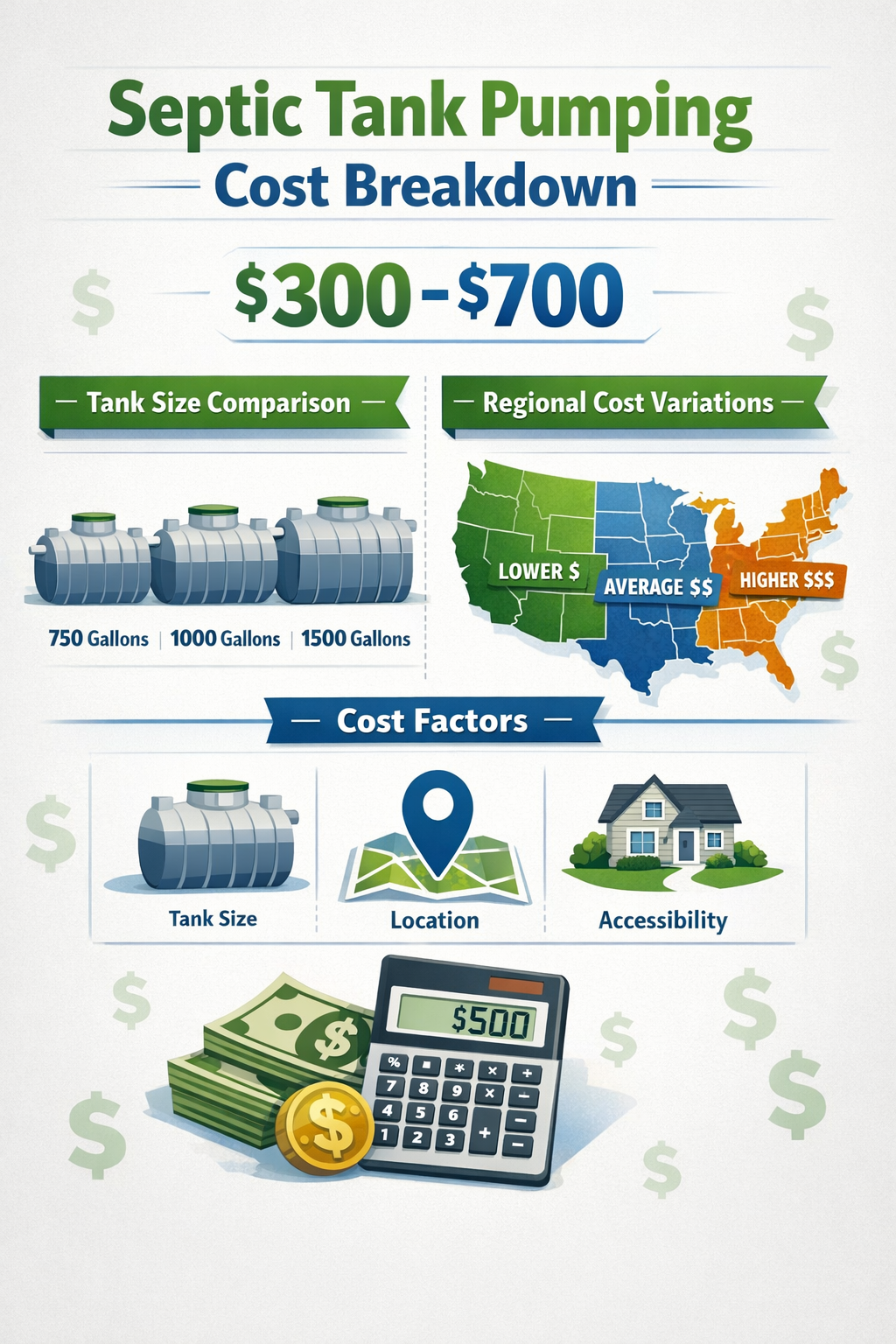
Septic tank pumping typically costs between $300 and $700 for standard residential systems. The exact amount depends on your tank size, location, accessibility, and local service rates. Most homeowners pay around $400-$500 for routine pumping every 3-5 years.
What Determines How Much to Pump Septic Tank
Tank size is the primary cost factor for septic pumping services. Larger tanks require more time and equipment capacity, directly increasing the service fee.
Here’s how tank size affects pumping costs:
• 750-1,000 gallon tanks: $300-$450
• 1,000-1,500 gallon tanks: $400-$550
• 1,500+ gallon tanks: $500-$700+
Additional cost factors include:
• Location and travel distance — rural properties often pay higher fees
• Tank accessibility — buried or hard-to-reach tanks increase labor costs
• Soil conditions — rocky or frozen ground complicates access
• Service company rates — established companies may charge premium prices
• Time of service — weekend or emergency calls cost significantly more
Choose a local service provider if you want to minimize travel fees. Companies typically charge $50-$100 extra for properties more than 20 miles from their base location.
Regional Cost Variations for How Much to Pump Septic Tank
Septic pumping costs vary significantly by geographic region due to local regulations, service availability, and cost of living differences. Urban areas often have more competitive pricing, while rural regions may face higher costs due to limited service providers.
Regional cost breakdown:
• Northeast: $400-$800 (higher due to regulations and winter conditions)
• Southeast: $250-$500 (competitive market with year-round service)
• Midwest: $300-$600 (moderate costs with seasonal variations)
• Southwest: $350-$650 (water scarcity regulations may increase fees)
• West Coast: $450-$900 (highest costs due to strict environmental rules)
State-specific factors that affect pricing:
• Licensing requirements — states with strict contractor licensing see higher prices
• Environmental regulations — areas with groundwater protection rules increase costs
• Disposal fees — regions with limited waste treatment facilities charge more
• Seasonal demand — northern states see price spikes before winter
Common mistake: Choosing the cheapest service without verifying proper licensing and insurance. Unlicensed pumping can lead to environmental violations and costly cleanup requirements.
Tank Size Impact on How Much to Pump Septic Tank Costs
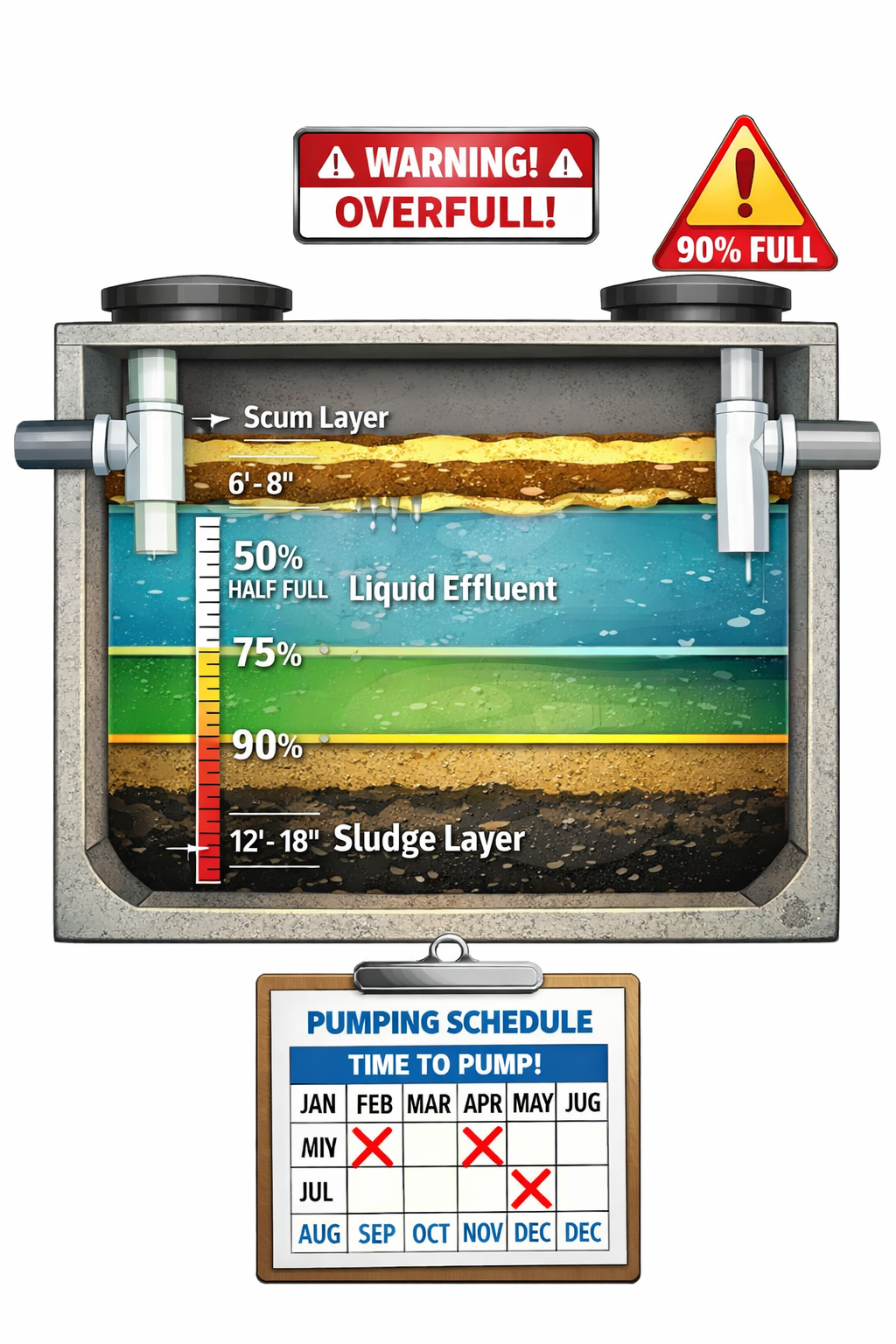
Larger septic tanks require more time to pump and generate more waste volume, directly increasing service costs. Most pumping companies charge based on tank capacity rather than actual waste removed.
| Tank Size | Typical Cost | Pumping Time | Waste Volume |
|---|---|---|---|
| 750 gallons | $300-$450 | 45-60 minutes | 500-600 gallons |
| 1,000 gallons | $375-$525 | 60-75 minutes | 700-800 gallons |
| 1,250 gallons | $425-$575 | 75-90 minutes | 900-1,000 gallons |
| 1,500 gallons | $475-$650 | 90-120 minutes | 1,100-1,200 gallons |
| 2,000+ gallons | $550-$800 | 2+ hours | 1,400+ gallons |
How to determine your tank size:
• Check your home’s septic permit — size is listed on original installation documents
• Measure tank dimensions — length × width × depth ÷ 7.48 = gallons
• Ask previous service providers — they often keep customer records
• Contact your local health department — they maintain septic system databases
Important consideration: Some companies charge flat rates regardless of tank size, while others use tiered pricing. Understanding your tank capacity helps you compare quotes accurately.
FYI: Some links may be affiliate links, which means I may earn a small commission at no extra cost to you.
Septifix: Simple Septic Tank Care in One Tablet
Septifix tablets help break down waste, reduce bad smells, and keep your septic tank working properly. With one easy monthly flush, you can help prevent blockages, protect your plumbing, and avoid costly repairs.
👉 See how Septifix tablets can keep your septic system clean and efficient
For ongoing septic health between pumpings, consider using Septifix tablets. These monthly treatments help break down waste naturally and can extend the time between pump-outs, potentially saving money on frequent service calls.
Additional Fees That Affect How Much to Pump Septic Tank
Most septic pumping services include additional fees beyond the base pumping cost. Understanding these extra charges helps you budget accurately and avoid surprise expenses.
Common additional fees:
• Tank inspection: $50-$150 (often required by local regulations)
• Difficult access surcharge: $75-$200 (for buried or obstructed tanks)
• Weekend/holiday service: $100-$300 extra
• Emergency pumping: 50-100% premium over standard rates
• Effluent filter cleaning: $25-$75
• Minor repairs: $50-$200 (depending on complexity)
Travel and setup fees:
• Mileage charges: $2-$5 per mile beyond service radius
• Minimum trip charges: $75-$150 for small jobs
• Equipment setup: $25-$50 for difficult terrain access
Ways to minimize additional fees:
• Schedule during regular business hours to avoid premium rates
• Clear access paths before the service appointment
• Bundle services like inspection and filter cleaning for package discounts
• Book annual maintenance to lock in standard rates
Red flag: Companies that quote unusually low base rates often make up profits through excessive additional fees. Always request itemized estimates before agreeing to service.
When Tank Condition Affects How Much to Pump Septic Tank Pricing
Septic tanks in poor condition or with excessive buildup require more time and specialized equipment, increasing pumping costs. Service providers often charge premium rates for challenging pump-out situations.
Conditions that increase pumping costs:
• Excessive sludge buildup — tanks not pumped for 7+ years
• Solid waste blockages — non-biodegradable items in the tank
• Structural damage — cracked or collapsed tank components
• Root intrusion — tree roots blocking access or damaging pipes
• Frozen conditions — winter pumping in northern climates
Cost implications by condition:
• Standard pumping: $300-$700
• Heavy buildup removal: $500-$1,000+
• Blockage clearing: $200-$500 additional
• Emergency situations: $800-$1,500+
Signs your tank needs immediate attention:
• Sewage backup in the house — indicates complete system failure
• Standing water over drain field — suggests tank overflow
• Strong odors around tank area — points to ventilation or overflow issues
• Slow drains throughout the house — shows tank capacity problems
Prevention strategy: Regular pumping every 3-5 years prevents most condition-related cost increases and maintains standard pricing.
How to Get Accurate Quotes for How Much to Pump Septic Tank
Getting multiple detailed quotes ensures you pay fair market rates for septic pumping services. Proper quote comparison requires understanding what each estimate includes and excludes.
Essential information to provide when requesting quotes:
• Tank size and age — affects equipment needs and time requirements
• Last pumping date — indicates likely waste volume
• Property access details — driveway width, gate clearances, distance from road
• Tank location and depth — buried tanks require additional equipment
• Any known issues — previous problems or repairs
Questions to ask potential service providers:
• What’s included in the base price? (pumping, basic inspection, disposal)
• Are there additional fees? (travel, access, weekend service)
• Do you provide written estimates? (protects against price changes)
• What’s your disposal method? (licensed facilities vs. on-site treatment)
• Do you offer service guarantees? (callback policies for issues)
Quote comparison checklist:
✓ Base pumping fee clearly stated
✓ All potential additional charges listed
✓ Service timeline and availability
✓ Company licensing and insurance verification
✓ Customer references or reviews available
Warning signs of unreliable quotes:
• Significantly lower prices than competitors — often indicates hidden fees
• Door-to-door solicitation — legitimate companies rarely use this approach
• Pressure for immediate decisions — professional services allow time for consideration
• Cash-only payment requirements — makes it difficult to resolve disputes
Helpful Resource
If you want a simple way to maintain your septic system between pumpings, Septifix tablets offer an easy monthly maintenance solution. These tablets help break down waste, reduce odors, and can potentially extend the time between costly pump-outs. With one tablet flushed monthly, you’re taking a proactive step to keep your septic system functioning efficiently and avoid emergency pumping situations.
FAQ
Q: How much should I expect to pay for septic tank pumping?
Most homeowners pay between $300-$700 for standard residential septic tank pumping, with the average cost around $400-$500 depending on tank size and location.
Q: Does tank size significantly affect pumping costs?
Yes, larger tanks cost more to pump. A 750-gallon tank typically costs $300-$450, while a 1,500+ gallon tank ranges from $500-$700.
Q: Are there additional fees beyond the base pumping cost?
Common additional fees include tank inspection ($50-$150), difficult access charges ($75-$200), and weekend service premiums ($100-$300 extra).
Q: How do regional differences affect septic pumping prices?
Costs vary significantly by region. Northeast and West Coast areas typically charge $400-$900, while Southeast regions often range $250-$500.
Q: What makes septic pumping more expensive?
Factors that increase costs include larger tank size, difficult access, emergency service calls, excessive waste buildup, and remote property locations.
Q: Should I get multiple quotes for septic pumping?
Yes, getting 2-3 quotes helps ensure fair pricing. Make sure each quote includes the same services and clearly lists any additional fees.
Q: Do septic companies charge extra for weekend service?
Most companies charge 50-100% more for weekend, holiday, or emergency pumping services compared to regular business hours.
Q: How can I reduce septic pumping costs?
Schedule during business hours, ensure clear tank access, bundle services like inspection and cleaning, and maintain regular pumping schedules to avoid emergency rates.
Q: What’s included in a standard septic pumping service?
Standard service typically includes waste removal, basic tank inspection, and proper disposal at licensed facilities. Additional services cost extra.
Q: Are cheaper septic pumping services worth it?
Extremely low prices often indicate hidden fees, unlicensed operators, or substandard service. Choose licensed, insured companies even if they cost slightly more.
Q: How do I know if my septic tank needs pumping?
Signs include slow drains, sewage odors, standing water over the drain field, or if it’s been 3-5 years since the last pumping.
Q: Can I reduce how often I need septic pumping?
Regular maintenance, proper waste disposal habits, and bacterial treatments can help extend time between pumpings, but most systems still need service every 3-5 years.
Conclusion
Understanding how much to pump septic tank costs helps you budget effectively for this essential home maintenance. With typical costs ranging from $300-$700, factors like tank size, location, accessibility, and service timing all impact your final bill.
Key steps to manage septic pumping costs:
• Get multiple quotes from licensed, insured service providers
• Schedule during regular business hours to avoid premium rates
• Maintain clear access to your tank to prevent additional fees
• Bundle services like inspection and filter cleaning for better value
• Keep regular pumping schedules to avoid emergency service costs
Take action now: If it’s been more than 3 years since your last pumping, contact local service providers for quotes. Regular maintenance prevents costly system failures and keeps your septic system functioning properly for years to come.
Remember that investing in proper septic maintenance today saves thousands in potential system replacement costs tomorrow. Your septic system is a significant home investment that deserves professional care and attention.
References
[1] How Often To Pump A Septic Tank – https://clearriverenvironmental.com/how-often-to-pump-a-septic-tank/
[2] Septic Tanks Preventative Routine Maintenance – https://des.sc.gov/permits-regulations/septic-tanks/homeowner-resources/septic-tanks-preventative-routine-maintenance
[3] Septic Tank Pumping Frequency – https://smartsepticpros.com/blog/septic-tank-pumping-frequency/
[4] How Often To Pump Septic Tank – https://dandhsepticservices.com/how-often-to-pump-septic-tank/