
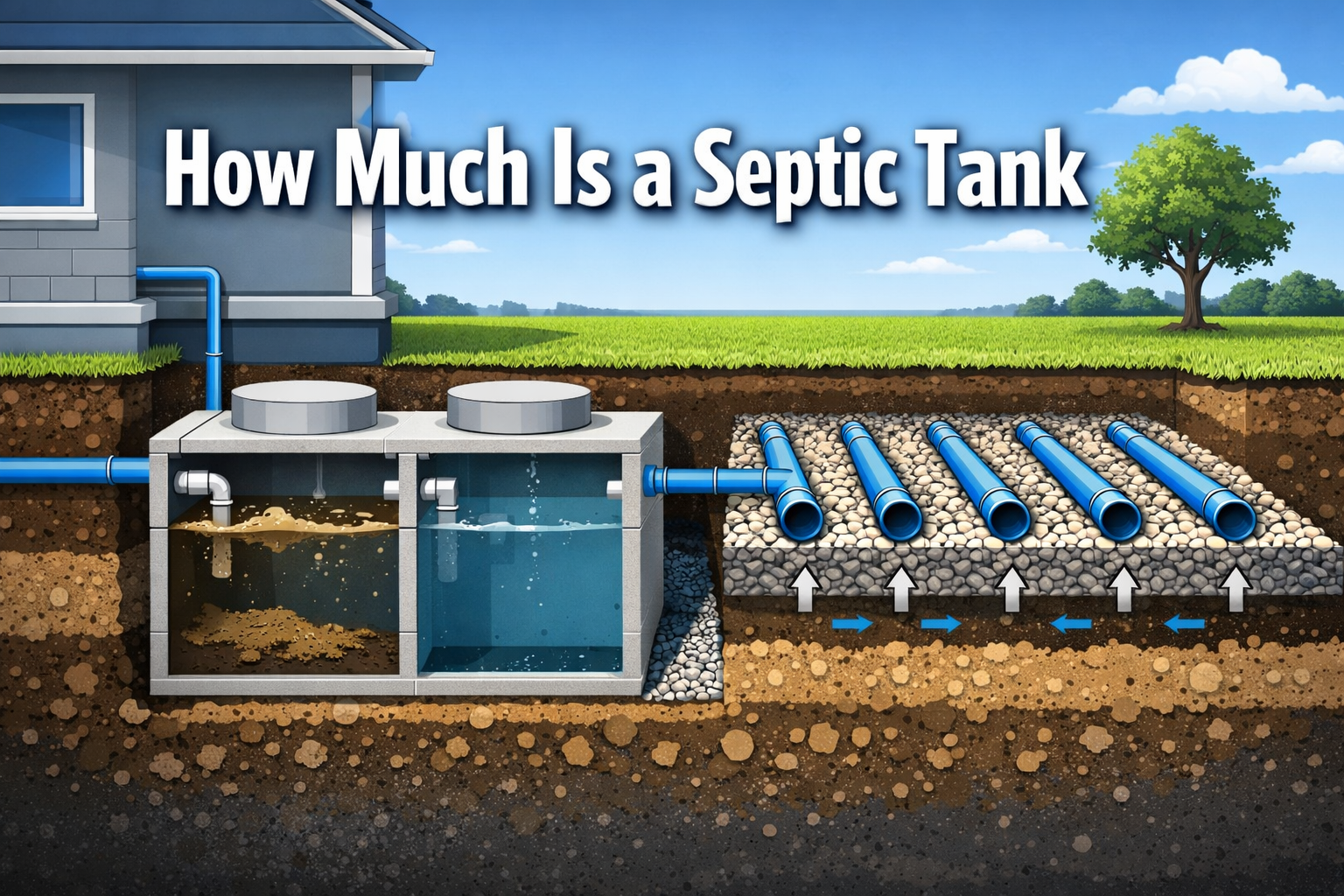
Last updated: February 25, 2026
Key Takeaways
• Septic tank alone costs: $500-$2,000 depending on material (concrete, fiberglass, or plastic)
• Complete system installation: $10,000-$45,000 with national average around $8,039
• Basic gravity systems: Most affordable option at $6,000-$9,000
• Tank size matters: 1,000-gallon tanks for 3-4 bedrooms cost $900-$1,500
• Labor represents 50-70% of total installation costs ($1,400-$4,100)
• Drain field installation: Additional $5,000-$12,000 depending on soil conditions
• Advanced systems: Aerobic and recirculating systems cost $11,000-$18,000
• Excavation costs: $1,200-$4,500 for standard installations
Quick Answer
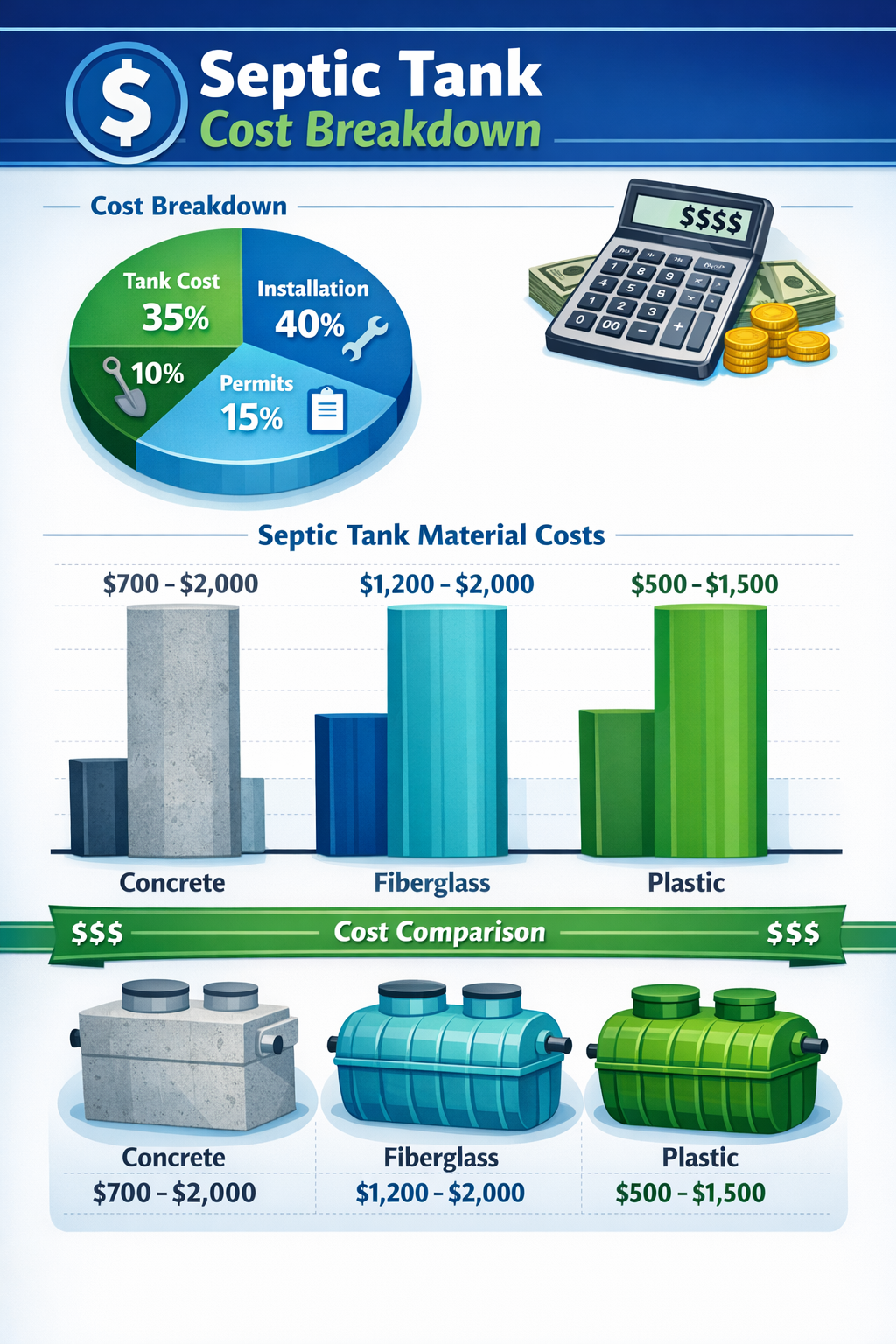
A septic tank alone costs $500-$2,000, but complete septic system installation ranges from $10,000-$45,000 with a national average of $8,039. Basic gravity systems start around $6,000-$9,000, while advanced systems can reach $18,000 or more.
What Affects How Much Is a Septic Tank
The cost of your septic tank depends on several key factors that can dramatically change your final price. Tank material, size requirements, and installation complexity all play major roles in determining your total investment.
Material costs vary significantly:
• Concrete tanks: $700-$2,000 (most durable, longest-lasting)
• Fiberglass tanks: $1,200-$2,000 (lightweight, corrosion-resistant)
• Plastic tanks: $500-$1,500 (most affordable, easiest installation)
Tank size requirements:
• 3-4 bedroom homes: 1,000-gallon tank ($900-$1,500)
• 5+ bedroom homes: 1,200-gallon tank ($1,200-$1,600)
Choose concrete if you want maximum durability and don’t mind higher upfront costs. Fiberglass works best for properties with high water tables or corrosive soil. Plastic tanks offer the most budget-friendly option but may not last as long in harsh conditions.
Common mistake: Choosing tank size based only on current occupancy instead of maximum capacity. Always size for peak usage to avoid premature filling and costly pumping.
How Much Is a Septic Tank Installation System
Complete septic system installation costs $10,000-$45,000, with most homeowners paying around $8,039 nationally. This wide range reflects differences in system complexity, local regulations, and property conditions.
System type cost breakdown:
• Basic gravity systems: $6,000-$9,000
• Standard residential systems: $8,000-$12,000
• Recirculating systems: $11,000-$18,000
• Advanced treatment units: $15,000-$25,000
Installation components include:
• Tank purchase and delivery
• Excavation ($1,200-$4,500)
• Drain field installation ($5,000-$12,000)
• Permits and inspections
• Labor costs (50-70% of total)
Choose gravity systems if your property has proper slope and soil conditions. Recirculating systems become necessary when soil doesn’t drain well or local regulations require advanced treatment.
FYI: Some links may be affiliate links, which means I may earn a small commission at no extra cost to you.
To help maintain your new septic system and prevent costly repairs, consider using Septifix tablets. These monthly treatments help break down waste, reduce odors, and keep your system running efficiently. One simple tablet flush per month can help protect your investment and avoid expensive emergency repairs.
Labor and Installation Costs for Septic Tanks
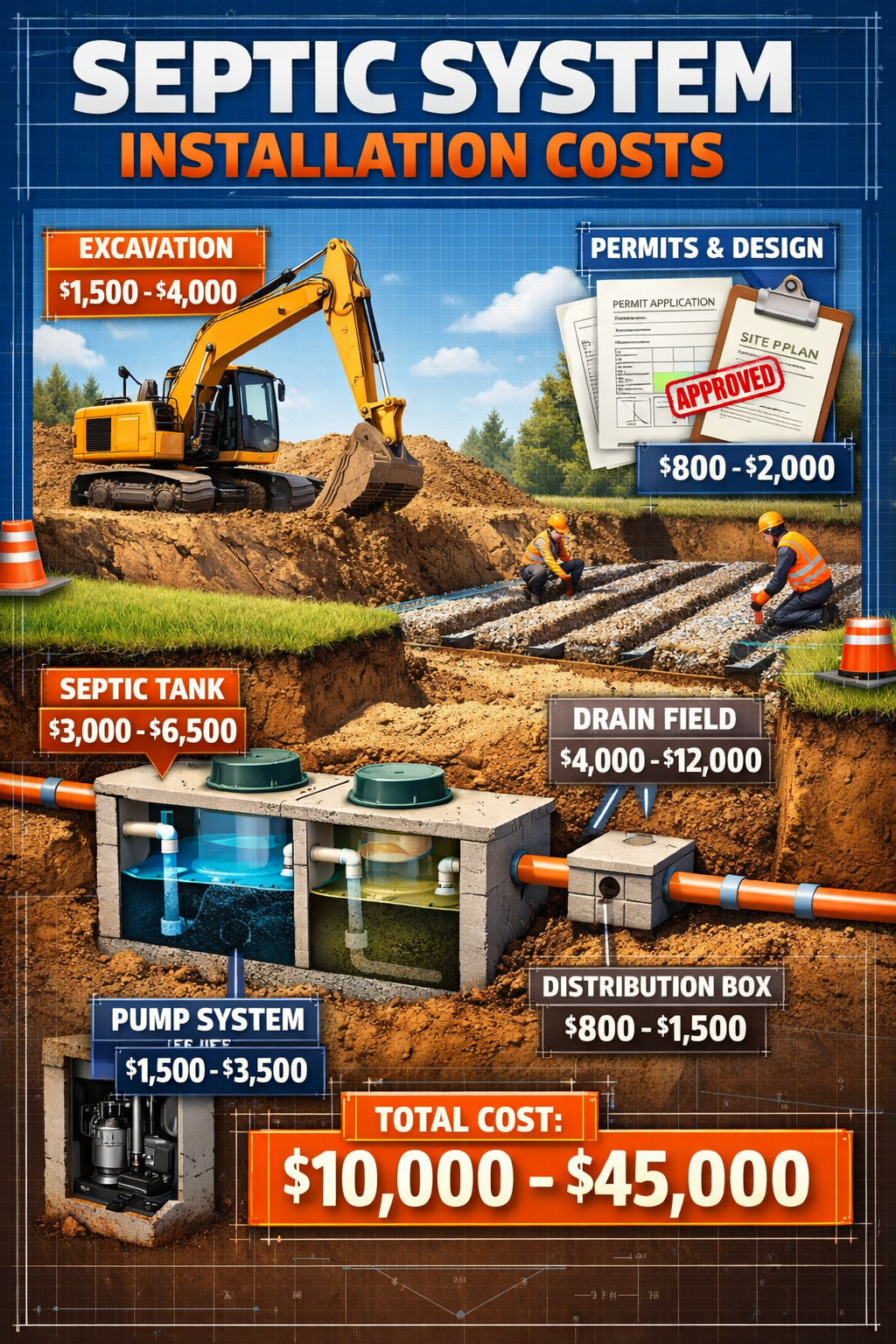
Labor represents the largest portion of septic installation costs, typically accounting for 50-70% of your total project expense. Professional installation costs range from $1,400-$4,100 nationally, but complex installations can exceed these estimates.
Labor cost factors:
• Excavation difficulty and soil type
• Distance from house to drain field
• Local permit requirements and inspections
• Seasonal weather conditions
• Equipment accessibility
Installation timeline:
• Simple installations: 2-3 days
• Complex systems: 1-2 weeks
• Weather delays can extend timeline significantly
What’s included in professional installation:
• Site survey and soil testing
• Permit applications and approvals
• Excavation and grading
• Tank and component installation
• System testing and inspection
• Final backfilling and restoration
Choose experienced local contractors who understand your area’s soil conditions and regulations. Get multiple quotes but don’t automatically pick the lowest bid if it seems unrealistic.
Edge case: Properties requiring pump systems or alternative drain fields can double labor costs due to increased complexity and specialized equipment needs.
Drain Field Costs and Septic Tank Pricing
Drain field installation costs $5,000-$12,000 and represents a critical component that significantly impacts your total septic system investment. The drain field size and complexity depend on your tank capacity and soil conditions.
Drain field cost variables:
• Soil percolation test results
• Required field size (typically 300-800 square feet)
• Pipe material and layout complexity
• Gravel and sand requirements
• Local environmental regulations
Soil condition impacts:
• Good drainage: Standard trenches work fine
• Poor drainage: May require raised beds or alternative systems
• Rocky soil: Increases excavation costs significantly
• High water table: Requires specialized mound systems
System sizing relationship:
A 1,000-gallon tank typically requires a 600-square-foot drain field, while larger tanks need proportionally bigger fields. Poor soil conditions can double the required field size.
For ongoing drain field protection, regular septic maintenance becomes essential. Proper maintenance practices help prevent field saturation and extend system life.
Common mistake: Skipping soil testing to save money upfront, then discovering expensive soil amendments or alternative systems are required during installation.
Comparing Septic Tank Types and Their Costs
Different septic tank materials offer distinct advantages and price points. Understanding these differences helps you choose the right tank for your budget and property conditions.
| Tank Type | Cost Range | Lifespan | Best For |
|---|---|---|---|
| Concrete | $700-$2,000 | 30-40 years | Most soil types, maximum durability |
| Fiberglass | $1,200-$2,000 | 25-30 years | Corrosive soil, high water tables |
| Plastic | $500-$1,500 | 15-25 years | Budget installations, easy access |
Concrete tanks offer the longest lifespan and handle heavy loads well, but they’re heavy and require larger excavation equipment. They resist damage from shifting soil and provide excellent structural integrity.
Fiberglass tanks won’t crack from ground movement and resist corrosion completely. They’re lighter than concrete, making installation easier in tight spaces, but they can float in high water table conditions without proper anchoring.
Plastic tanks cost the least upfront and install quickly due to their light weight. However, they may crack under heavy soil pressure and typically need replacement sooner than other materials.
Choose concrete for maximum longevity, fiberglass for problematic soil conditions, or plastic for budget-conscious installations with good soil support.
Maintenance Costs: How Much Is a Septic Tank to Maintain
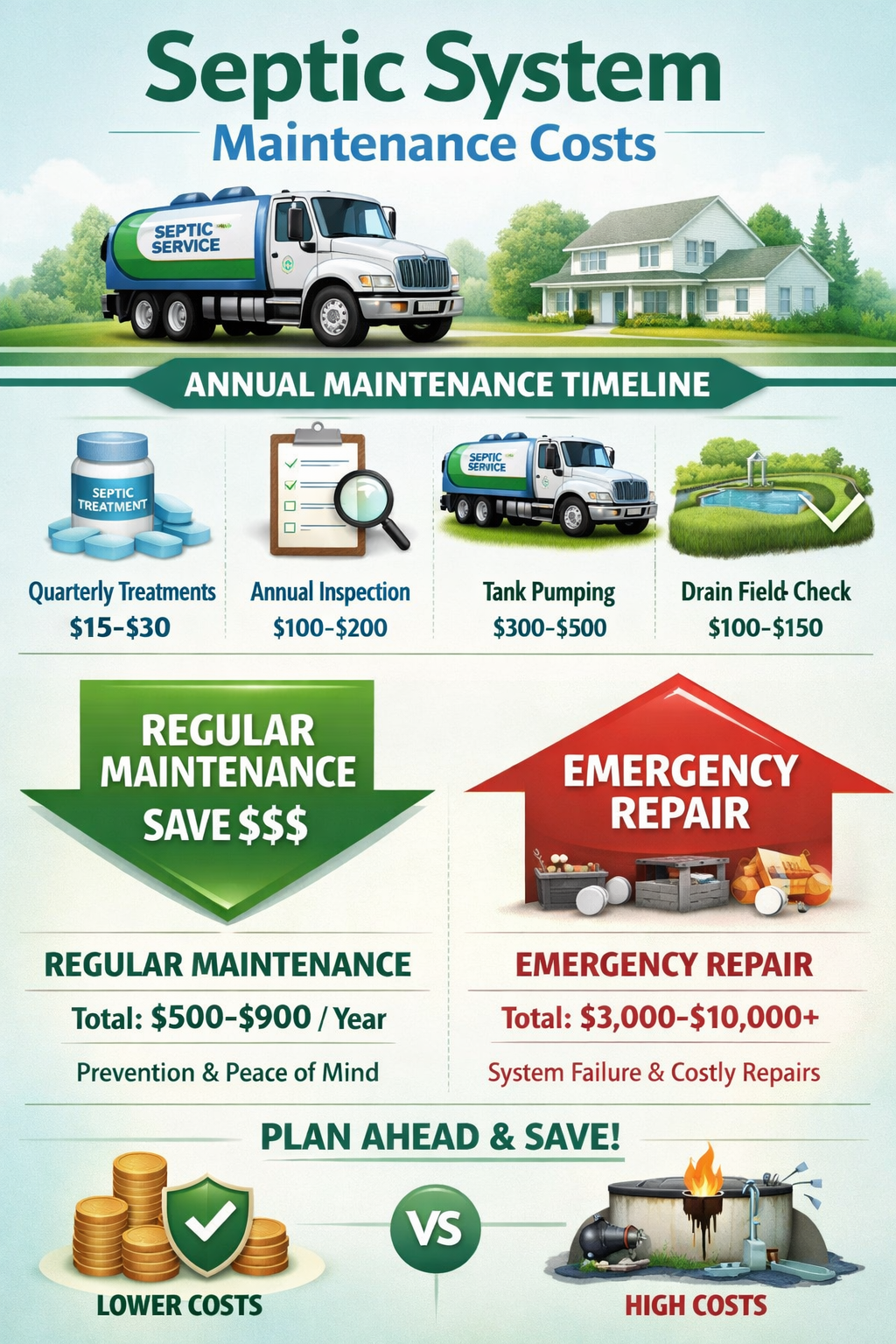
Annual septic maintenance costs $200-$500, making it far more affordable than emergency repairs that can reach thousands of dollars. Regular maintenance includes pumping, inspections, and preventive treatments.
Annual maintenance breakdown:
• Pumping every 3-5 years: $200-$400 per service
• Annual inspections: $100-$200
• Bacterial treatments: $50-$100 annually
• Minor repairs: $100-$300 as needed
Maintenance schedule:
• Monthly: Monitor water usage and avoid harmful chemicals
• Annually: Professional inspection and bacterial treatment
• Every 3-5 years: Professional pumping based on usage
Cost comparison:
Regular maintenance ($300/year) versus emergency repairs ($3,000-$8,000) makes preventive care an obvious choice. Recognizing when your tank needs attention helps prevent expensive problems.
Helpful Resource: Simple Monthly Septic Care
For homeowners who want an easy way to maintain their septic system, Septifix tablets provide a simple monthly solution. These tablets help break down waste naturally, reduce bad smells, and keep your septic tank working properly. With one easy monthly flush, you can help prevent blockages, protect your plumbing, and potentially extend the time between expensive pump-outs.
While not required, many homeowners find that consistent monthly treatments help them avoid costly emergency repairs and maintain their system more effectively.
Frequently Asked Questions
How much does just the septic tank cost without installation?
Septic tanks alone cost $500-$2,000 depending on material and size. Concrete tanks run $700-$2,000, fiberglass costs $1,200-$2,000, and plastic tanks range $500-$1,500.
What’s the cheapest type of septic system to install?
Basic gravity systems cost $6,000-$9,000 and represent the most affordable option for properties with suitable soil and slope conditions.
How much does it cost to replace an existing septic tank?
Replacement costs $3,000-$8,000 for the tank and basic installation, assuming the existing drain field remains functional and doesn’t need replacement.
Do I need permits for septic tank installation?
Yes, most areas require permits costing $200-$500. Your contractor typically handles permit applications, but verify this is included in your quote.
How long does septic tank installation take?
Simple installations take 2-3 days, while complex systems requiring alternative drain fields can take 1-2 weeks depending on weather and soil conditions.
What factors increase septic installation costs the most?
Poor soil drainage requiring alternative systems, difficult excavation conditions, long distances from house to suitable drain field location, and local regulations requiring advanced treatment systems.
Can I install a septic tank myself to save money?
Most areas require professional installation and inspection. DIY installation typically voids warranties and may violate local codes, potentially creating expensive problems later.
How often will I need to pump my new septic tank?
Most residential tanks need pumping every 3-5 years, costing $200-$400 per service. Usage patterns and household size affect pumping frequency.
What’s the difference between septic tank cost and total system cost?
The tank represents only 15-25% of total system cost. Complete installation includes excavation, drain field, permits, labor, and inspections, typically totaling $10,000-$45,000.
Are there financing options for septic system installation?
Many contractors offer financing, and some areas provide low-interest loans for septic system replacement. Check with local health departments about available assistance programs.
How much does soil testing cost before installation?
Soil percolation tests cost $100-$300 and determine drain field requirements. This testing is mandatory in most areas and helps avoid expensive surprises during installation.
What happens if my septic installation goes over budget?
Get detailed written estimates including potential additional costs for rock removal, poor soil conditions, or permit delays. Quality contractors discuss these possibilities upfront rather than surprising you later.
Conclusion
Understanding septic tank costs helps you budget effectively for this essential home system. Tank prices range from $500-$2,000, but complete system installation typically costs $10,000-$45,000 depending on your property conditions and system complexity.
Key cost factors to remember:
• Material choice affects both upfront cost and longevity
• Labor represents 50-70% of total installation expense
• Soil conditions significantly impact drain field requirements
• Regular maintenance costs far less than emergency repairs
Next steps for homeowners:
- Get soil testing done early to understand your property requirements
- Obtain multiple quotes from licensed local contractors
- Factor in long-term maintenance costs when choosing system types
- Consider proper maintenance practices to protect your investment
Smart septic system planning involves balancing upfront costs with long-term performance. Choose quality materials and professional installation to ensure your system serves your home reliably for decades.
References
[1] Price Septic Tank Installation – https://renoquotes.com/en/blog/price-septic-tank-installation
[2] How Much Does A Septic Tank Cost – https://www.consumeraffairs.com/homeowners/how-much-does-a-septic-tank-cost.html
[3] What Does It Cost Install Septic System – https://www.angi.com/articles/what-does-it-cost-install-septic-system.htm
[4] How Much Does A Septic System Cost – https://point.com/blog/how-much-does-a-septic-system-cost
[5] Residential Septic Tank Pricing – https://www.ntotank.com/blog/residential-septic-tank-pricing
[7] How Much Does It Cost To Install A Septic Tank – https://dillonseptic.com/how-much-does-it-cost-to-install-a-septic-tank/