
How Does a Septic Tank Work: Complete Guide for Homeowners
Last updated: February 20, 2026
Key Takeaways
- Septic tanks use natural bacterial processes to break down waste into three distinct layers: scum, effluent, and sludge
- The complete system includes the septic tank, distribution box, and drain field working together to treat wastewater
- Regular maintenance every 3-5 years prevents costly system failures and protects groundwater quality
- Modern septic systems can last 15-40 years with proper care and quality installation
- Understanding your system helps you avoid expensive repairs and maintain optimal performance
Quick Answer
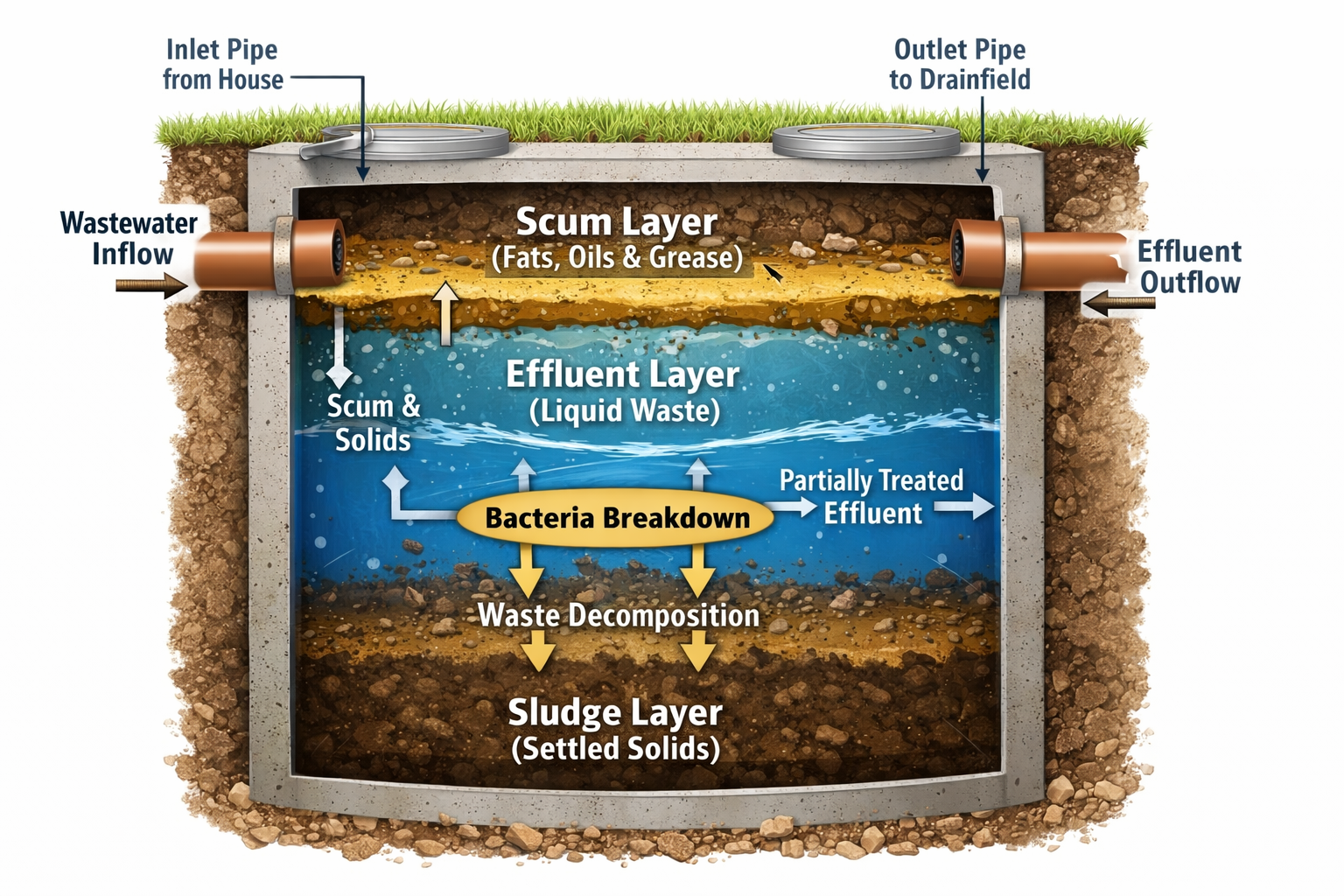
A septic tank works by collecting wastewater from your home and using natural bacterial processes to separate and break down waste into three layers. Solids settle to the bottom as sludge, oils float to the top as scum, and partially treated water (effluent) flows to the drain field for final filtration through soil. This biological treatment process removes harmful bacteria and nutrients before water returns to groundwater.
Understanding how does a septic tank work is essential for every homeowner who depends on this wastewater treatment system. Your septic system quietly handles thousands of gallons of wastewater each month, protecting both your family’s health and the environment when properly maintained.
What Happens Inside Your Septic Tank
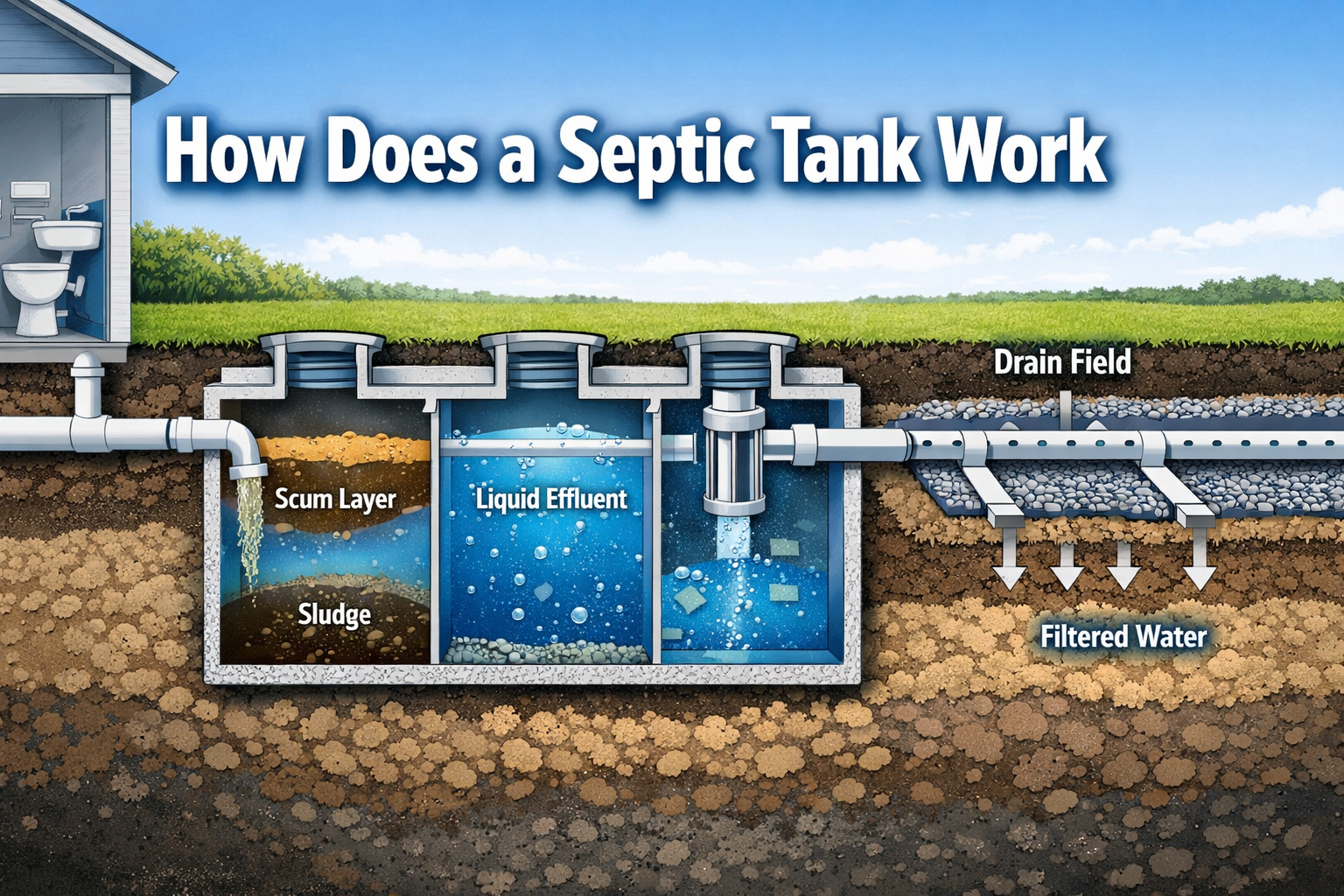
A septic tank creates a controlled environment where beneficial bacteria break down organic waste through anaerobic digestion. This biological process separates wastewater into three distinct layers that form naturally through gravity and bacterial action.
The scum layer forms at the top, containing oils, grease, and floating debris. The effluent layer sits in the middle as partially treated wastewater. The sludge layer accumulates at the bottom with heavy solids and decomposed organic matter.
Key processes occurring inside your tank:
- Bacterial decomposition of organic waste
- Gravity separation of solids and liquids
- Anaerobic digestion reducing waste volume
- Natural settling of heavy particles
- Oil and grease flotation to surface
Choose pumping every 3-5 years if you have a standard household of 2-4 people. Larger families or heavy water usage may require more frequent service to prevent sludge buildup that disrupts the separation process.
How the Three-Layer System Functions
The three-layer separation system is the foundation of septic tank operation. Each layer serves a specific purpose in treating wastewater before it leaves the tank for final soil filtration.
Scum Layer (Top):
- Contains fats, oils, grease, and soap residues
- Floats due to lower density than water
- Prevents odors from escaping through inlet pipe
- Requires periodic removal during pumping
Effluent Layer (Middle):
- Partially treated wastewater ready for soil filtration
- Contains dissolved nutrients and some bacteria
- Flows continuously to distribution box
- Represents 80-85% of tank volume
Sludge Layer (Bottom):
- Heavy solids that settle through gravity
- Undergoes continuous bacterial decomposition
- Accumulates over time requiring regular removal
- Should not exceed 30% of tank depth
This natural separation occurs because materials have different densities. Modern septic tanks incorporate advanced filtration techniques and tank compartmentalization to optimize this process and minimize blockages.
The Complete Septic System Workflow
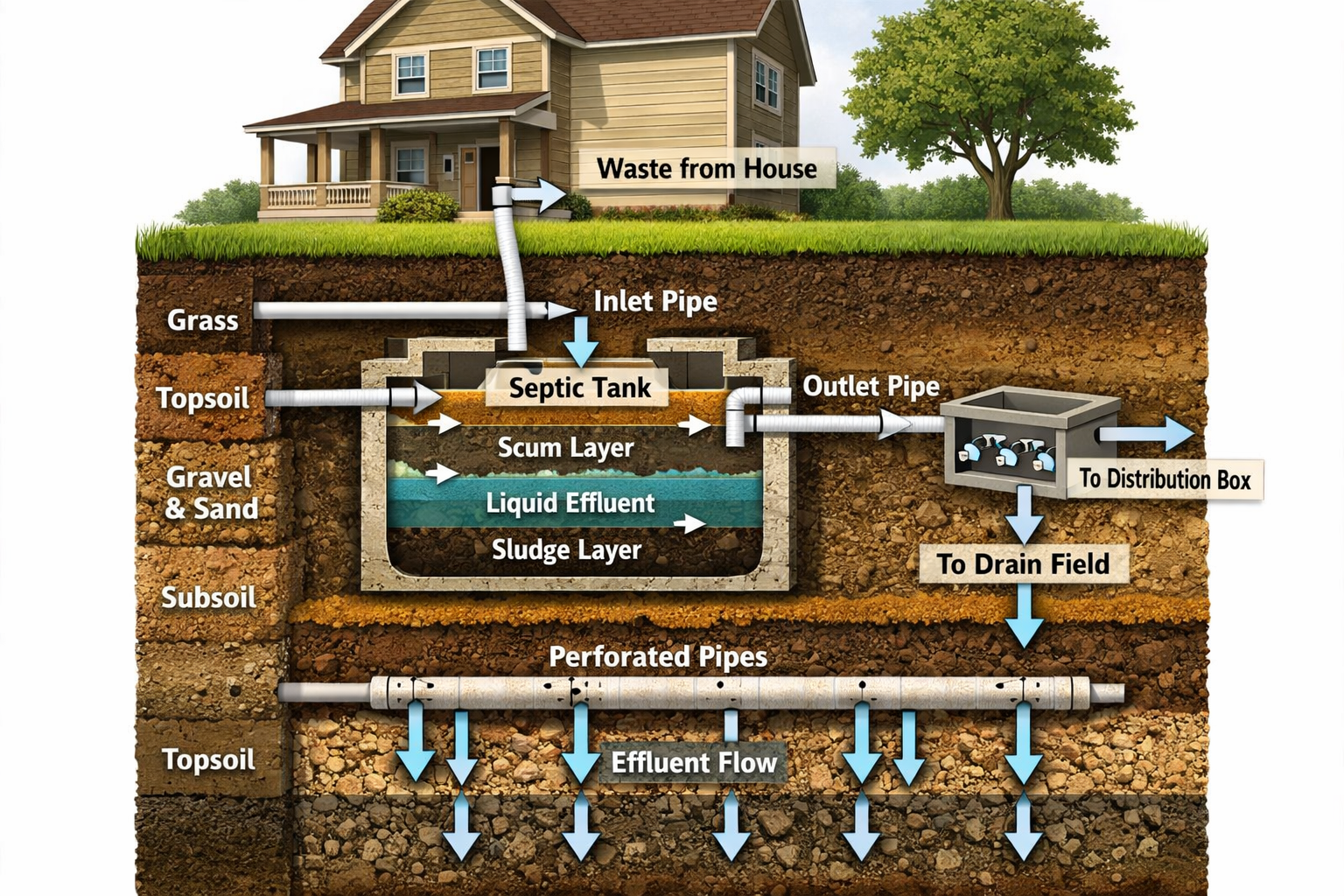
Understanding how does a septic tank work requires seeing the entire system workflow from your home to groundwater. The process involves four main components working together to treat wastewater effectively.
Step 1: Wastewater Collection
All wastewater from toilets, sinks, showers, and laundry flows through your home’s main drain line into the septic tank inlet pipe.
Step 2: Primary Treatment in Tank
- Solids settle and separate into three layers
- Beneficial bacteria break down organic matter
- Effluent clarifies through bacterial action
- Tank retains waste for 24-48 hours minimum
Step 3: Distribution Box
Partially treated effluent flows from the tank outlet to a distribution box that evenly disperses wastewater across multiple drain field lines.
Step 4: Soil Absorption Area (Drain Field)
- Perforated pipes distribute effluent through gravel beds
- Soil filters remaining contaminants and bacteria
- Natural processes remove nutrients and pathogens
- Clean water eventually reaches groundwater
Choose professional inspection if you notice slow drains, odors, or wet spots in your yard. These symptoms often indicate problems with system workflow that require immediate attention.
For homeowners looking to maintain optimal bacterial balance in their septic tanks, septic tank treatment products can help support the natural breakdown process.
FYI: Some links may be affiliate links, which means I may earn a small commission at no extra cost to you.
Modern Septic Tank Design and Technology
Today’s septic systems incorporate advanced secondary treatment systems that offer higher levels of treatment than basic systems and can be tailored to work with difficult soils, smaller lots, and uneven terrains. These innovations improve treatment efficiency and system longevity.
Advanced Design Features:
- Compartmentalized tanks with multiple chambers for enhanced separation
- Mechanical agitators that maintain fluidity and reduce blockage causes
- Effluent filters preventing solids from entering drain field
- Eco-friendly components using resilient polymers and biodegradable elements
Modern System Types:
- ATU (Aerated Treatment Units) using oxygen injection for enhanced bacterial activity
- Sand mound systems for areas with poor soil drainage
- UV disinfection systems using ultraviolet rays to eliminate harmful microorganisms
- Sand filter systems providing additional treatment before soil absorption
Material Improvements:
Modern concrete septic tanks have an exceptional lifespan of 40 years when well-installed[5]. Overall lifespan ranges between 15 to 40 years depending on material quality, maintenance routines, and local soil conditions.
Choose advanced treatment systems if your property has challenging soil conditions, limited space, or strict environmental regulations. These systems provide superior treatment but require more maintenance than conventional tanks.
Signs Your Septic System Needs Attention
Recognizing early warning signs helps prevent costly system failures and protects your investment. Most septic problems develop gradually, giving homeowners time to address issues before they become emergencies.
Immediate Action Required:
- Sewage backups in toilets, sinks, or floor drains
- Standing water or wet spots over drain field
- Strong odors near tank or in yard
- Gurgling sounds from drains or toilets
Schedule Professional Inspection:
- Slow draining fixtures throughout the house
- Unusually green grass over drain field
- High nitrate levels in well water
- Tank hasn’t been pumped in 3+ years
Common Causes of System Problems:
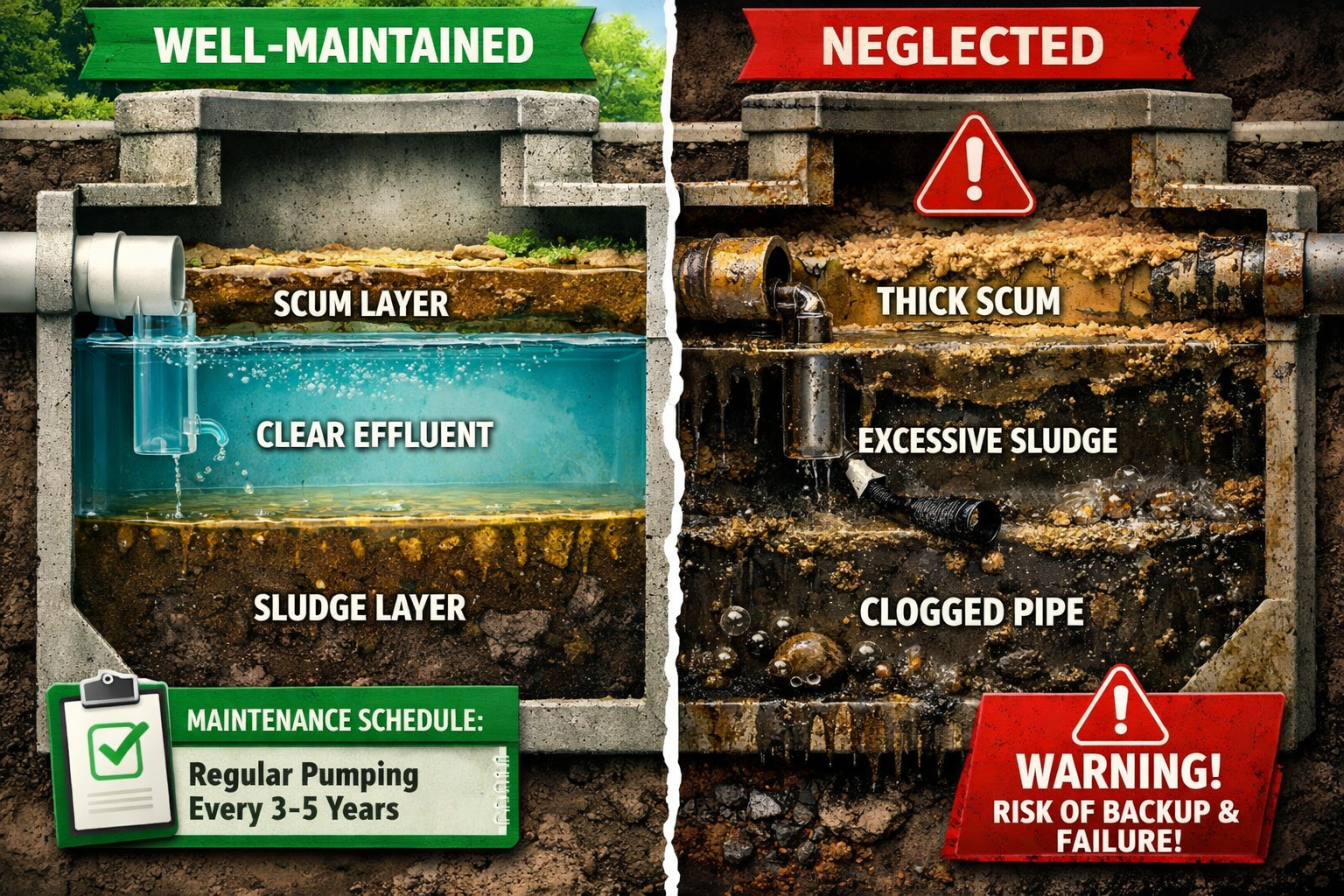
- Excessive sludge buildup from infrequent pumping
- Flushing non-biodegradable items
- Overloading system with too much water
- Damage from heavy vehicles over tank or pipes
- Tree root intrusion into pipes
If you’re experiencing multiple warning signs, check our guide on signs your septic tank needs maintenance for detailed troubleshooting steps.
Choose immediate professional help if you have sewage backups or standing water. These situations can pose health risks and cause expensive property damage if not addressed quickly.
Essential Maintenance for Optimal Performance
Regular maintenance is the key to maximizing your septic system’s lifespan and preventing expensive repairs. A well-maintained system protects both your property value and local groundwater quality.
Pumping Schedule:
- Every 3-5 years for average households
- Every 2-3 years for larger families or heavy usage
- Annual inspection of tank condition and sludge levels
- Professional assessment of drain field performance
Daily Care Practices:
- Use septic-safe toilet paper and cleaning products
- Avoid flushing medications, chemicals, or non-biodegradable items
- Spread laundry loads throughout the week
- Fix leaky faucets and running toilets promptly
- Limit garbage disposal use
Protect Your Drain Field:
- Never park vehicles or build structures over the system
- Redirect roof drains and surface water away from drain field
- Avoid planting trees within 30 feet of system components
- Don’t use drain field area for gardening or landscaping
Tank replacement costs typically range from $3,000 to $10,000 depending on size and material[6], making regular maintenance a smart financial investment.
For comprehensive maintenance guidance, review our septic tank maintenance tips to keep your system running smoothly.
Helpful Resource for System Maintenance
If you want something structured to help maintain your septic system’s bacterial balance, Septifix tablets can keep your septic system clean and efficient. These easy-to-use tablets are trusted by many homeowners to maintain a healthy, efficient septic system with minimal effort—from breaking down waste and reducing buildup to helping prevent blockages and costly repairs.
Not required, but useful for homeowners who prefer a simple monthly treatment routine rather than worrying about bacterial balance in their tanks.
What Not to Put in Your Septic System
Understanding what harms your septic system is just as important as knowing how does a septic tank work. Many common household items can disrupt bacterial processes or cause physical damage to system components.
Never Flush or Drain:
- Medications and chemicals that kill beneficial bacteria
- Grease, fats, and cooking oils that create blockages
- Cigarette butts, diapers, and feminine hygiene products
- Cat litter, coffee grounds, and paint
- Household cleaners with antibacterial agents
Limit These Items:
- Garbage disposal waste (compost instead when possible)
- Bleach and harsh cleaning chemicals
- Fabric softeners and excessive detergent
- Water softener backwash
Septic-Safe Alternatives:
- Biodegradable toilet paper and cleaning products
- Enzyme-based drain cleaners
- Natural cleaning solutions (vinegar, baking soda)
- Phosphate-free laundry detergents
Choose septic-safe products whenever possible to protect the bacterial ecosystem in your tank. Even small amounts of harmful chemicals can disrupt the treatment process and lead to system failure.
For more details about protecting your system, see our complete guide to septic tank treatment.
Troubleshooting Common Septic Issues
When you understand how does a septic tank work, you can better diagnose problems and determine when professional help is needed. Many issues have simple solutions if caught early.
Slow Drains Throughout House:
- Check if tank needs pumping (most common cause)
- Inspect for clogs in main drain line
- Verify distribution box isn’t blocked
- Consider drain field saturation issues
Odors Near Tank or in Yard:
- Check tank lid seals and access ports
- Ensure proper ventilation through house plumbing
- Inspect for cracks in tank or pipes
- Verify adequate bacterial activity in tank
Wet Spots Over Drain Field:
- Reduce household water usage immediately
- Schedule professional drain field inspection
- Check for broken distribution pipes
- Consider soil compaction or system overload
Gurgling Sounds from Drains:
- Often indicates tank approaching capacity
- May signal partial blockage in system
- Check vent pipes for obstructions
- Schedule pumping if overdue
Choose professional diagnosis for persistent problems or multiple simultaneous symptoms. Attempting DIY repairs on septic systems can cause expensive damage and health hazards.
If you’re unsure whether your tank is full, our guide on how to tell if your septic tank is full provides clear indicators to watch for.
FAQ
How often should I pump my septic tank?
Pump every 3-5 years for average households, or every 2-3 years for larger families. Pumping frequency depends on tank size, household size, and water usage patterns.
Can I use bleach with a septic system?
Use bleach sparingly. Small amounts for cleaning are generally safe, but excessive bleach can kill beneficial bacteria needed for waste breakdown.
What size septic tank do I need?
Tank size depends on household size and daily water usage. Most homes need 1,000-1,500 gallon tanks, with larger families requiring bigger capacity.
How long do septic systems last?
Well-maintained systems last 15-40 years depending on material quality and maintenance. Concrete tanks typically last longest, while plastic and fiberglass tanks may need earlier replacement.
Can I plant grass over my septic tank?
Yes, grass is ideal over septic tanks and drain fields. Avoid planting trees or deep-rooted plants that could damage pipes or interfere with soil absorption.
What happens if I don’t pump my septic tank?
Unpumped tanks accumulate excessive sludge, leading to system backups, drain field failure, and expensive repairs. Regular pumping prevents these costly problems.
How do I find my septic tank?
Check your home’s as-built drawings, follow the main sewer line from your house, or hire a professional with locating equipment. Tank locations are often recorded with local health departments.
Can heavy rain affect my septic system?
Yes, excessive rainfall can saturate drain fields and cause temporary system backups. Reduce water usage during heavy rain periods to prevent overloading.
Is it normal for my septic tank to have water in it?
Yes, septic tanks should always contain water up to the outlet pipe level. This water is the effluent layer being treated by bacterial processes.
What should I do if sewage backs up into my house?
Stop using water immediately, contact a septic professional, and avoid contact with sewage. Backups pose serious health risks and require prompt professional attention.
How much does septic tank maintenance cost?
Regular pumping costs $200-500 every 3-5 years. Professional inspections cost $100-300. These maintenance costs are much less expensive than system replacement.
Can I add bacteria to my septic tank?
Additional bacteria products can help maintain optimal bacterial balance, especially after antibiotic use or chemical exposure that might disrupt natural bacterial populations.
Key Takeaways
- Septic tanks use natural bacterial processes to separate waste into three layers: scum, effluent, and sludge, with each layer serving a specific treatment function
- The complete system workflow involves collection, primary treatment in the tank, distribution, and final soil filtration through the drain field
- Regular pumping every 3-5 years prevents sludge buildup that can cause system backups and expensive drain field damage
- Modern septic technology includes advanced filtration, compartmentalized designs, and eco-friendly materials that improve treatment efficiency and system longevity
- Proper daily care means using septic-safe products, avoiding harmful chemicals, and protecting the drain field from damage
- Early problem recognition through monitoring for slow drains, odors, and wet spots helps prevent costly emergency repairs
- Professional maintenance and inspection are essential investments that protect your property value and local groundwater quality
- Understanding your system helps you make informed decisions about repairs, upgrades, and replacement timing
- System lifespan of 15-40 years depends heavily on installation quality, material choice, and consistent maintenance practices
Conclusion
Understanding how does a septic tank work empowers you to protect your investment and avoid costly repairs. Your septic system is a sophisticated wastewater treatment facility that relies on natural bacterial processes, proper maintenance, and responsible usage to function effectively.
The three-layer separation system, combined with soil filtration in the drain field, provides reliable wastewater treatment when properly maintained. Regular pumping, careful attention to what you put down drains, and prompt response to warning signs will keep your system running smoothly for decades.
Take these steps today:
- Schedule pumping if it’s been more than 3 years since your last service
- Switch to septic-safe household products
- Locate your tank and drain field boundaries
- Create a maintenance calendar with inspection and pumping reminders
- Learn the warning signs of system problems
For ongoing system care, bookmark our comprehensive septic maintenance guide and consider professional inspection if you notice any concerning symptoms.
Your septic system works hard to protect your family’s health and the environment. With proper understanding and care, it will continue serving your home reliably for many years to come.
References
[1] Benefits Of Installing A Modern Septic System – https://www.joeyridglessepticservice.com/benefits-of-installing-a-modern-septic-system
[2] Septic – https://www.epa.gov/septic
[3] Septic System Types – https://www.premiertechaqua.com/en-us/blog/septic-system-types
[5] Businesnewswire 2026 1 23 Why Concrete Septic Tanks Are The Most Reliable Choice In 2026 – https://investor.wedbush.com/wedbush/article/businesnewswire-2026-1-23-why-concrete-septic-tanks-are-the-most-reliable-choice-in-2026
[6] Essential Facts About Buying Homes With Septic Systems In – https://www.amerisave.com/learn/essential-facts-about-buying-homes-with-septic-systems-in