
Last updated: March 4, 2026
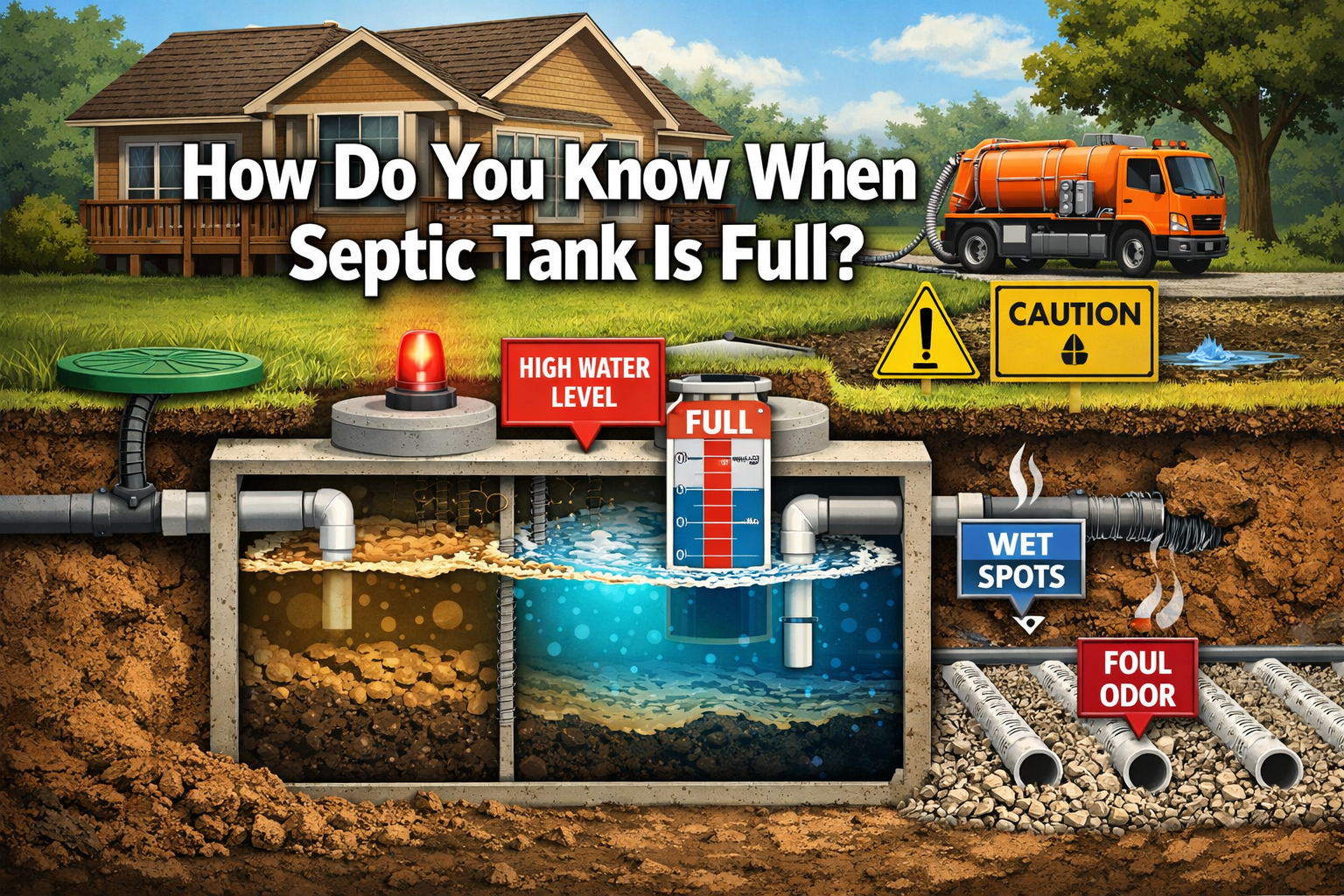
When your septic tank reaches capacity, it sends clear warning signals that demand immediate attention. Recognizing these signs early can save you thousands in emergency repairs and prevent sewage backups in your home.
Key Takeaways
• Slow drains throughout your house indicate your septic tank may be approaching or at capacity
• Foul sewage odors around drains, toilets, or your yard signal gases escaping from an overfull tank
• Pooling water near your drain field or septic area shows wastewater overflow and soil contamination
• Gurgling sounds in pipes occur when trapped air cannot escape due to insufficient tank capacity
• Toilet flushing problems often represent the first symptom, with plunging providing no relief
• Unusually green grass above your drain field indicates nutrient-rich wastewater leaking into soil
• Regular pumping every 3-5 years prevents most full tank emergencies and costly repairs
• Professional inspection can confirm tank levels and identify problems before they become severe
• Emergency pumping is required immediately when sewage backs up into your home
Quick Answer
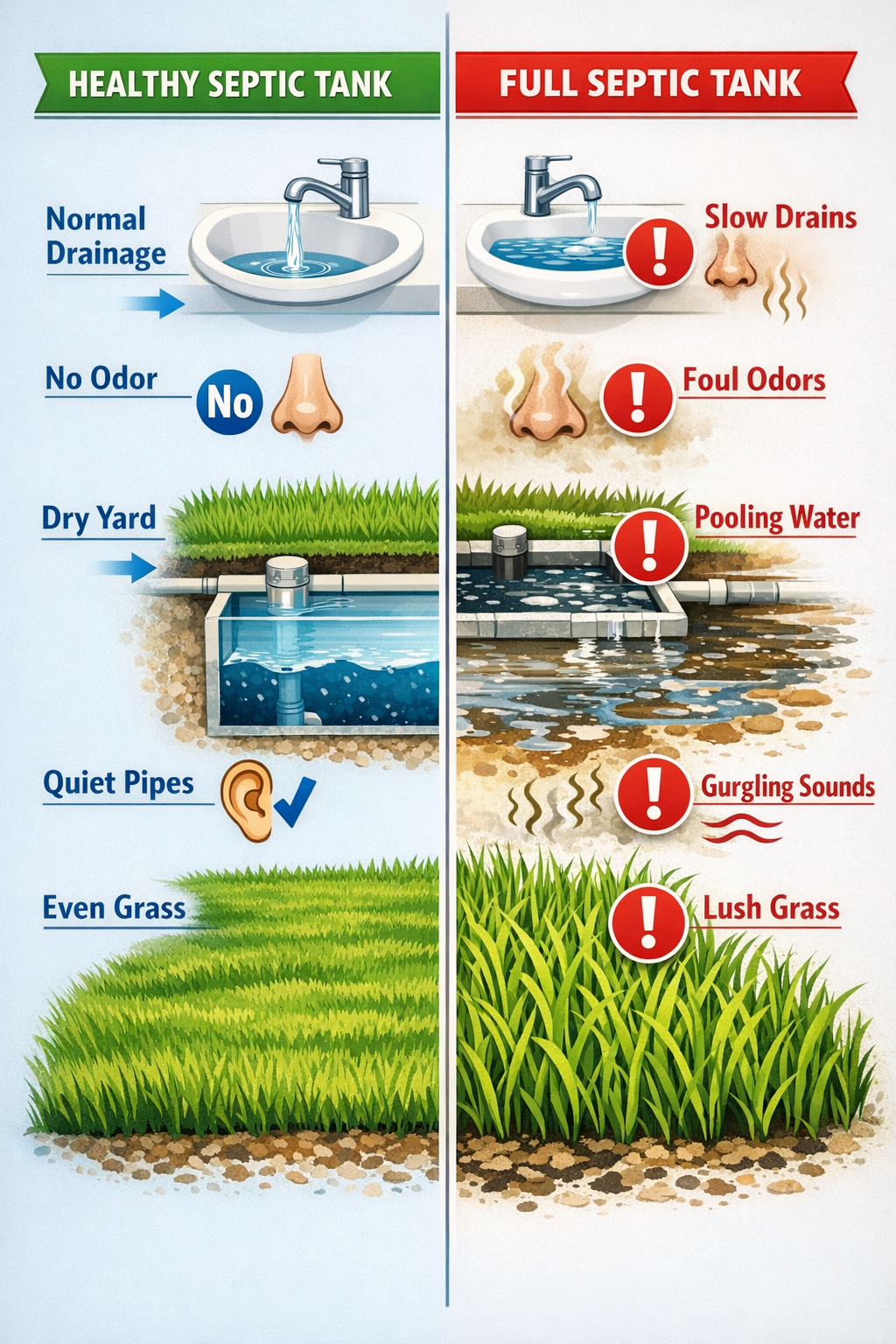
Your septic tank is full when you notice slow drains throughout your house, foul sewage odors, gurgling sounds in pipes, or difficulty flushing toilets. The most serious sign is sewage backing up into your home, which requires immediate professional pumping.
What Are the Most Common Signs Your Septic Tank Is Full?
Slow drains throughout your house are the most reliable early indicator of a full septic tank. When your tank reaches capacity, wastewater cannot flow properly through the system, causing backups that affect multiple fixtures simultaneously.
The primary warning signs include:
• Multiple slow drains – Kitchen sinks, bathroom drains, and showers all drain slowly at the same time
• Toilet flushing difficulties – Toilets won’t flush completely or require multiple attempts
• Gurgling sounds – Pipes make bubbling or gurgling noises when you use water fixtures
• Foul sewage odors – Strong smells around drains, toilets, or outside near your septic area
• Standing water – Pooling water appears near your drain field or septic tank location
Choose immediate inspection if you notice two or more of these signs occurring together. A single slow drain might indicate a localized clog, but multiple symptoms suggest your tank has reached capacity.
Common mistake: Homeowners often assume slow drains mean simple pipe clogs and waste time with drain cleaners instead of checking their septic tank levels. Chemical drain cleaners can actually harm your septic system’s beneficial bacteria.
For more detailed information about these warning signs, check our comprehensive guide on signs of a full septic tank.
How Can You Visually Inspect Your Septic Tank to Check Fullness?
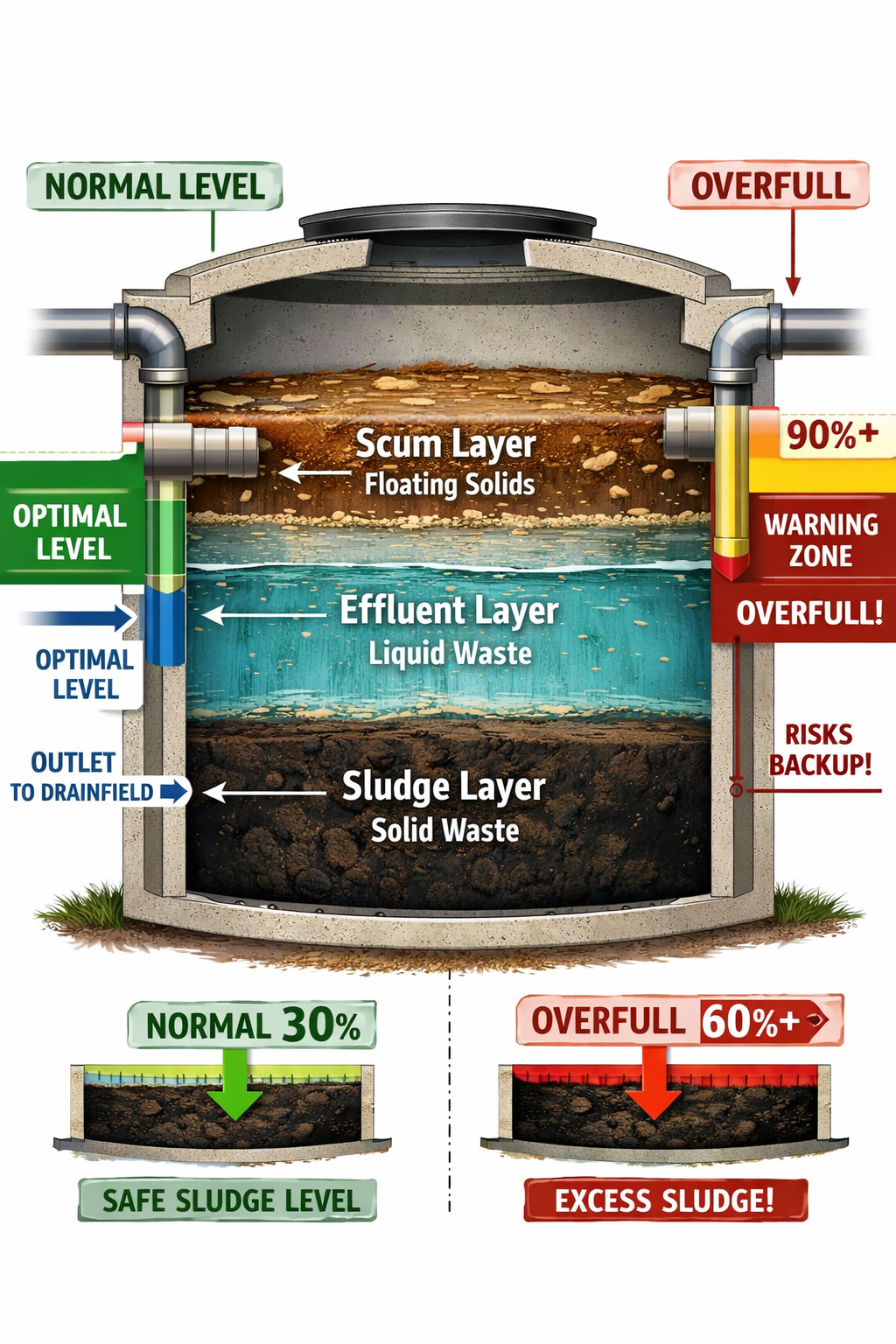
A visual inspection requires locating your tank’s access port and measuring the distance between the liquid surface and the tank’s outlet pipe. Your tank is considered full when the liquid level reaches within 6 inches of the outlet pipe.
Here’s how to safely check your tank levels:
Safety first: Never enter or lean over an open septic tank. Toxic gases can cause unconsciousness or death within minutes.
Visual Inspection Steps
- Locate your septic tank – Check your property records or use a probe rod to find the tank
- Remove the access lid – Use proper tools and have someone present for safety
- Measure liquid levels – Use a long stick or measuring device to check the distance from liquid surface to outlet pipe
- Check for scum and sludge layers – Normal tanks have distinct layers with clear separation
Tank level guidelines:
• Normal operation: Liquid level 8-12 inches below outlet pipe
• Needs attention: Liquid level 6-8 inches below outlet pipe
• Requires pumping: Liquid level within 6 inches of outlet pipe
• Emergency: Liquid level at or above outlet pipe
Edge case: If you cannot locate your septic tank or access ports, contact a professional service. Attempting to dig or probe extensively can damage your system or underground utilities.
For guidance on finding your tank location, see our article on how to locate septic tank for maintenance.
What Happens When Your Septic Tank Becomes Overfull?
When your septic tank exceeds capacity, untreated wastewater backs up into your home’s plumbing or overflows into your drain field, creating health hazards and expensive damage. This occurs because the tank cannot process additional waste when it’s already at maximum capacity.
Immediate consequences of an overfull tank:
• Sewage backup – Raw waste flows back through your lowest drains, typically basement or ground-floor fixtures
• Drain field contamination – Untreated wastewater floods your soil absorption area, killing beneficial bacteria
• Environmental pollution – Contaminated water can reach groundwater supplies and nearby water sources
• Property damage – Sewage backup damages flooring, walls, furniture, and creates costly cleanup requirements
• Health risks – Exposure to raw sewage carries serious bacterial and viral infection risks
Financial impact: Emergency pumping and cleanup costs typically range from $300-800 for pumping plus $1,000-5,000 for damage restoration, depending on the extent of backup and contamination.
Choose immediate professional help if sewage appears in your home. This situation requires emergency pumping and professional sanitization – it’s not a DIY project.
To understand the full scope of consequences, read our detailed guide on what happens when septic tank is full.
How Often Should You Check if Your Septic Tank Is Full?
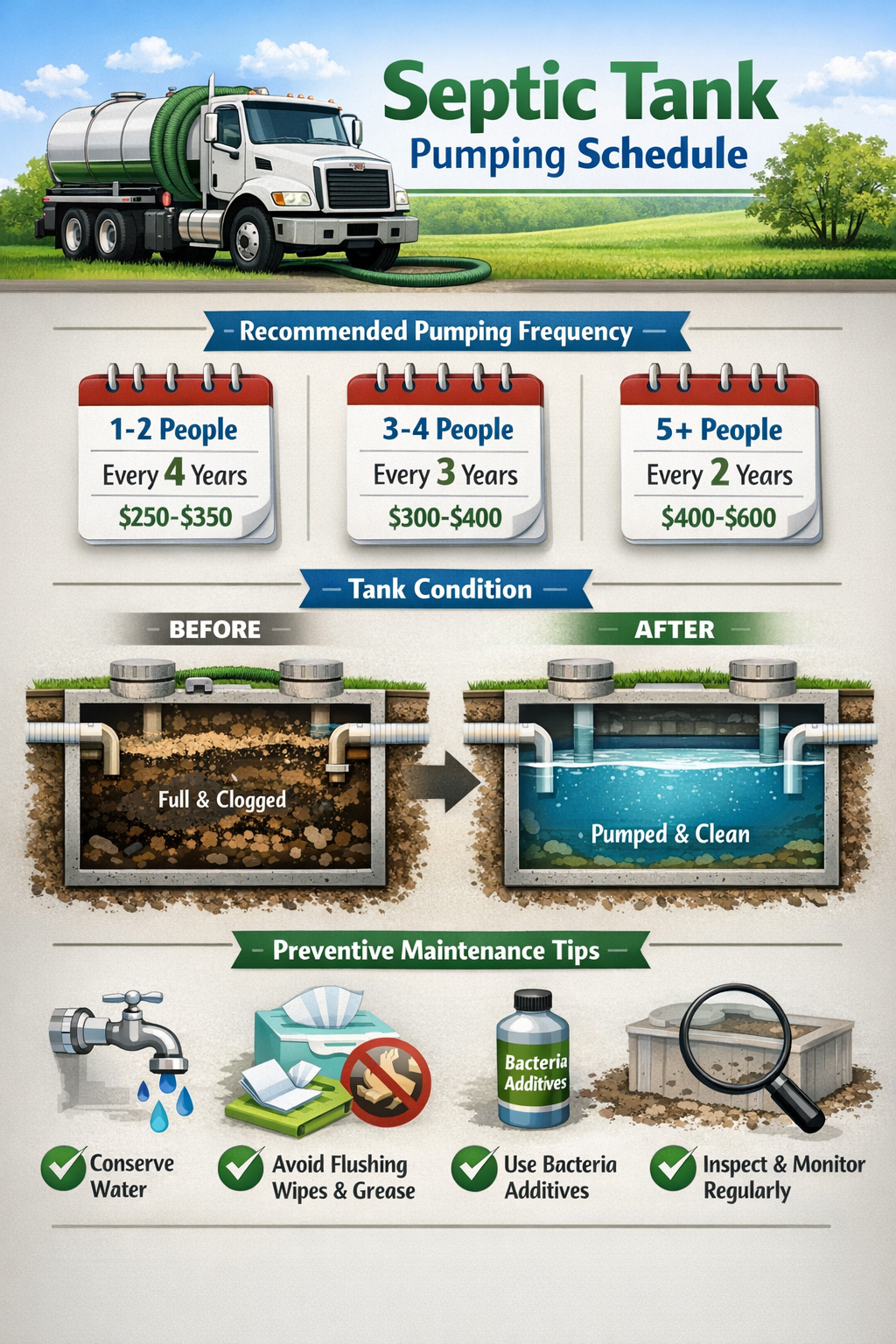
Most septic tanks require pumping every 3-5 years, but you should monitor for warning signs monthly and schedule professional inspections annually. Your specific timeline depends on household size, tank capacity, and water usage patterns.
Recommended monitoring schedule:
Monthly checks:
• Monitor drain performance throughout your house
• Notice any new odors around fixtures or outside
• Observe toilet flushing efficiency
• Check for standing water near your drain field
Annual professional inspection:
• Measure sludge and scum layer thickness
• Assess tank structural condition
• Evaluate drain field performance
• Determine optimal pumping schedule
Factors affecting tank filling speed:
• Household size – More people create more waste and faster filling
• Tank capacity – Smaller tanks fill more quickly than larger ones
• Water usage habits – Excessive water use accelerates the filling process
• Garbage disposal use – Food waste increases solid accumulation
• Cleaning products – Harsh chemicals kill beneficial bacteria, reducing waste breakdown
Pumping frequency guidelines:
• 1-2 people: Every 4-5 years
• 3-4 people: Every 3-4 years
• 5+ people: Every 2-3 years
• Heavy usage: Annual inspection with pumping as needed
FYI: Some links may be affiliate links, which means I may earn a small commission at no extra cost to you.
Between professional services, you can help maintain your system’s efficiency with quality septic treatments. Septifix tablets can keep your septic system clean and efficient by breaking down waste buildup and supporting healthy bacterial activity, potentially extending the time between pumpings.
For specific pumping schedules based on your situation, see our guide on signs septic tank needs pumping.
Can You Prevent Your Septic Tank from Getting Full Too Quickly?
Yes, proper water management and waste disposal habits can significantly extend the time between pumpings and prevent premature tank filling. The key is reducing unnecessary water usage and avoiding materials that don’t break down naturally.
Water conservation strategies:
• Fix leaks immediately – A running toilet can add 200+ gallons daily to your tank
• Install low-flow fixtures – Reduce water volume per use without sacrificing performance
• Spread laundry loads – Wash clothes throughout the week instead of multiple loads in one day
• Take shorter showers – Reduce shower time by 2-3 minutes to save significant water volume
• Run dishwashers only when full – Maximize efficiency of each water-using cycle
Waste disposal best practices:
Never flush these items:
• Feminine hygiene products, diapers, or wipes (even “flushable” ones)
• Cigarette butts, dental floss, or cat litter
• Medications, paint, or household chemicals
• Coffee grounds, cooking grease, or food scraps
Limit garbage disposal use – Food waste increases solid accumulation and can overwhelm your system’s bacterial balance.
Choose septic-safe products – Use biodegradable soaps, detergents, and toilet paper designed for septic systems. Harsh chemicals kill the beneficial bacteria that break down waste in your tank.
Common mistake: Many homeowners believe they can extend pumping intervals indefinitely through conservation alone. Even with perfect habits, septic tanks accumulate sludge that requires professional removal every few years.
Learn more preventive strategies in our complete septic tank maintenance checklist guide.
When Should You Call a Professional About Your Full Septic Tank?
Contact a septic professional immediately if you experience sewage backup in your home, persistent foul odors, or multiple slow drains throughout your house. These situations indicate your tank has exceeded capacity and requires emergency pumping.
Emergency situations requiring immediate professional help:
• Sewage backup – Any raw waste appearing in drains, toilets, or basement areas
• Standing water – Pooling wastewater around your septic tank or drain field area
• Strong sewage odors – Persistent smells that don’t resolve after checking obvious sources
• Complete drain failure – Multiple fixtures that won’t drain despite attempts to clear clogs
Non-emergency professional services:
Annual inspections help identify problems before they become costly emergencies. Professional technicians can measure sludge levels, assess tank condition, and recommend optimal pumping schedules.
Routine pumping should occur every 3-5 years based on your household size and usage patterns. Don’t wait for warning signs – preventive pumping costs much less than emergency services.
What to expect from professional service:
• Tank location and access – Professionals can locate buried tanks and access ports
• Waste removal – Complete pumping of liquid waste, sludge, and scum layers
• System inspection – Assessment of tank condition, baffles, and outlet pipes
• Maintenance recommendations – Guidance on pumping schedule and system care
Cost considerations: Emergency pumping typically costs 50-100% more than scheduled maintenance. Regular service also prevents the expensive property damage associated with sewage backups.
For guidance on what to expect during professional service, check our article on what happens during a septic inspection.
Helpful Resource for Septic Tank Maintenance
Maintaining your septic system doesn’t have to be complicated. While professional pumping remains essential, you can support your system’s health between services with the right approach.
If you want a simple way to help maintain your septic system’s efficiency, Septifix tablets offer an easy solution for homeowners. These tablets work by breaking down waste buildup and supporting the beneficial bacteria that keep your system running smoothly. They’re particularly helpful for preventing the rapid accumulation of solids that leads to premature tank filling.
This isn’t a replacement for regular pumping, but many homeowners find these treatments useful for maintaining optimal system performance and potentially extending the time between professional services.
FAQ
How do you know when septic tank is full without opening it?
Watch for slow drains throughout your house, gurgling sounds in pipes, foul sewage odors, and difficulty flushing toilets. These external signs indicate capacity issues without requiring tank access.
What does a full septic tank smell like?
A full septic tank produces strong sewage odors similar to rotten eggs or raw waste. These smells appear around drains, toilets, or outside near your septic area when gases escape from an overfull system.
How long does it take for a septic tank to fill up?
Most residential septic tanks fill to pumping capacity in 3-5 years with normal usage. Factors like household size, tank capacity, and water usage habits affect this timeline significantly.
Can you pump a septic tank too often?
Yes, excessive pumping removes beneficial bacteria needed for waste breakdown and wastes money. Stick to professional recommendations based on your household size and usage patterns.
What happens if you never pump your septic tank?
An unpumped tank will eventually overflow, causing sewage backup in your home, drain field failure, environmental contamination, and thousands in repair costs.
How much does emergency septic pumping cost?
Emergency pumping typically costs $400-800, plus potential cleanup and damage repair costs ranging from $1,000-5,000 depending on the extent of sewage backup.
Can heavy rain cause septic tank to appear full?
Yes, excessive groundwater from heavy rain can saturate your drain field and cause temporary backup symptoms that mimic a full tank. Professional assessment can distinguish between the two.
Is it normal for septic tank to be half full?
Yes, septic tanks should always contain liquid at roughly half capacity during normal operation. The concern is when liquid levels rise too close to the outlet pipe.
What time of year is best for septic pumping?
Spring and fall offer ideal conditions with moderate weather and accessible ground conditions. Avoid winter pumping when possible due to frozen ground and harsh weather.
How do you know if your septic tank is damaged vs. full?
Damage typically causes localized problems like persistent odors in one area, while a full tank affects multiple drains simultaneously. Professional inspection can definitively determine the cause.
Can you use the toilet when septic tank is full?
Avoid using plumbing fixtures when your tank is full, as additional waste will likely cause immediate backup into your home. Contact professionals for emergency pumping first.
Do septic tank additives help prevent overfilling?
Quality bacterial additives can support waste breakdown and potentially slow solid accumulation, but they cannot replace regular pumping or overcome poor maintenance habits.
Conclusion
Recognizing when your septic tank is full protects your home, health, and wallet from costly emergencies. The key warning signs – slow drains, foul odors, gurgling pipes, and toilet problems – give you time to act before sewage backs up into your home.
Take action now: Schedule annual professional inspections, monitor your system monthly for warning signs, and maintain a regular pumping schedule every 3-5 years based on your household size. Don’t wait for emergency symptoms that cost thousands to resolve.
Remember that prevention costs far less than emergency repairs. A $300-500 routine pumping prevents the $3,000-8,000 expense of sewage cleanup and system restoration. Start by checking your records to determine when your tank was last pumped, then establish a maintenance schedule that keeps your system running smoothly for years to come.
For comprehensive guidance on maintaining your septic system, explore our essential septic tank care tips for homeowners.
Related Reading
• How to Tell If Your Septic Tank Is Full
• What Happens When Your Septic Tank Is Full
• Signs Your Septic Tank Needs Maintenance
• Complete Septic Tank Maintenance Checklist Guide
• How Often Does a Septic Tank Need to Be Pumped