How Can You Tell If Your Septic Tank Is Full? Warning Signs Every Homeowner Should Know

Last updated: March 4, 2026
Key Takeaways
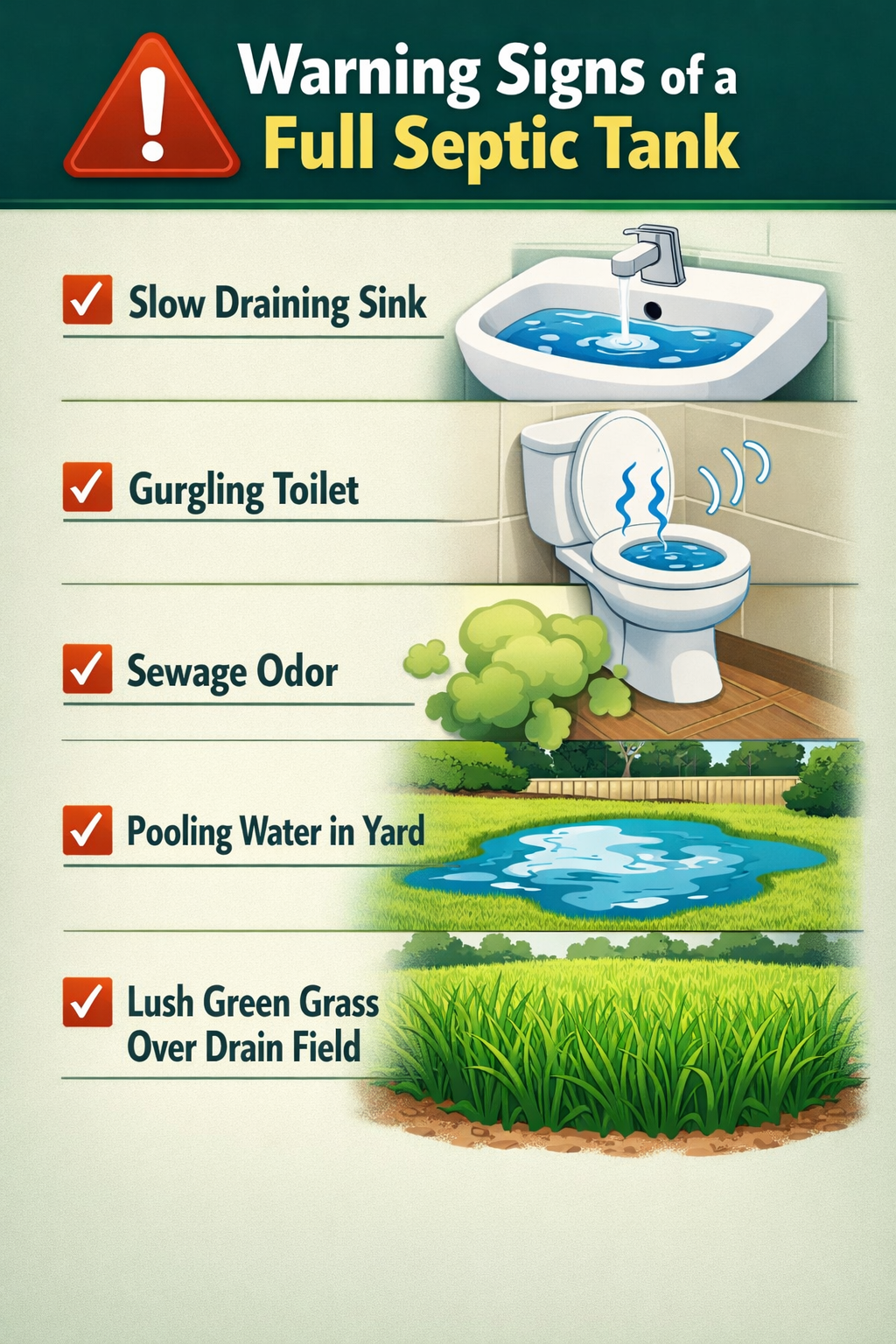
- Slow drains throughout your home are often the first sign your septic tank needs attention
- Gurgling sounds from pipes indicate air displacement caused by backup in the system
- Sewage odors inside or outside your home signal immediate septic issues requiring action
- Pooling water or wet spots in your yard around the drain field area indicate overflow
- Lush green grass over the septic area suggests excess nutrients from system overflow
- Sewage backup into your home is the most serious warning requiring emergency pumping
- Regular inspections every 3-5 years help prevent costly emergency repairs
- Professional pumping is typically needed every 3-5 years for most households
- Early detection can save thousands in repair costs and prevent health hazards
Quick Answer
You can tell if your septic tank is full by watching for slow drains throughout your home, gurgling sounds from pipes, sewage odors, pooling water in your yard, unusually green grass over the drain field, or sewage backing up into your house. Most septic tanks need pumping every 3-5 years, but these warning signs indicate immediate attention is needed regardless of your last pump date.
What Are the Early Warning Signs Your Septic Tank Is Full?
The earliest indicators of a full septic tank typically appear as drainage issues throughout your home. Slow-draining sinks, showers, and toilets that don’t respond to normal cleaning or plunging suggest your septic system can’t handle the incoming wastewater volume.
Key early warning signs include:
- Multiple slow drains – When several fixtures drain slowly simultaneously, it’s rarely a coincidence
- Gurgling sounds from pipes, especially when using other fixtures
- Toilets that flush weakly or require multiple flushes
- Standing water in sinks or tubs that takes longer than usual to drain
- Unusual sounds from your plumbing system during normal use
Common mistake: Many homeowners assume slow drains are isolated plumbing issues and try drain cleaners first. However, when multiple fixtures are affected, the septic tank is usually the culprit. Chemical drain cleaners can actually harm your septic system’s beneficial bacteria.
Choose professional septic inspection if you notice slow drains in multiple locations, especially if they’ve developed gradually over several weeks.
How Can You Tell If Your Septic Tank Is Full by Checking Your Yard?
Your yard provides clear visual evidence when your septic tank reaches capacity. The drain field area becomes the first place where overflow and system stress become visible to homeowners.
Yard indicators of a full septic tank:
- Pooling water or consistently wet areas over the drain field
- Unusually lush, dark green grass in the septic area compared to surrounding lawn
- Soft, spongy ground that feels saturated when walked on
- Standing water that doesn’t drain after rain stops
- Sewage odors detectable outdoors, especially on warm days
The lush grass occurs because excess effluent acts as fertilizer when your system can’t properly process wastewater. This might look appealing initially, but it indicates serious system stress.
Decision rule: If wet spots persist for more than 48 hours after rain, or if you notice sewage smells outdoors, schedule septic inspection immediately. These signs often appear 2-4 weeks before indoor backup occurs.
What Sounds and Smells Indicate Your Septic Tank Needs Pumping?
Unusual sounds and odors provide unmistakable evidence that your septic tank has reached or exceeded capacity. These sensory warnings typically develop gradually but can become severe quickly.
Sound indicators:
- Gurgling from drains when other fixtures are used
- Bubbling sounds from toilets when sinks drain
- Unusual pipe noises during normal water usage
- Air displacement sounds from plumbing vents
Odor indicators:
- Sewage smells inside your home, particularly in bathrooms
- Rotten egg odors from drains or fixtures
- Outdoor sewage odors around the septic tank or drain field
- Persistent bad smells that cleaning doesn’t eliminate
Important distinction: Occasional gurgling might indicate minor clogs, but consistent sounds paired with odors almost always mean septic issues. Sewage odors inside your home require immediate professional attention.
FYI: Some links may be affiliate links, which means I may earn a small commission at no extra cost to you.
If you’re dealing with persistent odors and want to help maintain your system between professional services, Septifix tablets can help break down waste and reduce buildup that contributes to unpleasant smells and system stress.
When Should You Inspect Your Septic Tank for Fullness?
Regular septic tank inspections help you catch fullness issues before they become expensive emergencies. Most experts recommend professional inspections every 3-5 years, but certain circumstances call for more frequent checks.
Standard inspection schedule:
- Every 3 years for households with 4+ people
- Every 4-5 years for smaller households (1-3 people)
- Annually if your system is over 20 years old
- Every 2 years if you use a garbage disposal regularly
Immediate inspection needed when:
- You notice any combination of warning signs mentioned above
- It’s been more than 5 years since your last pumping
- You’ve had recent heavy water usage (guests, laundry, etc.)
- You’re buying or selling your home
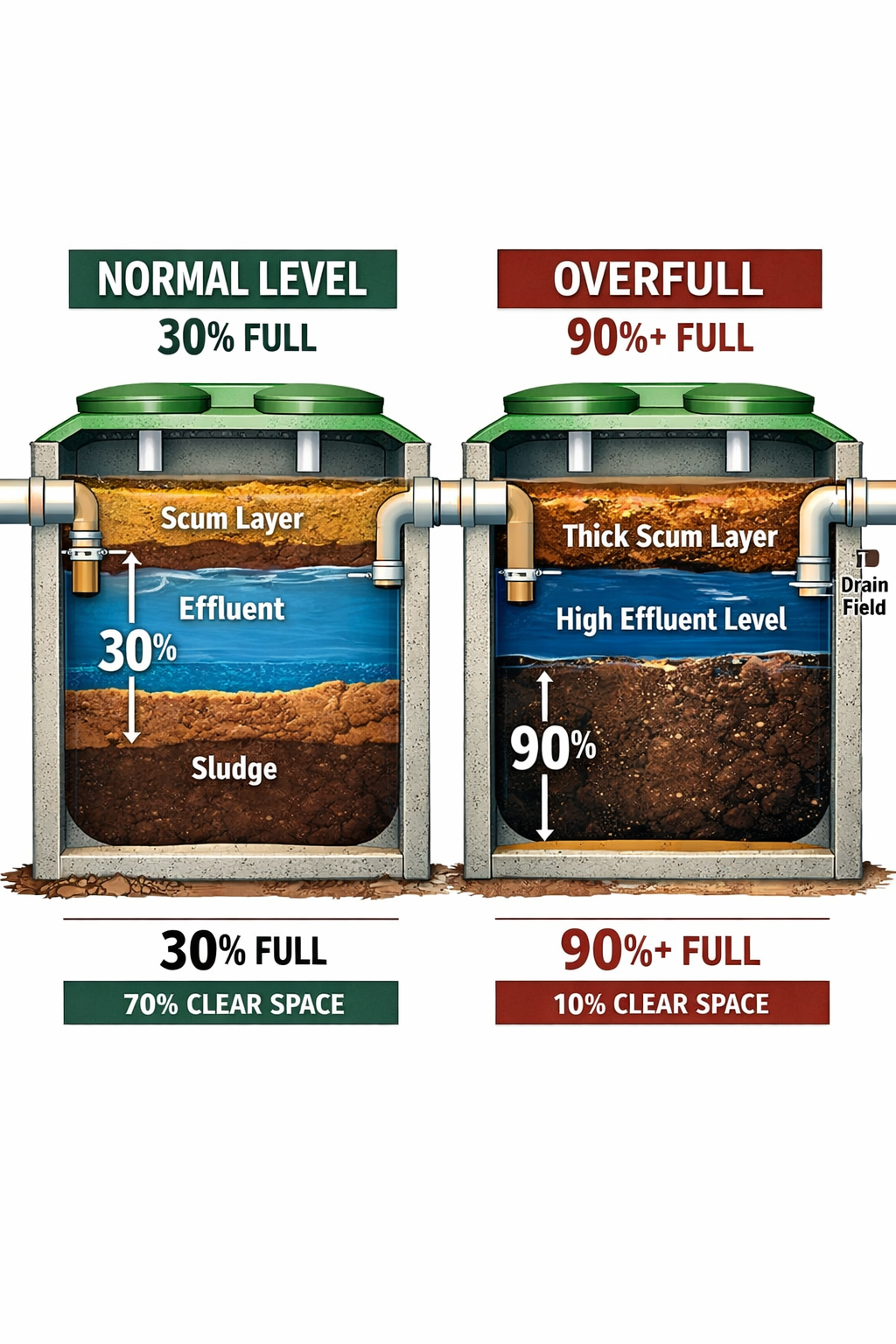
Inspection process: A professional will measure sludge and scum layers in your tank. When combined layers exceed 30% of tank capacity, pumping is recommended.
Choose immediate inspection over waiting if you’re experiencing multiple warning signs, even if your last pumping was recent. Unusual circumstances like damaged pipes or excessive water usage can fill tanks faster than normal.
How Can You Tell If Your Septic Tank Is Full Without Professional Help?
While professional inspection provides the most accurate assessment, homeowners can perform basic checks to gauge their septic tank’s condition. These DIY methods help you determine if professional service is urgently needed.
Safe DIY assessment methods:
- Monitor drain performance across multiple fixtures daily
- Track water usage and compare to normal household patterns
- Document odors and their frequency/intensity
- Photograph yard conditions to track changes over time
- Note gurgling frequency and which fixtures are affected
Visual tank inspection (if accessible):
- Locate your septic tank access port
- Use a flashlight to check visible water levels
- Look for obvious scum buildup on the surface
- Never enter or put your head directly over the tank opening
Warning: Septic tanks contain dangerous gases. Never enter a tank or lean directly over openings. If you suspect immediate danger (sewage backup in home), call professionals rather than attempting DIY fixes.
Limitation: DIY assessment can’t measure precise sludge levels or identify all system problems. Use these methods to determine urgency, but rely on professionals for accurate capacity measurement and system health evaluation.
What Happens If You Don’t Address a Full Septic Tank?
Ignoring a full septic tank leads to progressively worse problems that become exponentially more expensive to fix. Understanding these consequences helps homeowners prioritize timely maintenance over emergency repairs.
Immediate consequences (1-4 weeks):
- Sewage backup into your home through drains and toilets
- Complete system failure requiring emergency pumping
- Health hazards from exposure to raw sewage
- Inability to use household plumbing normally
Medium-term damage (1-6 months):
- Drain field contamination and failure
- Soil saturation requiring drain field replacement
- Groundwater contamination affecting wells and environment
- Structural damage to septic tank from pressure buildup
Long-term costs:
- Complete system replacement ($15,000-$30,000+)
- Environmental remediation requirements
- Health department fines and compliance issues
- Property value reduction due to failed septic system
Health risks: Raw sewage contains harmful bacteria, viruses, and parasites that can cause serious illness. Children and pets are particularly vulnerable to contaminated water exposure.
For more details on the serious consequences of septic tank overflow, see our guide on what happens when your septic tank is full.
How Often Should You Pump Your Septic Tank to Prevent Fullness?
Proper pumping frequency prevents most fullness issues and extends your septic system’s lifespan. The schedule depends on household size, tank capacity, and usage patterns.
Standard pumping schedule:
| Household Size | Tank Size | Pumping Frequency |
|---|---|---|
| 1-2 people | 1,000+ gallons | Every 5-6 years |
| 3-4 people | 1,000+ gallons | Every 3-4 years |
| 5-6 people | 1,000+ gallons | Every 2-3 years |
| 6+ people | 1,000+ gallons | Every 1-2 years |
Factors requiring more frequent pumping:
- Heavy water usage (large families, frequent guests)
- Garbage disposal use
- Older septic systems (20+ years)
- Smaller tank capacity (less than 1,000 gallons)
- Clay or poorly draining soil conditions
Cost consideration: Regular pumping typically costs $300-$600, while emergency pumping can cost $800-$1,500+. System replacement costs $15,000-$30,000, making preventive maintenance extremely cost-effective.
Record keeping: Track your pumping dates and any issues noted by professionals. This information helps establish the optimal schedule for your specific system and usage patterns.
Learn more about determining the right pumping schedule in our comprehensive guide on how often should you pump your septic tank.
What Emergency Steps Should You Take When Your Septic Tank Is Full?
When you confirm your septic tank is full, immediate action prevents sewage backup and minimizes damage to your system and property. Follow these emergency steps while arranging professional service.
Immediate actions (first 24 hours):
- Reduce water usage to absolute minimum – no laundry, dishwashing, or long showers
- Stop using garbage disposal and avoid putting anything down drains
- Contact septic pumping service for emergency appointment
- Document the situation with photos for insurance purposes if backup occurs
- Keep family and pets away from wet areas in your yard
Water conservation emergency measures:
- Use paper plates and disposable utensils temporarily
- Take short showers or use public facilities if possible
- Collect rainwater for non-drinking uses
- Avoid running multiple water-using appliances
- Fix any leaky faucets or running toilets immediately
If sewage backup occurs:
- Turn off electricity to affected areas
- Avoid contact with contaminated water
- Ventilate the area but don’t use fans that might spread contamination
- Contact your insurance company to report potential damage
- Don’t attempt cleanup until after professional pumping
Professional help timeline: Most septic companies offer emergency services within 24-48 hours. However, during peak times (spring thaw, heavy rain periods), wait times may be longer.
For detailed guidance on handling septic emergencies, check our guide on septic tank backing up into house.
Helpful Resource for Septic Tank Maintenance
If you want to help maintain your septic system between professional pumpings and reduce the likelihood of sudden fullness issues, Septifix tablets can be a useful addition to your maintenance routine. These tablets help break down waste buildup, reduce odors, and support the beneficial bacteria that keep your system functioning properly.
While not a replacement for regular pumping, products like these can help extend the time between services and reduce some of the warning signs that indicate a struggling system. They’re particularly helpful if you’ve noticed early warning signs like slow drains or occasional odors.
FAQ
How can I tell if my septic tank is full without calling a professional?
Monitor for slow drains in multiple fixtures, gurgling sounds from pipes, sewage odors inside or outside your home, and wet spots or unusually green grass in your yard. These signs together indicate a full tank needing immediate attention.
What’s the difference between a full septic tank and a clogged drain?
A full septic tank affects multiple fixtures simultaneously and often includes yard symptoms like wet spots or odors. Clogged drains typically affect only one fixture and respond to plunging or drain cleaning.
How quickly can a septic tank go from normal to full?
Under normal conditions, septic tanks fill gradually over 3-5 years. However, heavy usage, system damage, or drain field problems can cause rapid filling within weeks or months.
Can heavy rain cause my septic tank to appear full?
Yes, excessive groundwater from heavy rain can saturate your drain field and cause backup symptoms similar to a full tank. However, these symptoms should resolve within 48-72 hours after rain stops.
Is it safe to pump my septic tank myself?
No, septic tank pumping requires specialized equipment and safety training. Tanks contain dangerous gases and require proper waste disposal. Always use licensed professionals for pumping services.
How much does emergency septic pumping cost compared to regular service?
Emergency pumping typically costs 50-100% more than scheduled service, ranging from $800-$1,500 compared to $300-$600 for routine pumping. Weekend and holiday rates may be even higher.
What should I do if sewage backs up into my house?
Immediately stop all water usage, turn off electricity to affected areas, avoid contact with contaminated water, and call emergency septic service. Document damage for insurance and don’t attempt cleanup until after professional pumping.
Can I use my plumbing at all when my septic tank is full?
Minimize usage to absolute essentials only. Avoid showers, laundry, dishwashing, and garbage disposal use. Even essential usage should be brief to prevent sewage backup into your home.
How do I find my septic tank to check if it’s full?
Check your property records or contact your local health department for septic system maps. Look for access ports or lids in your yard, typically 10-25 feet from your house in the direction opposite your well.
Will adding bacteria products help if my septic tank is already full?
Bacteria additives won’t solve an already full tank – you need professional pumping first. However, they can help maintain proper bacterial balance after pumping to prevent rapid refilling.
How can I prevent my septic tank from filling up so quickly?
Spread laundry loads throughout the week, fix leaky fixtures promptly, avoid excessive garbage disposal use, don’t flush non-biodegradable items, and maintain your system with regular inspections and pumping.
What time of year is best for septic tank pumping?
Spring and fall are ideal because ground conditions are typically stable. Avoid winter pumping in freezing climates when possible, and summer pumping may be more expensive due to high demand.
Conclusion
Knowing how to tell if your septic tank is full can save you thousands of dollars in emergency repairs and protect your family’s health. The key warning signs – slow drains, gurgling sounds, sewage odors, yard wetness, and unusually green grass – typically appear weeks before complete system failure, giving you time to act.
Take action now by:
- Scheduling regular septic inspections every 3-5 years
- Monitoring your home’s drainage performance weekly
- Checking your yard for wet spots or odors monthly
- Keeping records of your pumping schedule and any issues
- Reducing water usage immediately if you notice warning signs
Remember that preventive maintenance costs a fraction of emergency repairs. A $400 pumping service every few years prevents $15,000+ system replacements and protects your property value.
If you’re experiencing any combination of the warning signs discussed in this guide, don’t wait – contact a licensed septic professional for inspection and pumping. Your septic system is a critical part of your home’s infrastructure that deserves the same attention as your roof or HVAC system.
For ongoing septic system care and maintenance tips, explore our complete septic tank maintenance guide and learn about signs your septic tank needs maintenance to stay ahead of potential problems.