DIY Septic Tank Maintenance Tips: Keep Your System Running Smoothly

Last updated: March 8, 2026
Your septic tank is working 24/7 to process your home’s wastewater, but without proper care, it can quickly become your most expensive headache. Smart homeowners who follow proven DIY septic tank maintenance tips can extend their system’s life by decades while avoiding costly emergency repairs that often run into thousands of dollars.
Key Takeaways
- Pump every 3-5 years based on household size and usage patterns
- Schedule professional inspections every 3 years to catch problems early
- Conserve water by spreading laundry loads and fixing leaks promptly
- Never flush non-biodegradable items like wipes, grease, or harsh chemicals
- Keep detailed maintenance records for warranty and resale purposes
- Watch for warning signs like slow drains, odors, or wet spots in the yard
- Use septic-safe products and avoid antibacterial cleaners that kill beneficial bacteria
- Protect your drain field by avoiding heavy vehicles and excess water
Quick Answer
Effective DIY septic tank maintenance involves three core practices: pumping every 3-5 years, conserving water through efficient usage habits, and avoiding harmful substances that disrupt the tank’s natural bacterial process. Regular inspections and proper record-keeping help catch issues before they become expensive problems.
How Often Should You Inspect and Pump Your Septic Tank?
Your septic tank needs professional pumping every 3-5 years, with inspections every 3 years to maintain optimal performance. The exact timing depends on your household size, water usage, and tank capacity.
A family of four with a 1,000-gallon tank typically needs pumping every 3-4 years. Larger families or homes with frequent guests may require service every 2-3 years. Here’s a practical guideline:
Pumping Schedule by Household Size:
- 1-2 people: Every 4-5 years
- 3-4 people: Every 3-4 years
- 5+ people: Every 2-3 years
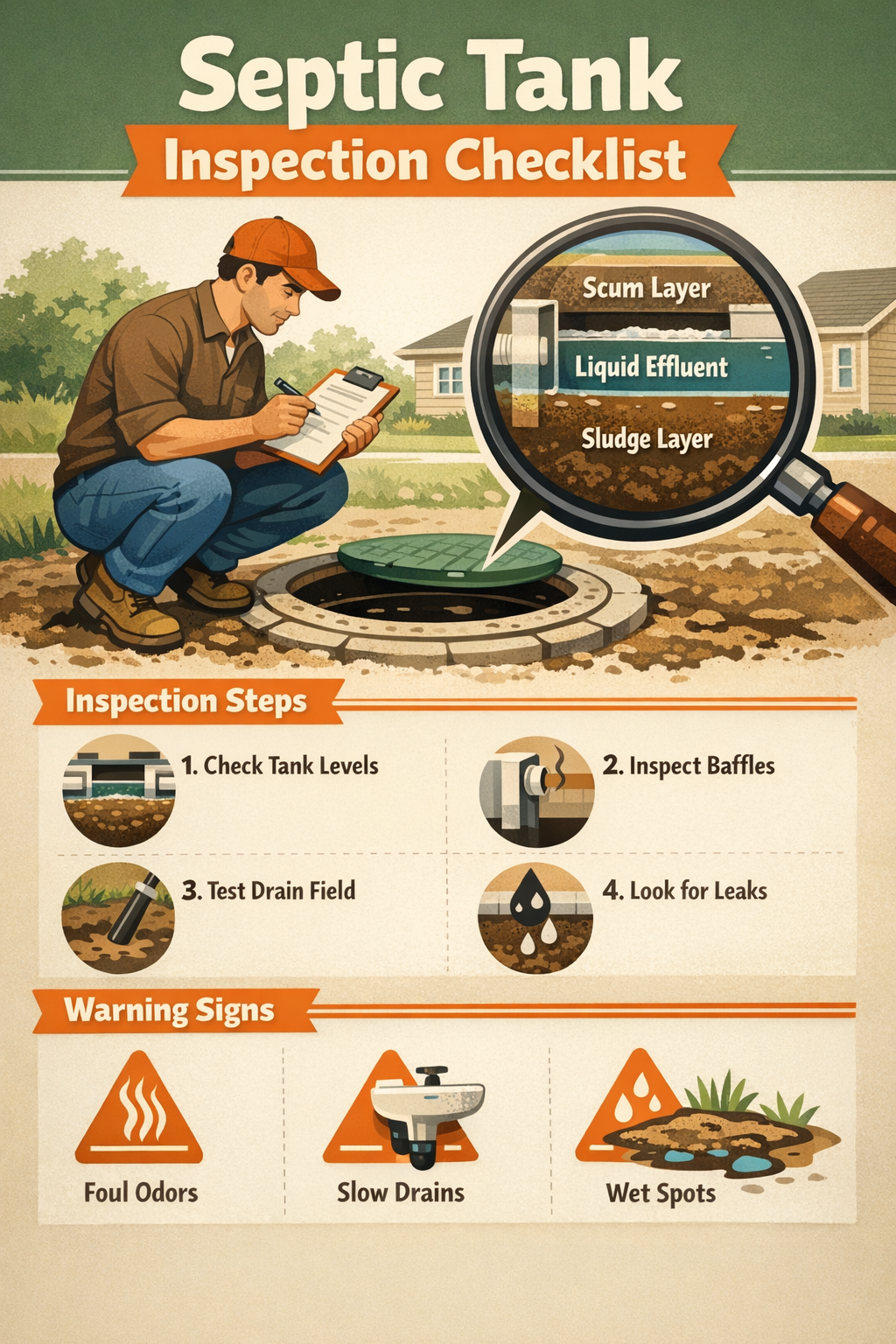
Professional inspections every three years help identify potential problems like cracks, leaks, or early signs of drain field failure. During inspections, technicians check sludge levels, examine baffles, and test the drain field absorption rate.
Common mistake: Waiting for problems before scheduling service. By the time you notice slow drains or odors, damage may already be extensive and expensive to repair.
Keep detailed records of all maintenance work, including dates, services performed, and any issues noted. This documentation helps with warranty claims and adds value when selling your home. For guidance on how often to maintain your septic tank, consider your specific usage patterns and local soil conditions.
What Are the Essential Water Conservation Practices?
Reducing water usage is the single most effective DIY maintenance step for extending your septic system’s life. Excessive water overwhelms the tank’s settling process and can flood the drain field.
Daily Water Conservation Tips:
- Spread laundry loads throughout the week instead of doing multiple loads in one day
- Fix leaky faucets and running toilets immediately—a running toilet can waste 200+ gallons daily
- Take shorter showers and install low-flow showerheads (2.5 gallons per minute or less)
- Run dishwashers only when full and choose shorter wash cycles
- Stagger water-heavy activities like laundry, dishwashing, and long showers
Efficient Appliance Upgrades:
- High-efficiency toilets (1.6 gallons per flush or less)
- ENERGY STAR washing machines that use 40% less water
- Low-flow faucet aerators and showerheads
- Tankless water heaters to reduce standby water heating
Choose this approach if your system hasn’t been pumped recently or you’ve noticed slower drainage. Homes with older systems (15+ years) benefit most from aggressive water conservation.
Edge case: During heavy rain periods, temporarily reduce indoor water usage since saturated soil can’t absorb additional water from your drain field. Our complete septic tank maintenance checklist provides seasonal water management strategies.
Which Items Should Never Enter Your Septic System?
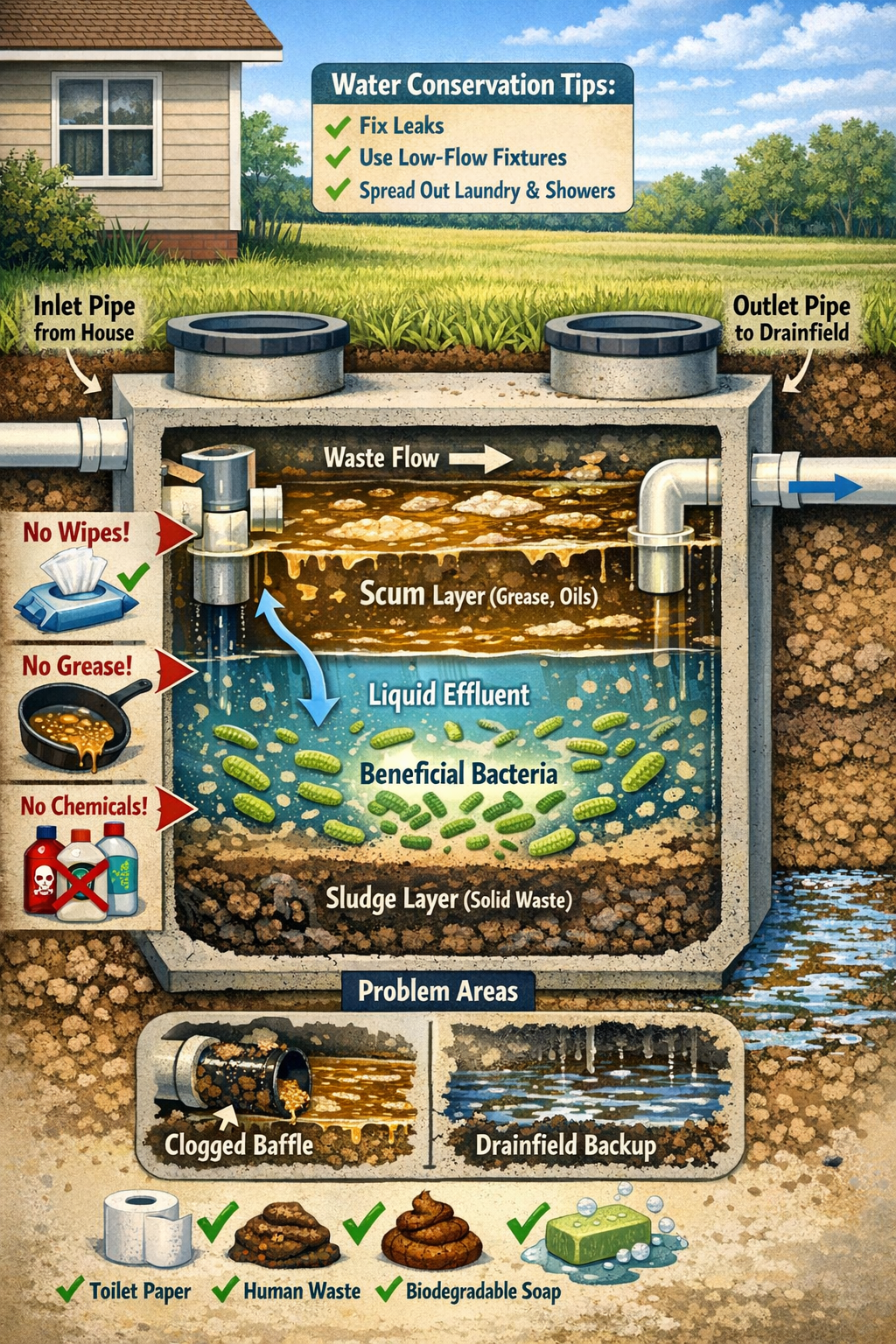
Never flush anything except human waste, toilet paper, and water down your drains—everything else can damage your system or kill essential bacteria. Even products labeled “septic-safe” or “flushable” can cause problems.
Absolutely Never Flush:
- Wipes of any kind (including “flushable” wipes)
- Feminine hygiene products
- Diapers or baby wipes
- Cat litter (even “flushable” types)
- Dental floss or hair
- Cigarette butts
- Paper towels or napkins
Never Pour Down Drains:
- Cooking grease, oil, or fats (they solidify and clog pipes)
- Chemical drain cleaners (they kill beneficial bacteria)
- Paint, solvents, or automotive fluids
- Prescription medications
- Coffee grounds in large quantities
- Antibacterial soaps and cleaners (they disrupt the bacterial balance)
Septic-Safe Alternatives:
- Use a drain snake or boiling water for clogs instead of chemical cleaners
- Dispose of grease in the trash after it cools and solidifies
- Choose biodegradable, phosphate-free cleaning products
- Use natural cleaners like vinegar and baking soda
FYI: Some links may be affiliate links, which means I may earn a small commission at no extra cost to you.
For homeowners looking for an easy way to maintain healthy bacteria levels, Septifix tablets can help break down waste and reduce odors with just one monthly flush. These tablets support your tank’s natural processes without harsh chemicals, making septic maintenance more convenient.
Decision rule: When in doubt, throw it out. If you’re unsure whether something is septic-safe, dispose of it in the trash rather than risk system damage. Learn more about essential septic tank safety tips for comprehensive protection strategies.
How Can You Recognize Early Warning Signs?
Watch for slow drains, sewage odors, or wet spots in your yard—these indicate your septic system needs immediate attention before problems worsen. Early detection saves thousands in repair costs.
Indoor Warning Signs:
- Slow drainage in sinks, tubs, or toilets
- Gurgling sounds from drains or toilets
- Sewage backup in lower-level drains
- Strong odors near plumbing fixtures
- Water backing up in floor drains
Outdoor Warning Signs:
- Wet, soggy areas over the drain field
- Lush, green grass growing faster over the septic area
- Standing water or surface sewage around the tank or drain field
- Strong sewage odors outside, especially near the tank or drain field
- Well water contamination if you have a private well
Immediate Action Steps:
- Reduce water usage immediately to prevent further system stress
- Avoid using harsh chemicals that might worsen bacterial imbalance
- Contact a licensed septic professional for inspection within 48 hours
- Document symptoms with photos and dates for service records
Common mistake: Ignoring early signs hoping they’ll resolve themselves. Septic problems always worsen over time and become exponentially more expensive to fix.
Edge case: If you smell gas-like odors near your septic tank, evacuate the area immediately and call professionals—this could indicate dangerous hydrogen sulfide buildup. For detailed guidance on signs your septic tank needs maintenance, monitor these indicators monthly.
What Seasonal Maintenance Should You Perform?
Adapt your septic maintenance routine to seasonal challenges—winter freeze protection, spring inspections, summer water management, and fall preparation keep your system running year-round. Each season presents unique maintenance opportunities and risks.
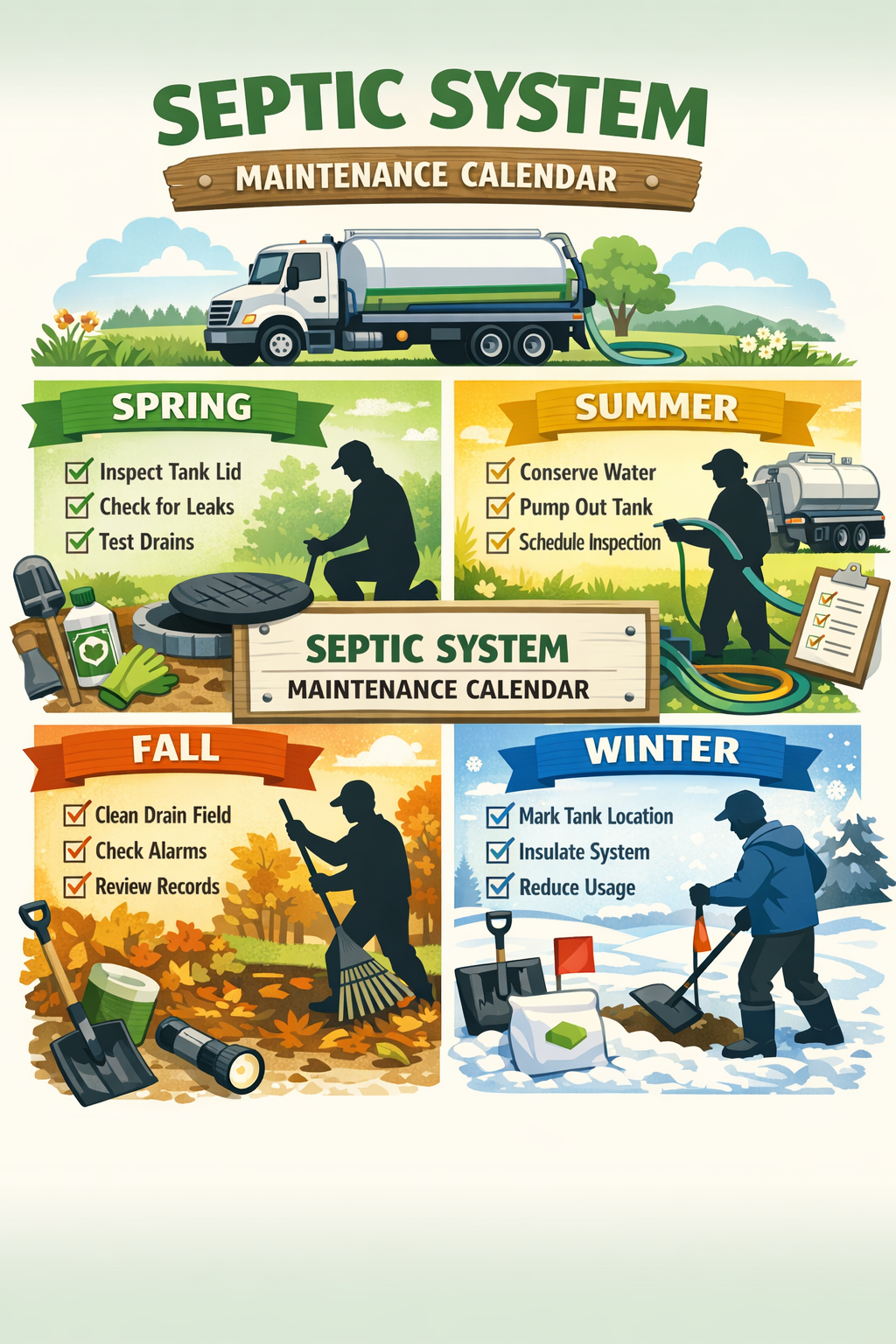
Spring Maintenance (March-May):
- Schedule annual inspection after winter freeze-thaw cycles
- Check for frost damage to exposed pipes or tank lids
- Locate and mark tank and drain field boundaries before lawn care season
- Test water fixtures for winter damage and repair leaks promptly
- Plan pumping service if due within the next 12 months
Summer Maintenance (June-August):
- Manage increased water usage from guests, pools, or irrigation
- Spread out high-water activities like laundry and dishwashing
- Inspect drain field for signs of stress from heat or overuse
- Maintain proper bacteria levels during peak usage periods
- Keep drain field vegetation trimmed but not removed
Fall Maintenance (September-November):
- Complete final inspection before winter weather
- Remove excess leaves from tank and drain field areas
- Insulate exposed components in regions with hard freezes
- Schedule pumping if tank is approaching capacity
- Check and repair any damaged tank lids or access covers
Winter Maintenance (December-February):
- Maintain consistent water flow to prevent freeze-ups
- Avoid driving on frozen drain fields with heavy vehicles
- Monitor for ice dams that could affect system drainage
- Keep snow cleared from tank access points for emergency service
- Run water regularly in unused fixtures to maintain system flow
Choose this schedule if you live in regions with distinct seasons and want to prevent weather-related damage. For comprehensive guidance, see our winter septic tank maintenance guide and summer septic care tips.
How Do You Maintain Proper Drain Field Health?
Protect your drain field by avoiding heavy traffic, managing water flow, and maintaining appropriate vegetation—this component represents 70% of your system’s treatment capacity. Drain field failure is the most expensive septic repair.
Drain Field Protection Rules:
- Never drive or park vehicles over the drain field area
- Avoid heavy equipment like swing sets, sheds, or decks
- Don’t plant trees within 30 feet of drain lines (roots can clog pipes)
- Maintain grass cover but avoid deep-rooted plants
- Redirect surface water from roofs, driveways, and hillsides away from the field
Proper Vegetation Management:
- Keep grass short (2-3 inches) to allow oxygen penetration
- Use shallow-rooted plants like wildflowers or native grasses
- Avoid fertilizers that can disrupt soil chemistry
- Never use herbicides or pesticides over the drain field
- Remove invasive plants that might damage underground components
Water Management:
- Install roof gutters to divert rainwater away from the drain field
- Grade landscaping to prevent surface water from pooling
- Avoid irrigation systems over or near the drain field
- Monitor soil saturation during heavy rain periods
Decision rule: If you’re unsure about drain field boundaries, hire a professional to locate and mark them before any yard work or landscaping projects.
Common mistake: Treating the drain field like regular lawn space. This area requires special care because it’s actively processing wastewater just 12-18 inches below the surface.
Helpful Resource for Simplified Maintenance
If you want a simple, effective way to support your septic system’s health, Septifix tablets offer convenient monthly maintenance. These tablets help break down waste, reduce bad smells, and keep your septic tank working properly. With one easy monthly flush, you can help prevent blockages, protect your plumbing, and avoid costly repairs while supporting the natural bacterial processes your system depends on.
FAQ
How much does DIY septic maintenance cost per year?
Basic DIY maintenance costs $50-150 annually for supplies and water conservation measures, plus $300-600 every 3-5 years for professional pumping. This prevents $3,000-10,000+ in system replacement costs.
Can I pump my septic tank myself?
No, septic pumping requires specialized equipment and proper waste disposal licensing. DIY pumping is illegal in most areas and extremely dangerous due to toxic gases. Always hire licensed professionals.
How long do septic tanks last with proper maintenance?
Well-maintained septic tanks last 20-30 years, with some concrete tanks functioning for 40+ years. Poor maintenance can reduce lifespan to 10-15 years and require premature replacement.
What’s the best toilet paper for septic systems?
Use single-ply, biodegradable toilet paper without added dyes or fragrances. Brands labeled “septic-safe” break down faster and reduce accumulation in your tank.
Should I add bacteria supplements to my septic tank?
Healthy septic tanks produce sufficient bacteria naturally. Supplements may help after antibiotic use or harsh chemical exposure, but they’re not necessary for routine maintenance in most systems.
Can heavy rain damage my septic system?
Excessive rainfall can saturate drain fields and prevent proper wastewater absorption. During heavy rain periods, reduce indoor water usage and ensure surface water drains away from your system.
How do I find my septic tank location?
Check your home’s original building permits, look for depressions or raised areas in your yard, or follow the main sewer line from your house. Professional locating services cost $100-200 if needed.
What temperature affects septic tank function?
Septic bacteria work best at 77-95°F. Cold temperatures below 60°F slow bacterial activity, while freezing can damage components. Maintain consistent water flow during winter to prevent freeze-ups.
Can I use bleach with a septic system?
Use bleach sparingly—no more than 1 cup per week. Excessive bleach kills beneficial bacteria essential for waste breakdown. Choose oxygen-based bleaches when possible for septic-safe cleaning.
How often should I clean my septic filter?
Clean effluent filters every 3-6 months or during regular pumping service. Clogged filters cause backups and system stress. Some filters are disposable, while others can be rinsed and reused.
What causes septic tank odors?
Common causes include overfull tanks, damaged vent pipes, dry drain traps, or bacterial imbalance from harsh chemicals. Address odors immediately as they indicate system problems requiring attention.
Should I keep maintenance records?
Yes, maintain detailed records of all pumping, inspections, and repairs. Documentation helps with warranty claims, troubleshooting problems, and adds value when selling your property.
Conclusion
Effective DIY septic tank maintenance combines regular professional service with smart daily habits that protect your system’s natural processes. By following these proven maintenance tips—pumping every 3-5 years, conserving water, avoiding harmful substances, and watching for warning signs—you can extend your system’s life while avoiding expensive emergency repairs.
Take action today by scheduling your next inspection if it’s been more than three years, implementing water conservation measures, and creating a maintenance record system. For comprehensive guidance, explore our complete septic tank maintenance guide and best maintenance practices.
Remember that consistent preventive care costs far less than emergency repairs or system replacement. Start with the basics—water conservation and proper disposal habits—then build a routine that works for your household’s specific needs and usage patterns.