Last updated: March 11, 2026
Quick Answer
The 25 do’s and don’ts of septic tank maintenance come down to three core habits: pump regularly, protect your drain field, and never flush or pour anything that kills beneficial bacteria. Follow these rules and your system can last 25 to 40 years. Ignore them and you’re looking at repairs that easily run into the thousands.
Septifix: Simple Septic Tank Care in One Tablet
Septifix tablets help break down waste, reduce bad smells, and keep your septic tank working properly. With one easy monthly flush, you can help prevent blockages, protect your plumbing, and avoid costly repairs.
👉 Discover the benefits of using Septifix for hassle-free septic maintenance
Key Takeaways
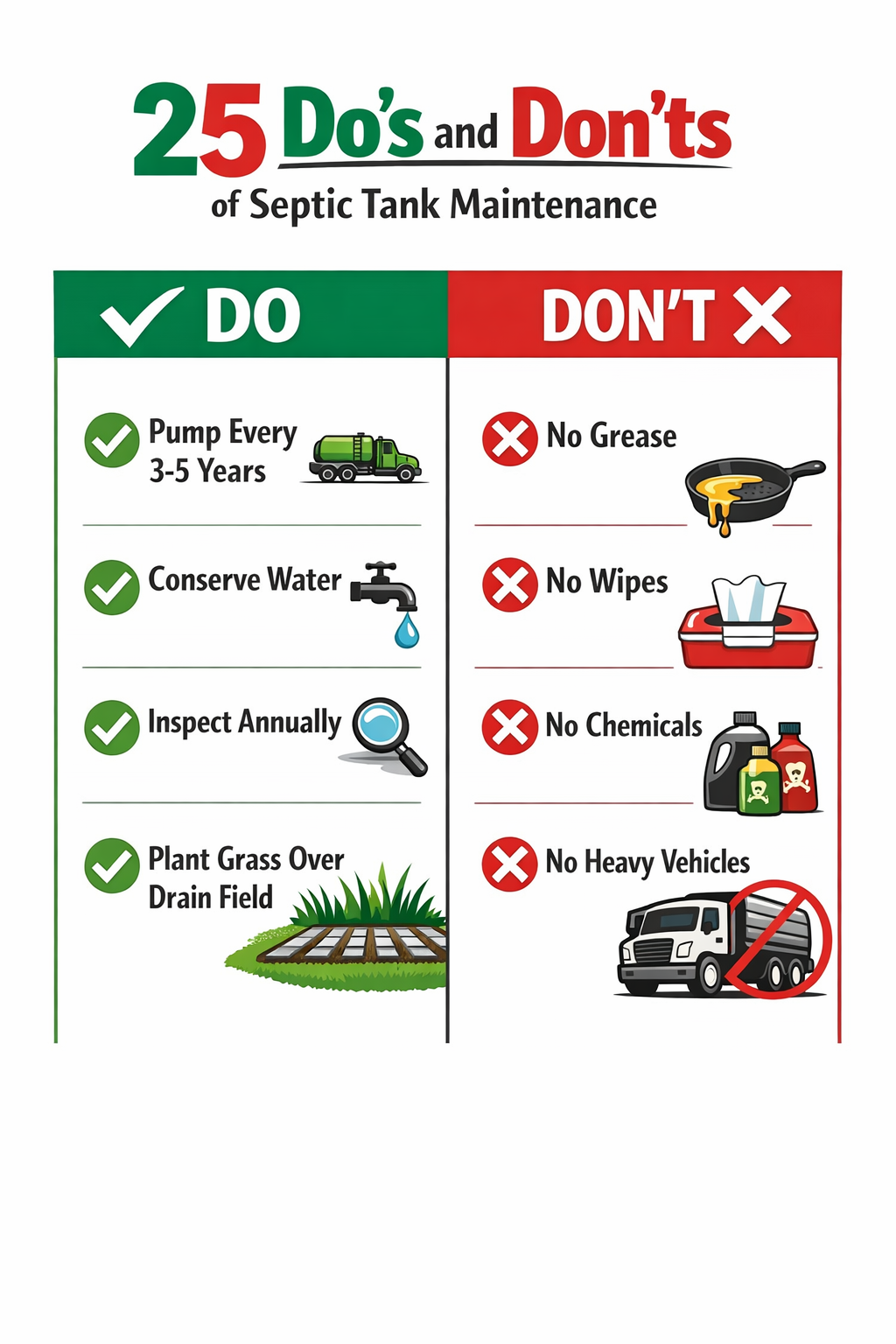
- Pump your septic tank every 3 to 5 years (every 2 to 3 years for a family of four with a 1,000-gallon tank)
- Schedule professional inspections annually, costing $150 to $450, to catch problems before drain field failure at $10,000+
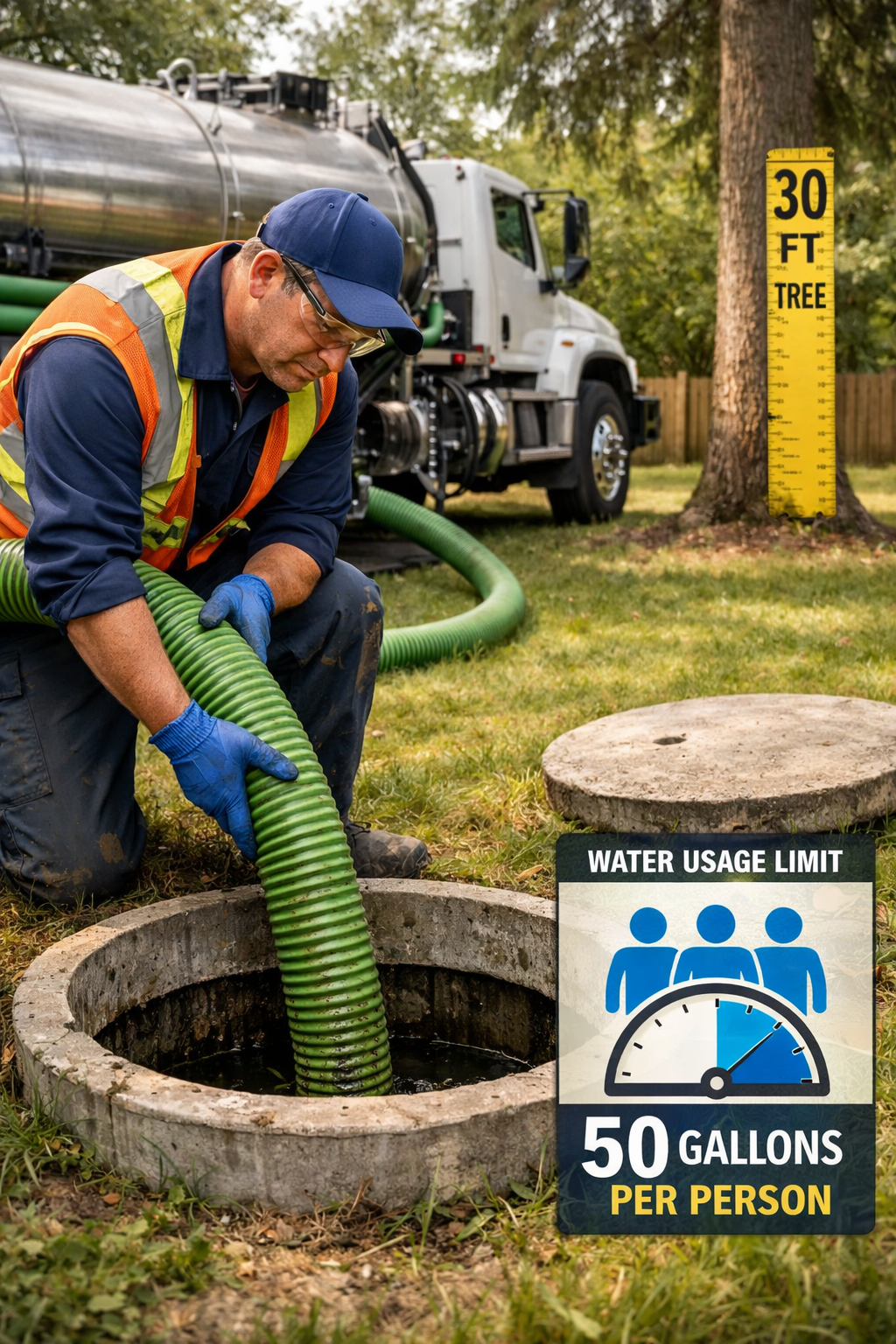
- Limit water use to roughly 50 gallons per person per day to avoid overloading the system
- Keep trees and large shrubs at least 30 feet away from your septic system
- Never flush wipes, grease, chemicals, or medications — they destroy the bacterial balance your system depends on
- Fix leaky toilets immediately; a running toilet can dump 200+ extra gallons into your system daily
- Maintain grass over the drain field; deep-rooted trees and heavy vehicles are the two biggest physical threats
The Complete 25 Do’s and Don’ts of Septic Tank Maintenance
Here are all 25 rules, split into what you should do and what you should avoid. Each one is practical, specific, and based on how septic systems actually work.
✅ The 13 Do’s of Septic Tank Maintenance
1. Do pump your tank on schedule.
For most households, that means every 3 to 5 years. A family of four with a 1,000-gallon tank should aim for every 2 to 3 years. Skipping pumps lets sludge build up until it overflows into the drain field — and drain field repairs are expensive.
2. Do schedule annual inspections.
A professional inspection costs $150 to $450 and can catch cracked baffles, rising sludge levels, or drain field stress before they become $10,000+ problems. Use our septic tank maintenance schedule guide to plan yours.
3. Do conserve water daily.
Aim for roughly 50 gallons per person per day. Spread laundry loads across the week instead of doing them all on one day. Running too much water at once can flush solids out of the tank before they break down properly.
4. Do fix leaks and running toilets fast.
A toilet that runs constantly can add more than 200 gallons per day to your system load. That’s the equivalent of an extra person living in your home.
5. Do maintain grass cover over the drain field.
Shallow-rooted grass holds soil in place, absorbs excess moisture, and protects pipes from surface damage. It’s one of the easiest things you can do and costs nothing.
6. Do keep trees and shrubs at least 30 feet away.
Tree roots follow moisture and will find your pipes. Keep any large plantings at least 30 feet from the tank and drain field. For more on protecting your system’s location, see how to locate your septic tank for maintenance.
7. Do have your effluent filter cleaned regularly.
The effluent filter prevents solids from reaching the drain field. It needs periodic cleaning by a professional to keep working properly. Check our septic tank filter maintenance guide for details.
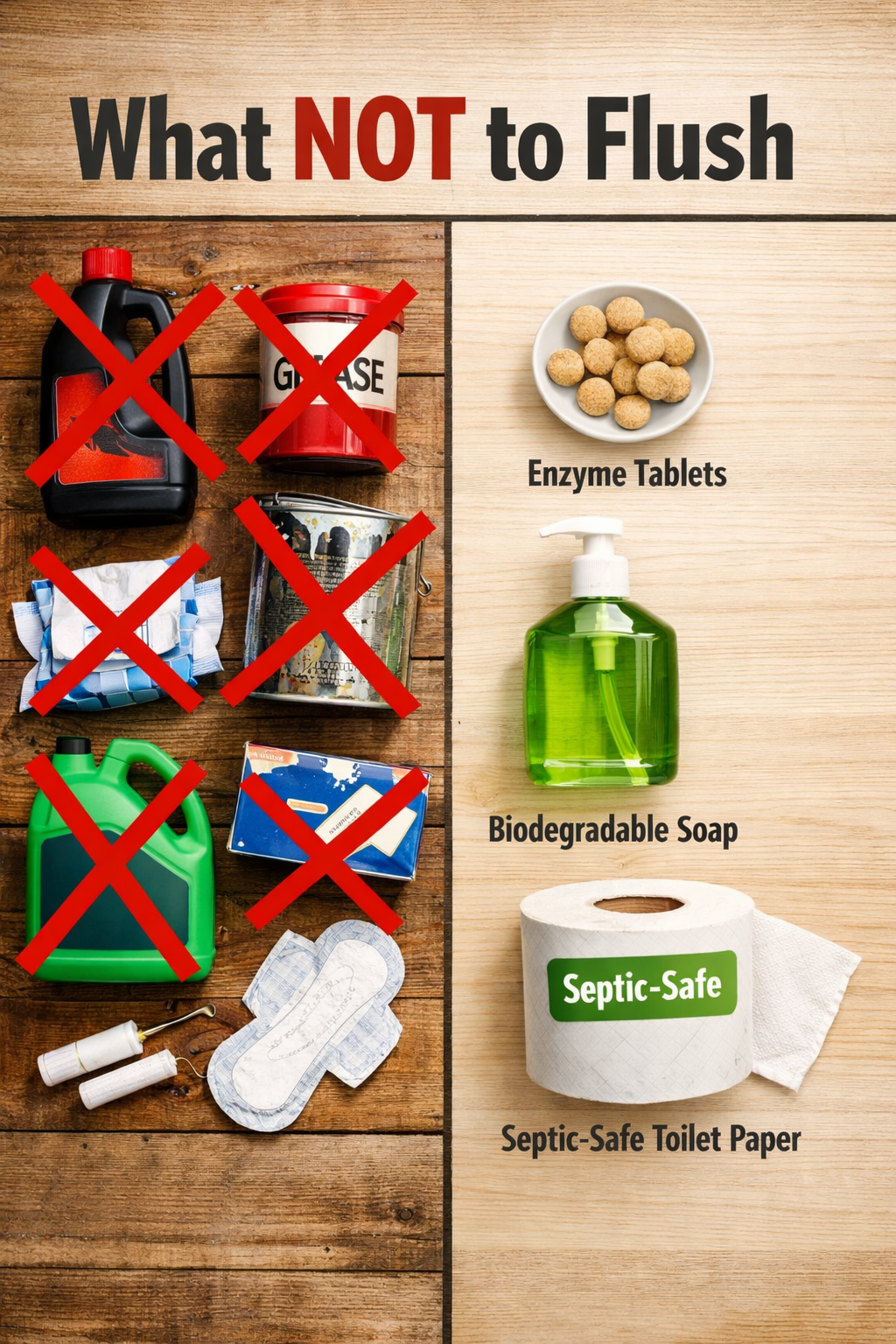
8. Do use septic-safe toilet paper.
Single-ply or septic-safe labeled paper breaks down much faster than thick multi-ply brands. It’s a small swap that makes a real difference over time.
9. Do divert rainwater and surface runoff away from the drain field.
Saturated soil can’t absorb effluent. Make sure gutters, sump pumps, and grading direct water away from your leach field area.
10. Do keep accurate records.
Log every pump-out, inspection, and repair with the date and service provider. This helps you spot patterns and is valuable when selling your home.
11. Do use enzyme or bacterial additives if your system needs a boost.
After heavy antibiotic use or a long vacation, beneficial bacteria levels can drop. A quality bacterial additive can help restore balance.
💡 FYI: Some links in this article may be affiliate links, which means I may earn a small commission at no extra cost to you.
If you want a straightforward option, Septifix tablets are worth considering. They’re designed to replenish beneficial bacteria and reduce odors — not a magic fix, but a practical monthly maintenance tool that many homeowners find useful.
12. Do know the warning signs of a full or failing tank.
Slow drains, gurgling sounds, wet spots over the drain field, and sewage odors indoors are all red flags. The sooner you catch them, the cheaper the fix. See our guide on signs your septic tank needs maintenance.
13. Do educate everyone in your household.
The most common septic problems come from someone flushing the wrong thing. A five-minute conversation can prevent a $5,000 repair.
❌ The 12 Don’ts of Septic Tank Maintenance
14. Don’t pour grease, oils, or fats down the drain.
These solidify inside the tank and build up a thick scum layer that blocks the system over time. Pour cooled grease into a container and throw it in the trash.
15. Don’t use chemical drain cleaners.
Products like Drano contain caustic chemicals that kill the beneficial bacteria your tank needs to break down waste. Use a drain snake or call a plumber instead.
16. Don’t flush “flushable” wipes.
They don’t break down the way toilet paper does. Wipes are one of the leading causes of septic clogs and pump failures.
17. Don’t dispose of medications down the toilet.
Pharmaceuticals don’t break down in a septic system and can contaminate groundwater. Use a local medication take-back program.
18. Don’t pour paint, solvents, antifreeze, or pesticides down drains.
These chemicals are toxic to the bacteria in your tank and can contaminate your soil and water supply. Take them to a hazardous waste disposal facility. For a full list, see what not to put in a septic tank.
19. Don’t flush sanitary products, applicators, or cotton swabs.
These items don’t break down and will accumulate in your tank, accelerating the need for pumping.
20. Don’t overuse your garbage disposal.
Garbage disposals push large amounts of food solids into the tank. This increases sludge buildup significantly and can cut your pump interval in half. Compost food scraps instead.
21. Don’t park vehicles or place heavy structures over the tank or drain field.
The weight compacts soil and can crack pipes or the tank itself. Keep the area clear of cars, sheds, and patios.
22. Don’t plant gardens over the drain field.
Vegetable gardens require regular watering and digging, both of which can damage drain field pipes and expose you to contaminated soil.
23. Don’t ignore slow drains.
A single slow drain is usually a plumbing issue. Multiple slow drains throughout the house often point to a full or failing septic tank. Don’t wait — call a professional.
24. Don’t open the septic tank yourself without proper training.
Septic tanks produce toxic gases including hydrogen sulfide and methane. Entering or leaning over an open tank without safety equipment can be fatal. Always hire a licensed professional for inspections and pump-outs.
25. Don’t skip maintenance because the system “seems fine.”
Septic systems fail quietly. By the time you notice a problem, significant damage has often already occurred. Consistent, scheduled maintenance is always cheaper than emergency repair.
Quick Reference: Do’s vs. Don’ts at a Glance
| Category | Do ✅ | Don’t ❌ |
|---|---|---|
| Pumping | Every 3–5 years | Skip or delay indefinitely |
| Water use | ~50 gal/person/day | Run all appliances at once |
| Drain field | Plant grass, keep clear | Park vehicles, plant trees nearby |
| Flushing | Toilet paper only | Wipes, medications, sanitary products |
| Chemicals | Septic-safe cleaners | Drain cleaners, paint, solvents |
| Inspections | Annual professional check | Wait until problems appear |
| Bacteria | Support with additives if needed | Kill with antibacterial products |
A Simple Product Worth Knowing About
If you want an easy way to support your system’s bacterial health between pump-outs, 👉 see how Septifix tablets can keep your septic system clean and efficient. Drop one tablet in monthly and it helps maintain the microbial balance that keeps your tank processing waste properly. It won’t replace pumping or inspections, but it’s a low-effort habit that many homeowners find worthwhile.
FAQ
How often should I pump my septic tank?
Every 3 to 5 years for most households. A family of four with a 1,000-gallon tank should pump every 2 to 3 years.
What is the biggest mistake septic tank owners make?
Skipping regular pumping. Sludge buildup overflows into the drain field, which can cost $10,000 or more to replace.
Can I use bleach with a septic system?
Small amounts of household bleach (from laundry or cleaning) are generally tolerable. Pouring large quantities directly down the drain can kill beneficial bacteria.
What should I never put in a septic tank?
Grease, wipes, medications, paint, solvents, antifreeze, pesticides, and sanitary products. These either clog the system or destroy its bacterial function.
How do I know if my septic tank is full?
Watch for slow drains throughout the house, gurgling sounds in pipes, sewage odors indoors or outdoors, and wet or unusually green patches over the drain field.
Is a garbage disposal bad for a septic system?
Yes, heavy use significantly increases solids in the tank and shortens the time between necessary pump-outs [3]. Use it sparingly or compost food waste instead.
Do bacterial additives actually work?
They can help maintain bacterial populations, especially after antibiotic use or periods of low water use. They’re a supplement, not a replacement for pumping.
How far should trees be from my septic system?
At least 30 feet for large trees and shrubs. Root intrusion is one of the most common causes of pipe damage.
Conclusion
The 25 do’s and don’ts of septic tank maintenance aren’t complicated, but they do require consistency. Pump on schedule, protect your drain field, watch what goes down your drains, and get a professional inspection every year. Those four habits alone will prevent the vast majority of septic problems.
Your next steps:
- Check when your tank was last pumped and schedule a service if it’s been more than 3 years
- Walk your drain field and remove any vehicles, heavy objects, or deep-rooted plants
- Share the “don’t flush” list with everyone in your household
- Book an annual inspection if you haven’t had one recently
For a deeper dive into keeping your system healthy year-round, explore our complete septic tank maintenance checklist and our guide on 13 costly septic tank care mistakes to avoid.
References
[1] Septic System Maintenance – https://www.nearbyhunt.com/articles/septic-system-maintenance
[2] Why Regular Septic Maintenance Can Save You Thousands In 2026 – https://www.metroseptic.com/blog/why-regular-septic-maintenance-can-save-you-thousands-in-2026/
[3] Septic Systems And Their Maintenance – https://content.ces.ncsu.edu/septic-systems-and-their-maintenance