

Last updated: March 11, 2026
Quick Answer: The 19 smart septic tank care practices that save you money come down to three core habits: pump and inspect on schedule, protect what goes into the tank, and guard your drain field. Homeowners who follow a consistent routine spend far less on emergency repairs and replacements than those who ignore their system until something goes wrong.
Septifix: Simple Septic Tank Care in One Tablet
Septifix tablets help break down waste, reduce bad smells, and keep your septic tank working properly. With one easy monthly flush, you can help prevent blockages, protect your plumbing, and avoid costly repairs.👉 See how Septifix tablets can keep your septic system clean and efficient
Key Takeaways
- Pump your septic tank every 3–5 years to prevent sludge buildup and system failure
- Schedule professional inspections every 1–3 years to catch problems early
- Never flush wipes, diapers, or paper towels — they cause blockages fast
- Use septic-safe, biodegradable cleaning products to protect beneficial bacteria
- Fix household leaks promptly; excess water overloads the system and the drain field
- Keep heavy vehicles and deep-rooted trees away from your drain field
- Add bacteria cultures every 6 months to maintain healthy waste breakdown
- A little routine care now prevents thousands of dollars in repairs later
Why These 19 Practices Matter for Your Wallet
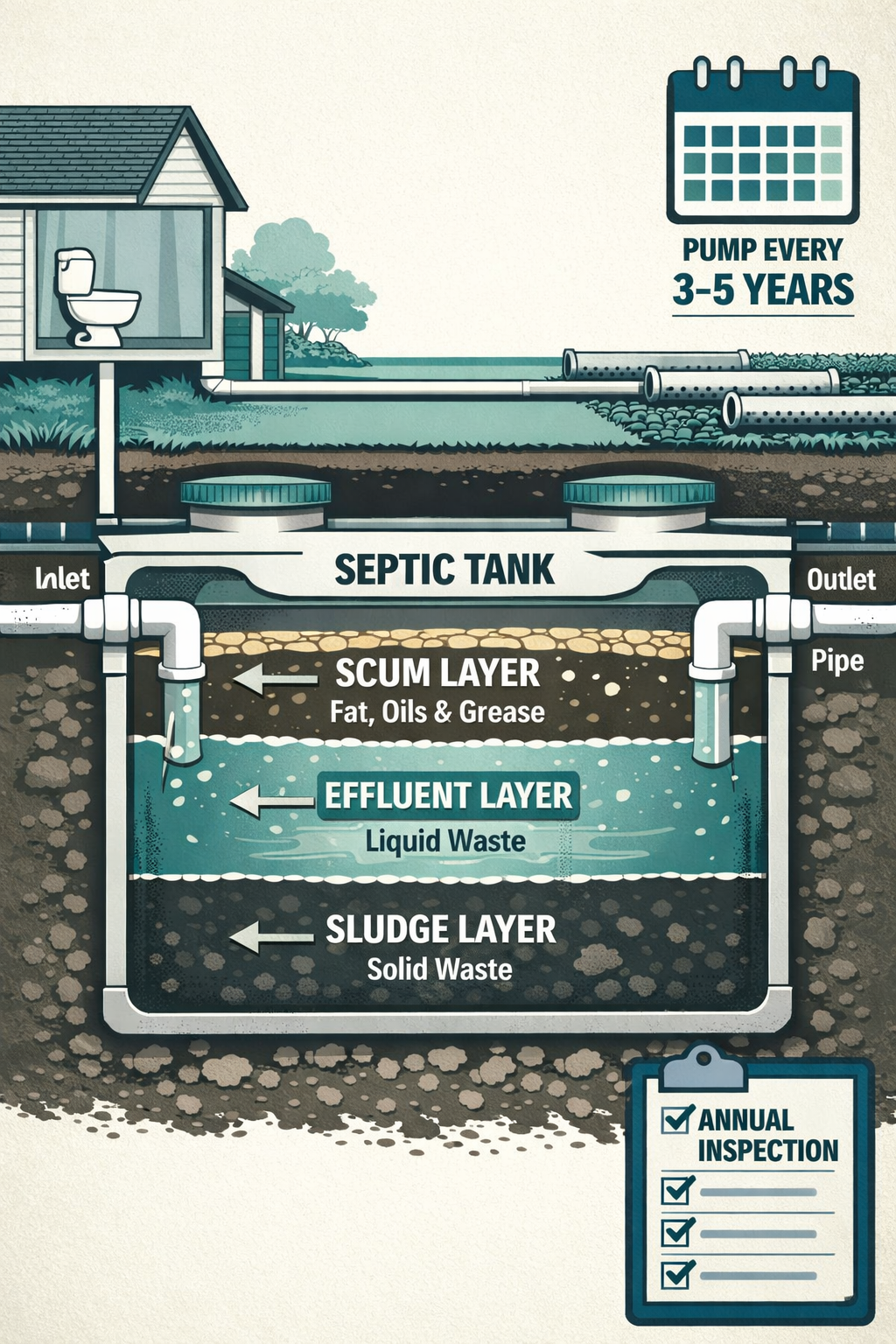
Septic system repairs are expensive. A drain field replacement can run into the tens of thousands of dollars. The good news is that most failures are preventable. The 19 smart septic tank care practices that save you money in this guide are based on what septic professionals consistently recommend — simple habits that keep your system running for decades.
The Core 19 Smart Septic Tank Care Practices That Save You Money
Here are all 19 practices, explained clearly so you can act on them today.
🔧 Maintenance & Inspection Practices
1. Pump your tank every 3–5 years.
Sludge and scum accumulate over time. If they build up too much, solids overflow into the drain field and clog it permanently. Pumping on schedule is the single most cost-effective thing you can do. See our septic tank pumping frequency guide for household-size recommendations.
2. Schedule a professional inspection every 1–3 years.
A licensed inspector checks for cracks, leaks, blockages, and early signs of drain field stress. Catching a small crack early costs far less than fixing a contaminated yard later.
3. Keep a maintenance log.
Write down every pump-out, inspection, and repair with dates and notes. This helps you spot patterns, stay on schedule, and provides documentation if you sell the property.
4. Know where your tank and drain field are located.
You can’t protect what you can’t find. Keep a simple map of your system. Our guide on how to locate your septic tank for maintenance walks you through this step by step.
5. Clean or replace the effluent filter annually.
Many tanks have a filter at the outlet baffle. A clogged filter backs up the tank and stresses the drain field. Rinsing it once a year takes minutes and prevents major problems. Learn more about septic tank filter maintenance.
6. Watch for early warning signs.
Slow drains, gurgling pipes, soggy patches in the yard, or sewage odors indoors all signal trouble. Catching these early keeps repair costs manageable. Review the signs your septic tank needs maintenance so you know what to look for.
🚽 What Goes Into Your Tank
7. Never flush non-biodegradable items.
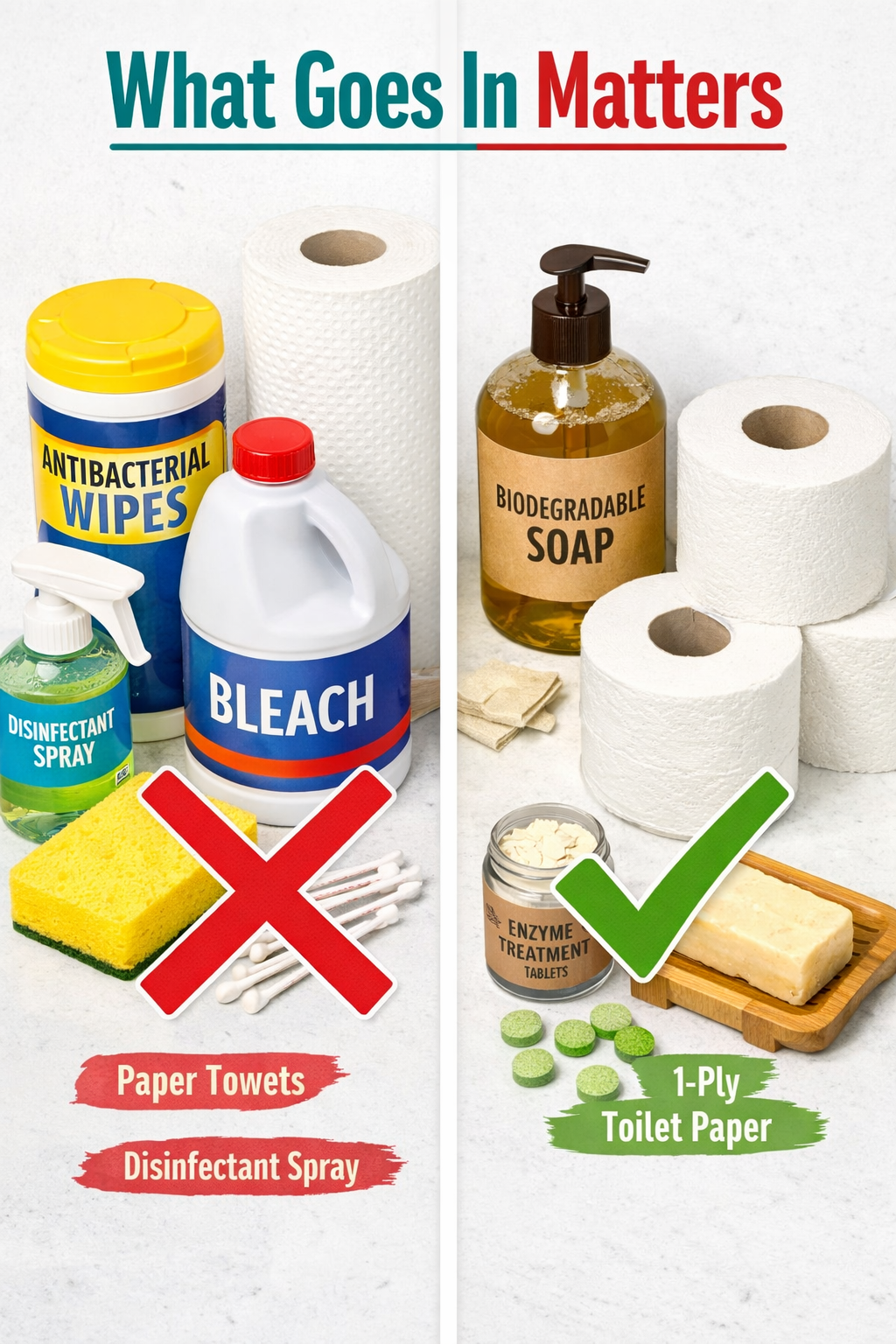
Wipes (even “flushable” ones), diapers, feminine hygiene products, and paper towels do not break down. They clog pipes and fill your tank faster than waste should. Check our full list of what not to put in a septic tank.
8. Use only septic-safe toilet paper.
Single-ply or septic-rated toilet paper dissolves quickly. Thick, quilted brands break down slowly and add to sludge volume.
9. Keep grease and cooking oils out of drains.
Grease solidifies inside pipes and the tank, creating stubborn blockages and reducing the tank’s effective capacity. Wipe pans with a paper towel before washing.
10. Avoid antibacterial soaps and harsh chemical drain cleaners.
These products kill the beneficial bacteria your tank relies on to break down waste. Switch to biodegradable, septic-safe cleaning products instead.
11. Limit garbage disposal use.
Food solids from a garbage disposal add significant sludge volume to your tank. If you use one, expect to pump more frequently — roughly every 2–3 years instead of every 3–5.
12. Don’t pour medications down the drain.
Pharmaceuticals disrupt bacterial activity in the tank and can contaminate groundwater. Use local medication take-back programs instead.
💧 Water Use & Drain Field Protection
13. Fix leaks and dripping faucets promptly.
A constantly running toilet or dripping faucet can send hundreds of extra gallons into your system each day. That hydraulic overload pushes solids into the drain field before they’ve settled.
14. Spread laundry loads throughout the week.
Doing five loads of laundry in one day floods your tank with water faster than it can process. Space loads out to give the system time to recover.
15. Install water-efficient fixtures.
Low-flow toilets, faucet aerators, and efficient washing machines reduce the daily water volume entering your system. Less water means less strain and a longer drain field life.
16. Keep vehicles and heavy equipment off the drain field.
Soil compaction from vehicles crushes the pipes and disrupts the absorption process. Mark the field boundaries clearly so guests and contractors know to stay off.
17. Plant only grass over the drain field.
Deep-rooted trees and shrubs send roots into pipes and distribution boxes, causing serious damage. Grass is the right choice — it absorbs moisture without threatening the system.
🦠 Bacteria & Seasonal Care
18. Add beneficial bacteria cultures every 6 months.
Your tank depends on bacteria to digest solid waste. Antibiotics, harsh cleaners, and bleach can reduce bacterial populations. A periodic bacteria treatment helps restore balance.
FYI: Some links in this article may be affiliate links, which means I may earn a small commission at no extra cost to you.
If you want a simple, consistent way to support bacterial health, Septifix tablets are worth considering. You drop one tablet in the toilet monthly, and it releases oxygen and bacteria directly into the tank. It’s not a replacement for pumping or inspections, but it can help maintain a healthier bacterial environment between service visits.
19. Adjust your care routine seasonally.
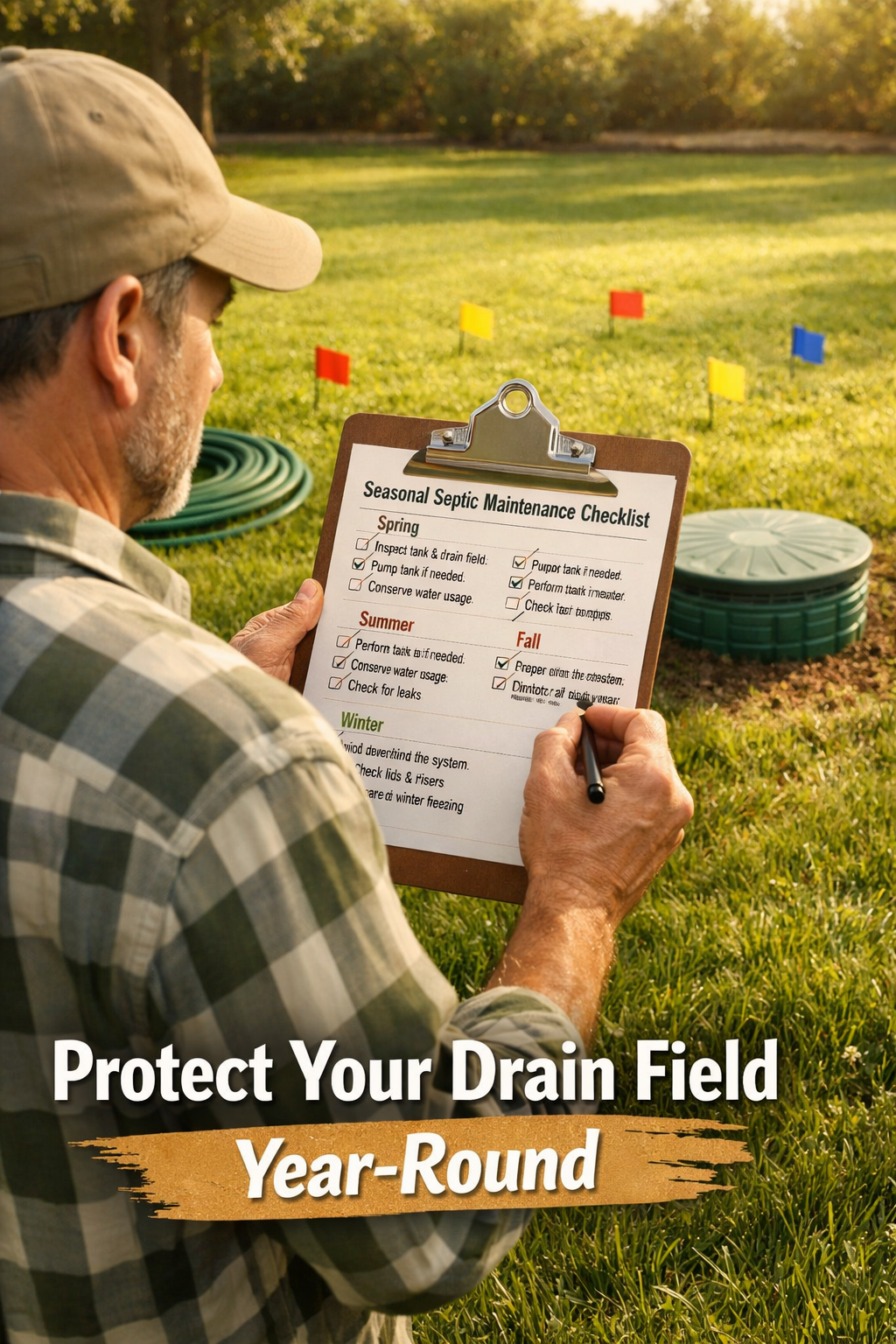
Heavy summer water use (guests, irrigation runoff near the tank) and frozen ground in winter both stress your system differently. Review our summer septic tank care tips and winter septic maintenance guide to stay ahead of seasonal issues.
Quick Reference: Annual Septic Care Checklist
| Task | Frequency | DIY or Pro? |
|---|---|---|
| Pump the tank | Every 3–5 years | Pro |
| Professional inspection | Every 1–3 years | Pro |
| Clean effluent filter | Annually | DIY |
| Check for leaks indoors | Monthly | DIY |
| Add bacteria treatment | Every 6 months | DIY |
| Inspect drain field area | Seasonally | DIY |
| Review water usage habits | Annually | DIY |
Common Mistakes That Cost Homeowners the Most
Even well-meaning homeowners make these errors:
- Waiting for a problem to appear before scheduling a pump-out. By then, damage is often already done.
- Using “flushable” wipes — they don’t actually break down in septic systems.
- Planting trees near the drain field without knowing the root spread radius.
- Ignoring slow drains as a minor inconvenience rather than an early warning sign.
For a full breakdown, see our guide on 13 costly septic tank care mistakes to avoid.
A Simple Product That Supports These Practices
If you want a low-effort way to support bacterial health as part of your routine, Septifix tablets are a practical option. Each tablet dissolves slowly in the tank, releasing beneficial bacteria and oxygen to aid waste breakdown. It’s not a cure-all, but used alongside proper pumping and inspection schedules, it can help maintain system balance. 👉 See how Septifix tablets can keep your septic system clean and efficient.
FAQ
How often should I pump my septic tank?
Most households need pumping every 3–5 years. Larger households or homes with garbage disposals may need it every 2–3 years.
What are the first signs my septic tank needs attention?
Slow drains, gurgling sounds in pipes, sewage odors indoors or outdoors, and wet patches over the drain field are the most common early signs.
Can I use bleach if I have a septic system?
Occasional, limited bleach use is unlikely to cause major harm, but regular heavy use kills the bacteria your tank needs. Switch to septic-safe alternatives where possible.
Do septic tank additives actually work?
Bacterial additives can support healthy bacterial populations, especially after antibiotic use or heavy cleaning. They are not a substitute for pumping. Enzyme-only additives have less consistent evidence behind them.
What happens if I don’t pump my septic tank?
Sludge overflows into the drain field, clogging the soil. Drain field replacement is far more expensive than regular pumping — often by a factor of 10 or more.
Is it safe to plant a vegetable garden over the drain field?
No. Wastewater pathogens can contaminate root vegetables. Grass is the recommended cover for drain fields.
How do I know if my drain field is failing?
Soggy ground, foul odors outside, and sewage backing up into the house are key indicators. A professional inspection can confirm it.
Can heavy rain damage my septic system?
Yes. Saturated soil reduces the drain field’s ability to absorb effluent. Avoid heavy water use indoors during and after prolonged rain.
Conclusion
The 19 smart septic tank care practices that save you money aren’t complicated — they’re consistent. Pump on schedule, protect your bacterial ecosystem, watch what goes down the drain, and keep your drain field clear. These habits cost very little compared to the repairs they prevent.
Your next steps:
- Check when your tank was last pumped and schedule service if it’s been more than 3 years.
- Walk your drain field and note any trees, wet spots, or vehicle tracks.
- Swap out any harsh cleaners for septic-safe alternatives.
- Set a calendar reminder to add a bacteria treatment every 6 months.
For a complete routine, our best septic tank maintenance practices guide is a good next read.
References
[1] Septic System Maintenance – https://smartsepticpros.com/blog/septic-system-maintenance/
[2] Septic Tank Maintenance – https://safetyculture.com/topics/septic-tank-maintenance
[3] The Ultimate Guide To Septic System Maintenance – https://www.bobssepticserviceinc.com/the-ultimate-guide-to-septic-system-maintenance/
[4] The Ultimate Guide To Septic Tank Maintenance For Homeowners – https://www.har.com/blog_132372_the-ultimate-guide-to-septic-tank-maintenance-for-homeowners/