
Last updated: March 11, 2026
Quick Answer: The 18 easy septic tank care habits for a healthy system come down to three core principles: control what goes in, manage how much water flows through, and schedule regular professional maintenance. Follow these habits consistently and you can avoid the most common — and most expensive — septic failures.
Key Takeaways
- Pump your tank every 2–3 years (or every 3–5 years for smaller households with larger tanks)
- Never flush wipes, grease, or harsh chemicals — even “septic safe” labeled products
- Spread laundry loads across the week to prevent water overload
- Clean the effluent filter every six months
- Get a professional inspection every three years
- Keep vehicles and heavy equipment off the drain field at all times
- Fix leaky faucets and running toilets immediately — they add far more water than most homeowners realize
- Keep records of every pump-out, inspection, and repair
Why These 18 Easy Septic Tank Care Habits for a Healthy System Actually Work
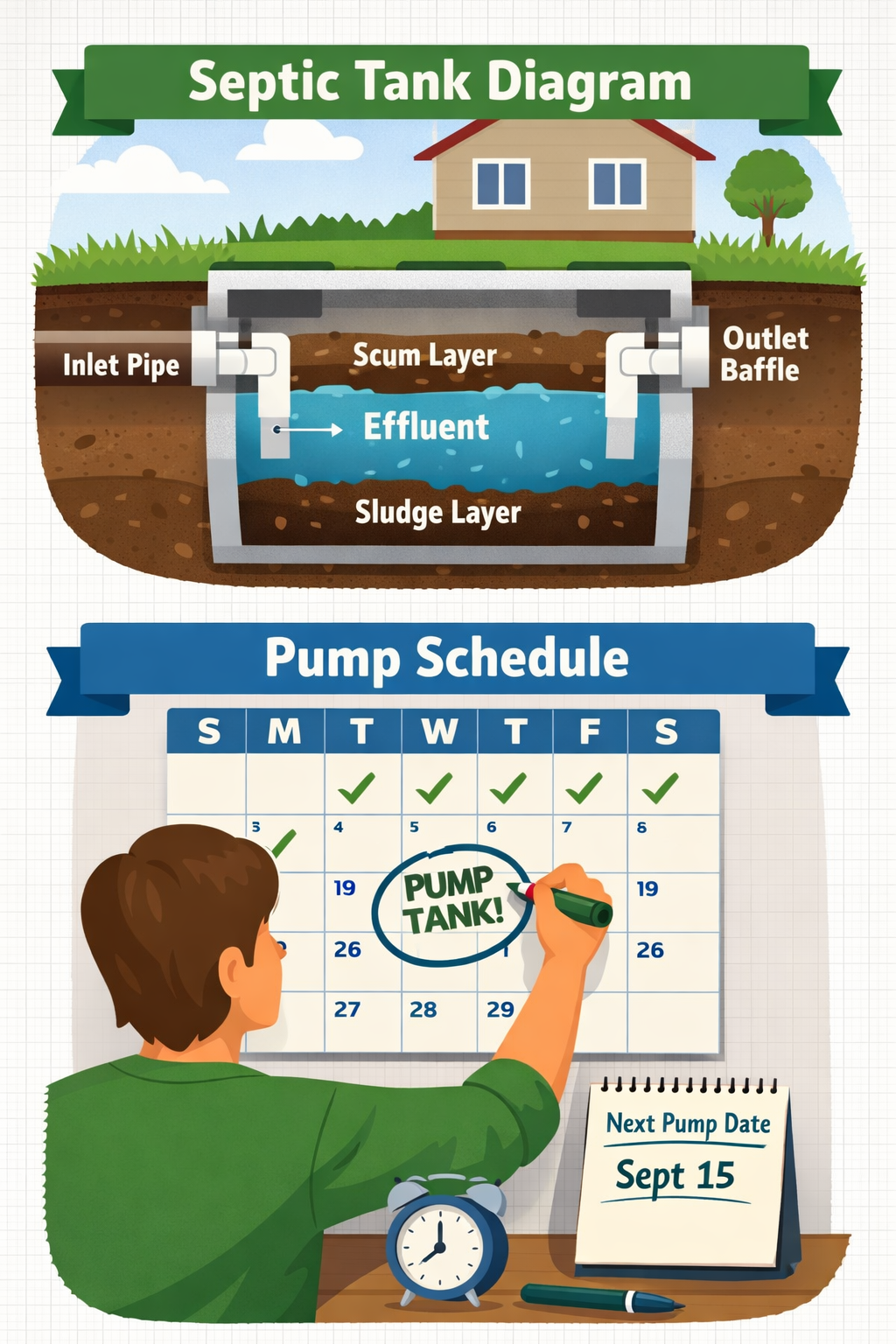
A septic system is a living ecosystem. Beneficial bacteria inside the tank break down waste, and the drain field filters the liquid that flows out. When you disrupt either process — with the wrong products, too much water, or neglect — the whole system suffers.
The good news: most problems are preventable. The 18 habits below are organized into four practical categories so you can build them into your routine without overthinking it.
Habits 1–5: Control What Goes Down the Drain
The single biggest cause of septic failure is flushing or draining the wrong things. These five habits protect the bacterial balance and prevent physical blockages.
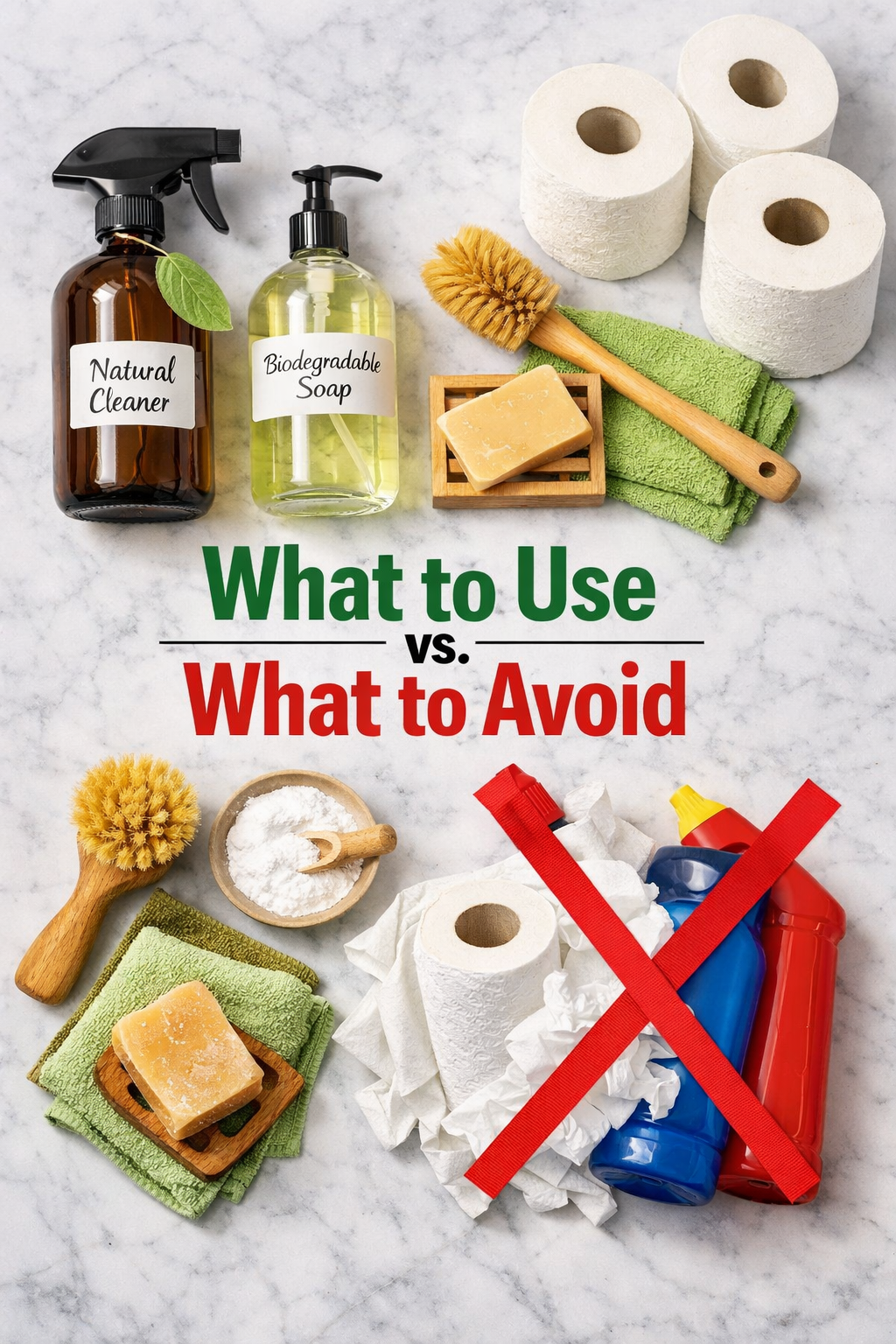
1. Only flush toilet paper and human waste.
Every other item — wipes (even “flushable” ones), paper towels, feminine hygiene products, cotton swabs, and condoms — can block pipes or accumulate in the tank . No exceptions.
2. Never pour fats, oils, or grease down the sink.
Grease coats the tank walls, smothers bacteria, and can clog the drain field over time . Pour cooled grease into a sealed container and throw it in the trash.
3. Avoid chemical drain cleaners.
Products like bleach-based drain openers kill the beneficial bacteria your tank depends on. Use a drain snake or enzyme-based cleaner instead.
4. Skip the garbage disposal — or use it sparingly.
Food solids add to the sludge layer faster than bacteria can break them down. If you have a disposal, use it minimally and pump your tank more frequently.
5. Choose septic-safe, biodegradable products.
Use low-suds, phosphate-free soaps and single-ply toilet paper that dissolves quickly. Check labels for “biodegradable” or “septic safe” — and skip the antibacterial soaps, which can harm tank bacteria.
💡 Quick rule: If it didn’t come out of your body or isn’t single-ply toilet paper, it doesn’t belong in your septic system.
Septifix: Simple Septic Tank Care in One Tablet
Septifix tablets help break down waste, reduce bad smells, and keep your septic tank working properly. With one easy monthly flush, you can help prevent blockages, protect your plumbing, and avoid costly repairs.
👉 Discover the benefits of using Septifix for hassle-free septic maintenance
Habits 6–10: Manage Your Water Usage
Overloading a septic tank with water is the second most common cause of system failure. Too much water at once pushes solids into the drain field before they’ve had time to settle and break down.
6. Spread laundry loads throughout the week.
Doing five loads in one day can flood the tank and leach field. Aim for one load per day instead.
7. Install low-flow toilets and showerheads.
Toilets that use 1.6 gallons per flush or less significantly reduce the daily water load on your system. Low-flow showerheads offer similar savings with no lifestyle change.
8. Fix leaks immediately.
A running toilet can waste hundreds of gallons per day. That constant trickle overloads the tank and disrupts the settling process. Check for leaks monthly and repair them right away.
9. Stagger water-heavy activities.
Don’t run the dishwasher while someone is showering and another person is doing laundry. Space out high-water tasks across the day.
10. Redirect roof and surface water away from the drain field.
Gutters, downspouts, and yard grading should direct rainwater away from the leach field area. Saturated soil can’t absorb effluent properly, leading to backups and system failure.
For more on how water flow affects your system, see our complete septic tank maintenance checklist guide.
Habits 11–14: Protect the Physical System
Physical damage to your tank and drain field is often irreversible without costly repairs. These four habits keep the structure intact.
11. Never drive or park over the tank or drain field.
Vehicle weight crushes pipes and compacts the soil in the leach field, reducing its ability to filter effluent. Mark the boundaries and make sure guests and contractors know.
12. Keep trees and large shrubs away from the system.
Tree roots seek out moisture and can crack tank walls or clog pipes. Plant only grass or shallow-rooted ground cover over the drain field.
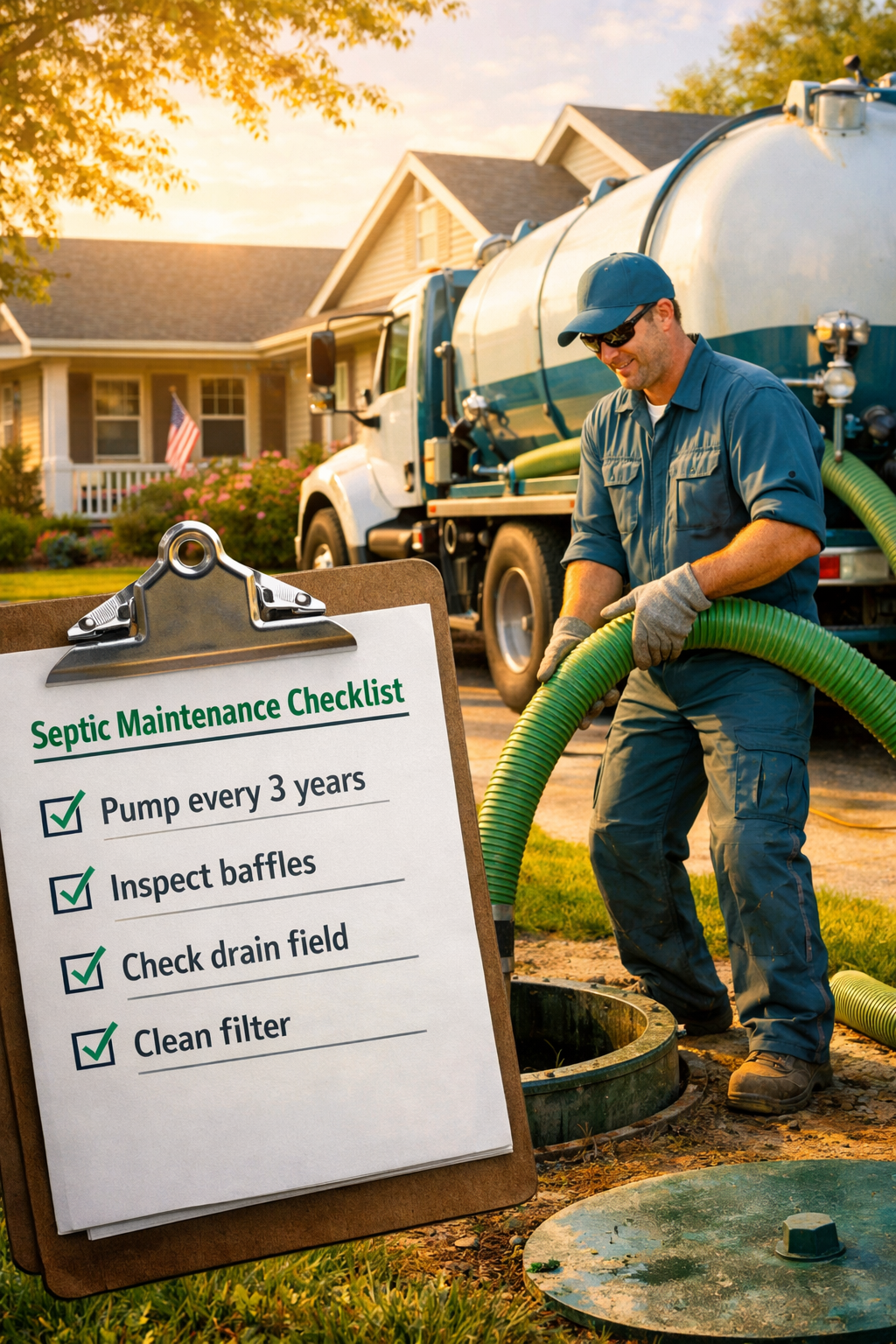
13. Clean the effluent filter every six months.
The filter sits at the tank outlet and catches solids before they reach the drain field. A clogged filter is a common cause of backups. This is a straightforward DIY task — see our guide to septic tank filter maintenance for step-by-step instructions.
14. Locate and mark your tank lid.
Knowing exactly where your tank is saves time and money when a technician arrives. Keep a simple diagram with your home records. If you’re not sure where it is, our guide on how to find your septic tank lid can help.
Habits 15–18: Schedule Professional and Routine Maintenance
Regular professional care catches problems before they become emergencies. These final four habits form the backbone of a long-term maintenance plan.
15. Pump the tank every 2–3 years.
For most households, pumping every 2–3 years is the standard recommendation. Larger tanks with fewer occupants may go 3–5 years, but don’t push it. Sludge buildup that reaches the outlet causes drain field damage that costs far more to fix than a pump-out. Use our septic tank pumping frequency guide to find the right schedule for your household.
16. Get a professional inspection every three years.
A qualified inspector checks the tank condition, inlet and outlet baffles, and drain field integrity [2]. They can spot early signs of failure that you’d never notice from the surface. For a full breakdown of what’s involved, see our complete septic system inspection guide.
17. Keep detailed maintenance records.
Document every pump-out, inspection, repair, and product used. Note the tank location, size, and installation date if you have it. These records are valuable when selling your home and essential for diagnosing recurring problems.
18. Watch for early warning signs.
Slow drains, gurgling sounds, wet spots over the drain field, and sewage odors indoors are all signs your system needs attention. Don’t wait. Learn more about troubleshooting common septic tank issues before a minor problem becomes a major repair.
Quick Reference: Maintenance Schedule at a Glance
| Task | Frequency |
|---|---|
| Pump the tank | Every 2–3 years (household-dependent) |
| Professional inspection | Every 3 years |
| Clean effluent filter | Every 6 months |
| Check for plumbing leaks | Monthly |
| Inspect drain field surface | Seasonally |
| Update maintenance records | After every service |
A Simple Option Worth Considering
FYI: Some links in this article may be affiliate links, which means I may earn a small commission at no extra cost to you.
If you want a straightforward way to support your tank’s bacterial health between pump-outs, 👉 see how Septifix tablets can keep your septic system clean and efficient. They’re not a replacement for pumping or inspections, but as a monthly maintenance habit, they can help maintain the bacterial balance — especially after heavy chemical use or a large gathering at your home.
Common Mistakes That Undo Good Habits
Even homeowners who follow most of these habits can slip up in a few key areas. Watch out for these:
- Using “flushable” wipes — They don’t break down in the tank, regardless of the label
- Ignoring a slow drain — It’s often the first sign of a full tank or clogged filter
- Skipping pumping because “nothing seems wrong” — Damage often happens silently before symptoms appear
- Adding bacterial additives as a substitute for pumping — Additives can support the system but won’t remove accumulated sludge
For a full list of what to avoid, see our guide on 13 costly septic tank care mistakes.
FAQ
How often should I pump my septic tank?
Most households should pump every 2–3 years. Larger tanks or smaller households may go up to 5 years, but annual water usage and tank size both affect this.
Can I use bleach with a septic system?
Occasional, diluted bleach use (like normal toilet cleaning) is generally tolerable. Regular heavy use kills beneficial bacteria and disrupts the breakdown process.
What toilet paper is safe for septic tanks?
Single-ply toilet paper that dissolves quickly is the safest choice. Look for products labeled “septic safe” and avoid thick, quilted varieties.
Is it okay to use a garbage disposal with a septic system?
It’s not recommended. Food waste increases sludge buildup and requires more frequent pumping. If you use one, pump your tank more often.
What are the signs my septic tank is full?
Slow drains throughout the house, gurgling pipes, sewage odors, and wet or spongy ground over the drain field are the most common signs. Learn more about how to know when your septic tank is full.
Do septic tank additives actually work?
Some enzyme and bacterial additives can support a healthy system, but they don’t replace pumping. They’re most useful after events that may have stressed the bacterial population. For an honest breakdown, see our septic tank bacteria treatment guide.
Can tree roots really damage a septic system?
Yes. Roots from trees and large shrubs can crack tank walls and clog pipes. Keep woody plants at least 30 feet from the tank and drain field as a general guideline.
What happens if I ignore a running toilet?
A running toilet can introduce hundreds of gallons of extra water per day into your system, overloading the tank and pushing solids into the drain field before they settle.
Conclusion
The 18 easy septic tank care habits for a healthy system aren’t complicated — they’re mostly about consistency. Control what goes into the system, manage your water use, protect the physical components, and stay on top of professional maintenance. Do those four things and your septic system can last for decades without a major problem.
Your next steps:
- Schedule a pump-out if it’s been more than 2–3 years
- Set a calendar reminder to clean your effluent filter in six months
- Fix any leaky faucets or running toilets this week
- Start a simple maintenance log with your tank location and last service date
- Review our complete septic tank care routine guide for a full year-round plan
If you’d like a simple monthly habit to support bacterial health in between service visits, 👉 Septifix tablets are worth a look — not as a cure-all, but as one easy piece of a consistent routine.
References
[1] Your Complete Guide To Septic Systems Care Maint – https://www.wrenvironmental.com/blog/2025/july/your-complete-guide-to-septic-systems-care-maint/
[2] Septicsmart Week 9 Care Tips Your Septic System And Health – https://www.dph.ncdhhs.nc.gov/blog/2024/09/16/septicsmart-week-9-care-tips-your-septic-system-and-health
[3] Five Basic Practices To Protect Your Septic System – https://extension.psu.edu/five-basic-practices-to-protect-your-septic-system/
[4] Caring For Older Septic Systems – https://www.vdwws.com/blog/caring-for-older-septic-systems