
Last updated: March 11, 2026
Quick Answer: The most effective way to protect your septic system is to pump it every 3–5 years, avoid flushing anything non-biodegradable, conserve water daily, and schedule professional inspections regularly. These 17 expert-approved septic tank care secrets cover every layer of maintenance — from what goes down your drains to how you protect the ground above your drainfield.
Septifix: Simple Septic Tank Care in One Tablet
Septifix tablets help break down waste, reduce bad smells, and keep your septic tank working properly. With one easy monthly flush, you can help prevent blockages, protect your plumbing, and avoid costly repairs.
👉 See how Septifix tablets can keep your septic system clean and efficient
Key Takeaways
- Pump your septic tank every 3–5 years (or every 1–3 years for pressure distribution systems).
- Never flush wipes, grease, harsh chemicals, or medications — they destroy the bacterial balance your tank depends on.
- Fix household leaks promptly; excess water overloads the system and can flood the drainfield.
- Keep vehicles, heavy equipment, and deep-rooted plants off the drainfield area.
- Schedule professional inspections every 1–3 years to catch small problems before they become expensive ones.
- Maintain a written record of all pumping, inspections, and repairs.
- Use enzyme or biological treatments instead of chemical drain cleaners.
- Know where your tank and drainfield are located — accidental damage is one of the most common (and avoidable) problems.
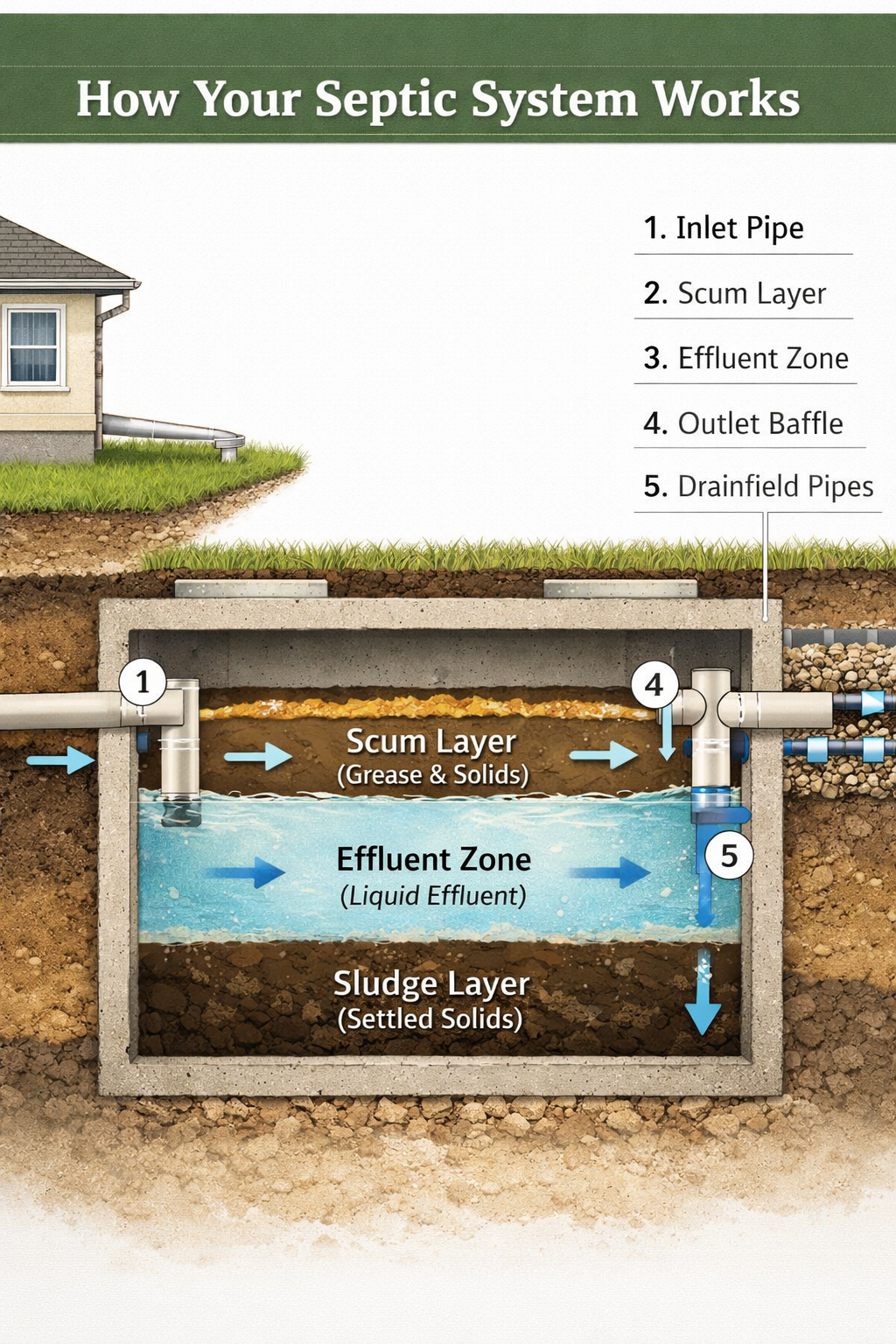
What Are the 17 Expert-Approved Septic Tank Care Secrets?
These are practical, field-tested habits that septic professionals recommend to homeowners who want to avoid backups, extend system life, and stay compliant with local regulations. They apply to any conventional septic system and most alternative systems.
Here are all 17, explained clearly:
Secret 1: Pump on Schedule — Not When It’s Already Too Late
Pump your septic tank every 3–5 years for a typical household. Pressure distribution systems need pumping every 1–3 years. Waiting until you notice problems usually means the damage is already done.
According to the U.S. Environmental Protection Agency, pumping frequency depends on tank size, household size, and the volume of solids entering the system. A 1,000-gallon tank serving a family of four is a common benchmark for the 3–5 year range. (Source: EPA, see References.)
Want to know exactly how often your specific system needs service? See our guide on how often a septic tank needs to be pumped.
Secret 2: Get a Professional Inspection Every 1–3 Years
Annual inspections (or every 3 years for simpler systems without electrical components) catch failing baffles, cracked lids, and early drainfield saturation before they become $10,000+ repairs. Think of it as a routine checkup for your home’s waste system.
Secret 3: Never Flush Non-Biodegradable Items
Wipes (even “flushable” ones), feminine hygiene products, paper towels, dental floss, and cotton swabs do not break down in a septic tank. They clog pipes and accumulate in the tank, accelerating the need for pumping and risking drainfield damage.
Rule of thumb: If it isn’t toilet paper or human waste, it doesn’t belong in the toilet.
Secret 4: Keep Harsh Chemicals Out of Your Drains
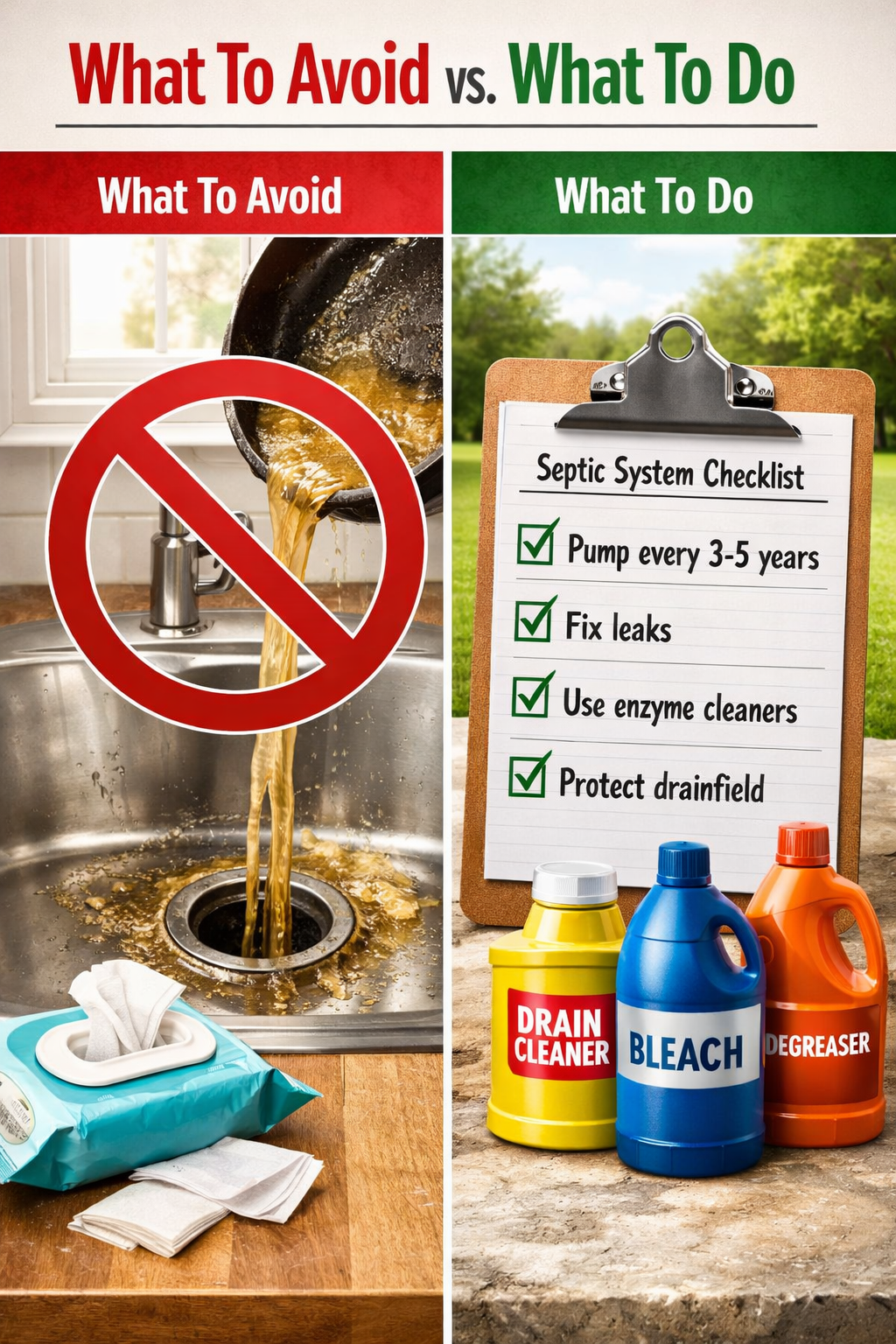
Bleach, chemical drain cleaners (like Drain-O), and antibacterial soaps in large quantities kill the beneficial bacteria your tank needs to break down waste. Some prescription medications — particularly cancer and tuberculosis treatments — also destroy bacterial cultures when flushed.
Use enzyme-based or biological drain cleaners instead. They clean effectively without harming your system’s microbial balance. For a deeper look at this, see our guide on septic tank bacteria treatment.
💡 If you want a simple, consistent way to replenish beneficial bacteria monthly, Septifix tablets are worth considering. They’re designed to support bacterial activity without requiring any special plumbing knowledge. See how Septifix tablets can keep your septic system clean and efficient.
FYI: Some links in this article may be affiliate links, which means I may earn a small commission at no extra cost to you.
Secret 5: Eliminate or Minimize Garbage Disposal Use
Garbage disposals send excess fats, grease, and food solids into the tank. This speeds up sludge accumulation and can clog the drainfield. If you have a disposal, use it sparingly and increase your pumping frequency accordingly.
Secret 6: Never Pour Fats, Oils, or Grease Down the Drain
Fats, oils, and grease (FOG) solidify in pipes and form a thick scum layer in the tank. Scrape cooking grease into the trash or a sealed container instead. This single habit prevents a significant share of drainfield failures.
Secret 7: Fix Household Leaks Immediately
A leaking toilet or dripping faucet sends hundreds of extra gallons into your system daily. That excess water overloads the tank and pushes partially treated effluent into the drainfield before it’s ready, causing saturation and failure.
Secret 8: Spread Out Water Use Throughout the Day
Running the dishwasher, washing machine, and multiple showers at the same time floods the tank. Space out laundry loads and high-water-use activities across the day to give the system time to process each input. This is one of the most overlooked — and easiest — septic care habits.
For more water-saving strategies, check out our complete septic tank care routine guide for homeowners.
Secret 9: Use High-Efficiency Appliances and Toilets
Low-flow toilets, high-efficiency washing machines, and WaterSense-labeled fixtures reduce the daily water load on your system. Less water in means less stress on the tank and drainfield.
More of the 17 Expert-Approved Septic Tank Care Secrets: Protecting Your Drainfield
The drainfield is the most expensive part of your septic system to replace. These next secrets focus specifically on keeping it healthy.
Secret 10: Keep Vehicles and Heavy Equipment Off the Drainfield
Soil compaction from vehicles crushes the perforated pipes underground and prevents effluent from filtering properly. Mark the drainfield boundaries clearly and make sure contractors, delivery trucks, and guests know to stay off it.
A well-protected drainfield can last 25–50+ years. A compacted one may fail in under a decade.
Secret 11: Plant Only Grass Over the Drainfield
Deep-rooted trees and shrubs send roots into drainfield pipes, cracking them and causing blockages. Shallow-rooted grass is the only recommended ground cover directly over the drainfield. Keep trees at least 30 feet away (farther for willow or poplar varieties).
Secret 12: Divert Surface Water Away from the Drainfield
Rainwater, downspouts, and landscape irrigation that drain toward the drainfield saturate the soil and prevent proper effluent absorption. Grade the land to direct water away, and avoid placing sprinkler heads near the drainfield.
Secret 13: Know Exactly Where Your Tank and Drainfield Are Located
Accidental damage during landscaping, construction, or digging is one of the most common causes of septic system damage. Get a copy of your system’s as-built diagram from your county health department and mark the boundaries clearly in your yard.
Not sure where to start? Our guide on how to find your septic tank walks you through the process step by step.
Secret 14: Learn the Warning Signs of a Failing System
Slow drains, gurgling sounds, sewage odors indoors or outdoors, wet spots over the drainfield, and unusually lush green patches of grass are all signs that your system needs attention. Catching these early saves thousands of dollars.
Learn more about signs your septic tank needs maintenance so you know what to watch for.
Secret 15: Maintain a Written Maintenance Log
Keep a record of every pump-out, inspection, repair, and additive used. This documentation proves compliance with local regulations, helps future service providers understand your system’s history, and is often required when selling a property.
| What to Log | Why It Matters |
|---|---|
| Pump-out dates and volume | Tracks sludge accumulation rate |
| Inspection findings | Documents system condition over time |
| Repairs and parts replaced | Helps diagnose recurring issues |
| Products added to the tank | Avoids overuse or conflicting treatments |
Secret 16: Plan Maintenance Around Seasonal Conditions
Schedule inspections before wet seasons (when saturated soil limits drainfield performance) or after freezing weather (which can affect pipe integrity). In cold climates, insulating exposed pipes and avoiding driving over the drainfield in winter prevents frost damage.
For cold-weather-specific advice, see our winter septic tank maintenance guide.
Secret 17: Use Biological Additives Wisely — Not as a Substitute for Pumping
Enzyme and bacterial additives can support a healthy microbial environment in your tank, especially after heavy antibiotic use or chemical exposure. They are not a replacement for regular pumping, but they can help maintain bacterial balance between service visits.
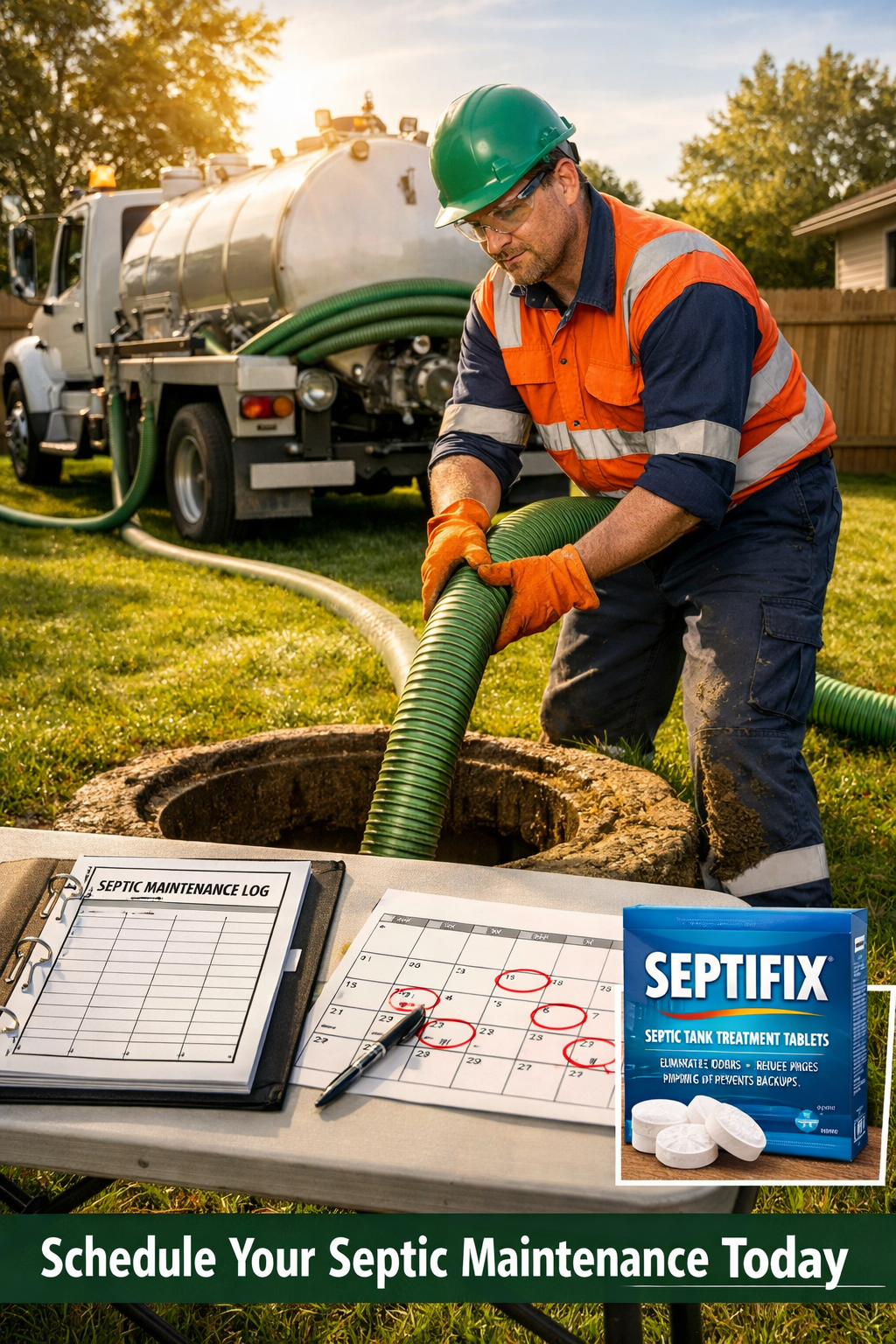
A Simple Tool That Supports Several of These Secrets
If you want a straightforward way to support bacterial health in your tank without complicated routines, a monthly tablet treatment can help. Septifix tablets are one option that homeowners use to maintain bacterial activity and reduce odors between pump-outs. It’s not a magic fix, but as part of a broader maintenance routine, it can make a real difference — especially if your household uses a lot of antibacterial products or cleaning chemicals.
👉 See how Septifix tablets can keep your septic system clean and efficient
FAQ: 17 Expert-Approved Septic Tank Care Secrets
Q: How often should I really pump my septic tank?
Every 3–5 years for most households. Smaller tanks, larger families, or heavy garbage disposal use may require pumping every 2–3 years.
Q: Can I use bleach if I have a septic system?
Occasional, diluted bleach use (normal laundry or cleaning) is generally tolerable. Regular heavy use or undiluted bleach poured directly down drains kills beneficial bacteria and should be avoided.
Q: What happens if I never pump my septic tank?
Sludge and scum layers build up until they overflow into the drainfield, clogging it permanently. Drainfield replacement can cost $5,000–$20,000 or more depending on location and system type.
Q: Are “flushable” wipes safe for septic systems?
No. Most flushable wipes do not break down quickly enough in a septic tank and can cause clogs in pipes and the drainfield. Stick to toilet paper only.
Q: Do I need to add bacteria to my septic tank?
A healthy tank generates its own bacteria naturally. Additives can help after antibiotic use, heavy chemical exposure, or system restart. They are not required for a normally functioning system.
Q: How do I know if my drainfield is failing?
Look for wet, soggy ground over the drainfield area, sewage odors outside, unusually green grass in patches, or slow drains throughout the house. Any of these warrant a professional inspection.
Q: Can tree roots really damage my septic system?
Yes. Tree roots actively seek moisture and can penetrate drainfield pipes and even the tank itself. Keep trees at least 30 feet away from any septic components.
Q: Is it safe to build a deck or shed over my drainfield?
No. Any structure over the drainfield blocks oxygen exchange, prevents maintenance access, and can compact the soil. Keep the entire drainfield area clear and accessible.
Conclusion: Put These Secrets to Work This Year
These 17 expert-approved septic tank care secrets aren’t complicated — but they do require consistency. The homeowners who avoid costly repairs are usually the ones who pump on schedule, watch what goes down their drains, protect their drainfield, and keep simple records.
Your next steps:
- Find your tank and drainfield if you don’t already know where they are.
- Check your last pump-out date and schedule one if it’s been more than 3–5 years.
- Audit your household habits — especially drain use, cleaning products, and water consumption.
- Set a calendar reminder for your next inspection.
- Start a maintenance log today, even if it’s just a notebook.
For a full maintenance framework, our complete septic tank maintenance checklist guide is a practical next read.
And if you want a simple monthly habit to support bacterial health between service visits, Septifix tablets are worth a look — not as a shortcut, but as one useful tool in a solid maintenance routine.
References
- U.S. Environmental Protection Agency. Septic Systems Overview. EPA.gov. https://www.epa.gov/septic (2023)
- U.S. Environmental Protection Agency. How to Care for Your Septic System. EPA.gov. https://www.epa.gov/septic/how-care-your-septic-system (2023)
- National Environmental Services Center (NESC). Septic System Owner’s Guide. West Virginia University. (2019)
- University of Minnesota Extension. Septic System Maintenance. Extension.umn.edu. (2022)
- Washington State Department of Health. Maintaining Your Septic System. doh.wa.gov. (2021)