

Last updated: March 11, 2026
Quick Answer: The 12 warning signs your septic tank needs immediate care include slow drains, sewage odors, gurgling pipes, sewage backup, standing water near the tank, unusually green grass over the drain field, a triggered septic alarm, and several other system stress indicators. If you notice two or more of these signs at once, contact a licensed septic professional within 24 to 48 hours. A single high-severity sign — like raw sewage backing up indoors — requires emergency service right away.
Key Takeaways
- Slow drains and gurgling sounds are early warnings that appear days or weeks before serious problems develop
- Sewage odors indoors or outdoors signal a system that is failing and needs professional inspection
- Standing water or wet spots near the drain field can indicate saturation, with repairs potentially costing $2,000–$15,000
- Unusually lush, bright green grass over the drain field means wastewater is surfacing and fertilizing the soil
- Sewage backup into toilets, showers, or tubs is a late-stage emergency — stop using water and call a pro immediately
- Spring and heavy rain seasons expose hidden problems faster, especially in systems 25–40 years old
- Ignoring early signs can turn a simple pump-out into a full drain field replacement
- Regular pumping (typically every 3–5 years) and bacterial maintenance are the best ways to prevent most of these signs
What Are the 12 Warning Signs Your Septic Tank Needs Immediate Care?
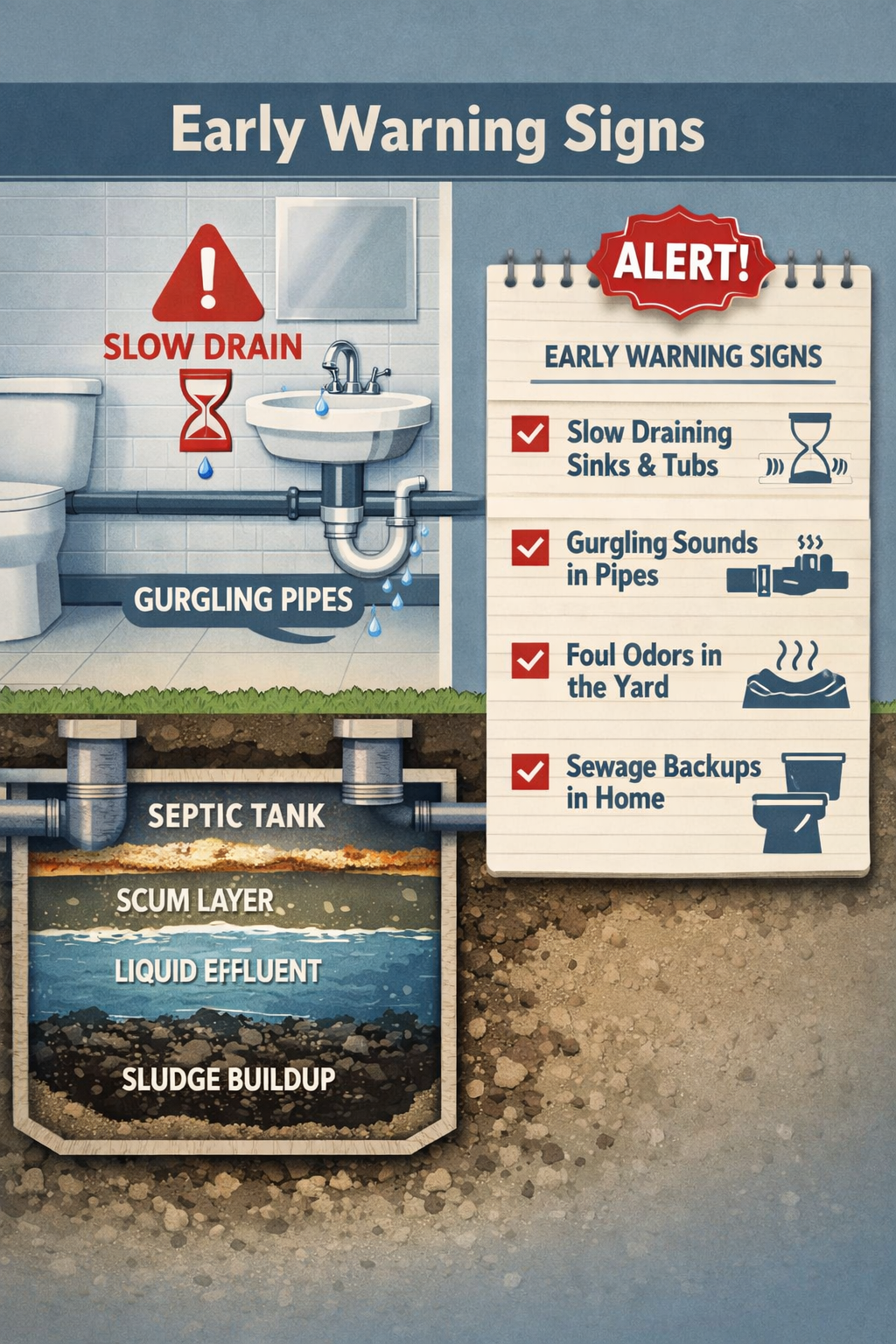
Here are all 12 warning signs clearly numbered so you know exactly what to watch for. Each one signals a different stage of system stress — from early and manageable to urgent and expensive.
1. 🚿 Slow Drains Throughout the House
Multiple slow drains — not just one — point to a septic problem, not a simple clog. When the tank is full or the drain field is overwhelmed, wastewater has nowhere to go, so it backs up slowly into every fixture.
- A single slow drain usually means a local clog
- Multiple slow drains at the same time suggest the main line or tank is the issue
- Check sinks, showers, and tubs on different floors
“Slow drains are one of the first signals homeowners notice — and one of the easiest to dismiss. Don’t.”
For more detail, see our guide on signs your septic tank needs maintenance.
2. 🔊 Gurgling or Bubbling Sounds from Pipes
Gurgling sounds from toilets or drains — especially when another fixture is running — are an early warning that air is trapped in the lines due to a blockage or full tank.
This sign often appears days or weeks before more serious symptoms. If your toilet gurgles when you run the washing machine, take it seriously.
For a deeper look, read our article on septic tank gurgling sounds: causes, fixes, and prevention.
3. 🪠 Sewage Backup into Toilets, Showers, or Tubs
Raw sewage backing up into your home is a late-stage emergency. Stop using all water in the house and call a licensed septic professional immediately.
- This is the most urgent sign on this list
- Do not attempt to flush or run water to “clear” the backup
- Health risk: raw sewage contains pathogens that are dangerous to your family
Septifix: Simple Septic Tank Care in One Tablet
Septifix tablets help break down waste, reduce bad smells, and keep your septic tank working properly. With one easy monthly flush, you can help prevent blockages, protect your plumbing, and avoid costly repairs.
👉 See how Septifix tablets can keep your septic system clean and efficient
4. 💨 Strong Sewage or Rotten-Egg Odors Indoors
Hydrogen sulfide gas (the rotten-egg smell) escaping into your home means gases are not venting properly — a sign the system is under stress or failing.
This odor near drains, in the basement, or around the toilet base should never be ignored. It can also indicate a cracked tank or damaged vent pipe.
5. 🌿 Foul Odors Outside Near the Tank or Drain Field
Outdoor sewage smells around the tank lid or drain field area mean wastewater is surfacing or the tank is venting improperly.
- Smell is strongest after rain or warm weather
- If neighbors can smell it, the problem is significant
- This is a public health concern, not just a nuisance
Our complete guide on how to reduce septic tank odors covers the most effective solutions.
6. 💧 Standing Water or Wet Spots Near the Tank or Drain Field
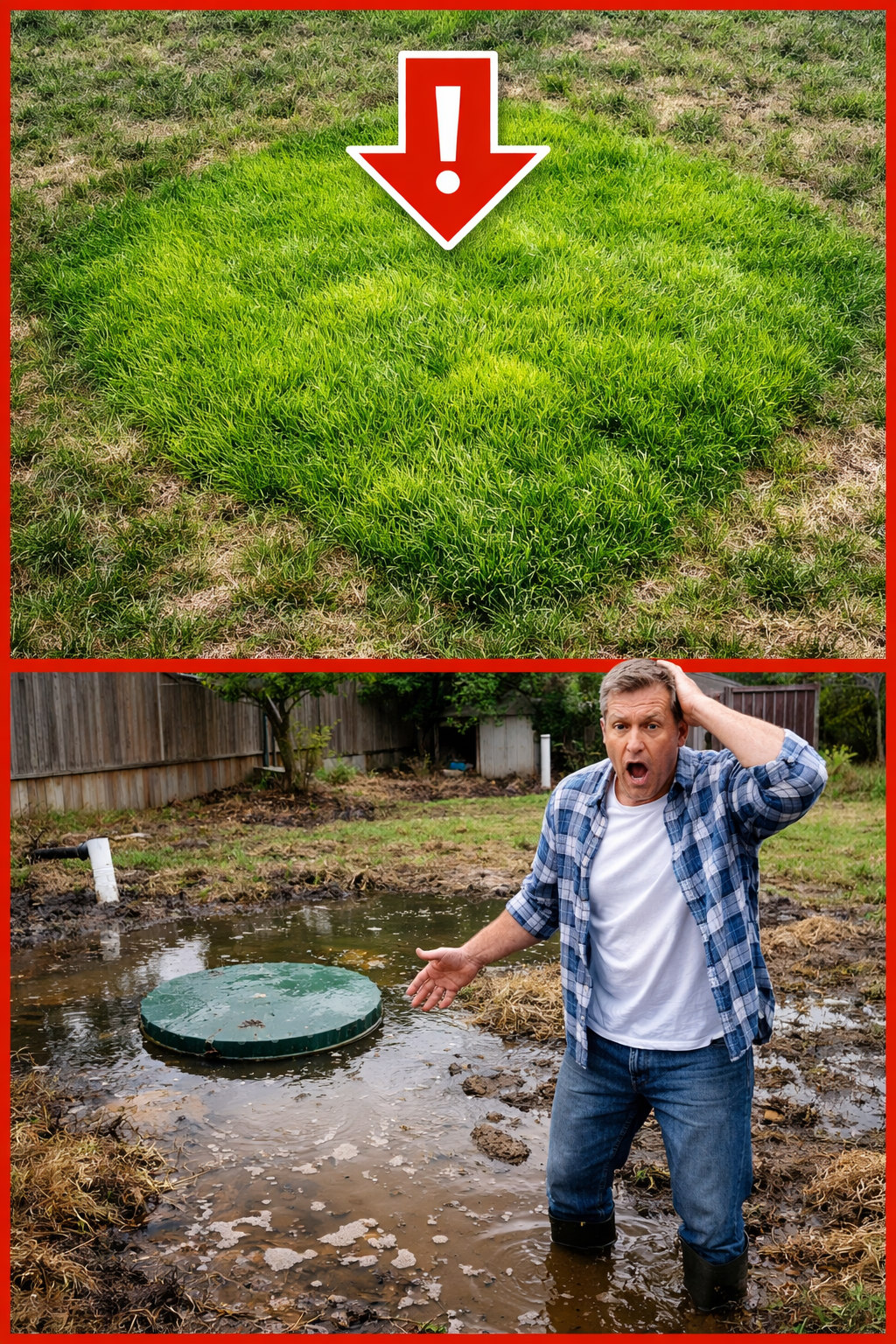
Puddles or soggy ground near your septic tank or drain field — without recent heavy rain — signal that the system is saturated and wastewater is surfacing.
Drain field repairs range from $2,000 to $15,000 depending on the extent of damage, so catching this early matters.
7. 🌱 Unusually Lush or Bright Green Grass Over the Drain Field
A patch of grass that is noticeably greener or grows faster than the rest of your lawn — directly over the drain field — means effluent is fertilizing the soil from below.
This is a classic sign that the drain field is not processing wastewater properly. It may look harmless, but it means partially treated sewage is close to the surface.
8. 🚽 Toilets That Flush Slowly or Won’t Flush Fully
A toilet that requires multiple flushes or drains slowly — when the bowl itself is not clogged — points to a full tank or restricted outflow line.
- Rule out a standard clog first with a plunger
- If the problem persists across multiple toilets, the tank is the likely cause
- This sign often accompanies slow drains and gurgling sounds
9. 🔔 Septic System Alarm Is Activated
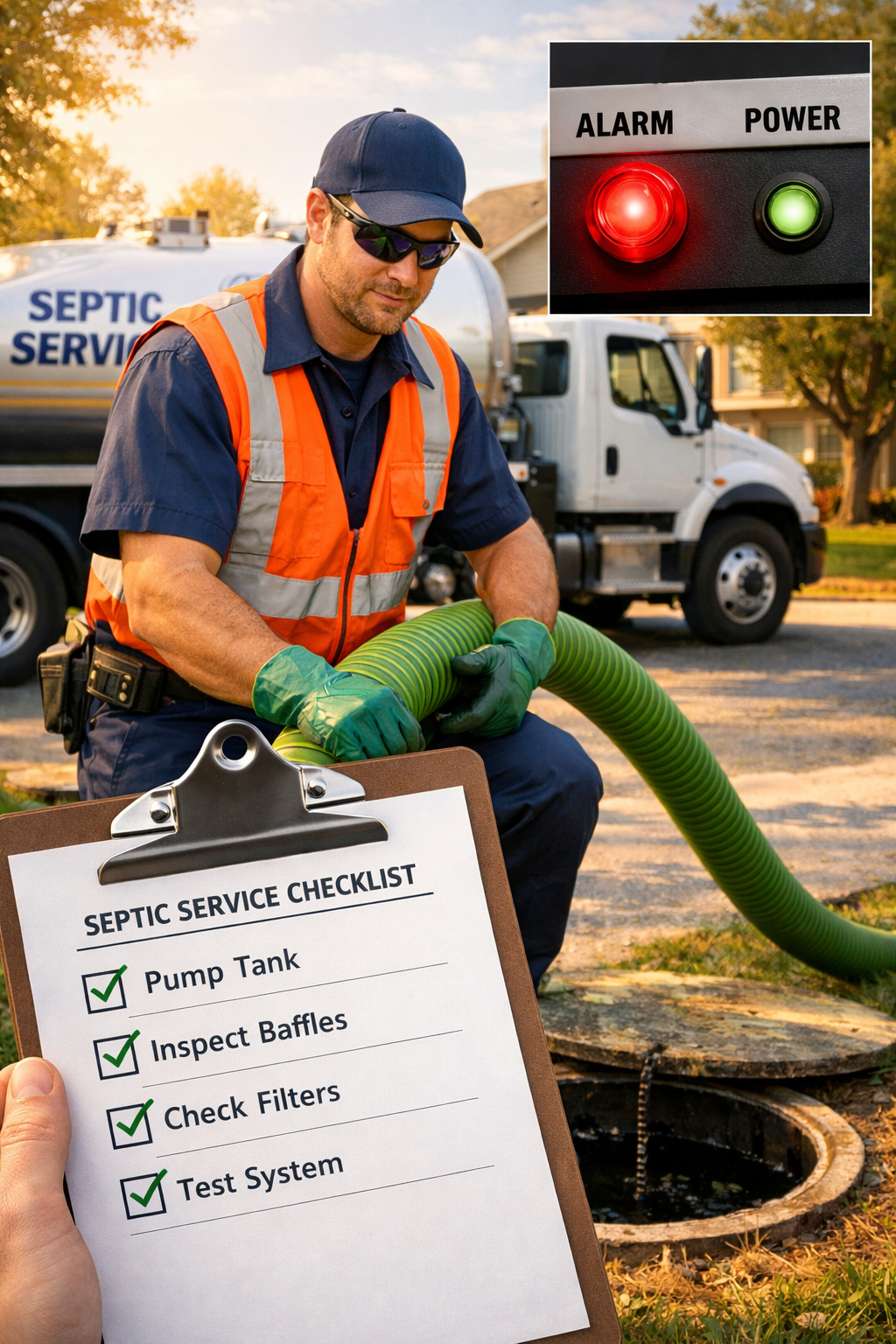
A triggered septic alarm means the water level in the tank is too high, the pump has failed, or there is an aeration issue.
Ignoring the alarm can lead to backups and surface discharge within hours. Check the alarm panel, note the indicator light color, and call your service provider.
10. 🌧️ Problems That Worsen After Heavy Rain
If slow drains, odors, or wet spots get noticeably worse after rain, the drain field is likely saturated and cannot absorb more liquid.
Groundwater infiltrating the tank can overwhelm the system. Spring is especially risky — melting snow and rising groundwater expose hidden problems faster, particularly in older systems.
11. 🦠 Nitrates or Bacteria in Your Well Water
If you have a private well and water tests show elevated nitrates or coliform bacteria, your septic system may be leaking and contaminating the groundwater.
- Test your well water annually if you have a septic system
- This sign has no visible symptoms — only a water test will catch it
- This is a serious health and environmental concern
12. ⏳ It Has Been More Than 3–5 Years Since the Last Pump-Out
A tank that has not been pumped within the recommended interval is at high risk of overflow, backup, and drain field damage — even if no other signs are visible yet.
Most households need pumping every 3 to 5 years, though usage, tank size, and household size all affect this. See our guide on how often a septic tank needs to be pumped for a personalized estimate.
Warning Sign Severity: A Quick Reference Table
| Warning Sign | Severity | Action Needed |
|---|---|---|
| Slow drains (multiple) | Moderate | Schedule inspection soon |
| Gurgling sounds | Moderate | Monitor + call pro |
| Sewage backup indoors | Emergency | Stop water use, call now |
| Indoor sewage odors | High | Call pro within 24 hrs |
| Outdoor sewage odors | High | Call pro within 24 hrs |
| Standing water near field | High | Call pro within 24 hrs |
| Bright green grass patch | Moderate–High | Schedule inspection |
| Slow/incomplete toilet flush | Moderate | Schedule inspection |
| Alarm activated | High | Call service provider |
| Worsens after rain | Moderate–High | Schedule inspection |
| Well water contamination | Emergency | Stop using well, call pro |
| No pump-out in 3–5+ years | Moderate | Schedule pump-out |
How to Respond When You Spot These 12 Warning Signs Your Septic Tank Needs Immediate Care
Act based on severity and how many signs are present. One moderate sign warrants scheduling an inspection within a week. Two or more signs together — or any single emergency sign — require action within 24 to 48 hours.
Step-by-step response:
- Stop adding stress to the system — reduce water use immediately (no laundry, long showers, or dishwasher cycles)
- Document what you see — note which signs are present, when they started, and whether they worsen after rain or heavy use
- Check your pump-out records — when was the last service?
- Call a licensed septic professional — describe all symptoms so they can prioritize correctly
- Do not use chemical drain cleaners — these kill the beneficial bacteria your tank needs to function
If you want a simple, ongoing way to support bacterial health between pump-outs, Septifix tablets are worth looking into. They introduce oxygen-releasing bacteria that help break down solids and reduce odors. Not a substitute for pumping, but a useful maintenance tool for many homeowners.
(FYI: Some links in this article may be affiliate links, which means I may earn a small commission at no extra cost to you. I only recommend products I believe are genuinely useful.)
For a broader look at avoiding costly errors, see 13 costly septic tank care mistakes to avoid.
Why Ignoring These Signs Costs You More
Small problems become expensive fast. A routine pump-out costs a few hundred dollars. A drain field replacement can run $5,000 to $15,000 or more.
The math is straightforward: catching a warning sign early and scheduling a pump-out or inspection is almost always cheaper than waiting until the system fails completely.
Spring is the highest-risk season. Melting snow, saturated soil, and rising groundwater all put extra pressure on the system — especially in homes with systems that are 25 to 40 years old and have deferred maintenance.
FAQ: Septic Tank Warning Signs
Q: Can I use my toilets if I see sewage backup?
No. Stop using all water immediately. Flushing or running taps will push more waste into an already overloaded system and worsen the backup.
Q: Is a gurgling toilet always a septic problem?
Not always — it could be a vented drain issue. But if multiple fixtures gurgle and drains are slow, the septic system is the more likely cause.
Q: How do I know if the green grass is from the septic system?
If the lush patch sits directly over the drain field and appears after wet weather or increased household water use, the septic system is the likely source.
Q: What should I do if my septic alarm goes off?
Reduce water use immediately and call your septic service provider. Note which light is on — red usually means high water level, while other indicators may signal pump or aeration issues.
Q: How often should I have my septic tank inspected?
Most professionals recommend a full inspection every 1 to 3 years and a pump-out every 3 to 5 years, depending on household size and tank capacity.
Q: Can heavy rain cause septic problems?
Yes. Saturated soil prevents the drain field from absorbing effluent, which can push wastewater to the surface or back into the home.
Q: Do septic additives help prevent these warning signs?
Bacterial additives like Septifix can support the natural breakdown process and reduce odors, but they do not replace regular pumping. 👉 See how Septifix tablets can keep your septic system clean and efficient.
Q: What is the most dangerous warning sign on this list?
Sewage backup into the home and well water contamination are the most urgent. Both pose direct health risks and require immediate professional response.
Conclusion: Act Early, Spend Less
Knowing the 12 warning signs your septic tank needs immediate care is one of the most practical things a homeowner can do. Most of these signs are visible, smellable, or audible — you just need to know what to look for.
Your action plan:
- Walk your yard and check the drain field area monthly
- Note any slow drains, odors, or sounds and track when they started
- Schedule a pump-out if it has been more than 3 to 5 years
- Call a pro within 24 hours if you see two or more signs, or immediately for sewage backup or well contamination
- Support bacterial health between pump-outs with a simple maintenance routine
For a complete ongoing maintenance plan, our complete septic tank care routine guide for homeowners is a good next step.
A simple maintenance option: If you want something easy to add to your routine, Septifix tablets can help maintain bacterial balance and reduce odors between professional service visits. Think of it as a low-effort way to give your system consistent support.
References
[1] Signs Septic System Failing – https://www.texassepticguide.com/learn/signs-septic-system-failing
[2] Septic System Problems Warning Signs Every Homeowner Should Know – https://brighteyestexas.com/2026/01/06/septic-system-problems-warning-signs-every-homeowner-should-know/
[3] Protect Your Home And The Environment – https://tpchd.org/wp-content/uploads/2024/01/Protect-Your-Home-and-the-Environment.pdf
[4] Signs Of Septic Failure In The Spring A Homeowners 2026 Survival Guide – https://valleyviewexcavatingllc.com/signs-of-septic-failure-in-the-spring-a-homeowners-2026-survival-guide/