

Last updated: March 11, 2026
Quick Answer: Following the 10 essential septic tank care rules for long-term performance keeps your system running reliably for 20 to 40 years and prevents repair bills that can reach $25,000 to $50,000. The core habits are simple: pump on schedule, watch what goes down the drain, protect your drain field, and inspect the system regularly. Most homeowners can follow all 10 rules without any special skills.
Septifix: Simple Septic Tank Care in One Tablet
Septifix tablets help break down waste, reduce bad smells, and keep your septic tank working properly. With one easy monthly flush, you can help prevent blockages, protect your plumbing, and avoid costly repairs.
👉 Discover the benefits of using Septifix for hassle-free septic maintenance
Key Takeaways
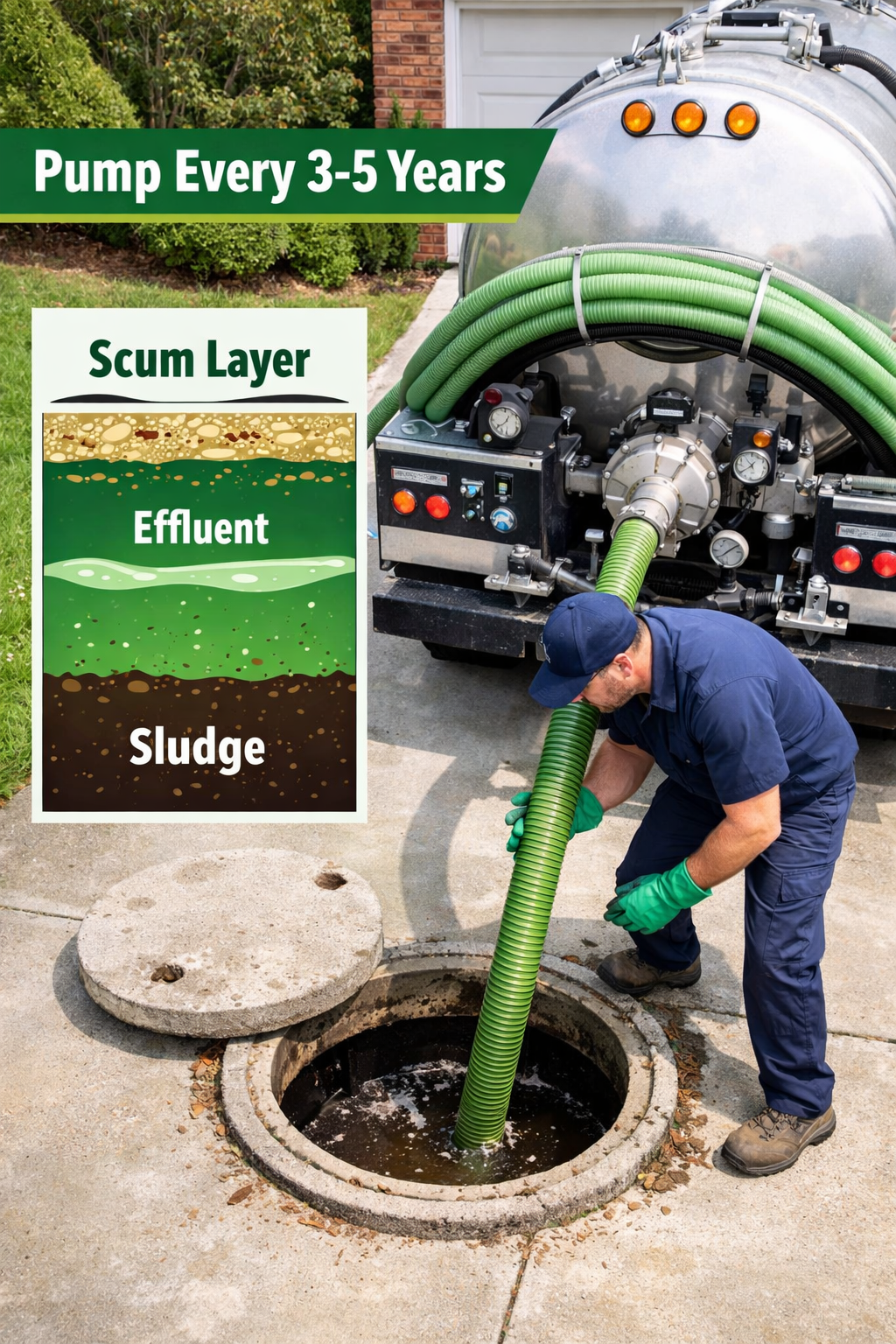
- Pump your septic tank every 3 to 5 years (or every 2 to 3 years for households of 4+ people)
- Professional inspections every 1 to 3 years cost $150 to $450 and catch problems early
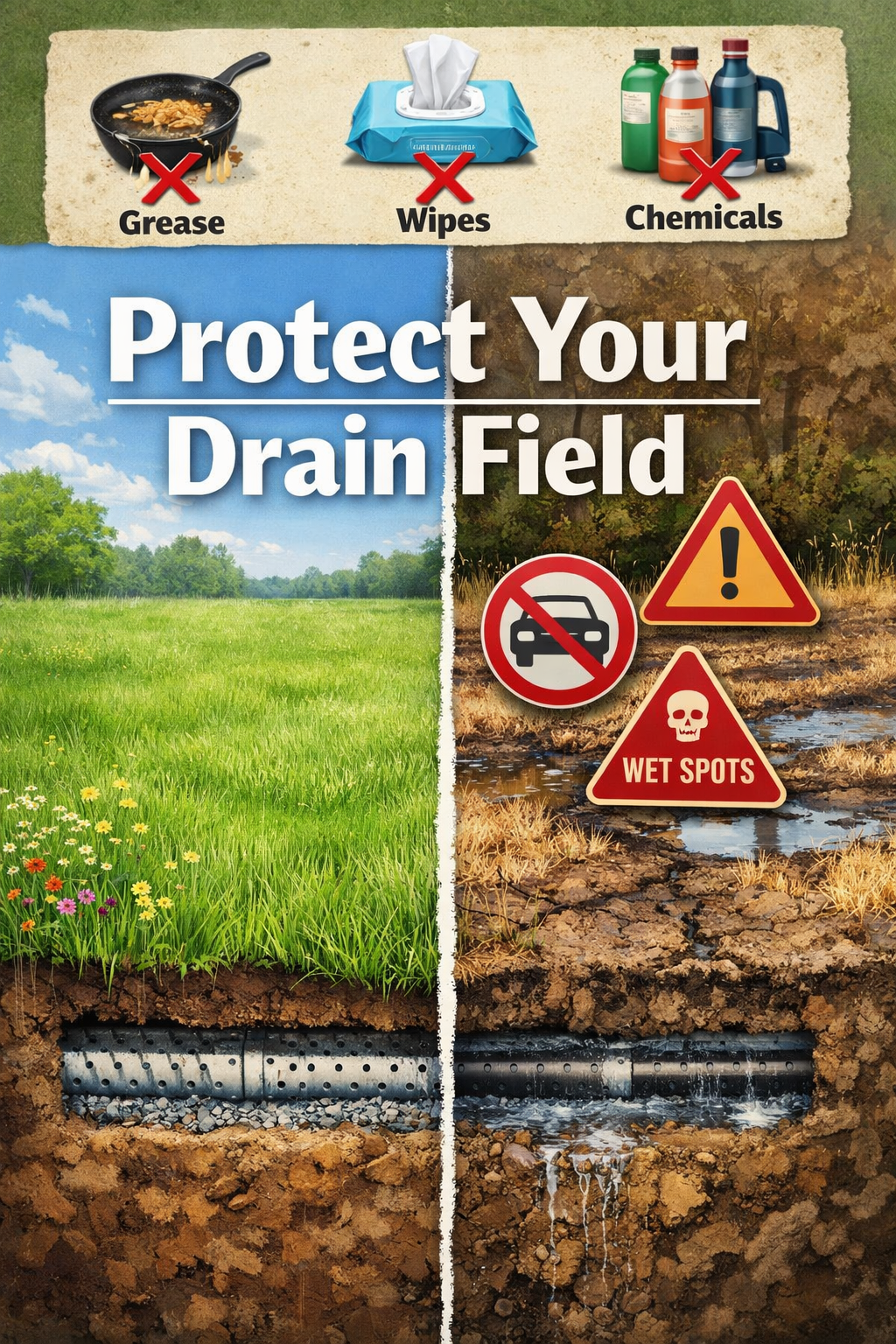
- Never flush grease, wipes, chemicals, or medications — they kill beneficial bacteria
- Fix leaky toilets fast — a running toilet can add 200+ gallons daily to your system load
- Keep trees and large shrubs at least 30 feet from the drain field to prevent root damage
- Proper 20-year maintenance costs roughly $3,000 to $4,000 total; neglect can cost $25,000 to $35,000 in emergency repairs
- Every $1 spent on maintenance saves approximately $10 on repairs
- Garbage disposals can cut pumping intervals by nearly 50% — use them sparingly
Why These 10 Rules Matter for Every Septic System Owner
Septic systems are out of sight, so they’re easy to ignore — until something goes wrong. The 10 essential septic tank care rules for long-term performance exist because most septic failures are preventable. A well-maintained system can last 20 to 40 years; a neglected one can fail in under 10.
Full system replacement costs $15,000 to $50,000. That’s a compelling reason to spend a few hundred dollars every few years on pumping and inspections instead.
The 10 Essential Septic Tank Care Rules for Long-Term Performance
Here are the 10 rules every homeowner and property manager should follow, explained clearly and in order of priority.
Rule 1: Pump Your Tank on Schedule
Pump your septic tank every 3 to 5 years. Households of four or more people with a standard 1,000-gallon tank typically need pumping every 2 to 3 years. A 1,500-gallon tank serving the same household can go up to 5 years between services.
Skipping pumps lets sludge accumulate until it overflows into the drain field — and drain field repairs are far more expensive than pumping. Check out our guide on how often to pump your septic tank for a full breakdown by household size and tank capacity.
Pumping frequency quick reference:
| Tank Size | Household Size | Recommended Interval |
|---|---|---|
| 1,000 gal | 1–2 people | Every 4–5 years |
| 1,000 gal | 3–4 people | Every 2–3 years |
| 1,500 gal | 3–4 people | Every 4–5 years |
| 1,500 gal | 5+ people | Every 3 years |
Rule 2: Schedule Regular Professional Inspections
Have a licensed professional inspect your system every 1 to 3 years. Inspections cost $150 to $450 and catch failing baffles, high sludge levels, and early drain field saturation before they become catastrophic.
This is the single best early-warning tool available to homeowners. Know the signs your septic tank needs maintenance so you can act between scheduled inspections too.
Rule 3: Never Flush the Wrong Things
Only flush human waste and septic-safe toilet paper. Everything else is a risk. Items that damage your system include:
- 🚫 Grease, oils, and fats
- 🚫 “Flushable” wipes (they don’t break down)
- 🚫 Chemical drain cleaners
- 🚫 Paint, solvents, antifreeze, and pesticides
- 🚫 Medications
- 🚫 Paper towels, cotton swabs, and feminine products
These items either kill the beneficial bacteria your tank depends on or cause physical blockages. See our full list of what not to put in a septic tank for a complete reference.
Rule 4: Use Water Wisely
Excessive water use overwhelms your septic system. When too much water enters the tank at once, solids get pushed into the drain field before they’ve been properly treated.
Practical steps to reduce water load:
- Spread laundry loads throughout the week rather than doing them all in one day
- Install low-flow toilets and showerheads
- Fix leaky faucets and running toilets promptly — a single running toilet can add 200+ gallons daily to your system
Rule 5: Protect Your Drain Field
Keep your drain field clear of anything that compacts the soil or damages pipes. A saturated or compacted drain field is one of the most expensive septic failures you can face.
Rules for drain field protection:
- Never park vehicles or heavy equipment over the drain field
- Divert roof gutters and sump pump discharge away from the area
- Plant only grass over the drain field — no gardens, no paved surfaces
Rule 6: Keep Trees and Shrubs Away
Plant trees and large shrubs at least 30 feet from your drain field and septic tank. Tree roots actively seek moisture and will grow into perforated drain field pipes, causing blockages and structural damage.
Grass is the only safe ground cover directly over the drain field. Shallow-rooted flowers planted well away from the system are generally acceptable, but check with your septic professional first.
Rule 7: Maintain Healthy Bacteria Levels
Your septic tank relies on live bacteria to break down waste. Antibacterial soaps, bleach, and chemical cleaners used in large quantities can reduce bacterial populations and slow the digestion process.
FYI: Some links in this article may be affiliate links, which means I may earn a small commission at no extra cost to you.
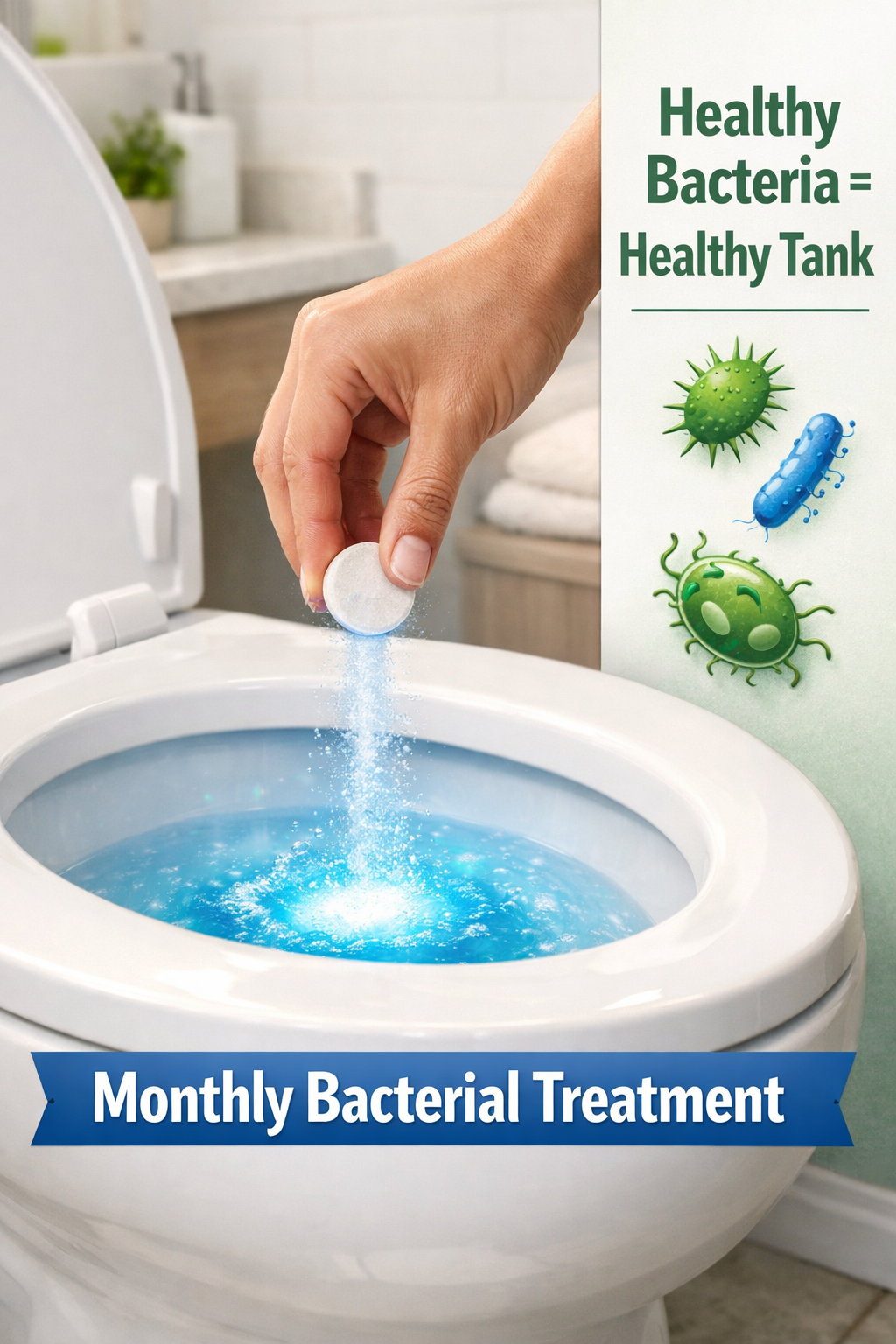
If you want a simple way to support bacterial health between pumpings, Septifix tablets are worth considering. You drop one tablet in the toilet monthly, and it releases beneficial bacteria directly into the tank. It’s not a replacement for pumping, but it can help maintain the biological balance that keeps your system working efficiently — especially after using antibiotics or heavy cleaning products.
Learn more about why your septic tank needs bacteria and how bacterial balance affects long-term performance.
Rule 8: Use Garbage Disposals Sparingly
Garbage disposals significantly increase the solid load in your tank. Using one regularly can reduce your pumping interval by nearly 50%, because food solids accumulate faster than waste the system was designed to handle.
If you use a garbage disposal, factor that into your pumping schedule and increase frequency accordingly. Composting food scraps is a better alternative for septic system owners.
Rule 9: Know the Warning Signs
Catching problems early saves thousands of dollars. Learn to recognize these warning signs before they become emergencies:
- Slow drains throughout the house
- Gurgling sounds in pipes or toilets
- Sewage odors indoors or near the drain field
- Wet, spongy ground over the drain field
- Unusually lush, green grass directly over the tank or drain field
If you notice any of these, call a professional immediately. Our guide on how to know if your septic tank is failing walks through each symptom and what it typically means.
Rule 10: Keep Records and Stay Consistent
Document every service, inspection, and repair. A maintenance log helps you track pumping intervals, identify recurring problems, and provide proof of care if you sell the property.
What to record:
- Date and company for each pumping
- Sludge and scum levels noted by the technician
- Any repairs made and parts replaced
- Inspection findings and recommendations
Consistency is the foundation of long-term performance. A complete septic tank maintenance schedule makes it easy to stay on track without guessing.
How Much Does Following These Rules Actually Cost?
Proper maintenance over 20 years costs an estimated $3,000 to $4,000 total (roughly $300 to $400 per pumping every 3 to 5 years, plus periodic inspections) [3]. Compare that to emergency repairs costing $25,000 to $35,000, or a full system replacement at $15,000 to $50,000.
Every dollar spent on preventive maintenance saves approximately $10 on repairs. That’s not a small margin — it’s a strong financial case for staying consistent with all 10 rules.
Common Mistakes That Undermine Long-Term Septic Performance
Even homeowners who try to maintain their systems make avoidable errors. The most damaging include:
- Skipping inspections because the system “seems fine” — problems develop silently
- Flushing wipes labeled “flushable” — they accumulate and cause blockages
- Planting trees near the drain field without checking root spread potential
- Ignoring slow drains until a backup occurs
- Over-relying on additives as a substitute for pumping
For a full breakdown, see our list of costly septic tank care mistakes to avoid.
A Simple Monthly Habit Worth Considering
If you want one easy addition to your routine, a monthly bacterial treatment can support the work your system does between pumpings. 👉 See how Septifix tablets can keep your septic system clean and efficient — they’re a low-effort, low-cost way to help maintain bacterial balance, reduce odors, and support healthy digestion in the tank. Think of it as a small monthly habit that complements the 10 rules above, not a replacement for any of them.
FAQ: Septic Tank Care Rules
Q: How often should I pump my septic tank?
Every 3 to 5 years for most households. Households of 4 or more people with a 1,000-gallon tank should pump every 2 to 3 years. Using a garbage disposal regularly shortens that interval by nearly 50%.
Q: What happens if I never pump my septic tank?
Sludge builds up until it overflows into the drain field, causing soil clogging and system failure. Drain field repairs or replacement can cost $10,000 to $50,000.
Q: Can I use bleach with a septic system?
Occasional, diluted bleach use is generally tolerable, but heavy or frequent use kills the beneficial bacteria your tank needs to function. Use septic-safe cleaning products where possible.
Q: Are flushable wipes safe for septic tanks?
No. Despite the label, most wipes do not break down in septic tanks and accumulate as solids, causing blockages and increasing pumping frequency.
Q: How far should trees be from my septic system?
At least 30 feet from the drain field and tank. Tree roots actively seek moisture and will grow into perforated pipes.
Q: Do septic additives replace pumping?
No. Bacterial additives can support healthy bacterial populations, but they cannot remove accumulated sludge. Pumping is still required on schedule.
Q: What are the first signs my septic tank needs attention?
Slow drains, gurgling pipes, sewage odors near the drain field, and unusually lush grass over the tank area are the most common early warning signs.
Q: Is a garbage disposal bad for a septic system?
Yes, if used heavily. Food solids accumulate faster than the system can process, cutting pumping intervals nearly in half. Compost food scraps instead when possible.
Conclusion: Start With One Rule Today
The 10 essential septic tank care rules for long-term performance aren’t complicated — they’re consistent. Most failures happen because homeowners skip pumping, flush the wrong things, or ignore early warning signs for too long.
Your action steps for 2026:
- Check when your tank was last pumped — schedule service if it’s been 3+ years
- Review what goes down your drains and toilets
- Walk your drain field and look for warning signs
- Book a professional inspection if you haven’t had one in the past 2 years
- Start a simple maintenance log
For a deeper dive into building a reliable routine, our complete septic tank care routine guide covers everything in one place.
A well-maintained septic system is quiet, reliable, and inexpensive to run. A neglected one is none of those things.
References
[1] Septic System Maintenance – https://www.nearbyhunt.com/articles/septic-system-maintenance
[2] Florida Septic Tank Requirements – https://www.ntotank.com/blog/florida-septic-tank-requirements
[3] Why Regular Septic Maintenance Can Save You Thousands In 2026 – https://www.metroseptic.com/blog/why-regular-septic-maintenance-can-save-you-thousands-in-2026/